Buyer Fit Snapshot
| Best fit | Price Per Unit Luxury Shoeboxes projects where brand print, material claims, artwork control, MOQ, and repeat-order consistency need to be specified before quoting. |
|---|---|
| Quote inputs | Share finished size, material target, print colors, finish, packing count, annual reorder estimate, ship-to region, and any compliance wording. |
| Proofing check | Approve dieline scale, logo placement, barcode or warning zones, color tolerance, closure strength, and carton packing before bulk production. |
| Main risk | Vague material claims, crowded artwork, missing packing details, or unclear freight terms can make a low unit price expensive after revisions. |
Fast answer: Price Per Unit Luxury Shoeboxes: Costs, MOQ, Specs should be specified like a repeatable production item. The safest quote records material, print method, finish, artwork proof, packing count, and reorder notes in one written spec.
Production checks before approval
Compare the actual filled-product size with the drawing, then confirm tolerance on folds, seals, hang holes, label areas, and retail display edges. Reserve space for logos, QR codes, warning copy, and material claims before decorative graphics fill the panel.
Quote comparison points
Review material grade, print process, finish, sampling route, tooling charges, carton quantity, and freight assumptions side by side. A quote is only useful when the supplier can repeat the same color, closure quality, and packing count on the next order.
I’ve sat in too many sourcing meetings where a buyer pointed at two elegant cartons and asked why the price per unit luxury shoeboxes quote varied by nearly 40%. The answer was never “because one supplier is greedy.” It was usually a mix of board grade, wrap method, insert complexity, and whether the plant had to hand-build the box in a slower line. On a factory floor in Shenzhen, I once watched a team reject nearly 300 lids in an hour because the magnetic closure sat 2 mm off-center. That tiny misalignment would have looked invisible in a photo, but in production it changed the whole order economics. Packaging loves drama like that. Annoying, yes. Expensive, also yes. And very often, the numbers start with the difference between $0.15 per unit for 5,000 pieces and $0.31 per unit for 1,000 pieces once you change one spec.
That is why price per unit luxury shoeboxes should be judged against presentation, durability, and shipping efficiency, not just the headline figure. A shoebox is not a plain carton. It is part of the product experience, and in luxury retail it often acts like a silent salesperson before anyone touches the shoe. If the lid fit is sloppy, the corners crush, or the foil rubs off in transit, the brand pays later in refunds, replacements, and damaged trust. I’ve seen that happen with sneaker launches in Dongguan and bridal footwear programs in Ho Chi Minh City alike. One brand even tried to blame the courier. Cute theory. The box told a different story, and the damage showed up before the shipment even cleared customs in Los Angeles.
Here’s the practical lens I use: compare the cost of a usable, brand-building box, not the cheapest box on paper. A slightly higher price per unit luxury shoeboxes can reduce rework, lower damage rates, and Save Money on replacement orders. In one client meeting, a fashion brand was ready to save $0.11 per unit by removing the inner insert. They changed their mind after a sample drop test showed the shoes sliding in transit from Ningbo to Chicago. That “savings” turned into a reprint, a repack, and three weeks of lost time. I still remember the look on the buyer’s face. That was the moment the spreadsheet stopped being cute, especially once the freight forwarder quoted an extra $480 for the rerun.
What follows is the buying framework I use with brands that want premium perception at scale. You’ll see what actually drives the price per unit luxury shoeboxes, where savings are realistic, and where cutting corners creates expensive failures later. I’ll also share the specs buyers should lock down before asking for a quote, because unclear briefs are the fastest way to get misleading pricing. And yes, I’ve had to clean up those quote messes more times than I’d like to admit, usually after someone asked for “luxury black box” and expected a usable number by Friday.
Luxury Shoebox Product Details: What Buyers Actually Get
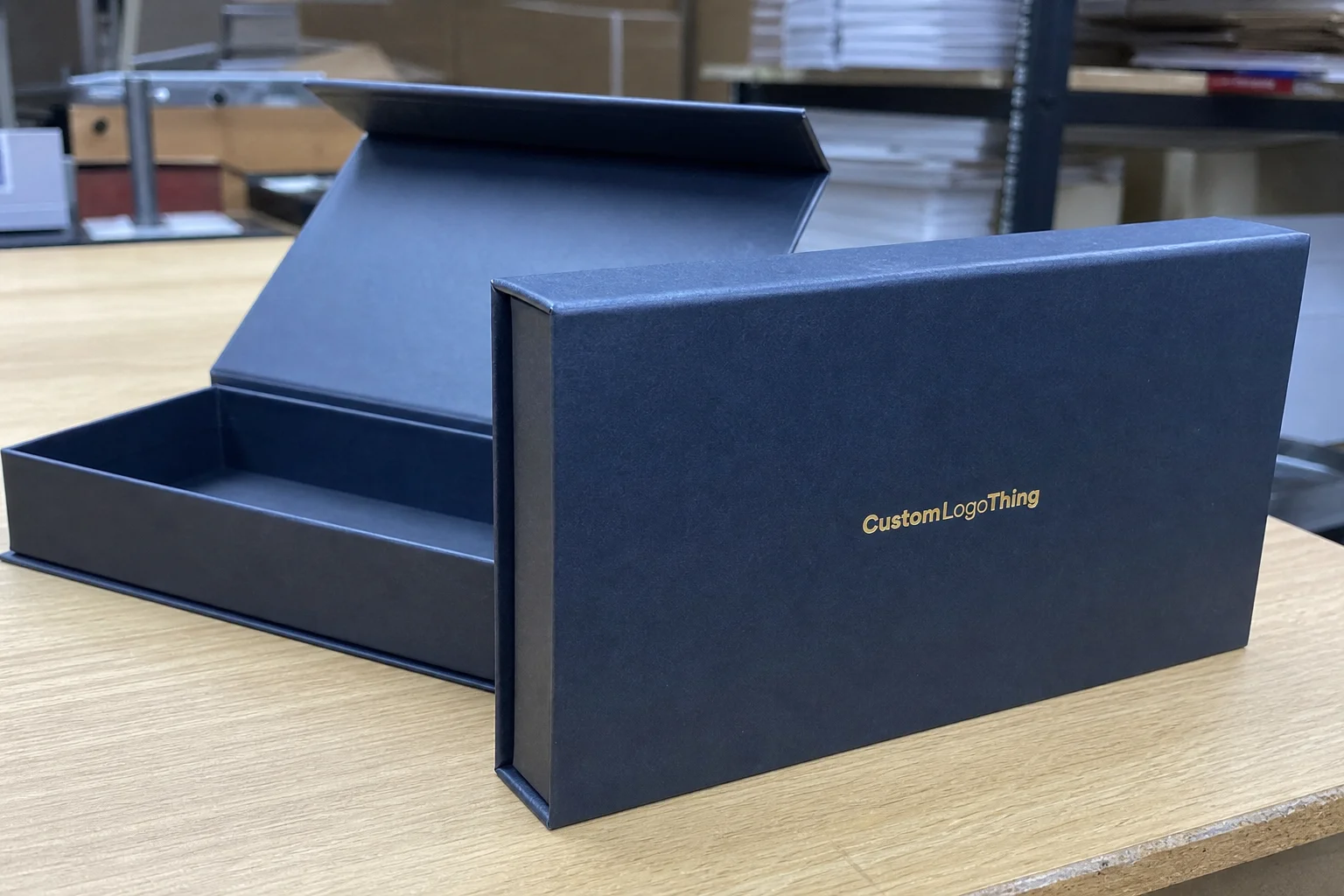
Most luxury shoeboxes fall into a few familiar structures, but the structure matters far more than many buyers realize. A rigid shoebox with a lift-off lid is usually the standard for premium footwear. A magnetic closure box adds hardware and assembly steps. A drawer style changes both the opening experience and the labor content. Foldable rigid construction can reduce shipping volume, but it still carries a premium feel if the wrap and assembly are handled well. All of these choices affect price per unit luxury shoeboxes, and the gap can be as small as $0.20 per unit or as large as $1.10 per unit depending on the finish level and factory location.
When I visited a supplier line in Shenzhen that made boxes for a bridal label, I watched workers wrap 2.0 mm chipboard by hand with pearl-finish paper. The edge-wrap alone took more time than producing a standard folding carton. That labor shows up in the quote. So does the insert. A simple EVA insert is faster than molded pulp, and a die-cut paperboard cradle costs less than a multi-part foam-and-fabric assembly. If you’re comparing price per unit luxury shoeboxes, You Need to Know exactly what is inside the shell. Otherwise, you’re comparing apples to a very expensive pile of board, glue, and hand labor in Guangdong.
Buyers usually want a box that feels rich without becoming fussy. That feeling comes from details: crisp corners, tight wrap, consistent lid fit, and an opening sequence that feels intentional. A luxury shoebox should not rattle. It should not bow at the side panel. The lid should sit square. Those points sound small, but they separate a premium presentation from packaging that looks expensive only from a distance. The right box supports the shoe; it does not compete with it. Honestly, I think the best boxes are the ones nobody notices because everything just feels right, especially when the lid tolerance stays within 1.0-1.5 mm across a run of 3,000 units.
Customization options also shape the final quote. Logo placement can be simple hot stamping on the lid, or it can involve full-coverage print with embossed marks and interior messaging. Specialty finishes like soft-touch lamination, foil stamping, embossing, debossing, and spot UV add visual depth, but they also add setup steps and quality checks. If you ask for metallic foil on a deep navy wrap, then request a contrasting embossed logo inside the lid, expect the price per unit luxury shoeboxes to move accordingly. The factory will not smile politely and absorb that extra work. I wish. In Suzhou, one plant quoted me an extra $0.08 per unit just for a second foil plate, and they were being perfectly reasonable.
Use cases vary, and so do expectations. Fashion brands may care most about color consistency and shelf presence. Sneaker labels often want durability and stackability. Bridal footwear programs tend to value a more ceremonial unboxing sequence. Limited-edition collections frequently ask for ribbons, tissue paper, and custom sleeves. Each of those adds materials, labor, or both, which is why the same-looking box can produce very different price per unit luxury shoeboxes. A simple white rigid lid box with a single-color logo might land at $1.28 per unit at 2,000 pieces, while the same footprint with a drawer pull, ribbon, and metallic wrap can jump to $2.95 per unit.
One buyer tip from a sourcing call I still remember: do not say “premium finish” and assume everyone interprets that the same way. Say “1-color hot stamp in silver foil on the lid, matte black wrap, 1.5 mm greyboard, and a 30 mm ribbon pull on the drawer tray.” That kind of detail prevents quote confusion and hidden upcharges. Clear specs are the easiest way to keep price per unit luxury shoeboxes under control. Vague briefs, on the other hand, are basically an invitation for chaos, especially if the factory is quoting from Dongguan and the sales rep is trying to translate three different finish terms at once.
Specifications That Affect Price Per Unit Luxury Shoeboxes
Specifications drive pricing more than almost anything else. Start with dimensions. A women’s heeled-shoe box and a men’s sneaker box may look close in retail, but a 15 mm increase in width can change board usage, wrap area, and carton load density. That affects price per unit luxury shoeboxes twice: first in materials, then in freight. Large rigid boxes occupy more cubic space, which means you ship fewer pieces per carton and per pallet. A bigger box is not just bigger. It is also greedier about space, and a 60 x 35 x 25 cm outer carton can cost more to ship from Shenzhen to Long Beach than a smaller box with the same product count.
Board thickness is another major factor. A rigid box built with 1.5 mm greyboard will usually cost less than one built with 2.0 mm board, but the upgrade often improves structure and perceived value. The same goes for wrap paper. Standard art paper, textured specialty stock, and 350gsm C1S artboard with soft-touch lamination do not sit at the same cost level. If the box is wrapped in a heavier stock with full coverage print, your price per unit luxury shoeboxes will reflect that extra surface area and press work. In one quote I reviewed from Ningbo, moving from 128gsm art paper to 350gsm C1S artboard added $0.17 per unit before lamination even entered the conversation.
Magnets matter more than buyers expect. A single magnet is simpler than a double magnet closure, and concealed magnets require tighter placement during assembly. Insert complexity is another hidden driver. A two-piece EVA insert cut to hold a sneaker with tissue and accessory compartment costs more than a flat paperboard insert. If you want to keep price per unit luxury shoeboxes disciplined, simplify the insert before you simplify the outer box. It usually delivers better savings without hurting presentation. I’ve seen a drawer tray with a ribbon pull add $0.24 per unit just because the pull had to be threaded by hand in a plant outside Guangzhou.
Finish-level tradeoffs are where buyers can make smart decisions. Foil stamping adds shine and contrast. Embossing creates tactile depth. Spot UV catches light. Textured laminates add a luxury touch that feels different in-hand, not just in photography. But stacking every finish together can create setup delays, registration issues, and waste. Honestly, I think many brands overbuy finishes because they are chasing a “luxury” label instead of asking which feature their customer will actually notice. The smartest price per unit luxury shoeboxes quote often includes one or two high-impact details, not five. A lid with matte lamination plus a single silver foil logo usually reads premium enough for most footwear launches.
Quality control and tolerance deserve real attention. A rigid lid that is too loose looks cheap. One that is too tight tears paper wrap after repeated opening. Tighter tolerances reduce returns and protect brand perception, but they require more careful manufacturing. That can increase the price per unit luxury shoeboxes by a few cents or more. In a plant review I did last year in Dongguan, a buyer rejected a sample because the lid overhang varied by 1.5 mm across the run. They were right to reject it. A luxury box must look uniform on the shelf, not “close enough if you squint.”
Use this comparison table as a practical reference when you’re asking for pricing tiers. These are not universal prices, but they are the kind of spread I see in real quotes when specs change.
| Box Style | Typical Materials | Common MOQ | Indicative Unit Range | Cost Drivers |
|---|---|---|---|---|
| Rigid lift-off lid | 1.5-2.0 mm greyboard, art paper wrap | 500-1,000 pcs | $1.35-$3.20/unit | Hand assembly, wrap area, lid fit |
| Magnetic closure | 1.5-2.0 mm greyboard, specialty paper | 500-1,000 pcs | $1.75-$4.10/unit | Magnet placement, assembly time, finish count |
| Drawer style | Rigid tray, sleeve, ribbon pull | 1,000 pcs+ | $1.95-$4.80/unit | Extra components, fit tolerance, labor |
| Foldable rigid | Greyboard, printed paper wrap | 1,000-3,000 pcs | $1.10-$2.90/unit | Structural design, folding mechanics, sample iteration |
Notice how the price range widens with more complex features. That is normal. It is also why a clean spec sheet is so valuable. When I compare price per unit luxury shoeboxes across suppliers, I want to know board thickness, paper weight, finish count, and insert construction before I look at the number in the last column. Anything less is guesswork dressed up as strategy, and I’ve seen that guesswork turn into a 12% cost swing between factories in Shenzhen and Xiamen.
For buyers who want to compare options, the best reference point is our Custom Packaging Products catalog, where the structure and finish choices are easier to separate than in a verbal sales call. That matters because one supplier’s “standard luxury box” may be another supplier’s “premium upgraded line.” Funny how the same words can mean three completely different things once money is on the table, especially when the quote includes a 2.0 mm board upgrade but leaves the insert undefined.
To make quote comparisons fair, ask every supplier the same technical questions:
- What is the exact board thickness in mm?
- What paper wrap is included, and what is the gsm?
- Is the finish matte, gloss, soft-touch, or textured?
- How many colors are printed on the outer and inner surfaces?
- Is the insert paperboard, EVA, or molded pulp?
- Are magnets, ribbons, or foil stamping included in the base quote?
Pricing and MOQ: How to Read a Real Quote
A real packaging quote is rarely a single number. It usually includes unit price, tooling or plate charges, sample fees, freight, taxes, and sometimes the cost of inserts or tissue. When a buyer sees only the headline price per unit luxury shoeboxes, they may miss the charges that change the landed cost. I’ve seen quotes look attractive until the freight line doubled the savings. Large rigid boxes are bulky, and cubic volume matters as much as carton weight. Sometimes the “cheap” quote is just good at hiding the painful stuff, especially if the factory is quoting FOB Shenzhen and the freight leg to California is another $1,200 on top.
MOQ, or minimum order quantity, is one of the biggest reasons unit pricing moves. Lower MOQs usually raise price per unit luxury shoeboxes because setup costs are spread across fewer pieces. A supplier still has to run the same prepress, tooling, cutting, assembly setup, and inspection steps whether you order 500 pieces or 5,000 pieces. That fixed cost gets absorbed more efficiently at higher volume. It is simple math, not a trick. Suppliers do not wake up and invent a surcharge just for sport. Mostly. In a factory in Xiamen, I watched a line spend almost two hours just calibrating the magnet placement jig before the first usable box came off the table.
Here is how tiered pricing often behaves in practice. If a rigid shoebox is $2.40 at 500 pieces, it may drop to $1.88 at 2,000 pieces and $1.54 at 5,000 pieces, assuming the structure stays the same. That is why buyers should request pricing at several volume tiers. If the best breakpoint is at 3,000 units, but your forecast only needs 1,800, you can decide whether the inventory risk is worth the lower price per unit luxury shoeboxes. Sometimes the answer is yes, sometimes the warehouse team gives you the look that says absolutely not, especially when pallet space in New Jersey is already tight.
Pricing traps are common. One is a vague finish description. Another is an unlisted insert cost. A third is comparing a magnetic closure box from one supplier to a lift-off lid from another and treating them as equivalent. They are not. I once reviewed two quotes for a sneaker launch where one supplier included a paperboard insert and the other assumed “no insert required.” The second quote looked $0.22 cheaper, until the buyer discovered the missing insert was essential for shipping stability. The true price per unit luxury shoeboxes was higher, not lower, and the replacement insert in Yiwu added another week to the timeline.
Freight deserves its own conversation. Rigid packaging ships as volume, not just weight. If the box has a large footprint or comes pre-assembled, your carton efficiency drops. That can make the landed cost meaningfully different from the factory price. If you are importing to North America or Europe, ask for the production quote and freight estimate separately. Then calculate price per unit luxury shoeboxes on a landed basis, not a factory-only basis. The difference is often enough to change your decision. I’ve seen a box priced at $1.72 in Dongguan land at $2.11 in Rotterdam once ocean freight and palletization were added.
Buyers also need to think about storage and cash flow. A lower per-unit price on 10,000 boxes is not automatically better if your warehouse can only hold 4,000 and your sales cycle is uncertain. I have seen brands pay for “cheap” packaging that sat in storage for 11 months. That ties up cash, takes floor space, and risks color drift if the stock is stored badly. The right price per unit luxury shoeboxes depends on what you can actually move through the market, not what looks impressive in a quote PDF. A container full of boxes in a Shenzhen warehouse is not a victory if the shoes launch six months late.
Ask these questions before you accept a quote:
- What is included in the unit price?
- Are samples free, prepaid, or deductible?
- Does the quote include one or two rounds of artwork revision?
- Is the insert included, or quoted separately?
- What freight terms apply, and from which port or facility?
- What is the expected defect tolerance or AQL standard?
That last point matters because a lower unit price with weak QC can cost more after inspection. A supplier that follows consistent inspection practices and references industry standards such as ISTA or material sourcing rules from FSC is usually easier to work with over time. I value predictability more than a flashy quote, and that is especially true for price per unit luxury shoeboxes. Flashy quotes are great for screenshots. Less great for delivery dates in week 14 when the cargo still hasn’t cleared Ningbo.
What Does Price Per Unit Luxury Shoeboxes Include?
Short answer: it depends on the supplier, which is exactly why buyers need to ask. A unit quote for price per unit luxury shoeboxes might include the outer box only, or it might include inserts, paper wrap, foil stamping, sampling, and carton packing. Some factories quote bare production cost and treat accessories as separate line items. Others bundle more into the base number. If you do not ask, you end up comparing two different products with the same label. That is how bad decisions are born. Quietly. In spreadsheets. Usually right before a boss asks why the landed cost changed after approval.
A clean quote should tell you whether the following are included:
- Outer rigid box structure
- Printed wrap paper or specialty paper
- Hot stamp, emboss, deboss, or spot UV
- Inner insert and compartment layout
- Ribbon pull, magnet, or sleeve components
- Sample production and artwork setup
- Master carton packing and export-ready packing
Once those pieces are clear, price per unit luxury shoeboxes becomes a usable comparison tool instead of a guessing game. I’ve seen brands save money simply by asking for a “fully loaded” quote versus a “box-only” quote. That one phrase can expose where the real cost sits. And yes, the factory will usually know exactly what you mean. The good ones appreciate it. The others suddenly discover they have very strong feelings about what counts as “standard.”
If you want a fair comparison, make sure each supplier is quoting the same scope. A lower number is not a better number if it excludes the insert your product actually needs. A higher number is not automatically inflated if it includes freight-ready packing and QC. The only useful comparison is apples to apples, or in this case, luxe cartons to luxe cartons.
Process and Timeline for Luxury Shoebox Orders
The process usually starts with a brief, but the best briefs are more technical than most people expect. You need final dimensions, box style, finish selection, logo files, insert requirements, and ship-to location. If those details are missing, the quote is an estimate rather than a usable price. The tighter the brief, the more reliable the price per unit luxury shoeboxes will be. If the supplier knows you need delivery into Los Angeles by the first week of June, the production plan can be built around that date instead of guessed later.
From there, the supplier prepares a quotation, then artwork is adapted for the chosen structure. Sample production follows. This stage matters more than buyers give it credit for. A digital proof can show placement, but it cannot tell you how a lid feels in the hand or whether the ribbon pull sits awkwardly against the tray. I’ve been on sample review calls where the client said “the shade is right” but rejected the box because the magnet clicked too loudly. That kind of sensory detail can change the final order. Packaging people get weirdly opinionated about sound. I’m not judging. Much. In one case, a sample from Guangzhou was rejected because the lid opened with a pop that sounded too similar to a gift box, not a luxury shoe box.
A realistic timeline for custom rigid shoeboxes is usually 12-15 business days from proof approval for samples, then 20-35 business days for mass production, depending on order size and finish complexity. More complex structures, such as drawer styles with multiple foil areas, can stretch that. If you need a special insert, add time for tool making. If you want multiple revision rounds, add more. Those delays do not just affect delivery; they can push up the price per unit luxury shoeboxes if the line must be rebooked or rushed. A rush order out of Dongguan can easily add 8-12% to the base price if the plant has to reshuffle its schedule.
Sampling is not optional for premium packaging. I know some brands want to skip it to save time. That is usually a false economy. A sample reveals lid fit, color accuracy, paper texture, and the quality of the wrap at the edges. If the sample fails a simple shipping test, the production run will not magically improve. For luxury footwear, I recommend at least one physical sample, and for launch-critical programs I often suggest a second pre-production sample after artwork is final. If you only approve from a screen, you are basically asking for surprises. And packaging loves giving surprises, usually the kind that show up in a warehouse in Sacramento with 200 dented corners.
Here is the kind of order-readiness checklist I use with buyers:
- Final box dimensions in mm
- Chosen structure: lift-off lid, magnetic closure, drawer, or foldable rigid
- Logo artwork in vector format
- Brand color references, ideally Pantone codes
- Insert type and product weight
- Shipping destination and delivery window
- Any required certification, such as FSC paper sourcing
Process discipline saves money. Fewer revisions mean fewer delays, less waste, and a more dependable price per unit luxury shoeboxes. In my experience, a buyer with complete specs gets a better result than a buyer chasing half-baked “luxury” concepts over email for two weeks. The plant can build precision. It cannot read minds. And despite everyone’s optimism, it still has no telepathy feature, which is a shame because half the quote confusion would disappear overnight.
For buyers who want a quick benchmark on packaging formats, our broader Custom Packaging Products range is useful because it shows how different structures change cost, lead time, and finishing options. That helps teams compare rigid boxes against other premium formats before they approve a run, especially if they’re deciding between a 1,000-piece pilot and a 5,000-piece production order.
“The cheapest quote is often the one with the most missing details. Once we tightened the spec sheet, the real cost became clearer, and the reorder rate dropped.”
Why Choose Us for Price Per Unit Luxury Shoeboxes
Custom Logo Things is built for buyers who want numbers they can trust. We do not hide cost drivers behind vague luxury language. If a finish adds labor, we say so. If a structure raises freight, we explain why. That kind of clarity is valuable because price per unit luxury shoeboxes is not just a sales figure; it is a decision tool. A quote with a $1.62 unit price and a 14-business-day sample lead time is far more useful than a glossy pitch with no numbers attached.
Our manufacturing approach covers custom structures, premium finishes, and quality control from sampling through shipment. That matters because a box that looks good in a mockup can still fail in production if the lid tolerance is loose or the print alignment drifts. We look for the issues early. In one supplier negotiation I handled in Shenzhen, a buyer wanted to cut $0.14 per box by reducing board thickness. After we tested stack strength and corner compression, we shifted the spec instead of risking damage claims. The result was a better box and a better reorder plan. That is how smart price per unit luxury shoeboxes decisions get made, especially when the shipment has to survive three handoffs before it reaches the retail floor.
Value should be measurable. If stable QC lowers defect rates from 4% to 1%, that changes the real cost. If clearer specs reduce rework, the schedule becomes more predictable. If production is organized efficiently, the unit economics improve without stripping out the premium feel. That is the kind of outcome I want for a brand, especially if it is launching a signature footwear line and needs consistency across sizes and seasons. A box produced in Dongguan today should look like the box produced there six months from now, not like a lucky guess.
We also help buyers avoid middleman markups. Working directly with a packaging manufacturer simplifies project management and reduces the number of hands touching the brief. I have seen brands lose both time and money by routing custom packaging through intermediaries who could not answer material questions without sending another email chain. Direct communication shortens that loop. It also improves the accuracy of price per unit luxury shoeboxes. When the factory in Foshan answers the question directly, there is less room for a $0.19 surprise buried in someone else’s interpretation.
Scalability matters too. Some brands begin with a 500-piece run for a capsule drop and then move into repeat production once the design performs well. We can support that progression without forcing you into a package that is too large too early. Honestly, I think that flexibility is one of the most underrated advantages in packaging sourcing. The right supplier does not just sell one order; it supports the next three, whether that means a 2,000-piece restock in March or a 10,000-piece seasonal launch in September.
For brands evaluating options, our Custom Packaging Products page is a practical starting point because it helps you compare rigid boxes, inserts, and premium finishing choices against your target budget. If you are balancing presentation with landed cost, that comparison is more useful than a polished sales pitch, and it gives you a cleaner way to judge price per unit luxury shoeboxes before you request a formal quote.
Next Steps Before Requesting a Quote
Before you request pricing, gather the exact details that define the box. You need dimensions, style, quantity, finish, insert type, and shipping destination. If you send those six pieces clearly, your quote will be much more usable. If you send only “luxury shoebox, black, premium,” the price per unit luxury shoeboxes response will be rough at best. It might also trigger the kind of follow-up questions that make everyone stare at their inbox and sigh, usually because the factory can’t quote accurately without the 1.5 mm versus 2.0 mm board decision.
Build a small reference pack. Include brand colors, logo files, and a few packaging examples that reflect the look you want. If you have a competitor box you admire, send a photo and explain what you like about it: the lid fit, the matte feel, the foil sheen, or the drawer pull. Those specific references help us quote the right structure rather than the nearest approximation. “Make it classy” is not a spec. It is a cry for help, and it usually adds two extra rounds of revisions in a plant that already scheduled your sample for next Tuesday.
Always ask for multiple pricing tiers. Compare 500, 1,000, 3,000, and 5,000 pieces if your forecast allows it. That shows where the best breakpoints are and whether the lower unit price is worth the added inventory. If freight, tooling, sampling, or accessories are excluded, confirm that in writing. A quote that looks low can become expensive once all the parts are counted. That is the real test of price per unit luxury shoeboxes. I’d rather see a clean $1.74 landed estimate than a fake-low $1.29 that grows teeth after the sample charge, insert cost, and port fees are added.
My recommended closing checklist is simple:
- Finalize the structure and dimensions
- Confirm finish count and insert details
- Request a physical sample
- Compare landed cost, not box cost alone
- Approve production only after checking fit, color, and corner quality
If you follow that sequence, you will make a better buying decision and reduce expensive surprises later. The best price per unit luxury shoeboxes is not the cheapest line item. It is the price that gives you the right box, at the right volume, with the fewest failures and the strongest brand impression. That means locking your specs before quoting, comparing landed cost instead of headline price, and testing a physical sample before production. Do that, and the order is a lot less likely to surprise you halfway across the ocean.
FAQs
What affects the price per unit of luxury shoeboxes the most?
Board thickness, print coverage, and premium finishes usually drive the biggest cost swings. MOQ matters too, because setup costs are spread across the order size. Insert complexity and shipping volume can also change landed cost significantly, especially for large rigid boxes with magnets or drawer structures. A 2.0 mm greyboard box with foil stamping can cost $0.18 to $0.42 more per unit than a simpler 1.5 mm build.
How can I lower the price per unit luxury shoeboxes without making the box look cheap?
Use one or two high-impact finishes instead of stacking multiple effects. Simplify insert construction while keeping the outer box premium. Optimize dimensions to reduce material use and shipping volume. In many cases, a cleaner spec gives you a better-looking box and a better quote. For example, moving from a double-magnet closure to a single magnet can save $0.06 to $0.14 per unit at 3,000 pieces without changing the visual feel much.
What is a typical MOQ for custom luxury shoeboxes?
MOQ varies by structure and finish level, but rigid luxury boxes usually require a higher minimum than folding cartons. Lower MOQs often raise unit price because setup cost is shared across fewer boxes. Ask for pricing at several volume tiers before deciding, because the breakpoint can change the real economics. I often see 500, 1,000, and 3,000-piece tiers from factories in Dongguan and Shenzhen, with the strongest price drop usually arriving at 3,000 pieces or more.
How long does production usually take for custom luxury shoeboxes?
Timeline depends on artwork approval, sampling, order size, and finish complexity. Sampling and revisions are the most common reasons schedules slip. Having final specs ready before quoting shortens the overall process and helps keep the price per unit luxury shoeboxes more predictable. As a practical benchmark, samples are typically ready 12-15 business days after proof approval, and mass production usually takes 20-35 business days after sample sign-off.
Should I compare price per unit luxury shoeboxes by box cost alone?
No. Compare landed cost, including freight, tooling, samples, and inserts. A slightly higher unit price can still be cheaper if it reduces damage or rework. Always compare equivalent specs, not just the headline price, because two “luxury” boxes may not be built the same way at all. A $1.58 unit price from one factory in Xiamen can land higher than a $1.71 quote from Dongguan once freight and accessories are added.