Most label failures are not design failures. They are specification failures: wrong material, wrong fold, wrong finish, wrong assumptions about how the label will behave once it is sewn into a garment. If you want to print custom labels online for clothing, the real work is choosing a label that fits the fabric, the wash cycle, and the brand position, not just finding the lowest quote.
Online ordering works best for buyers who already know what they need, or at least know the right questions to ask. You can compare woven, satin, cotton, printed, and heat-transfer options faster than you can trade emails back and forth with a rep. You can also move faster on packaging decisions, because label choice affects hang tags, cartons, inserts, and the overall tone of a product line. If you already source Custom Labels & Tags or you are building out Custom Packaging Products, the ordering process gets much easier once the specs are defined.
A label that looks fine on screen can still fail in use if the hand feel, fold, or wash durability is wrong. Buyers usually find that out only after the first production run.
Why printing clothing labels online is easier than it sounds
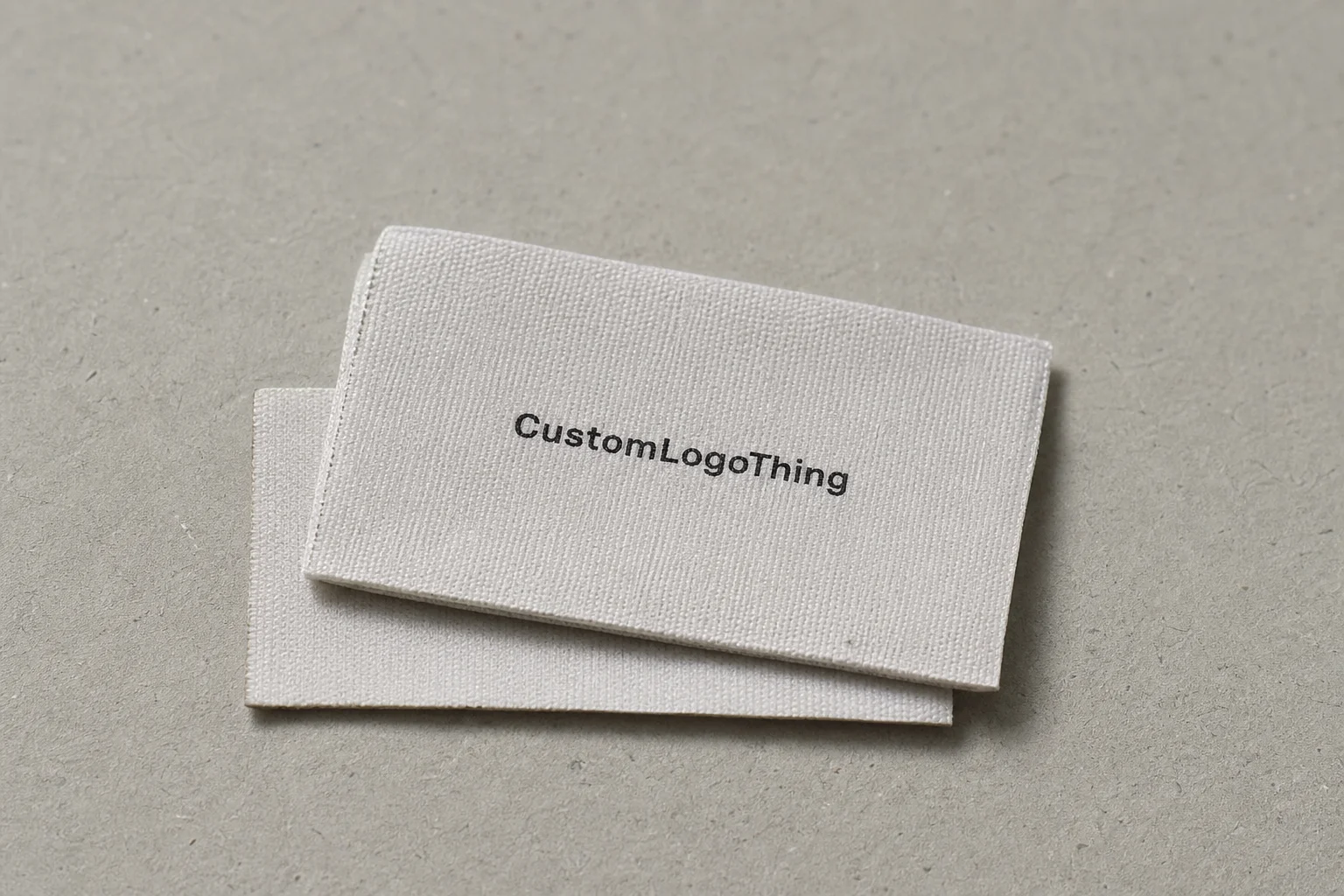
From a packaging buyer’s point of view, online ordering removes a lot of friction. You do not need to wait for a quote, then a revised quote, then a third version because someone forgot to ask about the fold style. A decent online workflow lets you compare materials, check price breaks, and confirm whether your artwork fits the available label size before production starts.
The catch is simple: faster ordering does not correct bad input. A clothing label still has to survive sewing, wear, laundering, and repeated handling. That makes the issue less about whether you can place an order online and more about whether you know enough to place the right order.
The phrase print custom labels online usually covers several production paths: woven labels, printed satin labels, cotton labels, and heat-transfer labels. Some suppliers offer instant checkout and pricing. Others collect artwork, send a proof, and wait for approval before production begins. Both models are normal. The difference is how much of the decision-making happens before checkout versus during proofing.
For newer brands, the main advantage is speed. You can test a small run, compare constructions, and keep the packaging consistent without long lead times. For established brands, the advantage is repeatability. Once a label spec is locked, reorders should be uneventful. That is a feature, not a flaw. Reordering should be boring.
How to print custom labels online without wasting time
The cleanest ordering process is predictable. You choose the label type, enter dimensions, upload artwork, select the finish, then receive either an instant quote or a proof for review. A well-run supplier also shows turnaround estimates, shipping options, and file requirements before you submit anything.
Most delays come from missing basics. Tiny text gets rejected. Logos arrive in low-resolution PNG files. A buyer requests a center fold after the design was built for a straight cut. Or the label looks acceptable on a monitor and becomes unreadable once it is folded and sewn into a collar.
If you want to print custom labels online without wasting days, have these details ready:
- Label dimensions and the visible area after folding.
- Quantity, including any size split across SKUs.
- Placement: neck, side seam, hem, care label, or external brand tag.
- Color references, ideally Pantone or tightly controlled CMYK values.
- Artwork files in vector format when possible.
Some vendors offer fully self-serve checkout. Others are semi-assisted and will not release production until you approve a digital proof. Both are fine. The better setup depends on how many variants you need and how confident you are about the spec. If the label has to match a garment drop, a sample proof is cheap insurance.
For brands building out branded packaging, labels should not feel like an afterthought. They sit beside hang tags, cartons, and inserts, so the tone has to align. A soft-touch box with a cheap-feeling label looks off. A premium label with sloppy typography looks off too. The order form is easy. Consistency is the part people miss.
Label materials, finishes, and sizing that affect the result
Material choice matters more than most first-time buyers expect. A label is not just a logo carrier. It is a tactile object that sits against skin, gets folded, rubbed, washed, and inspected far more often than a product insert. If the material feels wrong, the whole garment feels cheaper.
Woven labels are the workhorse choice for durability. They are usually made in damask or satin weave styles, with damask giving finer detail and satin giving a smoother, slightly shinier surface. Printed satin labels work better when softness matters and the artwork includes tight type or fine lines. Cotton labels suit heritage or natural brands that want a matte, understated look. Heat-transfer labels are common for activewear and kidswear because they remove sewn-in bulk.
For apparel, sizing should be judged by readability and placement, not just finished dimensions. A 1 inch by 2 inch label can be enough for a logo and a short size mark. Go much smaller and legibility starts collapsing. Go larger and the label can become too visible on a slim tee or fine knit.
Finish choices matter too. Cut-to-size labels are straightforward. Folded labels add structure. End fold, center fold, and loop fold all change how much artwork remains visible once the label is sewn in. If the fold is wrong, the design can look clipped or cramped even when the art file was technically correct.
In the wider packaging world, process labels like digital printing or offset printing often dominate the conversation. Clothing labels are judged differently. Tactile performance and detail retention usually matter more than the printing process name. That is the same reason buyers who care about custom printed boxes should care about label hand feel: the customer notices what their fingers touch first.
If you are sourcing paper inserts or hang tags alongside labels, sustainability claims should be checked instead of assumed. The FSC certification standards are worth reviewing for paper-based packaging, and packaging guidance from packaging.org can help you avoid material choices that look good in mockups and disappoint in production.
One practical rule: a soft label that works on a T-shirt may be too delicate for denim, and a structured label that suits outerwear may feel wrong on babywear. That is not taste. That is use case.
Cost and pricing: what drives your quote
Online label pricing usually comes down to the same variables: quantity, size, material, color count, folding, finishing, and rush timing. The headline unit price matters, but it is only useful if you know what sits behind it. Two quotes can look similar and still land very differently once shipping, revisions, and samples are added.
Unit cost usually falls as quantity rises, but only if the specification stays stable. If you change the size, switch from printed satin to woven damask, or add a custom fold, the pricing curve changes quickly. That is normal. Setup costs need to be spread across more pieces, and specialty production adds labor.
| Label option | Typical use | Typical unit cost at 5,000 pieces | Notes |
|---|---|---|---|
| Woven damask | Premium tees, denim, outerwear | $0.10-$0.24 | Best for sharp detail and long wear life |
| Printed satin | Soft knits, basics, liner labels | $0.06-$0.16 | Soft against skin and useful for fine type |
| Cotton | Natural, heritage, eco-positioned brands | $0.09-$0.18 | Matte look with a more textured hand feel |
| Heat-transfer | Activewear, kidswear, minimalist branding | $0.12-$0.30 | No sewn-in bulk, but correct application matters |
Minimum order quantities vary. Some online suppliers will take a small test run, especially for printed or digitally produced labels. Premium woven work, custom folds, and specialty threads often push the MOQ higher. That is not a warning sign. It usually means the production method has a real setup cost.
Watch the hidden costs. Shipping can swing more than people expect, especially if samples and the main run are ordered at the same time. Proof revisions can add time, and some vendors charge for extra mockups. Metallic threads, heat-activated backing, and complex fold styles can all move the quote. The smart move is to compare total landed cost, not just the unit price line.
If your label order is tied to broader product packaging, compare it the same way you would compare custom printed boxes or hang tags. Price per unit matters, but so does the cost of getting the order approved, delivered, and usable on schedule.
Production steps, proofing, and turnaround expectations
After you place an order, the usual sequence is straightforward: artwork review, digital proof, approval, manufacturing, finishing, packing, and shipping. The exact order can shift slightly by supplier, but the proof stage matters almost every time. That is your last clean chance to catch a misspelling, a bad color, or a fold direction that makes no sense for the garment.
Simple printed label runs often move faster than woven or specialty work. A short digital run may ship quickly after approval, while a custom woven label with multiple colors and a special fold needs more lead time. If the order includes sampling, add that time before production, not after. People like to pretend samples are optional until they become the reason a launch slips.
There are three common slowdown points:
- Artwork changes after the first proof.
- Unclear instructions on size, fold, or placement.
- Files that are not production ready, especially low-res logos and poorly set typography.
For clothing brands, turnaround planning should sit beside garment production, not behind it. Labels are usually a small part of the order, but they can still block packing, folding, and final assembly if they arrive late. If the labels need to coordinate with retail packaging, make sure the schedule includes enough time for proofing and a sample run. That matters even more when you are managing multiple sizes or colorways.
Rush service helps when the spec is already solid. It does not rescue indecision. It also does not fix bad files. Faster production still needs clean input. That is not exciting, but it is true.
For finished cartons and shipping packs, it is worth looking at ISTA test methods if you care about how the order will hold up in transit. It is not about the label alone. It is about the whole package surviving handling without turning into a mess.
Step-by-step guide to place a better online order
If you want a cleaner result, treat the order like a production spec, not a shopping cart. The difference shows up in proof quality, lead time, and the final garment feel.
- Define the garment and placement. Neck label, side seam, hem, care label, and external tag applications all have different requirements.
- Choose the label type first. Decide based on comfort, durability, and brand image before you start decorating the file.
- Prepare artwork correctly. Use vector files where possible, keep text legible, and avoid colors that look fine on a monitor but drift in production.
- Check the proof line by line. Size, fold, spelling, spacing, colors, and placement all need a close look before approval.
- Order a sample if the line is new. A small test run makes sense for premium garments or a new label structure.
- Inspect the first carton on arrival. Compare it to the approved spec before you release the full run into use.
A good master spec sheet saves time later. Keep one record for label size, material, fold type, approved colors, stitch placement, and reorder quantity. That way, the next time you print custom labels online, you are not rebuilding decisions from memory. Memory is unreliable. The file is not.
Brands that manage package branding well usually handle labels the same way they handle inserts, wraps, and outer cartons. The goal is consistency across product packaging, not a pile of components that merely share a logo.
If you are pairing labels with a broader launch, align the label order with the rest of the packaging calendar. A clean label spec plus a clean box spec is how the system stays manageable.
Common mistakes when ordering labels online
Most bad label orders come from the same short list of mistakes. None of them are mysterious.
- Buying on price alone. Cheap labels can be fine, but only if they fit the garment and survive wear.
- Using tiny text. Thin fonts disappear fast on woven or satin material.
- Ignoring fold style. A bad fold can make the label uncomfortable or hide the logo.
- Skipping wash durability. Apparel gets laundered. The label should behave like it knows that.
- Approving the proof too quickly. Misspellings and color drift usually show up here, not in production.
- Ordering the wrong quantity. Size runs, seasonal demand, and reorders all affect how much stock you actually need.
One more mistake deserves its own mention: choosing a label style that clashes with the garment. A rough cotton label on a polished fashion piece can look deliberate, or it can look underdeveloped. A shiny satin label on rugged workwear can do the same. Context matters. The product has to support the label, not fight it.
If the clothing line is meant to sit next to premium retail packaging or custom printed boxes, keep the label spec just as disciplined. Sloppy label decisions drag down the perceived value of the entire product.
Expert tips before you order labels online
Match the label style to the garment category first, then fine-tune the decoration. That one decision eliminates a lot of weak orders. A soft satin label can be right for tees, a woven damask label can elevate denim, and a heat-transfer label can be the cleanest option for performance wear. Start there.
Use one primary logo version for labels. Do not cram a slogan, website, legal text, and ornamental detail into a tiny neck label unless you want unreadable art. Labels need breathing room. Packaging design follows the same rule. Clean almost always beats crowded.
If touch, drape, or wash performance matters, ask for sample photos or a physical sample. Screen images never tell the full story. A label that feels acceptable in a mockup may feel stiff, shiny, or overly textured in hand. That difference matters on a garment.
Keep the label order connected to the rest of the line. If hang tags, boxes, or inserts are changing, review the label at the same time. That keeps the brand language aligned across product packaging and retail packaging. It also avoids the odd situation where the box says one thing and the label says another.
For repeat programs, keep a locked spec sheet and store the approved proof. Reorders should not require detective work. If the file, dimensions, and finish are already documented, you can print custom labels online again without re-litigating every detail.
That is the practical way to buy labels: Choose the Right construction, review the proof properly, and treat the order like part of the product, not an accessory to it. If you do that, print custom labels online stops being a gamble and becomes a repeatable part of your apparel workflow.
How do I print custom labels online for clothing without getting the wrong size?
Measure the actual placement area on the garment before you order. Compare the usable design area, not just the finished label size on paper. If the label will be folded or sewn into a seam, ask the supplier how much of the artwork stays visible after finishing.
What is the best material when I print custom labels online for T-shirts?
Printed satin is usually the softest option against skin, while woven labels are better if you want a more durable brand mark. For most tees, comfort comes first. If the label irritates the wearer, the design does not matter.
Why does the quote change when I print custom labels online in different quantities?
Setup costs get spread across more units as the order grows, so the unit price drops. Special folds, extra colors, specialty threads, and rush production can all raise the quote. Shipping can also change the total more than buyers expect.
How long does it usually take to print custom labels online?
Simple runs can move quickly after proof approval, while woven, specialty, or high-volume orders need more lead time. Artwork revisions are usually the real delay. Press time is often the least problematic part of the schedule.
Can I print custom labels online if I only need a small order?
Yes. Many suppliers support low minimums for test runs, though the unit price will usually be higher on small quantities. A short run makes sense if you are testing a new garment line, a new size range, or a new label style.


