Printed Cotton Bags: Buyer’s Guide to Smarter Custom Orders
Printed cotton bags look simple until the first production round exposes the weak points. A logo that feels crisp on a screen can soften on woven fabric. A bag that feels sturdy in hand can arrive too limp once it is cut and sewn. A quote that seems competitive can turn expensive once print colors, handles, gussets, and packing are all counted properly.
That is why buying these bags is less about finding the cheapest tote and more about choosing the right combination of fabric, construction, and print method. The best orders are usually not the most elaborate. They are the ones where the spec matches the real use: retail packaging, trade-show handout, event merch, or a reusable carrier that needs to stay in circulation for months.
From a packaging perspective, cotton sits in a useful middle zone. It feels more substantial than disposable alternatives, it can be printed in a straightforward way, and it ships more efficiently than many custom gift items. If the artwork is clean and the spec is disciplined, printed cotton bags can do three jobs at once: carry product, carry a brand, and carry enough durability to avoid looking like a throwaway.
Why printed cotton bags outperform cheap giveaways
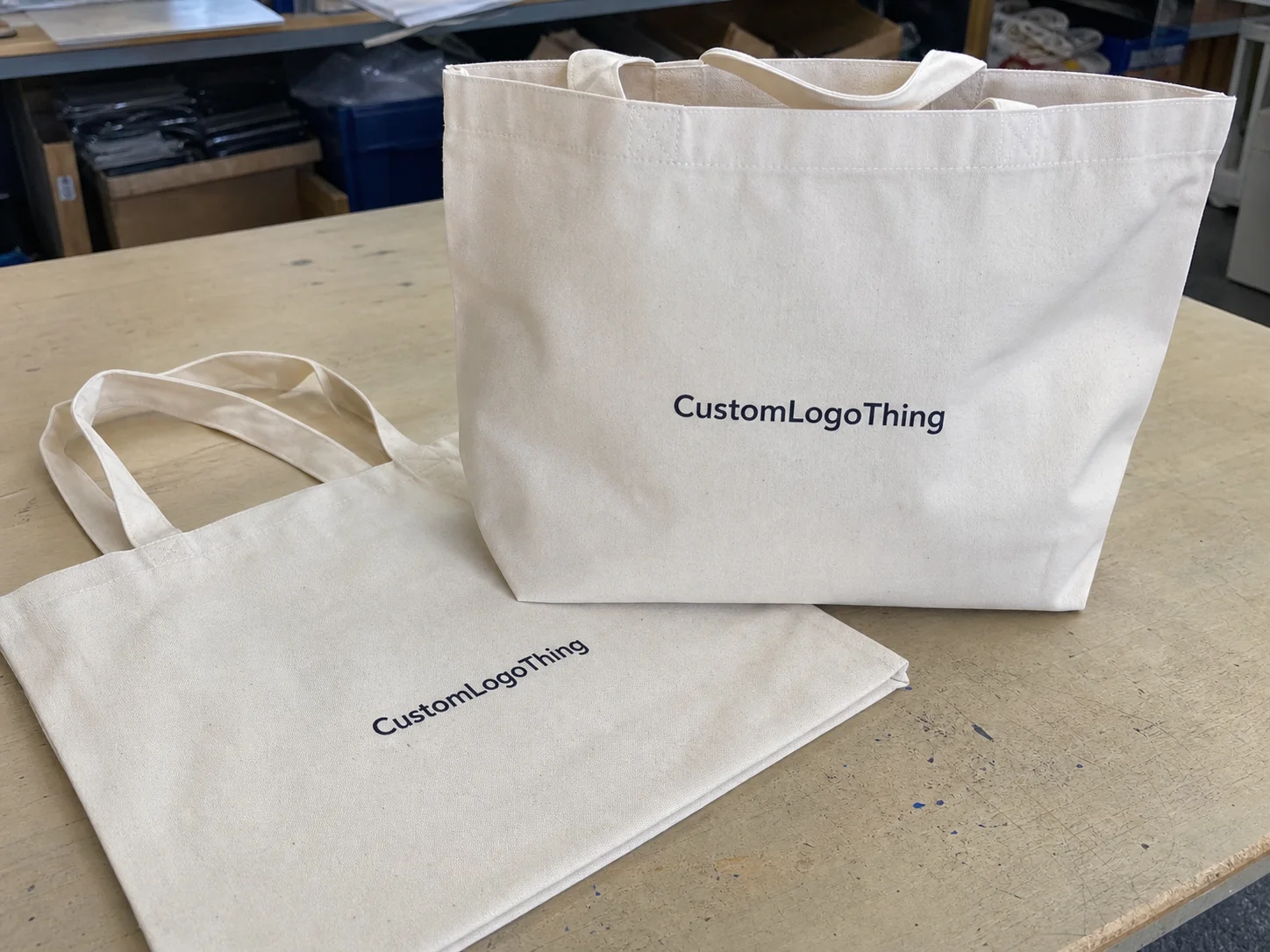
The practical advantage is retention. People keep bags that solve a real problem. They use them for groceries, books, commute items, or as a backup carry-all in the car. A flimsy giveaway tends to disappear after the event. A cotton tote with decent stitching and a sensible print often stays in rotation because it earns its place.
That repeated use is the value. A single impression at a booth is short-lived; a bag that moves through weekly routines creates far more brand exposure without another distribution budget. The math is obvious in principle, but the execution depends on whether the bag feels worth keeping.
Material choice changes that perception faster than artwork does. A 100 to 120gsm plain-weave cotton bag is light, packable, and usually fine for short-term promotions. A 140gsm cotton canvas or heavier build gives more structure and a more deliberate hand feel. Heavier fabric can improve perceived quality, but it also raises material cost and bulk. There is no universal best weight. The right choice depends on load, display value, and whether the bag is meant to be reused often or just distributed widely.
Handle construction matters as much as fabric weight. Short handles suit hand carry and retail counters. Long handles make shoulder carry possible, which increases use frequency. Reinforcement at the handle attachment points matters too. If those stitches fail, the bag becomes a poor advertisement for the brand printed on it.
Buyers sometimes spend too much time on logo placement and not enough on the substrate. That is backwards. The substrate is what people touch first. The print matters, but the cloth, seam quality, and drape shape the first impression before anyone reads the message.
“A tote that looks polished on day one but fails after a few uses is wasted spend. A tote that stays in circulation keeps delivering value long after the initial distribution.”
These bags work best in retail, museum stores, event programs, conference kits, and branded merchandise lines where reuse is part of the promise. If the objective is only one-time handing out, a lighter spec may be enough. If the goal is to keep the item visible for as long as possible, a sturdier cotton construction is usually the better investment.
How the printing process works on cotton fabric
The first production step is artwork setup. Vector files are preferred because they keep lines sharp, scale cleanly, and separate well for screens or transfer films. If the design includes fine type, thin rules, gradients, or tiny icons, the printer should check whether those details can survive the texture of the cloth. Cotton is not a smooth board. It has weave, absorbency, and slight movement, and each of those affects how ink lands.
Screen printing remains the default for many orders because it handles bold spot colors well and becomes economical at volume. It is especially useful for simple logos and large run counts. The print is only as good as the setup, though. Mesh count, registration, ink thickness, and curing all matter. A well-run screen job gives strong color and a durable finish. A rushed one can look muddy, crack early, or shift from bag to bag.
Heat transfer is useful when the artwork needs more color complexity or when the run is smaller and screen setup would be inefficient. Digital methods can handle image-heavy graphics and short production windows, but the result depends heavily on the cotton surface and the intended wash or wear performance. A supplier should be able to explain why a method was chosen, not just say it is available.
| Print method | Best fit | Typical strengths | Watch-outs |
|---|---|---|---|
| Screen printing | Bold logos, spot colors, medium to large runs | Strong color, lower unit cost at volume, durable when cured correctly | Less efficient for highly detailed art or many color changes |
| Heat transfer | Smaller runs, multicolor art, fine detail | Flexible artwork handling and good detail control | Hand feel can vary, and adhesion depends on process control |
| Digital print | Short runs and image-heavy graphics | Fast setup and broad design flexibility | Not every cotton surface gives the same color sharpness |
Fabric finish changes the result more than many buyers expect. A tighter weave usually gives cleaner edges for text and small marks. A looser weave can create a softer, more rustic appearance, which some brands prefer and others should avoid. Natural or unbleached cotton also shifts the final color because the base fabric is not a bright white substrate. That matters if the design relies on a specific brand tone.
Ink selection and curing are the other two variables that determine whether the print survives normal use. Under-cured ink can fail in wash or rub testing. Overbuilt ink can feel stiff and sit awkwardly on a soft bag. A good supplier talks in practical terms about pre-treatment, ink laydown, curing temperature, and drying time. If those topics are vague, the production risk is higher than the quote suggests.
For shipping performance, some buyers also reference ISTA-style pack testing so cartons arrive intact. That is not a decoration issue, but it matters. A perfect bag is still a bad order if the outer pack collapses before distribution.
Cost, pricing, and MOQ factors buyers should know
Pricing for printed cotton bags depends on more variables than most first-time buyers expect. Bag size, fabric weight, number of print colors, print locations, stitching, handle type, packing method, and order quantity all affect the quote. A flat one-color tote is not comparable to a heavier gusseted bag with two-sided print and custom labeling, even if the product photo looks similar.
Minimum order quantity changes the economics quickly. Screens, setup, artwork prep, and fabric booking create fixed costs that have to be spread across the order. That is why unit price usually drops as volume rises, even while total spend increases. Buyers often see a larger invoice and assume the deal got worse. In reality, the per-piece cost may have improved because the setup is being absorbed more efficiently.
For planning purposes, a simple one-color bag at higher volume may fall around $0.45 to $0.85 per piece. Heavier canvas, more complex decoration, or custom finishing can push the unit price above that range. A more retail-oriented tote with stronger fabric and careful finishing can land closer to $0.95 to $1.80 per bag, while smaller runs with multiple colors or added labels can rise into the $1.50 to $3.25 range. Those are working ranges, not promises. The real number depends on the exact spec, the print method, and the production region.
| Order profile | Typical quantity | Indicative unit price | Why it moves |
|---|---|---|---|
| Light event tote, one-color print | 5,000+ | $0.45-$0.85 | Lower setup cost per unit, simpler print, lighter fabric |
| Retail-style tote, heavier canvas | 1,000-3,000 | $0.95-$1.80 | Heavier cloth, stronger seams, more material per bag |
| Custom finish, multiple colors | 500-2,000 | $1.50-$3.25 | Extra screens or setup, tighter QC, more finishing steps |
Special features raise the price faster than most buyers expect. Longer handles, inside labels, gussets, overlocked seams, Custom Hang Tags, and printed care labels all add labor or material cost. A flat tote is faster to cut and sew than a gusseted one. Even a small change in structure can alter fabric usage, stitching time, and carton counts. The cleanest quote request keeps dimensions, fabric weight, print locations, and packing assumptions identical across vendors.
Low price is not the same as good value. If a cheaper bag arrives with misaligned print, weak stitching, or inconsistent color, the hidden cost appears later in replacements, complaints, or brand damage. Cheap only stays cheap when the bags can actually be used as intended.
Process and timeline for an order that stays on schedule
A well-run order usually follows a simple sequence: artwork approval, proofing or sampling, material booking, printing, curing, inspection, and packing. The sequence itself is predictable. What changes the schedule is the number of decisions the buyer makes along the way. A clear brief moves quickly. A moving target does not.
Artwork changes are the most common delay. If logo size, layout, or color targets keep shifting after the proof stage, everything downstream slows down. Color matching is the second common delay, especially when the brand depends on precise tones or when the print sits on natural cotton rather than bright white cloth. Cotton absorbs ink differently from coated paper, so the final color often looks slightly deeper or warmer than it did on screen.
For straightforward single-color bags, production often takes about 12 to 15 business days after proof approval. Multi-color printing, custom construction, or peak seasonal demand can extend that. If a physical sample is required, add the time for making, shipping, reviewing, and approving it before the main run begins. Buyers who build in review time, shipping time, and one round of corrections are far less likely to be pushed into rushed sign-off.
Packaging and transport deserve their own check. Bags can be produced correctly and still arrive damaged if the cartons are under-specified. Carton strength, inner packing density, and pallet stacking all matter. That is where shipping standards such as ISTA become relevant. They do not improve the bag itself, but they reduce the chance that a good run becomes a bad delivery.
A realistic schedule is less about speed than about removing surprises: final artwork, confirmed spec, approved proof, and a delivery window that accounts for packing and freight.
Common specification mistakes that weaken the final bag
Oversized artwork is a common mistake. A large logo can look strong in a mockup and still fail on the actual bag if it crosses seams, handle stitches, or folds in the fabric. The same problem appears with tiny text. Fine details can disappear into the weave, especially on unbleached cotton where the surface is not perfectly uniform. If the design depends on small elements, a printability check is worth asking for before approval.
Fabric weight is another decision that gets oversimplified. A 90gsm bag may be acceptable for a one-day event, but it can feel too soft or wear too quickly if it is expected to carry heavier contents. Buyers sometimes compare bags by GSM alone and miss the full picture. Stitch quality, seam construction, and the way the bag hangs matter too. A 140gsm or 180gsm canvas often feels more stable because it holds shape better and resists sagging under load.
Print placement deserves more care than it usually gets. A logo placed too low can disappear into the fold. A design placed too high can compete with the handle attachments. Flat front-and-back layouts are the safest. Gusseted or boxier bags need more precise art placement because side panels and seams change the visible area. A good supplier should show a print map, not just a visual proof.
Color mismatch is another trap. Natural cotton, off-white cotton, and bleached white cotton are not interchangeable. The same ink can look different on each one because the base shade changes the perceived color. If brand color is critical, ask for a controlled proof or a swatch and be realistic about what cotton can deliver. It is not coated paper, and it will never behave like it.
For repeatable quality, ASTM-style checks on seam strength, print adhesion, and dimensional consistency are useful references. Not every order needs formal testing, but any supplier who can explain how they inspect those points is showing process discipline rather than guesswork.
Expert selection tips for fabric, print, and finish
Match the fabric to the use case instead of automatically choosing the heaviest option. Lightweight bags are efficient for events and short-term promotions where cost and packing density matter. Heavier canvas makes more sense for retail, resale, or repeated daily use. If the bag is meant to be kept, a sturdier spec usually signals that before the customer even opens it.
Choose the simplest print method that still protects the design. A clean one-color logo usually looks better as a clean one-color screen print than as a complicated transfer. Fewer colors often mean sharper registration and a more disciplined finish. If the artwork includes gradients, fine line work, or photographic detail, then digital or transfer output may be the better fit. The goal is not to use the most complex process available. The goal is to preserve the design in a way that survives normal handling.
Comfort is part of the spec, not an afterthought. Handle length changes whether the bag is carried in hand or over the shoulder. Bag depth changes how the contents sit against the body. A bag that folds flat is easier to distribute at scale, while a bag with more structure tends to look better in retail environments. Small decisions here affect how often the bag gets used.
Finish should be intentional. A clean hem, even stitch line, and well-placed label usually do more for perceived quality than extra features with no practical value. If the bag is promotional, keep the spec efficient. If it is a retail item, spend where people can see and feel the difference: stronger cloth, better sewing, and a print treatment that looks deliberate rather than rushed.
If the program includes paper inserts, hang tags, or outer cartons, FSC-certified board can be part of the packaging story even when the bag itself is cotton. For broader packaging guidance, Packaging.org is a useful industry reference point.
Next steps for a clean, quote-ready order
Before requesting pricing, gather the finished size, fabric weight, quantity, print area, color count, delivery deadline, and any finishing details. If the bag needs one-sided or two-sided printing, say so clearly. If it needs gussets, a longer handle, or a custom label, include that upfront. Those details shape the quote more than most buyers expect.
Send the best artwork file available, ideally vector art with outlined fonts. If the logo exists only as a low-resolution JPG, the proofing stage slows down because the print team has to rebuild edges or confirm what can be separated cleanly. That back-and-forth costs time and can expose preventable problems that would have been obvious from a proper file.
Ask for three things before approving production: a sample photo or proof, confirmation of the print method, and a production timeline that includes shipping. If the vendor cannot explain how the bag will be printed, what fabric will be used, or how long approval and production will take, the quote is not ready for a purchasing decision.
Compare every offer on the same spec sheet. Same bag dimensions, same fabric, same print colors, same locations, same packing, same delivery terms. That is the only fair way to evaluate value. Once the numbers are aligned, the strongest printed cotton bags are the ones that balance cost, durability, and brand presence without creating avoidable problems in production or distribution.
FAQ
What is the best print method for printed cotton bags?
Screen printing is often the most practical option for bold logos and solid spot colors because it stays clean and cost-effective at volume. Digital or transfer methods can make more sense when the artwork has fine detail, gradients, or more colors than a basic screen setup handles well. The right choice depends on fabric, quantity, artwork complexity, and the durability target.
How much do printed cotton bags usually cost?
Price depends on bag size, fabric weight, print colors, print locations, finishing details, and order quantity. Higher quantities usually reduce unit cost, while heavier fabric and custom construction raise it. The cleanest comparison is always the same spec across every quote.
What affects the turnaround time for printed cotton bags?
Artwork approval, color matching, and proof revisions are the biggest early-stage variables. Production time changes with order size, print complexity, and whether custom samples are needed. Shipping distance and peak-season demand can also extend the total timeline.
Can printed cotton bags be reused and washed?
Yes, many cotton bags are made for repeated use, but the print method and curing quality matter. Heavier fabrics and properly cured inks usually hold up better over time. Washing instructions should always match the exact ink and fabric combination.
What should I send when requesting a quote for printed cotton bags?
Provide finished size, quantity, fabric preference, print colors, artwork file, and target delivery date. Include whether you need one-sided or two-sided printing and any finishing details. Clear specs speed up quoting and reduce surprises later in production.