Printed Moving Boxes: Buy Smarter for Safe, Branded Moves
On a busy move, the box is doing three jobs at once. It has to protect what is inside, it has to tell people where that box belongs, and it may also need to carry branding, handling instructions, or tracking data without adding a second labeling step. That is why printed moving boxes are not just a cosmetic upgrade. Used well, they reduce sorting mistakes, speed up loading, and make the whole packing flow easier to control.
Most buyers compare them with plain corrugated cartons plus stickers, or with a mixed system of printed labels and handwritten notes. The question is really the same each time: how much information can the package carry without slowing the operation down? The answer depends on print method, board grade, artwork quality, and how much abuse the cartons will take in transit or storage. A move-friendly box is not the prettiest one on a mockup screen; it is the one people can read quickly, stack safely, and reuse without confusion.
There is also a quiet benefit that shows up after the first few cartons are packed. Once the box itself carries room names, icons, or box numbers, teams stop pausing to decode loose labels. That saves time at the front door, in the hallway, on the dock, and at the destination. For larger moves, those small savings compound quickly.
Printed moving boxes: what they are and why they matter
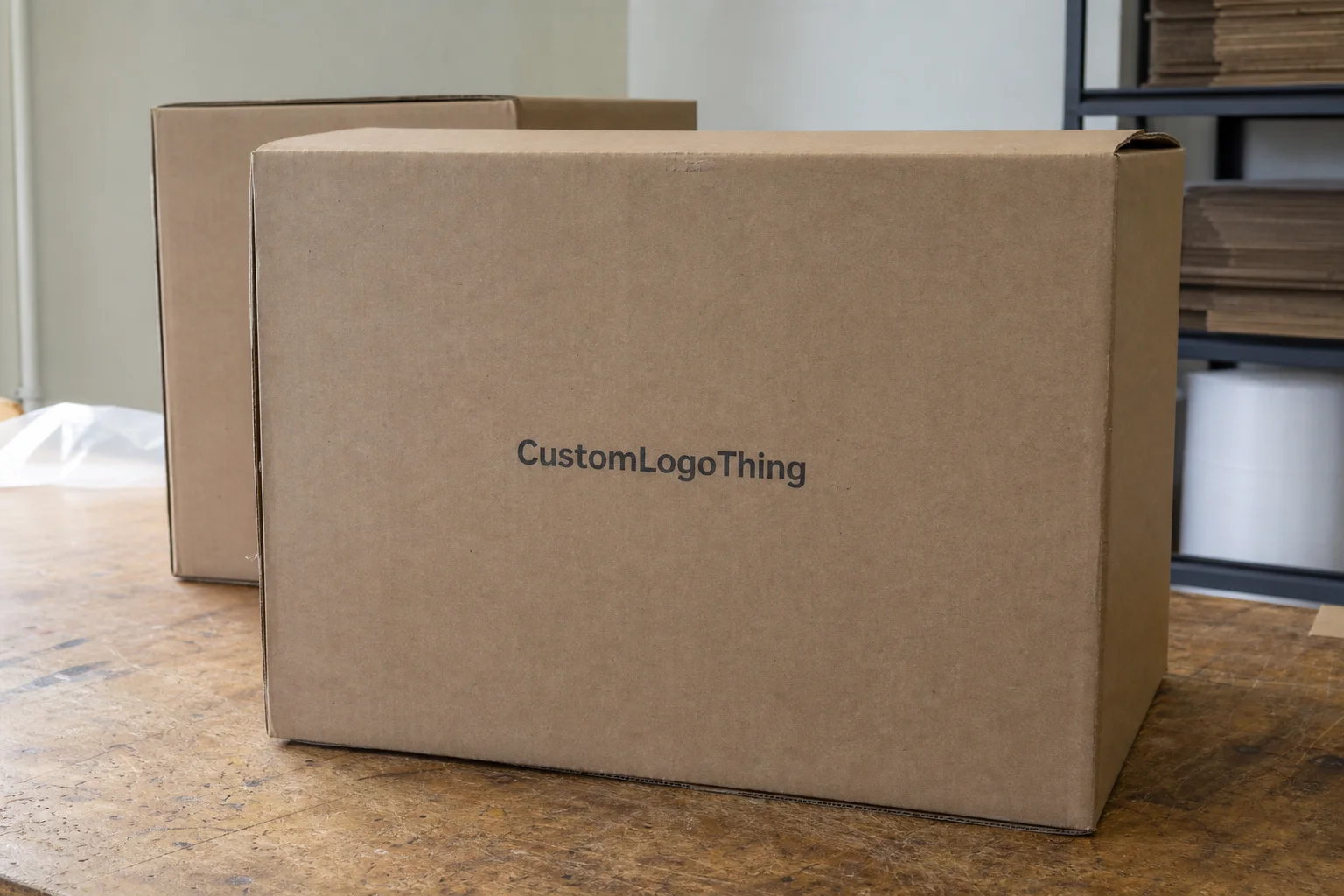
Printed moving boxes are corrugated cartons customized with logos, room names, numbering, warning icons, QR codes, arrows, or color blocks that help people sort and move inventory faster. In practice, the print may be as simple as a one-color logo on the top flap, or as functional as a layout that includes “Kitchen,” “Files,” “Fragile,” and a unique box ID on multiple panels.
The main value is practical. A box that identifies itself reduces the number of times someone has to pick it up, rotate it, and read a separate label. In a home move, that can save minutes at the front door and cut down on mix-ups between bedrooms, storage, and kitchen goods. In an office move, it can keep files, monitors, cables, and peripherals from drifting into the wrong zone. Once the carton count climbs into the dozens or hundreds, that small improvement starts to matter more than the print cost itself.
Consistency is another reason teams use printed cartons. Labels can peel, smear, curl, or end up in the wrong place. Direct print stays where it was applied, which makes the handling cue more reliable across the whole run. That matters in operations where the cartons pass through multiple hands, because the packaging needs to communicate in a single glance. The real measurement is not whether the box looks branded. It is whether the box helps people pack, scan, lift, and unload with fewer mistakes.
A plain one-color print that sorts cartons faster usually beats a full-panel design that looks polished on a screen but disappears on a warehouse floor.
There is a brand effect too, although it is usually secondary. For relocations tied to retail, storage, subscription fulfillment, or field operations, printed cartons signal order. They tell crews and customers that the process is controlled and repeatable. That is not decoration for decoration’s sake; it is a visible sign that someone cared enough to organize the workflow properly.
Buyers also like the flexibility. A moving box can carry fixed branding, temporary handling notes, room codes, or even scan-ready data. Once the box format is chosen, the print can be tailored to the job instead of forcing the team to work around an unmarked carton.
How printed graphics work on corrugated shipping boxes
Most corrugated moving cartons are printed using flexographic printing, litho-lamination, or digital print. Each method has a different setup burden, cost structure, and finish quality. The right choice depends on quantity, artwork complexity, and how polished the final carton needs to look.
| Print method | Best fit | Typical strengths | Tradeoffs |
|---|---|---|---|
| Flexographic printing | Medium to large runs with simple graphics | Lower unit cost at volume, efficient for one- to two-color layouts, durable on corrugated board | Setup plates add cost, fine detail can soften on rough kraft surfaces |
| Litho-lamination | Premium presentation cartons and retail-facing packaging | Sharp detail, strong color reproduction, cleaner look for photo-heavy artwork | Higher cost, more setup, usually unnecessary for basic moving cartons |
| Digital print | Smaller batches, fast-turn projects, variable data | Minimal setup, good for short runs, easier artwork changes, suitable for QR codes and box IDs | Unit cost rises as quantity grows, coverage and board texture can affect color consistency |
Board structure matters just as much as the print method. A 32 ECT single-wall carton can be a sensible choice for lighter contents, while heavier loads usually call for stronger board or double-wall construction. Flute type affects both durability and print sharpness. A rough kraft liner absorbs ink differently from a smoother white-top liner, so a logo that looks crisp on screen may print softer on the finished carton. That is why sample proofs matter, especially when the artwork uses thin lines, small type, or low-contrast color.
Common print elements include logo placement, room labels, box numbers, arrows for orientation, fragile icons, and scannable QR codes. If the goal is tracking, QR placement should be tested before production starts, not after. A code that scans cleanly on a monitor but fails on corrugated stock is wasted space. For transport performance, many teams reference ISTA test methods when carton strength or handling needs to be verified.
There is also a practical difference between printing and using adhesive labels. Labels are more flexible for variable information. Printing is cleaner when the message is fixed across the run. If every box needs the same room name, warning cue, or brand mark, direct print usually keeps the workflow tighter. If every carton needs a unique destination code, labels or a hybrid print-plus-label system can make more sense. In many operations, the most efficient setup is a stable printed base with a small area reserved for variable data.
One more point matters on the production side: the box surface is not a sheet of paper. Ink density, board color, fold lines, and seam placement all affect the finished result. Good prepress work takes those constraints into account before the order goes to press.
Cost, pricing, and MOQ factors that change your quote
Pricing for printed moving boxes is driven by a small set of variables, and the most common mistake is assuming the carton itself is the only cost driver. It is not. Size, board grade, print colors, number of printed panels, order quantity, and finishing all move the quote.
A simple one-color logo on a standard corrugated carton may sit well below a fully printed multi-panel layout. As a rough buyer-facing range, a modest custom run can land around $0.18-$0.35 per unit at higher quantities for basic one-color flexo work on common sizes. Smaller or more complex runs can rise into the $0.60-$1.50 per unit range or higher depending on board choice, print coverage, and freight. Those numbers are directional, not universal, because carton dimensions, paper availability, and shipping distance can swing them quickly.
MOQ, or minimum order quantity, is where many buying decisions get interesting. A supplier may quote a lower unit price at 5,000 pieces than at 500 because setup costs are spread across more cartons. That does not mean the larger order is automatically the better choice. It means the total landed cost should be compared against the labor saved by printing. If printed cartons reduce labeling time by even 10 to 20 seconds per box across a large move, the labor math can justify the higher print spend.
Hidden costs usually show up in artwork prep, plate setup, proofing, and freight. If a vendor has to redraw a logo, clean up a dieline, or rework a color-separated file, the quote can change. Custom sizes also add cost because they affect die setup and board usage. One-color branding is often the most economical starting point. Full-panel graphics make more sense when the carton is customer-facing, reused often, or part of a premium presentation package rather than a short-lived move kit.
Paperboard sourcing can affect both price and documentation. If recycled content or certified fiber matters to your team, ask whether the board is sourced under FSC chain-of-custody rules. That does not automatically make one carton better for every use case, but it does help procurement teams document sourcing more clearly.
Budget also shifts based on ink coverage and the number of print stations involved. A small logo in one location is one thing. A wrapped design with multiple colors, orientation arrows, and variable fields is another. Buyers who compare only unit price often miss the real cost difference between a simple functional carton and a highly decorated one.
Production steps and timeline: from artwork to delivery
The workflow is usually straightforward: define the box spec, submit artwork, approve the proof, produce the cartons, pack them, and ship. The details matter, because small mistakes early in the process tend to become delays later.
For a standard order, lead time often runs 12 to 15 business days from proof approval, although some simple digital-print jobs can move faster and complex flexo or litho-laminate jobs can take longer. Seasonal demand, production queue, board availability, and freight routing all affect the calendar. If the order is time-sensitive, ask for production time and transit time to be shown separately so the schedule stays transparent.
Before requesting a quote, prepare the basics: box dimensions, estimated quantity, board strength target, print colors, artwork files, ship-to location, and the date boxes must arrive. If the move is tied to an office opening or a warehouse transfer, that deadline should be stated clearly. A late proof approval usually creates more delay than almost anything else, because production cannot begin until the artwork is locked.
Revisions are where schedules slip. Low-resolution logos, missing bleed, unclear dielines, and last-minute copy changes are common culprits. Even a minor text edit can require a new proof cycle. If the layout includes barcodes or QR codes, ask for a scannability check before final approval. That small step can save a full run from becoming inventory with a clean-looking but unusable code.
Quality control should happen at several points, not just at the end. A solid production team checks color accuracy, print registration, board caliper, glue integrity, and box dimensions before release. If the run is large enough to matter, ask how defects are screened and what percentage of cartons is typically inspected. Buyers do not need a factory tour to ask those questions; they just need a supplier that can answer them clearly.
Step-by-step: how to order the right custom moving boxes
Step 1: Define the use case. Residential moves, office relocations, storage, retail distribution, and internal transfer projects do not need the same carton. A home move may care more about room labeling, while an office move may need asset tracking, department separation, and fragile cues.
Step 2: Choose the box style and strength. Match the board to the contents and stacking conditions. Lightweight soft goods can use a lighter carton, but files, electronics, glassware, and mixed-content move kits usually need stronger board and better crush resistance. If the boxes will sit in storage or stack high on a pallet, strength matters more than print density.
Step 3: Decide what to print. Keep the message disciplined. Logo only? Room name and box number? Warning icons? QR code? If every panel is overloaded, the carton becomes harder to read at a glance. One primary message and one support message are usually enough.
Step 4: Request a Quote with exact specs. Ask for pricing tied to actual dimensions, quantity, print colors, and destination. Generic quotes are useful for early screening, but not for buying. The more exact the spec, the less room there is for surprise charges later.
Step 5: Review the proof carefully. Check spelling, contrast, placement, and barcode readability. Also check the board color. Dark brown kraft can mute low-contrast art, while white-top board can make a red or black logo stand out much better. If the file includes a QR code, test it on a printed proof or digital mockup at final size.
Step 6: Plan receiving and staging. Printed cartons should arrive before packing starts, not during the middle of it. Allocate dry storage space, confirm pallet drop access if needed, and separate different carton sizes so crews do not grab the wrong SKU under pressure.
Step 7: Verify the first cartons against the approved proof. On larger jobs, the first boxes off the line should match the approved color, size, and placement before the full batch is accepted. That basic check catches problems while they are still cheap to fix.
If you need a broader packaging mix around the move, our Custom Packaging Products page is a useful place to compare carton formats beyond one moving box spec.
Common mistakes buyers make with printed box orders
The first mistake is ordering too late. Plain stock boxes can often ship quickly, but printed cartons need artwork approval and production time. If the move date is fixed, the print schedule has to be pulled forward. Waiting until the week before packing is how people end up paying rush freight or settling for blank cartons and handwritten markers.
The second mistake is designing for a monitor instead of a corrugated surface. A pale gray logo may look refined on screen and vanish on brown board. Thin type can fail the same way. Contrast wins on warehouse packaging, especially when the box will be handled in dim storage areas or by crews moving fast.
Another common error is ignoring strength. A box that looks good but crushes under stack pressure is not a win. For moving cartons, print and performance need to be judged together. A strong plain box is better than a pretty carton that collapses or tears at the seam.
Artwork format causes avoidable delays as well. Raster logos at low resolution, missing fonts, and files without bleed create revisions that should never have been necessary. Editable vector files are the safest starting point. If the supplier asks for a dieline, use it. It keeps print placement aligned with the physical box and reduces layout drift.
Buyers also sometimes overcomplicate the message. Too many colors, too many icons, and too much copy can make a carton harder to use, not easier. A move box should communicate fast. It does not need to explain the whole operation in full sentences.
Expert tips for better branding, fewer errors, and lower total cost
Keep the system simple enough that crews will actually use it. A color-coded room label, a clear box number, and a small logo are usually enough. If you try to print five messages on every panel, the carton stops helping and starts competing with itself.
Standardize box sizes wherever you can. Fewer SKUs usually mean easier procurement, cleaner packing instructions, and less time spent hunting for the right carton. In move operations, SKU sprawl creates friction in the same way too many container sizes do in retail packing: people hesitate, then improvise.
Ask for a digital proof or a prototype when print placement is critical. That is especially useful for QR codes, multi-language instructions, or layouts that need to line up with tape and shipping labels. A small test run is cheaper than a correction after production starts.
There is a smart split between direct print and label-based workflows. Direct print is ideal for fixed branding, handling icons, and room names that stay the same. Labels are better for variable data, temporary routing, or destination changes. Many disciplined operations use both: print the stable information, label the changeable part.
One final point: do not overspec the finish. Gloss coatings, extra ink coverage, and decorative treatments can push the price up quickly without improving move performance. For most buyers, legibility, board strength, and accurate sizing beat decoration.
The lowest quote is not always the lowest cost. The better carton is the one that arrives on time, stacks properly, and removes work from the packing line.
There is also value in asking how the supplier handles waste and overruns. A cleanly planned print run should not create a pile of unusable cartons because of a small setup error or avoidable artwork issue. The more disciplined the prepress review, the less likely the order is to arrive with hidden cost in the form of reprints, delays, or manual relabeling.
Next steps for ordering printed moving boxes confidently
The fastest way to move forward is to build a one-page spec sheet. Include carton dimensions, quantity, board strength, print colors, print panels, artwork files, and the date the boxes need to be on site. That one document makes supplier conversations faster and the quotes easier to compare.
Next, compare at least two versions of the order: a minimal branding option and a fuller handling-graphics option. That gives you a clear read on what extra print is actually buying. Sometimes a simple one-color logo plus room label is enough. Other times QR codes and orientation arrows save enough labor to justify the added setup.
Approve the proof only after you have checked the artwork at final size. Tiny layout issues can become expensive when multiplied across hundreds or thousands of cartons. If you are also buying other packout materials, align the carton spec with the rest of the workflow so tape, labels, and inserts do not fight the box design.
Printed moving boxes work best when they are treated as a functional tool, not a decoration order. If the print helps people pack faster, sort cleaner, and handle freight with fewer mistakes, it has earned its place. And if the job only needs a simple mark to guide the crew, there is no prize for adding more ink than the operation can use.
Are printed moving boxes worth it for a small move?
Yes, if you want faster room sorting or fewer labeling mistakes. A simple one-color print can add useful organization without a large budget jump. For very small moves, plain cartons plus labels may still be the better buy unless branding or tracking matters.
What is the usual lead time for printed moving boxes?
Lead time depends on print method, quantity, artwork readiness, and proof approvals. Simple digital runs often move faster than multi-color or custom-sized jobs. The most common delays come from artwork revisions and late approvals, not the press itself.
How do I reduce the cost of custom moving box printing?
Limit the number of print colors, keep to standard box sizes, and avoid unusual constructions unless they are truly needed. Quantity matters too, because unit cost usually drops as volume increases. Clean artwork files also reduce prepress time and avoid revision charges.
Can printed moving boxes include QR codes or handling instructions?
Yes. Many buyers use QR codes for inventory, move tracking, or digital instructions, and handling messages like fragile, keep upright, or room names are common. Test the code size and contrast during proofing so it scans on the final board surface.
What should I send when requesting a quote for printed moving boxes?
Send dimensions, quantity, print colors, branding files, shipping location, and any special strength or handling requirements. If you already know the move date, include that too. The clearer the spec, the more accurate the price and timeline will be.


