A printed woven labels quote for coffee is usually decided by measurable specs, not by the logo alone. Size, fold style, thread type, color count, and order quantity move pricing far more than the creative concept does, which is why a careful brief produces a better number than a vague request ever will.
That matters because coffee merchandise lives in the real world. Aprons get washed. Tote bags get carried across counters and parking lots. Sleeves, hoodies, and gift items sit on shelves where the label does quiet branding work. A well-made woven label makes a modest item feel deliberate. A weak one makes the whole piece look unfinished.
For coffee brands, the label is not just decoration. It affects perceived value, how the garment holds up after repeated laundering, and whether reorders stay visually consistent. That is why a printed woven labels quote for coffee should start with the exact build you need, not a generic request for “labels.”
Why Coffee Labels Win Attention on Small Merchandise
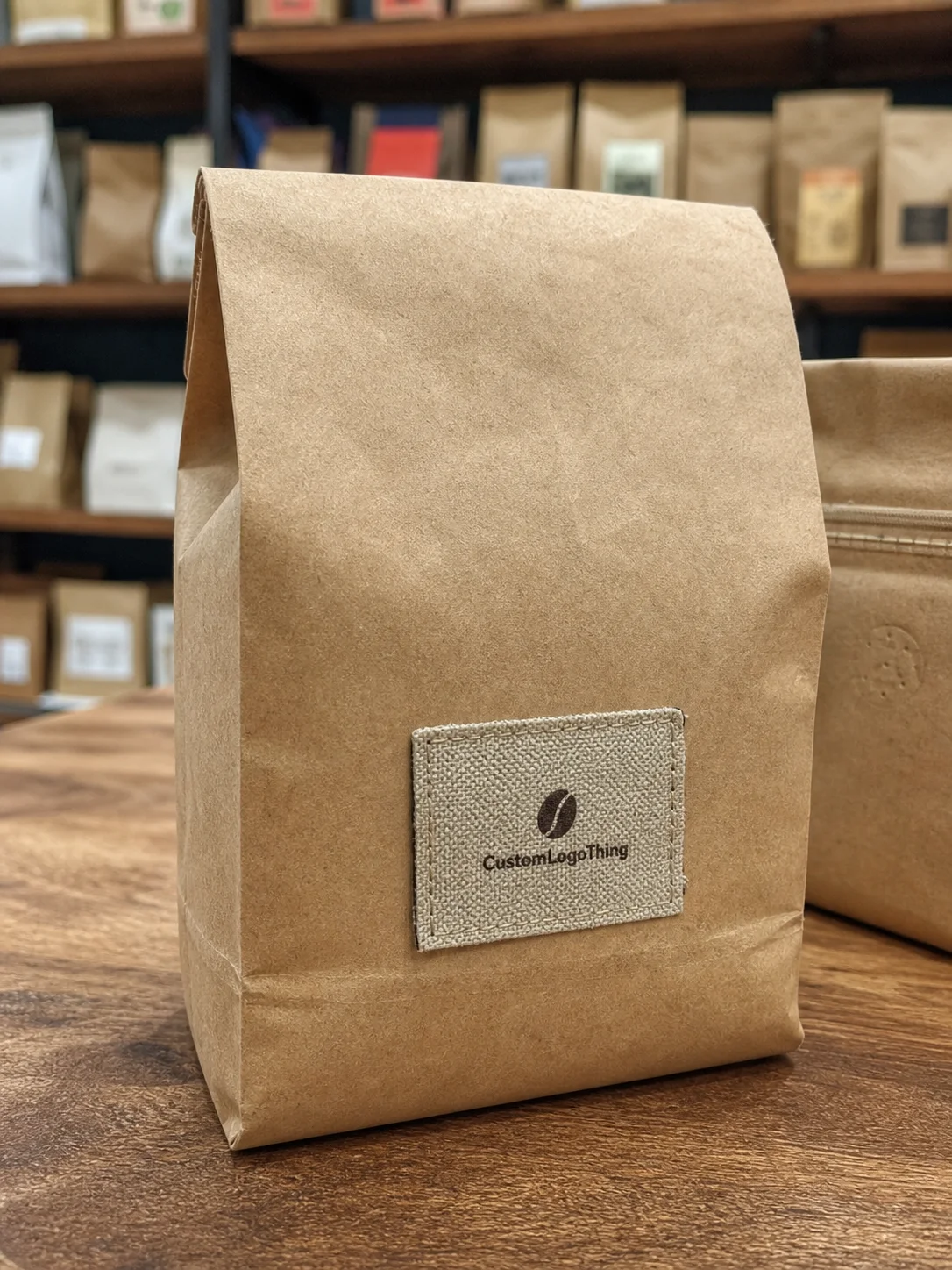
Coffee brands lean hard on small-format merchandise because the margins and the shelf space usually demand it. A tote bag, a barista apron, or a retail hoodie may cost little to produce, yet the label can change the way the item is read at first glance. The same garment can feel utilitarian or retail-ready depending on that one detail.
Woven labels tend to hold that impression better than printed marks on fabric alone. Screen printing can fade. Heat transfer can crack. Direct-to-garment decoration can soften after repeated washing. A properly specified woven label stays readable longer and usually keeps its edges cleaner under daily use. For coffee businesses selling apparel, staff uniforms, or branded gift items, that durability matters because the item has to survive routine handling, not just product photography.
There is also a retail effect buyers underestimate. A clean label can add perceived value without changing the garment style or the base fabric. The opposite is true as well. A noisy, low-contrast, or oversized label can make a decent product feel cheap. The material may be fine, but the presentation is doing the damage.
A label is a small surface area with an outsized effect. In coffee merch, it often signals whether the product feels intentional or merely printed.
That is why buyers should think beyond artwork. The label has to survive abrasion, washing, and close inspection at the point of sale. If it cannot do those things, the first quote is the least important problem.
Ask for the same artwork across multiple sizes if you are comparing aprons, tote bags, sleeves, and retail packaging. The unit price difference is often smaller than expected, but the readability difference can be large. A strong quote shows you that tradeoff before production starts.
What Printed Woven Labels Include and When They Outperform Printed Tags
Woven labels are built with threads rather than only ink, which gives them a textured feel, tighter edge control, and usually better wear resistance. That construction also creates limits. Tiny type, hairline rules, and highly detailed icons may not reproduce cleanly unless the label is large enough and woven at a high enough density.
For coffee merchandise, woven labels tend to work best when the item needs a premium feel, regular washing, or a label that carries more than a logo. That includes brand marks, size identification, care text, origin lines, and short product statements. If the piece is meant to sit comfortably beside the cafe’s core products, woven construction often looks more deliberate than a basic printed tag.
There are a few common constructions worth comparing:
- End fold for sewing into hems or seams.
- Center fold for necklines or side seams where the label wraps around an edge.
- Loop fold for hanging or enclosed placements.
- Straight cut for external branding tabs or stitched-on applications.
The thread itself matters too. Polyester is common because it holds color well and tolerates washing. Recycled polyester can be a sensible option if the rest of the packaging program is being tightened up for sustainability claims, though buyers should still verify the broader material stack rather than assume one component makes the entire line “green.” Damask weaving is usually chosen for fine detail. Satin gives a smoother, softer finish with more sheen. Taffeta is often the economical option for simpler designs and larger runs.
For coffee brands, the most common uses are apron necklines, side seams on tees and hoodies, tote bag seams, and retail gift packaging where the label becomes part of the product story. A printed woven labels quote for coffee should name the use case because the same artwork may need a different fold, backing, or edge finish depending on where it is attached.
If the label sits alongside broader packaging decisions, it helps to think separately about the paper and shipping side of the program. FSC guidance is useful for paper-based components, and packaging bodies such as PMMI and ISTA are relevant when you are coordinating labels with cartons, mailers, or transit requirements. The label itself may not need those standards, but the finished product often does.
What buyers sometimes get wrong is assuming print automatically wins on detail. A woven label with the right density can reproduce a logo cleanly and still give you the durability and tactile finish that retail buyers expect. The right choice depends on artwork, garment weight, wash frequency, and how close customers will inspect the product.
Specs That Control Readability, Feel, and Attachment
The quote changes fastest when the spec changes. Width and height matter first, then color count, then fold style. A 25 x 60 mm label with two colors is a different production job from a 40 x 80 mm label with five colors and a center fold. If the supplier cannot see those details up front, the quote will usually be padded or incomplete.
Thread density affects both appearance and legibility. Fine text needs more structure than a bold icon. Thin strokes can blur if the weave count is too low. Small designs often look acceptable on screen and fail at actual label size. Buyers should think in millimeters, not pixels. A logo that looks crisp in a design file can still be too busy at a 30 mm label height.
Attachment choice matters just as much as the face of the label. Sew-in is still the most common because it is reliable across garments and fabric weights. Heat-seal or iron-on options can work on some substrates, but they are not universal. Adhesive-backed labels are more specialized and usually better for temporary use or packaging than for garments that will be washed. The product surface should drive the backing decision, not the other way around.
Before you request a printed woven labels quote for coffee, gather the following:
- Final artwork file, ideally vector.
- Exact label dimensions.
- Preferred fold style.
- Backing choice.
- Pantone references or a clear color target.
- Any care text, size mark, or origin line.
Contrast deserves its own check. White on cream, charcoal on black, or gold on brown can look elegant in a brand deck and weak in production. Good suppliers will flag this before weaving begins, but the buyer still needs to ask the question. If the label has to be read at arm’s length, say so explicitly.
There are also practical quality-control checks that separate a usable quote from a risky one. Ask how the supplier verifies edge trim, color consistency between lots, legibility of small text at final size, and whether a pre-production proof is available. For labels that will be washed frequently, it is reasonable to ask what happens to sharpness after laundering. Not every supplier tests the same way, so the question matters more than the promise.
Where durability is critical, some buyers also compare the label program against the handling standard for the rest of the package. That is where transit testing references such as ISTA are useful. The label should survive the same environment as the product it identifies. If it cannot, the package is out of balance.
Pricing, MOQ, and Unit Cost
The first question most buyers ask is price. The better question is what drives the price. A printed woven labels quote for coffee usually moves on five variables: size, color count, fold style, backing type, and quantity. Artwork cleanup can also affect the number if the file needs to be simplified before production starts.
As a planning range, simple woven Labels for Coffee merchandise often sit in the low cents per piece at scale, while small runs can climb sharply because setup is spread over fewer labels. A straightforward two-color sew-in label at mid volume may land in roughly the $0.05 to $0.15 range per unit before freight. Smaller orders can move higher, especially if you need unusual folds, extra colors, or a special backing. Physical samples are usually a separate cost, often somewhere in the $20 to $80 range depending on the supplier and the shipping method.
MOQ is the next decision point. Smaller runs are possible, but the unit cost rises because setup is being amortized over fewer pieces. Larger runs reduce cost per label and make reorders easier to manage. For coffee merch buyers who launch seasonal drops or refresh staff apparel on a cycle, the right order size is often the smallest run that still gives a sensible reorder price.
Here is a practical comparison buyers can use when requesting pricing:
| Order Profile | Typical Unit Cost Effect | Best For | Risk to Watch |
|---|---|---|---|
| Low quantity, simple 2-color label | Higher per unit because setup is spread thin | Sampling, launch tests, small cafe runs | Shipping can distort the real landed cost |
| Mid quantity, standard fold, moderate color count | Usually the best balance of cost and flexibility | Core staff apparel and retail merch | Artwork changes can delay approval |
| Higher quantity, repeatable spec | Lowest unit cost after setup is absorbed | Multi-location programs and reorders | Overbuying can tie up cash in inventory |
Ask for prices at two or three quantity levels. That shows the break point where the unit cost changes meaningfully. Sometimes the jump from 1,000 to 2,500 labels is enough to justify the larger order. Sometimes it is not. The numbers should make that call.
Also check the items that hide in the margins of the quote. Sampling, rush production, special packaging, and freight can change the final landed cost more than the base label price suggests. A supplier can give you a competitive unit number and still be expensive once transit is added. The landed total is what matters when you are comparing offers or building retail margin.
A usable quote should separate setup, production, and shipping whenever possible. That makes comparison much cleaner, especially when one supplier looks cheaper only because freight is buried or the proof cost was left out.
Process and Timeline: Artwork, Sample, and Approval
The production flow is usually simple: send artwork, confirm specs, receive a digital proof, approve a sample if required, and move into production. The biggest delay is rarely weaving itself. It is usually artwork cleanup, spec clarification, or the time the buyer takes to review the proof.
A realistic lead time for a standard woven label run is often 10 to 15 business days after proof approval, with more time added if a physical sample is needed first. Rush orders can be faster, but they narrow your options on fold style, backing, and shipping. If your launch date is fixed, state it early. Suppliers can only build a credible schedule if they know the deadline.
There are three timing buckets worth separating:
- Artwork and proofing for file cleanup, color checks, and layout confirmation.
- Sampling when a physical example is needed before the full run.
- Production and transit which should include a shipping buffer, not just machine time.
Good suppliers do more than send a price. They explain whether the quote assumes direct sew-in, a specific fold, or one backing type over another. They also give measurable specs, not vague promises. If the supplier will not state label size tolerance, artwork limitations, or the approval steps, the quote is not ready to buy.
For launches tied to staff onboarding, pop-ups, or seasonal retail drops, ask for a proof before the full run starts. That one step often prevents a reprint. It is especially useful if your artwork has fine lines, tiny text, or multiple text blocks. A sample can expose low contrast or a care line that becomes unreadable once woven.
If you need a faster path, keep the use case explicit from the first message. A label for a washed apron is not the same as a label for a retail hoodie or a coffee gift bag. Clear end use helps the supplier Choose the Right backing, weave density, and edge finish before the quote is issued.
Why Coffee Buyers Reorder From the Same Supplier
Consistency is the real value in a label program. The lowest first quote is not always the best business decision if the second order comes back with a different shade, a slightly altered fold, or a changed hand feel. Coffee brands care about presentation across seasons, locations, and product lines. A label that shifts from run to run undermines that consistency quickly.
Reorders work best when the supplier keeps clean records: saved specs, approved artwork, fold style, backing choice, and prior proof notes. That reduces rework and shortens turnaround. For a cafe moving from one store to several, that operational memory matters as much as the price. Nobody wants to rebuild the same quote from scratch every time the merch is refreshed.
There is a packaging parallel here. In food and drink retail, small material changes can make the same product feel like a different brand. A slightly different paper stock, ink tone, or finish changes perception immediately. Labels behave the same way. Once buyers approve a label that works, they usually want that exact result on the next run.
The suppliers worth keeping are the ones who solve problems quickly and communicate clearly when a spec needs adjustment. If artwork changes, quantity changes, or the merch line expands, a reliable supplier can adapt without turning every reorder into a new project. That is where long-term value shows up.
Price matters, but repeatability matters more once the product is live. A clean record of the first order, a proof that matches the finished run, and a supplier who can reproduce that result are usually the difference between a smooth replenishment and a messy one.
Next Steps to Request the Right Quote
Start with the basics. Gather the logo file, label size, fold style, backing choice, and target quantity before you ask for pricing. If the quote needs to be useful, include the product use case too. A label for a washed apron is not the same as a label for a retail hoodie or a coffee gift bag.
Ask for at least one higher-volume pricing tier. That shows the point where unit cost becomes meaningfully better. In some cases, the larger order is the smart move. In others, the lower quantity is the better business decision because cash flow, storage, or demand uncertainty matters more than the per-piece number.
Request a proof. If the artwork is simple, a digital proof may be enough. If the design is tight, small, or highly detailed, ask whether a sample is available. That is especially useful for coffee merch where the label is part of the premium feel and not just a functional marker.
Use this checklist before sending a printed woven labels quote for coffee request:
- Artwork attached in vector format if possible.
- Exact dimensions confirmed.
- Fold and backing specified.
- Quantity and reorder expectation stated.
- Use case explained clearly.
- Delivery date included with shipping buffer.
The most useful quote is the one that gives you enough detail to compare landed cost, production quality, and consistency across reorders. Once those pieces are in place, the label stops being an open-ended line item and becomes a controlled part of the product spec.
For coffee brands, that is the practical standard: ask for a printed woven labels quote for coffee with exact specs, a proof, and at least one volume break. That gives you a buying decision grounded in durability, presentation, and landed cost, which is where the real margin lives.
FAQs
How do I request a printed woven labels quote for coffee apparel?
Send the logo file, label size, fold style, quantity, and backing preference in the first message. Include where the label will be used, such as aprons, hoodies, tote bags, or retail packaging. Ask for proofed pricing so the quote reflects the actual build, not a generic estimate.
What affects the price of woven labels for coffee brands the most?
Size, color count, fold style, and quantity usually have the biggest impact on unit cost. Backing type and rush timing can raise the quote even when the artwork is simple. Sampling and shipping should also be checked so the final landed cost is clear.
What MOQ should I expect for coffee merchandise woven labels?
MOQ depends on the label size, weave complexity, and whether the order is standard or custom. Smaller runs are possible, but the unit price usually improves at higher quantities. Ask for price breaks at two or three volumes to judge the best order size.
Can I approve a sample before the full run starts?
Yes, many buyers request a proof or physical sample before production. A sample is useful when the logo has fine lines, small text, or specific brand colors. Approval before production reduces the risk of costly rework.
How long does production take after artwork approval?
Production time depends on quantity, construction, and whether a sample is required first. Artwork approval is usually the fastest step; proof review and shipping often add the most time. Request a written lead time that includes production plus transit.