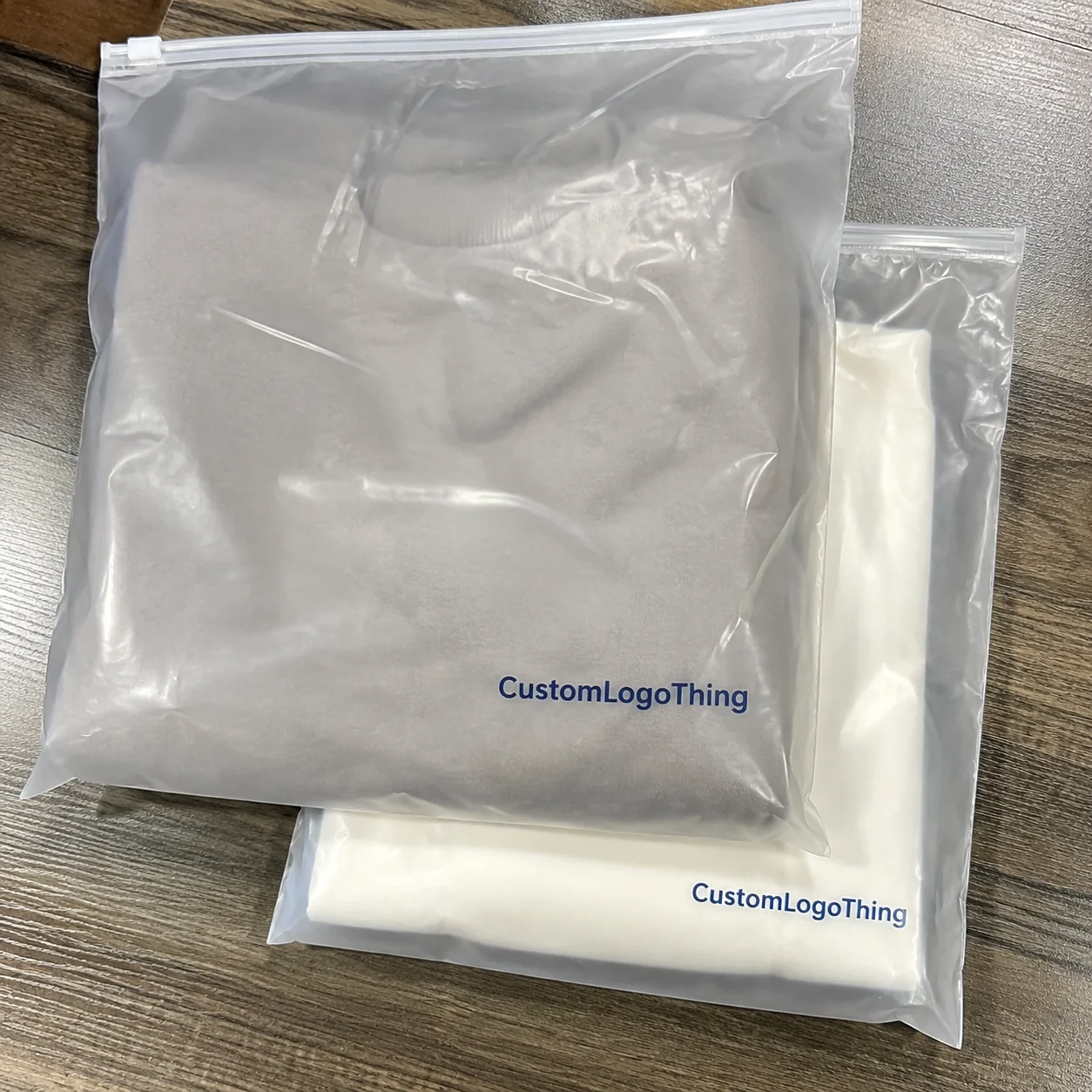
Buyer Fit Snapshot
| Best fit | Product Packaging Supplier for Brands projects where brand print, material claims, artwork control, MOQ, and repeat-order consistency need to be specified before quoting. |
|---|---|
| Quote inputs | Share finished size, material target, print colors, finish, packing count, annual reorder estimate, ship-to region, and any compliance wording. |
| Proofing check | Approve dieline scale, logo placement, barcode or warning zones, color tolerance, closure strength, and carton packing before bulk production. |
| Main risk | Vague material claims, crowded artwork, missing packing details, or unclear freight terms can make a low unit price expensive after revisions. |
Fast answer: Product Packaging Supplier for Brands: Material, Print, Proofing, and Reorder Risk should be specified like a repeatable production item. The safest quote records material, print method, finish, artwork proof, packing count, and reorder notes in one written spec.
Production checks before approval
Compare the actual filled-product size with the drawing, then confirm tolerance on folds, seals, hang holes, label areas, and retail display edges. Reserve space for logos, QR codes, warning copy, and material claims before decorative graphics fill the panel.
Quote comparison points
Review material grade, print process, finish, sampling route, tooling charges, carton quantity, and freight assumptions side by side. A quote is only useful when the supplier can repeat the same color, closure quality, and packing count on the next order.
I once stood next to a folder-gluer in Dongguan while 40,000 cartons sat in limbo because one line never made it onto the dieline: board grade. Not the artwork. Not the foil. Not the varnish. Just the stock note, and it should have been 350gsm C1S artboard, not "premium board" written like a nervous shrug. The plant manager gave me that look - the one that says, "Great, now everybody gets to stay late." That mess is exactly why a product packaging supplier guide matters before the first quote lands in your inbox.
A product packaging supplier guide is not a sales brochure wearing steel-toe boots. It is a working method for comparing vendors, materials, print methods, pricing, and timing so you can pick the right partner for product packaging that protects the item and still looks like it belongs on a shelf, in a mailer, or in a retail display. If you are building branded packaging for a launch in Austin, Berlin, or Shenzhen, or you need Custom Printed Boxes that survive parcel drops from 76 cm without the corners blowing out, this is the framework I wish more buyers used instead of trusting a pretty PDF and a cheerful email. It also makes packaging procurement less of a guessing game, which is a nice change for anyone who enjoys having numbers that actually mean something.
I have used this kind of checklist in supplier meetings with startup founders, procurement teams, ecommerce operators, and marketers trying to balance package branding against hard numbers like 1,000-unit MOQs, 12-business-day lead times, and freight bills that jump from $180 to $540 depending on whether the cartons ship from Ningbo or Monterrey. I remember one founder who wanted a luxury unboxing moment on a budget that screamed "please do not ask questions." We had to have a very honest conversation over a sample box with 2.0 mm greyboard and a soft-touch wrap. If you are still shaping the packaging structure, our Custom Packaging Products page can help you think through the build before you commit to a supplier.
Here is the scope I am talking about: folding cartons, corrugated shippers, rigid boxes, mailers, inserts, labels, sleeves, and specialty parts like foam, paperboard trays, and hanging tabs. A good product packaging supplier guide should help you judge whether a vendor can handle print quality, structural strength, and repeatability, not just toss back a quick quote and hope you will not notice the gaps later. I am talking about things like 32 ECT versus 44 ECT corrugated, or whether a 0.9 mm insert is thick enough for a 280 gram glass bottle. Those details are the difference between "looks fine" and "why are we reprinting 8,000 units?"
Most buyers get burned the same way. They start with decoration instead of structure. They spend twenty minutes debating matte versus gloss, then discover the box is 3 mm too short for the insert. That sort of mistake is exactly what a product packaging supplier guide is supposed to catch early. Honestly, I think half the packaging headaches I have seen could have been avoided with a ruler, a scale, and ten minutes of discipline before anybody touched the Pantone book.
What Does a Product Packaging Supplier Guide Actually Cover?
A solid product packaging supplier guide starts with a blunt fact: packaging is a technical purchase with a marketing job attached. If your product weighs 280 grams, ships through parcel carriers, and sits on a retail shelf for six weeks, the box has to survive impact, stack pressure, humidity, and the customer opening it with whatever tool is nearest. I watched a cosmetics brand in Guangzhou lose a launch week because the insert was designed for 1.2 mm board, then the sample showed up in 0.9 mm stock and let the bottle shift just enough to scuff the print. Small mistake. Expensive result. The founder actually said, "We cannot be the brand that ships sadness." Fair point, especially after they had already paid $380 for the first round of sample freight.
I define a product packaging supplier guide as a practical way to compare vendors across five things: material fit, manufacturing capability, quality control, service, and landed cost. A supplier can sound polished in email and still fail at the basics. If they cannot explain the difference between 32 ECT and 44 ECT corrugated, or they dodge questions about coating adhesion on a 350gsm C1S artboard, you do not have a partner yet. You have a quote. A quote is nice. A quote is not a strategy.
This is for brand owners trying to make retail packaging look premium, procurement teams trying to protect margins, startup founders ordering a first run of 2,500 units, and ecommerce operators who care more about corner crush than a fancy finish. In one supplier review I sat through in Ho Chi Minh City, a founder placed three samples on the table: a rigid set-up box with 2.0 mm greyboard, a folding carton in 350gsm C1S artboard, and a mailer made from E-flute corrugated. The prettiest sample lost. The one that fit the shipping channel and product weight won. It was not glamorous. It was correct, and it saved them roughly $0.27 per unit on damage-related returns.
In real life, the product packaging supplier guide should cover the formats buyers actually use: folding cartons for shelf-facing goods, corrugated shippers for transit, rigid boxes for higher perceived value, mailers for DTC orders, inserts for immobilization, sleeves for quick branding, and labels for short-run or seasonal work. If you need the structure to support a larger line, our Custom Packaging Products catalog is a useful place to match format to product before anyone starts sketching a fantasy box that would never survive a 1.5-meter drop test.
"The box looked fine on screen, but one missing board note turned a three-day approval into an eight-day delay." A plant manager in Wenzhou told me that while a stack of custom printed boxes waited beside a Heidelberg press, and I still hear it every time a buyer says, "It's just packaging."
The scope also includes the parts suppliers do not always volunteer unless you ask: whether they own the die cutting, whether a finishing step is outsourced, whether they can hit a specific Pantone chip, and whether their current schedule can actually absorb your launch date. A product packaging supplier guide should make those invisible parts visible before money changes hands. I have seen too many buyers learn about those details only after the invoice and the apology email show up together, which is a terrible little combo, especially when the freight deadline was already set for Friday at 2:00 p.m.
- Folding cartons: 300gsm to 450gsm board, often with aqueous coating or matte lamination.
- Corrugated shippers: E-flute, B-flute, or 32/44 ECT board for transit strength.
- Rigid boxes: 1.5 mm to 2.5 mm greyboard wrapped in printed art paper.
- Mailers and sleeves: common for ecommerce, launches, and limited promotions.
- Inserts and trays: paperboard, molded pulp, foam, or corrugated partitions.
Set your expectations with a little realism. A decent product packaging supplier guide does not promise the cheapest route every time. It helps you Choose the Right match for the job, which usually means fewer reprints, fewer freight surprises, and less scrambling three days before launch. That last part matters more than people admit, especially when the next vessel out of Shenzhen is already booked and the customer wants the cartons in California by next Thursday.
How Does a Product Packaging Supplier Guide Process Work?
The workflow in a good product packaging supplier guide starts with a brief, not a quote. The buyer sends product dimensions, weight, shipping method, target audience, artwork status, and a target date, then the supplier decides whether the build is feasible. Ask for "a premium box" and you will get vague answers. Give actual dimensions, weight, shipping details, and finish requirements, and the supplier can think like a manufacturer instead of a fortune teller. That alone saves everyone a headache, and usually saves at least one round of proof corrections.
From there, the quote stage should include a structural review, a material recommendation, and a realistic sense of how many revisions are likely. Simple jobs can turn around in 1 business day, especially if the spec is a standard folding carton or a basic mailer. More complex packaging takes longer. One changed flap length can affect the knife, the glue allowance, and the outer shipper count. A product packaging supplier guide has to spell that out in plain English, because "we'll see" is not a production plan, and neither is "probably next week" when the shipment is already on a truck in Shenzhen.
Once the quote moves forward, the plant side starts to matter. I have watched jobs move from board converting to print production, then die cutting, then folding and gluing, and finally packing and palletizing, with quality checks at each stage. In a corrugated plant I visited in Johor Bahru, the operator checked every 50th sheet for flute crush while a second technician ran a color bar against a spectro reading. Clean floor, tight process, no drama. That is why some factories stay predictable while others drown in rework and crossed fingers, usually after someone "approved by email" from a hotel lobby in a different time zone.
Communication is the real separator. In a reliable product packaging supplier guide, the buyer talks to sales, prepress, and the production manager before the first tool is cut. That gives everyone a chance to confirm finish, tolerances, carton count per shipper, pallet height, and special handling like anti-scuff film or food-contact requirements. A 15-minute call can save days of back-and-forth. I am not exaggerating; I have watched one short call prevent a week of useless email ping-pong, and the supplier was in Dongguan while the buyer was in Chicago.
Typical timing looks like this: a basic quote in 24 hours, a structural sample in 5 to 7 business days, artwork proofing in 2 to 4 business days, and full production in 12 to 20 business days depending on volume and finishing. Add buffer time if the job needs a custom die, foil stamp, embossing tool, or a paper source with limited stock. A practical product packaging supplier guide does not hide that. It tells you exactly where the calendar can slip, because calendars are usually the first thing to lie to you, especially when a supplier in Ningbo says the carton board is "on the water" and nobody has checked the vessel schedule.
"The fastest projects are the ones where the buyer sends the dimensions, the target freight method, and the final artwork status in the first email." A production manager in Guangzhou told me that during a supplier negotiation, and he was right down to the day.
Key Factors to Compare in a Packaging Supplier
A product packaging supplier guide only works if you compare the right things. Material fit comes first, because a beautiful box that collapses under stack pressure is still a bad box. For corrugated, ask whether the supplier recommends 32 ECT or 44 ECT, and whether the inner flute should be E-flute at about 1.5 mm or B-flute at about 3 mm. For paperboard, ask for caliper and coating details, not a vague "premium stock." A 350gsm C1S artboard with aqueous coating behaves very differently from a 400gsm board with soft-touch lamination and spot UV. If a supplier cannot explain that without blinking, keep walking.
Manufacturing capability is the second filter. A supplier that handles offset, flexo, and digital in-house has more control over consistency than one that outsources the print and only handles assembly. If you need hot foil, embossing, window patching, or a complex insert, ask whether those steps happen on-site or travel to another shop. I once saw a project miss a launch in Los Angeles because the foil vendor and the box assembler were 80 kilometers apart near Suzhou, and nobody had penciled in the transfer day. Somehow everybody acted surprised when the truck existed, which was adorable in the worst possible way.
Quality systems matter just as much as equipment. Ask how they inspect incoming board, how they manage color control, whether they run inline checks during print, and what signoff happens before shipping. A serious product packaging supplier guide should make room for standards like ISTA test methods for transit testing and ASTM references such as D4169 for distribution performance. If the product will sit in damp warehouses in Houston or get stacked on pallets in Rotterdam, these standards tell you more than appearance ever will.
Business fit gets ignored too often. Do they answer questions in one business day or three? Do they send a clean spec sheet with board grade, print method, finish, carton count, and freight assumptions? Can they scale from 2,000 units to 50,000 without changing how they communicate? A product packaging supplier guide should help you choose a partner who can grow with you, not just get through one order and vanish until the next PO lands. I have seen too many "great at the first job" suppliers turn into radio silence the moment a reorder needed a split shipment to Dallas and Toronto.
Sustainability and compliance belong here as well. FSC paper, recycled content, reduced void fill, and smaller outer cartons are practical choices, not just nice phrases for a deck. If you need a supplier that can speak clearly about certified paper, the FSC site is the place to understand the standard. In my experience, buyers who ask about FSC chain-of-custody and shipping efficiency early usually avoid a scramble later, which is refreshing because scrambling is a terrible business model and the invoice never gets smaller after the fact.
- Ask for a machine list: offset press, flexo line, digital press, die cutter, folder-gluer, and finishing units.
- Ask for sample photos: look for clean edges, tight folds, and consistent color across a 500-piece run.
- Ask for quality steps: check whether they log board inspection, color approval, and final carton counts.
- Ask for escalation paths: one named contact for prepress, production, and freight saves days.
If you are narrowing the field for product packaging or retail packaging, keep the comparison grounded in operating details. A polished website does not tell you whether the supplier can hold a 2.0 Delta E color tolerance or whether they understand the crush strength needed for cross-country freight on a lane from Chicago to Phoenix in July heat. That is the kind of question a product packaging supplier guide should keep right at the front, with no fluff getting in the way.
Product Packaging Supplier Guide: Cost, Pricing, and MOQs
Pricing is where the product packaging supplier guide becomes especially useful, because unit price alone tells only half the story. The big drivers are quantity, box size, board grade, print coverage, number of colors, finishing steps, and freight distance. If one supplier quotes 10,000 folding cartons at $0.19 each and another quotes $0.24, the cheaper option may still cost more once tooling, samples, and shipping are added. I have seen that play out more than once in supplier review meetings in Shanghai and Chicago, and the winner was not always the one with the flashiest spreadsheet.
MOQ changes the math fast. A run of 1,000 rigid boxes might land at $2.40 per unit because the labor and wrap time are spread across too few pieces, while 5,000 units might drop to $1.55 each with the same decoration. A simpler folding carton could move from $0.31 at 1,000 pieces to $0.18 at 5,000. That spread is exactly why a product packaging supplier guide should make you think in tiers, not in wishful thinking. The lowest quantity is rarely the sweetest deal, and the spreadsheet usually knows it before people do.
There are hidden costs too, and buyers forget them until the invoice shows up. Tooling for a custom die can run $120 to $450 depending on size. Print plates may add another $80 to $300. Samples, rush fees, storage, and rework from a late artwork change can move the budget more than the base unit cost. In one negotiation I handled in Shenzhen, a buyer saved $0.03 per unit on paperboard and lost it all on a two-day rush fee and a second proof. Cheap headline, expensive ending. That one still annoys me, especially because the "rush" was only needed after the buyer changed the logo color from black to metallic gold on a Friday afternoon.
| Packaging Type | Typical Build | Common MOQ | Planning Price/Unit at 5,000 | What Moves the Price |
|---|---|---|---|---|
| Folding carton | 350gsm C1S, 4-color print, aqueous coating | 3,000-5,000 | $0.18-$0.32 | Ink coverage, coating, and carton size |
| Corrugated mailer | E-flute, 1-color print, die cut | 2,000-3,000 | $0.62-$1.05 | Board grade, print method, and glue area |
| Rigid box | 2.0 mm greyboard, wrapped art paper, insert | 1,000-3,000 | $1.40-$3.20 | Wrap paper, insert style, foil, embossing |
| Label or sleeve | Paper or BOPP, die cut, roll form | 5,000-10,000 | $0.03-$0.12 | Material, adhesive, and number of colors |
These are planning numbers, not formal quotes, but they are useful when a buyer needs to pressure-test a budget before a launch meeting. I have used ranges like these in supplier calls to decide whether a project can stay inside a $0.85 total packaging target or needs a design reset. That is where a product packaging supplier guide saves time: it gets everyone speaking the same financial language instead of arguing over vague "should be fine" estimates.
To compare apples to apples, request the same spec sheet from every supplier. Ask for the same dimensions, substrate, finish, print method, ship terms, and payment terms. A proper product packaging supplier guide should push you toward one simple habit: demand a line-item quote. If you only get one number and a promise of "good quality," keep asking until you see board grade, plate cost, sample charge, and freight listed separately. If a supplier acts offended by that request, that tells you more than their pricing ever will.
One real example: 10,000 folding cartons, 120 mm x 80 mm x 25 mm, 4-color CMYK, aqueous coating, and folded flat for pallet shipping. The quote broke down into $980 for paperboard, $220 for plates, $140 for make-ready, $410 for die cutting and gluing, $120 for pack-out, and $260 for freight. That made the pre-freight unit cost roughly $0.187. Numbers like that are why the product packaging supplier guide should always show the whole path, not just the shiny front page. If a supplier from Suzhou or Puebla can break the job down this clearly, you are already ahead of the game.
Step-by-Step Product Packaging Supplier Guide for Buyers
The cleanest way to use a product packaging supplier guide is to walk through the buying process in order. Step one is measuring the product, not guessing. Record length, width, height, weight, fragility, and any special condition like liquids, sharp edges, or temperature sensitivity. If the item is 178 mm x 64 mm x 41 mm and weighs 310 grams, the supplier can suggest a carton style that protects the corners instead of forcing a generic box around it. That sounds obvious until you see how often it gets skipped, usually right after someone says, "We have the sample somewhere."
Step two is building a shortlist of suppliers that actually make the packaging type you need. A general commercial printer may do fine with brochures, but that does not mean they understand corrugated compression, rigid box wrapping, or insert engineering. A smart product packaging supplier guide pushes you toward specialists by format. If you need shelf-ready packaging, shortlist vendors with strong folding carton references from Shenzhen or Ningbo. If you need heavy shipping protection, start with corrugated packaging expertise from Guangdong or Jiangsu. I would rather have the right factory than the nicest sales deck.
Step three is asking for a full quote package. That package should include dieline support, material recommendation, lead times for samples and production, payment terms, sample costs, and any artwork specs the supplier needs from your design team. I like it when a supplier sends a single PDF with board grade, coating, pallet count, and shipping assumptions because it shows they can think in production terms. That kind of detail belongs in every product packaging supplier guide, and frankly it saves everybody from playing detective later when the art file is 2 mm too wide and nobody wants to own it.
Step four is comparing vendors with a scorecard. I usually weight cost at 30%, quality at 25%, lead time at 20%, communication at 15%, sustainability at 5%, and scalability at 5%. Those percentages can shift, but the act of weighting matters. A supplier who is $0.02 cheaper but misses two proofs is not cheaper in any meaningful way. In one client meeting, the team picked the "best price" and then paid for a second air shipment from Shanghai to Dallas because the launch date was fixed. A scorecard would have made that risk obvious. Instead, everyone got a lesson in expensive optimism, and the finance team got to remember it forever.
Step five is running a pilot order or a preproduction sample. Do not skip it if the packaging supports a fragile product, a high-value product, or a launch tied to a retailer calendar. Inspect the sample under realistic light, test the closure, drop it from 76 cm if it is a shipper, and document what passed and what failed. A product packaging supplier guide should help you create a repeatable evaluation, not a gut-feel gamble. Gut feel is fine for choosing lunch. It is terrible for choosing a packaging run that has to make it through two distribution centers and a holiday peak.
- Measure precisely: use millimeters and grams, not "small" or "medium."
- Match the format: folding carton, mailer, rigid box, insert, or label.
- Request structure and print details: board grade, finish, and color method.
- Score the suppliers: cost, timing, quality, communication, and scale.
- Test before full production: sample, photograph, and record defects.
If you are still shaping the package concept, our Custom Packaging Products page can help you see which build belongs to which use case, from ecommerce mailers to presentation boxes. That makes the product packaging supplier guide easier to apply because you are comparing real structures, not vague ideas scribbled on a whiteboard after lunch in a conference room with no window and a bad coffee machine.
Common Mistakes When Choosing a Packaging Supplier
The first mistake I see in a product packaging supplier guide conversation is chasing the lowest quote without checking the spec behind it. One supplier may quote a folding carton on 300gsm board while another uses 350gsm, and the paper cost difference is tiny compared with the cost of a carton that dents on the line. A cheap-looking quote can hide a thinner board, fewer colors, smaller ink coverage, or a freight assumption that only works if the shipment fills a full pallet. That is how people end up bragging about a bargain and then paying for the mistake three times over, usually after 6,000 units are already packed and nobody wants to be the one to reopen them.
The second mistake is skipping the structural sample. That is risky for anything fragile, oddly shaped, heavy, or sensitive to vibration. I watched one buyer approve a beautiful sample for a glass bottle set in Paris, then discover the neck clearance was only 2 mm. The products rattled during parcel transit, the inserts tore, and the returns landed right back on the brand. A real product packaging supplier guide treats structure as a first-class decision, not a side note that gets handled later by someone who is already on another project and two Slack channels behind.
The third mistake is underestimating lead time. Artwork approval can take 2 days, but tooling can take 5 to 7 business days, and if a supplier needs to order board or a specific paper wrap, the timeline stretches again. Late calls on foil, coating, or insert depth can push a launch by a full week. In a supplier meeting I attended in Dongguan, one team lost 9 days because nobody signed off on the Pantone target until after the dieline was already in production. Nobody was happy. The room got very quiet, which is never a good sign, and the coffee did not help.
The fourth mistake is vague communication. If nobody on the buyer side can approve color, structural changes, or payment terms, the supplier gets stuck waiting for answers. The best product packaging supplier guide habits are basic: send exact dimensions, nominate one decision-maker, and state the target ship date in the first message. A supplier can work around a lot of things. They cannot work around silence, and they really cannot work around five people approving five different versions of the same email from three different cities.
The fifth mistake is ignoring quality checks. A 2% defect rate sounds small until it hits a 20,000-unit run and leaves 400 boxes with bent corners or misregistered print. That can turn into scrap, rework, or a brand problem if the packaging reaches the customer. If your packaging is part of the premium promise, the product packaging supplier guide has to include final inspection, pallet wrap, and carton count verification. Pretty packaging that arrives damaged is just expensive disappointment, and the customer does not care which factory caused it.
- Do not: compare unit price without tooling, samples, and freight.
- Do: request a sample with real artwork or at least final line art.
- Do not: assume a printer can handle structural packaging well.
- Do: confirm who owns prepress, die cutting, and assembly.
Expert Tips and Next Steps for Smart Packaging Sourcing
My best advice in any product packaging supplier guide is simple: ask for proof of process, not just proof of price. Request plant photos, a machine list, sample libraries, and a short explanation of quality checks. If a supplier can show you the pressroom, the die-cut station, the folding line, and the palletizing area, you learn a lot about how they work long before the first order ships. I trust the factory in Suzhou or Dongguan that can explain its own process without theatrics or a hundred buzzwords. If they can do that, good. If not, I start wondering what else is being glossed over, and I do not like being right about that.
Build a simple scorecard and keep notes on response time, accuracy, problem-solving, and technical clarity. A supplier who answers a board grade question with "we will check" is not the same as a supplier who says, "use 350gsm C1S for the outer carton and 1.5 mm greyboard for the insert; the die tolerance should stay within 1 mm." That level of detail is worth more than a polished brochure, and any product packaging supplier guide that ignores it is missing the point. I would take the precise answer every time, even if the email is less polished and the spelling is slightly chaotic.
Negotiate using forecasted volume, not just the first run. If you expect 5,000 units this month and 15,000 units across the next three replenishment cycles, say so. Suppliers often reward steady volume with better pricing, firmer scheduling, or a shorter approval loop for repeat orders. I have watched a buyer save 8% simply by committing to a 4-run forecast instead of treating each order like a fresh gamble. That is a very real move inside a product packaging supplier guide mindset, and it usually gets a much better response than haggling over a penny on the first PO.
Before you send your first inquiry, gather the product dimensions, artwork files, target color references, shipping method, and launch date. If your item needs a seasonal promo sleeve, a custom insert, or a premium box that supports package branding, include those notes too. Then request three structured quotes from qualified suppliers and compare them on the same sheet. That is how a product packaging supplier guide turns into a sourcing tool instead of a pile of screenshots you pretend will make sense later when someone asks, "Which one was the 350gsm carton again?"
One last thing: if you are building a line of custom printed boxes, do not judge the supplier by the smoothest sales call. Judge them by the sample they send, the questions they ask, and how clearly they explain the tradeoffs between shipping cost, print finish, and structural strength. In my experience, the right partner makes the work feel orderly because they sweat the details early. And yes, that usually means they are the annoying person in the room asking about flutes, coatings, and pallet height while everyone else is trying to leave early.
Use this product packaging supplier guide to shortlist, sample, and place the first order with confidence, and keep the conversation grounded in board grade, timeline, and freight instead of wishful thinking. Do that, and your packaging has a much better shot at protecting the product, supporting the brand, and arriving on time without expensive surprises. The practical next move is simple: lock the spec sheet, get three apples-to-apples quotes, and test one sample before you commit to production. That sequence saves more money than any clever negotiating trick I know. And I have seen plenty of those tricks. Most of them were kinda pointless.
What should I ask a product packaging supplier before requesting a quote?
Ask what packaging types they manufacture in-house, which materials they recommend for your product weight, and what information they need to quote accurately. A good first call should also cover lead times for sampling and production, plus whether they can support a rush order if your launch date slips by a week. I also like to ask for 2 or 3 examples of similar work, because that tells you more than a polished sales deck. A careful product packaging supplier guide starts with those basics, not with a price number pulled out of thin air or a promise that sounds nice over Zoom.
How do I compare product packaging supplier pricing fairly?
Compare the same dimensions, materials, print colors, finishes, and shipping terms from each supplier, then add tooling, samples, and freight to see the full landed cost. A lower unit price can hide a thinner board or a higher setup fee, so ask for a line-item quote every time. I have seen a $0.17 carton become a $0.24 carton after setup and freight were counted correctly. That is why the product packaging supplier guide approach matters so much, and why one-line quotes make me suspicious.
What is a normal timeline with a packaging supplier?
A simple quote may return in 24 hours, but sampling, artwork approval, and tooling can add several days before production even starts. For a standard folding carton, 12 to 20 business days for production is a reasonable planning range, while a rigid box or specialty finish can take longer. Build buffer time for revisions, because a 1 mm structural change can still create a 3-day delay. A practical product packaging supplier guide should assume that reality from the start, not act shocked when the calendar behaves like a calendar.
Should I choose a local or overseas packaging supplier?
Choose based on total value, not geography alone: lead time, communication, shipping Cost, and Quality control all matter. A local supplier can be useful for faster samples and shorter changeovers, while an overseas supplier may offer stronger pricing at higher volume. I have watched both models work well, and I have watched both fail when the buyer picked the wrong fit for the schedule. The best product packaging supplier guide tells you to match the supplier to the urgency, complexity, and quantity of the project, even if that answer is not the sexy one.
What files do I need to send to a packaging supplier?
Send final product dimensions, a dieline or structural reference, logo files, artwork, color targets, and any compliance notes. Photos of the product help too, especially if the item has an odd shape, a fragile finish, or a retail display requirement. If you have a target budget or launch date, include that in the first message so the supplier can quote realistically and avoid guessing. That kind of prep makes the product packaging supplier guide process faster and much cleaner, and it spares everyone from the phrase "we thought you meant..."