Overbuying packaging cuts margin through storage costs, tied-up cash, and obsolete stock. Buyers searching for pvc zipper garment Bags Low MOQ Custom Order are usually trying to avoid committing to a run that outlasts a collection, sizing update, or branding change.
PVC Zipper Garment bags fill a practical middle ground. They present better than thin disposable covers, keep garments visible for sorting, and provide useful dust protection for retail, bridal, uniforms, and showroom use. The value of a low MOQ depends on whether the supplier can actually build to spec rather than apply a logo to a stock bag.
That is the same planning issue buyers face when comparing Custom Packaging Products with larger Wholesale Programs. MOQ is not just a price threshold. It affects cash exposure, flexibility, and how quickly you can adjust after a first run.
Why low-MOQ zipper garment bags solve real buying problems
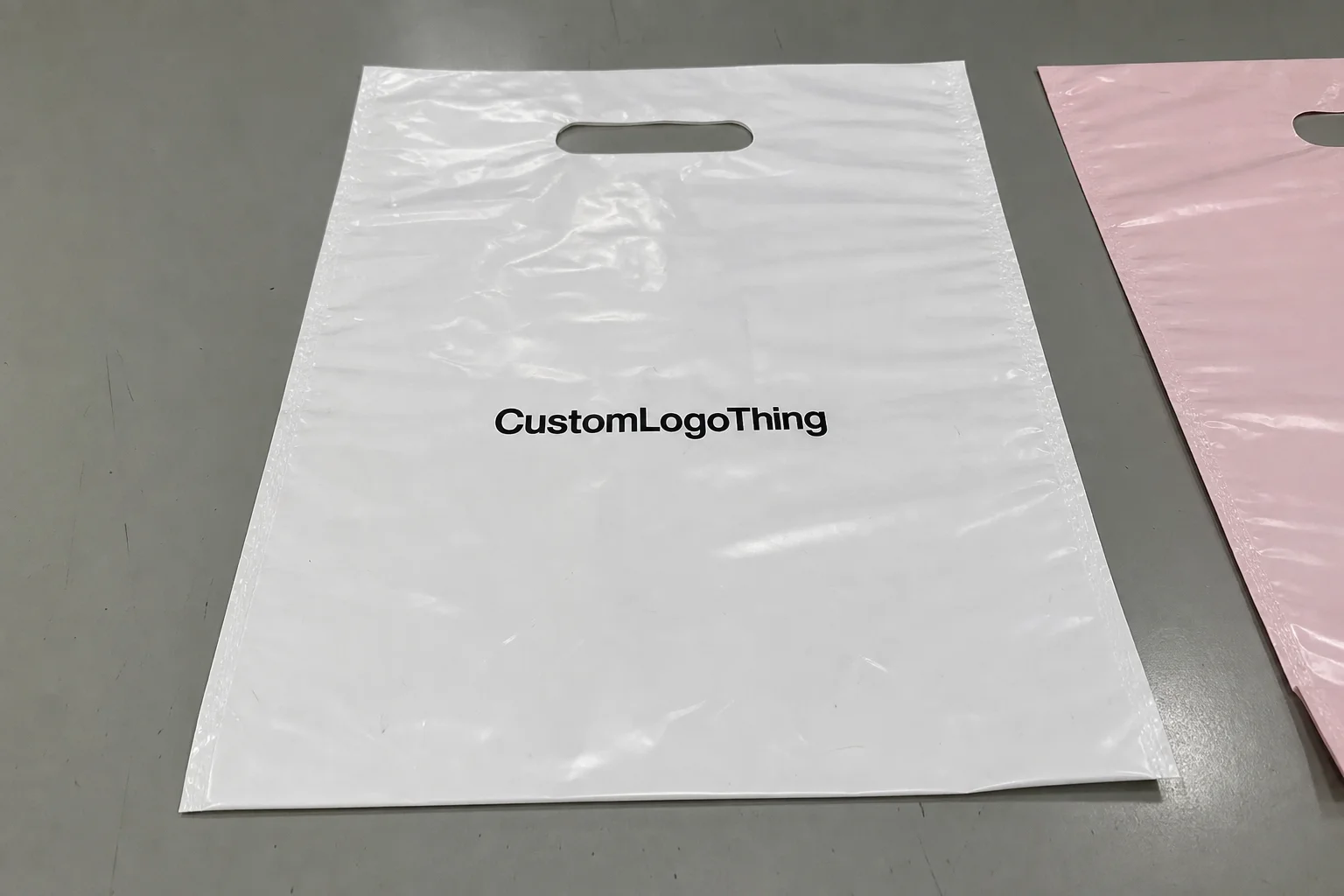
Low minimums matter because packaging demand is often less stable than buyers expect. A capsule collection, pilot uniform order, regional launch, or seasonal dress program may only justify a few hundred bags. Ordering thousands to chase a lower unit price can create more risk than savings.
Common hidden costs of over-ordering include:
- Storage: even flat-packed bags consume shelf and warehouse space.
- Handling: receiving, counting, moving, and protecting excess stock adds labor.
- Obsolescence: logo updates, fit changes, or discontinued lines can turn usable inventory into waste.
- Cash exposure: money tied up in packaging cannot be used for replenishment or new product testing.
A lower unit price can be misleading if the run is too large for the actual program. Saving a few cents per bag does not help if the remaining inventory becomes dead stock after a season change.
PVC remains common for garment packaging because it handles three buyer priorities at once:
- Visibility: clear or frosted material helps staff identify contents without opening every bag.
- Protection: it helps shield garments from dust, transfer marks, and light moisture during handling.
- Presentation: it generally looks more finished than a basic poly cover.
Low MOQ does not mean low quality. It means lower commitment. A bridal shop may need 250 long-hang bags, a menswear brand 600 for a test, or a hotel uniform program 1,000 split across different sizes. Those are standard buying scenarios.
Practical rule: If your garment dimensions, branding, or assortment may change within three to six months, a smaller run at a slightly higher unit price is often the safer overall buy.
For most buyers, the real decision points are straightforward: clear quoting, accurate sizing, a proof or sample process that catches errors early, and an MOQ structure that matches the program.
Product details that affect performance, branding, and durability
Most purchasing mistakes happen in the build details, not the general concept.
Material gauge is one of the first choices to confirm. Common PVC thicknesses for garment bags usually range from 0.10mm to 0.20mm for lighter-duty use and 0.20mm to 0.30mm for sturdier retail presentation. Thin film works for temporary protection or low-cost programs, but it folds more easily, feels cheaper, and shows stress sooner. Heavier gauges hold shape better and typically support premium apparel more convincingly.
Zipper quality matters because the closure is often the first failure point. If bags will be opened repeatedly in fitting rooms, stockrooms, or during sales sampling, check zipper alignment, slider consistency, and reinforcement at the start and stop points.
Finish changes both appearance and usability:
- Clear PVC: best visibility for color and garment identification.
- Frosted PVC: cleaner, softer appearance with less obvious scuffing.
- Tinted PVC: stronger brand look, but reduced color accuracy through the film.
- Printed panels: more branding impact, but less transparency.
Customization should follow the garment type. Dresses, gowns, coats, and suits often need a longer body, commonly around 40 to 60 inches depending on hem length and hanger drop. Folded knitwear may need a shorter format with more usable gusset depth. Sample and sales bags usually need stronger handles because they are carried more often.
Features buyers often forget until too late include:
- Reinforced hanger opening
- Handle or corner reinforcement
- ID window for uniforms or multi-location sorting
- Wipe-clean surface expectations
- Gusset depth suited to bulkier garments
For decoration, one-color logo printing in white, black, metallic silver, or a Pantone-matched spot color usually offers the best cost-to-impact ratio. Large print coverage raises cost, adds registration risk, and can reduce visibility if the garment still needs to be seen through the bag.
The best bag is usually not the most decorated. It is the one that fits the garment correctly, opens smoothly, and still looks presentable after repeated handling.
Size, thickness, and construction specifications to confirm before ordering
Vague sizing causes the most quoting problems. “For dresses” or “for jackets” is not enough. Suppliers need finished bag measurements and a clear use case to quote accurately.
Core dimensions to send
- Width: front panel measurement from side to side
- Height: top to bottom, with measuring method defined
- Gusset depth: important for coats, layered garments, or folded storage
- Zipper path: side zip, top zip, U-shape, or full front opening
- Hanger opening size: slit or cutout sized for hook clearance
Thickness should match the end use. A 0.12mm bag may work for lightweight shirts or backroom storage. Tailored jackets, coats, and premium dresses usually present better in the 0.18mm to 0.25mm range. Heavier film increases freight weight, but it also improves structure and perceived value.
Construction details deserve direct confirmation. Ask how seams are formed, whether the hanger opening is reinforced or simply cut, and how any handles are attached. These details affect durability once bags are loaded and carried at scale.
Print specifications should be confirmed with the same discipline:
- Maximum printable area
- Accepted artwork file formats such as AI, EPS, or high-resolution PDF
- Pantone matching availability
- Expected print registration tolerance
- Opacity limits on clear or frosted material
A frequent mistake is approving artwork on-screen without accounting for the substrate. Fine lines and small type can lose contrast when printed on frosted or tinted PVC, especially with light inks. If the bag is part of a launch or retail presentation, that matters.
Transport expectations should also be realistic. If the bags will ship in master cartons through parcel or mixed freight networks, general testing guidance from ISTA can help frame transit assumptions. Buyers reviewing broader material or disposal questions often use the EPA as a general reference point.
Brand consistency matters too. If your business already uses hangtags, inserts, or custom printed boxes, the garment bag should align with that system rather than look like a separate packaging decision.
PVC zipper garment bags low MOQ custom order: cost, pricing, and MOQ factors
Quotes usually move with five variables: material gauge, size, zipper quality, print complexity, and volume.
As a rough market baseline, a simple PVC Zipper Garment bag in a standard size with one-color logo printing often falls around $0.85 to $1.80 per unit at lower custom quantities, depending on thickness and construction. Larger or sturdier versions with reinforcement or more involved printing can move into the $1.90 to $3.50+ range. Very small runs may also include setup charges that make the first few hundred pieces relatively expensive.
Low MOQ changes the economics by limiting exposure. A 500-piece run at $1.65 each may cost more per unit than a 3,000-piece run at $1.08, but the smaller order sharply reduces upfront spend. If the collection changes after the first season, the larger “savings” can disappear into leftover inventory.
There are practical ways to reduce cost without undermining function:
- Use a standard size if it actually fits the garment
- Choose one-color printing over large coverage graphics
- Skip decorative trim that adds little functional value
- Keep gusset depth realistic instead of oversized
- Use shared tooling where available
| Build Option | Typical MOQ | Approx. Unit Price | Best Fit | Main Trade-Off |
|---|---|---|---|---|
| Standard clear PVC, one-color logo, no gusset | 300-500 pcs | $0.85-$1.25 | Shirts, light uniforms, sample protection | Less structure, simpler presentation |
| Frosted PVC, zipper, hanger opening, light gusset | 500-1,000 pcs | $1.20-$1.95 | Boutique apparel, dresses, jackets | Higher setup and freight cost |
| Heavier gauge PVC, reinforced handle, custom trim | 1,000+ pcs | $1.90-$3.50+ | Premium retail packaging, repeated use | Higher MOQ, longer proofing cycle |
To get a useful quote, send dimensions, quantity, artwork, thickness target, closure style, and destination region or zip code. Without those details, many first quotes are only rough placeholders.
Compare landed cost, not just ex-works price. Freight can change the decision quickly if one option uses heavier film, inefficient carton packing, or extra protective packing because the structure is too soft.
Process and timeline: from artwork approval to delivery
A typical order sequence is simple: inquiry, spec review, quotation, proofing, sample approval if needed, production, and shipping. Problems usually come from rushed approvals or incomplete specs.
- Inquiry: share dimensions, quantity, use case, and target delivery date.
- Specification review: confirm material, thickness, zipper style, finish, print method, and construction details.
- Quote: review pricing, setup charges, and freight assumptions.
- Artwork proof: confirm logo placement, print size, and color.
- Sample or pre-production approval: approve a physical sample or final reference.
- Production: manufacturing begins after approvals and payment terms are cleared.
- Shipping: dispatch by express, air, or ocean depending on budget and timeline.
Production for small custom runs often falls around 12 to 20 business days after final approval. Sampling can add 5 to 10 business days. Transit may take a few days by express or several weeks by ocean freight.
Typical delay points include:
- Incomplete or inconsistent measurements
- Artwork files that are not print-ready
- Repeated proof revisions
- Late sample signoff
- Payment or deposit delays
If the order supports a launch or seasonal reset, ask for milestone dates rather than broad turnaround promises. Proof by one date, sample by another, production completion by another. That reveals risk earlier and makes follow-up easier.
What to verify before placing a custom order with any supplier
Before ordering, confirm whether the supplier is truly producing low-MOQ custom bags or simply decorating near-stock inventory. That affects size flexibility, print options, and repeatability.
Ask direct questions:
- Is the MOQ per size, per color, or per artwork version?
- Are custom dimensions available, or only standard templates?
- Is there a sample fee, and is it credited back on production orders?
- How are defects handled: replacement, credit, or claim threshold?
- How many proof revisions are included?
- What quality checks are done before packing?
Useful QC checks include zipper function testing on random samples, print position checks against the approved proof, seam inspection, carton count verification, and review for haze, scratches, or obvious odor issues. These checks are basic, but they separate sellable packaging from avoidable claims.
Photos help, but close-up video often shows more. Ask to see zipper movement, film clarity, seam finishing, and handle attachment. A bag can photograph well and still feel weak in use.
Response speed is also a practical indicator. If basic quoting questions take days to answer, reorder support may be slow as well. That matters when the first run is a test and future volume depends on quick replenishment.
For a cross-check on proofs, customization limits, and production timing, review the site’s FAQ before final approval.
FAQ
What is the usual minimum for pvc zipper garment bags low moq custom order?
It varies by size, printing method, and construction, but low-MOQ custom programs often start in the low hundreds rather than the thousands. Always confirm whether the minimum applies per size, per color, or per artwork version.
Can I customize the size and logo on PVC zipper garment bags?
Yes. Common options include dimensions, logo printing, material finish, gusset depth, zipper path, hanger opening, and handles. Better measurements and artwork files usually lead to a more accurate quote and sample.
How does pricing change with a smaller custom order?
Smaller runs usually cost more per unit because setup, labor, and print preparation are spread across fewer pieces. The trade-off is lower upfront spend and less risk of excess inventory.
What details should I send to get an accurate quote?
Send finished bag dimensions, quantity, thickness target, zipper style, finish preference, logo artwork, and delivery location. A garment photo, sketch, or reference sample also helps confirm fit and construction.
How long does production usually take after approval?
Many small custom orders fall in the 12 to 20 business day range after proof or sample approval, though timing depends on customization level and material availability. Sampling and transit add extra time.
What should buyers compare before placing a pvc zipper garment bags low moq custom order?
Compare more than unit price. Check MOQ by size or design, PVC thickness, zipper quality, print clarity, sample policy, freight assumptions, defect handling, and whether the supplier is building custom bags or modifying stock templates.


