A real PVC Zipper Garment Bags packaging cost breakdown matters because the lowest unit quote is rarely the lowest total cost. Thin bags that split, haze, jam at the zipper, or arrive oversized in bulky cartons create rebagging, reject handling, and freight waste.
PVC Zipper Garment Bags sit between disposable poly sleeves and premium rigid packaging. They protect better than basic covers, keep the garment visible, and add presentation value without luxury-level cost. Brands use them for apparel, uniforms, travel sets, and retail packouts because they balance protection, visibility, and reuse.
If you also use Custom Packaging Products such as hang tags, inserts, or custom printed boxes, the garment bag should be quoted as part of the full packaging system. It affects presentation, handling speed, and total landed cost, not just the bag line item.
Why PVC zipper garment bags cost less than bad storage choices
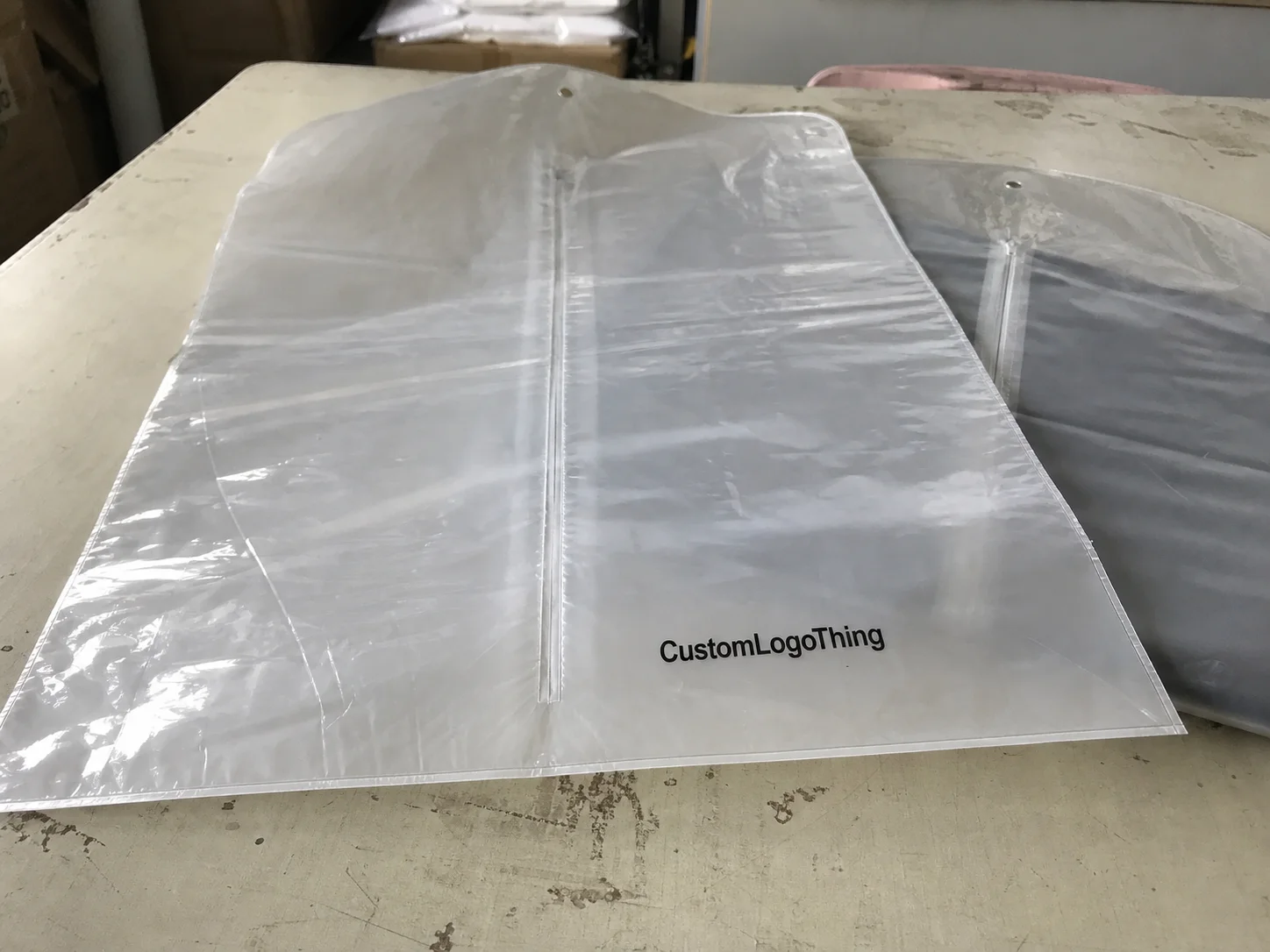
Cheap garment covers can look efficient until failure rates show up. A thin non-zip poly cover may cost $0.08 to $0.12 each, but if units tear in handling, collect dust, or collapse around the garment, the “savings” disappear fast. A sturdier PVC zipper bag at $0.22 to $0.38 can be cheaper in practice once rework and replacement are counted.
Protection changes the math. A well-made PVC Zipper Garment bag reduces dust exposure, limits incidental moisture contact, and holds shape better in storage. Film in the 0.16mm to 0.22mm range typically performs better than ultra-thin options because it resists collapse and presents more cleanly after transit.
Clear or frosted PVC also improves handling. Retail teams can identify color and style without opening the package. Warehouse teams can check SKUs faster and reduce unnecessary touchpoints. For premium apparel or travel sets, the zipper adds reuse, which raises perceived value without adding much operational complexity.
Practical rule: the cheapest bag is usually the cheapest line item, not the cheapest solution.
Buyers usually ask for numbers first, but there are three different numbers worth comparing: ex-factory cost, landed cost, and total program cost after damage or rework. Those are not the same answer, and the gap can be material on larger runs.
Material, zipper style, and build details that affect order value
The main cost levers are film, zipper, seams, gusset, handle, and print. Small changes in any of them can move unit pricing and freight more than expected.
PVC thickness is the first major lever:
- 0.12mm-0.14mm: budget covers, lighter-duty use, lower stiffness
- 0.16mm-0.18mm: common balance for retail and e-commerce apparel
- 0.20mm-0.25mm: heavier premium builds with better structure and higher freight weight
Thicker film improves shape retention and tear resistance, but it also increases material usage and shipping weight.
Zipper style is the next lever. A standard nylon zipper with a single pull is usually the most cost-efficient. Wider zipper tapes, double sliders, custom pullers, or upgraded hardware increase price but can improve user experience and perceived quality. For storage or uniform supply, basic hardware is often enough. For customer-facing retail packaging, an upgraded pull can be worth the extra cost.
Seam construction matters on larger bags. Heat sealing is common and efficient. Stitched edge binding looks more finished and can improve strength, especially when paired with gussets, but it adds labor. Gussets increase capacity for jackets, sets, and bulky folds, while also increasing film use and carton cube.
Handle design should be specified carefully. No-handle bags cost less and ship flatter. Die-cut or loop handles add convenience for retail or events but create stress points. If there is no reinforcement, failure rates rise quickly.
Finish affects both look and usability. Clear PVC maximizes visibility. Frosted PVC hides fingerprints and minor wrinkles and often looks cleaner on shelf. Buyers building premium custom apparel packaging often prefer frosted film for that reason.
Printing is usually most cost-effective when kept simple:
- Single-color screen print: best value for logos and simple marks
- Two-color screen print: stronger branding with moderate extra cost
- Large-area print: more impact, but higher setup waste and tighter registration demands
- Full-surface branding: usually justified only when shelf presentation strongly drives sales
Large print areas on flexible PVC are more likely to show registration drift, smudging, or cosmetic rejection than smaller logo placements. Simple graphics are easier to control and usually produce better yield.
Specifications buyers should lock before requesting a quote
If the RFQ says only “need quote for garment bag,” the pricing will be broad at best. Accurate quoting depends on dimensions, gauge, hardware, print, and packing details.
Before requesting a quote, lock these points:
- Finished dimensions: width x height x gusset depth
- PVC thickness: usually 0.12mm to 0.25mm
- Zipper style: top zip, full zip, single slider, double slider
- Finish: clear or frosted
- Handle option: none, die-cut, loop handle
- Print details: logo size, color count, print sides, placement
- Packing method: flat packed, inner polybag, bundle quantity
- Carton requirements: units per export carton and carton size limits
- Destination: port, warehouse ZIP code, or delivery region
Dimensions affect more than material yield. A move from 24" x 40" to 24" x 45" changes film usage, carton length, pallet footprint, and freight cost. Adding a 3" gusset may be necessary for fit, but it also raises material consumption and cube.
Typical size guidance:
- Shirts or blouses: about 12" x 16" to 14" x 18"
- Jackets: about 22" x 30" to 24" x 40"
- Dresses: about 24" x 54" to 24" x 60"
- Multi-piece sets or bulk storage: larger formats with 3" to 5" gussets
Fit testing matters. A bag that works on a folded sample can fail once hangers, inserts, trim bulk, or tissue are added. Quote from the actual packed garment profile, not the garment’s nominal size alone.
Compliance should be checked early if the bag reaches consumers or crosses borders. Ask about suffocation warning requirements, destination labeling, and restricted-substance standards where relevant. For broader packaging references, the Institute of Packaging Professionals is useful. If the packed product must survive tougher transit, ISTA guidance is relevant as well.
Also confirm whether the bag will travel inside a master carton or needs to survive parcel handling with limited secondary protection. Those are different performance requirements and should not be treated as the same spec.
PVC zipper garment bags packaging cost breakdown: pricing, MOQ, and hidden charges
A practical pvc zipper Garment Bags Packaging Cost Breakdown has six main cost buckets: PVC film, zipper hardware, labor, printing, packing, and freight. Sample fees, tooling, or setup charges may sit on top.
For standard custom sizes at moderate volumes, rough factory pricing often falls into these ranges:
| Bag Type | Typical Specs | MOQ | Estimated Factory Price |
|---|---|---|---|
| Budget shirt bag | 0.12mm clear PVC, simple zipper, no handle, 1-color print | 3,000-5,000 pcs | $0.14-$0.22 each |
| Standard apparel bag | 0.16mm-0.18mm PVC, zipper, optional gusset, 1-color print | 2,000-5,000 pcs | $0.22-$0.38 each |
| Premium retail bag | 0.20mm-0.25mm frosted PVC, upgraded zipper, handle, 2-color print | 2,000-3,000 pcs | $0.38-$0.75 each |
| Large dress or coat bag | Long format, gusseted, thicker film, zipper closure | 1,500-3,000 pcs | $0.55-$1.10 each |
These are working ranges, not guarantees. Size, film gauge, zipper grade, reinforcement, print coverage, and packing method can shift pricing sharply, but the ranges are useful for spotting quotes that are unrealistically low.
Material cost is usually the largest share because film usage scales directly with size and thickness. Zipper hardware follows, especially with custom colors or upgraded pulls. Labor rises with stitched binding, gussets, reinforced handles, and more complex finishing. Printing is driven by screen count, color matching, coverage area, and registration tolerance.
A rough split for a standard mid-range bag often looks like this: 45% to 60% material, 10% to 20% zipper and trims, 15% to 25% labor, 5% to 15% printing, then outer-carton packing on top.
MOQ logic is simple: lower runs spread setup costs over fewer pieces, so unit pricing rises. Higher runs usually reduce unit cost, but they tie up cash and warehouse space and only make sense if dimensions and artwork will stay stable long enough to use the inventory.
Custom MOQs commonly sit between 2,000 and 5,000 pieces. Very simple bags may run lower. Unusual shapes, thicker builds, or heavier custom printing may push the threshold higher.
Hidden charges often decide whether one quote is truly better than another. Watch for:
- Sample fees, often around $30 to $150 depending on complexity
- Screen or artwork setup charges
- Pantone matching surcharges
- Rush production fees, often 10% to 20%
- Export-carton customization or reduced carton counts
- Split shipments to multiple warehouses
- Tooling costs for unusual handles or shapes
- Inspection fees if third-party QC is required
Freight deserves separate attention. PVC bags are often more expensive to ship because of cube than weight. Long dress bags and gusseted coat bags fill cartons fast, so a low ex-factory quote can still lead to a poor landed-cost result.
A useful supplier quote should show at least two or three quantity tiers, such as 2,000, 5,000, and 10,000 pieces. That helps reveal where the actual price breaks sit.
If the garment bag belongs to a larger launch, compare it alongside Custom Packaging Products such as tissue, inserts, carton labels, and hang tags. A stronger bag may let you reduce other protective materials.
What is included in a PVC zipper garment bags packaging cost breakdown?
A proper breakdown usually includes raw PVC film, zipper components, cutting, sealing or stitching labor, printing, export-carton packing, and shipping. For custom work, it may also include sample development, screen charges, color matching, QC, and rush fees.
For clean comparison, ask suppliers to separate three numbers:
- Factory cost: the bag itself before freight and import expenses
- Landed cost: bag cost plus freight, duties, brokerage, and handling
- Total program cost: landed cost plus expected losses from damage, repacking, or returns
Also separate spec cost from execution cost. Two bags can share the same quoted dimensions and thickness but perform very differently if one has poor zipper attachment, weak seals, or loose print registration.
Practical QC checks usually include:
- Film thickness verification against the approved gauge
- Dimension tolerance checks on width, height, and gusset depth
- Zipper opening and closing tests across a sample lot
- Seal or stitch inspection at corners and stress points
- Handle pull checks if the bag includes carry features
- Print position and color consistency review
- Carton count and pack-direction verification before shipment
These checks are basic, but they prevent the most common avoidable failures.
Process and timeline: from artwork approval to shipment
The production flow is predictable when the specification is complete:
- Inquiry with full specs and quantity tiers
- Quote and build recommendation
- Sample request or digital mockup
- Artwork approval
- Pre-production confirmation
- Mass production
- QC inspection and export packing
- Shipment booking and dispatch
Typical timing for a custom order:
- Quote turnaround: 1 to 3 business days if specifications are complete
- Sample production: 5 to 10 business days
- Mass production: often 12 to 20 business days after approval
- Freight: around 3 to 7 days by air, or several weeks by ocean depending on route
Lead time extends with unusual frosted effects, custom zipper trims, oversized dimensions, or complex print layouts. Sample approval reduces risk by confirming fit, feel, zipper function, logo position, and pack count before full production.
Before requesting final lead time, have these ready:
- Vector logo file, usually AI or PDF
- Target dimensions and garment type
- PVC thickness preference
- Print color references
- Destination address or port
- Required in-warehouse date
If delivery falls near peak retail periods, build in extra time. Emergency freight is usually more expensive than early planning. For transit-performance standards, see ISTA.
Next steps to quote the right bag without wasting a week
If you want a usable quote, send a real spec sheet rather than a rough description.
Prepare these first:
- Finished bag dimensions
- Garment type and fold or hang method
- PVC thickness target or acceptable range
- Zipper style and handle requirement
- Clear or frosted finish
- Logo artwork and print colors
- Order quantity, ideally with 2 to 3 pricing tiers
- Destination port, warehouse, or ZIP code
A good buying move is to request two quote versions: one lowest-cost workable spec and one version with one or two upgrades that commonly affect performance, such as thicker film or better zipper quality. That side-by-side view shows whether the savings are meaningful or only cosmetic.
If the bag is customer-facing, premium, or subject to strict QC, request a physical sample. For simple warehouse storage, a photo sample or stock-material mockup may be enough.
Then follow this sequence:
- Send complete specs
- Confirm MOQ and quantity tiers
- Compare landed cost, not just factory price
- Approve a sample or mockup
- Lock artwork, carton details, and delivery timing
- Release production
The point of the breakdown is not to chase the lowest paper quote. It is to understand what the bag will actually cost after materials, labor, freight, presentation risk, and handling losses are counted together.
FAQ
What affects PVC zipper garment bags packaging cost the most?
Bag size and PVC thickness usually move price first because they directly change material usage. Zipper quality, gussets, handles, and print coverage also affect cost quickly. Freight matters more than many buyers expect, especially for large-format or bulky gusseted bags where carton cube increases faster than weight.
What is a typical MOQ for custom PVC zipper garment bags?
Many custom orders start around 2,000 to 5,000 pieces, though simple non-premium builds may begin lower. Smaller runs are possible, but the unit price rises because setup and sampling costs are spread across fewer bags. Tiered quotes at low, medium, and bulk quantities are the easiest way to see the actual cost curve.
How long does custom PVC zipper bag production usually take?
Standard production commonly takes about 12 to 20 business days after artwork or sample approval, assuming materials are available and the specification is fixed. Sampling usually adds 5 to 10 business days before that. Rush orders can move faster, but they cost more and leave less room to correct issues before shipment.
Can I get a logo printed on PVC zipper garment bags?
Yes. One-color and two-color screen printing are common for logos and simple branding. Print size, position, and ink coverage should be approved early because those details affect both appearance and reject risk, especially on flexible PVC surfaces.
What details should I send for an accurate quote?
Send dimensions, quantity, PVC thickness, zipper style, finish preference, handle option, logo file, print colors, packing method, and delivery destination. Include the garment type and whether the bag needs to survive parcel handling or only storage and retail display. A complete spec sheet shortens the quote cycle and reduces costly revisions later.

