Buyer Fit Snapshot
| Best fit | Recyclable Poly Mailers Wholesale projects where brand print, material claims, artwork control, MOQ, and repeat-order consistency need to be specified before quoting. |
|---|---|
| Quote inputs | Share finished size, material target, print colors, finish, packing count, annual reorder estimate, ship-to region, and any compliance wording. |
| Proofing check | Approve dieline scale, logo placement, barcode or warning zones, color tolerance, closure strength, and carton packing before bulk production. |
| Main risk | Vague material claims, crowded artwork, missing packing details, or unclear freight terms can make a low unit price expensive after revisions. |
Fast answer: Recyclable Poly Mailers Wholesale: Pricing, Specs & More should be specified like a repeatable production item. The safest quote records material, print method, finish, artwork proof, packing count, and reorder notes in one written spec.
Production checks before approval
Compare the actual filled-product size with the drawing, then confirm tolerance on folds, seals, hang holes, label areas, and retail display edges. Reserve space for logos, QR codes, warning copy, and material claims before decorative graphics fill the panel.
Quote comparison points
Review material grade, print process, finish, sampling route, tooling charges, carton quantity, and freight assumptions side by side. A quote is only useful when the supplier can repeat the same color, closure quality, and packing count on the next order.
Recyclable Poly Mailers Wholesale: Pricing, Specs & More
If you buy recyclable poly mailers wholesale, the first mistake is usually not the film. It is the size. Too much empty space raises freight, burns through material, and makes the package look careless the moment it reaches a customer. That sounds minor until you watch a fulfillment team start packing around oversized mailers and see the wasted film pile up by the end of the week. For a packaging buyer, recyclable poly mailers wholesale is a volume decision, so the real task is balancing cost, strength, print quality, and sustainability claims without turning a simple mailer into a procurement headache.
That matters for apparel, cosmetics, and subscription brands because those shipments need light protection, decent branding, and lower outbound shipping costs. Nobody wants to pay box pricing for a product that can move in a mailer. Nobody wants a thin bag that splits on the conveyor and turns one order into two shipments and a complaint. I have seen a clean-looking launch get dinged by nothing fancier than a bad bag size, and that is a frustrating way to learn a lesson you could have avoided in the spec stage.
One point buyers miss often: recyclable does not automatically mean recycled content. A mailer can be made from PE-based film that is recyclable in certain streams while still using virgin resin. It can also contain post-consumer recycled content and still need the right collection system to be accepted. Those are separate questions. Mixing them up is how people end up with claims they cannot support, and claims are the part of packaging that can come back to bite you later.
The frame is simple. If you are sourcing recyclable poly mailers wholesale, you need a product that seals cleanly, survives transit, prints well, and fits your budget at the quantity you actually plan to buy. Pretty packaging is nice. Accurate specs pay the bills.
Recyclable Poly Mailers Wholesale: What Buyers Miss
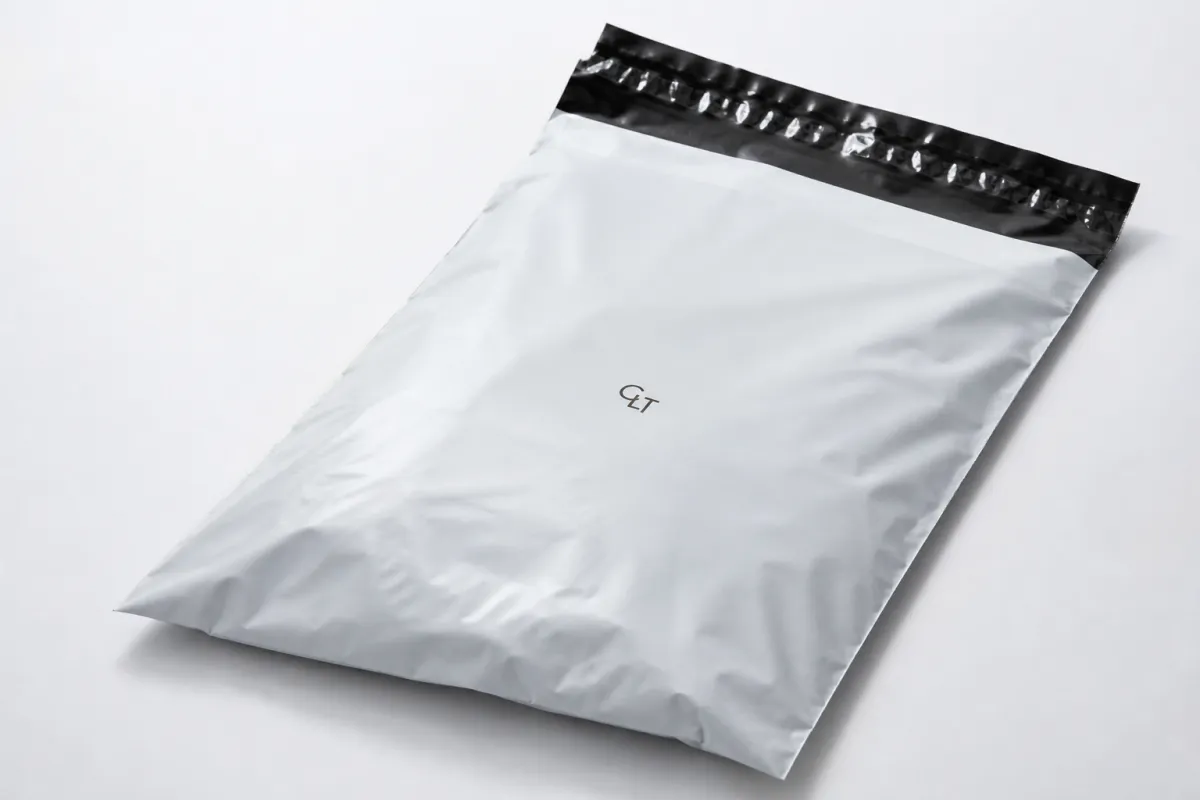
Most packaging waste does not come from the wrong material. It comes from the wrong size. That is the part people ignore because it is less glamorous than talking about “sustainable packaging.” If the mailer is two inches too large, you are buying extra film and shipping dead air. If it is too small, you are fighting overstuffed seams, crooked seals, and customer complaints. Recyclable poly mailers wholesale only works as a smart buy when the size matches the product, not just the catalog photo.
For apparel brands, the best case is usually a mailer that folds snugly around one folded garment or a two-piece set without forcing the seam open. For cosmetics, the mailer has to be firm enough to protect secondary boxes and small kits, but light enough that you are not paying box weight for a soft goods shipment. For subscription brands, the winning setup is simple: enough branding to look intentional, enough thickness to avoid splits, and enough consistency that the fulfillment team can pack fast. Recyclable poly mailers wholesale is not a design exercise. It is an operations choice.
Then there is recycling language. Buyers often ask for “recyclable” and assume the answer is the same everywhere. It is not. Acceptance depends on the film structure and the local recovery system. A PE mailer may be collected through store-drop or designated film programs in some markets, while another region may not accept it curbside at all. If you need to back up the claim, ask for the exact material structure, the label language, and whether the package is meant for retail drop-off or curbside sorting. The EPA’s recycling basics page is a good general reference point for how uneven these systems can be: EPA recycling guidance.
Here is the blunt version. Recyclable poly mailers wholesale should not be bought on slogans. Buy on film type, seal performance, and real end-use conditions. If the supplier cannot explain what stream the mailer is designed for, keep shopping. You are not being picky. You are being careful, which is what a packaging buyer is supposed to be.
If the only number on the quote is the unit price, you are not looking at the real cost. You are looking at the headline.
That is why brands that move quickly usually lock down size, thickness, print coverage, and recycling claim before they place the order. Recyclable poly mailers wholesale is easiest to manage when the spec sheet is boring. Boring is good. Boring means the mailer does its job.
There is also a practical reason seasoned buyers keep the specification tight: once a packing line gets used to a certain mailer, tiny changes start showing up everywhere else. The operator has to adjust how much product gets tucked, the label lands in a different spot, and the outer package no longer stacks the same way. That is the kind of mess nobody notices in a quote, but everybody feels in the warehouse.
Recyclable Poly Mailers Wholesale Product Details
A standard mailer has four parts that matter: the outer film, the seal flap, the tear strip, and any optional feature like a handle or double adhesive strip. That sounds basic because it is. The trick is Choosing the Right version for the item you ship. With recyclable poly mailers wholesale, basic is often better than overbuilt.
The outer film is usually PE-based when the goal is recyclability. In practical terms, that means the bag can be processed in some film recovery systems if the market accepts it. Some buyers also ask for post-consumer recycled content blends. That can be useful, but it changes the look and hand-feel a little. Expect slight color variation, a more matte appearance, and occasional minor surface texture differences. None of that is a problem if you know it is coming. It becomes a problem when sales wants a perfect white finish and procurement buys recycled-content film at the lowest quote.
Print options are straightforward, but they still trip people up. Logo printing can be one color, two colors, or full coverage depending on the press setup and the film. Matte and glossy finishes both work. Matte hides fingerprints and gives a quieter premium feel. Glossy looks sharper under bright retail lighting and usually feels more conventional. Opaque film is the safest choice for privacy. Semi-transparent film can work for some subscription or sample programs, but it is not the right move if you want the contents hidden.
Recyclable poly mailers wholesale is also a fit for soft goods, sample kits, and lightweight non-fragile items that do not need a box. That covers most apparel, socks, swimwear, lightweight accessories, and many direct-to-consumer orders. It does not cover everything. If the product is brittle, liquid, irregular, or heavy, stop pretending a mailer will solve the problem. Use the right structure, or the damage claims will eat whatever you saved on packaging.
For buyers who want to compare packaging formats, it helps to review the broader lineup of Custom Packaging Products and then narrow to Custom Poly Mailers if the order really belongs in a mailer format. That sounds obvious, but plenty of teams skip the comparison and over-spec the wrong thing.
Recyclable poly mailers wholesale should also be judged on how it looks in transit. A decent mailer resists punctures, seals without wrinkling open, and survives a few knocks without turning scuffed or shredded. If the print rubs off in the first shipment, you have not bought branding. You have bought frustration.
One thing I tell buyers during early packaging reviews is to handle the sample the same way a warehouse worker would, not the way a designer would. Twist the seam a bit. Tap the corner against a table. Try the label placement with the actual shipping label size. Those small checks reveal a lot faster than reading a spec sheet twice.
Recyclable Poly Mailers Wholesale Specifications: Sizes, Thickness, and Claims
Start with size. It is the easiest place to save money and one of the easiest places to get it wrong. Small accessory mailers often fall in the 6 x 9 inch to 8 x 10 inch range. Medium apparel mailers commonly sit around 10 x 13 inches, 12 x 15.5 inches, or similar. Larger shipping sizes may run 14.5 x 19 inches or more for bulkier soft goods. Those dimensions are not sacred. They just reflect what actually ships well. When people buy recyclable poly mailers wholesale without matching the size to the product, they end up paying for either waste or returns.
Thickness matters because it changes puncture resistance, tear performance, and feel. A thinner film can work for light garments and low-risk shipments, often around 2 mil or roughly 50 microns. Heavier gauges, such as 2.5 to 3 mil or around 60 to 75 microns, give better resistance when the package will move through busy fulfillment centers or less forgiving transit routes. Thicker is not automatically better. It raises material cost and can add a little to shipping weight. The sweet spot depends on what you ship, how far it moves, and whether your team tends to overpack mailers.
Here is the claim language buyers should handle carefully. Recyclable means the material is designed to be recycled somewhere, under some system. Recycled content means part of the film came from recovered resin. Compostable is a different category entirely and should not be treated as a softer version of recyclable. If you ask for the wrong claim, the supplier may quote the wrong construction. That is how a packaging project starts with good intentions and ends with confusing labels.
Before you approve any recyclable poly mailers wholesale order, request the practical specs that actually affect the job:
- Seal strength: Does the adhesive close cleanly after packing, and does it hold during transit?
- Puncture resistance: Can the mailer handle sharp garment trims, boxes with corners, or warehouse handling?
- Print area: How much space is truly available for a logo, pattern, or compliance copy?
- Color limits: Is the print one-color, spot color, or full coverage?
- Return use: Can the bag support a second adhesive strip for returns?
- Label area: Is there a clean zone for shipping labels and barcodes?
One more useful standard to keep in mind is transit performance. If a supplier talks about shipping durability, ask whether samples were checked against common test methods from groups like ISTA. That does not guarantee your exact route will be gentle, because freight is freight and it still behaves badly, but it gives you a more serious starting point than “it looks strong enough.”
Regional recycling rules matter too. A mailer that is accepted in one market may not be accepted in another, so the label on the outside bag should match the market you actually sell into. If your brand ships nationally or across borders, do not guess. Ask for the labeling approach in writing. Recyclable poly mailers wholesale is a packaging decision, but it also touches claims compliance, and that is where sloppy buying gets expensive.
In practice, the best packaging teams build a simple decision tree: product weight, outer dimensions, transit distance, and the claim they are willing to stand behind. If one of those four changes, the spec changes too. That approach keeps the conversation grounded and avoids the “we just need something eco-friendly” trap, which is usually too vague to be useful.
| Option | Typical MOQ | Typical Thickness | Estimated Unit Price | Best Use Case |
|---|---|---|---|---|
| Plain stock recyclable mailer | 500-1,000 pcs | 2.0-2.5 mil | $0.12-$0.22 | Testing, small launches, low-complexity orders |
| Custom logo print, single color | 2,000-5,000 pcs | 2.5-3.0 mil | $0.18-$0.32 | Brand visibility with moderate volume |
| Full-coverage custom print | 5,000-10,000 pcs | 2.5-3.5 mil | $0.24-$0.45 | Retail-ready presentation and strong branding |
| Recycled-content blend with custom print | 5,000 pcs and up | 2.5-3.5 mil | $0.26-$0.48 | Brands balancing recycled content and print requirements |
Those numbers are not a promise. They are the range you should expect to discuss once size, film, print coverage, and freight are on the table. In recyclable poly mailers wholesale, the spec is the price. Not the other way around.
Cost, Pricing, MOQ, and Quote Basics
Pricing on recyclable poly mailers wholesale breaks into a few controllable parts: size, thickness, print coverage, order quantity, and destination. That is the short list. Everything else is noise until those five things are settled. If a quote is missing one of them, it is not complete enough to compare.
MOQ usually moves with customization. Plain stock mailers can start lower because the supplier is not setting up a custom press run. Once you add logo printing, special colors, or film upgrades, the minimum order often rises. That is normal. If someone quotes a tiny MOQ for a highly customized mailer, ask what got removed from the spec. Usually something did.
Here is the part buyers forget when they chase the lowest unit price. A quote with a beautiful per-piece number can still be expensive once you add plates, setup, sampling, and freight. On smaller runs, freight can rival the unit cost. On larger runs, setup gets spread out, and the per-piece price starts to make more sense. The only number that matters is the landed cost. Recyclable poly mailers wholesale that looks cheap on paper can become irritatingly average once the shipping line is added.
A useful quote should show all of this clearly:
- Product size and thickness
- Film type and any recycled-content percentage
- Print method, number of colors, and print area
- MOQ and pricing breakpoints
- Artwork charges, if any
- Sample cost and sample lead time
- Packaging method, such as bulk carton or pallet
- Delivery terms and estimated freight
When buyers compare multiple suppliers, they should compare the same spec, not just the same phrase. A “12 x 15.5 recyclable mailer” from one supplier can be 2 mil film and plain white, while another quote includes 3 mil film, custom black print, and a return strip. That is not a direct comparison. That is a trap wearing a spreadsheet costume.
For brands that are still testing demand, there is a practical middle road. Start with a stock size, confirm the fit, and use that data to lock the branded version later. If you already know the SKU mix and shipping profile, go straight to custom. If not, use the first run to collect real packout data. Then order smarter next time. You can also compare with broader Wholesale Programs if you are sourcing packaging across several categories and want to consolidate freight.
Recyclable poly mailers wholesale pricing is not mysterious. It just punishes vague buyers. The clearer the brief, the better the quote. That is true across most packaging, but it is especially true here because resin, print, and freight all move the total.
Buyer's rule of thumb: if two quotes are close on unit price but one has clearer setup, better QC, and lower freight risk, the clearer quote often wins. Packaging people learn that the hard way and then stop pretending price is the whole story.
One detail that saves a lot of back-and-forth is to ask for the quote in a format you can compare line by line. I mean a real breakdown, not a single number with a vague note underneath it. Once freight, setup, and print are separated, the decision gets a lot less fuzzy.
Process and Timeline: From Artwork to Delivery
The order flow for recyclable poly mailers wholesale is straightforward if everybody answers messages on time. First comes the inquiry. Then the supplier confirms size, thickness, film structure, print method, quantity, and shipping address. After that, you get a quotation and usually an artwork check. Simple enough. The problems begin when the buyer sends half the information and expects the supplier to guess the rest.
The slowest approvals are usually color, size, and artwork edits. Color slows things down because what looks like a “black logo” may actually need to be a specific ink match, especially on colored film. Size slows things down because the buyer suddenly realizes the original measurements were based on one sample SKU, not the full range. Artwork changes slow things down because every revision can force the proof to be regenerated. If speed matters, keep the artwork clean and the comments precise.
Typical lead times vary by order type. Stock mailers can move quickly, sometimes around 7-12 business days before shipment if inventory is ready and the paperwork is clean. Custom printed recyclable poly mailers wholesale orders often need 12-15 business days from proof approval, and larger or more complex runs can take longer. If the order includes specialty film, extra colors, or heavier QC, build in more time. That is not pessimism. That is experience.
Production usually follows a familiar sequence:
- Material prep and film verification
- Printing and color alignment
- Bag forming, cutting, and sealing
- Sampling or in-line inspection
- Final QC and packing
- Shipment booking and dispatch
The QC stage matters more than many buyers think. This is where weak seals, print drift, odd sizing, and film defects get caught before they become customer complaints. If a supplier skips over QC language, ask what actually gets checked. Recyclable poly mailers wholesale should not leave the factory with guessing as the quality plan.
Freight can be the hidden bottleneck. Even a well-produced order can arrive late if the loading window is missed, the documentation is incomplete, or the receiving warehouse has a strict appointment schedule. That is why buyers should always tell the supplier whether the delivery is going to a warehouse, a third-party fulfillment center, or a direct store location. Packaging can be ready on time and still miss launch if logistics were treated like an afterthought.
For urgent launches, air freight may save the date but it will punish the budget. Sea freight lowers cost, but it adds time and more moving parts. There is no magic solution. There is only tradeoff management. Recyclable poly mailers wholesale orders go smoother when the buyer sets the launch date early and works backward instead of hoping the shipment simply appears.
If you have ever had a launch slip because the artwork proof sat in someone's inbox for three days, you already know the real lesson here. The production schedule is only as fast as the slowest approval, which is why clean internal decision-making matters just as much as the packaging spec itself.
Why Choose Us for Recyclable Poly Mailers Wholesale
Custom Logo Things is built for buyers who want practical packaging, not a lecture about sustainability. If you need recyclable poly mailers wholesale, the value is in clear specs, consistent print quality, and stable material sourcing. That sounds basic because it is. In packaging, basic done well beats fancy done badly.
What matters most is repeatability. A mailer that looks right on the first run and drifts on the second run is not a reliable supply plan. Strong QC reduces the usual headaches: poor sealing, print misalignment, weak film, inconsistent sizing, and ugly pallet packing. When those issues show up, they do not just hurt the mailer. They slow the fulfillment team and create waste everywhere else in the process.
We also know buyers often need help picking the right spec instead of the most expensive one. Some brands need a slim white mailer with one-color branding. Others need a heavier film, a larger size, and a second adhesive strip for returns. Recyclable poly mailers wholesale should match the product and the shipping profile, not someone else’s idea of premium packaging.
That is where good artwork support matters. A clean proof, a realistic color expectation, and a clear shipping estimate save time immediately. They also reduce the back-and-forth that eats up internal approval cycles. If the quote is clean, the decision moves faster. If the quote is vague, procurement ends up doing unpaid detective work.
We also keep the buying conversation grounded. If a customer only needs a low-quantity test order, we will say so. If a custom print makes sense, we will say that too. If the product is better served by another structure, we will say that as well. Packaging teams do not need cheerleading. They need answers they can use. That is the point of recyclable poly mailers wholesale done properly.
If you are comparing broader packaging options or planning a mixed purchase, the easiest way to keep things organized is to review Custom Packaging Products first, then narrow down the film, print, and MOQ that actually fit your launch. That keeps the order from becoming a pile of assumptions. It also helps if you are using recyclable poly mailers wholesale as part of a larger packaging program and want the numbers to line up across categories.
We have also learned, through a lot of routine sample checks, that the smallest details usually cause the biggest headaches. A slightly weak adhesive strip, a logo that sits too close to the fold, or a film that looks fine on screen but scuffs during handling can throw off a whole batch. So yes, the quote matters, but the sample tells the truth.
Next Steps for Recyclable Poly Mailers Wholesale Orders
If you want an accurate quote for recyclable poly mailers wholesale, send the basics up front: target size, quantity, print file, shipping address, and required delivery date. That alone cuts out most of the back-and-forth. If you also have a target thickness, recycling claim, or preferred finish, include that too. Buyers who send complete information get sharper quotes. Buyers who send “we need something eco-friendly” get a guessing game.
Ask for a sample or spec sheet before you commit, especially if the claim matters in your market. Verify whether the bag is meant for a certain recycling stream and whether the labeling matches the finished structure. If your sales team plans to mention recyclability in customer-facing copy, you should know exactly what that claim can and cannot support. That is not being difficult. That is basic risk control.
Compare at least two scenarios: one that meets your lower MOQ and one that gets you a better unit price at higher volume. That comparison tells you where the break-even point sits. In a lot of recyclable poly mailers wholesale programs, the smarter move is not the cheapest first run. It is the run that teaches you what customers actually keep ordering.
Then make the decision in plain English. If the budget is tight and the shipment is low risk, stock may be enough. If the branding needs to be visible and the volume is stable, custom print is the better move. If the product is rough on packaging, upgrade the film before you upgrade the art. Cheap bags that fail are never cheap for long.
The most useful takeaway is pretty straightforward: lock the size, thickness, print limits, and recycling claim before you place the order, and make sure the quote shows landed cost rather than just a headline unit price. That one habit cuts down on surprises, keeps the warehouse moving, and makes recyclable poly mailers wholesale a controlled buying decision instead of a guess.
For buyers ready to move, the fastest path is simple: review the options, choose the size and thickness that fit the product, and send the order details. If you want a volume quote, a sample, or a branded spec for recyclable poly mailers wholesale, Custom Logo Things can help you narrow it down without overcomplicating the job. Send the size, quantity, print file, and delivery date, and we will take it from there.
FAQs
Are recyclable poly mailers wholesale orders actually recyclable curbside?
Not always. Recyclability depends on the film type and the recycling system in the buyer's market. Ask for the exact material structure and labeling before you place the order. If curbside acceptance matters, verify the local program rules instead of assuming the claim applies everywhere.
What is the minimum order for recyclable poly mailers wholesale?
MOQ depends on whether the mailers are stock or custom printed. Plain mailers usually have a lower entry point than branded runs. If your quantity is small, start with a stock size first and move to custom print after demand is proven.
Can I print my logo on recyclable poly mailers wholesale products?
Yes, most wholesale mailers can be custom printed. Print limits depend on the film, number of colors, and available print area. Ask for an artwork mockup and confirm the print method before approving the order.
How long do recyclable poly mailers wholesale orders take to produce?
Stock items ship faster than custom printed orders. Artwork approval, sample confirmation, and freight scheduling are the usual time factors. If you have a hard launch date, build in extra time for review and shipping.
What changes recyclable poly mailers wholesale pricing the most?
Size, thickness, print coverage, and order quantity drive most of the cost. Freight and setup charges can matter as much as the unit price on smaller runs. The best quote is the one with the lowest landed cost, not the lowest headline number.