Buyer Fit Snapshot
| Best fit | Custom Poly Mailers by Size projects where brand print, material claims, artwork control, MOQ, and repeat-order consistency need to be specified before quoting. |
|---|---|
| Quote inputs | Share finished size, material target, print colors, finish, packing count, annual reorder estimate, ship-to region, and any compliance wording. |
| Proofing check | Approve dieline scale, logo placement, barcode or warning zones, color tolerance, closure strength, and carton packing before bulk production. |
| Main risk | Vague material claims, crowded artwork, missing packing details, or unclear freight terms can make a low unit price expensive after revisions. |
Fast answer: Custom Poly Mailers by Size: Choosing the Right Fit should be specified like a repeatable production item. The safest quote records material, print method, finish, artwork proof, packing count, and reorder notes in one written spec.
Production checks before approval
Compare the actual filled-product size with the drawing, then confirm tolerance on folds, seals, hang holes, label areas, and retail display edges. Reserve space for logos, QR codes, warning copy, and material claims before decorative graphics fill the panel.
Quote comparison points
Review material grade, print process, finish, sampling route, tooling charges, carton quantity, and freight assumptions side by side. A quote is only useful when the supplier can repeat the same color, closure quality, and packing count on the next order.
Custom Poly Mailers by size sound simple on paper, but the minute they meet real products, real packing habits, and real freight costs, the details start to matter fast. A bag that runs a little too large can waste postage, eat up shelf and carton space, and let the product slide around during transit. A bag that runs too tight can slow the packing line, crease the item, or make the finished package look rushed instead of considered. Custom poly mailers by size are not just a line item on a spec sheet; they need to match the packed shape of the product, the way it ships, and the room needed for branding so the package works without getting in the way. That is where the value sits. The mailer itself is only one part of the equation. Labor, returns, product protection, and the customer’s first impression often carry more weight than the unit price, and if you miss that balance, you are gonna feel it pretty quickly.
If your packaging system also includes labels, inserts, or other branded pieces, the mailer should sit inside that larger system rather than being chosen in isolation. Seen that way, Custom Poly Mailers by size become a practical packaging decision, not just a visual one. I have seen a half-inch of dead space turn into extra tape, extra fill, and a slower line more times than I care to count.
Custom Poly Mailers by Size: Why a Small Gap Gets Expensive
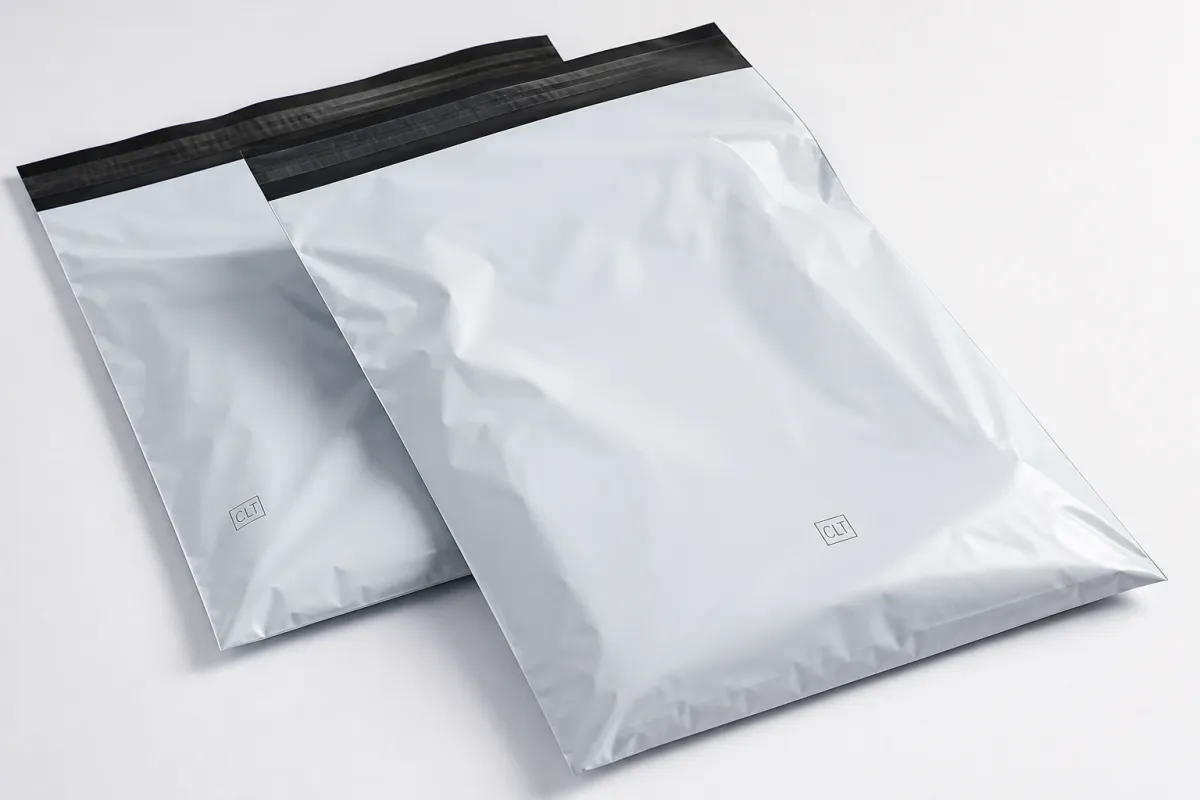
Many buyers treat mailer size like a design detail. That approach usually gets expensive. A mailer that is only slightly oversized can let the product move around, which is rough on soft goods, boxed items, and anything with corners or hard edges. It also tends to trigger a chain reaction: add void fill, add tape, add a few more seconds of labor, then wonder why the “budget” mailer no longer feels budget-friendly. Custom Poly Mailers by size are meant to remove that kind of waste from the process, not create a new version of it.
The better question is not “What size looks right?” It is “What size packs cleanly?” A folded garment that needs an extra crease just to fit has already lost something. A small hard product that rattles inside the bag feels less considered, and the customer notices. Brands selling through both e-commerce and retail packaging channels can feel that mismatch even faster, because a loose package reads as careless in both settings. Package branding is visual, but it also communicates control, and fit is a big part of that signal.
The gap between stated dimensions and usable space gets overlooked all the time. With Custom Poly Mailers by size, the usable interior is what matters, not the number printed on the order form. Seams, seals, and gussets all trim the real opening. A 10 x 13 inch mailer does not behave like a perfect rectangle on a drawing; it behaves like a finished product with folds, tolerances, and a sealing edge that needs room to do its job.
The practical rule: choose the smallest mailer that still allows easy loading, a secure seal, and enough room for the product in its thinnest and thickest packed form. That sounds simple. It is also where a lot of bad orders start.
Custom poly mailers by size also shape freight and storage in ways people miss until the warehouse is full. Smaller bags pack tighter on pallets and fit more efficiently into cartons. They cut down clutter in storage. Even a one-inch shift in footprint can change the way master cases build, which affects carton count, pallet layout, and receiving time. The bag price may move by a few cents, but the larger supply chain math can move much more than that. That is a good reason to think carefully before locking in a standard size just because it feels familiar.
If you are comparing packaging formats, it helps to look at the whole line. Our Custom Packaging Products page shows how mailers fit alongside other options, and our Custom Poly Mailers listing is a useful place to narrow the field if you already know the category you want.
For brands balancing branded packaging with shipping efficiency, the smartest move is to treat custom poly mailers by size as a fit problem first and a print problem second. That shift saves money and keeps the packing line from fighting oversized bags every morning.
How Custom Poly Mailers by Size Work from Film to Finished Bag
At the core, a poly mailer begins as flat film that gets printed, cut, sealed, and converted into a finished bag. The film is typically measured in mil thickness, with common choices around 1.5 mil for light apparel, 2.0 to 2.5 mil for everyday e-commerce use, and 3 mil or more for heavier or more demanding shipments. Custom poly mailers by size can be made as flat bags or with a gusset, and that choice changes the usable volume far more than many buyers expect.
Flat mailers work well for slim products. T-shirts, thin socks, light accessories, and folded documents all sit neatly in a flat format if the fold is controlled. Once the item gains thickness, the mailer needs more breathing room. That is where gusseted styles earn their place. A side gusset or bottom gusset creates an expandable profile, and that extra volume can matter more than width alone. For custom poly mailers by size, the difference between a smooth one-motion pack and a bag that takes two hands and extra attention often comes down to that construction choice.
Dimensions also affect where the seams land, which matters for print placement. A logo too close to a seal line can distort or disappear. Artwork crossing a fold can look stretched once the package is closed. With custom poly mailers by size, the print area and the bag geometry should be planned together. That is packaging design, not decoration.
There is a practical gap between outside size and usable opening size. Buyers often fixate on flat dimensions and forget that the opening needs to be wide enough for the product to enter without snagging on a seam or fighting the adhesive strip. That matters a lot for high-volume fulfillment. Packing speed drops quickly when every insert takes a little wrestling.
Here is the simplest way to think about custom poly mailers by size:
- Flat dimensions set the footprint and storage efficiency.
- Gusset depth sets how much bulk the bag can handle.
- Seal margin sets how much room the packer needs to close it securely.
- Print panel space sets how much room the brand has to look deliberate.
If you ship into retail packaging channels or use branded packaging as part of a stronger package branding strategy, those four points matter even more. The bag has to look right from the shelf, from the doorstep, and from the phone camera that catches it later.
To put a quality lens on the shipping side, it helps to test the finished package with basic drop and transit-style checks. ISTA offers useful guidance on distribution testing methods at ISTA. A lab is not necessary for every SKU, but proof that the package survives normal handling is. That is where custom poly mailers by size move from guesswork to a repeatable spec.
Custom Poly Mailers by Size: Cost, Pricing, and MOQ
Pricing for custom poly mailers by size usually comes down to five variables: film thickness, bag dimensions, print colors, finishing details, and production complexity. A standard one-color or two-color printed mailer in a common size may fall into a lower cost bracket than a fully custom dimension with heavier film and a larger print surface. As a rough planning range, many buyers see printed mailers around $0.12-$0.28 per unit at higher volumes for simpler specs, while larger or more customized versions can move into the $0.25-$0.55 range or higher depending on size, thickness, and print coverage. That is not a quote. It is a reality check.
Custom poly mailers by size do not scale in a neat straight line. Bigger bags use more material, yes, but the bigger shift often shows up in carton count, pallet efficiency, and freight class. Two sizes that look close on paper can behave very differently in a warehouse. If one size allows 30% more units per carton, the savings may show up in labor and shipping instead of the unit price.
MOQ is the part that surprises buyers. Standard-size printed mailers may start lower because the tooling already exists or the production flow is simpler. Fully custom dimensions often push minimums higher, commonly in the 5,000 to 10,000 unit range, because the manufacturer has to account for setup, film allocation, and line scheduling. Some suppliers can go lower, though that usually changes the price or the lead time. If you are testing a new product line, ask for the smallest viable MOQ before committing to a full run of custom poly mailers by size.
That matters because the cheapest unit price is not always the cheapest packaging. A three-cent savings on the bag can disappear fast if the size is too loose and you add tissue wrap, more labor, and a package that feels less polished. The unit price looked good on paper and lost the argument in the warehouse. That happens more often than buyers like to admit.
Pricing comparison for common mailer choices:
| Mailer Option | Typical MOQ | Approx. Unit Cost | Best For | Main Tradeoff |
|---|---|---|---|---|
| Standard flat printed size | 1,000-5,000 | $0.12-$0.28 | Apparel, slim accessories, repeat SKUs | Less flexibility if product thickness changes |
| Gusseted printed size | 3,000-8,000 | $0.18-$0.42 | Bulkier goods, bundled sets, mixed fold profiles | Slightly higher material use and setup complexity |
| Fully custom dimensions | 5,000-10,000+ | $0.22-$0.55+ | Brands with defined SKU shapes and tighter fit requirements | Higher setup and longer approval cycle |
| Oversized “one bag fits all” approach | Lower upfront | Looks cheap until labor is counted | Temporary testing only | Waste, movement, and higher hidden costs |
That last row is not a real strategy for most brands. If the product line is stable, custom poly mailers by size can reduce waste enough to justify a slightly higher unit price. If the line is still changing, a temporary size may be the right bridge for a short period. The point is to know which problem the order is solving.
For brands comparing product packaging options across formats, custom poly mailers by size often sit between plain shipping supplies and higher-end retail packaging. If the item needs a rigid presentation, custom printed boxes may be the better buy. If the product needs low freight cost and fast packing, a properly sized mailer usually wins. That is not a philosophy. It is arithmetic.
A clean fit does three jobs: it protects the product, keeps postage under control, and makes the brand look like it planned ahead.
One more practical note: if your broader packaging mix includes paper components, inserts, or cartons, FSC certification can matter for those materials. The FSC site at fsc.org is a helpful reference when you are checking chain-of-custody language or sustainability claims. Custom poly mailers by size may be plastic-based, but the full package experience usually is not.
Custom Poly Mailers by Size Process and Timeline
The production path for custom poly mailers by size is usually direct, though there are more moving parts than buyers expect. The process starts with sizing, then artwork, then proofing, then setup, then printing, converting, finishing, packing, and shipping. Miss one step and the schedule slips. That is not always a supplier failure. A lot of delays begin with the planning itself.
Standard printed mailers tend to move faster because the bag footprint and tooling are already established. Once the order shifts into fully custom dimensions, setup time grows. A realistic planning window for custom poly mailers by size is often 12-20 business days from proof approval for production alone, with shipping added after that. Rush options do exist in some programs, though they usually narrow your choices on film, print detail, or carton configuration.
Delays usually come from familiar places. Artwork arrives in the wrong file format. The size discussion starts with the mockup instead of the packed product. Proofs bounce around because nobody checked the seal margin. Then, right before approval, someone notices the hoodie is thicker than expected. That is how a two-week project turns into a month-long annoyance.
Custom poly mailers by size work best when packaging, brand, and operations agree on the spec early. The brand wants print placement and package branding to look intentional. Operations wants loading speed and damage control. Finance wants the landed cost to stay where it should. If those groups wait too long to talk, the order usually costs more than it needed to.
A clean workflow looks like this:
- Measure the packed product in its actual shipping form.
- Choose flat or gusseted construction based on the product shape.
- Select a thickness that fits the weight and edge profile.
- Place artwork only after the size is settled.
- Approve a sample or digital proof with the final loading direction in mind.
- Lock the production schedule before launch pressure builds.
That order of operations may feel basic, yet it prevents the classic mistake of picking custom poly mailers by size because the artwork looked good first. A beautiful bag that tears, bunches, or packs slowly is still the wrong packaging choice.
If you are building a larger branded packaging system, the same discipline applies across custom poly mailers by size, inserts, labels, and other product packaging pieces. Strong systems rarely depend on one perfect component. They depend on all the components matching the same shipping reality.
Step-by-Step Guide to Ordering the Right Size
Here is the practical way to choose custom poly mailers by size without turning it into a guess. Start with the product in its packed state, not the marketing photo and not the flat product on a table. Use the item that actually ships, with tissue, inserts, tags, and the fold pattern used in production. Measure length, width, and thickness after the product is packed the way it will leave the building.
Step 1: Measure the real packed form. If a tee is folded narrow for speed but the fulfillment team adds a thank-you card or insert, measure with those pieces in place. If hoodies ship regularly, account for the hood and cuffs. If accessories ship in a box, measure the box, not the object inside it. Custom poly mailers by size only work when the measurement reflects reality.
Step 2: Decide the packing style. Flat, folded, bundled, and boxed products each need different room to load cleanly. A flat tee can fit in a tighter bag than a sweatshirt with a zipper. A soft item with no hard edges needs less protection than one with corners. The mailer size should match the shape you actually pack, not the shape you wish you could pack.
Step 3: Add a loading allowance. This is the part that affects labor the most. Too tight, and packing slows down. Too loose, and the product shifts around. A useful rule is to allow enough space for the item to enter without force, then keep the extra space as small as possible. That balance is where custom poly mailers by size save both time and money.
Step 4: Check print area and seal margins. Artwork needs safe space away from edges, seals, and folds. A logo too close to the top closure can disappear into the adhesive zone. A design element crossing a side seal can look crooked once the bag is closed. This is where packaging design and production specs need to stay in the same conversation.
Step 5: Match the bag to shipping reality. If the carrier, service level, or route puts the package through rough handling, test for that. If the package is part of retail packaging with a premium feel, a thicker film or cleaner print finish may be worth it. If the shipment is high-volume apparel, loading speed may matter more than a glossy look. There is no universal answer, which is exactly why custom poly mailers by size are chosen by use case rather than habit.
Step 6: Compare two or three size options. Do not stop at the first dimension that seems close. A second option that is only slightly shorter or narrower can cut waste and improve fit. A third option may reveal that a gusset works better than a bigger flat bag. That is where custom poly mailers by size stop being a hunch and start being a controlled decision.
One useful comparison: if your product fits in a 10 x 13 inch flat mailer with room left over, check whether a 9 x 12 inch version still loads easily. If the product is bulkier, compare a flat 14 x 19 inch mailer against a gusseted 14 x 20 inch format. The goal is not to force a smaller bag. The goal is to find the smallest bag that does not create a packing problem.
The same logic applies if you also order custom printed boxes for premium SKUs. A box may fit one product line better, while custom poly mailers by size handle the rest. Good packaging programs usually use more than one format.
Common Mistakes When Choosing Size and Specs
The first mistake is guessing. People estimate from a flat garment or a sample packed by hand under perfect conditions. Then the real production run starts, the product folds a little thicker than expected, and the bag no longer fits the process. Custom poly mailers by size should not be chosen from a guess when a measurement takes only a few minutes.
The second mistake is ignoring thickness distribution. A hoodie with a zipper does not behave like a soft tee. A boxed item does not behave like a pouch. A product with hard edges or uneven bulk may need more room at one end or a gusseted sidewall instead of a wider flat bag. Custom poly mailers by size are supposed to account for that. If the spec ignores it, the bag will not fix the problem for you.
The third mistake is designing first and sizing later. That is a packaging design trap. If artwork gets approved before the final dimensions are set, logos end up too close to seals, brand marks distort, and the finished package looks rushed. That hurts package branding more than a simpler layout ever would.
The fourth mistake is assuming one size can cover everything. Sometimes a single bag works when the catalog is narrow and the SKUs are nearly identical. More often, it becomes a compromise that fits none of the products well. In that case, two or three custom poly mailers by size options usually perform better than one oversized compromise bag. Less waste. Less movement. Less frustration.
The fifth mistake is forgetting how the order is packed in the real world. A fulfillment center that packs by hand has different needs than a line running at speed. A warehouse with mixed SKU orders has different pain points than a brand shipping one hero product every day. Custom poly mailers by size should be chosen around the work itself, not a spreadsheet fantasy.
Here is a quick way to pressure-test the spec:
- If the product moves inside the bag, the size is too large or the fold is wrong.
- If the packer has to force the item in, the size is too small.
- If the artwork sits near a seam, the design area needs revision.
- If the carton count looks awkward, the footprint may need adjustment.
Brands often fix the wrong problem. They blame the film thickness when the real issue is the dimension. Or they blame the dimension when the issue is a bad fold. Custom poly mailers by size work best when the full packing method gets checked, not just the bag spec.
If you need a broader packaging reference point, general packaging resources can help with vocabulary and testing language. Packaging.org is a useful place to sanity-check terminology and industry context at packaging.org. That does not replace supplier guidance, but it does help when the team needs a common language for specs.
Expert Tips and Your Next Three Moves
Start with your top-selling SKU, not the odd item that ships twice a month. The product that carries volume should decide the first custom poly mailers by size spec. Once that main SKU is right, build the rest of the size matrix around it. That approach is cleaner than trying to build one universal mailer and hoping every product behaves the same way.
Ask for samples or a short test run and actually pack the product. Seal it. Shake it. Drop it from a realistic height. Check the corners. Check the adhesive closure. Check whether the print still looks centered after handling. If a packaging team only reviews a PDF proof, it is approving a picture, not a package. Custom poly mailers by size need physical testing because they live in the physical world.
Compare the full cost, not just the quote for the mailer. A slightly more expensive bag can still be the smarter choice if it reduces labor, shrink wrap, damage, or postage weight. That is especially true for high-volume apparel, accessory kits, and bundles where small savings compound quickly. A three-cent difference in unit cost can vanish under a ten-second labor loss. Custom poly mailers by size are one of those categories where the hidden numbers matter more than the headline number.
Good buyers also think about the shelf and the screen. If the package is part of retail packaging, the artwork needs to read well from a distance and in a thumbnail. If the package is mostly shipping-oriented, durability and line speed move to the front. That is why custom poly mailers by size should fit the brand without slowing the work that gets the product out the door.
Here are the next three moves I would make:
- Lock your product measurements and shipping method.
- Request quotes for 2 to 3 size options, not one.
- Approve the sample that fits cleanly, protects the product, and packs fast.
If you do those three things, custom poly mailers by size stop being a guess and start acting like a system. That is what good packaging should do.
One more practical note: if your product line includes heavier or more presentation-driven items, you may still decide that custom printed boxes are the better format for those SKUs. That is fine. A strong packaging program does not force every item into the same wrapper. It uses the right tool for the right product.
How do I choose the right custom poly mailers by size for clothing?
Measure the garment in its packed state, not flat on a table, because folded thickness changes the size you actually need. Leave enough room for easy insertion and sealing, but do not oversize it so much that the item shifts around. If you ship several apparel types, build separate sizes for tees, hoodies, and bulkier items instead of forcing one compromise size. That is usually the cleanest way to keep custom poly mailers by size efficient and predictable.
Do larger custom poly mailers by size always cost more?
Usually yes, because larger bags use more film and often cost more to print and ship. The exception is when a slightly larger bag reduces labor, damage, or postage enough to offset the higher unit price. That is why the smartest comparison is total landed cost, not just the line item for the bag. Custom poly mailers by size should be judged on the full shipping equation.
What MOQ should I expect for custom poly mailers by size?
MOQ depends on whether the size is standard, semi-custom, or fully custom, along with print complexity. Fully custom dimensions often need higher minimums because of setup and production efficiency. If you are testing a new SKU, ask for the lowest viable MOQ before you commit to a large run. That gives you room to prove the fit before you scale custom poly mailers by size across the full line.
How long do custom poly mailers by size take to produce?
Standard printed mailers are usually faster than fully custom sizes because the setup is simpler. Artwork approval, proof revisions, and the production queue are the main variables that move the timeline. Build extra lead time if the launch date cannot slip. For many orders, the difference between a smooth launch and a scramble is starting custom poly mailers by size earlier than expected.
Should I choose one size for every product or multiple sizes?
One size can simplify inventory, but it often wastes material or fits poorly for smaller and larger products. Multiple sizes usually win when the catalog has clearly different shapes or thicknesses. The practical answer is to match your best-selling SKUs first, then expand only if the data says you need it. That is the least painful way to build custom poly mailers by size into a real packaging system.
Handled well, custom poly mailers by size improve fit, trim waste, and make the brand look more organized without forcing the warehouse to do extra work. That is the point. Measure the packed dimensions, check the print area, compare the real costs, and treat custom poly mailers by size like a business decision instead of a decorating project.
The clearest takeaway is simple: pack the product the way it ships, measure that version, compare two or three sizes, and test the one that fits cleanly before you place the full order. Do that, and custom poly mailers by size become a repeatable part of your packaging system instead of a guess that happens to look good on a mockup.

