Buyer Fit Snapshot
| Best fit | recycled paper vs kraft packaging for packaging buyers comparing material specs, print proof, MOQ, unit cost, freight, and repeat-order risk where brand print, material, artwork control, and repeat-order consistency matter. |
|---|---|
| Quote inputs | Share finished size, material target, print colors, finish, packing count, annual reorder estimate, and delivery region. |
| Proofing check | Approve dieline scale, logo placement, barcode or warning zones, color tolerance, and any recyclable or compostable wording before bulk production. |
| Main risk | Vague material claims, crowded artwork, or missing packing details can create delays even when the unit price looks attractive. |
Fast answer: Recycled Paper vs Kraft Packaging: What Really Wins should be specified like a repeatable production item. The safest quote includes material, print method, finish, artwork proof, carton packing, and reorder notes in one written spec.
What to confirm before approving the packaging proof
Check the product dimensions against the actual filled item, not only the sales mockup. Ask for tolerance on folds, seals, hang holes, label areas, and retail display edges. If the package carries a logo, QR code, warning copy, or legal claim, reserve that space before decorative graphics fill the panel.
How to compare quotes without losing quality
Compare board or film grade, print process, finish, sampling route, tooling charges, carton quantity, and freight assumptions side by side. A lower quote is only useful if the supplier can repeat the same color, closure quality, and packing count on the next order.
Quick Answer: Recycled Paper vs Kraft Packaging
I remember standing beside a carton line outside Chicago, Illinois, watching recycled paper vs kraft packaging run side by side on a Thursday morning shift, and thinking, “Well, this is going to make someone’s brand team very emotional.” The kraft board looked stronger the second it came off the line. The recycled sheet looked better once we put the print samples under showroom lighting in the QC room. That split happens a lot in factories across the Midwest and the East Coast. Kraft tends to win on strength and natural texture. Recycled paper often wins on print friendliness and a cleaner branded look, depending on the board mix and coating. Packaging is fun like that. Slightly annoying. But fun.
If you want the short answer, here it is. Choose kraft when strength, a natural unbleached look, and lower visual waste matter most. Choose recycled paper when high post-consumer content, smoother graphics, and broader sustainability messaging matter more. In recycled paper vs kraft packaging, the better choice depends on the package type, product weight, ink coverage, finish, and whether the customer is buying for appearance, recyclability, or cost first. For a 350gsm C1S artboard mailer in a premium launch kit, I usually lean one way; for a 28pt kraft shipping sleeve going through a Texas fulfillment center, I lean the other.
I’ve seen both materials perform well in folding cartons, mailers, wraps, sleeves, and inserts, but they do not behave the same on a folder-gluer or on a BOBST die-cut line. Kraft usually gives fewer surprises in crush resistance and edge performance, while recycled paper can be a nicer canvas for branded packaging when you need cleaner type, controlled solids, or a more polished shelf look. That’s why recycled paper vs kraft packaging is never a one-line answer if you’re responsible for Product Packaging That has to ship, stack, and sell across Dallas, Atlanta, or Los Angeles.
Here’s the way I frame it for buyers: the winner is the substrate that best matches the job. If the carton is mostly protecting a 2-ounce serum jar in retail packaging, the decision may lean toward recycled paper with a matte aqueous finish and a 12- to 15-business-day approval cycle. If the job is a 14-ounce ecommerce kit that gets tossed into a truck and handled three more times before delivery, kraft usually earns its keep. We’ll get into the production details, pricing, and approval process so you can compare recycled paper vs kraft packaging with factory reality, not brochure language. That means sheet specs, actual quotes, and the annoying little details nobody wants to mention until the carton cracks at the fold.
What Is the Difference in Recycled Paper vs Kraft Packaging?
The simplest difference in recycled paper vs kraft packaging is fiber source and how the board behaves after it is made. Recycled paper uses recovered fiber content, which can include post-consumer waste, post-industrial waste, or a mix of both. Kraft usually refers to virgin or minimally processed kraft pulp, which gives the sheet more length, more strength, and a more natural brown appearance. That basic difference affects everything downstream: print quality, foldability, crush resistance, and how the finished carton feels in a customer’s hands.
In plain English, recycled paper is often chosen for premium print surfaces and sustainability storytelling, while kraft is picked for durability and a raw, earthy look. I’ve had buyers ask for “the greener option” and then point at kraft because it looked more natural. That’s not wrong, by the way. It’s just not the whole story. In recycled paper vs kraft packaging, the right choice depends on recycled content, certification, coating, converting performance, and the actual use case. Color alone does not decide the winner, no matter how many times someone says “brown means eco.”
For packaging materials in the real world, these are the practical distinctions I care about most:
- Recycled paperboard often has stronger branding appeal for retail packaging and custom printed boxes.
- Kraft paperboard often has better tear resistance and better performance in shipping and handling.
- Coated recycled board usually supports more precise graphics, fine type, and brighter ink reproduction.
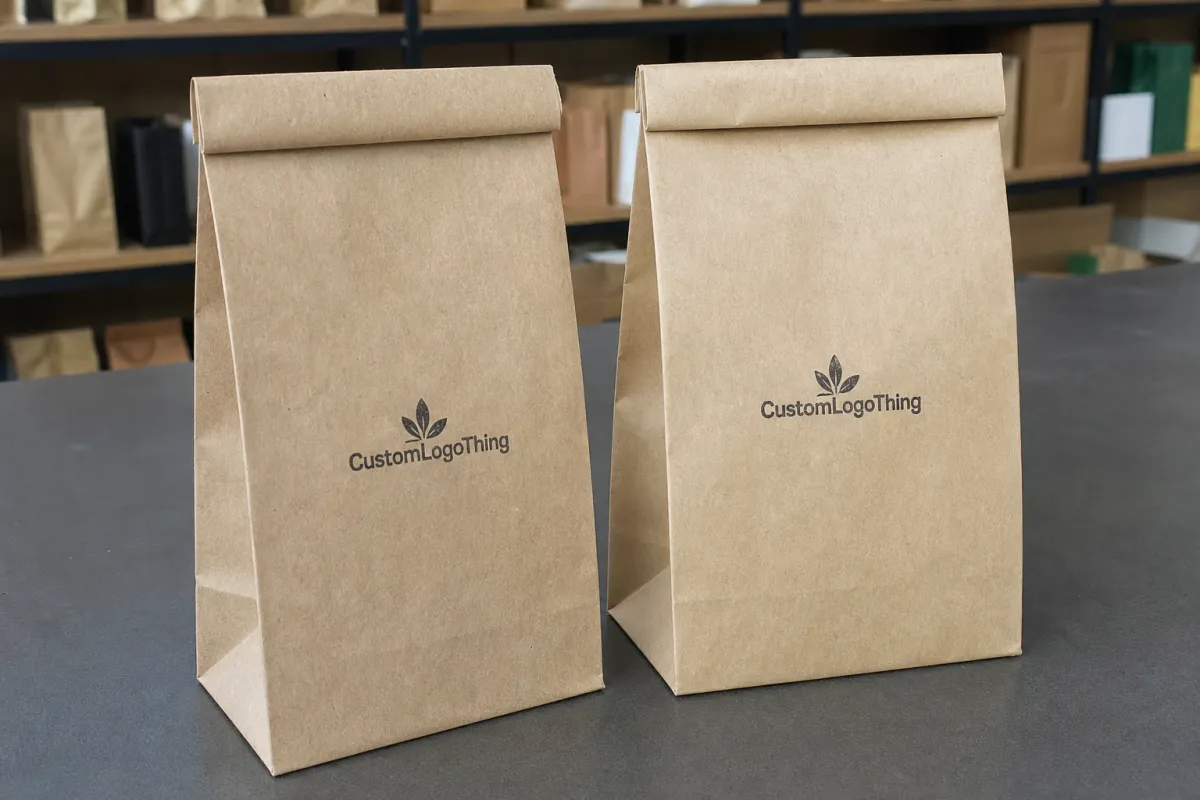
- Natural kraft usually gives a rugged, honest look that works well for utility packaging, inserts, and mailers.
That’s the frame I use before I even talk price. Because in recycled paper vs kraft packaging, the board that looks right on a sample table is not always the board that survives a distributor route in July heat. I’ve learned that the hard way more than once.
Top Options Compared: Recycled Paper vs Kraft Packaging
At the board level, recycled paper vs kraft packaging starts with fiber structure. Kraft is usually engineered for higher tear resistance and better tensile strength because the virgin fiber length is longer and more consistent. Recycled paper, by contrast, can vary more from mill to mill because recovered fiber content changes with the paper stream, the de-inking process, and the final board recipe. On a converting floor in Shenzhen or Dongguan, that variation matters when you’re scoring, folding, and trying to keep glue lines clean at 200 to 280 cartons per minute.
Print performance is another place where recycled paper vs kraft packaging separates quickly. Recycled paper often gives excellent opacity and a softer, more premium feel for graphics because the surface can be more uniform, especially on coated recycled board like 350gsm C1S or 400gsm SBS with a recycled liner. Kraft can still print well, but the brown base mutes bright colors, and that can be a blessing or a problem depending on the design. Earth tones, black type, and minimalist artwork can look beautiful on kraft, while dense CMYK imagery or bright brand colors usually pop better on recycled stock. I’ve had clients stare at two proofs for ten minutes in a conference room in Brooklyn and then point at the kraft sample because it “felt honest.” Sure. Honest and brown. Great combo.
On sustainability claims, I tell clients not to oversimplify. Recycled paper may carry a higher post-consumer content percentage, such as 30% PCW, 60% PCW, or even 100% recycled fiber, which is a strong story for package branding. Kraft can still be a responsible choice when it comes from certified fibers and is run efficiently through the mill and converting plant in Vietnam, North Carolina, or British Columbia. For that reason, recycled paper vs kraft packaging should always be compared with actual fiber data, not assumptions about color alone. If you need documentation, ask for recycled content statements, FSC or equivalent chain-of-custody records, and recyclability guidance for your target market. I ask for those before I approve a quote, not after the press has already been booked.
Finish options change the feel dramatically. Both substrates can be left uncoated, coated with matte aqueous, upgraded with soft-touch lamination, or paired with windows and patching, but their behavior is different in real converting environments. Recycled paper usually takes a matte or aqueous coating very nicely, especially for cosmetics and subscription mailers that need a clean unboxing moment. Kraft, on the other hand, can show edge cracking if the coating is too stiff and the score rule is too aggressive, so the die rule and crease depth have to be set with more care. That’s one reason recycled paper vs kraft packaging is really a converting discussion as much as a design discussion. The person who ignores the crease depth usually ends up calling me at 8:40 p.m.
In practical use, I’d group the two like this:
- Recycled paper: cosmetics, apparel, inserts, display boxes, subscription mailers, and custom printed boxes that depend on strong shelf presentation. A 2,000-piece run of skincare cartons in Toronto can look excellent on a recycled sheet with a matte aqueous finish.
- Kraft: foodservice sleeves, shipping cartons, rugged retail packaging, utility sleeves, and protective wraps where durability matters more than color fidelity. A 10,000-unit order for shipping mailers in Nashville usually runs cleaner on kraft because the line doesn’t have to fight the brown base.
One production buyer in New Jersey once told me, after we ran both materials on a run of 25,000 folding cartons, that the recycled sheet “felt more like a brand launch” while the kraft felt “more like a warehouse tool.” That was blunt, but it was accurate. The recycled board had better ink laydown, and the kraft had fewer edge issues during packout. That’s the kind of tradeoff I expect every time I evaluate recycled paper vs kraft packaging with a converter in Philadelphia or a sourcing team in Ho Chi Minh City.
Detailed Review: Recycled Paper vs Kraft Packaging in the Factory
Once you get onto the factory floor, the differences between recycled paper vs kraft packaging become obvious. Recycled paper can carry more variation in caliper, grain direction consistency, and even visible fiber speckling. That doesn’t automatically make it worse, but it does mean you need tighter process control on scoring depth, folding pressure, and glue-set time. If the board is too soft, the carton can open up at the corners; if it is too stiff in the wrong direction, you start seeing cracking on high-fold panels. I’ve stood next to a line in Suzhou while a supervisor muttered, “Why is this sheet acting like it has a personal grudge?” Same, honestly.
Kraft usually behaves better on converting equipment because the fibers are designed for mechanical strength. On a BOBST die-cut line in Guangzhou, I’ve seen kraft hold register more cleanly through long runs, especially when the carton has multiple score lines and a tuck flap that needs to survive several open-and-close cycles. In transit-tested Custom Printed Boxes, kraft often posts better crush resistance, which matters if the package is stacked on pallets or pushed through parcel networks. That mechanical advantage is one of the main reasons buyers keep coming back to kraft when they compare recycled paper vs kraft packaging. If the spec is 24pt kraft with a 1-color black print and a 3,000-unit MOQ, the production conversation gets easier very quickly.
Aesthetic differences are just as real. Recycled stock can show a subtle fleck or a more muted fiber texture, and some designers love that because it signals authenticity without looking overly rustic. Kraft delivers the familiar natural brown base that customers already associate with eco packaging, but that brown also influences every ink choice you make. A bright blue logo on kraft is never going to look the same as it does on white recycled board, no matter what the press operator does with density. For package branding, that matters a lot more than many people admit in the first meeting. I’ve watched a creative director in San Diego spend 20 minutes debating Pantone 293 on kraft when the final answer was basically, “It’ll be blue, but not that blue.”
Ink and coating behavior can make or break the job. Recycled paper often gives more predictable color reproduction, particularly if the board is white or off-white and the coating is consistent across sheets. Kraft can absorb more ink and may require a different trap, a different dot gain adjustment, and a more careful proof approval process. I’ve had projects where the first kraft proof looked flat until we tightened the ink curve and changed the aqueous coat from gloss to matte. After that adjustment, the panels looked exactly right. That’s why I never tell a client that recycled paper vs kraft packaging is simply a matter of “green vs brown.” It is a print physics problem too, plus a little bit of patience and a decent prepress team.
“The board that looks cheapest on the quote sheet is not always the one that behaves cheapest on the line.” I’ve repeated that in supplier negotiations more times than I can count, usually right after a converter in Kuala Lumpur hands me a waste report that completely ruins the mood.
In my experience, recycled paper often feels more curated for high-touch retail presentation, while kraft feels more dependable for rugged utility and shipping. I remember visiting a cosmetics converter in Pennsylvania where the brand team chose recycled board because the uncoated face took a soft-touch aqueous finish beautifully, and the cartons looked premium under 5000K LED shelf lighting. Two weeks later, I was at a foodservice plant in Ohio where kraft sleeves outperformed a recycled alternative simply because the recycled version showed more edge wear in the case packer after 8,000 units. That’s the practical truth of recycled paper vs kraft packaging: the “better” board changes with the job, the line speed, and the handling conditions. It also changes with humidity. A humid July afternoon in Memphis can make a liar out of a good-looking spec sheet.
Here are the factory-floor differences I watch most closely:
- Scoring quality: kraft typically scores cleaner under compression, especially on 18pt to 28pt board.
- Fold memory: recycled paper can vary more by mill batch, which matters on 5,000-piece and 20,000-piece runs.
- Edge integrity: kraft usually holds up better in shipping and on pallet corners.
- Graphic finish: recycled paper usually gives a more controlled print face for fine type and photographic work.
- Line speed: the less variable sheet often lets the folder-gluer run faster, sometimes by 10% to 15%.
If your project needs a direct benchmark, ask your supplier for board caliper, GSM, folding endurance, and an actual mockup on your intended converting line. A sample made from 300gsm recycled paper in Xiamen is useful; a sample run on your exact die board and glue pattern is better. That is the only honest way to compare recycled paper vs kraft packaging before you commit to production.
Price Comparison: Recycled Paper vs Kraft Packaging
Price is where a lot of buyers get tripped up, because recycled paper vs kraft packaging is not a simple “recycled is more expensive” or “kraft is cheaper” story. Standard kraft can absolutely be economical for simple jobs, but premium recycled boards can sometimes cost the same or even less depending on the mill, the order volume, and whether the supply chain is tight. I’ve seen recycled paper pricing beat kraft pricing on large programs when the converter had better stock availability and less trim waste. Yes, really. Procurement folks usually hate that sentence, but there it is.
I break the cost into four buckets: material cost, converting cost, print complexity, and waste rate. That matters more than the raw sheet quote. For example, a kraft carton might save a penny on board cost but lose three pennies in makeready because the print color needs extra balancing or the fold line shows cracking. Likewise, a recycled board may cost a touch more per sheet but reduce overall spend if it runs cleaner and needs less finishing. That is why the cheapest line item does not always give the best total cost in recycled paper vs kraft packaging. A quote sheet that ignores waste percentages is basically decorative art.
On one apparel project in Los Angeles, the client had two quotes for 10,000 mailers. The kraft option was quoted at $0.18 per unit for standard single-color print, while the recycled paper version came in at $0.22 per unit because of a denser board spec and a matte aqueous coat. Once we added the waste rate from the first press proof, though, the kraft job climbed to nearly the same total because it needed an additional press pass to hit the brand color. That’s a classic example of why recycled paper vs kraft packaging has to be reviewed on total landed cost, not just sheet price. A 5% waste difference on 10,000 units is 500 sheets. That adds up faster than people expect.
Here’s a practical way to think about the cost drivers:
| Cost Factor | Recycled Paper | Kraft | Typical Impact |
|---|---|---|---|
| Base material price | Can be moderate to premium | Often economical for standard grades | Depends on mill and recycled content |
| Printing | Usually friendlier for detailed graphics | May need more color management | Higher press time on difficult kraft jobs |
| Converting waste | Can be stable if board is consistent | Often low on straightforward specs | Waste can erase sheet savings |
| Finishing | Works well with aqueous and matte looks | Simple finishes often look best | Soft-touch can add cost on either substrate |
Kraft can be the lower-cost route for one-color or two-color jobs because it reduces prepress adjustment and tolerates simpler finishing. Recycled paper can become cost-effective in brand-driven packaging when it lowers the need for heavy lamination or extra embellishment. I’ve had clients at a Nashville warehouse save money by switching from laminated kraft to a cleaner recycled board with a matte aqueous coat, simply because they removed one finishing step and trimmed lead time by four business days. That saved about $0.03 per unit on a 20,000-piece run, which was enough to stop the CFO from asking five more questions.
My honest opinion? For recycled paper vs kraft packaging, the best value often comes from the material that keeps the line moving at the highest yield, not from the one with the prettiest sheet quote. If you’re only comparing numbers from the sales sheet, you’re missing the factory cost of spoiled sheets, reproofing, and slower throughput. A good supplier in Guangzhou will tell you that up front; a bad one will tell you after you sign.
How to Choose Between Recycled Paper vs Kraft Packaging
The cleanest way to choose between recycled paper vs kraft packaging is to start with product weight and shipping stress. Heavier items, ecommerce cartons, and rough logistics generally favor kraft because of its strength, tear resistance, and better crush performance. I’ve seen kraft hold up through parcel lanes where a lighter recycled board got bruised on corners after two hub transfers. If your package has to survive drops, compression, and repeated handling, the board choice should prioritize mechanics first. A 16-ounce candle jar does not care about your mood board.
Then look at brand positioning. Recycled paper suits modern, design-led brands that want a cleaner print surface and a more polished shelf presence. That shows up especially in cosmetics, premium apparel, and product packaging where the box is part of the product experience. Kraft has its own brand language, of course, and it can look excellent for rustic, natural, or utilitarian lines. But if your design depends on precise photography, rich gradients, or a white background for contrast, recycled paper often supports the artwork better. That difference is central to recycled paper vs kraft packaging, especially for a 4-color retail launch in New York or Seattle.
Sustainability claims need careful checking. I always ask for recycled content percentage, chain-of-custody documentation, and whether the board carries FSC certification or an equivalent sourcing record. For broader reference, the Forest Stewardship Council is a useful authority when your client needs sourcing documentation tied to responsible forestry. Just as important, ask whether the final package is recyclable in your target market, because a coated or laminated structure can change the recycling story even if the base board is recycled or kraft. A 0.5 mil plastic window can matter more than the board itself in some municipal systems.
Production timeline matters too. Recycled paper may need more proofing because color drift can show up between lots, especially on white or lightly coated boards. Kraft may need fewer visual revisions but more attention to legibility, since the brown base affects every color choice. If the launch window is tight, I’ve had projects where the simpler artwork on kraft won the schedule because it required one fewer press check. In other cases, recycled paper was faster because the approved sheet was already in stock at the converter’s yard in Savannah. That’s why recycled paper vs kraft packaging should be decided with actual inventory availability, not just assumptions.
MOQs and finishing complexity round out the decision. A small run of 2,500 inserts might be easy on recycled paper if the board is standard and the print is simple. A 25,000-unit carton program with window patching, foil, and inserts may be better suited to kraft if the structure is meant to be rugged and lower cost. I’ve seen teams get stuck because they fell in love with a board spec before they checked the line setup or the die board availability. Honestly, that’s where many packaging design conversations go sideways. The mood board is not the factory floor. I wish more people remembered that when they ask for a champagne finish on a shipping box.
To make the choice simpler, I use this checklist:
- What is the product weight in ounces or grams?
- Will the package ship, stack, or be handled repeatedly?
- How important is full-color print coverage?
- What recycled content claim do you need to support?
- What finish is required: uncoated, matte aqueous, soft-touch, or laminated?
- What is the target MOQ and launch date?
Answer those six questions honestly, and recycled paper vs kraft packaging usually becomes much easier to settle. If the answers point toward durability and transit protection, kraft usually wins. If they point toward shelf appeal, premium print, and brand storytelling, recycled paper often comes out ahead. I’ve watched that decision flip after a single drop test from 36 inches onto a concrete floor in a warehouse outside Atlanta.
Process and Timeline: From Spec to Shipment
From a production standpoint, recycled paper vs kraft packaging moves through the same broad workflow: substrate selection, structural dieline approval, print proofing, board procurement, scheduling, converting, inspection, and packout. The difference is in how much attention each stage demands. Recycled paper often needs more scrutiny during proofing because the shade and surface can vary between lots. Kraft may need more attention during cutting, scoring, and folding because the board’s natural stiffness changes how the carton behaves at speed. If you’re trying to hit a trade show date in Las Vegas, that difference is not theoretical.
Recycled paper can add lead time if the exact shade, thickness, or recycled-content spec is not already in stock. I’ve had a cosmetics order in California slip by nearly a week because the client wanted a very specific off-white recycled board with a minimum post-consumer fiber target, and the mill had to schedule a fresh run. Kraft often moves faster for standard structures because mills and converters keep common kraft grades on hand for quick-turn packaging programs. On the floor, inventory usually decides more than theory does. A 5000-piece carton run in Portland can be approved in a day if the board is sitting in a warehouse in Tacoma; it can also get stuck for 10 days if the mill has to remake the sheet.
Simple recycled or kraft sleeves can move quickly, while complex cartons with windows, inserts, or specialty coatings take longer. A straightforward sleeve might be approved in 3 business days and ship in 10 to 12 business days after proof sign-off, depending on stock availability. A more involved carton with soft-touch lamination and custom inserts may need 15 to 20 business days from final approval, especially if a new die or a special adhesive is involved. That timing is typical for recycled paper vs kraft packaging work when the project has actual finishing layers. For a 10,000-piece order, I usually tell clients to plan for 12-15 business days from proof approval if the artwork is locked and the board is already in the factory.
I learned this the hard way on a run for a subscription brand in Austin, Texas. The structure was simple, but the client changed the logo lockup three times after prepress had already imposed the form. The board was not the bottleneck; the revisions were. That happens constantly. The biggest delays usually come from artwork changes, not the board itself, so lock the structural and print specs early. If you want a faster path from proof to shipment, treat the dieline as a frozen document once the dimensions and glue panels are correct. I’ve had a one-inch flap change cost a full day of rework in a Dongguan plant. A single inch. Very expensive inch.
For practical planning, I recommend these milestones:
- Day 1–2: confirm board spec, dimensions, and print count.
- Day 3–5: approve digital or press proof.
- Day 6–10: procure board and schedule press time.
- Day 11–15: convert, inspect, and pack out.
That schedule can stretch if the project includes specialty coating, foil, embossing, or a large shipment split into multiple destinations. If you’re sourcing from a factory that also handles corrugated packaging or complex display work, ask how they sequence jobs on the folder-gluer and whether the board has to be acclimated for humidity before converting. Paperboard reacts to moisture, and I’ve seen that affect fit on both recycled and kraft programs. In humid Guangzhou summer weather, a 0.2 mm caliper shift is enough to change the fold feel.
Our Recommendation: Which Material Wins by Use Case
Here’s my honest verdict after years of watching these materials run through print houses, die-cut lines, and packout rooms: recycled paper vs kraft packaging is not a contest with one universal winner. Recycled paper usually wins for premium branding, soft tactile feel, bright print detail, and a stronger post-consumer content story. It is often the better choice for retail packaging that needs to look curated on a shelf or in an unboxing video, especially for 1,000-piece and 5,000-piece launches.
Kraft usually wins for shipping strength, rustic aesthetics, foodservice utility, and any project where durability and straightforward manufacturing matter most. If the box is going into ecommerce lanes, getting stacked on a warehouse rack, or being handled by people who are not exactly gentle, kraft earns its reputation fast. I’ve watched kraft outperform more “beautiful” boards simply because it kept the corners intact and reduced complaints after delivery. A box that arrives scuffed in Chicago but looked pretty on a render is still a bad box.
If I had to sum up recycled paper vs kraft packaging by use case, I’d put it this way:
- Choose recycled paper for cosmetics, apparel, inserts, launch kits, and custom printed boxes where image quality matters. A 350gsm C1S artboard carton with recycled content can look excellent for premium skincare in Miami.
- Choose kraft for shipping mailers, food sleeves, utility cartons, and any package that has to handle rough transit. A 24pt kraft mailer from a factory in Vietnam or Guangdong usually holds up well on parcel routes.
- Choose recycled paper if your brand story depends on premium finish and print clarity.
- Choose kraft if your brand story depends on natural texture and visible durability.
I also want to make one cautionary point. If the product is fragile, expensive, or likely to be handled repeatedly, performance should come first and sustainability second, not the other way around. A package that tears, crushes, or scuffs too easily creates more waste than it saves. That is why I push clients to test against the actual product weight, shipping route, and retail environment before they approve the final spec. You can learn a lot from a 10-unit pilot run, especially on recycled paper vs kraft packaging where surface behavior and board memory change how the box feels in hand. I’ve seen a perfect-looking prototype fail after three minutes in a freezer truck in Minneapolis.
If you’re still deciding, compare your dieline, product weight, print coverage, and target recycling claims against both substrates before you sign off. That conversation gets much easier when you also review your packaging design, the finishing plan, and the budget for custom printed boxes. And if you need a broader starting point, our Custom Packaging Products page is a good place to look at structures that can be built in either board family. It’s also a decent sanity check before you request five more revisions that no factory in Shenzhen needs or wants.
For buyers who want a second authority check, I also recommend reviewing material and recycling guidance from the U.S. EPA recycling resources and general paper packaging standards through the Paperboard Packaging Council. Those references help anchor sustainability claims in something more reliable than a marketing slide. They also make procurement meetings a little less painful, which is a nice side effect.
FAQ
Is recycled paper better than kraft packaging for custom boxes?
Not always. Recycled paper is often better for premium print, smoother branded packaging, and stronger sustainability messaging, while kraft is usually better for strength and a natural uncoated look. The best choice depends on product weight, shelf life, and whether the box will ship or mostly sit in retail packaging. A 12-ounce candle in Denver and a 2-ounce serum in New York will not need the same board.
Which is cheaper: recycled paper vs kraft packaging?
Kraft is often cheaper for simple packaging, but premium recycled boards can be comparable or even cost more depending on the mill and the recycled-content target. Total cost also depends on waste rate, coating, printing complexity, and converting speed, which can matter more than the base sheet price. On a 5,000-piece order, a $0.02 difference in waste can erase the board savings fast.
Does recycled paper print better than kraft packaging?
Usually yes. Recycled paper often has a more consistent printable surface and better support for brighter graphics, which helps with package branding and detailed artwork. Kraft can still print well, but colors usually look more muted because the brown base changes how ink reads. If your art depends on clean whites or vivid cyan, recycled paper usually gives you more control.
Which packaging material is more eco-friendly, recycled paper or kraft?
It depends on recycled content, fiber sourcing, and how the package is manufactured and recycled after use. Kraft can be very responsible when sourced from certified fibers, while recycled paper shines when it has high post-consumer content and the final structure remains recyclable in your target market. Ask for FSC records, recycled content percentages, and regional recycling guidance in the U.S., Canada, or the EU before making the call.
How do I choose between recycled paper vs kraft packaging for ecommerce?
Choose kraft if you need better durability, edge strength, and transit protection. Choose recycled paper if your ecommerce brand wants a more polished look and stronger sustainability messaging, especially for inserts, mailers, and lightweight cartons that need good print quality and a cleaner shelf or unboxing experience. For a 14-ounce skincare kit shipping from Los Angeles, kraft may survive better; for a luxury sample set shipped from Toronto, recycled paper may present better.
After testing both on real production lines, my conclusion is simple: recycled paper vs kraft packaging is about matching the material to the job, not trying to crown a permanent winner. If you want premium presentation, recycled paper often wins; if you want tough transit performance and natural texture, kraft usually wins. That’s the honest answer I give clients after the proofs, the line checks, and the shipping tests are all done. Usually with a cup of bad factory coffee in hand and a supplier asking if we can “just make the fold a little stronger.” Sure. If only physics worked that way.
The actionable takeaway: define the product’s weight, shipping stress, print requirements, and recycled-content target first, then ask your supplier for a sample run in both substrates with the same finish and dieline. That side-by-side comparison will tell you more than any quote sheet ever will, and it keeps recycled paper vs kraft packaging grounded in the only thing that really matters — how the package performs after it leaves the factory.