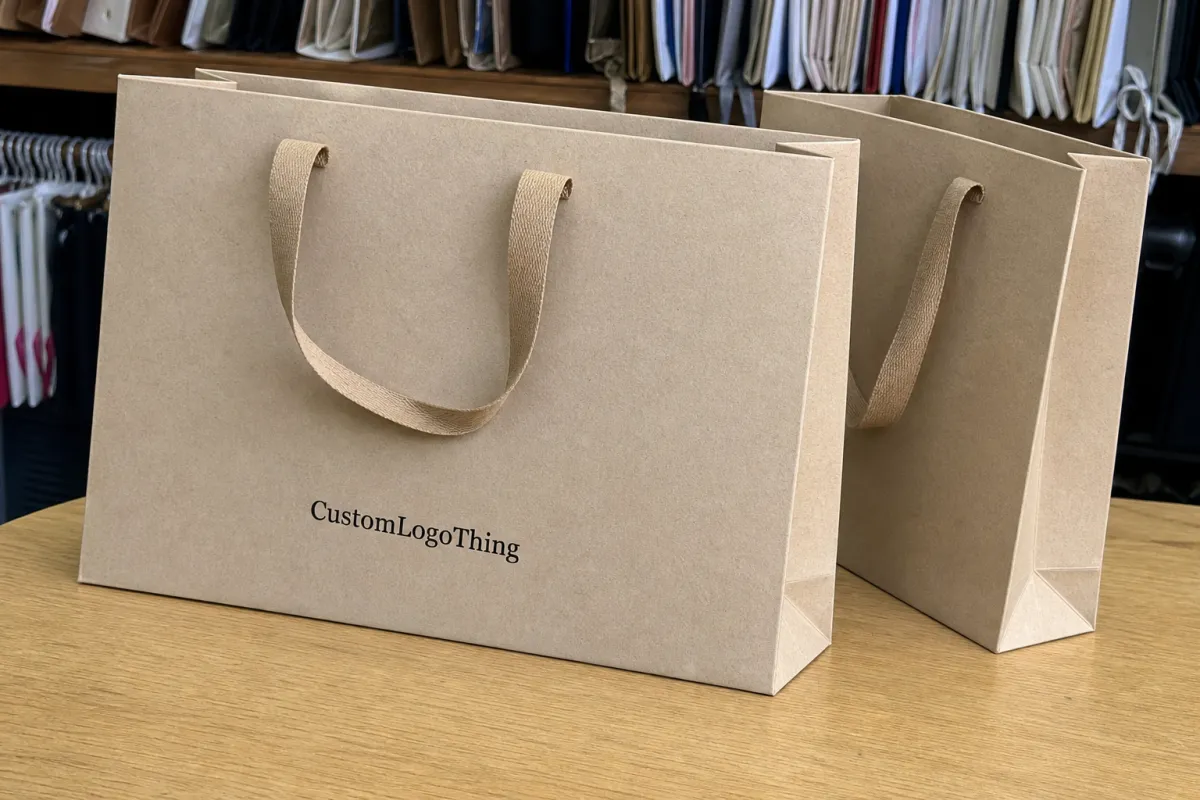
Two suppliers can quote what looks like the same custom mailer box, yet the approved order ends up costing more. That is why experienced buyers ask for a mailer boxes Unit Cost Breakdown before issuing a PO. The headline price often hides thinner board, excluded freight, setup fees, assembly labor, or an insert that was never included.
For ecommerce brands, subscription programs, promo kits, and retail-ready packaging, those omissions show up later as damage, slower packing, or extra charges. A useful quote should show what drives unit cost, how MOQ changes pricing, which specs move price fastest, and where lead time affects landed cost.
If you are still deciding on format, compare your project against broader Custom Packaging Products before forcing everything into a mailer structure. The wrong format can distort cost from the start.
Why a Cheap Box Quote Usually Costs More in the End

A low quote often comes from different assumptions, not better economics. One supplier may price lighter E flute, outside-only print, separate insert assembly, and ex-works shipping, while another includes stronger board, fuller print coverage, and delivered pricing. Same category, different job.
The key distinction is simple: quoted unit price is not the same as usable cost per piece. A low number built on weaker material, looser tolerance, or incomplete freight can disappear once boxes hit a packing line or parcel network.
For most DTC programs, a mailer box has to do three things:
- Protect the product through handling and transit
- Present the brand cleanly at delivery
- Move efficiently through fulfillment
If one of those fails, savings shift into operations. A box that saves $0.06 each but causes damage, rework, or slow packing is not cheaper in practice.
Bottom line: a cheap quote only helps if the structure, print quality, packing method, and freight assumptions still match the job you need.
What Is Included in a Custom Mailer Box Quote
A strong quote should be specific enough to audit. It should state the box style, finished dimensions, board or flute, print method, ink coverage, finish, insert type, proofing method, packing configuration, and freight basis.
Most custom mailer quotes include these components:
- Structure: roll end tuck front, tab lock mailer, or similar style
- Size: internal dimensions in L x W x D
- Material: E flute, B flute, F flute, SBS, or corrugated combinations
- Printing: digital, offset litho-lam, or flexo
- Coverage: one-color logo, full CMYK exterior, interior print, flood ink
- Finishes: matte aqueous, gloss varnish, soft-touch lamination, spot UV
- Insert: none, paperboard divider, corrugated fitment, foam, molded pulp
- Setup: plate cost, die cost, tooling fees, press setup
- Packing: flat-packed count per carton, pallet assumptions
- Freight: ex-works, FOB, delivered, or estimated landed pricing
The ex-works versus landed distinction matters. Ex-works pricing covers the manufactured boxes only. Landed pricing includes freight and may also include duties, handling, and final delivery. Comparing one supplier's ex-works number to another supplier's delivered number is not a valid comparison.
Optional items are where surprise charges usually appear:
- Custom tissue or branded sleeves
- Barcode labels or SKU stickers
- Kitting and hand assembly
- Special coatings or food-safe barriers
- Split shipments to multiple fulfillment centers
- Extra proof revisions beyond the stated limit
Whether a supplier quotes by project total or by piece, buyers still need a reliable landed cost and cost per unit. Confirm who owns the dieline, whether die and plate charges repeat, what over/under tolerance applies, and whether freight is fixed or estimated.
Specs That Move Price Fast: Size, Board Grade, Print, and Inserts
Small spec changes can move price quickly. A slight increase in box size can reduce sheet yield, add material waste, lower pallet count, and raise freight at the same time. Buyers usually feel this first in oversized boxes.
Size and sheet yield
If your product fits a 10 x 8 x 3 inch box, moving to 11 x 9 x 4 for flexibility often means paying for empty space. Extra cube usually requires more board, more void fill, and can increase dimensional-weight shipping charges.
Board grade and flute choice
E flute is common when print surface and slimmer profile matter. B flute offers stronger crush resistance. F flute can suit lighter retail presentations, but not every shipping environment. Heavier or fragile products may need a stronger corrugated combination or upgraded board weight.
That material upgrade may add roughly $0.08 to $0.22 per unit at 3,000 to 5,000 pieces, but it can still be cheaper than repeated transit damage. Ask whether the supplier can reference transit or performance standards such as ISTA protocols where relevant.
Print and finish costs
One-color exterior print is usually the lowest-cost option. Full CMYK raises cost, and interior print raises it again. Pantone matching, heavy flood coverage, and tighter color tolerance also increase setup and run complexity.
Digital printing often works best for shorter runs, especially when artwork changes often. Offset or litho-lam tends to make more sense at larger volumes where setup spreads across more units.
Finishes add another layer. Matte aqueous may add only a few cents. Soft-touch lamination, foil accents, and spot UV can push price much harder, especially below 3,000 units.
Inserts and structure details
Inserts are one of the biggest swing factors in a quote. A simple folded paperboard insert may add $0.10 to $0.25 per unit. Corrugated fitments often fall around $0.18 to $0.45, depending on complexity. Foam moves higher quickly. Molded pulp may support sustainability goals, but tooling and sample timing need to be planned early.
Other structural features also add cost: tear strips, dust flaps, double side walls, self-locking tabs, reinforced edges, and tight-fit tolerances for jars, bottles, or electronics.
If a shipment includes lighter accessories or secondary bundles, combining a rigid outer box with Custom Poly Mailers can sometimes improve the total packaging budget. That kind of packaging review often reveals savings that do not appear in a single-box quote.
Mailer Boxes Unit Cost Breakdown: Pricing, MOQ, and Volume Tiers
A real mailer boxes Unit Cost Breakdown shows why quantity changes almost everything. Setup, tooling, press prep, and scheduling costs do not disappear on a 500-unit run. They are simply spread across fewer boxes.
MOQ depends on structure and print method. Some suppliers can start digitally printed mailers around 100 to 300 units. Offset or litho-lam corrugated mailers more often start around 500 to 1,000 units, while 3,000 or more is usually where bulk pricing starts to improve meaningfully.
| Quantity Tier | Typical Print Fit | Estimated Unit Cost Range | Best Use Case |
|---|---|---|---|
| 500 | Digital, basic exterior print | $1.60-$3.20 | Launches, tests, short promos |
| 1,000 | Digital or entry offset | $1.10-$2.40 | Small DTC runs, limited SKUs |
| 3,000 | Offset or litho-lam becomes more viable | $0.72-$1.65 | Growing ecommerce programs |
| 5,000 | Better setup absorption | $0.58-$1.35 | Established subscription or retail kits |
| 10,000+ | Most efficient for stable artwork | $0.42-$1.10 | Repeat programs with forecast confidence |
These ranges are directional, not universal. Size, board grade, insert complexity, print coverage, and freight lane can shift the number up or down. The broader pattern holds: moving from 1,000 to 3,000 units usually changes pricing more than moving from 500 to 1,000.
A practical breakdown usually separates cost into these buckets:
- Material: corrugated board, liner, waste allowance
- Printing: ink, plates, make-ready, digital click cost, color matching
- Finishing: coating, lamination, special effects
- Insert: material, converting, fitment design
- Labor: assembly, packing, kitting
- Freight allocation: pallet quantity, destination, shipping mode
Digital often makes sense on smaller runs because it avoids part of the tooling burden. Larger, stable programs tend to favor offset or flexo on unit economics. Buyers with rising volume should ask for both scenarios.
Volume breaks are not automatically a win. Ordering 10,000 boxes to save a few cents each can backfire if artwork changes, SKUs shift, or storage cost climbs. Lower cost per piece only helps if inventory turns.
What Is a Mailer Boxes Unit Cost Breakdown and Why Does It Matter?
A mailer boxes Unit Cost Breakdown is a line-item view of what each box actually costs once material, printing, finishing, inserts, labor, and freight are considered.
It matters because packaging cost rarely fails in one obvious place. It leaks through omissions: a die charge shown separately, freight missing final delivery, insert costs buried in assembly, or a board downgrade that causes damage later. Buyers who review only the unit price are not seeing the whole job.
Like a bill of materials, the breakdown shows what is fixed, what is variable, and which changes will lower spend without hurting performance. For teams running subscription boxes, influencer kits, or repeat ecommerce shipments, that makes it easier to forecast reorders, compare MOQ jumps, and judge whether a redesign improves landed cost or simply moves cost to another line.
Production Process and Lead Time From Dieline to Delivery
Lead time is a chain, not a single number. Production time and transit time should be treated separately.
The usual process looks like this:
- Quote review and spec confirmation
- Artwork check
- Dieline issue or approval
- Sample, plain mockup, or printed proof
- Proof approval
- Production scheduling
- Printing and converting
- Packing and palletization
- Shipping and delivery
Straightforward custom printed mailers often take 10 to 15 business days after final proof approval. More complex orders with inserts, specialty finishes, or hand assembly may need 15 to 25 business days. Domestic freight may add 2 to 7 business days, while overseas freight can add weeks.
Delays usually come from ordinary issues:
- Missing finished dimensions
- Low-resolution artwork
- Fonts not outlined
- Branding changes after dieline approval
- Slow proof signoff on the buyer side
Rush orders are possible, but they usually involve tradeoffs such as digital print instead of offset, fewer finishing steps, or higher freight cost.
From a buying standpoint, a few rules do most of the work:
- Request a sample early if fit or stacking strength matters
- Lock artwork before the production slot is held
- For repeat runs, reorder when 30% to 40% of stock remains
If FSC-certified material matters, confirm availability through the supplier and review standards from FSC before approval.
How to Compare Suppliers Without Getting Burned on Quality
A lower quote means little if the specs do not match. Same size is not enough. Board grade, flute profile, print process, finish, insert design, packing count, and freight basis all need to align.
The supplier checks that matter most include:
- Material consistency: are board specs documented clearly?
- Color control: can they define acceptable variation or Pantone targets?
- Structural testing: do they discuss compression, transit risk, or ISTA-style handling expectations?
- Proof accuracy: are dielines and print proofs reviewed carefully?
- Response time: can they answer technical questions with specifics?
- Repeat-order consistency: will the second run match the first?
A credible supplier usually shows discipline through process: transparent line-item pricing, realistic lead times, clear revision limits, and specific assumptions on palletization, barcode labeling, mixed-SKU handling, and drop-ship requirements.
You should also know whether the quote comes from a manufacturer or a broker. Either model can work, but accountability for defects, remakes, and schedule misses should be clear before award.
Practical filter: if a supplier avoids line-item detail or cannot explain why a board recommendation fits your product weight and shipping method, keep looking.
What to Send for a Fast Quote and Smarter Next Step
Faster quotes come from complete inputs. Most delays start with missing basics.
Send the following information up front:
- Finished box dimensions: internal L x W x D
- Product details: weight, fragility, and whether it needs tight-fit support
- Quantity target: 500, 1,000, 3,000, 5,000, 10,000 or more
- Artwork files: vector PDF, AI, or editable source if available
- Print scope: outside only, inside/outside, CMYK or spot colors
- Insert needs: none, divider, fitment, foam, molded pulp
- Destination ZIP or postal code: needed for freight assumptions
- Desired in-hands date: not just ASAP
Ask for two versions of the estimate: best-value spec and premium spec. That makes the tradeoffs visible. If fit is critical, request a plain mockup or sample before mass production. If branding matters most, confirm the proofing method and revision limits before approval.
Before issuing a PO, verify four points in writing:
- Are setup charges included?
- Is proofing included?
- Is freight included, estimated, or excluded?
- Is assembly or kitting included if needed?
That is the simplest way to avoid post-approval surprises and keep supplier comparisons usable.
FAQ
What affects a mailer box unit cost breakdown the most?
The biggest cost drivers are quantity, box size, board grade, print coverage, finish level, insert complexity, and freight assumptions. Small spec changes can move pricing quickly, especially if they change sheet yield or require a different print process.
What is the MOQ for custom mailer boxes?
MOQ depends on print method, box size, and setup requirements. Lower minimums are usually possible with digital printing, though per-unit cost is higher because fixed setup is spread across fewer pieces. For repeat programs, a higher MOQ often improves unit economics if storage space and version control are manageable.
How can I lower my custom mailer box pricing without hurting performance?
Start with the biggest pressure points: reduce oversized dimensions, simplify print coverage, remove interior print, or switch to a standard insert style. Compare two board grades instead of defaulting to the heaviest stock. Moving to the next efficient volume tier can help, but only if inventory turnover supports it.
Does freight belong in a mailer boxes unit cost breakdown?
Yes. Freight can materially change true landed unit cost, especially on bulk orders or oversized cartons. Confirm origin, shipping method, pallet assumptions, and destination before comparing totals. A useful breakdown should show whether freight is included, estimated, or separate.
How long does custom mailer box production usually take?
Timing depends on sampling needs, artwork readiness, print method, order volume, and shipping lane. Straightforward production often runs 10 to 15 business days after proof approval, while more complex jobs can take 15 to 25 business days. Production time and transit time should always be listed separately.