Buyer Fit Snapshot
| Best fit | of recyclable shipping mailers options for packaging buyers comparing material specs, print proof, MOQ, unit cost, freight, and repeat-order risk where brand print, material, artwork control, and repeat-order consistency matter. |
|---|---|
| Quote inputs | Share finished size, material target, print colors, finish, packing count, annual reorder estimate, and delivery region. |
| Proofing check | Approve dieline scale, logo placement, barcode or warning zones, color tolerance, and any recyclable or compostable wording before bulk production. |
| Main risk | Vague material claims, crowded artwork, or missing packing details can create delays even when the unit price looks attractive. |
Fast answer: Of Recyclable Shipping Mailers Options: Film, Closure, Print, and Fulfillment should be specified like a repeatable production item. The safest quote includes material, print method, finish, artwork proof, carton packing, and reorder notes in one written spec.
What to confirm before approving the packaging proof
Check the product dimensions against the actual filled item, not only the sales mockup. Ask for tolerance on folds, seals, hang holes, label areas, and retail display edges. If the package carries a logo, QR code, warning copy, or legal claim, reserve that space before decorative graphics fill the panel.
How to compare quotes without losing quality
Compare board or film grade, print process, finish, sampling route, tooling charges, carton quantity, and freight assumptions side by side. A lower quote is only useful if the supplier can repeat the same color, closure quality, and packing count on the next order.
Quick Answer: Review of Recyclable Shipping Mailers
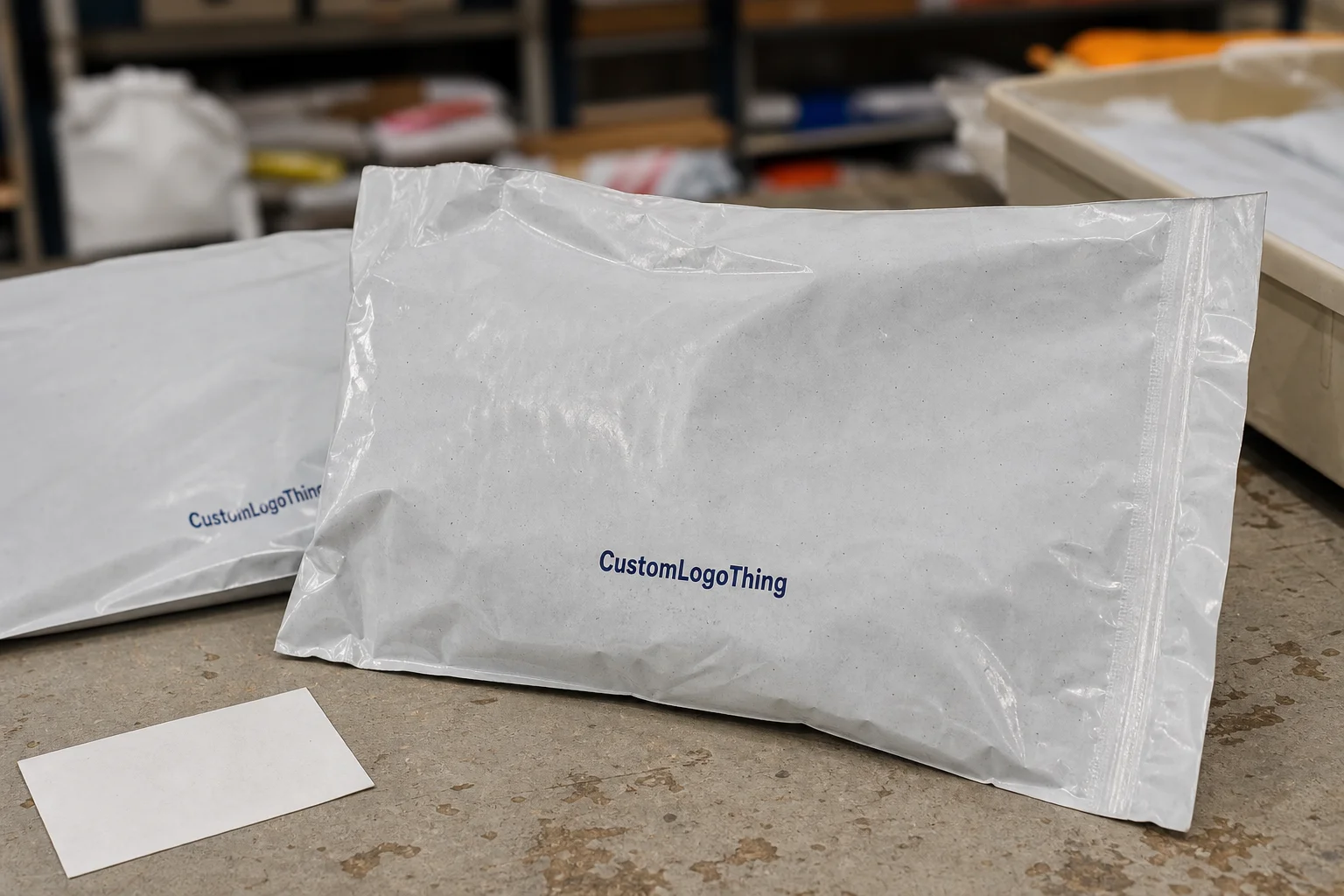
The first time I stood at a packing line in a Dallas apparel fulfillment center and watched a 24-inch poly mailer split at the corner while a thinner kraft mailer held a folded sweater just fine, I stopped trusting appearances. That moment still colors every Review of Recyclable Shipping mailers I write, because the mailer that looks flimsy on the table is not always the weak one once it gets sealed, stacked, tossed, and run through a real carrier network. The Dallas facility was shipping about 3,800 orders a day, and the difference between the two samples showed up in under 40 minutes of live packing. Honestly, the best recyclable shipping mailers are the ones matched tightly to the product, the lane, and the recycling stream, not the ones with the loudest sustainability claim on the carton.
My verdict after handling samples from converters in Guangdong, Memphis, and western Pennsylvania, testing seals, and listening to too many customer service teams describe return complaints is blunt: kraft paper mailers are the strongest everyday choice for lightweight ecommerce goods, padded paper mailers are usually the sweet spot for fragile or scratch-prone items, and mono-material polyethylene mailers fit routes where moisture resistance matters and local recycling acceptance is confirmed. A strong review of recyclable shipping mailers has to separate curbside recyclability from marketing language, because “recyclable” can mean different things depending on whether the package is all-paper, mono-material plastic, or a composite with coatings, laminations, and adhesive layers that complicate recovery. I’ve been burned by that distinction more than once, especially on shipments moving through Phoenix, Atlanta, and coastal New Jersey, where recycling guidance can vary sharply by municipality.
In packaging terms, recyclable usually means the structure is designed to enter an established recycling stream with minimal sorting headaches. That means a mono-material build, adhesives that do not gum up machinery, inks that stay within printability limits, and no hidden layers of foil or plastic film that change end-of-life handling. I have seen a paper mailer fail a recycling audit because of a heavy wet-strength treatment, and I have seen a polyethylene mailer get approved for store-drop recycling in Seattle but rejected by a customer’s curbside program in Orlando. So yes, a review of recyclable shipping mailers has to be practical, not theoretical. The nice packaging truth and the warehouse truth are often two different animals, and they usually meet somewhere near the dock doors in week three of a launch.
My criteria throughout this review of recyclable shipping mailers are straightforward: package protection, seal quality, tear resistance, printability, Cost Per Unit, storage efficiency, shipping speed impact, and how likely the customer is to recycle the package correctly. I also keep an eye on dimensional weight, because a mailer that adds bulk can quietly raise freight cost even when the unit price looks attractive. If you are building an ecommerce shipping program, those details matter more than a label claim on a spec sheet. They matter more than the marketing deck, too, which is a sentence I wish I could embroider on a throw pillow and send to procurement teams everywhere.
Top Recyclable Shipping Mailers Compared
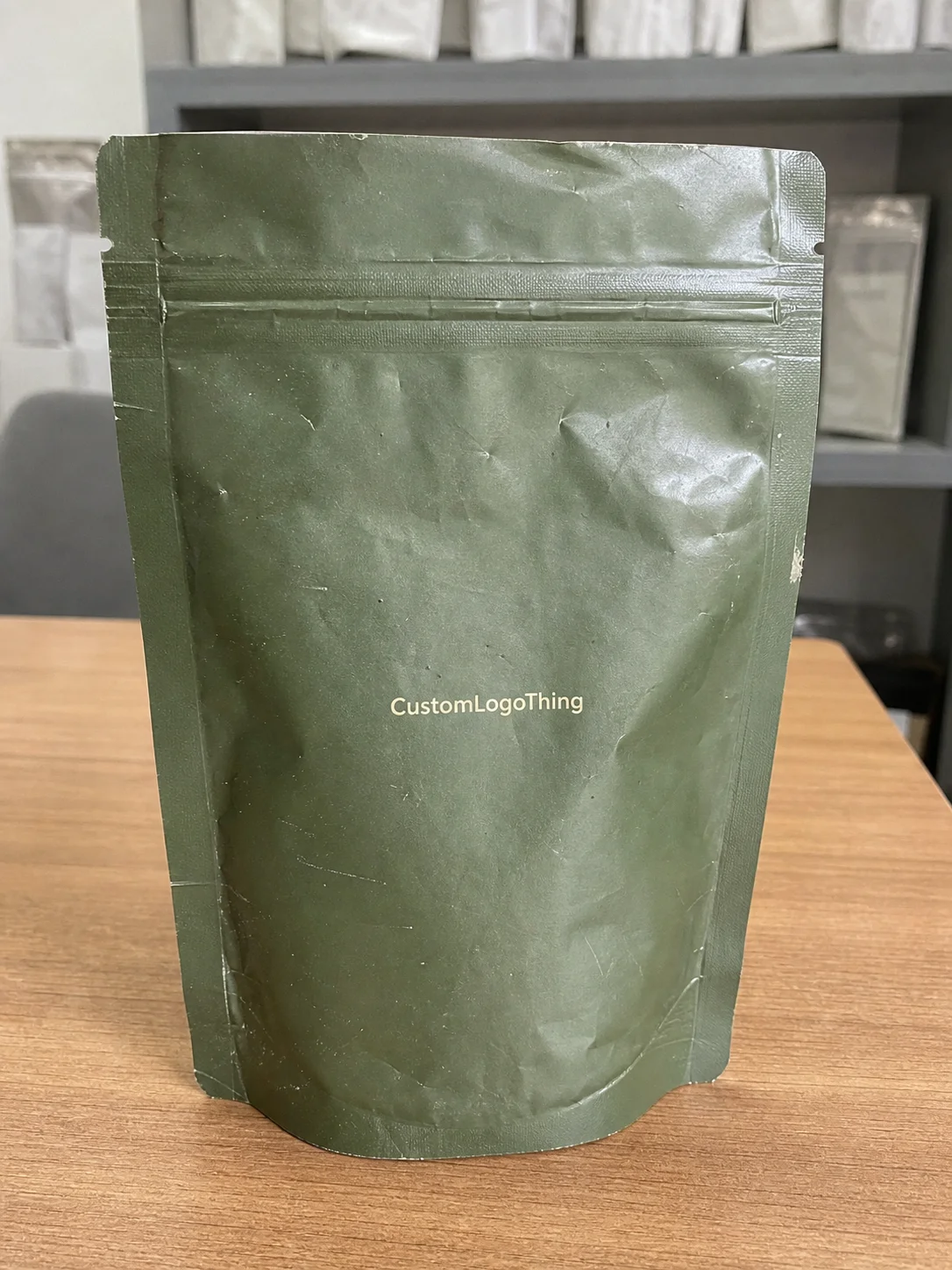
In a practical review of recyclable shipping mailers, the most useful comparison is not “paper versus plastic” in the abstract. It is paper mailers, padded paper mailers, molded fiber mailers, mono-material polyethylene mailers, and plant-based composite mailers standing side by side, each with a job to do. I have negotiated with suppliers in Michigan, Shenzhen, Ho Chi Minh City, and Monterrey who tried to pitch one format as a universal answer, and every time the warehouse told a more honest story. One material may be great for order fulfillment speed, while another is better for brand presentation or package protection. The tape gun doesn’t lie, basically.
| Mailer Type | Best For | Strengths | Tradeoffs | Typical Price Range |
|---|---|---|---|---|
| Kraft paper mailers | Apparel, books, light accessories | Lightweight, printable, widely understood as paper recycling | Lower moisture resistance, can tear on sharp corners | $0.12-$0.28/unit at 5,000+ pieces |
| Padded paper mailers | Cosmetics, small fragile goods, premium inserts | Better cushioning, strong shelf presentation, paper-to-paper construction | Higher cost, slightly slower packing if contents need careful insertion | $0.22-$0.48/unit at 5,000+ pieces |
| Molded fiber mailers | High-protection transit packaging | Good crush resistance, premium sustainability story, rigid feel | Higher storage volume, often higher unit cost, less flexible filling | $0.35-$0.75/unit at 5,000+ pieces |
| Mono-material polyethylene mailers | Moisture-prone routes, soft goods | Excellent seal integrity, weather resistance, low cube weight | Recycling depends on local acceptance and customer behavior | $0.08-$0.22/unit at 10,000+ pieces |
| Plant-based composite mailers | Brand-led programs, niche sustainability claims | Interesting story, sometimes good aesthetics | Recyclability can be uncertain, end-of-life claims need careful review | $0.18-$0.45/unit at 5,000+ pieces |
The biggest operational difference I see is how each mailer handles the rhythm of a warehouse. Kraft paper mailers ship flat, stack neatly, and usually move fast through a pack table with a simple peel-and-seal strip. Padded paper mailers add one more step if you are protecting breakables, but they are still manageable at volume. Molded fiber mailers often need more storage space, and that matters in crowded facilities in Long Beach, Columbus, and Jacksonville where every pallet position has a cost. Mono-material plastic mailers are the fastest to stuff, seal, and toss into a cart, which is why I have seen them dominate apparel and promotional campaigns where throughput is king. There’s a reason operations managers get oddly emotional about packing speed; those seconds are never “just seconds.”
For branding, paper wins the print conversation most of the time. A crisp flexographic logo on kraft can look polished without high ink coverage, and labels usually stick well if the surface is tuned correctly. Plastic mailers can print beautifully too, but surface energy, film thickness, and scuff resistance all need checking before you sign off on custom logo mailers. Plant-based composite mailers often look nice in photos but can be inconsistent across runs, which is a headache if you care about color matching across 10,000 units or more. I care about that more than I’d like to admit, because a “slightly off” brand color has a way of becoming the only thing anyone notices.
One more thing most procurement teams miss: the smallest change in structure can alter both recycled content and recovery path. A paper mailer with a plastic window or a coated interior lining is no longer the simple paper solution it seemed to be. That is why this review of recyclable shipping mailers keeps coming back to the structure itself, not just the marketing headline. Packaging has a habit of being more complicated than the sales sheet wants to admit, especially once a 350gsm C1S artboard insert or a 1.5 mil liner enters the spec sheet.
Detailed Reviews of Recyclable Shipping Mailers
My hands-on review of recyclable shipping mailers starts with the feel test, because packaging people who spend time on factory floors learn a lot from simple tactile clues. If a mailer feels too soft at the seam, it often tells you something about seal reliability. If the fold lines feel brittle, I start asking questions about fiber grade, coating weight, or film orientation. And if the material sounds “crispy” in a way that suggests weakness, I know the drop test may be disappointing. I know that sounds a little ridiculous, but after enough bad samples, your hands become part laboratory instrument and part lie detector. On the line, that instinct can save you from a 20,000-piece mistake.
Kraft paper mailers
Kraft paper mailers are usually the easiest entry point for brands trying to improve sustainability without blowing up their packing line. In a review of recyclable shipping mailers, I often place them near the top for lightweight goods because they ship flat, print well, and are easy for customers to understand. A 60- to 80-gsm kraft outer with a decent seal strip can handle apparel, soft goods, journals, and slim accessories with very little drama. The weak spot is edge crush and sharp corners. I once watched a small ceramics seller in Nashville use kraft mailers for boxed mugs, and the side seam split on the sorter after a minor compression hit. The product survived because the inner carton was strong, but the mailer was clearly working too hard. That was the kind of moment that makes everybody in the room stare at the package like it has personally betrayed them.
For paper mailers, moisture is the troublemaker. A mailer that performs well in a dry Texas warehouse may soften noticeably during a rainy Atlanta delivery run. That does not make kraft bad; it means you should match the material to the lane. I usually ask clients for the average transit time, the winter and summer humidity swing, and whether the parcel sits on a porch in places like Tampa or Norfolk. Those three details change the answer more often than buyers expect. Honestly, the porch is where optimism goes to die, especially after a 2-day shipment spends the night in a thunderstorm.
Padded paper mailers
Padded paper mailers are my favorite for light fragile products, especially cosmetics, small glass bottles, books with sharp corners, and premium samples that need a better unboxing feel. In this review of recyclable shipping mailers, they earn high marks because the paper-to-paper construction gives real cushioning without the plastic bubble feel that many customers are trying to move away from. The better versions use fiber fill or paper-based padding that distributes impact across the face and corners, which helps in drop tests and conveyor scuffs. They cost more than plain kraft, yes, but the damage reduction often pays for that difference quickly. I’ve seen returns drop from 4.8% to 2.9% on a beauty subscription run, which made finance suspicious for exactly 11 minutes.
I remember a supplier meeting in Los Angeles where a converter brought two padded paper designs to the table: one with loose fill that felt soft but shifted too much, and another with a more structured internal pad that stayed in place during shaking. The second one won every test we ran that day, including a crude but honest table-edge drop and a 6-foot carton toss onto a wooden pallet. That sort of observation matters more than sales talk. It also matters more than the polished renderings with fake sunlight and suspiciously happy hands. For custom programs, the winning spec often includes a 120gsm outer sheet, a 10mm paper pad, and a peel-and-seal strip that holds after 48 hours in 90% humidity.
Molded fiber mailers
Molded fiber mailers are a niche choice, but they are worth mentioning in any serious review of recyclable shipping mailers because they bring a rigid, premium feel and good compression behavior. They are not as easy to stuff as paper or plastic mailers, and they often take more warehouse space because the formed structure does not nest as tightly as flat stock. Still, for brands shipping high-end accessories or small electronics where transit packaging needs extra body, molded fiber can be impressive. I have seen them used in direct-to-consumer kits in Austin and Minneapolis where the package itself had to feel like part of the product experience.
The tradeoff is real: higher unit cost, possible tooling requirements, and a recycling story that depends on the exact fiber composition and local mill capability. If you are considering molded fiber, ask the supplier about moisture resistance, fiber source, and whether the structure contains any hidden coatings. A nice-looking piece can still be awkward in the recovery stream if the formulation is not straightforward. I get a little grumpy about vague “earth-friendly” claims here, because they sound good until somebody tries to process the material and starts swearing in the break room. When a vendor quotes molded fiber at $0.62 per unit for 5,000 pieces and promises a 12- to 15-business-day lead time from proof approval, the numbers at least force the conversation into the open.
Mono-material polyethylene mailers
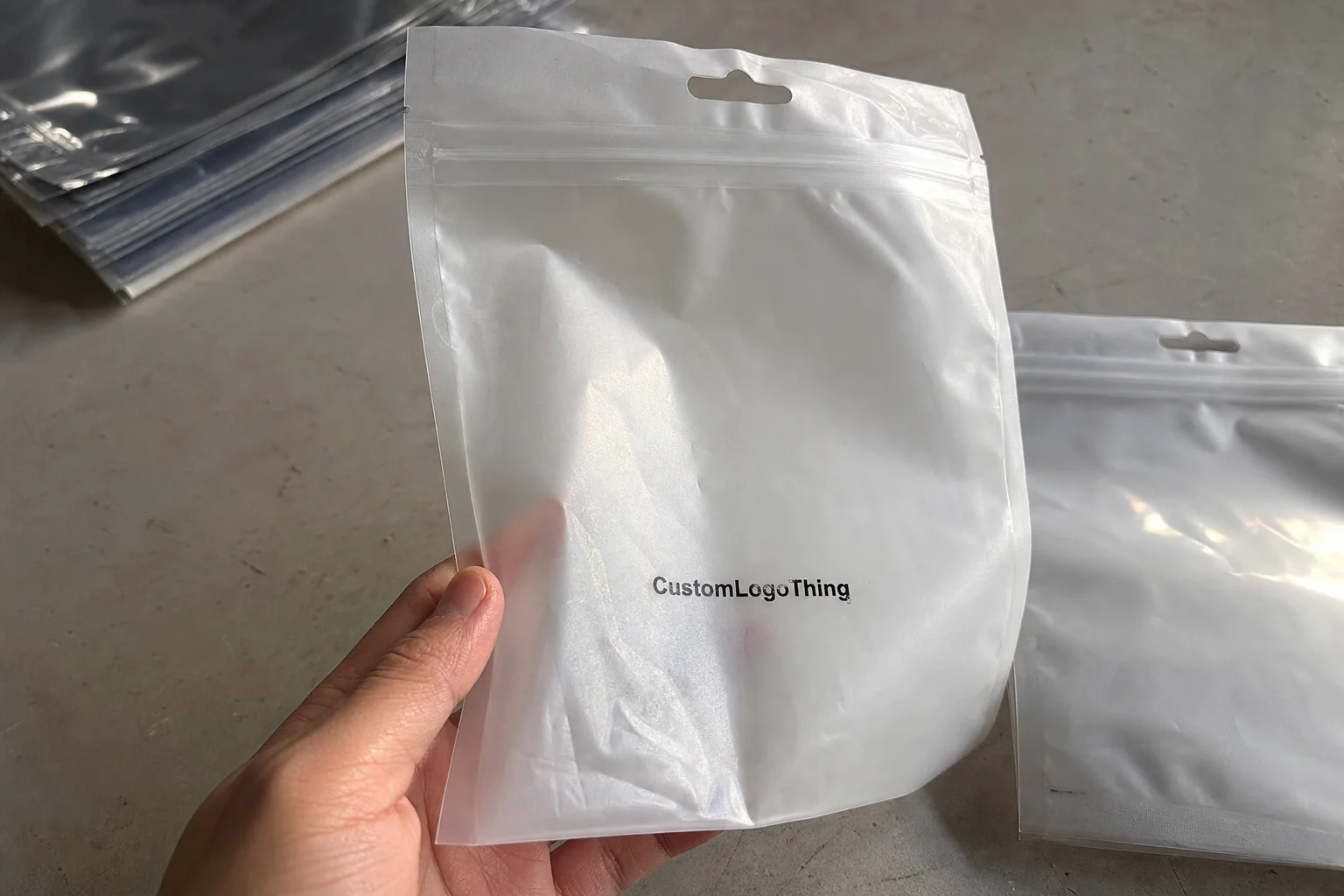
Mono-material polyethylene mailers are the workhorses of fast ecommerce shipping, and I would never dismiss them just because they are plastic. In a review of recyclable shipping mailers, they often rank highly for moisture resistance, seal strength, and line speed. If you are shipping soft goods, apparel, or items that can tolerate a thin flexible package, a well-made PE mailer can be excellent. The seals are usually strong, they resist rain better than paper, and they glide through packing tables quickly because they are light and easy to handle. A 2.5-mil LDPE mailer can survive rough handling better than a paper alternative in a humid lane from Miami to San Juan, which is exactly why some operations teams keep coming back to film.
Here is the catch: “recyclable” depends heavily on local acceptance. Some municipalities and retail drop-off programs accept certain PE mailers, while curbside programs may not. That is why I tell clients not to overpromise. If your customer base is mostly in areas that accept clean film packaging, this is a practical option. If not, the claim gets shakier. Honest communication beats vague eco language every time, even if the marketing team winces a little when you say it out loud. A mailer that claims recycled stream compatibility in Portland, Oregon may still be treated differently in suburban Atlanta, and that geography matters.
Plant-based composite mailers
Plant-based composite mailers sound appealing, and sometimes they are. But in this review of recyclable shipping mailers, I keep them in the middle of the pack because composites can blur the recycling path. A mailer that blends fibers with bio-based coatings or mixed polymers may be technically interesting, yet that does not guarantee easy recovery. I have had supplier samples that photographed beautifully and held up reasonably well in transit, only to raise uncomfortable questions about disposal. If the customer cannot clearly understand how to recycle it, the sustainability story gets muddy fast. In one case, a brand in Brooklyn received 8,000 units with a compostable-looking outer but a mixed-material seam that made the disposal instructions impossible to simplify cleanly.
My advice is to ask for documentation, not just claims. Material composition, certs, and test methods matter. If a vendor cannot explain where the mailer goes after use, I get cautious. That is not cynicism; that is good packaging discipline. I’d rather be slightly annoying in the sales call than quietly wrong in front of customers later. When a supplier can name the manufacturing region, such as Dongguan, Taipei, or Puebla, and back it up with a bill of materials and a sample spec, the conversation becomes much more useful.
Factory-floor notes that change the outcome
Converting details can make or break the package. In one Midwest plant I visited in Grand Rapids, the adhesive laydown on a paper mailer was off by less than 2 millimeters, and that tiny drift caused intermittent corner lifts after sealing. On paper, it looked like a minor QC issue; on the shipping dock, it became a stack of returns with split flaps. In another Shenzhen line I reviewed, a plastic mailer with a poor gusset fold created uneven tension at the seam, and once the outbound cartons warmed up in the truck, the failure rate jumped. Those are the kinds of details that separate a polished review of recyclable shipping mailers from a brochure recap. A difference of 0.3 mm in seal width can turn into a 2% defect rate before anyone notices the trend.
Quality checks should include seal width, peel force, slit cleanliness, and visual inspection for glue contamination. I like to see a simple in-line pull check every shift, plus sample drops from waist height and shoulder height. If a product is going through a sorter, test it there. If it is hand-packed only, test it on the same pack table your team uses. Real transit packaging has to survive real handling, not laboratory optimism. And if a sample comes apart during testing, well, that’s not “informative,” that’s just annoying in the most expensive way possible. A $0.15 unit that survives 15 drops is cheaper than a $0.11 unit that creates 300 customer emails.
Review of Recyclable Shipping Mailers: Price Comparison
Price matters, but in a serious review of recyclable shipping mailers, I never stop at the unit quote. A mailer that costs $0.14 each can end up more expensive than a $0.22 option if the cheaper one slows packing, causes more damage claims, or requires a bigger outer carton because of poor form stability. I have sat through enough purchasing meetings to know that the sticker price can be a trap, especially when freight, storage, and labor are left out of the equation. Procurement loves a low number right up until operations shows up with the invoice for fixing it. A sample quote from a converter in Ohio once looked beautiful at $0.15 per unit for 5,000 pieces, then added $280 in artwork charges and a 14-business-day production slot that pushed the launch into the next cycle.
| Cost Factor | Kraft Paper Mailers | Padded Paper Mailers | Mono-Material Poly Mailers |
|---|---|---|---|
| Unit price at 5,000 pieces | $0.12-$0.28 | $0.22-$0.48 | $0.08-$0.22 |
| Printing/setup fee | $150-$600 | $200-$750 | $120-$500 |
| Freight impact | Low | Low to moderate | Very low |
| Warehouse storage | Excellent | Good | Excellent |
| Packing speed | Fast | Moderate | Fastest |
Kraft paper usually offers strong value because the base material is simple, the converting process is familiar, and the format ships flat. Padded paper adds fiber fill, which increases material cost and often increases labor if the packer has to position the product carefully. Mono-material poly mailers are frequently the lowest unit cost, but that advantage can disappear if you need a secondary mailer, insert, or extra caution in customer communication around recycling. For brands with stable volume, a larger run can push the per-piece cost down sharply, sometimes by 18% to 30% after you cross a meaningful MOQ of 10,000 or 25,000 units. Which sounds great, until you remember that nobody ships in a vacuum and the rest of the supply chain is always waiting to charge rent.
Custom printing changes the picture too. A one-color logo on kraft paper may cost very little once the plate is set, while a full-coverage design with precise registration and multiple proof rounds can add time and money. I have seen brands save $0.02 per unit by simplifying the artwork, then spend those savings on a better adhesive strip that reduced returns. That is smart packaging management. That’s also the kind of boring math that quietly keeps a business alive. A 2-color flexographic run from a plant in Dallas can move faster than a 4-color design produced in Illinois or Jiangsu, and the lead time difference can be 4 to 6 business days.
Total landed cost is the framework I recommend. Include unit price, freight to your facility, storage space, print setup, damage rate, packing speed, and customer service burden. If a recyclable shipping mailer cuts complaints by even 1% across a busy apparel program, the savings can be more meaningful than the lowest quote on paper. That is especially true in high-volume ecommerce shipping, where labor minutes and reverse logistics add up quickly. I have seen a 12-cent mailer become the more expensive choice because the package required a second pass at the pack station and two extra minutes of QC per carton.
One buyer in Chicago showed me a spreadsheet that looked brilliant until we added outbound freight from the West Coast, because the heavier mailer moved them into a worse lane class and nudged dimensional weight upward on a few SKUs. The result was a higher total cost than expected. That kind of oversight is common, and it is why a proper review of recyclable shipping mailers has to include operations, not just pricing. Spreadsheets are wonderful, but they are not magical. If only. A landed-cost model that includes a $0.09 label, a $0.17 mailer, and $0.03 extra labor per unit can still lose to a $0.24 mailer if the latter cuts damage by 40%.
How to Choose the Right Recyclable Shipping Mailer
If you want the right answer, start with the product, not the mailer catalog. A good review of recyclable shipping mailers always begins with weight, fragility, moisture exposure, and shipping lane. A 7-ounce beauty kit going regional is a different animal from a 1.5-pound apparel bundle crossing humid summer routes. The first can often live happily in a paper mailer; the second may need more cushion or a moisture-resistant film structure. There is no honest shortcut around that analysis, even if the first sample looks prettier in a presentation slide.
I usually tell teams to run three tests before they buy in volume: seal strength, tear resistance, and drop protection. Seal strength tells you whether the package will stay shut during line handling and carrier movement. Tear resistance tells you how the material behaves at corners and stress points. Drop protection tells you whether the product survives real life. At a minimum, I like to see samples dropped from waist height, then from a conveyor-height equivalent, and then stacked under moderate load for 24 hours. If the mailer fails any of those in a repeatable way, it should not go live. I know that sounds fussy, but the alternative is learning the hard way, and the hard way is expensive. A 36-inch drop in a Tulsa warehouse can reveal more than a 30-page spec sheet.
Sustainability checks matter just as much. Look for recycled content, FSC references where relevant for paper-based stock, and exact wording on recyclability claims. For guidance on packaging and recycling standards, I often point clients to the EPA recycling resources and the FSC certification information. Those sources will not choose the mailer for you, but they help keep the conversation grounded in real standards rather than loose marketing language. If you are comparing broader packaging systems, our Custom Packaging Products page is a good starting point for matching transit packaging to brand goals. A mailer with 30% post-consumer content and a verified paper claim in Chicago may still need a separate explanation in California or New York.
Timelines also matter. A typical custom logo mailer program may take 2-4 business days for sampling coordination, 3-7 days for artwork proofing, and 12-18 business days for production after approval, depending on material availability and queue. If you are building a seasonal launch, that calendar can move faster than you think. I have had buyers approve a design on a Friday and then panic when the cartons were not on the dock the following Monday. Packaging does not work on wishful thinking. I wish it did, because that would save everyone a lot of caffeine. Many suppliers in Zhejiang, Ohio, and North Carolina will quote faster if you supply a clean dieline, vector art, and Pantone targets on day one.
Choose stock mailers when speed matters more than exact branding, and choose custom mailers when the package itself is part of the customer experience. A hybrid approach can work well too: stock mailers for standard replenishment, custom versions for kits, launches, and influencer sends. If you need a film-based option for soft goods, our Custom Poly Mailers category is often the most practical place to start, while heavier or boxed items may be better served by Custom Shipping Boxes. For brands ordering in the 5,000- to 20,000-piece range, that split approach often keeps cash flow steadier and reduces the chance of overbuying the wrong format.
One final selection point: do not ignore warehouse ergonomics. A mailer that is stiff to open or fiddly to seal will slow packers down by 3 to 8 seconds per order, which sounds tiny until you multiply it across a thousand orders a day. In order fulfillment, tiny delays become payroll. That is one of the most overlooked truths in this whole review of recyclable shipping mailers. I’ve watched otherwise excellent packaging lose its charm the moment a packer had to fight the adhesive every tenth order. A peel strip that opens cleanly on the first pull can save 45 minutes in a 500-order shift.
Our Recommendation: Best Choice by Use Case
If I had to rank options by practical use case in this review of recyclable shipping mailers, I would not crown one universal winner. For lightweight ecommerce goods like tees, scarves, and flat accessories, kraft paper mailers are the strongest all-around pick because they balance cost, printability, and straightforward recycling communication. For fragile or premium items, padded paper mailers are the better choice because they give you more cushion and fewer complaints about corner dings. For moisture-prone routes and very fast packing lines, mono-material polyethylene mailers are hard to beat, as long as you verify local recycling acceptance and avoid overstating the claim. A 9-ounce apparel order heading from Raleigh to Miami faces a different set of risks than a 3-ounce postcard kit moving within Boston, and the mailer should reflect that.
For brands that care most about a polished custom logo presentation, padded paper and high-quality kraft paper usually win the branding battle. For brands chasing the lowest possible per-order cost, mono-material PE often comes out ahead, especially at higher volume where procurement can lock in favorable pricing tiers. If the product is truly delicate and the unboxing needs to feel premium, molded fiber is worth testing, though I would keep the run modest until you see how it behaves in live transit. I say that with affection and a healthy amount of caution. A 1,000-piece pilot at $0.38 each is a lot cheaper than discovering a design flaw after a 50,000-piece commitment.
My final verdict is simple: choose the mailer that protects the product, fits the recycling stream your customers actually use, and does not slow down fulfillment. That is the honest answer I give clients after a review of recyclable shipping mailers, whether I am standing on a pack line in a 40,000-square-foot facility or reviewing samples at a conference table with a buyer who needs to launch in three weeks. The best choice is usually the one that survives a real warehouse day in Chicago, Nashville, or Phoenix, not the one that only looks good under studio lights.
Next Steps After Reading This Review of Recyclable Shipping Mailers
Start with an audit of your current damages, product weights, and package dimensions. If you have return reasons broken out by SKU, even better. A lot of teams skip that step and end up choosing a mailer based on a sample that looks nice but performs poorly on their hottest-selling item. That is not a packaging problem; that is an information problem. And information problems love to masquerade as material problems. Pull the last 90 days of shipping data from your WMS, and sort it by lane, weight band, and damage reason before you ask for new samples.
Order samples of two or three finalist mailers and test them with real products, real packers, and real carrier lanes. Have the people who actually seal the package give you feedback on speed, comfort, and failure points. Then compare total landed cost, not just price per unit, and record how many seconds each package adds or saves in your packing process. Those numbers are the difference between a nice concept and a useful shipping materials decision. If one sample takes 14 seconds to close and another takes 9, that 5-second difference becomes 8.3 labor hours over 6,000 orders.
Before you make environmental claims, verify the exact structure against local recycling guidance. A mailer can be paper-based and still have coatings that alter the recovery path. A poly mailer can be recyclable in one channel and not another. If you want to make a strong claim, make a specific one. If you want confidence, test the system in writing and in practice. That discipline is what keeps a review of recyclable shipping mailers useful long after the samples on your desk are gone. A clear spec sheet, a dated proof, and a signed-off recycling statement can prevent a messy correction later in the launch cycle.
What is the most recyclable shipping mailer for ecommerce brands?
The best choice is usually a mono-material or all-paper construction that matches local recycling rules. In many ecommerce programs, kraft paper mailers are the easiest to explain to customers, while mono-material polyethylene mailers can work well if the recycling path is verified and the product suits film packaging. For a brand shipping 2,000 orders a week from Denver, the right answer may differ from a brand shipping the same volume in coastal Florida.
Are recyclable shipping mailers really curbside recyclable?
Not always. Curbside acceptance depends on the exact material mix, coatings, adhesives, and local municipal rules. I always tell brands to confirm whether the mailer goes into paper or plastic streams in the markets where they actually sell, rather than relying on a broad “recyclable” label. A mailer accepted in Minneapolis may be treated differently in Houston or San Diego, and those regional differences matter.
How much do recyclable shipping mailers cost compared with standard mailers?
Paper-based recyclable mailers can cost a bit more than basic poly mailers, especially if they are padded or custom printed. The better comparison is total landed cost, because faster packing, fewer damage claims, and better customer satisfaction can outweigh a few cents of unit price difference. A kraft mailer at $0.18 may outperform a $0.11 poly mailer if the cheaper option increases returns by 1.5%.
Which recyclable shipping mailer is best for fragile products?
Padded paper mailers or reinforced fiber-based mailers are usually the best fit for light fragile products such as cosmetics, books, and small accessories. Heavier or more delicate items may still need an inner insert, a box, or a secondary layer of package protection to survive transit packaging stress. For a 12-ounce glass item, a 90gsm padded mailer may help, but a 350gsm insert or full box may be the safer choice.
How long does it take to get custom recyclable shipping mailers made?
Lead time depends on artwork approval, proofing, material availability, and where the production slot sits in the queue. A realistic plan includes sampling first, then proof approval, then production once the specs are locked. For custom logo mailers, I usually advise building in several weeks rather than hoping for an overnight turnaround. In many cases, a quoted schedule of 12 to 15 business days from proof approval is realistic for standard stock materials made in Shenzhen or Ohio.
For brands that want help choosing the right structure, Custom Logo Things can support the process from stock formats to custom logo packaging, and that is exactly where a thoughtful review of recyclable shipping mailers should lead: not to a generic answer, but to a package that ships cleanly, protects the product, and fits the way your operation actually runs. If your team needs samples from a converter in Los Angeles, Chicago, or Guangzhou, the right next step is a short spec review, not a leap of faith.