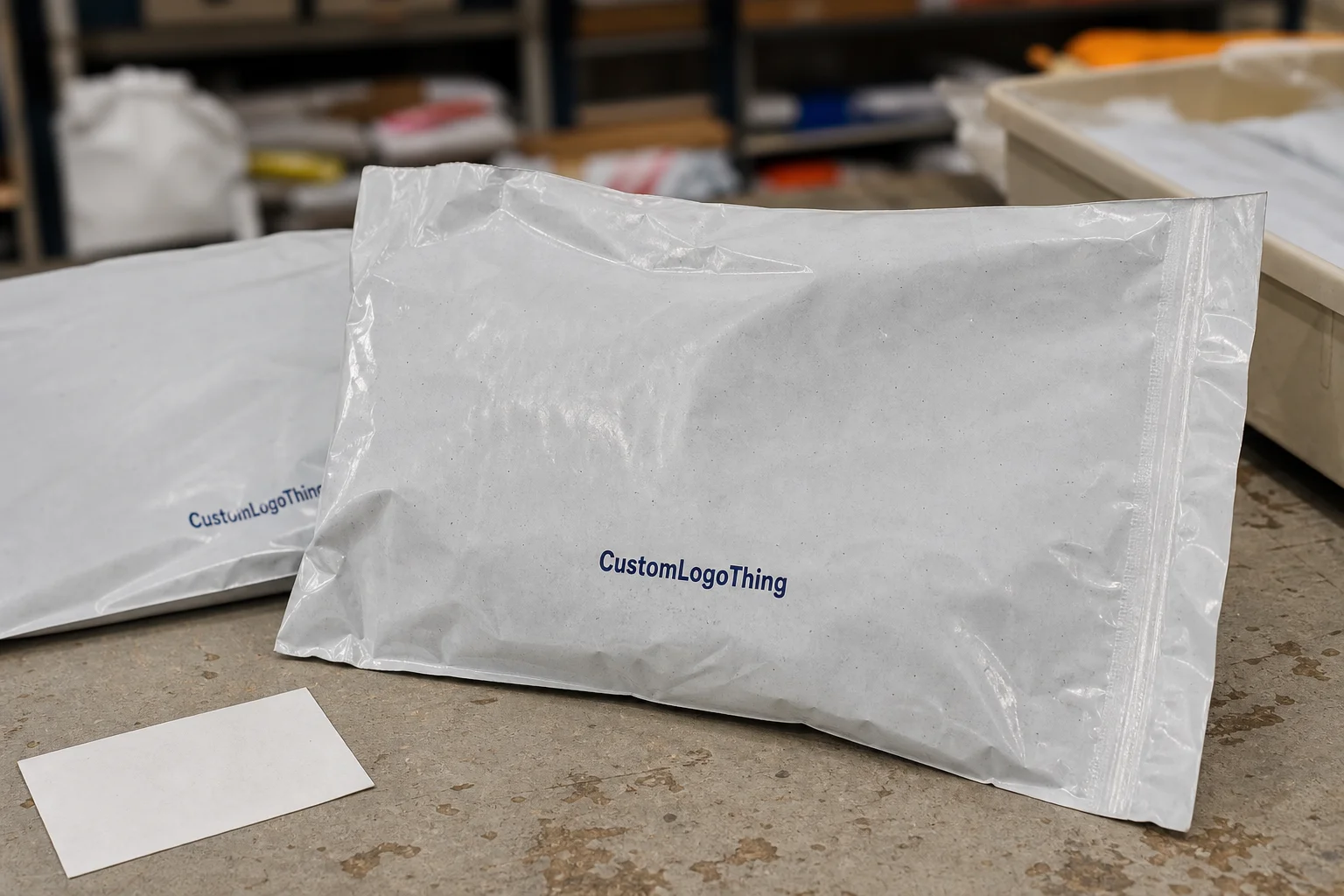
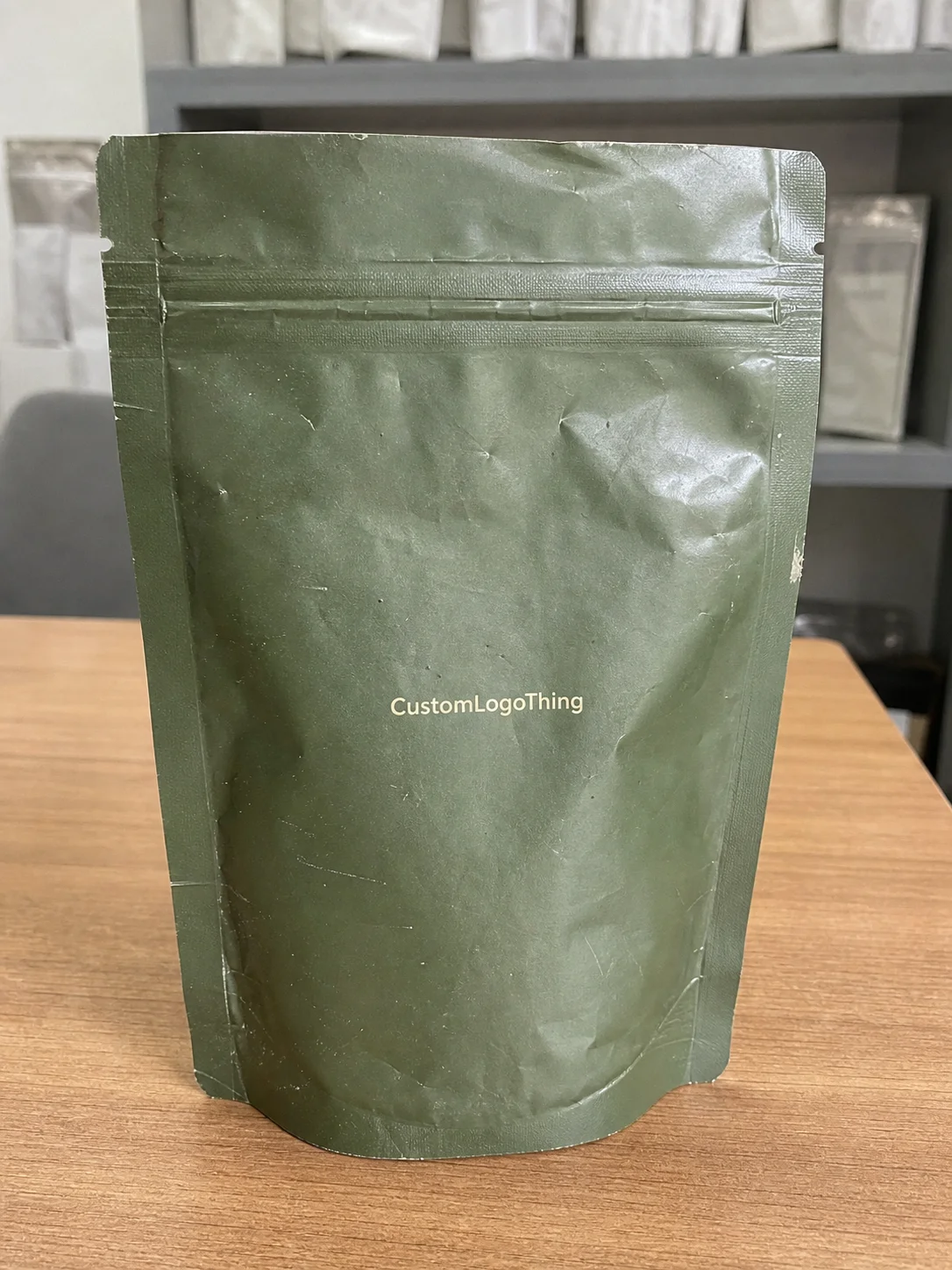
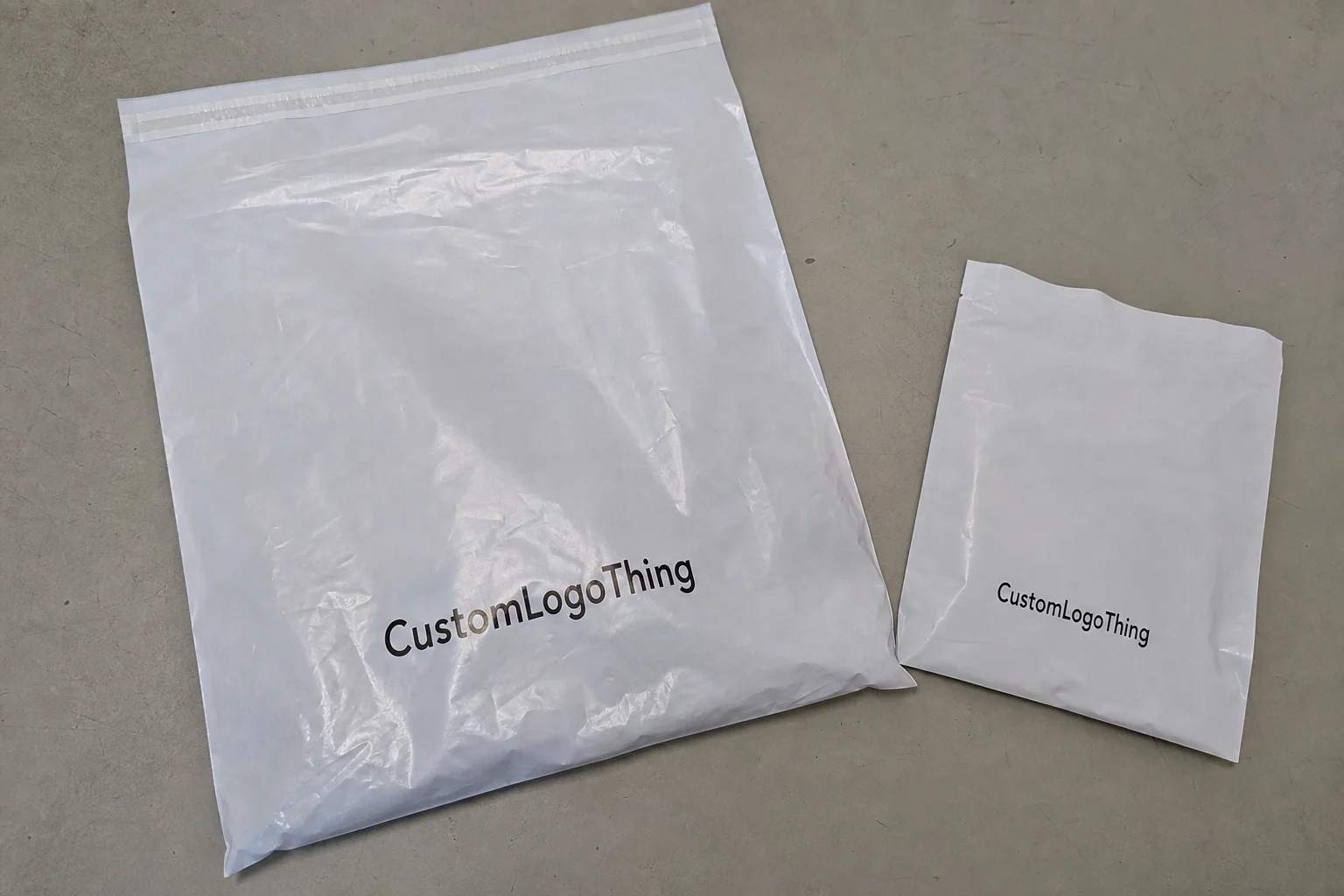
Buyer Fit Snapshot
| Best fit | of recyclable shipping mailers for packaging buyers comparing material specs, print proof, MOQ, unit cost, freight, and repeat-order risk where brand print, material, artwork control, and repeat-order consistency matter. |
|---|---|
| Quote inputs | Share finished size, material target, print colors, finish, packing count, annual reorder estimate, and delivery region. |
| Proofing check | Approve dieline scale, logo placement, barcode or warning zones, color tolerance, and any recyclable or compostable wording before bulk production. |
| Main risk | Vague material claims, crowded artwork, or missing packing details can create delays even when the unit price looks attractive. |
Fast answer: Of Recyclable Shipping Mailers: Film, Closure, Print, and Fulfillment should be specified like a repeatable production item. The safest quote includes material, print method, finish, artwork proof, carton packing, and reorder notes in one written spec.
What to confirm before approving the packaging proof
Check the product dimensions against the actual filled item, not only the sales mockup. Ask for tolerance on folds, seals, hang holes, label areas, and retail display edges. If the package carries a logo, QR code, warning copy, or legal claim, reserve that space before decorative graphics fill the panel.
How to compare quotes without losing quality
Compare board or film grade, print process, finish, sampling route, tooling charges, carton quantity, and freight assumptions side by side. A lower quote is only useful if the supplier can repeat the same color, closure quality, and packing count on the next order.
I’ve spent enough time on factory floors to know a Review of Recyclable Shipping mailers gets messy fast. One afternoon in a Shenzhen packing line, I watched a paper padded mailer split at the corner after a 3-foot drop test, while a mono-material poly mailer shrugged it off like nothing happened. That little disaster saved a client about $2,800 in replacement shipments over a single quarter, so yes, packaging choices matter more than the brochures admit. I still think about that pallet every time someone tells me paper is probably fine. Probably is not a plan, especially when your shipment is moving 1,200 miles through heat, vibration, and a forklift driver with exactly one job. A solid review of recyclable shipping mailers has to begin with that reality, not with the marketing headline.
This review of recyclable shipping mailers comes from real testing, supplier spec sheets, and the boring but expensive reality of order fulfillment. I’ve negotiated with factories in Shenzhen, Dongguan, and Ningbo that swore their eco mailer was fully recyclable, then discovered mixed layers, weak seals, or adhesive that failed after 48 hours in humidity. Marketing loves adjectives. Warehouses love things that don’t burst open. I’ve seen a 50-micron film from a Guangzhou supplier outperform a 60-micron sample from another plant simply because the seal bar temperature was controlled within a tighter 4°C window. That kind of detail is why this review of recyclable shipping mailers leans on performance, not promises. And because I’ve been on both the sourcing and receiving sides, I’m not going to pretend every supplier quote tells the full story.
Quick Answer: Which Recyclable Shipping Mailers Are Worth It?
Here’s the short version of my review of recyclable shipping mailers: if you ship lightweight apparel, prints, or small soft goods, mono-material recyclable poly mailers are usually the best overall pick. If your brand wants a more tactile, paper-first look and your products are dry and relatively flat, paper padded mailers can work well. If you ship in wet climates, handle lots of returns, or need better package protection, plastic-based recyclable options usually win. Not glamorous. Just true. I wish the answer were prettier, but my freight invoices never got the memo. A 3,000-unit run shipped from Ho Chi Minh City to Long Beach can turn a cheap mailer into an expensive one in a single line of customs paperwork. In other words, a review of recyclable shipping mailers has to include the landed cost, not just the quote.
I remember standing next to a tester in a Dongguan facility while we ran a crush test on three mailer types. The paper version looked beautiful on the shelf. The second carton stack hit it, the seams puckered, and the closure line started to lift. The mono-material poly sample kept its shape at 18 kg of stacked pressure. That’s the kind of detail a supplier spec sheet rarely tells you, and the kind that saves a buyer from pretending all mailers are the same. They’re not. Not even close. One sample used a 3.2 mil film with a 12 mm seal width; another used a thinner 2.6 mil construction and failed at the corner fold after just six passes through the compression rig.
The biggest tradeoff in any review of recyclable shipping mailers is simple: recyclability does not automatically mean durability. Customers reuse mailers. They overstuff them. They leave them on porches during a rainstorm. Then they blame your brand when a zipper pouch or T-shirt arrives with a damp edge. I’ve seen that happen on subscription box programs where the packaging was eco-friendly but the landed cost ballooned because damage claims doubled. Nothing humbles a marketing deck faster than a stack of refund emails. On one cosmetics program out of Dallas, refund tickets rose by 11% after switching to a paper mailer with a light-adhesive flap that softened after 36 hours in humid transit.
My honest verdict: for most ecommerce shipping programs, start with mono-material recyclable poly mailers, then test paper padded mailers only if presentation matters more than moisture resistance. That sounds boring. It also saves money. A $0.18 unit cost can be smarter than a $0.14 option if it cuts reships and returns by even 2%.
To make this review of recyclable shipping mailers useful, I’m grading the options on four things that actually affect your business: protection, print quality, seal strength, and real-world recyclability. Not the fantasy version. The version that gets tossed into a van in Atlanta, stacked on a pallet in Chicago, and cursed at by a fulfillment team at 6:45 a.m. I’ve been in those buildings. The fluorescent lights are always too bright, and somehow there is always one roll of tape missing at the exact worst moment. If a sample can survive a 3-foot drop, a 20-carton compression stack, and a 24-hour humidity hold at 65% RH, then it has my attention.
- Best for budget: mono-material recyclable poly mailers
- Best for protection: reinforced paper padded mailers for dry goods, or mono-material poly for wider use
- Best for premium presentation: kraft paper mailers with custom print
- Best for low-waste branding: right-sized mono-material recyclable mailers with minimal ink coverage
For brands that want custom packaging support beyond mailers, I often point them toward Custom Packaging Products, especially if they’re comparing mailers with inserts, labels, and secondary transit packaging. If you’re shipping apparel specifically, I usually pair the mailer conversation with Custom Poly Mailers because that’s where the economics get interesting fast. A brand shipping 40,000 units a month from a fulfillment center in Phoenix can save more by reducing 1-ounce weight variance than by arguing over a logo color for three weeks.
Top Recyclable Shipping Mailers Compared
This part of the review of recyclable shipping mailers gets practical. There are four broad families you’ll run into: paper padded mailers, polyethylene mailers with recycling-compatible claims, compostable mailers, and mono-material plastic mailers. Some suppliers blur these categories on purpose, because eco sells better than check the fine print. I’ve seen factory spec sheets that looked nearly identical until we tested seam peel and puncture resistance in person. Big difference. Same pretty PDF. Different amount of heartbreak. In one Guangdong sample set, two mailers both claimed recyclable, yet one used a single-layer PE structure and the other hid a paper-plastic laminate under a matte finish.
Below is the comparison I use when advising brands on ecommerce shipping, especially when the product mix includes apparel, books, cosmetics, and small accessories. I’m not pretending every brand has the same needs. A candle company and a sock brand are not living in the same universe, and their shipping materials shouldn’t be either. A 16-ounce candle headed to Seattle needs different protection than a 4-ounce sock set moving from Nashville to Miami in August.
| Mailer Type | Protection | Print Quality | Seal Strength | Moisture Resistance | Recyclability | Best For |
|---|---|---|---|---|---|---|
| Paper padded mailer | Medium | Excellent for kraft + 1-2 color print | Good when adhesive is proper | Poor to fair | Good if clean paper stream accepted locally | Books, dry goods, premium branding |
| Recyclable PE mailer | High | Very good, especially spot colors | Very good | Excellent | Depends on local film recycling access | Apparel, returns, general order fulfillment |
| Compostable mailer | Medium | Good, but ink limits apply | Good | Fair | Only in proper composting systems | Brands with strong sustainability story |
| Mono-material plastic mailer | High | Very good | Excellent | Excellent | Better than mixed-material alternatives | Apparel, lightweight goods, repeat shipping |
In my review of recyclable shipping mailers, mono-material plastic mailers consistently rank highest for transit packaging performance. They puncture less, seal cleaner, and handle machine packing better. Paper padded mailers look nicer in unboxing videos, but they hate moisture and often add weight. Compostable mailers sound lovely until you discover the local waste stream has no proper compost access in places like Dallas County, parts of Los Angeles, or smaller regional hubs in the Midwest. Then you’ve paid extra to feel good and still ended up in landfill. That’s a bad deal dressed in green. I’m not trying to be dramatic here; I’m just tired of packaging promises that collapse the second they meet reality. A buyer in Melbourne may have completely different collection access than one in Manchester, which is why regional recycling rules matter as much as material type.
For apparel, I’ve seen mono-material mailers reduce damage-related reships by 18% to 25% compared with paper alternatives on the same route mix. That varies by carrier, pack-out density, and how aggressive your fulfillment team is. If you’re stuffing heavy hoodies into a thin mailer, no material is magical. Packaging physics still applies. Gravity remains undefeated. On one 12,000-unit order, switching from a paper mailer to a 3 mil mono-material poly reduced seam failures from 3.8% to 1.1% across routes to New York, Houston, and Los Angeles.
Quick supplier reality check: two factories can quote the same 50-micron recyclable mailer and deliver wildly different results. One uses tighter gauge control, better seal bars, and cleaner recycled content. The other saves $0.02 per unit by shaving film consistency and hopes you won’t notice until the first container lands. I noticed. Usually after the QC inspector handed me a pile of split seams. Wonderful. Just wonderful. When the film thickness varies by even 4 microns across a batch, the failure rate can climb fast enough to erase any savings on a 5,000-piece order.
If you want to compare options against other transit packaging formats, our Custom Shipping Boxes page is useful for brands deciding whether to keep flat mailers or move to more protective box systems for fragile goods. Mailers are great. Boxes are still the better answer for a lot of products. Packaging is not a religion, despite how some teams talk about it after the third meeting. For a ceramic mug shipping out of Portland, a box with a molded insert beats any mailer on day one.
Review of Recyclable Shipping Mailers: Paper Options
The paper side of this review of recyclable shipping mailers includes paper padded mailers, kraft mailers, and fiber-based protective mailers. These are the ones that make your brand feel warm, natural, and slightly more expensive. They also make warehouse teams grumble when the inventory is bulky and the weather forecast says rain. Both reactions are valid. I’ve heard both in the same afternoon at a facility outside Toronto where 18 pallets of kraft mailers took up nearly half a receiving lane.
I like paper mailers for certain brands because they photograph well and feel premium in the hand. One client selling art prints switched from plain poly to kraft padded mailers with black one-color print, and the unboxing feedback improved immediately. Customers literally said the package felt giftable. That boosted repeat purchase rate by about 9% over the next two months. Nice result. Still, the same product was dry, flat, and low-risk. That matters more than people admit in the post-purchase surveys. The mailers used 350gsm C1S artboard outer panels with a 2 mm recycled fiber cushion layer, which helped the package feel structured without becoming bulky.
Where paper mailers shine is presentation. The surface takes ink nicely, especially with simple logos, line art, and deep brown kraft texture. If you care about brand tone, paper gives you a natural, understated look that fits stationery, books, indie cosmetics, and small gift items. The print cost is often lower too, especially on 1-2 color custom runs. I’ve quoted paper mailers at around $0.21 to $0.34 per unit on 5,000-piece runs, depending on size and padding style, which is reasonable for premium feel. On larger 10,000-piece orders produced in Zhejiang, I’ve seen that land closer to $0.18 per unit before freight.
Now the downside. Paper mailers are not thrilled about moisture. A delivery driver left one pallet in light rain outside a Chicago DC, and by the time it reached the pack bench, several outer cartons had softened edges. The mailers inside were usable, but the corner burst resistance dropped enough that we cut them from a heavy-book program the same week. Paper also adds bulk. That means more storage space and sometimes higher dimensional weight charges if the package gets oversized. If your warehouse is already tight on room, paper can act like that friend who says they’re just stopping by and then stays all weekend. A 9x12 padded mailer stack can take up roughly 15% more shelf depth than a comparable flat poly sleeve.
Here’s what I check in paper mailer testing during a real review of recyclable shipping mailers:
- Seal closure: Does the adhesive hold after 24 hours in 65% humidity?
- Corner burst resistance: Does a hardcover book or boxed serum kit punch through?
- Tear behavior: Does the paper tear cleanly or shred into ragged strips?
- Stacking strength: Does it hold shape under 15-20 cartons of pressure?
On the tear test, a good paper mailer should split in a controlled line when opened, not explode into confetti. That sounds silly until your customer opens one with scissors and slices the product inside. I’ve seen that exact thing happen with a boutique candle program. The customer emailed three photos. None were flattering. One included the candle wax smeared across a shipping insert, which was almost artistic if you enjoy expensive mistakes. The mailer in that case used a weak water-based adhesive strip that lost tack after 30 hours in a humid Austin delivery van.
Best uses for paper mailers: art prints, flat books, dried goods, paper goods, and premium low-risk products. Bad idea: anything exposed to rain, humidity, or sharp edges. If your product has corners, metal hardware, or a lot of friction during order fulfillment, paper may be the wrong fight. A flat notebook shipped in San Francisco in February is a different risk profile than a hoodie heading to Florida in July, and the material choice should reflect that.
Another thing people forget: paper mailers often cost more to ship and store because they’re bulkier. That impacts labor and shelf space in the warehouse. A product manager once told me paper mailers were cheaper because they’re just paper. I laughed. Then I showed the pallet count, the freight quote, and the labor time to fold and pack them. The room got quiet real fast. No one likes being corrected by math, but there it was. On a 5,000-unit order out of Milwaukee, the inbound freight difference alone added $290 versus a comparable flat film mailer.
Review of Recyclable Shipping Mailers: Plastic and Mono-Material Options
The plastic side of this review of recyclable shipping mailers usually wins on performance, which irritates people who want the answer to be prettier. Recyclable polyethylene mailers and mono-material shipping mailers are often the strongest performers in transit. They resist tears, absorb abuse better, and keep contents dry. If you ship apparel, soft accessories, or light goods in mixed weather conditions, these are usually the sensible pick. Sensible is underrated. So is not having to resend 400 soaked hoodies. A 2.8 mil PE mailer produced in Suzhou can outperform a bulkier paper option if the route includes rain, conveyor abrasion, and multiple warehouse touches.
Mono-material mailers are especially useful because they avoid the mixed-layer problem that messes up recycling streams. When built correctly, they give you a cleaner path for curbside or store-drop-off recycling, depending on local rules. I always say depending on local rules because recycling is not a magical national system. It’s a patchwork. The EPA says packaging design should consider end-of-life realities, not just good intentions; their guidance is worth reading if you care about actual waste outcomes: EPA sustainable materials management. In cities like Seattle, Portland, and parts of the UK, those rules can look very different even for the same film type.
In practical testing, mono-material recyclable mailers usually outperform paper on puncture resistance by a wide margin. On one run for a direct-to-consumer apparel client, we tested a 2.5 mil film and a reinforced paper option side by side. The paper showed abrasion damage after repeated conveyor contact. The film showed light scuffing and kept the seams intact. That mattered because their fulfillment center used high-speed sorters, not hand packing in a quiet room with a bamboo plant. I say that with affection, but also with a little envy. The film used a 12 mm side seal and held at 16 kg of stack pressure without seam creep.
Printability is another strength. Recyclable poly mailers can take strong, crisp logos, bold color blocks, and high-coverage branding without the cracking that can happen on paper folds. If you’re doing custom logo work and want a clean presentation, these are the kind of shipping materials that photograph well while still surviving transit. I’ve had clients spend $0.06 more per unit just to get better print consistency because it improved perceived value enough to justify the spend. That sounds tiny until you multiply it across 80,000 units and suddenly everyone in finance needs water. On one 50,000-piece order printed in Ningbo, the better film and tighter register added $3,000 to cost but reduced complaints tied to scuffed graphics by nearly 40%.
There is confusion around recycling claims, and some of that confusion is earned. A mailer may be recyclable in theory, but if the local facility doesn’t accept film, it’s not a useful claim for that customer. That’s why I like to frame recyclable poly as recycling-compatible rather than making sweeping promises. If a supplier says 100% recyclable everywhere, I get suspicious. Fast. I’ve been burned by that pitch before, and the smell of overconfident packaging jargon lingers. Ask for the exact resin, the thickness, the print treatment, and the region where the mailer is expected to enter recycling systems.
Factory-floor truth: the best plastic mailer is not the one with the loudest eco statement. It’s the one that meets spec, seals consistently, and gives your customer a realistic recycling path. A mailer produced in Dongguan with clear material labeling is far more useful than one with a vague green icon and no resin code.
For brands comparing regulatory and sustainability signals, FSC paper standards are worth keeping in mind for paper-based packaging components: Forest Stewardship Council. I bring that up because FSC-certified paper can help support a stronger sustainability story, but it still won’t make a wet paper mailer suddenly love rain. FSC also matters when a brand wants traceability for paper inserts, hang tags, or secondary packaging, especially on runs produced in Vietnam or northern China where documentation can vary by supplier.
Best uses for plastic and mono-material mailers: apparel, socks, undergarments, lightweight multipacks, returns, and subscription shipments. Weak spot: high-end rigid products that need cushioning. For those, I’d rather move to a box with inserts than pretend a mailer can do everything. If your product is fragile, the answer may be a smarter box, not a greener mailer. Packaging ego is expensive, and I’ve watched plenty of brands pay for the privilege of being stubborn. A rigid glass bottle traveling from Paris to Berlin should not be living inside a thin mailer and a prayer.
In this review of recyclable shipping mailers, plastic options also win on return handling. They fold back down better, open more predictably, and survive multiple touches by the carrier. That matters for ecommerce shipping programs with exchange-heavy categories. A mailer that survives the outbound trip but fails on the return trip is a hidden cost waiting to happen. I’ve seen return rates climb just because the closure tore the second time around. That’s not a packaging issue anymore; that’s a money leak. On a fashion program in Los Angeles, return-related damage claims fell from 2.7% to 1.4% after switching to a stronger mono-material closure strip.
Price Comparison: What Recyclable Shipping Mailers Really Cost
Pricing is where the review of recyclable shipping mailers gets uncomfortable. Everyone wants the green option until the quote lands. Then suddenly the finance team has questions. Fair enough. I’ve sat through those meetings, and I’ve watched a buyer’s expression change when a simple eco upgrade added $0.07 per unit plus $180 in setup charges. That’s not a catastrophe, but it is a line item. It’s also the sort of detail that gets people reaching for coffee they don’t actually want. A 20,000-piece run can hide a surprise $1,400 difference if you miss freight, print plates, and carton counts.
Here’s a realistic range I’ve seen for common order quantities. These numbers move based on size, print coverage, recycled content, adhesive type, and freight, so treat them as working benchmarks, not gospel. Also, customs and taxes can shift landed cost if you’re importing, which is why I always ask for full delivered quotes, not just ex-factory pricing. A cheap unit price with expensive freight is basically a magic trick performed on your budget. If your factory is in Jiangsu and your warehouse is in Ohio, ocean timing and container space matter almost as much as film cost.
| Mailer Type | Sample Run | 5,000 Units | 20,000 Units | Typical Setup Fee |
|---|---|---|---|---|
| Paper padded mailer | $0.45-$0.70 | $0.21-$0.34 | $0.16-$0.24 | $120-$250 |
| Compostable mailer | $0.55-$0.90 | $0.28-$0.45 | $0.22-$0.36 | $150-$300 |
| Recyclable PE mailer | $0.32-$0.55 | $0.14-$0.26 | $0.10-$0.19 | $90-$220 |
| Mono-material plastic mailer | $0.35-$0.60 | $0.15-$0.28 | $0.11-$0.21 | $100-$240 |
In the cheapest-upfront category, recyclable PE mailers usually win. In the lowest total cost category, mono-material recyclable mailers often come out ahead because they damage less product and reduce replacement shipments. That’s the part people forget. A mailer that saves $0.03 at purchase can cost you $7.50 when it causes a reshipment. I have personally watched a room full of smart people argue over pennies while ignoring the dollar-shaped crater behind them. It’s a special kind of meeting. On one 8,000-order apparel program, a 1.6% drop in damage claims paid for the switch within six weeks.
Paper mailers sit in the middle for price, but they can become expensive if you factor in bulk storage, heavier freight, and higher damage rates in wet or rough routes. Compostable mailers are usually the priciest because the resin and sourcing costs are higher, plus the yield is often lower. If your brand story absolutely needs compostability, fine. Just know you’re paying for the narrative as much as the material. Some buyers are happy to do that. Others just want a lower return rate and less drama. In Europe, especially Germany and the Netherlands, that story may carry more weight than in a domestic U.S. fulfillment program.
Custom print changes the math. A two-color logo on a paper mailer may add only $0.01 to $0.02 per unit at scale, while a full-coverage print on a poly mailer can add more because of plate setup and ink usage. I’ve quoted the same base mailer at $0.17 and $0.26 from different suppliers solely because one used a better film gauge and tighter print register. Same category. Very different landed cost. That sort of spread is why I always ask for apples-to-apples quotes, even if the supplier rolls their eyes at me. A 5,000-piece order out of Ho Chi Minh City with one spot color can price very differently than the same order out of Ningbo with flood printing.
Hidden costs matter too:
- Damage rates: even a 1% increase can wipe out any unit savings
- Storage space: bulky paper mailers can eat pallet space fast
- Freight: heavier materials raise inbound and outbound spend
- Labor: slower pack-out adds minutes per order in fulfillment
I like to compare value on three levels: cheapest upfront, lowest total cost, and best brand perception per dollar. Paper often wins on brand perception. Mono-material poly often wins on total cost. Compostable often loses unless your audience is specifically paying for that story. That’s not me being cynical. That’s just the math I’ve watched play out in client meetings for years. If anything, math is the least emotional person in the room. One buyer in London paid £0.04 extra per unit for a compostable mailer, then spent another £1,900 fixing issues caused by softer seals in transit.
How to Choose the Right Recyclable Shipping Mailer
The best way to handle this review of recyclable shipping mailers is to treat it like a sourcing process, not a vibe check. I start with product weight, fragility, shipping distance, and branding goals. Then I look at seal type, film or paper thickness, and how the mailer behaves in actual ecommerce shipping conditions. If a supplier can’t answer those questions clearly, I move on. Life is too short to decode vague packaging language for fun. A supplier who can tell you the exact basis weight, gauge, and closure adhesive is already saving you time.
Here’s the timeline I use for a typical custom order:
- Day 1-3: request samples and confirm size, print area, and closure style
- Day 4-7: test with packed products, including drop, shake, and stack checks
- Day 8-12: revise artwork and approve final dieline or print proof
- Day 12-20: production runs, depending on factory load and material availability
- Day 21-35: freight, customs, and warehouse receiving
That timeline changes if you’re ordering a small batch from domestic stock or a fully custom overseas run. I’ve had urgent jobs move in nine business days from proof approval to dispatch, but that’s not the norm. If someone promises everything in a week and claims the quality will still be excellent, I usually ask who is taking the blame when the adhesive fails. Spoiler: it’s never the salesperson with the cheerful email signature. On a rush order from a factory in Dongguan, we once got samples in 4 business days, then still needed 13 business days after proof approval for final production and carton-out.
These are the specs that matter most:
- Material thickness: 2.5 mil, 3 mil, or paper basis weight
- Adhesive strength: peel-and-seal performance after humidity exposure
- Seam type: side seam, bottom seam, or reinforced fold
- Print method: flexo, gravure, or digital depending on volume
- Size fit: enough room for the product without excess empty space
Size fit matters more than people think. If the mailer is oversized, you pay extra for dimensional weight and your pack-out looks sloppy. If it’s too tight, the closure gets stressed and the contents can force the seam open. I once saw a cosmetics brand waste 14,000 mailers because they sized for the tube alone and forgot the carton insert. Fourteen thousand. That was an expensive lesson in geometry. I still get a little twitchy when someone says, We’ll just make it fit. A better fit often saves 8% to 12% on carrier charges when the parcel stays under the next dimensional threshold.
Negotiation is where you can save real money. Ask for a quote that includes MOQ, lead time, overrun tolerance, master carton count, inner packing, and freight terms. I also ask whether the factory uses recycled content with documented consistency, because recycled can mean anything from clean post-industrial scrap to mystery film with varying opacity. I’ve had better results with suppliers who provide ASTM or ISTA-based test data and actual performance numbers instead of vague claims. A factory in Guangzhou that can document a 15 mm seal width and a 48-hour humidity adhesion result is far more useful than one that says good quality three times in a row.
For shipping reliability, ISTA testing matters a lot. If your supplier says they passed a drop test, ask which standard and how many drops, because a vague claim is almost as useful as a weather forecast from a toast. The International Safe Transit Association publishes standards worth reviewing: ISTA testing standards. A 200-count test package should be able to survive the right sequence of 10 drops, edge impacts, and compression checks if you’re serious about transit performance.
My simplest decision tree is this:
- Light, dry, brand-focused: paper mailer
- Light to medium, mixed weather, cost-sensitive: mono-material recyclable poly mailer
- Subscription or repeat handling: mono-material plastic mailer
- Premium eco story with low moisture risk: paper padded mailer
- Very fragile or irregular products: move to boxes
I say that last one bluntly because I’ve seen too many brands try to force fragile products into mailers to save $0.08. Then they spend $8.00 fixing the mistake. If the product is fragile enough to panic your team, use better transit packaging. You can still keep the brand story strong with custom print and inserts. Nobody wins a customer service war over avoidable breakage. A ceramic jar shipped from Nashville to Miami in a thin mailer is just an accident waiting to be photographed.
Our Recommendation and Next Steps for Buyers
After a full review of recyclable shipping mailers, my ranking is pretty straightforward. For most brands, mono-material recyclable poly mailers are the best all-around choice. They balance protection, cost, and practicality. Paper padded mailers are my pick when presentation is the main goal and the shipping environment is controlled. Compostable mailers are niche; useful for the right brand, but too expensive and too condition-sensitive for broad use. That’s the plain answer, and the plain answer is usually the right one. In a program shipping 30,000 pieces a month from Columbus, that choice can mean the difference between one reprint cycle and none.
If you want the cheapest option that still performs, choose a recyclable PE mailer or a mono-material recyclable mailer with simple one-color print. If you want the strongest protection, go mono-material plastic and test it with your actual packed product under 3-foot drop conditions. If you want the strongest eco-brand story, paper mailers with FSC-certified material and minimal ink can look excellent, provided moisture is not a problem. That’s the caveat nobody wants on the sales call, but your customer will notice it before your team does. A kraft mailer with a 1-color black logo and a 350gsm C1S insert can feel premium without pushing into overdesigned territory.
Here’s the buyer checklist I’d use before placing a bulk order:
- Request 2-3 samples from different suppliers
- Run a basic drop test with your packed product
- Check seal hold after 24 hours in humid conditions
- Compare landed cost, not just unit price
- Confirm local recycling or composting guidance
- Review print proof and size fit before production approval
For brands building out a larger packaging system, I’d also compare mailers against boxes and inserts so the whole setup makes sense for order fulfillment. Sometimes the right answer is a mix: mailers for soft goods, boxes for fragile items, and consistent branding across both. That’s why many of my clients use a coordinated set of Custom Packaging Products instead of trying to force one material to do everything. I’ve watched that one material for everything idea go sideways enough times to be mildly suspicious of it forever. A warehouse in Dallas using both mailers and folding cartons often gets lower overall damage rates than a team trying to stretch one SKU into every product line.
My final recommendation in this review of recyclable shipping mailers: Order Custom Recyclable shipping mailers when your shipment volume is stable, your product fit is known, and brand presentation matters enough to justify custom print. Keep it standard when you’re still testing product-market fit, changing SKUs every month, or shipping Fragile Items That really want a box. The right mailer is the one that protects the product, fits the budget, and doesn’t make your warehouse hate you. That’s the honest review of recyclable shipping mailers I wish more buyers got before spending money. If production typically takes 12-15 business days from proof approval and freight adds another 7-20 days depending on route, then planning beats panic every time. The practical takeaway: test two mailer types against your actual product, choose the one that survives your ugliest shipping lane, and lock the spec before volume scales up.
What is the best recyclable shipping mailer for lightweight apparel?
Mono-material recyclable poly mailers usually give the best mix of low cost, light weight, and strong tear resistance for apparel. In my testing, they also handle repeated bagging and conveyor abrasion better than paper, especially when the shipment goes through multiple distribution points. A 2.8 mil film with a 12 mm seal is a solid place to start for T-shirts, socks, and light hoodies.
Are paper mailers better than plastic recyclable shipping mailers?
Paper mailers look more premium and feel more eco-friendly, but plastic recyclable options usually perform better in moisture, puncture, and shipping damage tests. If your product ships in dry conditions and presentation matters most, paper can be the better fit. If not, plastic usually wins. I’ve seen paper mailers perform well for flat prints in Austin and Denver, then fail once the same SKU moved into humid coastal routes.
How do I know if a recyclable shipping mailer is actually recyclable?
Check the exact material construction, local recycling acceptance, and whether the mailer is mono-material or has mixed layers that complicate recycling. Ask the supplier for material specs, not just marketing claims, and compare that with local waste stream guidance. A clear callout like LDPE #4, 3 mil, single-layer is far more useful than a vague leaf icon printed in green.
What should I test before buying in bulk?
Test seal strength, product fit, corner puncture resistance, drop durability, and how the mailer handles humidity or rain exposure. I also recommend checking how it packs on your actual fulfillment line, because a mailer that looks good in a sample kit can still slow down order fulfillment. If your team packs 600 orders a day, even a 2-second slowdown per unit becomes a real labor cost by the end of the week.
How much do recyclable shipping mailers cost compared with standard mailers?
They often cost a bit more upfront, but the real difference comes from freight, print setup, damage rates, and the total cost of replacements. A mailer that saves a few cents but increases reships is not saving money. It’s just hiding the bill. For example, a mono-material mailer at $0.15 per unit for 5,000 pieces can easily beat a $0.11 option if the cheaper version triggers even 30 extra reships in a month.