Buyer Fit Snapshot
| Best fit | Rigid Boxes Pricing projects where brand print, material claims, artwork control, MOQ, and repeat-order consistency need to be specified before quoting. |
|---|---|
| Quote inputs | Share finished size, material target, print colors, finish, packing count, annual reorder estimate, ship-to region, and any compliance wording. |
| Proofing check | Approve dieline scale, logo placement, barcode or warning zones, color tolerance, closure strength, and carton packing before bulk production. |
| Main risk | Vague material claims, crowded artwork, missing packing details, or unclear freight terms can make a low unit price expensive after revisions. |
Fast answer: Rigid Boxes Pricing: Quote Scope should be specified like a repeatable production item. The safest quote records material, print method, finish, artwork proof, packing count, and reorder notes in one written spec.
Production checks before approval
Compare the actual filled-product size with the drawing, then confirm tolerance on folds, seals, hang holes, label areas, and retail display edges. Reserve space for logos, QR codes, warning copy, and material claims before decorative graphics fill the panel.
Quote comparison points
Review material grade, print process, finish, sampling route, tooling charges, carton quantity, and freight assumptions side by side. A quote is only useful when the supplier can repeat the same color, closure quality, and packing count on the next order.
My first real Rigid Boxes Pricing guide lesson came from a client who swore she had a $1.82 box nailed down for 5,000 pieces. Then the “small” details showed up: EVA inserts, soft-touch lamination on 350gsm C1S artboard, a foil logo, and freight from Shenzhen to Los Angeles. Suddenly the real number was closer to $3.60 landed, and the factory in Dongguan was still politely pretending this had all been obvious. Packaging loves that trick. The headline quote is usually the appetizer, not the meal.
I’ve spent 12 years inside packaging quotes, production sheets, and factory negotiations, and I can tell you this: a rigid box can look identical on a screen and still cost wildly different amounts depending on board grade, labor, finishing, and whether the factory is quoting honestly or just trying to win the job. I remember one supplier in Ningbo trying to charm me with “same quality, better price” while quietly swapping in 1.5mm board instead of 2.0mm. Cute. This rigid boxes pricing guide will show you how to read the numbers, what drives cost up, and how to avoid the classic trap of chasing the cheapest line item like it’s the whole story.
If you’re buying custom presentation packaging, cosmetic boxes, luxury gift boxes, or retail rigid packaging, You Need to Know the real math. By the end of this rigid boxes pricing guide, you’ll know how to compare quotes without getting fooled by low headline prices and sneaky add-ons that appear later like bad surprise guests. If your shipment is moving through Shenzhen, Dongguan, or Shanghai, the difference between quoted price and landed price can be 18% to 35% once freight and export packing are included.
Rigid Boxes Pricing Guide: Why the First Quote Usually Lies
Let me be blunt. The first quote is usually incomplete. Not always dishonest, but incomplete. And incomplete pricing is how people end up with a budget blowout after sample approval. In one Shanghai factory visit, I watched a salesperson quote a beautiful magnetic rigid box at $2.05 a unit for 5,000 pieces using 2.0mm grayboard and 157gsm art paper. Sounds decent, right? Then I asked about the insert, the wrap paper upgrade, and pallet freight. The answer was one of those awkward pauses that tells you everything. By the time we added the “missing” items, the cost had climbed past $3.20. That’s the part nobody prints in bold.
A rigid box is a thick setup box made from chipboard or paperboard wrapped with printed paper, specialty paper, or coated stock. A common build uses 2.0mm grayboard wrapped with 128gsm to 157gsm art paper, then finished with matte or soft-touch lamination. It feels premium because it is premium. Compared with folding cartons, rigid boxes use more board, more hand labor, more setup time, and usually more finishing. You are not buying a simple printed sleeve. You are buying structure, presentation, and perceived value. That costs money. Shocking, I know.
Why does pricing vary so much between suppliers, even when the box looks the same? Because “same” is usually fake. One factory may use 2.0mm grayboard and 157gsm art paper, while another uses 1.5mm board and cheaper wrap stock. One may include a full insert. Another may quote only the shell. One may price FOB Shenzhen, another may quietly leave out freight, cartons, and export packing. My rigid boxes pricing guide rule is simple: if the spec sheet is not identical, the quote comparison is useless. I’ve seen two quotes differ by $0.74 per unit on paper, then end up only $0.06 apart once you matched the materials line by line.
Here’s the promise: if you understand the cost stack, you stop buying mystery numbers. That’s the point of this rigid boxes pricing guide. Not to make packaging boring. Just to keep you from getting ambushed by the invoice. A clean quote from Guangzhou means nothing if the insert mold, export cartons, and ocean freight to Long Beach are sitting outside the total.
“The cheapest quote is usually the one with the most missing lines.” — a production manager in Dongguan who had clearly seen too much
How Rigid Boxes Pricing Works From Factory to Finish
A proper rigid boxes pricing guide has to break the cost into pieces, because factories do not price magic. They price materials, labor, machine time, waste, and logistics. If you know the stack, you can spot where the money is going. Here’s the basic anatomy for a typical 3,000-piece run made in Shenzhen or Dongguan.
- Paperboard core: usually grayboard or chipboard, often 1.5mm to 3mm thick, with 2.0mm being common for mid-premium boxes.
- Wrap paper: printed art paper, kraft, specialty textured paper, or coated stock, usually 120gsm to 157gsm.
- Printing: CMYK, PMS, or simple one-color branding.
- Lamination: matte, gloss, soft-touch, anti-scratch, or none.
- Finishes: foil stamping, embossing, debossing, spot UV, edge painting.
- Insert: EVA, molded pulp, paperboard divider, foam, satin tray.
- Labor: die cutting, wrapping, assembling, gluing, inspection.
- Packing and shipping: inner cartons, master cartons, pallets, freight.
That’s the actual economics behind a rigid boxes pricing guide. The shell is only part of the bill. A lot of brands fixate on the board thickness, which matters, sure, but then ignore the finish stack that can add $0.20 to $0.80 per unit without much effort from the factory. A soft-touch laminate in Huizhou can add $0.12 to $0.30 per unit by itself, and foil stamping can tack on another $0.10 to $0.35.
Setup costs are another sneaky one. If your structure needs a custom die-cut, special jig, unusual insert mold, or complex hand assembly, there’s a setup charge. This can be a flat $80 to $500 depending on the project and supplier, with mold-making in places like Dongguan often landing near the top of that range for multi-piece inserts. Small orders feel it more because fixed costs are spread over fewer boxes. A 1,000-piece run can carry a lot of pain. A 20,000-piece run can absorb it better. That’s not a theory. That’s just arithmetic with a cardboard attitude.
Sample pricing is different again. A white dummy sample may cost $20 to $60 from a factory in Guangzhou or Shenzhen. A printed prototype with foil and exact inserts can run $80 to $250, especially if the factory has to build it by hand. Mass production pricing only makes sense once the factory has approved art, confirmed the structure, and locked the material list. Mixing sample pricing and production pricing is how people lose trust in manufacturers for no good reason.
Let me give you a basic example from a client who ordered a magnetic closure skincare box in Shenzhen. The shell was quoted at $2.10 per unit at 3,000 pieces using 2.0mm grayboard and 157gsm art paper. Add soft-touch lamination, foil logo, custom EVA insert, and carton freight, and the landed cost moved to $3.40. Same box. Different truth. That’s exactly why a rigid boxes pricing guide should never stop at the base unit price.
For reference, if you want other packaging types, I keep reminding clients to check broader product options too, like Custom Packaging Products, because rigid boxes are only one piece of the packaging budget. If you are comparing a premium setup box against a lighter carton or mailer, you need the full menu, not just one price. A folding carton in Hangzhou might come in at $0.42, while a well-built rigid box in Dongguan can start at $1.20 before inserts and freight.
| Quote Component | Typical Cost Range | What It Covers |
|---|---|---|
| Shell only | $1.20–$2.40 | Board, wrap paper, basic assembly |
| Shell + finish | $1.70–$3.10 | Lamination, foil, embossing, spot UV |
| Shell + insert | $2.10–$3.80 | EVA, pulp, paperboard divider, foam |
| Landed cost | $2.50–$4.50 | Production plus packing, freight, and sometimes duties |
Key Factors That Change Rigid Boxes Pricing
Any honest rigid boxes pricing guide has to deal with the ugly truth: price is not one variable. It’s a stack of variables, and some of them multiply each other. You can keep the same dimensions and still see a very different quote just by changing the finish or insert. Here’s where costs move fast, especially across factories in Shenzhen, Dongguan, and Ningbo.
Material thickness and board grade
Thicker board means more rigidity, more protection, and more cost. A 1.5mm grayboard might be fine for a lightweight accessory box, while a 3.0mm board makes more sense for premium electronics or heavy gift sets. Chipboard density matters too. I’ve seen factories save $0.07 to $0.12 a unit by dropping board grade, which sounds tiny until you multiply it across 10,000 pieces. Then it’s real money. A switch from 2.0mm grayboard to 1.5mm board can also change how the lid sits, which is exactly the kind of “small” mistake that turns into a customer complaint.
Wrap paper quality also matters. A basic 120gsm art paper is not the same as a textured specialty stock or a high-opacity printed sheet. If the artwork needs rich color or crisp foil contrast, you may need better paper and a cleaner lamination method. That shows up in the quote fast. This rigid boxes pricing guide always comes back to the same point: materials are where the first serious cost decisions happen. A 350gsm C1S artboard wrap can behave very differently from 157gsm art paper when the printer is trying to hold deep black coverage.
Printing complexity and finishing
A one-color logo is easy. Full-bleed artwork with tight registration is not. Add foil stamping, embossing, debossing, or spot UV, and you’re adding separate machine steps plus more QC. On one factory floor in Shenzhen, I watched a team reject a whole batch because the gold foil shifted 1.5mm off-center. The manager didn’t care that it was “close enough.” Luxury packaging is not supposed to look close enough. A premium box shipping to Los Angeles or New York is still judged by the 1.5mm nobody wanted to mention.
Finishes can add serious cost. Foil stamping might add $0.10 to $0.35 per unit. Embossing can add $0.08 to $0.25. Soft-touch lamination often adds $0.12 to $0.30. If you stack all three, your premium box suddenly behaves like a premium bill. A solid rigid boxes pricing guide should tell you to use finishes with intention, not as confetti. A single foil logo in gold or silver often delivers more perceived value than full coverage spot UV plus edge painting plus embossing, especially on runs under 5,000 pieces.
Box style and structure
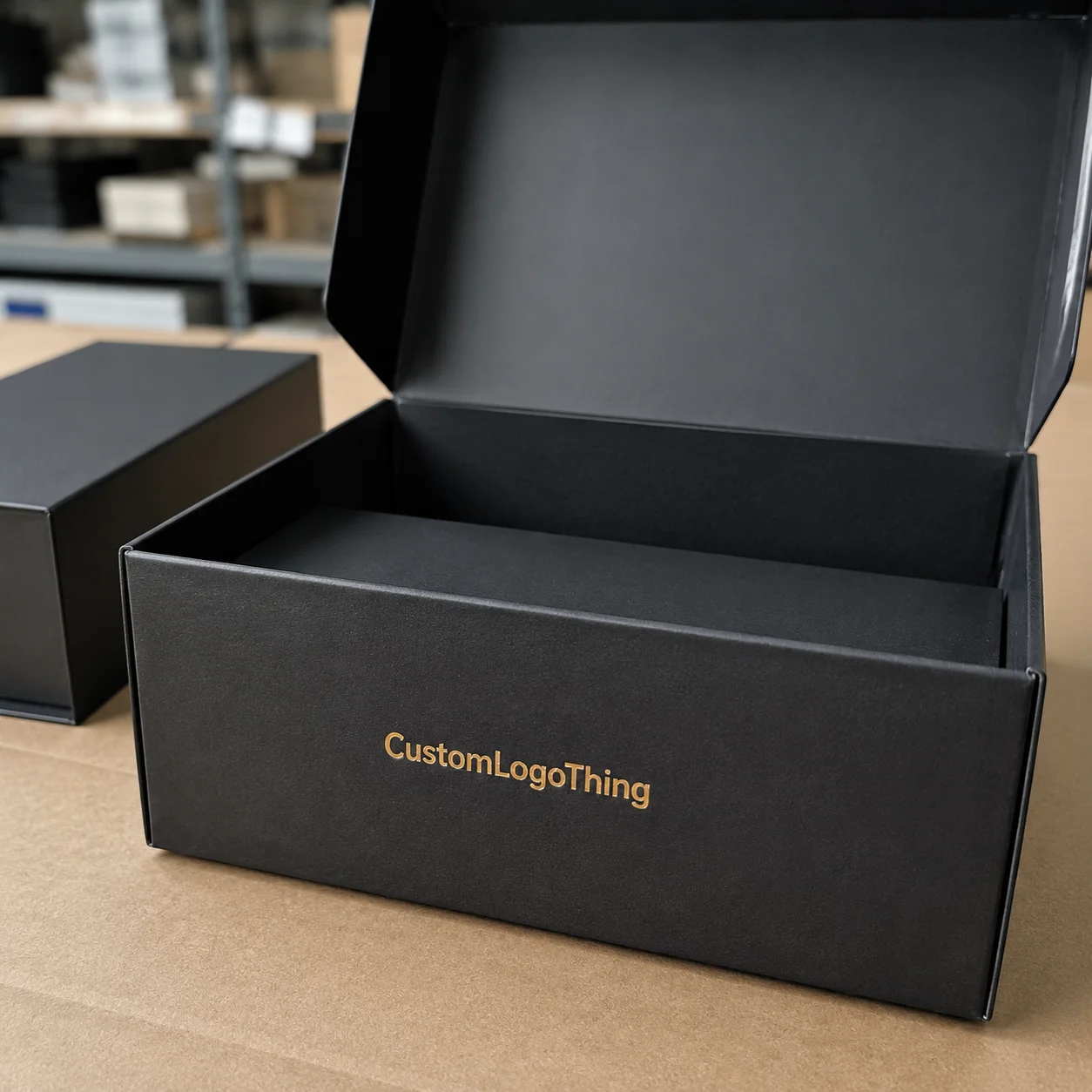
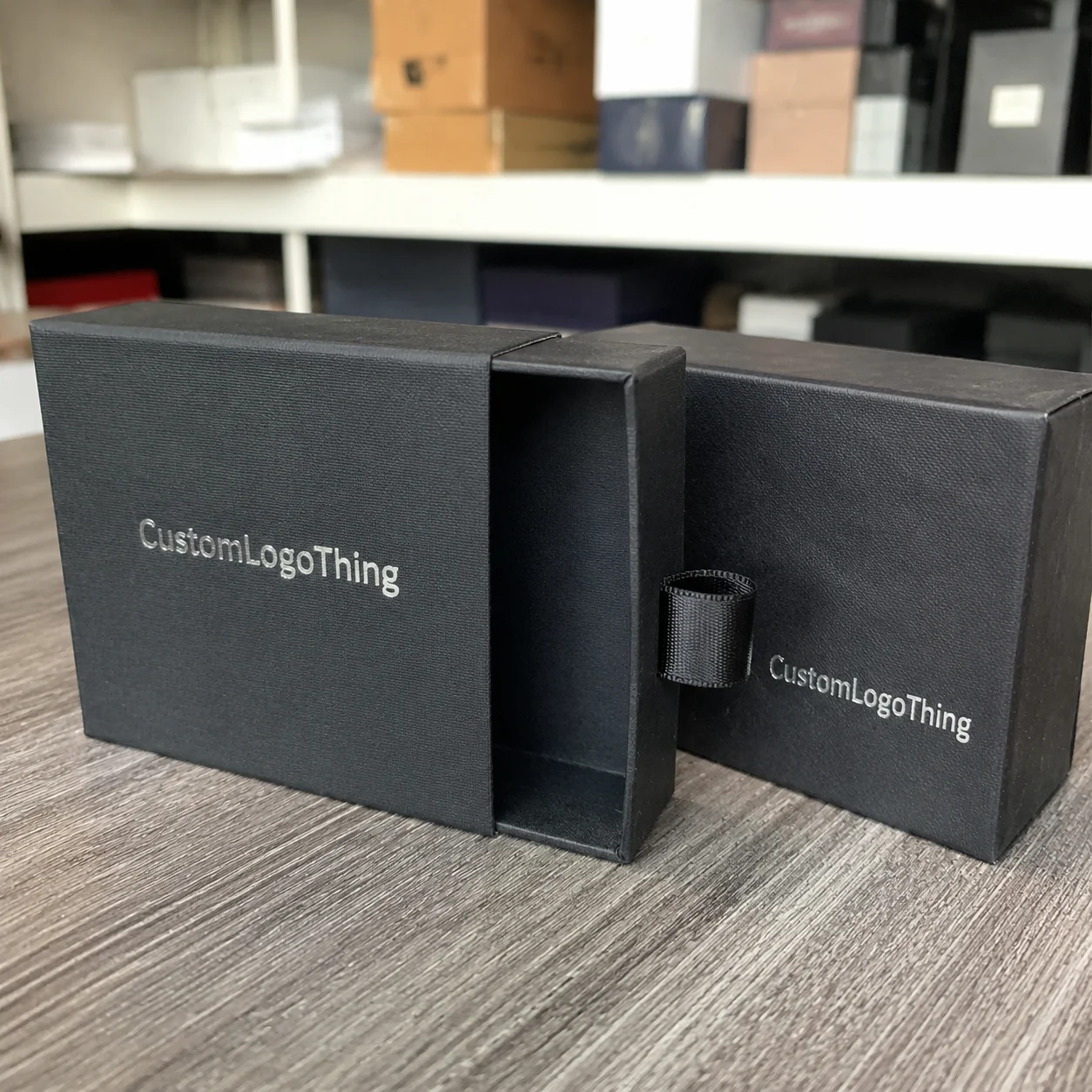
Magnetic Closure Boxes, drawer styles, book-style boxes, shoulder-neck boxes, hinged lids, and custom multi-piece sets are all priced differently because the labor and structure differ. A simple two-piece lift-off lid box is usually easier to make than a drawer box with a ribbon pull and custom insert. Every extra panel, fold, magnet, or glue line adds touch labor. In a factory outside Guangzhou, I once watched a team spend nearly 25 seconds extra per unit just aligning a ribbon pull. That’s not a design flourish. That’s labor.
Here’s how I think about it: if the structure makes a factory worker slow down for 20 extra seconds per unit, that cost compounds across the run. Nobody sends you a bill saying “we were mildly annoyed,” but the unit price says it anyway. That’s why this rigid boxes pricing guide keeps structure near the top of the list. A shoulder-neck box with a magnetic lid can easily cost $0.30 to $0.70 more per unit than a basic two-piece setup box, depending on volume.
Order quantity and unit economics
Higher volume lowers per-unit price because setup costs get spread out. That’s not packaging wisdom. That’s basic manufacturing. A 1,000-piece order might carry a painful setup burden, while 10,000 pieces can look much healthier on a per-unit basis. But volume is not a free lunch. If you over-order, you just move the cost problem from the unit price to the warehouse. In Shanghai, I’ve seen brands save $0.19 per unit by doubling volume from 2,500 to 5,000 pieces, then spend six months paying storage because the launch slipped.
I’ve seen brands push quantity too high just to “get a better price,” then sit on 4,000 unused boxes for 18 months because the campaign changed. That’s not savings. That’s inventory cosplay. A smart rigid boxes pricing guide should keep volume tied to actual sell-through, not ego. If your reorder plan is likely in 90 days, don’t buy like you’re building a warehouse in Foshan.
Size, dimensions, and waste
Large boxes use more board, more wrap paper, and often more freight volume. Even small dimensional changes can affect die-cut layout and waste. If you can trim 5mm from height or width without hurting the product fit, you may reduce material use enough to matter. I’ve had clients save nearly $0.09 per unit just by tightening the internal space and avoiding oversized inserts. Tiny change. Real money. A 2mm reduction in wall allowance can also improve carton packing density by one or two units per master carton, which matters when freight from Shenzhen is billed by volume.
Shipping destination and packaging method
Freight is the part everybody forgets until the cartons are ready. A quote from a factory in Shenzhen, Dongguan, or Ningbo is not your real cost. Add carton packing, palletization, export documents, ocean freight or air freight, and destination charges. The difference between FOB and delivered pricing can be ugly. A landed-cost estimate belongs in every rigid boxes pricing guide because the factory number alone is basically fictional budgeting. A box quoted at $2.10 FOB Shenzhen can become $2.78 landed in Los Angeles once ocean freight, port handling, and inland delivery are added.
For supply-chain quality standards and packaging testing resources, I often point clients to the Institute of Packaging Professionals and the ISTA transport testing guidelines. For sustainability and responsible material choices, the EPA sustainable materials page is useful too. Not glamorous, but better than guessing. A box that passes ISTA 3A in the lab is a lot less exciting than a cracked box arriving in Chicago.
Rigid Boxes Pricing Guide: Step-by-Step Cost Breakdown
If you want a usable rigid boxes pricing guide, you need a process. Otherwise, you are just collecting random quotes and calling it research. I’ve seen teams compare five suppliers with five different specs and then complain the pricing makes no sense. Of course it doesn’t. You asked five different questions and expected one answer. Cute. Start with one exact spec sheet, ideally locked before you send files to factories in Shenzhen, Dongguan, or Guangzhou.
- Define the use case. Is this for cosmetics, luxury gifts, electronics, or apparel? A perfume box and a jewelry box do not need the same construction.
- Lock the dimensions. Measure the product and any inner tray or insert. Use actual millimeters, not “around 6 inches.”
- Choose the box style. Two-piece, magnetic closure, drawer, shoulder neck, or book-style. Structure drives labor.
- Specify material. Board thickness, wrap paper type, lamination, and insert material should all be listed.
- Ask for three comparable quotes. Same spec sheet. Same assumptions. No freestyle pricing.
- Compare all charges. Unit price, setup, sample, tooling, freight, and any packaging extras.
- Request landed cost. This is the actual number you can budget against.
- Approve samples carefully. Check color, fit, magnet strength, glue lines, and corner wrap quality.
The best rigid boxes pricing guide workflow is boring in the best way. It removes drama. It makes suppliers accountable. It also helps you spot the quote that looks cheap because it’s missing half the line items. If one supplier is quoting a 2.0mm board and another is quoting 1.5mm, you are not comparing prices. You are comparing materials with a costume on.
One client in the skincare space once sent me a quote comparison where Supplier A was 30% cheaper than Supplier B. We dug into it and found Supplier A had quoted the shell only, while Supplier B included an EVA insert, matte lamination, foil logo, and ocean freight from Shenzhen to Los Angeles. That’s not a price difference. That’s a spreadsheet prank. After we corrected the specs, the quotes were within $0.18 of each other. That’s why this rigid boxes pricing guide keeps hammering on consistency.
Use the landed-cost model below as your reality check for a 5,000-piece order:
- Base shell: $1.80
- Soft-touch lamination: +$0.18
- Foil logo: +$0.12
- EVA insert: +$0.22
- Carton packing and freight allocation: +$0.62
- Total landed cost: $2.94
That example is not universal, because real quotes depend on order volume, board thickness, and route costs. Still, it’s the kind of arithmetic every buyer should know. A serious rigid boxes pricing guide is really just a map from fantasy pricing to landed pricing. If your supplier in Dongguan refuses to separate shell, insert, packing, and freight, that quote is a balloon with a nice font.
How Much Do Rigid Boxes Cost?
People ask this question all the time, and I get why. You want a clean answer. Unfortunately, a clean answer is fake unless the spec is locked. Still, a practical rigid boxes pricing guide should give you a usable range. For standard custom rigid packaging, I usually see factory prices start around $1.20 to $1.80 for very simple shells at decent volume, then move up fast once finishes, inserts, and premium materials enter the picture.
For a mid-range magnetic closure box with a printed wrap, matte lamination, and a basic insert, the price often lands between $2.10 and $3.20 before freight. Add soft-touch, foil, or custom EVA, and the number can move into the $3.00 to $4.50 zone pretty quickly. If you are buying small quantities, sample-heavy projects, or highly decorative luxury gift boxes, the unit price can climb higher. That is normal. Not fun. Normal.
Here’s the part buyers miss: rigid boxes pricing is not just a product number. It is a production number plus a logistics number. A quote at $2.40 FOB Shenzhen and a quote at $2.78 landed in Los Angeles may be the same deal once freight, palletization, and packing are added. That’s why the phrase rigid boxes pricing guide matters. It forces you to ask for the full cost, not the showroom version.
If your supplier gives you a quote and refuses to define board thickness, wrap paper gsm, finish type, or insert material, keep your wallet in your pocket. That’s not a quote. That’s a teaser.
Process and Timeline: How Long Rigid Boxes Really Take
The timeline matters because rush jobs cost more. Always. A supplier who says “7 to 10 days” is usually talking about production only, not proofing, revision time, or shipping. I learned that the hard way during a holiday gift project when a brand assumed approval and transit were included in that number. They were not. We ended up air-freighting part of the order from Shenzhen at a premium that made everyone very quiet in the meeting. Silence. The most expensive sound in packaging. That air shipment alone added roughly $0.38 per unit on a 2,000-piece split.
A realistic rigid box timeline often looks like this for a project approved in Guangzhou or Dongguan:
- Inquiry and quote review: 1 to 3 business days
- Design confirmation and file prep: 2 to 5 business days
- Sample creation: 5 to 10 business days
- Sample revision and approval: 2 to 7 business days
- Mass production: typically 12 to 20 business days depending on complexity
- Freight: 5 to 35 days depending on air, sea, or domestic shipping
Complex structures take longer. A shoulder-neck box with magnetic closure and multi-piece insert needs more assembly, more QC, and more time to cure adhesives properly. If a factory promises the moon on a very complex project, ask what part of the process they’re skipping. That question usually gets the truth out. A drawer box with a ribbon pull and gold foil can take 15 to 18 business days from proof approval just for production, and that’s before ocean freight from Ningbo or Shanghai.
This is where a rigid boxes pricing guide helps beyond money. Time is cost. Revisions are cost. Delays are cost. If your product launch depends on retail windows, trade show dates, or seasonal promotions, you need at least one buffer week built into the plan. I usually tell clients to pad the schedule by 10 to 15 business days if there are custom finishes and imported freight in the mix. That buffer has saved more than one launch from becoming a panic story.
Common Mistakes That Blow Up Rigid Boxes Pricing
Most bad packaging budgets come from five mistakes, and I’ve seen all of them more times than I’d like. The funny part is they almost always start with the same sentence: “We can figure that out later.” Later, in packaging, has a price tag and a freight bill.
First: people order before finalizing dimensions. They think, “We’ll tweak it later.” Later is expensive. The insert changes. The wrap changes. The die changes. Suddenly the whole job is reworked, and the quote is useless. A 2mm shift in product height can force a new insert cut and a new carton layout, which means more sampling in Shenzhen or Dongguan.
Second: they compare mismatched quotes. One includes textured paper and one uses plain art paper. One includes assembly, one doesn’t. The spreadsheet looks useful, but it’s basically apples, oranges, and a banana wearing a hat. If one supplier is quoting 1.5mm board and another is quoting 2.0mm board, the cheaper quote may simply be lighter, weaker, and easier to regret.
Third: they forget freight, duties, and packaging materials. Cartons, master cartons, pallets, and export labels all add cost. If you are importing, your landed cost may jump by 15% to 35% depending on route and timing. Any rigid boxes pricing guide that ignores logistics is half a guide. A shipment from Ningbo to Los Angeles can add $0.25 to $0.80 per unit depending on weight, volume, and whether you choose sea or air.
Fourth: they pile on premium effects everywhere. Foil here. Embossing there. Spot UV on top. Great if your customer can feel every single effect. Usually they can’t. Spend where the brand gets seen first. Not every surface needs to shout. On a 4,000-piece cosmetic box run, dropping one effect can save $0.14 to $0.28 per unit without making the package look cheap.
Fifth: they never ask about minimum order quantities, reprint costs, or die charges. Some factories need 500 units minimum, others 1,000 or 3,000. If your team might re-order in smaller batches later, you need to know the threshold now, not after the first run is done. That’s basic rigid boxes pricing guide discipline. I’ve seen a supplier in Guangzhou charge $120 for a reprint die because the client forgot to ask about tooling ownership the first time.
“The invoice is never surprised. Only the buyer is.” — something I heard from a freight coordinator after a very long customs day
Expert Tips to Lower Cost Without Making the Box Look Cheap
Saving money does not mean making the box look budget. It means spending with restraint. There’s a difference. And if your packaging team can’t tell the difference, they are probably buying too many finishes and not enough strategy. I’ve sat in factories in Dongguan while brand teams argued over silver foil versus Rose Gold Foil on a box that was already over-designed. The customer just wanted the serum to look expensive. That was the brief.
One: use one premium finish, not five. A single soft-touch laminate plus foil logo can look elegant. Add embossing, spot UV, edge painting, and specialty paper, and the design starts fighting itself. One statement usually beats four shouting matches. On a box produced in Shenzhen, I saw a brand cut $0.19 per unit just by dropping spot UV and keeping only soft-touch plus foil.
Two: optimize dimensions. A slightly smaller outer size can reduce board usage, freight volume, and insert material. I once helped a client reduce the box width by 8mm and save about $0.11 per unit across 8,000 pieces. That kind of change is why a good rigid boxes pricing guide pays attention to measurements, not just aesthetics. A tighter footprint can also improve carton packing by 6% to 9%.
Three: consider stock inserts if the product shape allows it. Custom EVA looks great, but if a paperboard divider or stock foam insert does the job, you can save real money. Not every premium box needs a museum-grade interior. A molded pulp insert from a supplier in Shenzhen can be $0.07 to $0.16 cheaper than custom EVA on mid-volume runs.
Four: ask suppliers where yield loss is happening. Good factories will tell you if an artwork layout wastes material or if a corner wrap can be adjusted. I’ve had production teams in Dongguan suggest moving the logo 4mm to reduce foil waste. That saved a little on every unit and improved registration. Honest factories are worth their weight in hot tea. Also, factories that say “it’s fine” too quickly usually want you to discover the waste later, after payment.
Five: negotiate smartly. Volume tiers, sample credits, and consolidated shipping are all fair game. If you’re ordering multiple SKUs, ask whether they can combine cartons or share freight space. That often saves more than trying to squeeze another cent off the shell price. In Shanghai, I’ve seen a mixed-SKU shipment drop by $380 just because three carton sizes were consolidated into two master cartons.
Six: build a pricing buffer. I usually recommend 8% to 12% for imported rigid packaging, especially if freight is volatile or the project has multiple rounds of sampling. A buffer is not bad planning. It’s professional planning. This rigid boxes pricing guide would be incomplete without that reality. If your quote looks perfect on paper, you probably haven’t found the missing line item yet.
For clients who want to compare packaging formats before committing, I also point them toward broader material and box options in Custom Packaging Products. Sometimes the right answer is still a rigid box. Sometimes it’s a high-end folding carton with the right finish stack. Packaging should fit the product and the margin, not your ego. If your launch budget is $12,000 and packaging eats $5,000, somebody needs to do the math in Guangzhou, not the marketing deck.
FAQs
What affects rigid boxes pricing the most?
Material choice, box size, print complexity, finishes, and order quantity usually drive the biggest swings in rigid boxes pricing guide calculations. Freight and sampling can matter a lot too, especially for smaller runs where fixed costs are spread over fewer units. A 2.0mm board box with foil in Shenzhen will not price like a 1.5mm plain box in Ningbo.
Why do rigid box quotes vary so much between suppliers?
Some suppliers include more services in the base quote, while others leave out setup, inserts, or shipping. Different factories also use different board grades, labor rates, and production methods, so a quote that looks cheaper may simply be missing a few expensive details. One quote in Dongguan may include export cartons; another may stop at the shell. That is not a fair comparison.
How can I estimate rigid box cost before requesting samples?
Start with dimensions, box style, finish level, and quantity. Then ask for a landed-cost estimate, not just the factory number. A good rigid boxes pricing guide comparison should include production, packing, freight, and any applicable duties. If you’re ordering 5,000 pieces, ask for a line-by-line quote with board thickness, wrap paper gsm, and insert material spelled out.
Do rigid boxes get cheaper with larger orders?
Yes. The per-unit price usually drops as quantity increases because setup costs get spread across more boxes. The biggest savings often show up once you move past very small runs, though the exact break point depends on the structure and finish complexity. A 1,000-piece order in Shenzhen may carry a $0.40 setup burden that shrinks to $0.08 at 10,000 pieces.
What’s the easiest way to avoid surprise costs in rigid box pricing?
Use one exact spec sheet for every supplier. Confirm samples, freight, duties, and finishing before approving production. If the quote doesn’t clearly define what’s included, assume something valuable is missing and ask again. A clean quote from Guangzhou should list board grade, wrap paper gsm, finish type, MOQ, and delivery terms.
The cleanest rigid boxes pricing guide is the one that helps you compare apples to apples, not apples to “luxury-inspired fruit assortment.” Know your dimensions. Know your finish stack. Know your freight. And if a quote looks suspiciously cheap, ask what’s not included before you fall in love with the number. I’ve seen too many brands learn that lesson the expensive way, and honestly, you don’t need to be one of them. If your factory says $1.58 for a fully finished magnetic box in Dongguan with no setup or freight, that’s not a bargain. That’s a starting line.
Your next quote review should be a simple three-step check: match the spec sheet line by line, convert every supplier offer to landed cost, and reject any estimate that won’t define board thickness, wrap stock, finish, and insert material. Do that, and the pricing stops being a guessing game. It becomes a decision.