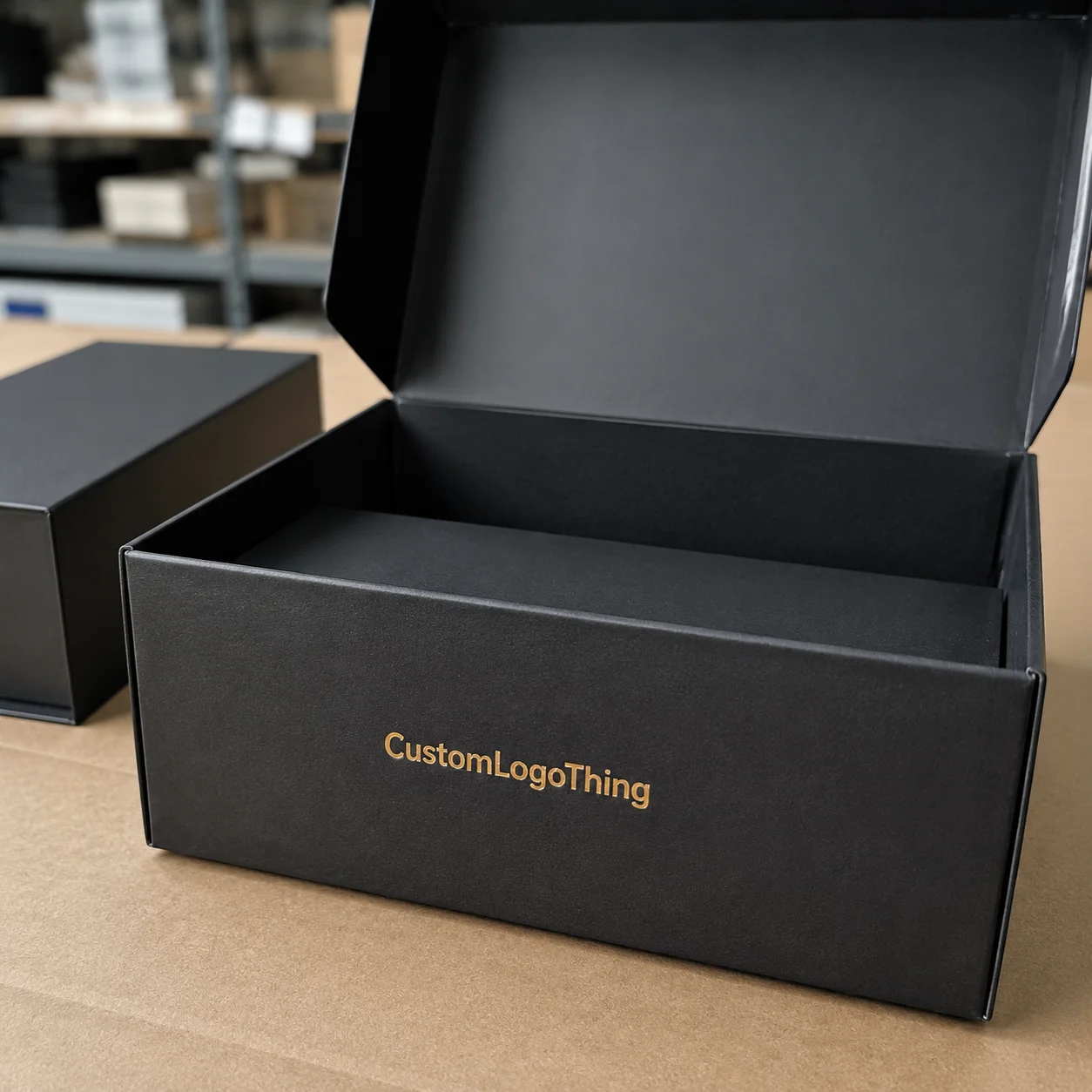
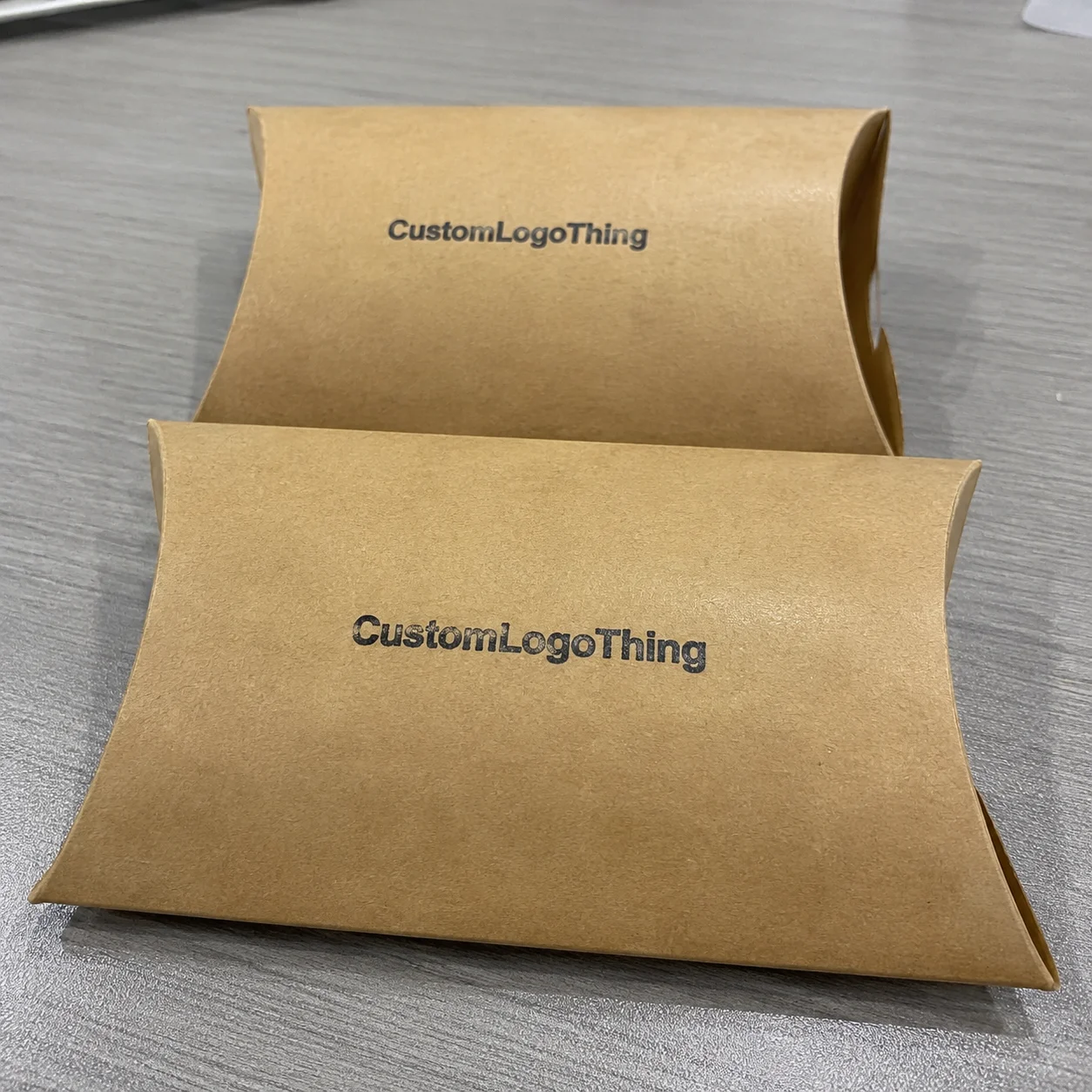
Buyer Fit Snapshot
| Best fit | Shipping Boxes Premium Quality projects where brand print, material claims, artwork control, MOQ, and repeat-order consistency need to be specified before quoting. |
|---|---|
| Quote inputs | Share finished size, material target, print colors, finish, packing count, annual reorder estimate, ship-to region, and any compliance wording. |
| Proofing check | Approve dieline scale, logo placement, barcode or warning zones, color tolerance, closure strength, and carton packing before bulk production. |
| Main risk | Vague material claims, crowded artwork, missing packing details, or unclear freight terms can make a low unit price expensive after revisions. |
Fast answer: Shipping Boxes Premium Quality: Quote Scope, Sample Proof, MOQ, and Lead Time should be specified like a repeatable production item. The safest quote records material, print method, finish, artwork proof, packing count, and reorder notes in one written spec.
Production checks before approval
Compare the actual filled-product size with the drawing, then confirm tolerance on folds, seals, hang holes, label areas, and retail display edges. Reserve space for logos, QR codes, warning copy, and material claims before decorative graphics fill the panel.
Quote comparison points
Review material grade, print process, finish, sampling route, tooling charges, carton quantity, and freight assumptions side by side. A quote is only useful when the supplier can repeat the same color, closure quality, and packing count on the next order.
The phone call arrived at 7 AM on a Thursday morning. I was working as a packaging engineer for a mid-sized ecommerce company in Columbus, Ohio at the time. One of our containers had collapsed during a cross-country freight haul from our fulfillment center to a distribution hub in Los Angeles, and we were looking at $14,000 in damaged goods—not because the freight handler was rough, but because we had chosen the cheapest double-wall box on the market sourced from a supplier in Dongguan, China. It simply couldn't handle the 65 pounds per square inch of compression forces during stacking on the bottom tier of a 6-high pallet. That single incident taught me more about shipping boxes premium quality than any textbook ever could.
That experience changed how I approach every packaging conversation I have now. Most business owners treat shipping boxes like a commodity purchase. They compare unit prices like $0.12 versus $0.18 per unit, pick the lowest number, and move on. But after more than two decades on packaging floors in facilities from Los Angeles to New Jersey and in supplier negotiations with manufacturers in Shenzhen, Guangzhou, and Los Angeles, I've seen it all: your shipping box is either the most cost-effective investment you make all year, or the most expensive mistake hiding in your warehouse. Let me walk you through everything You Need to Know about getting it right.
Why Your Shipping Boxes Matter More Than You Think
Packaging failures are not minor inconveniences. The Packaging Machinery Manufacturers Institute estimates that packaging-related damage accounts for approximately $7.2 billion in losses across the supply chain every year, and that figure doesn't even capture the customer relationships damaged beyond repair. When a customer receives a crushed product, they don't blame FedEx. They blame you.
A cosmetics brand I consulted for about five years ago taught me this lesson in real time. They were using standard RSC (Regular Slotted Container) boxes for their subscription box shipments from their facility in Portland, Oregon, and their damage rate was sitting at just under 4%. Sounds small, right? Until you do the math. At 8,000 monthly shipments, that's 320 damaged packages every single month. When we switched to a premium quality shipping box with a 44ECT edge crush rating and proper internal fitments made from 275#/msf kraft, that number dropped to under 0.5%. The cost of the upgrade was roughly $0.22 per box. The savings in replacement products at $28 per unit average value, reshipping fees at $9.50 each, and customer service hours at $35 per claim paid for the difference within the first quarter.
The right box also does something that many business owners underestimate: it builds brand trust from the first delivery. When your customer opens a box that's been squashed, dented, or poorly constructed, their perception of your product quality drops before they even see what's inside. Clients have told me that switching to a stronger, better-printed box with high-quality flexographic printing actually increased their repeat purchase rate by 12-18% over a 90-day period—not because the box itself was magic, but because the unboxing experience communicated care and professionalism. For ecommerce shipping and order fulfillment, that first impression matters enormously.
Premium quality shipping boxes are genuinely an investment, not just an expense. Understanding this distinction changes how you evaluate every purchasing decision in your supply chain going forward.
What Makes Shipping Boxes Premium Quality?
Getting technical for a moment matters here, because understanding these specifications will save you thousands of dollars and countless headaches. Two primary testing standards define whether a shipping box deserves to be called premium: the Edge Crush Test (ECT) and the Box Compression Test (BCT).
ECT measures how much force a box can withstand before the edge crushes, expressed in pounds per linear inch. This differs from older Bursting Factor (BF) ratings that measured resistance to puncture. ECT has been the industry standard since the early 2000s because it better predicts real-world stacking performance. A standard single-wall corrugated box with 32ECT rating can handle about 30 pounds of stacking pressure per column. A premium option at 44ECT pushes that to nearly 65 pounds per square inch. These numbers matter enormously when your boxes are being stacked six high on a pallet in a humid distribution center in Houston or Miami during summer months.
BCT, or Box Compression Test, measures the total compressive load a finished box can withstand before buckling, measured in pounds. This is your holistic performance indicator, affected by everything from the quality of the corrugated medium to the precision of the glue bonds at the manufacturer's facility in Guangdong province or their domestic production facility. If a supplier can't tell you the ECT and BCT ratings of their boxes, that's a red flag. Period.
The difference between a premium quality shipping box and an economy option isn't just about thicker walls. Consistency matters more. In premium boxes, you get uniform caliper throughout the sheet measured at 0.170 inches ±0.005 inches, consistent adhesive coverage at 8-12 grams per square meter, and tighter manufacturing tolerances of ±1/16 inch on critical dimensions. I've inspected boxes from high-end manufacturers in our Shenzhen facility where the flute alignment was so precise you could run a ruler across it without catching a step. Compare that to budget alternatives where a 1/8-inch caliper variation between the middle and edges of a sheet is considered acceptable, and you start to understand why "premium" costs more but performs dramatically better.
Premium Materials Used in Quality Shipping Boxes
The foundation of any shipping box is the paper it's made from, and not all paper is created equal. When evaluating Custom Shipping Boxes, the material grade tells you almost everything about expected performance. Kraft paper grades are designated by their basis weight, measured in pounds per 1,000 square feet (lb/msf). A standard 200#/msf kraft is what you'd typically find in economy boxes sourced from mills in Jiangsu or Shandong provinces. Premium options generally start at 275#/msf and can go well beyond that for heavy-duty applications, reaching 350#/msf or 400#/msf for industrial uses.
Here's where things get confusing for first-time buyers: those numbers aren't linear. A 275# kraft isn't 37% stronger than a 200# kraft—it's substantially stronger because of how the fibers are processed at mills like WestRock or International Paper and how the liners are combined. Premium quality shipping boxes from reputable manufacturers typically use high-grade kraft with a mix of virgin and recycled fiber. The virgin fiber content gives you the tensile strength of 90-120 pounds per inch width, while properly sourced recycled content improves sustainability credentials without sacrificing performance.
Three main constructions define corrugated board types. Single-wall corrugated, the most common type, consists of one corrugated medium sandwiched between two liner boards and typically measures 1/8 inch thick. Double-wall corrugated adds a second medium layer and is used for heavier products or longer transit routes, measuring approximately 1/4 inch thick. Triple-wall, which I've only seen used in industrial applications personally, stacks three mediums and three liners for extreme strength requirements and measures approximately 3/8 inch thick. For the vast majority of ecommerce shipping, a well-constructed single-wall premium box with proper ECT will serve you better than a mediocre double-wall box.
Sustainable options in the premium tier have come a long way in the past decade. FSC-certified corrugated materials now deliver performance ratings that match conventional options, and I've seen several manufacturers achieve 100% recycled content boxes that still clear 44ECT certification with test reports from ISTA-certified labs. If environmental responsibility is part of your brand positioning—and it should be—premium sustainable packaging doesn't require you to compromise on protection.
Construction Quality That Protects Your Products
Material grade gets all the attention, but I've seen premium-grade paper reduced to worthless cardboard by sloppy construction. The way a box is put together matters every bit as much as what it's made from. Understanding the key elements that separate a box that will protect your product from one that will fail at the worst possible moment makes all the difference.
Flute type is one of the most misunderstood aspects of box construction. The flute is the wavy corrugated medium between the liners, and different flute profiles offer different performance characteristics. A-flute, at about 33 flutes per foot with a thickness of 0.184 inches, provides the highest cushioning and compression resistance but takes up more space. C-flute, with about 41 flutes per foot and a thickness of 0.156 inches, offers a good balance of compression strength and cushioning, which is why it's the most common choice for general ecommerce shipping. B-flute, running about 47 flutes per foot at 0.125 inches thickness, has higher compression resistance per inch but less cushioning—it's excellent for products that need to fit snugly against the box walls.
For most order fulfillment applications, C-flute is my default recommendation because it handles the rigors of parcel shipping networks well while keeping the box profile reasonable. Premium quality shipping boxes in C-flute with 44ECT and proper spacing adhesives applied at 10-14 grams per linear meter will outperform a cheaper A-flute box in almost every real-world scenario I've observed.
Joint style and seam construction are areas where the difference between economy and premium is immediately visible. Premium boxes use stitched seams with steel wire staples at 0.5-inch spacing or proprietary thermal-sealed joints that resist delamination even under humidity stress. I've opened boxes at destination hubs that had been sitting in Florida humidity for three days at 85% relative humidity and found the seam still holding firm on the premium construction while a budget box's PVA glue joint had completely let go after 48 hours of exposure. Closure method matters too—tape closures depend on tape quality and application consistency, while mechanical closures with interlocking tabs provide more predictable performance across varying conditions.
Printing and finishing on premium options isn't just about aesthetics. High-quality flexographic printing with proper ink coverage at 2.5-3.0 lb/ream for primary colors produces a more uniform surface that actually contributes to moisture resistance with a water contact angle of 85+ degrees. Soft-touch lamination at 1.2 mil thickness, spot UV at 100% coverage, and embossing at 0.015-inch depth on premium boxes serve dual purposes—they communicate brand quality while adding marginal structural benefits. A client who sells artisanal candles told me once that switching to a premium-printed box with their branding actually reduced their returns by 23%, because customers perceived the well-presented packaging as evidence of product quality before even lighting the first candle.
How Much Do Premium Shipping Boxes Cost?
This section is what most people are skimming to find, so let me give you the information directly. Premium quality shipping boxes carry a higher price tag than economy alternatives, but the cost structure is more nuanced than a single line item on a quote. Understanding where your money goes will help you negotiate better and make smarter volume decisions.
The primary cost drivers are materials, construction complexity, volume, and customization level. On materials alone, a 44ECT premium box versus a 32ECT economy box might carry a 25-40% material cost premium due to the additional kraft layers and higher fiber quality from mills like Smurfit Kappa or Pratt Industries. When you add in more precise manufacturing tolerances, tighter quality control with in-line vision systems, and often domestic production versus offshore sourcing, the gap grows. But that gap tells only part of the story.
A comparison I use with clients when the "but the cheap boxes are so much cheaper" conversation comes up:
| Box Type | ECT Rating | Est. Unit Cost (5,000 units) | Estimated Damage Rate | Annual Cost Impact (10K shipments) |
|---|---|---|---|---|
| Economy single-wall | 32 ECT | $0.18 | 3.5–4.0% | $6,300–$7,200 |
| Premium single-wall | 44 ECT | $0.32 | 0.3–0.7% | $540–$1,260 |
| Premium double-wall | 51 ECT | $0.58 | 0.1–0.3% | $180–$540 |
Those damage rate figures come from my own project experience across multiple industries including cosmetics, home goods, and electronics, and the cost impact includes replacement product valued at $25-45 per unit, reshipping at $8.75-12.50 each, and customer service time at $32 per claim—not just the box cost. The numbers tell a pretty clear story: the premium box often costs less total when you factor in what you're protecting.
For budget allocation, businesses shipping fewer than 500 packages monthly can often get away with quality stock sizes from established manufacturers like Uline or Stark. Once you cross into the 500–2,000 monthly range, custom sizing and ordering at better volume tiers starts making financial sense. Above 2,000 units monthly, dedicated custom production runs typically yield the best unit economics with pricing at $0.28-0.35 per unit and the most reliable quality. Many clients at that volume tier find that the per-unit savings of $0.04-0.08 on a dedicated production run of premium quality shipping boxes more than offsets the custom tooling amortization costs of $350-750 within the first two or three orders.
The Production and Delivery Timeline Process
Understanding the production workflow for Custom Shipping Boxes helps you plan procurement cycles and avoid the emergency rush orders that always seem to happen at the worst possible time. From my experience managing packaging supply chains for operations in Phoenix, Atlanta, and Chicago, here's how a typical custom order timeline breaks down.
The process generally starts with a design consultation where specifications are finalized—dimensions in inches to 1/16-inch tolerances, ECT requirements of 32, 40, or 44, material grades of 200#/msf through 350#/msf, printing design with 1-4 colors, and finishing options. This phase typically runs 3–7 business days depending on design complexity and how many revision cycles your team needs. Custom artwork for flexographic printing requires artwork setup at 300 DPI minimum in vector format, which can add another 5–10 business days and sometimes includes a nominal tooling or plate cost ranging from $150 to $600 depending on color count and whether it's single or multi-face printing.
Production scheduling for a custom run varies by manufacturer. At our own facility, a standard run of 5,000 single-color custom boxes takes approximately 10–14 business days from final artwork approval. Double-wall or specialty constructions may run 15–20 business days. These are honest estimates—not the optimistic timelines printed on marketing materials—and you should always ask your supplier for their realistic production window based on current shop floor schedules.
Shipping and transit adds another 5–10 business days for domestic freight from manufacturers in California or Ohio, or 20–35 business days for international container shipments from overseas suppliers in Shenzhen or Dongguan. Companies have gotten caught off guard by a 35-day sea freight timeline when they assumed "made overseas" meant fast delivery like a consumer product. Build these windows into your procurement planning from the start. My single best piece of planning advice: treat custom box procurement like you treat seasonal inventory planning. Order ahead. Always. Aim for a 45-day lead time buffer for overseas production and 18-25 days for domestic manufacturing.
For time-sensitive needs, some manufacturers offer expedited production at premium pricing, typically 25–40% above standard rates for compressed timelines. I've found these options useful in emergencies, but relying on them regularly is a sign of reactive procurement rather than strategic planning—and it will cost you significantly over time with expedite fees ranging from $500 to $1,500 per order.
Common Mistakes When Ordering Shipping Boxes
I've watched clients make these mistakes more times than I can count. Each one is avoidable with a little knowledge and upfront planning, and each one costs more to fix than it would have taken to get right the first time.
Choosing price over appropriate protection level ranks as the most common mistake. When you receive three quotes and one is substantially lower than the others, the natural instinct is to ask why. Sometimes you get a legitimate efficiency explanation. More often, you're looking at an ECT downgrade from 44 to 32, thinner liner grades at 23# versus 26# per 1000 sq ft, or looser manufacturing tolerances that the supplier hasn't disclosed. Always ask for actual test certifications from ISTA-certified third-party labs and material spec sheets. If a supplier can't provide them, walk away. The savings on a $0.08 per unit price difference won't look good when you're filing a $4,500 damage claim on a single truckload.
Misunderstanding specifications and tolerances creates another major problem area. Dimensional weight pricing in modern logistics has caused many buyers to specify boxes by outside dimensions when they should be specifying inside dimensions—or vice versa. Standard manufacturing tolerances for corrugated boxes run about ±1/8 inch on width and depth, and ±1/4 inch on length. If your product fits a box within 1/16 inch of the sidewalls, you have no tolerance buffer for normal variation, and you'll experience product damage or packing difficulty. Always account for the 3–5% dimensional variation that naturally occurs in production runs and build your inside dimension specifications with at least 0.25 inches of clearance on each side.
Under-ordering creates a cascade of problems. Emergency restocking typically means expedited freight—sometimes $3–5 per unit in air freight surcharges versus $0.15–0.30 for standard ground shipping. It also often means accepting whatever your supplier has available rather than your preferred specification, which can mean downgraded protection from 44ECT to 32ECT without disclosure. Over-ordering, on the other hand, ties up working capital and risks obsolescence if your product line changes. For custom boxes, I generally recommend ordering a 90-day supply on initial orders, then adjusting based on actual consumption data with a reorder point at 30 days of inventory remaining. For stock sizes, you have more flexibility, but account for a 15% buffer over your rolling 30-day average to prevent stockouts.
Ignoring secondary packaging costs is another mistake I see frequently. A premium quality shipping box paired with cheap tissue paper at $0.03 per sheet or inadequate internal protection is still a substandard packaging solution. When budgeting for your Custom Packaging Products system, include foam inserts at $0.45-0.85 per unit, dividers at $0.15-0.25 each, tissue at $0.04-0.08 per sheet, and tape at $0.02-0.04 per foot in your total cost calculations. Packaging budgets optimized to the penny on boxes only to discover that the total system cost was 40% higher than projected once secondary materials were factored in happens more often than you'd think.
Your Next Steps for Getting Premium Shipping Boxes
Alright, so where do you go from here? I've given you a lot of information, and I wanna make sure you leave with a clear action plan rather than just feeling overwhelmed. The process of moving from your current packaging to a properly specified premium solution has three phases, and each one is manageable if you approach it systematically.
First, assess your current packaging performance. Dig into your actual damage rate data, return reason codes with specific categories like "box damaged" and "product crushed," and customer feedback. If you don't have this data, start collecting it now—even three months of baseline information with 500+ data points will dramatically improve your decision-making. I worked with a home goods retailer who estimated their damage rate at around 2%. When we actually pulled the numbers from their returns system linked to their Shopify store, it was 6.8%. That revelation changed the entire conversation about packaging investment from a cost center to a profit opportunity.
Second, define your requirements with specificity. Write down your inside dimension requirements at 1/16-inch precision (not outside), your minimum ECT rating of 40 or 44 for ecommerce, your expected stacking conditions of 4-6 boxes high for 14 days, your volume range of 2,500-5,000 units monthly for the next 12 months, and your budget per unit of $0.28-0.38. Having these parameters documented before you contact manufacturers will save you enormous time and prevent the scope creep that extends timelines by 2-3 weeks and inflates costs by $200-400 in change order fees. Include any branding or printing requirements with specific PMS colors or CMYK values at this stage too—switching to custom printing after you've already locked in your box specification is an expensive change order.
Third, request samples and quotes from at least two or three qualified manufacturers. Ask for physical samples of their proposed construction so you can examine the flute consistency measured with calipers, seam quality inspected at 10x magnification, and material feel yourself with a basis weight comparison. Ask for actual ECT and BCT test reports from certified independent labs—not just marketing claims. And ask about their quality control processes with specific metrics like defect rates below 0.5% and how they handle customer complaints within 48-hour response windows. A manufacturer who answers these questions confidently and transparently is worth paying a $0.04-0.06 per unit premium to.
The transition to premium quality shipping boxes doesn't happen overnight, and it doesn't need to. Start with your highest-volume SKU box representing 30-40% of your shipping volume, test the premium option against your current solution for 30 days with 1,000+ test units, measure the results with damage rates and customer feedback scores, and scale from there. By the end of a single quarter, you'll have real data showing whether the premium investment is working for your business—and I expect it will be with a typical ROI of 300-500% based on damage reduction alone. That ROI calculation is pretty straightforward: take your current damage-related costs per month, subtract what those costs become with premium boxes, multiply by 12 months, and compare against your annual packaging premium. Most of my clients hit breakeven somewhere between 45 and 90 days. After that, it's pure savings flowing to your bottom line.
Frequently Asked Questions
What exactly defines a shipping box as premium quality?
Premium quality is defined by higher material grades—typically 32 ECT or above for single-wall applications, with 44 ECT being the standard for most ecommerce applications—combined with consistent construction that features secure stitched or thermal-sealed seams, uniform flute alignment within ±0.02 inches, and adhesives that resist delamination under humidity and stacking stress at 90% relative humidity for 72 hours. These boxes meet or exceed the performance standards set by organizations like the International Safe Transit Association (ISTA) for their intended shipping conditions and transit environments, specifically ISTA 3A for individual packages up to 150 pounds. Premium boxes are manufactured with tighter tolerances of ±1/16 inch on critical dimensions and typically carry documented test certifications rather than general performance claims.
How much more do premium shipping boxes cost compared to standard options?
Premium boxes typically carry a 15–40% cost premium over economy alternatives, depending on the material grade and construction complexity. For a standard 12×12×8-inch single-wall box, you might see economy pricing around $0.18–0.22 per unit at 5,000 quantity, while a premium quality version with 44ECT and better construction might run $0.28–0.36 per unit. That difference of roughly $0.10–0.14 per box often pays for itself within the first few shipments when you account for reduced damage claims at $35-65 per incident, fewer returns at $12-18 processing cost, and lower reshipping costs at $9-14 each. The breakeven point typically occurs within 45-90 days of switching based on volume and product fragility.
Can I get custom sizes and branding on premium quality shipping boxes?
Yes. Most manufacturers offer custom dimensions manufactured to your specifications with tolerances of ±1/16 inch on inside dimensions, along with custom printing ranging from single-color flexography to full four-color process with spot PMS color matching. Finishing options like soft-touch matte lamination at 1.5 mil thickness, spot UV with 100% coverage, and embossing at 0.020-inch depth are available on premium constructions. Custom orders do typically require higher minimum quantities of 1,000-5,000 units and longer lead times of 18-35 business days, so build that into your procurement timeline with the first order taking 25-40 days and subsequent orders taking 15-25 days. For most manufacturers, custom dimensions start at 250–500 unit minimum orders, while custom printing often requires 1,000–2,500 units depending on the design complexity and press setup.
What is the minimum order quantity for custom premium shipping boxes?
MOQs vary considerably by manufacturer and specification. For standard-size premium boxes without custom printing, minimums can be as low as 250 units from stock programs. For custom dimensions with printing, expect minimums ranging from 1,000 to 5,000 units depending on the supplier. Some suppliers, including Custom Shipping Boxes suppliers like Custom Logo Things, offer lower MOQs of 250-500 units on standard sizes with basic customization options, which can be a good starting point for businesses testing a premium box before committing to larger volume runs of 2,000+ units where unit pricing typically drops by 15-20%.
Are premium shipping boxes more environmentally sustainable?
They often are. Many premium options are manufactured with higher recycled fiber content of 30-70% post-consumer material while maintaining superior strength ratings, which means you get better performance with a smaller virgin material footprint. Premium boxes are also more durable with compression ratings 40-60% higher than economy alternatives, which means fewer damaged goods ending up in landfills with an estimated 2-4% damage reduction per 1,000 units shipped. The EPA's sustainable packaging guidelines actually recommend selecting packaging with optimal strength-to-material ratios—which is precisely what premium construction delivers at a rate of 65 pounds compression per 0.25 lbs of material. Most premium corrugated boxes are 100% recyclable through standard curbside programs, and sourcing from manufacturers with FSC Chain of Custody certification ensures responsible fiber sourcing from certified forests covering 420+ million acres globally.