If you are launching a hoodie, a denim jacket, or a limited-run tee, the difference between “nice garment” and “finished product” is often a label. That is where Small Batch Woven Labels custom logo orders earn their place: they add a durable branded detail without forcing you to commit to a large inventory of tags that may never move.
From a packaging buyer’s point of view, woven labels sit in the same family as good branded packaging. They tell the customer the product was finished on purpose, not assembled as an afterthought. Whether the label is stitched into the neck, tucked into a side seam, or folded into a hem tab, it quietly signals that the brand cared about the last inch of the product.
That last inch matters more than many brands expect. A garment can have strong pattern cutting, good fabric, and careful sewing, yet still look incomplete if the brand mark is missing or handled poorly. In small runs, that gap is especially visible because customers often evaluate the piece as a whole rather than separating “product” from “branding.”
Why small-batch woven labels can make a product feel finished
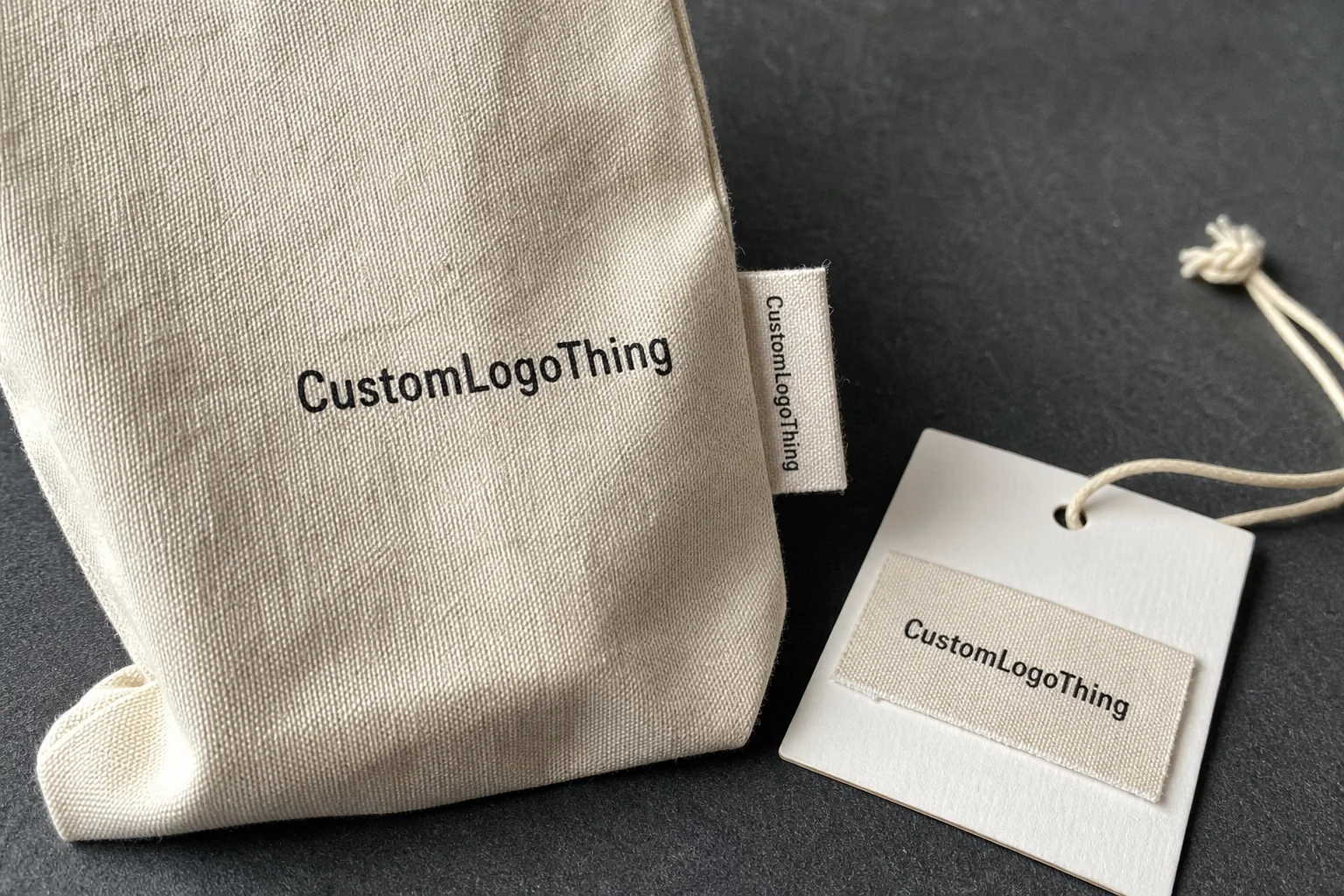
Woven labels are made by weaving threads together to form the artwork itself, rather than printing ink on top of a surface. That structure gives them a practical advantage: they usually hold up well through wash cycles, keep their shape, and stay readable longer than a low-grade printed tag. The label becomes part of the textile, not just something attached to it.
For brands working with small quantities, that durability is only half the story. The other half is presentation. A clean neck label or side seam label can make a product feel retail-ready even when the collection is still being tested. It is the same logic that drives careful box design or consistent tissue paper placement: the product reads as intentional because every visible detail agrees with the brand.
Small runs are useful when a brand is trying a new silhouette, building a seasonal capsule, or avoiding a pile of unused stock. A batch of 200, 500, or 1,000 labels can be a workable bridge between concept and full production. That is why buyers often search for small batch woven labels custom logo options instead of jumping straight to higher minimums.
There is also a subtle difference between label placement types. Neck labels are usually the first branding element the customer sees. Side seam labels behave more like a signature. Hem tabs can function almost like a miniature badge. In photos, all three show up more than people expect, especially on flat lays and close-up product pages.
A label does not just identify the brand; it helps define whether the customer reads the product as a polished retail piece or a prototype that made it to market.
That is why custom logo woven labels are rarely chosen for decoration alone. They are part of the product story, part of the packaging system, and often part of the reorder strategy once a style starts selling consistently.
How the weaving process turns a logo into a label
The process starts with artwork, but it does not end there. A label maker reviews the logo, cleans up the edges, assigns thread colors, and maps the design into a weave structure that can actually reproduce on a small textile patch. After that, the loom setup is programmed, the labels are woven, and then they are cut and finished according to the fold or edge style you choose.
That translation from file to thread is where many buyers are surprised. Fine lines, tiny type, and subtle gradients may look sharp on screen and still lose clarity when they become woven threads. The tighter the artwork detail, the more the design has to be simplified so the final label stays readable at a glance. A script logo with delicate strokes, for example, may need thicker lines or a larger finished size than the brand initially planned.
Three common constructions come up often:
- Damask - the most common choice for detailed branding because it balances softness and sharpness well.
- Satin - smoother and shinier, often used when a softer hand feel is important.
- Taffeta - usually more economical, with a flatter feel and less fine detail than damask.
For apparel buyers, the finish matters just as much as the weave. An end fold works well for side seams and exterior branding. A center fold is common for neck labels because it can be sewn into a seam cleanly. A straight cut or heat-cut edge is sometimes used for patch-style applications or loop folds. The right choice depends on how the label will sit against the garment and how much the edge will touch the skin.
Sample approval is usually the most valuable stage. This is where buyers catch the problems that are easiest to miss on a screen: a logo that is too narrow, a text line that disappears, or a color that reads more gray than intended. A proof is not a formality. It is the last practical checkpoint before production begins.
Key factors that affect quality, cost, and MOQ
Price and quality move together more often than buyers want to hear. The main cost drivers are label size, number of colors, weave density, and finishing style. A 1-inch by 2-inch label with two thread colors and a simple fold is a very different job from a dense multi-color badge with a custom cut edge and backing treatment.
Higher stitch detail raises setup complexity because the weaver has to fit more artwork into a small area. That usually means tighter thread counts, more careful artwork preparation, and sometimes a higher minimum order quantity. If a logo includes tiny copy or intricate line work, the production team may recommend simplifying it to keep the label readable and stable.
There is always a tradeoff between ultra-fine branding and readability. On a neck label, for example, a brand may want a delicate logo, a size marker, a country-of-origin note, and a care symbol line all in one place. That can work, but the label often needs to be larger than the buyer first imagined. For children’s garments, the readability issue is even more important because small labels can become cluttered quickly.
Here is a simple comparison that buyers often find useful:
| Option | Typical Use | Relative Cost | Best For |
|---|---|---|---|
| Damask woven label | Neck labels, detailed logos | Mid to higher | Brands that need clarity and softness |
| Satin woven label | Fashion items, softer touch | Mid | Premium-feel garments with moderate detail |
| Taffeta label | Basic branding, internal labels | Lower | Simple artwork and budget-sensitive runs |
Unit cost usually drops as quantity rises. A very small run may sit in the rough range of $0.18 to $0.35 per label depending on size, colors, and finishing, while larger runs can fall lower because setup fees are spread across more pieces. Small-volume orders often carry a higher per-label price, and backing options, center folds, and special cuts can shift the quote more than buyers expect.
Minimum order quantity is not just a supplier preference. It reflects loom setup time, thread programming, cutting, sorting, and the fixed effort needed before the first usable label comes off the line. For a brand trying to keep apparel branding flexible, that can actually be useful because it avoids locking into a large amount of a design that may change next season.
Small batch woven labels custom logo: production steps and timeline
The workflow is straightforward, but each step matters. It begins with a quote request, then artwork review, then proof approval, then weaving, cutting, inspection, and shipping. For small batch woven labels custom logo orders, the proof stage often takes the most back-and-forth, especially if the logo needs resizing or the buyer is deciding between folds and backing styles.
What should you prepare up front? Vector artwork is the best starting point, ideally in AI, EPS, or a clean PDF format. You will also want the final label dimensions, your thread color references, the fold preference, and any special details such as a brand website, size marker, or care note. If you already know where the label will be sewn, measure the available space first. That one step saves a surprising amount of rework.
Typical turnaround depends on proof speed and the complexity of the job. A straightforward order might move from approval to shipment in roughly 12 to 15 business days, while more detailed work or peak factory periods can stretch that schedule. If sampling is included, add time for revisions and reapproval. Domestic production may shorten communication loops, while overseas production can offer better unit economics but longer transit time.
Speed usually improves when the buyer makes a few decisions early: final logo file, final size, final color list. The repeated “can we change this thread” email is what extends schedules. A clean, complete brief makes the entire production line easier to manage.
For brands that also order Custom Labels & Tags and broader Custom Packaging Products, it often helps to align all branding pieces at once. That way the woven label, hang tag, and retail box feel like one family instead of three separate decisions.
Timeline also depends on the logistics side. If the labels are being tested against apparel for a small launch, shipping method matters. For products that need durability testing, teams sometimes check wash resistance against common textile standards, and broader packaging decisions may even reference the kind of transit and handling thinking used in ISTA testing for retail packaging. If you want a neutral standards reference, organizations such as ISTA and packaging.org publish useful material on packaging performance and testing disciplines.
Common mistakes that cause weak branding or rework
The biggest mistake is using artwork that is too detailed for the label size. Thin serif type, hairline strokes, and tiny symbols often turn muddy once woven. If the logo looks crowded in the proof, it will look crowded on the garment too. Simplification usually gives a cleaner result than trying to force every last detail into thread.
Another common issue is choosing a label size that is too small for everything the brand wants to include. People want the logo, size, origin, wash instructions, and a slogan, all in a one-inch label. That rarely ends well. A better approach is to separate branding from compliance text, especially in retail packaging workflows where the garment tag and the hang tag can each do one job well.
Skipping proof review is an expensive shortcut. Buyers sometimes approve artwork quickly, then realize after production that the fold hides part of the design or the color contrast is too low. A proof should be checked for spelling, spacing, orientation, and what matters once the label is actually sewn, bent, and washed.
Backings and finishes can cause problems too. A label that is technically correct can still feel stiff in a neck seam. A poor fold choice can make the label twist on the garment. Some brands also underestimate how often labels are handled in retail photos, during packing, and by customers before purchase. A label is not a hidden component; it is part of the product’s visible trust signal.
- Keep text large enough to read at arm’s length.
- Use contrast that survives dark fabrics and heavy washing.
- Match the fold to the sewn location, not just the artwork shape.
- Do not assume a screen mockup will match the woven result exactly.
Pricing, quote details, and how to compare suppliers
A good quote should spell out quantity, size, weave type, number of colors, fold style, backing, and shipping. If any of those pieces are missing, the buyer is not really comparing apples to apples. Two quotes can look similar at first glance and still differ materially once the hidden assumptions are exposed.
Setup charges and per-unit pricing are the two parts most buyers need to separate in their head. Setup is the fixed work: artwork conversion, loom programming, and proof preparation. Per-unit pricing is the variable piece that drops as quantity increases. The cheapest quote is not always the best value if it comes with low clarity, longer lead times, or costly revisions later.
When comparing suppliers, ask for mockups or samples if possible. Look at edge finish, softness, thread definition, and how the label feels when folded. A lower price does not matter much if the label is scratchy or the logo reads poorly on the actual cloth. For brands thinking beyond labels, it is also worth comparing how the label fits with overall package branding, hang tags, and product packaging so the entire presentation feels consistent.
Suppliers should also tell you whether artwork stays on file for reorder consistency. That matters a lot for brands planning repeat collections, because color matching and layout consistency become more important over time. A reorder-friendly workflow saves back-and-forth, and it helps keep branded packaging aligned from one release to the next.
One more point on value: compare total landed cost, not just unit price. Shipping, duties, rush fees, and sampling can shift the real cost noticeably on a small run. If your brand uses custom printed boxes or other retail packaging pieces alongside the labels, it makes sense to look at the whole package together, not as separate purchases with separate timing and risk.
For environmental considerations, buyers sometimes ask whether label suppliers can source recycled thread or work within FSC-aligned packaging programs for the larger carton or insert materials around the order. FSC is more directly relevant to paper components than woven labels themselves, but it can still matter if your overall branded packaging strategy includes paper hang tags or carton inserts. The FSC site is a useful reference if you are building a more responsible packaging program.
Expert tips for better-looking labels in small runs
If you want better results, start by simplifying the logo. Bold shapes, strong outlines, and larger text usually survive weaving better than decorative detail. That does not mean your branding has to feel plain. It means the design needs to respect the material it will be made from.
Thread color choice matters more than many buyers expect. High contrast is your friend on dark denim, brushed fleece, and heavily textured fabrics. If your label is going onto a garment that will be washed often, pick colors that still read cleanly after wear, not just on a digital proof. Neutral and saturated tones tend to hold up visually better than very light combinations on dark garments.
Ask for a size mockup against the actual garment type. A label that looks perfect on paper can feel too large on a slim tee and too small on a heavyweight hoodie. That proportional check is especially useful for neck labels and exterior brand tabs, because those two placements serve different visual and comfort goals.
Here are a few practical choices that usually improve results:
- Keep one clear logo priority, not three competing messages.
- Use the shortest possible legal or care text.
- Choose a fold and backing that suits the seam, not just the artwork.
- Save a clean vector version for future reorders.
That last point sounds minor, but it pays off. If you plan to reorder later, having a consistent master file keeps the woven label aligned across collections, sizes, and seasons. That consistency becomes part of the brand identity just like packaging design does for boxed goods and mailer sets.
There is one more practical detail worth checking before production: how the label will behave against the garment fabric. A label that feels fine on cotton jersey may feel different on brushed fleece, denim, or coated outerwear. Texture, thickness, and seam placement affect comfort more than the flat artwork mockup suggests.
What to do next before you order custom woven labels
Before you request pricing, gather the logo file, decide the label size, choose the fold and finish, and define your target quantity. Then measure the sew-in space on the garment itself. If the label is going into a neck seam, a side seam, or a hem tab, those locations can change the ideal dimensions quite a bit.
If your design has fine detail, compare at least two construction options. Damask is often the best all-around choice, but some artwork benefits from a slightly larger size or a different weave structure. It is better to adjust the label spec once than to approve a design that will look fuzzy in production.
Do not rush the proof. Check spelling, spacing, orientation, and color balance line by line. Confirm how the label will fold, where the seam will land, and whether any part of the logo gets hidden. Those checks take a few minutes and can prevent a costly rework.
If you are building a small collection and want the branding to feel intentional from the first touchpoint, small batch woven labels custom logo options are a smart place to start. They give a garment a finished, retail-ready feel without asking you to overcommit on quantity, and they fit naturally into a broader system of custom branding, from labels to packaging to the rest of the presentation.
What is the best fabric choice for small batch woven labels custom logo orders?
Damask is often the best all-around choice because it balances detail, softness, and durability. If the logo has tiny text or thin lines, choose a tighter weave structure so the artwork stays readable. For neck labels, a softer feel usually matters more than a rigid finish.
How many woven labels do I need for a small batch run?
Order enough for the current production run plus a buffer for samples, spoilage, and unexpected replacements. If you expect a restock, ordering extra can help future reorders match the same production lot. Small batches work best when the quantity reflects your actual sewing and sales plan.
How long does it usually take to produce custom woven labels?
Timeline depends on artwork approval, proof revisions, label complexity, and the production queue. Simple designs generally move faster than detailed labels with multiple colors or special folds. Shipping method also affects total turnaround, so always count both manufacturing and transit time.
Why do some woven label quotes cost more than others?
Price changes with quantity, size, thread count, number of colors, and finishing method. Setup and proofing can raise the cost on smaller orders because fixed production steps are spread across fewer pieces. A lower unit price may not be cheaper overall if shipping, revisions, or rework are added later.
Can I use a detailed logo on a small woven label?
Yes, but the design may need simplification so the woven artwork stays readable. Tiny text, thin strokes, and gradients are the most likely elements to lose clarity. A clean proof and realistic size check will show whether the logo should be adjusted before production.