Buyer Fit Snapshot
| Best fit | Small Business Packaging Ideas on Budget projects where brand print, material claims, artwork control, MOQ, and repeat-order consistency need to be specified before quoting. |
|---|---|
| Quote inputs | Share finished size, material target, print colors, finish, packing count, annual reorder estimate, ship-to region, and any compliance wording. |
| Proofing check | Approve dieline scale, logo placement, barcode or warning zones, color tolerance, closure strength, and carton packing before bulk production. |
| Main risk | Vague material claims, crowded artwork, missing packing details, or unclear freight terms can make a low unit price expensive after revisions. |
Fast answer: Small Business Packaging Ideas on Budget: Quote Scope should be specified like a repeatable production item. The safest quote records material, print method, finish, artwork proof, packing count, and reorder notes in one written spec.
Production checks before approval
Compare the actual filled-product size with the drawing, then confirm tolerance on folds, seals, hang holes, label areas, and retail display edges. Reserve space for logos, QR codes, warning copy, and material claims before decorative graphics fill the panel.
Quote comparison points
Review material grade, print process, finish, sampling route, tooling charges, carton quantity, and freight assumptions side by side. A quote is only useful when the supplier can repeat the same color, closure quality, and packing count on the next order.
Small Business Packaging ideas on budget are usually the first thing owners ask me about after they’ve already paid for product development, photography, and a website rebuild. I’ve stood on enough factory floors, from corrugated plants in Pennsylvania to folding-carton lines in Guangdong and Shandong, to tell you this: the packages people remember most are often the simplest ones, provided they fit well, protect the product, and carry clear branding Without Wasting Money on unnecessary extras. A plain 32ECT mailer with a one-color logo can outperform a fancy rigid box that costs $2.10 per unit and takes a week longer to assemble.
That’s really the heart of small business packaging ideas on budget. It’s not about finding the cheapest box in a catalog and hoping for the best. It’s about building a system that keeps product packaging costs under control while still making the customer feel like the brand paid attention to detail. Get the size, board grade, and print method right, and a plain mailer can feel polished. Pick the wrong structure and a flashy box can look sloppy the second it shows up bent at the corner. I’ve seen $0.19 mailers outclass $1.40 presentation boxes because the cheap one actually fit the product.
I’m Sarah Chen, and I’ve spent more than 20 years around die-cutters, folder-gluers, litho-lam lines, and packing tables where people decide in real time whether a box is worth using again. Honestly, the brands that do small business packaging ideas on budget well are the ones that stop treating packaging as decoration and start treating it like part of the product system. That shift changes everything: cost, labor, shipping damage, and how your customer talks about the unboxing. I learned that the hard way while watching a supplier in Dongguan rework a carton spec three times because the brand kept adding features that nobody on the warehouse floor actually wanted.
What Small Business Packaging Ideas on Budget Really Means
On one visit to a tuck-box line in New Jersey, I watched a client reject a plain kraft mailer because it looked “too simple,” then choose a more expensive structure with foil stamping and a magnetic flap. Three weeks later, the return rate told the real story: the simpler box had less shipping damage, assembled faster, and cost almost 18% less per order once labor was counted. The kraft mailer used 200gsm kraft outer stock with a 32ECT corrugated insert, and it packed in about 14 seconds instead of 31 seconds. That’s the kind of lesson small business packaging ideas on budget teaches you fast—if you look beyond the surface.
Budget-friendly packaging is a system, not a single item. It includes the outer carton, the insert, the tape, the labels, the void fill, and the time spent packing it. A business shipping candles in a 200 x 150 x 100 mm corrugated mailer might save $0.12 on the box and lose $0.38 in extra paper fill, longer packing time, and higher postage because the carton was oversized. I’ve seen that math ruin a lot of “cheap” packaging plans. I remember one buyer insisting the cheaper box was “good enough,” then watching their warehouse team fight with it for a week in a 12,000-unit run. That box may have been cheap, but the labor bill sure wasn’t.
Small business packaging ideas on budget also means balancing three things at once: product protection, brand presentation, and margin. If the package cracks, crushes, or arrives with tape peeling at the seam, the customer notices. If the package looks like a random warehouse carton, they notice that too. But if you Choose the Right substrate, keep the print clean, and design for standard manufacturing, you can Create Branded Packaging that feels intentional without driving up unit cost. A 350gsm C1S artboard carton with a single-color black print can look more disciplined than a four-color box with soft-touch lamination slapped on top of the wrong structure.
Here’s the distinction I use with clients: something can be inexpensive and still feel premium, or it can be expensive and still look cheap. That second one happens more often than people think. A glossy package with five colors and an embossed logo means very little if the size is wrong or the finish scuffs in transit. Good packaging design starts with fit and ends with restraint. Honestly, restraint is underrated. Everybody wants to add “just one more thing” until the quote looks like a hostage note and the lead time jumps from 10 business days to 24.
“The cleanest-looking packouts I’ve seen on the floor usually had the fewest parts, the fewest print steps, and the fewest chances for human error.” — a packing supervisor I worked with in a folding carton facility outside Chicago
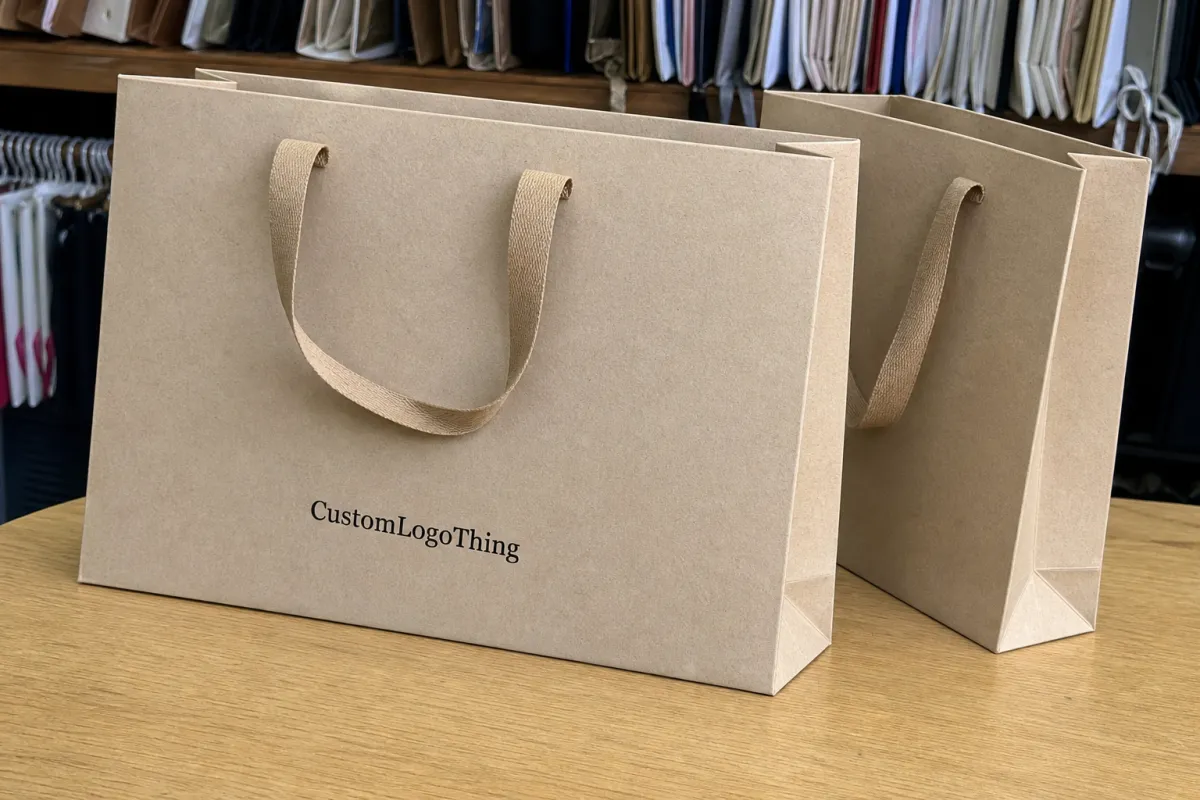
If you’re building small business packaging ideas on budget, set your expectations around consistency, not extravagance. You can still have a strong package branding moment with one-color printing, a smart sticker, a kraft insert card, or a custom printed box that uses only one side of the panel. The trick is knowing where to spend and where to stay plain. (And yes, “plain” can look good. I know. Shocking.) A $0.06 kraft sticker on a 250 x 180 x 60 mm mailer can do more for brand recall than a $0.80 foil seal if the rest of the package is organized.
How Budget Packaging Works in Real Production
Small business packaging ideas on budget make the most sense once you understand how packaging is actually made. A production run usually starts with product measurement, because the carton needs enough clearance for the product plus any insert or protective paper. Then comes material selection, dieline planning, print setup, converting, finishing, and fulfillment. Every one of those steps can add cost if the spec keeps changing. I’ve watched a five-day quote turn into a three-week headache because someone changed the bottle height by 6 mm after the proof was already approved.
In a corrugated carton plant, the focus is often on board efficiency and die-cut speed. In a folding carton line, the priority may be print quality and the way the board folds at the scoreline. In a flexographic shop, you’ll see cost discipline around fewer colors and repeat runs. In digital print, smaller quantities move faster because there’s less setup, but the unit price may be higher. That’s why small business packaging ideas on budget can look very different depending on the factory type. A shop in Chicago running digital cartons for 500 units will quote very differently from a plant in Ningbo running offset for 20,000 units.
Standard materials do a lot of heavy lifting. E-flute mailers are popular for light products because they keep thickness manageable while offering decent crush resistance. B-flute is a common choice for heavier ecommerce shipments where wall strength matters. Kraft paper wraps, paperboard inserts, and simple corrugated shippers can all keep cost under control if the dimensions are disciplined. I’ve seen brands spend more on custom inserts than the product actually needed, just because nobody measured packout correctly in the first round. That’s the kind of mistake that makes me stare at a packing table and mutter, “Well, this is expensive in a very creative way.”
Most of the money goes into a few buckets: materials, print setup, tooling, finishing, labor, packing, and shipping. A custom die can be a one-time cost, but it still matters when you’re ordering 2,000 units instead of 20,000. Printing with two colors instead of one means more setup and more waste. Adding soft-touch lamination or foil stamping changes the process entirely. If you’re serious about small business packaging ideas on budget, ask each vendor what happens to the quote when you change board grade, print coverage, or quantity. For example, a 5000-piece run of 350gsm C1S artboard cartons in Guangzhou might land at $0.15 per unit, while the same spec at 1000 pieces could jump to $0.32 per unit. That’s not magic. That’s manufacturing math.
One ecommerce client I worked with wanted custom printed boxes for skincare jars. The first sample looked beautiful, but the carton was 12 mm too tall, so the jar shifted on rough handling tests. We tightened the fit, reduced the print coverage, and switched to a standard white corrugated shipper with a branded insert card. The finished pack looked cleaner, shipped better, and cost $0.27 less per order. The production cycle from proof approval to finished goods took 13 business days in a plant outside Suzhou, which was a lot easier to live with than paying for a prettier failure.
Key Cost Factors That Shape Small Business Packaging Ideas on Budget
If you want small business packaging ideas on budget that actually hold up in production, start with the cost drivers that move quotes up or down. Box size is the biggest one. A package that’s 15% larger than it needs to be doesn’t just cost more in materials; it usually costs more in freight, storage, and void fill too. Oversized packaging is one of the easiest ways to quietly burn cash. A 220 x 160 x 90 mm carton can often replace a 260 x 200 x 110 mm carton and cut dimensional weight charges by $0.35 to $0.90 per parcel depending on the carrier zone.
Material thickness matters too. A 350gsm C1S folding carton is a very different animal from a 24ECT corrugated mailer or a 32ECT kraft shipper. Thicker isn’t always better. For light retail packaging, a properly engineered paperboard carton can look clean and cost less than a heavier structure that doesn’t serve a real purpose. For shipping, the wrong flute can create edge crush problems and damage in transit. The product should choose the board, not the other way around. For glass droppers, I usually want at least 32ECT with a tight insert; for lightweight soap bars, 350gsm artboard may be plenty.
Print coverage is another lever. A full-bleed, four-color design on every panel will almost always cost more than a one-color logo printed on the front panel and a simple brand message inside. Foil stamping, embossing, debossing, spot UV, and lamination add another layer of expense because they introduce extra processes and more opportunities for delay. A lot of small business packaging ideas on budget work best when one brand element does the visual heavy lifting. I’d rather see one sharp Pantone 485 red mark on kraft stock than a whole parade of gradients that costs an extra $0.11 per unit and still muddies up in print.
Minimum order quantities also matter. I’ve seen clients push back on ordering 5,000 units because 2,000 felt safer, but the per-unit cost at 5,000 was sometimes 20% lower. If your storage space is adequate and the design is stable, a slightly larger run can save more than it costs. That said, I don’t recommend overbuying on the assumption that “we’ll use it eventually.” If your product size or label information changes every quarter, keep the run shorter and protect your flexibility. In Atlanta and Dallas fulfillment spaces I’ve toured, the brands that overordered boxes always ended up renting shelf space they didn’t need.
Here’s a simple comparison I often use during quoting conversations:
| Packaging Option | Typical Use | Approx. Unit Cost | Production Notes |
|---|---|---|---|
| Kraft mailer with sticker | Light ecommerce goods | $0.28–$0.65 | Low setup, fast turn, clean look |
| One-color corrugated shipper | Shipping heavier items | $0.42–$0.95 | Good protection, stable board grades |
| Simple folding carton | Retail packaging or inner pack | $0.18–$0.52 | Strong presentation, easy shelf stacking |
| Custom printed box with one insert | Premium unboxing on a budget | $0.55–$1.25 | Best when size and artwork are tightly controlled |
If those numbers look wide, that’s because they are. Quantity, board type, print count, freight zone, and finishing choices can move a quote quickly. Small business packaging ideas on budget work best when the business accepts that packaging is a costed system, not a fixed number someone invents in a meeting. I’ve seen quotes vary by 41% between a 3000-unit and 10,000-unit order for the exact same carton, just because the press setup got spread over more pieces.
For reference points on packaging materials and sustainability criteria, I often suggest reviewing the resources at the PMMI packaging association and EPA packaging guidance. Those references won’t quote your box, but they help frame material choices and waste reduction in a practical way. If you’re sourcing out of Vietnam, Mexico, or coastal China, those standards also help you ask better questions before a deposit leaves your account.
Small Business Packaging Ideas on Budget: Step-by-Step Setup
The easiest way to build small business packaging ideas on budget is to treat packaging like a small engineering project. Start with a packaging audit. Measure the product in three dimensions, note the weight, list the shipping method, and identify where the customer actually sees the package. A subscription candle going direct-to-consumer needs different packaging than a soap bar sold in a boutique store with retail packaging expectations. A 180g candle in a 210 x 80 mm jar does not need the same carton as a 1.2 kg ceramic mug. Obvious, right? Yet somehow this still gets mixed up in 8 out of 10 first quotes.
Next, choose the format that matches the product. Mailers work well for light items, especially apparel, stationery, cosmetics, and accessories. Corrugated shippers make more sense for heavier goods, glass jars, and anything that rattles if the fit is loose. Folding cartons are strong for shelf display, retail kits, and secondary packaging where presentation matters but the product still needs a simple protective shell. These are classic product packaging choices, and the right one depends on how the product moves through the world. For a lipstick tube, a 350gsm C1S carton with a tuck-end structure can be perfect; for a humid warehouse in Houston, a corrugated mailer may survive better.
Then pick one brand element to prioritize. A printed logo, a single custom sticker, or a branded insert card can create a memorable experience without forcing you to customize every inch of the box. I’ve had clients insist on full-color printing inside and outside, plus tissue paper, plus a foil seal, only to discover the package assembly time doubled. If the packing team loses six seconds per order on a 2,000-order week, that adds up fast. Six seconds sounds harmless until you multiply it by a warehouse shift and somebody starts asking why everyone is suddenly grumpy before lunch. A $0.04 insert card in a 90-second packout is a better use of money than a $0.18 foil seal in a 3-minute packout.
Prototype before committing. I can’t stress this enough. One apparel client in Los Angeles sent me a mockup for a mailer that looked perfect on screen, but the folded seam popped open when they inserted the folded garment. We tested three samples, changed the flap depth by 8 mm, and the final version packed in 40% less time. Small business packaging ideas on budget are much easier to get right after you’ve seen a physical sample with your own hands. We approved the corrected mailer in 9 business days, not because the factory was slow, but because nobody wanted to repeat the same mistake twice.
Final artwork should stay simple. High-contrast branding prints more cleanly on kraft or white stock, and it usually survives production variation better than fine gradients or thin reversed-out text. If you need to keep costs low, use one strong brand color, a bold logo, and clear product information. A cluttered design can make a package look cheaper, even if the print spend was higher. That’s one of the biggest packaging design mistakes I see from newer brands. In practice, a single matte-black logo on natural kraft often looks better than a full-spectrum print job that costs $0.22 more per carton and still arrives slightly off-register.
Practical setup checklist
- Product dimensions measured to the nearest millimeter
- Shipping weight confirmed on a calibrated scale
- Board grade selected for product fragility
- One primary branding element chosen
- Sample packout tested by the fulfillment team
If you need source options while you’re sorting out the structure, our Custom Packaging Products page is a helpful starting point for comparing styles, materials, and print options. I’d still recommend getting samples in hand before you commit, especially if your first production run is under 3000 units and every penny matters.
Process and Timeline: From Quote to Finished Packaging
Small business packaging ideas on budget often fall apart because the schedule wasn’t realistic. A typical packaging flow starts with the brief and quote, then moves to structural design, sample approval, print production, converting, finishing, and shipping. Even simple jobs can get delayed if artwork arrives late or the dimensions change after the sample is made. I’ve had a carton quote in Bangkok sit idle for five days because the client’s logo file was the wrong format, which is a very expensive way to learn about vector art.
Digital printing can be a smart choice for smaller orders because it reduces setup time and allows faster changes. Flexographic and offset jobs usually need more preparation, but they can be cost-effective at higher volumes. In one supplier meeting I attended near Shenzhen, a buyer was frustrated because the digital quote was $0.14 higher per unit than flexo. Once we factored in the smaller order quantity, the faster approval cycle, and the saved warehousing time, digital was actually the safer financial choice for that launch. The proof was approved on a Tuesday, and the first cartons shipped 12 business days later. That beats waiting a month for a “better” price that misses the launch window.
Material shortages are real, and they’re not always the printer’s fault. A paper mill can run out of a specific linerboard grade, a lamination film can be backordered, or a coating line can be booked weeks ahead. That’s why small business packaging ideas on budget should include a buffer. If your products launch on the first Monday of the month, I like to see packaging ready at least 10 business days earlier, especially if the packaging needs to arrive before fulfillment starts. In practice, I tell clients to build a 15-business-day cushion from proof approval to landing at the warehouse if the cartons are shipping from eastern China or central Mexico.
A timeline might look like this for a straightforward job:
- Quote and brief: 1–3 business days
- Structural design: 2–5 business days
- Sampling and approval: 4–7 business days
- Print production: 7–15 business days
- Converting and finishing: 3–7 business days
- Freight and delivery: 3–10 business days, depending on location
That’s the idealized version. If the artwork gets revised twice, add time. If the insert needs a specialty cut, add time. If your spec changes after sampling, add time again. I’ve seen an “easy” packaging order turn into a six-week scramble simply because the brand moved the logo 14 mm and then requested a new die line. Small business packaging ideas on budget work best when the design is frozen early and everybody agrees on the final spec sheet. Otherwise, you end up in the dreaded “one more tiny change” spiral, which is always neither tiny nor one. A sample approved on April 3 and a finished order shipped on April 19 is manageable; a sample approved on April 3 and a new logo request on April 14 is how people lose their weekend.
For structural validation and shipping confidence, it’s smart to use recognized test references. The ISTA testing standards are a good benchmark for transit simulation, especially if your product is fragile or high value. A box that looks fine on a table is not always a box that performs well on a conveyor, in a trailer, and on a porch. I’d rather fail a drop test in the sample room in Jiangsu than fail a customer in Denver after the box takes a 36-inch drop off a courier belt.
Common Mistakes to Avoid with Budget Packaging
The first mistake is chasing the lowest quote without checking the real damage rate. A carton that saves $0.08 can cost $0.60 in replacements if it crushes easily or allows product movement. I’ve seen that happen with glass bottles packed in thin mailers that looked acceptable during a short bench test but failed after a normal parcel route. Small business packaging ideas on budget should never ignore transit abuse. If a bottle rattles in the carton during a 30-second shake test, the customer’s porch is going to be uglier than your spreadsheet.
The second mistake is too much empty space. An oversized box makes the shipment look unpolished, drives up postage, and usually needs extra void fill. That extra void fill adds labor too. It’s not uncommon for a 15% smaller carton to cut both shipping cost and packing time. When I reviewed pack stations in a Midwest fulfillment center, the biggest savings came from reducing box variety from 11 sizes down to 5. Fewer box sizes, fewer headaches. Amazing how that works. The team there went from three shelf rows of mixed cartons to one clearly labeled rack in Indianapolis, and the pack rate improved by about 19% in the first month.
Another issue is inconsistent branding. If your logo moves around from one package to the next, the whole system feels less trustworthy. Weak adhesives can create the same impression. Tape that lifts at the seam or labels that curl at the corners make a package look neglected before the customer even opens it. A good budget package is still a disciplined package. I once saw a beautiful soap carton in Portland ruined by a label that peeled in humid weather after only 48 hours in storage. Cheap adhesive. Expensive mistake.
People also overspend on finishes that the box size can’t support. A soft-touch lamination on a thin carton that dents in transit is a poor trade. Foil on a large shipping box may look impressive in photos but add little value once the box is stacked, rubbed, and handled by carriers. I’m not against premium finishes; I’m against using them in the wrong place. Smart small business packaging ideas on budget usually spend less on surface decoration and more on fit, clarity, and structure. A $0.03 upgraded board or a better die line often does more for the customer than a $0.22 coating.
Finally, too many brands test only the look and never the shipping performance. Set the box on a table, yes, but also drop it from a short height, shake it gently, and pack it with the same labor path your team will use every day. Packaging should survive reality, not just photography. If your warehouse in Phoenix packs 400 orders a day, the packout has to make sense at 2 p.m., not just on a styled tabletop with perfect lighting.
Expert Tips for Better Packaging Value Without Overspending
If you want stronger results from small business packaging ideas on budget, pick one “hero” unboxing element and let that do the work. A branded insert card with a thank-you note can build perceived value for a few cents. A custom sticker seal can do the same. I’ve watched customers open a plain kraft mailer and immediately comment on the insert because it felt personal, even though the packaging line itself was simple. A 70 x 120 mm insert printed on 250gsm uncoated stock can carry more brand warmth than a box covered in gimmicks.
Standardize box sizes wherever possible. This is one of the easiest ways to reduce inventory complexity and packaging waste. If three product sizes can fit inside two box dimensions instead of three, the savings show up in warehousing, reorder planning, and packing speed. Standardization also makes it easier to reorder custom printed boxes without reworking the whole spec every time. In a busy shop, fewer SKUs usually means fewer mistakes. I’ve seen a team in Toronto cut their carton count from 14 SKUs to 6 and save nearly $900 a month in storage and handling fees.
Use materials that look honest. Kraft substrates, one-color printing, and clean typography can feel modern and premium when the design is restrained. I’ve seen brands spend heavily on silver foil and then lose the effect because the rest of the design was crowded. A sharp logo printed in black on natural kraft often communicates more confidence than a complicated layout with three finishes. A 1200-unit run on 300gsm kraft board in Xiamen can look premium enough if the typography is clean and the score lines are accurate.
Always compare unit price to total landed cost. A box quoted at $0.31 might be the wrong choice if it adds $0.09 in freight, $0.04 in packing labor, and a higher damage rate. Good small business packaging ideas on budget look at the whole picture: materials, shipping, storage, assembly, and returns. That’s how the numbers stay honest. I’d rather approve the $0.37 carton that arrives in 11 business days than the $0.29 carton that hits the dock three weeks late and costs you a launch month.
Work with a supplier who will talk structure, not just sell stock items. A packaging manufacturer should be willing to discuss board grade, dieline tolerance, print method, and packout time. If they only talk about unit price, they may not be helping you solve the real problem. I’ve found that the best supplier relationships feel like engineering conversations, not just purchasing transactions. And yes, sometimes they feel like politely arguing with a spreadsheet until it gives up. The good suppliers in Dongguan, Monterrey, and Ohio all do the same thing: they ask about fit first, then price second.
For businesses building out branded packaging or broader package branding systems, consistency matters more than ornament. A well-chosen insert card, a repeatable box size, and a fixed color palette can make a young company look much more established than a one-off fancy box ever will. One consistent 2-color system across 6 SKUs will usually beat a random assortment of special finishes that nobody can reorder cleanly six months later.
Best Next Steps to Put Your Packaging Plan in Motion
To turn small business packaging ideas on budget into a real packaging plan, start with a checklist. Gather product dimensions, shipping weight, fragility notes, branding files, monthly order volume, and your target budget per shipment. Those numbers help vendors quote accurately and keep the conversation practical. If you can tell a supplier you need 4000 units of a 210 x 140 x 55 mm mailer for a product that weighs 380 g, you’ll get a much better quote than if you say, “something nice and not too expensive.”
Then request two or three sample structures in different materials. For example, compare a kraft mailer, a folding carton, and a corrugated shipper with the same product inside. You’ll learn quickly which option gives you the best mix of cost, protection, and presentation. I’ve watched teams change their minds after a 10-minute sample comparison because the most expensive box wasn’t the one that performed best. A sample set approved in 7 business days can save a launch from a 7-week correction later.
Ask for a quote that separates material, print, finishing, and freight. That breakdown shows where the savings live. Sometimes the cheapest-looking item is actually expensive because freight is high or labor is slow. Other times, the better-surfaced package is only a few cents more once the order quantity increases. Good decisions come from clear line items, not guesses. In one quote I reviewed from a supplier near Ho Chi Minh City, the box itself was $0.24, but freight to California added $0.08 and tape-on assembly another $0.05. That changed the whole conversation.
Test the final choice with real products and real packing labor. Have the fulfillment team assemble 25 units, then ship 5 through a normal carrier route. Watch how long the packout takes, whether the tape holds, and whether the customer-facing presentation stays neat. This is where small business packaging ideas on budget become practical instead of theoretical. If the average pack time is 22 seconds and the carton needs a second insert to stay stable, you should know that before you print 8000 pieces.
Once you’ve locked the spec, keep a reorder plan on file. That means the final dieline, board grade, print file, insert dimensions, and target reorder point are all documented. If the business grows, that paperwork protects consistency and saves time on the next run. I’ve seen companies lose weeks because nobody could find the exact carton spec after the first order sold through. A single archived PDF in the wrong inbox can cost more than a full day of production in Shenzhen.
At Custom Logo Things, we’ve found that the strongest packaging programs usually start small, stay disciplined, and improve in measured steps. If you keep the structure simple, the branding clean, and the budget grounded in real production numbers, small business packaging ideas on budget can still look polished, perform well, and support growth without eating into margin.
FAQs
What are the best small business packaging ideas on budget for shipping products safely?
Use the smallest mailer or carton that still fits the product with enough protective insert or paper fill to stop movement. Standard corrugated sizes, simple branded labels, and a real shipping test usually beat decorative packaging that hasn’t been checked under transit conditions. I’d rather see a snug 32ECT shipper with a clean label than a big box full of filler every time. For a 450 g product, a properly sized 200 x 150 x 100 mm carton often works better than a roomy 260 x 200 x 120 mm box.
How much should a small business spend on packaging per order?
There isn’t one fixed number, because the right spend depends on product margin, shipping method, and damage risk. Many businesses keep packaging lean by watching total cost, including freight and labor, rather than only the unit box price. A package that costs a little more but reduces returns can be the better financial choice. For lower-margin goods, I often see successful brands stay in the $0.35 to $0.90 packaging range per order, excluding outbound postage.
What packaging gives the most premium look on a tight budget?
A clean kraft mailer or simple folding carton with one-color printing can look polished if the typography is strong and the fit is tight. Add one branded detail, such as a sticker, insert card, or tissue wrap, and the package feels more intentional without a big cost jump. Simple often reads as confident when the print is crisp. A 300gsm kraft carton with a black logo and a $0.05 insert card can feel more premium than a $1.20 box with too much decoration.
How do I reduce packaging costs without making it look cheap?
Standardize sizes, reduce print coverage, and remove extra finishing steps that don’t improve function. Use quality materials in fewer places instead of upgrading every component. If the fit is right and the branding is consistent, the package can still feel deliberate and professional. A 24ECT shipper with a well-placed logo and a tidy insert often beats a fancy carton that wastes $0.14 on finishing and still arrives scuffed.
How long does custom packaging usually take for a small business?
Timing depends on the structure, print method, sample approvals, and whether the material is readily available. Simple digital-print projects can move faster than more complex offset or specialty-finish runs. I always tell clients to build extra time for proofing, revisions, and freight so launch plans don’t get squeezed. From proof approval, a straightforward run typically takes 12–15 business days in southern China, and a domestic U.S. run can be 7–10 business days if the board is in stock.