Buyer Fit Snapshot
| Best fit | sustainable luxe magnetic gift box ideas that feel premium for packaging buyers comparing material specs, print proof, MOQ, unit cost, freight, and repeat-order risk where brand print, material, artwork control, and repeat-order consistency matter. |
|---|---|
| Quote inputs | Share finished size, material target, print colors, finish, packing count, annual reorder estimate, and delivery region. |
| Proofing check | Approve dieline scale, logo placement, barcode or warning zones, color tolerance, and any recyclable or compostable wording before bulk production. |
| Main risk | Vague material claims, crowded artwork, or missing packing details can create delays even when the unit price looks attractive. |
Fast answer: Sustainable Luxe Magnetic Gift Box Ideas That Feel Premium should be specified like a repeatable production item. The safest quote includes material, print method, finish, artwork proof, carton packing, and reorder notes in one written spec.
What to confirm before approving the packaging proof
Check the product dimensions against the actual filled item, not only the sales mockup. Ask for tolerance on folds, seals, hang holes, label areas, and retail display edges. If the package carries a logo, QR code, warning copy, or legal claim, reserve that space before decorative graphics fill the panel.
How to compare quotes without losing quality
Compare board or film grade, print process, finish, sampling route, tooling charges, carton quantity, and freight assumptions side by side. A lower quote is only useful if the supplier can repeat the same color, closure quality, and packing count on the next order.
sustainable luxe Magnetic Gift Box ideas are not just pretty boxes wearing a green label. I’ve stood on factory floors in Shenzhen and Dongguan while buyers argued over a 0.5mm board change that saved a carton from feeling flimsy. I’ve also watched a polished box get rejected because the foam insert smelled like cheap glue. That was an 8,000-unit lesson for the client, and it happened on a line where the boxes were being packed into 5-ply export cartons for a Los Angeles shipment. The point is simple: sustainable luxe magnetic gift box ideas only work when premium feel, material honesty, and production discipline all line up.
Custom Logo Things gets asked about sustainable luxe magnetic gift box ideas constantly because brands want two things at once: the premium unboxing moment and a packaging story that doesn’t make customers roll their eyes. Fair ask. If your box looks expensive but turns into landfill confetti because it’s layered with mixed plastics, laminated foams, and unnecessary inserts, the concept has already failed. I’ve seen brands spend $4.20 per unit on packaging and still end up with a product that feels cheap because the structure and finish choices were wrong from the start. That kind of irony should be illegal, frankly, especially when the order is only 2,500 units and the setup charge alone is $260.
Here’s the honest version: sustainable luxe magnetic gift box ideas are about smarter materials, cleaner construction, and better durability. Not magic. Not zero impact. Just less waste, better sourcing, and a box your customer may actually keep for jewelry, candles, cosmetics, or corporate gifting. I remember one client telling me, with a straight face, that the box would “sell the sustainability story all by itself.” It won’t. The box has to earn that story, and if the lid is made with 350gsm C1S artboard wrapped over 2.0mm greyboard, the specs need to support the claim.
Sustainable Luxe Magnetic Gift Box Ideas: What They Actually Mean
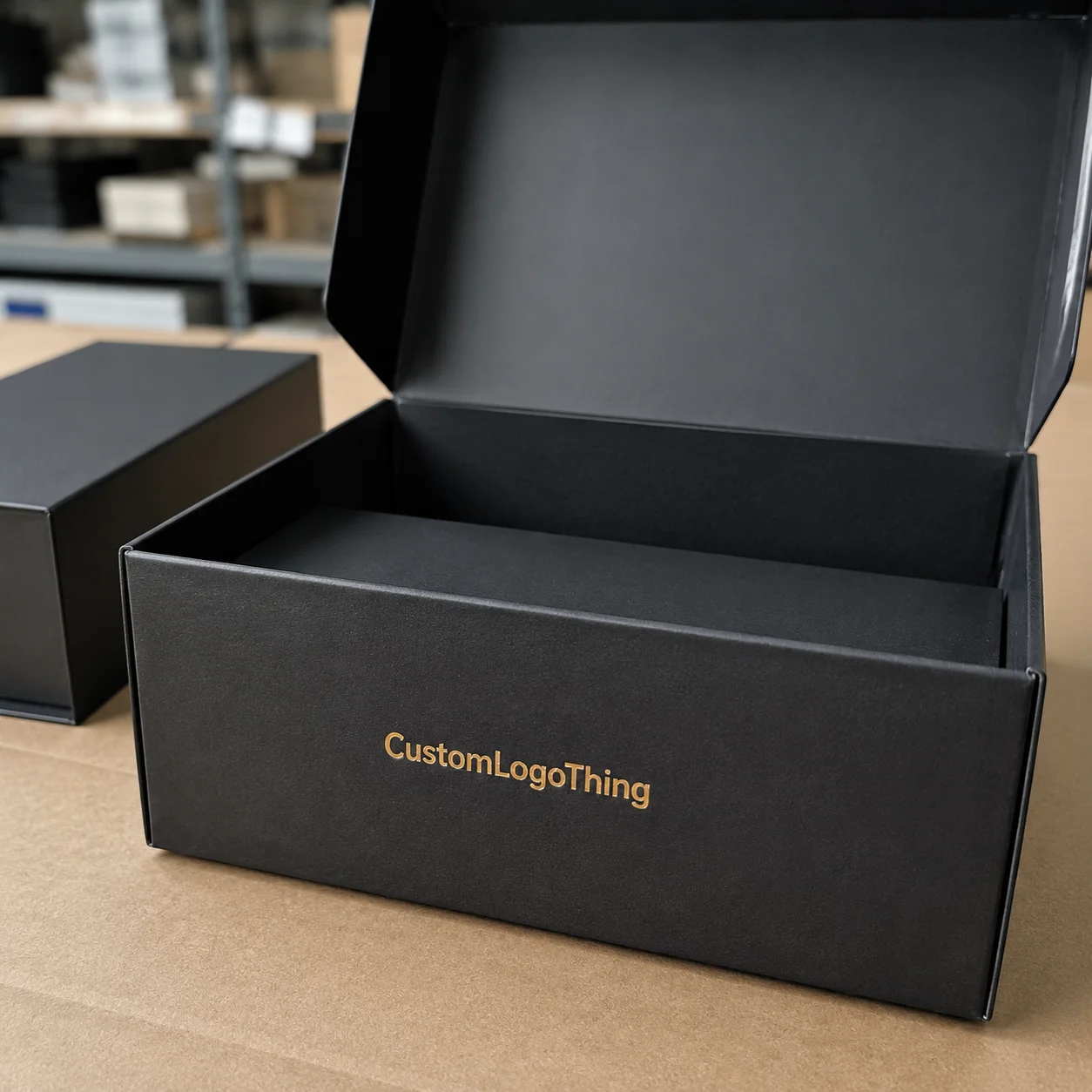
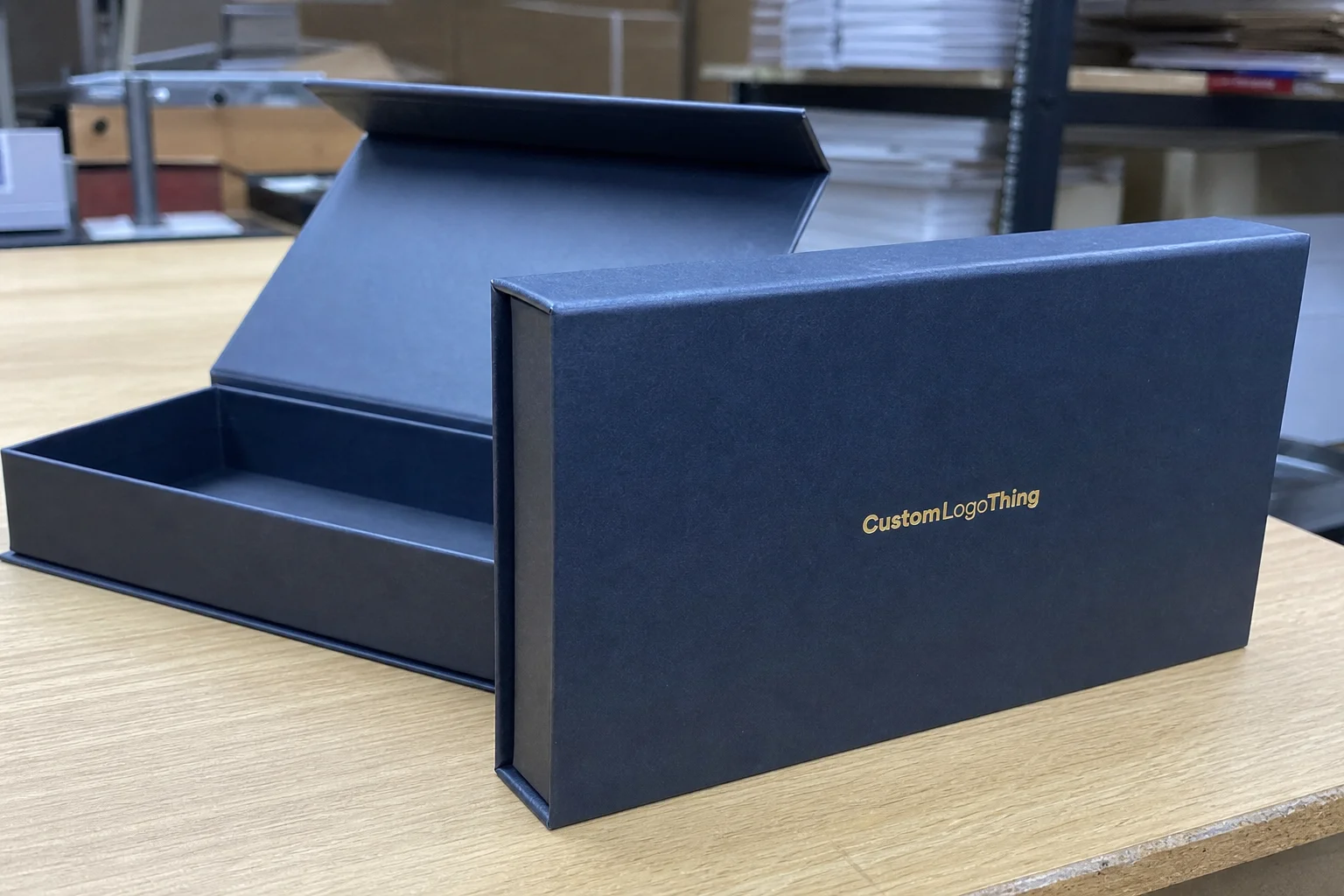
Let’s define sustainable luxe magnetic gift box ideas plainly. A luxe magnetic gift box is usually a rigid box made from chipboard or greyboard, wrapped in printed or specialty paper, and closed with embedded magnets hidden inside the flap and front wall. The luxury side comes from the rigid feel, the sharp corners, the clean reveal, and the closure that clicks shut with a satisfying snap. The sustainable side comes from the materials and the way the box is built: FSC-certified board, recyclable paper wraps, soy or water-based inks, and fewer mixed-material components. A common build spec is 2.0mm or 2.5mm greyboard with a 157gsm or 120gsm wrap paper, depending on whether the box is headed for Seoul retail shelving or Paris corporate gifting.
I once watched a buyer reject a gorgeous black magnetic box because the foam insert smelled like solvent for days. The box looked like a $12 retail item, but the smell gave away a lower-grade adhesive, and that smell matters more than people think. Customers may not know the difference between EVA foam and molded pulp, but they absolutely know when something feels cheap. That’s why sustainable luxe magnetic gift box ideas need to be judged on the whole package, not a single fancy finish. A shiny lid won’t rescue a bad interior. It just won’t, especially if the adhesive was still off-gassing on day three after proof approval.
Why do buyers care so much now? Because premium unboxing still matters, but customers also ask what the box is made of, where the paper came from, and whether the whole thing can be recycled or reused. In my experience, once a brand starts selling at $60+ AOV, packaging questions get sharper fast. People don’t want theater without responsibility. They want the performance and the receipts, especially when a DTC carton travels from Ningbo to Chicago in 18 to 24 days by ocean freight.
There’s a trade-off table I use with clients all the time when we review sustainable luxe magnetic gift box ideas:
| Option | Feel | Recyclability | Typical Cost | Best Use |
|---|---|---|---|---|
| Standard luxury magnetic box with laminated wrap and EVA foam | Very premium, but sometimes heavy-handed | Low to moderate | $2.80–$5.50/unit at 3,000 pcs | High-end retail where recycling story is secondary |
| Sustainable luxe magnetic gift box with FSC board, paper wrap, and paperboard insert | Premium, clean, tactile | Moderate to high | $3.10–$6.20/unit at 3,000 pcs | Brands balancing luxury and eco positioning |
| Ultra-premium custom magnetic box with specialty paper, embossing, and molded pulp tray | High-end, refined, collector-worthy | Moderate | $4.20–$8.00/unit at 5,000 pcs | Prestige launches, gifting, limited editions |
Sustainable does not always mean compostable, and it definitely does not mean zero-impact. That phrase gets abused more than “luxury” in packaging sales decks. Better language is more useful: lower-waste, responsibly sourced, recyclable where practical, and designed for longer use. If a supplier says “eco” three times and can’t back it up with specs like FSC Mix board, soy ink, or a paper-based insert, I start getting suspicious. Fast. A real supplier will tell you the board grade, the wrap stock, and the factory location, whether they’re in Dongguan, Ho Chi Minh City, or Xiamen.
“If the box looks amazing but can’t survive a shipping lane, it’s not luxury. It’s a photo shoot.” That’s what I told a brand manager after we ran ISTA-style transit checks on a rigid box sample that failed corner crush testing twice, once after a 70cm drop and again after vibration in a Guangzhou-to-Texas lane test.
If you want a useful external reference, I point teams to the Forest Stewardship Council for FSC-certified sourcing language and to EPA recycling guidance when they ask what packaging components are typically recyclable in the U.S. In the U.K., I also send people to the local authority recycling directory because what works in Manchester may not be accepted in Glasgow.
How Sustainable Luxe Magnetic Gift Boxes Work
The structure is simple, even if the details are not. A rigid chipboard or greyboard shell forms the body, wrap paper covers the outside, and magnets are embedded in the lid flap and front panel so the box closes with a crisp magnetic pull. In sustainable luxe magnetic gift box ideas, the goal is to keep that structure strong enough to feel premium while cutting out unnecessary plastic and reducing mixed-material waste. A common production spec is 2.5mm greyboard with 157gsm art paper and two 10mm x 2mm magnets per lid on a medium-size box.
I visited a factory in Dongguan where the line was running 12-hour shifts on magnetic boxes for a cosmetics client. The foreman showed me three versions side by side: 2.0mm board, 2.5mm board, and 3.0mm board. The 3.0mm version felt substantial, sure, but it also added freight weight, board consumption, and cost. For a 180g skincare set, the 2.0mm version with a well-chosen paper wrap was actually the smarter buy. That’s the kind of call that separates thoughtful sustainable luxe magnetic gift box ideas from packaging that tries to look expensive by brute force. On a 5,000-piece order, that board choice alone can shift the unit price by $0.18 to $0.34.
The tactile experience matters more than people admit. That hinge-style open, the slow reveal, the soft resistance from the magnet, and the click shut all signal value before the customer even touches the product inside. In my experience, a box can feel high-end with very little decoration if the board cut is precise, the paper grain is consistent, and the lid alignment is tight within 1.5mm. I’ve had clients obsess over foil shades while ignoring a crooked lid line. That’s like polishing the hood and forgetting the engine, especially when a 0.8mm overhang shows up on every single carton in the final QC photos.
Here’s the standard manufacturing sequence I’ve used for years with sustainable luxe magnetic gift box ideas:
- Dieline approval and dimension check.
- Material selection for board, wrap, and insert.
- Print proofing and color matching.
- Board cutting and scoring.
- Magnet placement in the shell and lid.
- Wrapping and corner folding.
- Insert assembly and fit test.
- Final QC, carton packing, and freight planning.
That order matters. If you finalize artwork before choosing paper stock, you can end up with color drift, distorted foil, or a texture that fights the ink. I’ve had a client approve a soft-touch black wrap from photos, then hate the actual sample because it made the logo look dull. Paper samples exist for a reason. Photos lie. Paper doesn’t. Honestly, if I had a dollar for every time someone said, “But the render looked richer,” I could retire to a beach and still complain about coating specs. A 300dpi render cannot tell you how 120gsm cotton paper will absorb black ink.
Sustainable construction choices usually mean lighter board where the product allows it, paper-based wraps instead of plastic films, and inserts that avoid mixed materials. A paperboard insert may not cradle a glass serum bottle as aggressively as a full EVA tray, but it can work beautifully with a snug die-cut profile and a corrugated support layer. For a candle or apparel accessory, molded pulp can be a strong option. For jewelry, a wrapped paperboard tray often does the job with less waste. A 45mm ring box does not need the same insert architecture as a 240ml diffuser set.
Branding still matters. Foil stamping, embossing, debossing, and spot UV are all possible in sustainable luxe magnetic gift box ideas, but each choice has a consequence. Foil can complicate recycling. Heavy spot UV can reduce the clean paper feel. A blind emboss on a textured kraft wrap can look more refined than six decorative effects fighting each other. I’m not anti-decoration. I’m anti-overkill. A single 1.2mm-deep blind emboss on the lid often does more than a full-panel metallic print.
Shipping format matters too. Flat-packed magnetic boxes can save freight and warehouse space, but they add assembly labor. Pre-assembled boxes cost more to ship, but they reduce packing time on your end. For one client in Texas, switching from assembled to flat-packed saved about $680 in ocean freight on a 3,500-unit order. They spent a little more on local assembly labor, but the math still worked because their warehouse team could build them in under 90 seconds each. I’ve seen that trade play out a dozen times, and the wrong choice usually comes from underestimating labor at the destination side. In Dallas, for example, labor costs made flat-pack the better call by nearly $0.22 per unit.
Key Factors in Sustainable Luxe Magnetic Gift Box Ideas
Material choice is the first real decision in sustainable luxe magnetic gift box ideas. FSC-certified board is a solid baseline because it gives you a paper sourcing story that buyers understand. Recycled board can work too, although the surface may not be as pristine as virgin-fiber board, depending on the grade. I’ve seen 100% recycled greyboard perform beautifully on a matte wrap, but I’d be cautious about it for ultra-light colors where surface texture and speckling might show through. I’m all for recycled content; I’m just not fond of ugly surprises once the box is in hand. For luxury cosmetics shipping out of Guangzhou, I usually start with 2.0mm FSC greyboard and test both virgin and recycled wrap samples.
Wrap material is where brands either get smart or get loud for no reason. Kraft wrap makes the sustainability story obvious, but it can look too casual if the brand wants high polish. Specialty textured papers can still fit sustainable luxe magnetic gift box ideas if they are responsibly sourced and not coated with plastic-heavy finishes. A good paper with a linen grain or subtle pearlescent tint can do more for perceived value than a stack of gimmicky add-ons. I’ve seen plain paper beat fancy finishes, which feels slightly rude to the finish suppliers, but there it is. A 157gsm uncoated text paper from a mill in Zhejiang can outperform a plastic-laminate wrap on both touch and brand fit.
Magnet strength sounds like a tiny detail until it becomes the reason your box either feels elegant or irritating. Too weak, and the lid flops open in transit. Too strong, and the customer feels like they need a crowbar to open it. I usually ask for a test sample with the actual product inside, because magnet pull changes when weight and pressure are inside the box. Over-specifying hardware raises cost and increases material burden, which is the opposite of what you want in sustainable luxe magnetic gift box ideas. Two 10mm x 2mm magnets are often enough for a medium box; jumping to four magnets can add unnecessary cost and complexity.
Insert strategy without the waste pile-up
Insert selection is where the sustainability story can collapse if you’re not careful. A molded pulp tray is a nice option for bottles, jars, and tech accessories because it’s recyclable in many curbside systems, depending on local rules. Paperboard inserts are even lighter and often easier to recycle. Corrugate platforms work well for heavier products, especially if you need stacking strength. Fabric-lined trays look rich, yes, but they often create a recycling headache and a cost headache at the same time. Fancy is not the same as smart. I have spent entire afternoons explaining that difference to people who really wanted velvet and common sense in the same sentence, usually while looking at a 2,000-piece quote from a factory in Shenzhen.
Here’s a useful comparison I share when discussing sustainable luxe magnetic gift box ideas with brands trying to hit both beauty and budget:
| Insert Type | Luxury Feel | Eco Profile | Typical Added Cost | Best For |
|---|---|---|---|---|
| Molded pulp | Clean, modern | Good | $0.18–$0.42/unit | Bottles, jars, electronics |
| Paperboard die-cut insert | Minimal, premium when well printed | Very good | $0.10–$0.35/unit | Light to medium products |
| Corrugate insert | Practical, sturdy | Good | $0.12–$0.28/unit | Shipping-heavy or heavier goods |
| EVA foam | Very premium visually | Poor | $0.25–$0.70/unit | Legacy luxury, but less ideal for sustainability goals |
Finish selection needs the same honesty. Matte lamination is common, but if your sustainability goals are strict, a water-based aqueous coating may be better. Soft-touch lamination feels rich, yet it can create recycling complications depending on the film type and local recovery systems. Foil stamping looks expensive. Blind embossing looks expensive too. The trick is using one clean hero finish instead of smearing effects across every panel like you’re decorating a birthday cake. For a 4,000-unit run, dropping one lamination layer can reduce material cost by roughly $0.11 to $0.26 per box.
Compliance and sourcing are not optional. Ask for supplier documentation before production starts: FSC claims, ink system details, and any available material safety sheets. If you’re shipping internationally, I also recommend transit testing under ISTA standards when the box is carrying fragile items. A beautiful box that fails drop testing is just expensive disappointment. If the factory is in Yiwu or Ningbo, ask for photos of the board stack and magnet inventory before the run starts.
Brands also forget that reuse value is part of sustainability. A magnetic gift box sturdy enough to keep becomes a storage box, a drawer organizer, or a keepsake case. That extends its life. A flimsy “eco” box that collapses after one use is not very sustainable in practice, even if the paper content sounds virtuous in a sales email. I’m going to say the quiet part out loud: a box people throw away immediately is a waste, no matter how nicely you word the spec sheet. If the board is only 1.5mm and the lid bows after six openings, the reuse story falls apart fast.
Sustainable Luxe Magnetic Gift Box Ideas: Cost, Pricing, and MOQ
Now the part everyone asks about first, then pretends they don’t. Cost. For sustainable luxe magnetic gift box ideas, the price is driven by size, board thickness, wrap stock, print coverage, finish complexity, magnet count, and order volume. A smaller, simple magnetic box with one-color print and a paperboard insert will always be cheaper than a large box with specialty paper, foil, embossing, and a molded pulp tray. Shocking, I know. A 200 x 200 x 80mm box in 2.0mm board is a very different quote from a 350 x 260 x 120mm set box in 2.5mm board with a ribbon pull.
For realistic context, here’s a range I’ve seen from factories in China and Vietnam depending on specs and quantity. A 5,000-unit order for a medium-size magnetic box might land around $2.10 to $4.80 per unit if the design is restrained. Add specialty paper, foil, and a shaped insert, and you can easily push that to $5.50 or more. A 1,000-unit run is a different animal entirely. Setup costs don’t shrink just because you want them to. I’ve had more than one client blink at that and ask if “the factory can just do less setup.” Sure, and maybe the magnets can install themselves. In Ho Chi Minh City, a clean 5,000-piece run with simple print can come in near the low end, while Shenzhen or Dongguan with more finishes often sits higher.
MOQ reality is where many first-time buyers get surprised. Custom Rigid Boxes often need 1,000 to 3,000 units minimum, and many factories prefer 3,000+ because die cutting, wrapping, magnet insertion, and QC all carry labor. I’ve had buyers ask for 500 boxes with four finish effects and a custom tray. Sure. And I’d like a private island with good freight rates. Not happening at that level without paying a premium. For a 2,000-piece order, expect the unit price to rise by 15% to 30% compared with 5,000 pieces.
The hidden costs matter more than people think. Sample fees can run $60 to $180 depending on complexity. Die charges can add $120 to $400. Special paper upgrades may increase the box by $0.20 to $1.10 per unit. Freight is its own beast, especially if the box ships assembled. If you’re building a budget for sustainable luxe magnetic gift box ideas, leave room for these extras instead of pretending the unit price is the whole story. A paper sample set from a mill in Zhejiang might cost $25 to $60 before you even approve the first prototype.
I had a client in Singapore approve a beautiful cream textured paper, then the quote jumped by $0.74/unit because the premium texture meant a stock the supplier had to source from a specialty mill. That is the part people don’t see on the mood board. The sample looked like a dream. The actual procurement quote looked like a tax bill. I still remember the silence on the call. Silence, then “can we make it look the same for less?” A classic line. Almost charming. Not remotely useful. The answer was no, unless they were willing to accept a 120gsm paper instead of the 157gsm stock they had fallen in love with.
My rule of thumb: prioritize one or two premium touches and keep the rest clean. For example, use FSC board, a rich uncoated wrap, and a blind emboss on the lid. That can feel more expensive than a box loaded with foil, gloss UV, ribbon pulls, and shiny paper all fighting for attention. sustainable luxe magnetic gift box ideas should feel intentional, not chaotic. On a 10,000-piece run, that discipline can save $1,200 or more across finishes alone.
Here’s a simple budgeting framework I use with clients:
- Budget tier: focus on structure, print accuracy, and a paperboard insert.
- Mid tier: add FSC board, a specialty wrap, and one finish like embossing.
- Premium tier: add precise foil, molded pulp, and carefully controlled magnetic closure strength.
The smart move is to spec the box around what the product actually needs. If you’re shipping silk scarves, you do not need a fortress. If you’re shipping a glass fragrance bottle, you do. That distinction can change the quote by $0.40 to $1.25 per unit, easy. A 90g scarf in a 2.0mm board box does not need the same insert depth as a 350ml candle kit heading to Toronto.
Step-by-Step Process and Timeline for Production
Good sustainable luxe magnetic gift box ideas start with product specs, not artwork fantasies. I need the product dimensions, weight, fragility, retail channel, shipping condition, and target price before I’d even sketch a box. A 230g candle going into DTC shipping needs a different build than a 45g jewelry pendant sold in a boutique. If the product is shipping from Ningbo to New York, I also want carton count and target landed cost before I approve a dieline.
Next comes the dieline. I always push clients to prototype the structure first so the box fits the product instead of forcing the product into a box that only looked good on a screen. I’ve seen too many people approve artwork on a 3D render without checking board thickness. Then they’re shocked when the closure shifts by 3mm and the lid doesn’t sit flush. That’s not a design problem. That’s a planning problem, and it usually shows up after the first sample if the board was specified at 2.5mm but the factory used 2.2mm stock by mistake.
Material selection should happen before final artwork. Why? Because paper texture, coating, and color affect how the design reads. A dark matte wrap will make a pale logo pop differently than a warm kraft wrap. If you want a recycled look with clean luxury, I usually recommend samples from at least two paper mills so you can compare tone and grain in hand. Paper swatches are boring until they save you $900 in reprints. A mill in Zhejiang and one in Guangdong can give you the same color family and still produce very different surface absorption.
Proofing is where disciplined teams win. Ask for printed samples, color checks, magnet alignment tests, and insert fit checks. I’m blunt about this because I’ve seen clients skip the sample approval round and then spend three weeks complaining that the gold foil looks too yellow. You can avoid that with one proof and a 15-minute review under proper lighting. Not fluorescent office lighting. Real light. Daylight near a window in Shenzhen is more honest than a laptop screen at 2 a.m.
Production timelines for sustainable luxe magnetic gift box ideas usually run in phases. Concept and spec alignment can take 2 to 5 business days. Sample production may take 7 to 14 business days depending on material sourcing. Revisions can add another 3 to 7 days if the dieline changes. Mass production often takes 12 to 20 business days for a typical rigid box run once the sample is approved. Inspection and freight planning add their own time, especially if you need carton labeling, palletization, or export docs. In practice, I tell clients to expect 12-15 business days from proof approval for a standard 3,000 to 5,000-piece order when the factory already has the paper in stock.
Common timing bottlenecks are predictable. Specialty paper lead times can slip. Holiday congestion hits factories hard. Artwork approval drags because someone’s marketing director is on a flight. I’ve had a box that should have shipped in late October get pushed because one client wanted to see another foil option after sample signoff. That extra week cost them air freight later. A very expensive form of indecision, especially when the shipment had already been booked for a Rotterdam transload.
If you care about quality control, ask how the factory checks magnet placement and box squareness. I want to know if they measure corner symmetry, lid overhang, and insert tolerance. A good factory will have a QC checklist. A better one will show it to you. That’s the difference between a supplier selling boxes and a supplier protecting your brand. I also ask for a 24-point inspection sheet if the order exceeds 5,000 units.
From a practical point of view, sustainable luxe magnetic gift box ideas work best when the team sets decisions early: board, wrap, finish, insert, closure strength, and shipping format. Changing one of those late can ripple through tooling, print, and freight. Packaging people love drama, but not that kind. A late change from 2.0mm to 2.5mm board can add 4 to 6 days if the die must be revised.
Common Mistakes with Sustainable Luxe Magnetic Gift Box Ideas
The first mistake is choosing eco paper that looks cheap and quietly destroys the luxury experience. I’m all for recycled content, but if the paper is dull, speckled, or too rough for the brand position, the box ends up feeling like a compromise instead of a premium choice. The goal of sustainable luxe magnetic gift box ideas is not to apologize for sustainability. It’s to make sustainability look intentional. A 100% recycled sheet from a mill in Dongguan can work beautifully if the print and board structure are tuned to it.
The second mistake is piling on finishes. Too much foil, gloss, embossing, and print detail can hurt recyclability and make the box look busy. I once saw a fragrance brand use black soft-touch laminate, silver foil, spot UV, a metallic inner wrap, and a satin ribbon. It was trying so hard. The final result looked like four different agencies fought in a conference room and nobody won. One strong tactile detail would have been better, and the brand would have saved money and my sanity. On a 2,000-piece run, that over-specification added nearly $0.95 per unit.
Another mistake: ignoring transit stress. A beautiful sample on a desk is not the same as a box that survives 1.2 meters of drop testing, vibration in ocean freight, and warehouse stacking. I strongly recommend asking for transit simulation where possible, especially if your boxes carry glass, ceramics, or electronics. Packaging that fails on arrival is not sustainable. It gets replaced, which means waste twice. A sample that survives in Guangzhou may still fail after 28 days in a humid port warehouse.
Oversized magnets and thick board are a common overcorrection. Buyers think heavier automatically means better. Sometimes it just means more material, more cost, and more shipping weight. For sustainable luxe magnetic gift box ideas, I’d rather see smart stiffness from good board geometry than brute force from excess thickness. A well-scored 2.0mm board can outperform a poorly built 3.0mm board every day of the week.
Skipping insert testing is a classic mess-up. If the product rattles, shifts, or sinks into the tray, the whole unboxing falls apart. A 2mm tolerance issue can turn into a $3.80 box that feels loose and cheap. That’s maddening because the fix is usually simple: adjust the cavity, tighten the fold, or switch insert material. I’ve seen a $0.06 change to the die-cut save a $1.20 box from becoming dead stock.
And yes, coatings matter. If you tell customers the box is recyclable but your spec includes a non-recyclable laminate, metallic film, and plastic-heavy foam, you’re creating a trust problem. I’d rather a brand be honest about partial recyclability than make a sustainability claim it can’t support. Customers can smell greenwashing from a mile away, and not just because of the glue. A supplier in Suzhou once tried to sell me “eco gloss” with no data sheet attached. That ended the conversation immediately.
Expert Tips for Better Sustainable Luxe Magnetic Gift Box Ideas
My first tip: use one hero premium detail, not five. A clean emboss on a textured paper, or a rich uncoated wrap with perfect print registration, often feels more luxurious than a box packed with every finish under the sun. In sustainable luxe magnetic gift box ideas, restraint usually reads as more expensive because it signals confidence. A single foil mark on the lid of a 210 x 150 x 60mm box can do more than foil on the lid, sidewalls, and insert.
Second, ask for material swatches, not just photos. I can’t stress that enough. Paper tone, coating sheen, and texture can look wildly different in person. I’ve had a warm white sample arrive looking like hospital paper under daylight. That would have been a disaster if the client had approved from a screen alone. I’ve learned to trust my hands more than my inbox, especially when the supplier is quoting from Shenzhen and the artwork team is sitting in London.
Third, test closure tension with the actual product inside. A box without product weight behaves differently than a filled box. I’ve seen magnetic lids that snapped beautifully when empty but floated open once a heavy serum bottle shifted the center of gravity. That is not a small detail. That’s the difference between polished and sloppy. A 280g bottle can change lid behavior enough to require a stronger magnet pair or a tighter front wall.
Fourth, build in reuse value. A sturdy, attractive magnetic box is more likely to be kept if it looks good on a shelf or inside a drawer. That extends its lifespan and makes the sustainability story stronger in practice. Some of the best sustainable luxe magnetic gift box ideas I’ve worked on were designed like keepsake boxes from the start, which meant the customer had a reason to hold onto them after the product was gone. A box that doubles as a jewelry drawer tray or desk organizer has a second life built in.
Fifth, negotiate smarter spec choices. If the board can drop from 2.5mm to 2.0mm without harming structure, do it. If the insert can move from EVA foam to paperboard or molded pulp, test that option. You don’t need to sacrifice luxury. You need to remove waste. There’s a difference. On a 7,500-piece production order, that kind of optimization can save $900 to $1,600 depending on finish selection.
Sixth, work with factories that can explain sourcing clearly. If a supplier only says eco-friendly but can’t tell you board grade, paper source, ink type, or coating composition, keep asking. A good partner should be able to tell you what they buy, from whom, and why. That’s basic due diligence, not a special request. If they’re in Dongguan, Yiwu, or Xiamen, they should still be able to name the board mill and the magnet supplier.
One more practical point: ask for a production photo set before the boxes ship. I like shots of magnet placement, folded corners, insert fit, and carton packing. It saves everyone from arguments later. I learned that after a run of 6,000 magnetic boxes where the exterior looked perfect, but half the insert cavities were 1.5mm too shallow. The photos proved the issue was in the die-cut stage, not final assembly. Evidence saves money. Always. A 12-image QC set is cheaper than one air freight rescue shipment.
For brands building sustainable luxe magnetic gift box ideas into a broader packaging system, I’d also recommend keeping the same paper family across SKUs. That helps color consistency, simplifies procurement, and can reduce waste from too many custom material variants. Fewer paper types. Fewer headaches. Amazing how that works. It also makes reordering easier when a seasonal line in 3,000 pieces needs to match a permanent line in 10,000 pieces.
FAQ
What makes sustainable luxe magnetic gift box ideas different from standard luxury boxes?
They use more responsible materials and simpler construction without losing the premium rigid structure and magnetic closure. The goal is lower waste, better recyclability, and longer reuse life rather than just stacking on expensive-looking finishes. A standard build might use laminated wrap and EVA foam, while a sustainable version often uses FSC board, paper wrap, and a paperboard or molded pulp insert.
How much do sustainable luxe magnetic gift boxes usually cost?
Price depends on size, paper stock, finish, inserts, magnet count, and quantity. Custom rigid boxes usually cost more than folding cartons, and specialty papers or complex finishes can push the unit price up fast. For example, a 3,000-piece run may land around $3.10 to $6.20 per unit, while a 5,000-piece order with restrained specs can start near $2.10 per unit and rise from there based on finish choices.
What materials are best for a sustainable magnetic gift box?
FSC-certified rigid board, recycled or responsibly sourced paper wraps, soy or water-based inks, and paperboard or molded pulp inserts are strong options. If recyclability is a priority, avoid unnecessary plastic layers and mixed-material inserts wherever possible. A common spec is 2.0mm or 2.5mm greyboard wrapped in 120gsm to 157gsm paper.
How long does it take to produce custom sustainable luxe magnetic gift boxes?
The timeline usually includes design, sample development, revisions, production, inspection, and shipping. A typical project may take 2 to 5 business days for spec alignment, 7 to 14 business days for samples, and 12 to 20 business days for mass production after approval, depending on material sourcing and factory workload. For straightforward jobs, production is typically 12-15 business days from proof approval.
Can sustainable luxe magnetic gift box ideas still feel high-end?
Yes. Premium feel comes from structure, fit, finish quality, and print precision, not just from heavy material use. A clean design with one strong tactile detail often feels more luxurious than a box overloaded with coatings and extras. A blind emboss, crisp lid alignment within 1.5mm, and a well-tuned magnetic closure can feel more premium than a box with four separate effects.
If you’re planning sustainable luxe magnetic gift box ideas for retail, gifting, or direct-to-consumer shipping, start with the product, then build the box around it. Choose the board grade first, then the wrap, then the insert, then the finish stack. Test the sample with real product weight, real lighting, and real transit assumptions before production locks. That’s the practical path to packaging that feels premium, avoids waste, and still holds up after the freight ride.