Buyer Fit Snapshot
| Best fit | custom magnetic gift box assembly for packaging buyers comparing material specs, print proof, MOQ, unit cost, freight, and repeat-order risk where brand print, material, artwork control, and repeat-order consistency matter. |
|---|---|
| Quote inputs | Share finished size, material target, print colors, finish, packing count, annual reorder estimate, and delivery region. |
| Proofing check | Approve dieline scale, logo placement, barcode or warning zones, color tolerance, and any recyclable or compostable wording before bulk production. |
| Main risk | Vague material claims, crowded artwork, or missing packing details can create delays even when the unit price looks attractive. |
Fast answer: Custom Magnetic Gift Box Assembly: How It Works should be specified like a repeatable production item. The safest quote includes material, print method, finish, artwork proof, carton packing, and reorder notes in one written spec.
What to confirm before approving the packaging proof
Check the product dimensions against the actual filled item, not only the sales mockup. Ask for tolerance on folds, seals, hang holes, label areas, and retail display edges. If the package carries a logo, QR code, warning copy, or legal claim, reserve that space before decorative graphics fill the panel.
How to compare quotes without losing quality
Compare board or film grade, print process, finish, sampling route, tooling charges, carton quantity, and freight assumptions side by side. A lower quote is only useful if the supplier can repeat the same color, closure quality, and packing count on the next order.
I still remember the first time a Custom Magnetic Gift box assembly looked flawless on the packing table and then failed in transit after a 1.2 meter drop test. The magnet was off by maybe 2 mm. Tiny. You’d never catch it with your eyes. On the drop test, though, the lid sprang open as if it had better plans, and the shipment from our Shenzhen facility had to be checked box by box before it could leave the warehouse.
That happened in our Shenzhen facility in Longhua District, and the client was not amused. The artwork was beautiful, the soft-touch lamination felt rich in the hand, and the box had all the drama people expect from premium product packaging. Still, the build fell apart because the assembly tolerances were sloppy, the greyboard was only 1.8 mm instead of the 2.0 mm spec we had recommended, and the magnet pocket depth varied by nearly 1 mm across the run. Pretty face. Bad handshake.
If you’re buying custom Magnetic Gift Box assembly for luxury retail, influencer kits, cosmetics, candles, wine, or corporate gifting, the build matters more than the logo. I’ve seen brands spend $1.20 per unit on foil stamping and then spoil the entire experience with a weak closure or a loose insert. That’s like putting a $300 bottle in a cardboard shoebox and calling it elegant, especially when the outer carton arrives in Los Angeles after 18 days on ocean freight and the lid has already drifted open twice.
Once you understand how Custom Magnetic Gift box assembly works, pricing stops feeling random. Weak specs stand out. “Cheap” quotes become easier to compare. The right questions show up before anyone starts gluing anything together, which matters because a standard sample-to-production cycle in Dongguan or Shenzhen typically runs 12-15 business days from proof approval, not the vague “about two weeks” some sales reps like to say. I’m going to walk through the real process, not the brochure version, because the brochure version always leaves out the part where someone in the factory is muttering at a die line at 7:30 p.m. while the heat press is still warm.
Custom Magnetic Gift Box Assembly: What It Is and Why It Matters
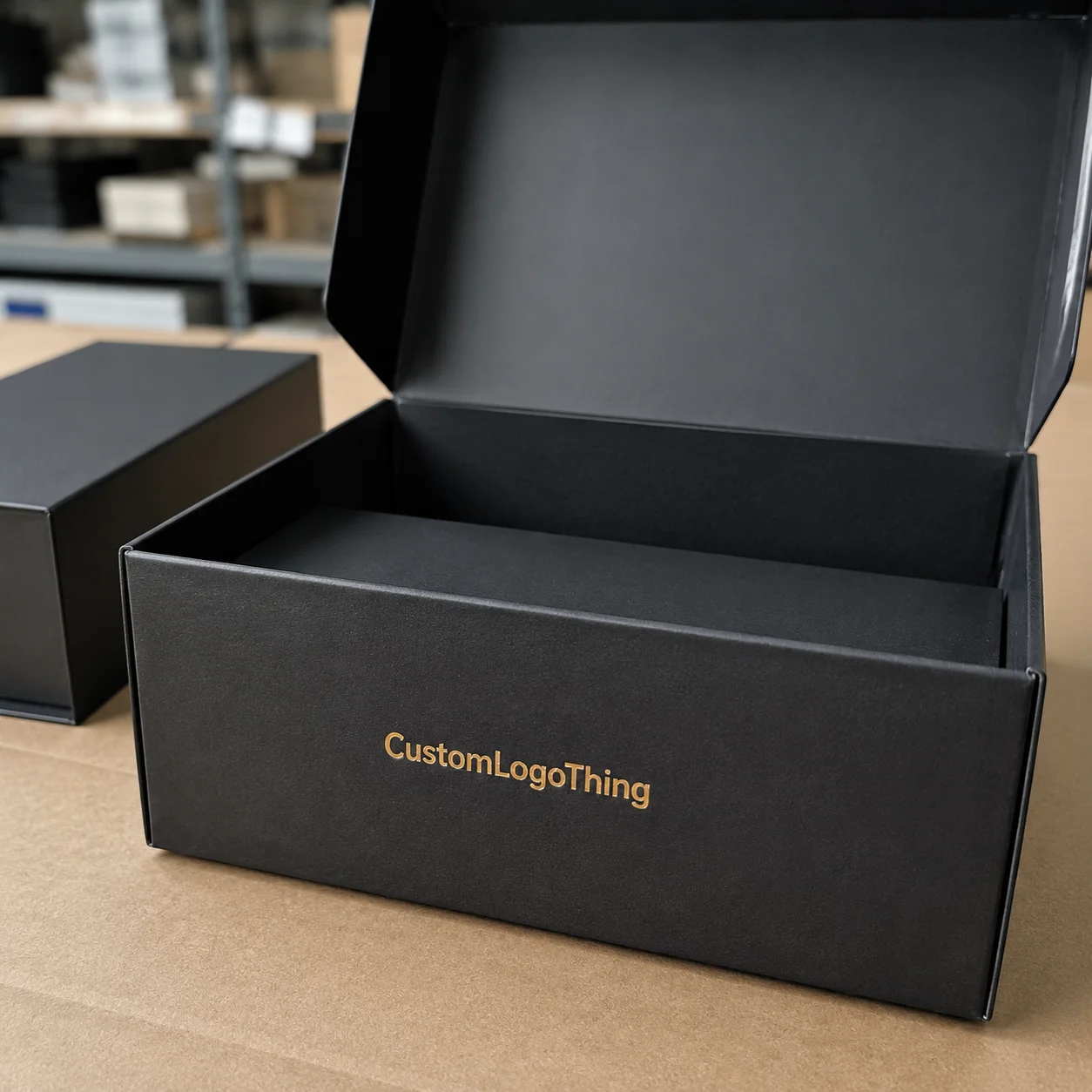
Custom magnetic gift box assembly is the full build process for a rigid gift box that closes with hidden magnets instead of a ribbon, tuck flap, or plain lid. In practice, that means cutting the board, folding the rigid structure, wrapping it with printed paper or specialty stock, embedding magnets, fitting inserts, and checking that the final box closes cleanly. There’s more to it than sticking a pretty shell on a board, and honestly, anyone who tells you otherwise probably hasn’t had to explain a failed run to a very unhappy buyer in Shanghai, Guangzhou, or Amsterdam.
I’ve walked lines where the artwork looked flawless but the box kept opening halfway because the magnet channel was cut too deep by 0.5 mm. One millimeter too shallow and the magnet sits proud. One millimeter too deep and it loses pull strength, especially if you’re using a 10 mm x 2 mm neodymium disc instead of a larger paired closure. That’s the part clients don’t see, and the part that decides whether the box feels premium or irritating after the first 20 openings.
The closure strength shapes the first impression, the shipping durability, and the way the customer feels when the box opens. A great-looking box that rattles, gaps, or bursts open in a courier bag from Shenzhen to Chicago does not feel like premium retail packaging. It feels unfinished. The foil can be perfect and the box can still miss the mark. I’ll say it plainly: I’d rather have a modest-looking box that closes properly than a gorgeous one that behaves like it’s offended by gravity and wants to spring open every time a courier turns a corner.
Custom magnetic gift box assembly shows up often in branded Packaging for Cosmetics sets, candles, electronics accessories, watches, sample kits, wedding gifts, and wine presentation boxes. In one client meeting, a skincare brand wanted 10,000 boxes with embossed logos and a magnetic flap. Their original spec called for a lightweight insert. I pushed back. The glass serum bottles weighed 180 g each, and that mass was enough to shift during shipping. We upgraded the insert to 1200gsm board with EVA cutouts and a 2 mm wall clearance, and the complaints vanished after the first 3,000 units went out of our Guangzhou warehouse.
“The box looked expensive, but the closure and insert told the real story.” That’s what a buyer told me after a failed launch, and honestly, he was right.
Custom printed boxes can carry a lot of brand weight. For that weight to feel intentional, custom magnetic gift box assembly has to be handled with care. The rest of this piece covers how it works, what affects cost, and where brands usually trip over the details, from greyboard thickness in Huizhou to magnet sourcing in Ningbo and wrap finishing in Foshan.
How Custom Magnetic Gift Box Assembly Works
The build sequence for custom magnetic gift box assembly usually begins with board cutting. Most rigid boxes use greyboard in the 1.5 mm to 3 mm range, depending on box size and shipping needs. Smaller jewelry boxes may work at 1.5 mm. Larger corporate gift boxes often need 2.0 mm or 2.5 mm board so the structure doesn’t feel flimsy after wrapping, especially if the finished box is traveling in a master carton with 24 units packed upright.
Scoring and folding come next. If the score lines are off by even 0.8 mm, the corners won’t meet properly. Then the paper wrap gets applied, usually with printed art paper, specialty texture paper, kraft paper, PU leather wrap, or soft-touch laminated stock. A lot of brands lean hard on finish and barely think about adhesion. Fancy surface, weak glue. That combination has caused more headaches than I can count, and it always seems to happen on a Friday afternoon when the line crew would really like to go home after the 6:00 p.m. shift ends.
Magnets go in after that. There are two common methods in custom magnetic gift box assembly:
- Hidden embedded magnets - magnets sit inside the board or wrap layer, so the closure looks clean and premium.
- Surface-set magnetic strips - usually used for simpler builds, faster assembly, or lower-budget runs where the magnet zone is less concealed.
Embedded magnets are the better choice for high-end package branding. They look cleaner and usually feel more deliberate. They also demand tighter control over polarity and placement. I’ve watched workers place a batch of magnets upside down because the jig was poorly marked, and the error only showed up after 120 sample boxes had been built in a factory on the edge of Dongguan’s Houjie area. The lid still closed. Just not on the right side. That run went to rework and cost the client about $680 in labor and delay charges. Cheap mistake? Not even close. It’s the kind of thing that makes you stare at a sample box for a long minute and say, “Well, that’s not ideal,” which is my polite version of what I was actually thinking.
Tolerances matter more than most buyers expect. In custom magnetic gift box assembly, even a 1 to 2 mm error in hinge depth, magnet spacing, or wrap tension can change how the lid snaps shut. If the closure feels weak, customers assume the box is cheap. If the lid slams too hard, the experience feels clumsy. The sweet spot is firm, smooth, and repeatable, and that usually means asking your supplier to measure pull force on at least 10 random samples from each batch of 500 units.
What a factory line typically does
A proper factory flow for custom magnetic gift box assembly usually looks like this: sample build, structure approval, artwork proofing, pre-production confirmation, mass assembly, final QC, then carton packing. Good factories do not skip the sample stage. Bad factories promise, then “adjust on the line.” That usually means they’ll figure it out while your money is already committed. I’ve heard that line more than once in Shenzhen and Dongguan, and every time it makes me want to reach for the nearest clipboard and a red pen.
For QC, I look for five checks every time: lid alignment, magnet pull force, glue bleed, corner squareness, and drop resistance. If the box passes those, it has a chance of surviving real shipping conditions. If it fails even one, I want a re-test before production continues. I’ve seen ISTA-style transit testing save a client from a six-figure reprint disaster, especially when the boxes were heading out of a warehouse in Ningbo and into mixed pallet freight. For standards, I usually point people to ISTA packaging test protocols and FSC sourcing guidance from FSC when the project involves responsible paper choices.
There’s also the product insert. Foam, paperboard, molded pulp, or EVA all change how custom magnetic gift box assembly behaves. A tight insert holds the product in place. A loose one turns the box into a rattle trap. For wine or glass items, I prefer a denser insert and a little breathing room around fragile surfaces. No one wants broken glass and a premium feel in the same shipment, especially when the outer dimensions are already fixed at 320 x 240 x 90 mm and there is no room to improvise.
| Assembly method | Typical feel | Best for | Relative cost |
|---|---|---|---|
| Embedded magnets | Clean, premium | Luxury retail, influencer kits, cosmetics | Higher |
| Surface-set magnetic strip | Functional, visible if not covered well | Short runs, practical corporate gifting | Lower |
| Magnet plus ribbon closure | Decorative, softer close | Gift sets, seasonal branded packaging | Medium |
For most premium projects, I recommend embedded magnets. Not because they sound fancy, but because they hold up better in custom magnetic gift box assembly when the box gets handled, stacked, opened, closed, and shipped twice. Packaging is not a museum piece. It gets abused, and a box assembled in Qingdao or Shenzhen has to survive warehouse forklifts, retail back rooms, and courier bags that have already seen too much.
Key Factors That Affect Custom Magnetic Gift Box Assembly Cost and Timeline
Cost in custom magnetic gift box assembly is driven by size, board thickness, wrap material, magnet grade, insert complexity, print method, and quantity. Bigger boxes use more board. Premium papers cost more. Foil stamping and embossing add labor. Custom foam inserts add cutting time. None of this is mysterious. It’s just math with nicer stationery, and sometimes a little less patience from the production manager in Dongguan’s factory district.
Small runs almost always cost more per unit. If you order 500 boxes, the setup work gets spread over fewer pieces. If you order 5,000, the unit price drops because the same die cutting, sample approval, and setup labor are shared across more units. I’ve quoted projects where a 500-piece run landed at $3.40 per unit, while the 5,000-piece version came down to $1.18 per unit with the exact same exterior spec. On a simpler 350gsm C1S artboard wrap, we once saw a price as low as $0.15 per unit for 5,000 pieces for the wrap component alone, but only after the structure, magnet count, and insert were standardized. That’s what scale does, and that’s why quantity matters before anyone says “just quote it both ways.”
Material choices matter too. A 350gsm C1S wrap with matte lamination costs less than a specialty textured stock with hot foil and soft-touch coating. Add a 2 mm greyboard shell, a custom EVA insert, and hidden magnets, and your custom magnetic gift box assembly price climbs fast. If your supplier tells you all of that is “basically the same,” keep your wallet closed. I mean that literally. Close it. Then ask for a line-by-line quote with board, wrap, magnet, insert, labor, and carton costs separated.
Timeline works the same way. Sample approval usually takes the longest because structure and art need to be confirmed first. If your logo sits too close to a hinge, or the die line is wrong, you’ll lose days correcting it. Then there’s material sourcing. I’ve had a project in Dongguan delayed four business days because a specific soft-touch film was out of stock at the paper converter in Bao'an, Shenzhen, and the substitute film changed the color by half a shade under factory lighting. That’s not rare. It’s Tuesday.
Magnet sourcing can also move the schedule. Many factories buy magnets from suppliers in Ningbo or Dongguan, and if they need a specific size or pull strength, lead time can stretch by 3 to 5 business days. Rush fees apply when labor has to be pulled from other lines or when a project jumps ahead of production planning. I’ve seen a 15% rush surcharge on a 2,000-unit custom magnetic gift box assembly order just to hit a trade show deadline in Las Vegas. Worth it? Sometimes. Cheap? Never.
Real pricing logic, not fairy tales
For a simple magnetic rigid box with basic print, I usually think in rough bands rather than pretending there’s one magical price. Lower-complexity runs may land around $0.90 to $1.60 per unit at higher quantities. Add premium wrap, foil, and a complex insert, and you can easily move into $2.00 to $4.50 per unit or more, depending on quantity and finishing. If someone quotes dramatically below that, ask what they left out. Magnet? Insert? Inner tray? Freight? Miracles? Probably one of those, and usually the freight from Shenzhen to your warehouse is the first thing they quietly forget.
To compare options in custom magnetic gift box assembly, I always ask suppliers to quote using the same line items. Otherwise, one factory includes the insert and another leaves it off, then the “cheaper” quote turns into an expensive surprise. I’ve had procurement teams show me quote sheets with the board, wrap, and print all included, but the magnet cost hidden in “miscellaneous” at $0.08 per unit. That’s not pricing. That’s theater, and it happens often enough in Guangdong that I always ask for a cost breakdown before I even look at the artwork file.
Step-by-Step Custom Magnetic Gift Box Assembly Process
The best way to understand custom magnetic gift box assembly is to follow the job from spec sheet to ship carton. I like breaking it into six steps because it keeps the project honest. If one step goes sideways, the rest of the box usually does too. I learned that the hard way on a candle launch where a tiny artwork shift turned into a week of back-and-forth between our Shenzhen team and the client’s London office, and nobody slept well for a while.
Step 1: Confirm box specs before anyone prints anything
Start with the product dimensions, product weight, closure direction, and how many items go in each box. If you’re packing one bottle, measure the bottle. If you’re packing a set of three jars, measure all three and their combined footprint. In one client meeting, a candle brand gave us the jar dimensions but forgot the wooden lid added 8 mm of height. The first sample closed, but the lid pressed hard into the insert. That project needed a quick redesign before assembly continued, and the new insert die was cut the same afternoon in Dongguan.
For custom magnetic gift box assembly, I also want the shipper carton target. If the outer carton holds 20 boxes, I design the inner arrangement around that. It sounds boring. It saves money. Packaging design only looks glamorous from the outside, and I say that with affection because the glamorous part is exactly what gets everyone excited before the practical stuff shows up with a ruler, a tape measure, and a stack count of 60 units per pallet.
Step 2: Approve the structure sample and artwork placement
Before mass production, request a white sample or plain kraft sample. That tells you whether the box shape, hinge, and magnet closure feel right. Then approve the decorated sample. If you’re using foil stamping, embossing, or soft-touch lamination, confirm those effects separately. It’s easier to catch issues on one sample than on 8,000 finished units, and a good factory in Shenzhen or Huizhou will usually have the sample ready within 3 to 5 business days after dieline confirmation.
I once sat at a table with a beauty brand founder who loved a deep navy wrap with gold foil. Beautiful choice. The problem was the logo sat 3 mm too close to the fold line, and once the wrap tension was applied during custom magnetic gift box assembly, the foil looked distorted. We shifted the art, re-approved, and saved the run. Small correction. Big difference. That sort of adjustment is exactly why proof approval exists before the line begins.
Step 3: Build the rigid board structure
At this stage, the greyboard is cut and folded into the box body and lid. The dimensions must match the dieline exactly. If the board is too loose, the box feels soft. If it’s too tight, the wrap wrinkles and the corners bulge. A 2.0 mm board can behave very differently from a 1.5 mm board once paper and glue are added, so I always insist on checking the assembled shell before magnets go in, especially for larger luxury sets that need a firmer hand feel.
During custom magnetic gift box assembly, corner squareness matters more than people think. A box can look acceptable on a bench and still rack slightly under pressure. That’s a problem for stacking and shipping. I’ve had suppliers in Guangdong swear a corner was “fine” because it passed the eyeball test. Then we put it under a ruler and measured a 2.3 mm deviation across the diagonal. Not fine. The ruler won, as it usually does, and the rework was far cheaper than a full return shipment.
Step 4: Install magnets with correct polarity
This is the part people underestimate. Magnet polarity has to be right every time, and the magnet pocket depth has to be consistent across the run. If one box closes with a crisp snap and another barely holds, the line needs adjustment. I ask for a pull test on random samples because the human hand can be fooled. Fingers aren’t measurement tools, no matter how confident someone sounds while holding a sample at chest height in a factory office in Foshan.
For stronger, larger lids, I sometimes recommend a pair of magnets rather than a single one, especially for heavier custom magnetic gift box assembly projects. A big wine box or corporate gift set can put too much stress on one closure point. Two magnets distribute the load better and reduce the chance of lid lift during transit, especially when the outer carton is stacked five high in a warehouse in Ningbo or Rotterdam.
Step 5: Add inserts, trays, or holders
Insert fit is where a lot of branded packaging jobs go wrong. EVA is stable and clean, but it costs more. Paperboard inserts are lighter and cheaper, but they may not hold fragile products as firmly. Foam feels protective but can look less premium if it’s exposed. The right choice depends on the product, not the mood board, even if someone in a meeting insists the mood board is “giving” protection. It is not, and the difference between a 600gsm paperboard insert and a 20 mm EVA tray shows up the moment the box gets shaken.
In one negotiation, a client wanted a candle box with a paperboard insert to save $0.12 per unit. I told them that was fine if they were okay with the jar shifting during shipment. They were not. We switched to a better die-cut insert, and the return rate stayed at zero across a 5,000-unit launch. That’s how custom magnetic gift box assembly should work: the insert protects the product, not just the profit margin, and the right insert can be the difference between a clean opening experience and a noisy rattle in the back of a delivery van.
Step 6: Final QC and packing
Final QC covers closure alignment, print accuracy, glue stains, corner wrap quality, and insert fit. Then the boxes get packed into master cartons with transit protection. If the shipper carton is weak or overfilled, the best assembly in the world won’t matter. I prefer carton specs that account for weight, stacking, and moisture exposure. If the route includes long ocean freight from Yantian to the Port of Los Angeles, I’m even more careful and usually ask for desiccant packs in the master cartons.
For shipping standards, I often reference EPA sustainable materials guidance when clients ask about recyclable boards, recycled fiber content, or general material responsibility. Not every box needs a lecture, but the sourcing decisions should still be sensible, and a 1200gsm recycled board shell can be a very practical choice when the design supports it.
So yes, custom magnetic gift box assembly is a process. It is not “print, glue, done.” If a supplier makes it sound that simple, they either don’t build these often or they’re hoping you won’t ask questions while the sample is still warm from the laminator.
Common Mistakes in Custom Magnetic Gift Box Assembly
The most common mistake in custom magnetic gift box assembly is using weak magnets that feel expensive on paper and cheap in the hand. A lid that drifts open after a few uses makes the box feel underbuilt. If the closure matters to the user experience, don’t save $0.04 and lose the premium feel, especially on a 10,000-unit beauty or candle order where that tiny savings turns into a big brand impression problem.
Another classic problem is ignoring product weight. A light filler card in a cosmetic box is not the same as a 650 g candle jar or a glass bottle set. I’ve seen brands pick a cute insert, then wonder why the product shifted in transit and scraped the inside wall. The box wasn’t wrong. The spec was. And yes, someone always acts surprised, as if gravity is a new development that arrived after the quote sheet was approved.
People also design artwork before confirming the structure. That’s how you end up with seams cutting through logos, hidden folds under typography, or magnetic channels running through critical graphics. In custom magnetic gift box assembly, structure comes first. Art follows the die line, not the other way around, because a 2 mm shift in the hinge can turn a polished logo into a crooked one.
Skipping sample approval is another expensive habit. You may save a week, then lose three weeks fixing a bad closure, misaligned insert, or poor wrap behavior. Glossy and textured wraps also need testing because glue adhesion can vary. A beautiful paper with bad corner wrap behavior will make the box look tired before it ever reaches the customer, and a lot of those problems show up only after the box has sat for 48 hours in a warehouse at 28°C.
Too many buyers treat custom magnetic gift box assembly like a generic print job. It isn’t. It’s a mechanical product with aesthetic demands. That mix is why it’s tricky and why experienced suppliers matter, especially if they can explain the difference between a 1.5 mm and 2.0 mm greyboard shell without needing three follow-up emails.
Expert Tips for Better Custom Magnetic Gift Box Assembly
My first tip is simple: specify magnet strength, not just “magnetic closure.” If you leave it vague, the factory chooses what “good enough” means. That might work for a stationery box. It won’t work for a heavy corporate kit or a wine presentation box. Ask for a magnet spec and a sample pull test in writing, ideally with the closure force measured on finished samples rather than loose hardware.
Second, request both a white sample and a decorated sample. The white sample tells you whether custom magnetic gift box assembly works structurally. The decorated sample shows you the real finish, wrap tension, and print alignment. If your supplier only wants to send one sample, that’s not efficiency. That’s a shortcut, and shortcuts often show up later as rework costs of $300 to $800 once the line is already running.
Third, build in a 1 to 2 mm tolerance check for inserts. Bottles, jars, and oddly shaped products need a little room, but not too much. Too snug and the product rubs the finish. Too loose and it shifts. I learned that one the hard way during a premium candle project where the glass had a slight taper. A 1 mm adjustment fixed it. That tiny change saved the run and kept the box from arriving with scuffed interiors.
Fourth, ask for a drop test and a closure test before full approval. For transit reality, I want the packed box tested, not just the empty shell. That means the product goes in, the box closes, and then it gets checked for movement after handling. If you can, align the test with ISTA-style thinking so your supplier isn’t guessing what “durable” means, especially if the shipment is leaving Shenzhen for a 3,000 km domestic distribution network.
Fifth, choose finishes based on handling reality. Soft-touch feels luxurious, yes. It also shows fingerprints and rub marks faster than people expect. Matte paper hides some wear better. High-gloss can look sharp, but it can also show scuffs depending on distribution conditions. In custom magnetic gift box assembly, the prettiest finish is not always the smartest one, and a finish that looks good under showroom lights in Shanghai may age very differently in a busy retail stockroom.
I also recommend using Custom Packaging Products as your reference point when you’re comparing box structures, inserts, and finishing options. It helps to have a product page in front of you while talking to suppliers instead of pretending memory will save the day. It won’t, and I say that with the gentle exhaustion of someone who has seen one too many “we thought it was included” emails after a $12,000 order is already in production.
Finally, don’t let anyone rush you through the approval stage just because the quote looks attractive. A box that needs rework after production is no bargain. It’s just a delay with an invoice attached. That’s the blunt truth about custom magnetic gift box assembly, especially when the factory schedule in Guangdong is already booked through the next 10 business days.
What to Do Next Before You Order Custom Magnetic Gift Box Assembly
Before you request quotes, collect the product dimensions, product weight, and how many units go in each shipper carton. If you don’t know the product weight, weigh a filled sample on a kitchen scale or shipping scale. Don’t guess. Guessing is how a “light” box becomes a freight problem, and a 150 g error per unit can add up fast over 5,000 pieces.
Next, decide your target price per box and your lead time before you start talking to factories. If the budget is $1.30 landed and you need foil, embossing, a complex insert, and a premium wrap, somebody is going to be disappointed. Better to know that on day one, along with whether your supplier is building in Shenzhen, Dongguan, or a subcontracted plant in Foshan.
Then request three things from your supplier: a structural sample, a decorated sample, and a magnet closure test. Those three items tell you far more than a glossy quote sheet. They show whether the factory actually understands custom magnetic gift box assembly or just knows how to answer emails, and they usually reveal whether the shop can hold a 12-15 business day production promise after proof approval.
Create a simple approval checklist. I use one with board thickness, wrap finish, insert fit, lid alignment, closure strength, seam visibility, and carton packing. It takes 10 minutes to fill out and prevents “we thought that was included” drama later. I’ve seen entire launches protected by a boring checklist. Boring is good. Boring ships, and boring is what keeps 8,000 boxes from turning into 8,000 excuses.
Finally, compare at least two suppliers using the same spec sheet. If one quote is far lower, look closely at what’s missing. Maybe the insert is excluded. Maybe the magnet count is lower. Maybe the paper stock is lighter. Maybe the freight estimate is fantasy. A proper quote comparison is the fastest way to spot fake savings in custom magnetic gift box assembly, especially when one factory is quoting from Shenzhen and the other is sourcing from a smaller shop in Huizhou.
My honest advice? Treat the box like part of the product, because it is. The box holds, protects, presents, and sells. If you get the assembly right, the customer notices before they even touch the item inside. If you get custom magnetic gift box assembly wrong, they notice that too. Fast, usually within the first 3 seconds after opening.
FAQ
How does custom magnetic gift box assembly differ from standard rigid box assembly?
Custom magnetic gift box assembly adds magnet placement, polarity control, and closure testing to the usual rigid box build. The lid has to snap shut cleanly, so alignment tolerances are tighter than they are for a standard rigid box without magnetic hardware. Standard rigid box assembly can skip that step, which makes it simpler and usually cheaper, especially on short runs of 500 to 1,000 units.
What affects the cost of custom magnetic gift box assembly the most?
The biggest cost drivers are box size, board thickness, insert complexity, magnet grade, and quantity. Low quantities raise the unit price because setup labor gets spread across fewer boxes. Special finishes like foil stamping, embossing, and soft-touch coating also raise the cost of custom magnetic gift box assembly because they add more labor and more room for rework. A 350gsm C1S wrap, for example, is far less expensive than a textured paper with custom embossing and a foil logo.
How long does custom magnetic gift box assembly usually take?
Sample approval usually takes the longest because the structure and artwork need to be confirmed first. Production timing depends on material sourcing, magnet availability, and order size. For most projects, a typical timeline is 12-15 business days from proof approval to finished goods, while a rush order can compress that to 7-10 business days if the factory in Shenzhen or Dongguan already has the paper and magnets in stock. Rush jobs are possible, but they often cost more and can increase the chance of quality issues in custom magnetic gift box assembly.
What is the best magnet strength for a magnetic gift box?
The best magnet strength depends on the box size, lid weight, and what goes inside. A small jewelry box does not need the same pull force as a large corporate gift set. Always test closure strength on the finished box, not just the magnet alone, because the wrap, board thickness, and insert all affect how custom magnetic gift box assembly performs. In many premium boxes, a pair of 10 mm x 2 mm magnets gives a firmer close than a single oversized disc.
What should I check before approving custom magnetic gift box assembly?
Check lid alignment, magnet snap feel, insert fit, wrap seams, and corner finishing. Confirm that the box closes smoothly without forcing or gapping. I also recommend testing the packed box for shipping durability so the product does not rattle loose during transit. That final check catches more problems than people expect in custom magnetic gift box assembly, especially when the boxes will be stacked 4 or 5 layers high on a pallet for export from Guangdong or Shenzhen.