Buyer Fit Snapshot
| Best fit | Thick Poly Mailers Wholesale projects where brand print, material claims, artwork control, MOQ, and repeat-order consistency need to be specified before quoting. |
|---|---|
| Quote inputs | Share finished size, material target, print colors, finish, packing count, annual reorder estimate, ship-to region, and any compliance wording. |
| Proofing check | Approve dieline scale, logo placement, barcode or warning zones, color tolerance, closure strength, and carton packing before bulk production. |
| Main risk | Vague material claims, crowded artwork, missing packing details, or unclear freight terms can make a low unit price expensive after revisions. |
Fast answer: Thick Poly Mailers Wholesale: Specs, Pricing, Timing should be specified like a repeatable production item. The safest quote records material, print method, finish, artwork proof, packing count, and reorder notes in one written spec.
Production checks before approval
Compare the actual filled-product size with the drawing, then confirm tolerance on folds, seals, hang holes, label areas, and retail display edges. Reserve space for logos, QR codes, warning copy, and material claims before decorative graphics fill the panel.
Quote comparison points
Review material grade, print process, finish, sampling route, tooling charges, carton quantity, and freight assumptions side by side. A quote is only useful when the supplier can repeat the same color, closure quality, and packing count on the next order.
Thick Poly Mailers Wholesale: Specs, Pricing, Timing
For a brand shipping soft goods, accessories, books, or mixed e-commerce orders, thick Poly Mailers Wholesale is not just another packaging line item. It sits right where damage prevention, packing speed, and customer experience meet. A lightweight apparel order may move safely in a standard mailer. Add a box with hard corners, a zipper pouch, or a rainy delivery route, and the picture changes fast, which is where thick poly mailers wholesale starts to earn its keep.
The best purchasing decisions usually come from matching the mailer to the shipment, not from chasing the thickest film on a spec sheet. I have seen teams spend too much time comparing low quotes, only to lose the savings to repacks, split seams, and customer complaints later. Buyers compare puncture resistance, seal performance, print quality, and lead time against the actual shipping mix. That is the real value of thick Poly Mailers Wholesale: fewer replacements, fewer support tickets, and less time spent fixing preventable packing problems.
There is also a small but real operational effect that gets overlooked. A mailer that holds its shape, seals cleanly, and resists corner punctures tends to move faster through a packing station because the team is not second-guessing the bag. That may sound minor, but in a busy warehouse, minor adds up. If a bag tears on the line, the schedule is gonna feel it.
From the customer side, thicker film can make the parcel arrive flatter, cleaner, and less stressed-looking. That is not luxury packaging theater. It is a practical sign that the order survived the trip the way it was supposed to. For thick poly mailers wholesale, the business case is usually more about protecting margin than making a dramatic branding statement.
Thick Poly Mailers Wholesale: Why Thickness Changes Outcomes
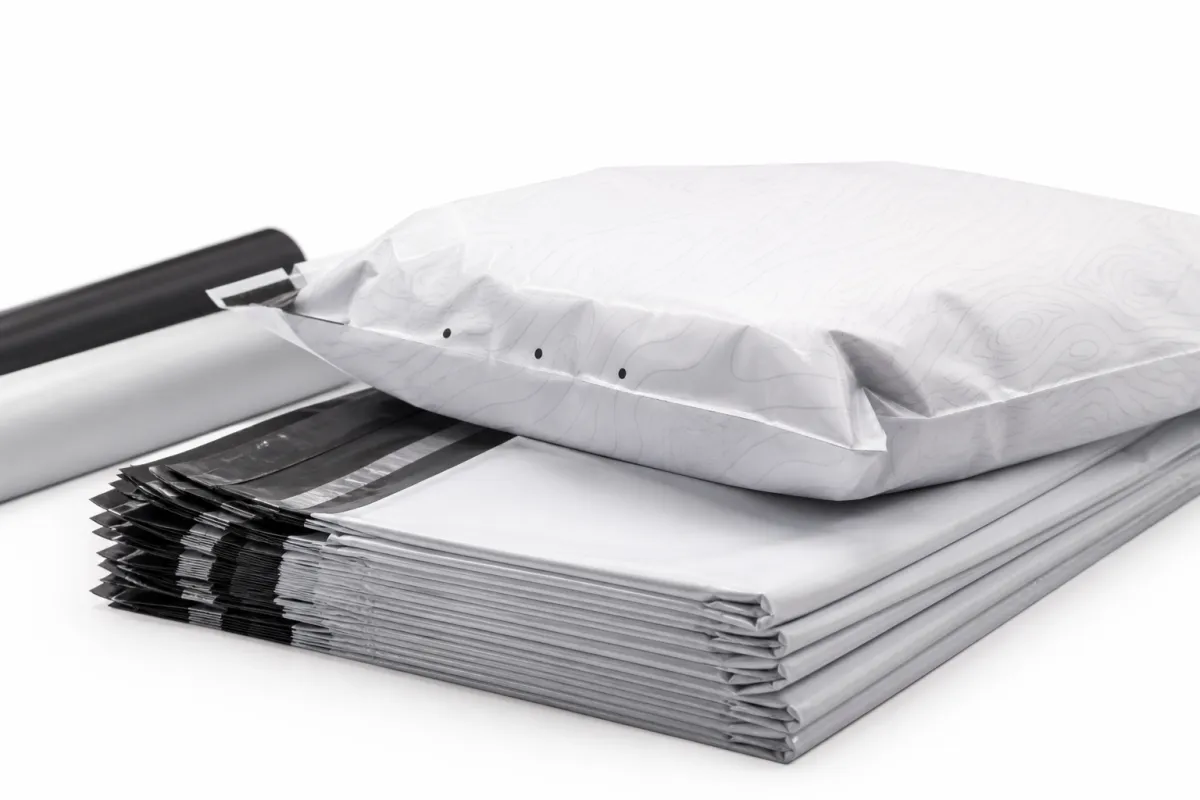
Start with a familiar shipping scenario. A folded T-shirt in a soft poly bag can travel well in a thinner mailer. Add a hanger hook, a zipper, a hard cosmetic jar, or a boxed accessory, and the risk profile shifts quickly. A slightly thicker film can absorb small impacts that would otherwise split a seam or punch through a corner. That is why thick poly mailers wholesale matters most for brands shipping a mix of soft and semi-rigid products.
On the packing line, thicker mailers can also reduce rework. If the team spends less time swapping damaged mailers, rebuilding orders, or double-bagging fragile items, the operational gain can outweigh the small increase in unit cost. With thick poly mailers wholesale, the real cost is never just the invoice total. It is the total cost per fulfilled order, including labor, replacements, and the customer service messages that follow a damaged delivery.
Another detail buyers miss sometimes: a heavier mailer can improve customer perception before the package is even opened. Not because it feels fancy for the sake of it, but because it usually arrives flatter, cleaner, and less torn. That matters in apparel, subscription kits, retail returns, and printed collateral. For thick poly mailers wholesale, the gain is often quiet but useful.
Thickness also affects fulfillment speed. A flimsy mailer may be fine on a low-volume day, then suddenly slow the whole line when the adhesive fails, the bag clings to itself, or a sharp edge catches during pack-out. A stronger mailer can save seconds per order if the seal closes cleanly and the bag keeps its shape while the package is scanned and staged. Over time, that is real money.
A practical procurement rule: if a thicker mailer prevents even a small percentage of repacks or claims, the landed cost can improve even when the unit price goes up.
thick poly mailers wholesale is also a margin decision for brands shipping soft goods, accessories, print collateral, and mixed-item e-commerce orders. When the product is light but awkward, the package often needs more structure than the weight suggests. When the product is branded, the mailer may need a cleaner print surface too. The strongest buying decisions usually come from matching the mailer to the lane, not from guessing based on price alone.
I have watched more than one team fix a packaging problem by moving from a thin, brittle bag to a better-built 3 mil option instead of overbuying a super-heavy film. That middle ground is often where the real value sits. Not too flimsy, not overbuilt, just right for the item and the route.
Thick Poly Mailers Wholesale Product Details: What You Are Buying
Buyers often compare thickness numbers first and everything else later. That creates trouble. A thick poly mailers wholesale order is not just a film thickness; it is a set of choices that includes outer film, inner layer, seal quality, opacity, and tear resistance. Two mailers with the same nominal thickness can feel different if one uses a better resin blend or a wider seal zone.
The construction usually starts with a blended polyethylene film. The outer layer needs enough stiffness to resist stretching and tearing, while the inner layer needs a clean sealing surface for the self-seal adhesive. On higher-end thick poly mailers wholesale programs, buyers may also ask for an opaque layer that hides the product, a matte finish for stronger logo contrast, or a recycled-content blend if the broader packaging strategy calls for it.
Common features matter more than people admit. A self-seal adhesive strip should close firmly without extra tape. Tamper-evident closures can show whether the package has been opened. Water resistance helps on rainy routes or last-mile handoffs where parcels sit on wet loading docks. For thick poly mailers wholesale, these details are not decorative. They are the difference between a shipment that lands intact and one that arrives with a support email attached.
Use case matters too. Apparel brands often want a mailer that folds neatly around soft items without adding much bulk. Cosmetics brands need stronger puncture resistance because jars and tubes create pressure points. Books and catalogs need a flatter bag with good tear strength at the corners. Subscription kits and retail returns may need extra opacity and a dependable seal because the contents can vary. The best thick poly mailers wholesale spec is the one that fits the product family, not the one that looks strongest on paper.
If you are comparing options across a catalog, the Custom Poly Mailers page is a useful starting point because it brings size, print, and material choices into the same conversation instead of splitting them apart. That is exactly how a procurement team should think about thick poly mailers wholesale: as a package spec, not a single attribute.
Plain, printed, and custom-branded mailers also change the buying equation. Plain stock mailers usually ship faster and carry the lightest setup burden. Printed mailers add branding and usually add setup complexity. Custom-branded thick poly mailers wholesale orders can involve more precise size control, specific color matching, and layout approval steps that affect both price and schedule. If the logo is going on the bag, the spec sheet should be treated like a production document, not a rough estimate.
One honest caution: not every product needs a thick mailer just because it sounds safer. A soft garment does not benefit much from overkill, and a bigger film footprint can raise freight and material costs without solving a real problem. The trick is to match the mailer to the pack, not the packaging mood.
Specifications to Compare Before You Place an Order
The first spec to decode is thickness. In the market, buyers will hear gauge, mil, and micron. Those terms are not interchangeable, and that creates confusion fast. A thick poly mailers wholesale quote should state the actual film spec clearly. Mil means one-thousandth of an inch. Micron means one-millionth of a meter. If a supplier says the mailer is “thick” but cannot explain the film in plain numbers, ask again.
For reference, 1 mil equals 25.4 microns. That means a 2.5 mil mailer is roughly 63.5 microns, while a 3.0 mil mailer is about 76.2 microns. Those small differences matter more than many teams expect. In thick poly mailers wholesale, moving from 2.5 mil to 3.0 mil may improve puncture resistance enough to reduce edge failures on boxed or semi-rigid items, while still keeping the package lightweight enough for efficient shipping.
Size is the next trap. A bag that is too large adds wasted film and can make the parcel look sloppy. A bag that is too small creates stress on the seam and the corners. The right thick poly mailers wholesale choice wraps around the product with a little breathing room, not a lot. Measure the item, not just the carton count. That sounds obvious, yet many programs are built from box dimensions instead of the actual shipped object.
Then look at the print surface. If the mailer will carry a logo, the surface should allow strong contrast without smudging or muddy edges. Single-color prints are usually easier to control than complex multi-color art. On thick poly mailers wholesale orders, ask about color limits, registration tolerance, print area, and whether the substrate is glossy or matte. A matte finish often makes typography easier to read, while a glossy film can make color appear sharper, depending on the artwork.
Here are the practical specs procurement teams should compare before approving a run:
- Film thickness: ask for mil and micron, not just “heavy duty.”
- Seal width: wider seals usually help on heavier contents; 30 mm or more is a common starting point on stronger mailers.
- Load tolerance: match the bag to the item weight and shape, not just the order total.
- Opacity: important for privacy, branding, and keeping product details hidden.
- Tear strength: especially useful for books, small boxes, and angled product corners.
- Closure type: self-seal adhesive, tamper-evident strip, or return-friendly double seal.
- Print method: flexographic printing is common on larger thick poly mailers wholesale runs; simpler art usually keeps costs down.
Performance testing should not sit at the end of the process. If a mailer is going to a national distribution program, ask how it responds to drop, vibration, and compression conditions. ISTA test procedures are a useful reference for transit testing, and you can review the standards at ISTA. If your broader packaging program includes paper-based components or sustainability claims, the FSC framework may also matter. A serious thick poly mailers wholesale buy is not built on feel alone.
One more detail: some suppliers talk about “gauge” in a way that sounds precise but is hard to compare across factories or catalogs. That is why material spec sheets matter. A strong thick poly mailers wholesale order should include the actual film structure, closure details, and carton pack count so the buyer can compare apples to apples instead of comparing marketing language to marketing language.
When a sample arrives, I like to put the actual shipped item inside it, seal it, and handle it the way a warehouse associate would. If the opening is awkward, the seal feels weak, or the corners start to strain, that mailer is telling you something before the first full run even starts. A five-minute test can save a lot of trouble later.
Cost, Pricing, and MOQ for Wholesale Orders
Price changes for clear reasons. Material thickness raises resin usage. Print coverage raises setup and production time. Larger dimensions use more film. Special features, such as a stronger adhesive or return-strip construction, add cost. Freight can move the delivered number more than the bag price itself if the order is bulky. In thick poly mailers wholesale, the quote should be read as a full system, not just a unit price.
The most common mistake is comparing only the lowest line item. A supplier may quote a low per-unit cost but charge separately for plates, proofs, carton configuration, or freight. Another supplier may quote a slightly higher unit price with fewer surprise charges. On thick poly mailers wholesale orders, the cheapest quote is often not the cheapest purchase once inventory risk and shipping are added.
MOQ, or minimum order quantity, depends on whether the mailer is stock, printed, or fully custom. Stock plain mailers can start at relatively low quantities. Printed thick poly mailers wholesale orders usually need higher minimums because setup costs have to be spread across enough pieces to stay efficient. Fully custom dimensions and print layouts can raise the MOQ again, especially if the factory has to run a dedicated film size or plate set.
Buyers should ask for multiple tiers. A 1,000-piece quote may be useful for testing, but a 5,000- or 10,000-piece quote often shows where the meaningful price drop begins. That is the point where thick poly mailers wholesale becomes interesting. If the spread between tiers is wide and reordering is likely every month or two, paying a little more upfront for a larger run can reduce unit cost and administrative churn.
The prices below are illustrative, not a live quote. Resin markets move, freight changes, and print coverage can change the math more than most people expect.
| Option | Typical Thickness | Illustrative Wholesale Price at 5,000 Units | Best Fit | Notes |
|---|---|---|---|---|
| Plain stock mailer | 2.0-2.5 mil | $0.10-$0.16 | Apparel, soft goods, low-risk shipments | Fastest path; lowest setup burden for thick poly mailers wholesale |
| One-color printed mailer | 2.5-3.0 mil | $0.14-$0.22 | Brand-forward e-commerce, subscription kits | Good balance of branding and protection |
| Custom size plus print | 3.0-4.0 mil | $0.18-$0.30 | Mixed-item packs, boxed goods, accessories | Higher setup, stronger fit, stronger transit protection |
| Heavy-duty return mailer | 4.0 mil+ | $0.22-$0.40 | Returns, books, hard-edged products | Useful where puncture and seal integrity matter most |
thick poly mailers wholesale pricing should also be checked against the packaging use case. If the item is soft and light, the expensive option may never pay back. If the item is often damaged or repacked, the more durable option can save more than it costs. That is why a good quote conversation starts with the product, the route, and the damage history, not with a hope for the lowest number.
If your team reorders often, pay close attention to the gap between unit price and landed cost. A slightly higher quote can still be the better business move if it cuts claims and labor.
For teams buying through a broader procurement channel, the Wholesale Programs page is worth using as a benchmark because it helps compare minimums, pack counts, and repeat-order structure in one place. That is often the cleanest way to evaluate thick poly mailers wholesale against other packaging purchases in the same budget cycle.
Process and Lead Time: From Artwork to Shipment
The buying process should feel orderly. First comes the quote request. Then the supplier confirms size, thickness, print area, color count, pack count, and freight destination. After that comes artwork submission, digital proofing, production approval, and shipment. A thick poly mailers wholesale project moves faster when those steps are set early, because each step removes ambiguity before material is committed.
Lead time depends on the order type. Stock plain mailers can move quickly, sometimes in a few business days if inventory is on hand. Printed thick poly mailers wholesale orders usually need more time because they require artwork setup, proof approval, and quality checks before release. A practical planning window for many custom runs is often 12-15 business days after approval, with freight added separately.
Delays usually come from the same places. Artwork files are incomplete. A logo is submitted in a low-resolution format and needs cleanup. The buyer changes the wording after the proof is sent. The size looks right on paper but too tight in the sample. Freight routing is not finalized until the end. In thick poly mailers wholesale, a day lost in proofing can turn into a week lost in shipping, especially if the order is tied to a launch date or retail reset.
There is a simple planning rule that saves a lot of stress: build a buffer before campaigns, seasonal peaks, and warehouse migrations. If an order is going to a new fulfillment center, allow extra time for receiving, inspection, and internal sign-off. A thick poly mailers wholesale order that looks on schedule can still become a problem if the warehouse needs it three days sooner than the freight lane allows.
Artwork files deserve their own discipline. Vector logos generally reproduce better than flattened image files. Spot colors are easier to control than artwork built from vague RGB references. Bleed and safe zones should be checked before proof approval. If the logo is critical to the brand, ask for a proof that shows placement on the actual bag outline, not on a blank rectangle that hides the true print dimensions. That level of detail keeps thick poly mailers wholesale projects from drifting into guesswork.
One practical way to reduce risk is to request samples before the final purchase. A sample lets the team check seal feel, material stiffness, logo visibility, and the way the bag folds around the product. For high-volume thick poly mailers wholesale programs, that small step can avoid an expensive mismatch between the spec and the actual item being shipped.
There is also a logistics detail that is easy to miss: freight booking can influence the delivered timeline as much as production can. If the bags are finished but the carrier pickup is delayed, the project is late anyway. The smartest thick poly mailers wholesale programs account for production, inland freight, and receiving time as separate parts of the schedule.
Why Choose Us for Wholesale Poly Mailers
For buyers reviewing options at Custom Logo Things, the value is not a vague promise of “good service.” It is a clearer purchasing process. thick poly mailers wholesale should be bought against measurable specs: consistent thickness, dependable seals, readable print, and straightforward quoting. Procurement teams do not need theatrics. They need answers that help them place the order correctly the first time.
Consistency matters because packaging programs fall apart when one batch behaves differently from the next. A mailer that seals well on the first order and weakly on the second can create avoidable returns and confusion at the packing table. A dependable thick poly mailers wholesale supplier helps reduce that variance by holding the spec steady and documenting the details clearly.
Sample support is another practical advantage. Before a larger run, a buyer should be able to review thickness, closure strength, print quality, and size fit against the actual product flow. That is especially useful for brands shipping multiple SKUs. The right thick poly mailers wholesale recommendation should reflect the item profile, not force every package into the same bag.
Communication matters too. Buyers often need help with sizing, color expectations, pack configuration, and freight planning. A supplier that answers those questions directly saves time on both sides. At Custom Logo Things, the goal should be to keep thick poly mailers wholesale simple enough for a buyer to approve quickly and detailed enough for operations to trust the result.
There is also value in repeat-order support. Once a packaging spec works, the worst outcome is having to re-explain it every time the team reorders. A good wholesale setup reduces that friction. For a purchasing manager, that is not a small benefit. It is how a packaging program stays stable while sales volume grows and product lines shift. That is why many buyers prefer a supplier that treats thick poly mailers wholesale as an ongoing program instead of a one-time transaction.
If your packaging needs extend beyond mailers, the Custom Packaging Products catalog can help the team compare mailers, inserts, and related shipper items in one place. That broader view can be useful because the best thick poly mailers wholesale choice is sometimes the one that works in harmony with the rest of the shipping system.
There is no magic claim here. The best supplier is the one that sends clear specs, honest lead times, and samples that match the run. Anything less gets expensive pretty quickly.
Next Steps: Build the Right Wholesale Order
Before asking for a quote, measure the product and write down the real shipping risk. Is the item soft, boxed, sharp-edged, or mixed? Does it need privacy? Is the current packaging failing at the seam, the corner, or the closure? Those answers shape the right thick poly mailers wholesale spec faster than any general budget discussion.
Then estimate monthly usage. A buyer shipping 1,000 units a month needs a different MOQ conversation than a team shipping 20,000 units a month. Ask for two or three quote scenarios so the tradeoff between unit cost, thickness, and turnaround is visible. That is the cleanest way to judge thick poly mailers wholesale without overbuying inventory that sits in the warehouse.
Prepare the practical details before reaching out: artwork files, shipping ZIP code, expected order count, preferred pack quantity, and whether the logo is required on the first run. Those details shorten the quote cycle and make the comparison more reliable. A buyer who sends complete information gets a better thick poly mailers wholesale answer because the supplier can price the real job, not a guess.
As the order grows, do not be afraid to move from stock to custom, or from thinner film to a thicker spec if the damage history justifies it. The right packaging decision is usually the one that matches the shipment profile today, with room to scale into a stronger or more branded version later. That is the discipline behind thick poly mailers wholesale: protect the order, protect the margin, and avoid paying for features the lane does not need.
For teams building a repeatable packaging program, thick poly mailers wholesale should be treated as a controlled purchase, not a last-minute scramble. If the spec is clear, the MOQ is realistic, and the lead time fits the calendar, the result is usually better protection, cleaner packing, and fewer surprises in transit.
What thickness is best for thick poly mailers wholesale orders?
Choose thickness based on product shape, weight, and puncture risk rather than assuming the thickest film is the safest choice. Apparel and soft goods often perform well at lower mil counts, while boxed items, books, or mixed-product packs usually need more material. In thick poly mailers wholesale, a thicker gauge can lower repacking and replacement costs if the route is rough or the item has sharp edges.
What is a typical MOQ for thick poly mailers wholesale?
MOQ depends on whether the order is stock, printed, or fully custom. Stock programs can start lower, while printed thick poly mailers wholesale runs usually require more units because setup costs need to be spread across the batch. Ask for several tiered quotes so you can compare unit cost against inventory risk and reorder frequency.
Can I print my logo on thick poly mailers wholesale?
Yes. Most programs support custom printing, but artwork complexity changes both price and lead time. Simple one- or two-color logos are usually easier to control than full-coverage graphics. For thick poly mailers wholesale, request a proof before production so you can confirm size, placement, color, and readability on the actual bag format.
How long does production usually take after approval?
Stock mailers usually ship faster than custom printed runs because they do not need the same level of setup and quality checks. For thick poly mailers wholesale, a common planning window is around 12-15 business days after proof approval for custom work, with freight added on top. Clean artwork files and prompt proof approval help the timeline stay predictable.
How do I compare wholesale prices across different mailer specs?
Compare the same size, thickness, print coverage, and quantity before deciding which quote is best. Then add freight, setup, proofing, and any special features. In thick poly mailers wholesale, the lowest quote is not always the best value if the film is too thin, the seal is weak, or the lead time risks a stockout.
The most useful next move is simple: measure the item you actually ship, name the failure point you want to fix, and request samples in the exact size, film thickness, and print format before you commit to a bulk run. That gives you a cleaner thick poly mailers wholesale decision than chasing a price alone, and it keeps the packaging choice tied to the way your orders really move.