Buyer Fit Snapshot
| Best fit | Essential for Stacking Fragile Shipments Securely projects where brand print, material claims, artwork control, MOQ, and repeat-order consistency need to be specified before quoting. |
|---|---|
| Quote inputs | Share finished size, material target, print colors, finish, packing count, annual reorder estimate, ship-to region, and any compliance wording. |
| Proofing check | Approve dieline scale, logo placement, barcode or warning zones, color tolerance, closure strength, and carton packing before bulk production. |
| Main risk | Vague material claims, crowded artwork, missing packing details, or unclear freight terms can make a low unit price expensive after revisions. |
Fast answer: Essential for Stacking Fragile Shipments Securely: Material, Print, Proofing, and Reorder Risk should be specified like a repeatable production item. The safest quote records material, print method, finish, artwork proof, packing count, and reorder notes in one written spec.
Production checks before approval
Compare the actual filled-product size with the drawing, then confirm tolerance on folds, seals, hang holes, label areas, and retail display edges. Reserve space for logos, QR codes, warning copy, and material claims before decorative graphics fill the panel.
Quote comparison points
Review material grade, print process, finish, sampling route, tooling charges, carton quantity, and freight assumptions side by side. A quote is only useful when the supplier can repeat the same color, closure quality, and packing count on the next order.
I've stood in more warehouses than I can count, watching that moment when a forklift operator sets down a pallet and you hear it—that subtle groan of shifting boxes. My heart sinks every time. Over my twenty years in packaging and logistics, I've seen companies lose thousands of dollars in a single shipment because someone didn't understand Tips for Stacking fragile shipments securely. Last year, a client in Portland was hemorrhaging $40,000 monthly in damage claims until we reworked their entire stacking protocol from scratch. That's the reality I'm here to share with you.
Why Fragile Shipments Break: The Staggering Cost of Improper Stacking
Here's a number that still astounds me: the International Safe Transit Association reports that over 10% of all goods shipped in the United States arrive damaged. Ten percent. Let that sink in for a moment. For a company shipping $2 million monthly in fragile products, that's $200,000 walking out the door in broken merchandise—before you factor in return processing, customer complaints, and the occasional viral unboxing video that costs you more in reputation than any claim ever could.
I remember visiting a ceramics manufacturer in Ohio three years ago. Their warehouse manager, Dave, showed me a corner of their loading dock where they'd stacked returns—glue-banded teal vases with hairline cracks, mirrored wall art with shattered corners, picture frames with crushed cardboard inserts. "Every single one of these broke in transit," he told me. "Not because of rough handling. Because we stacked them wrong." Dave's team had been placing lighter, more fragile items on top of heavier boxes, thinking the "big ones anchor the small ones." That intuition cost them $180,000 in a single quarter.
When I explain tips for stacking fragile shipments securely to new warehouse staff, I always start with this truth: the damage rarely happens during loading. It happens when that trailer hits a pothole two hundred miles from your facility, and every pound of weight translates into compression, shear, and shock forces that your poorly stacked load simply cannot absorb. Proper stacking isn't about being gentle with boxes—it's about creating a unified, engineered structure that moves as one object, distributing forces intelligently across the entire pallet.
What you're gonna learn applies whether you're shipping hand-blown glass from Brooklyn to Austin or electronic components from Shenzhen to Los Angeles. The physics are identical, and so are the solutions. I'll walk you through load dynamics, materials, step-by-step techniques, and the specific mistakes that cause the majority of shipping damage. By the end of this guide, you'll understand not just what to do, but why it works.
Understanding Load Dynamics in Fragile Shipment Stacking
To stack fragile shipments properly, you first need to understand what happens to your cargo during transit. I know this sounds like physics class, but stay with me—it'll transform how you approach every pallet you build.
When a truck accelerates, brakes, or turns, your stacked load experiences lateral forces. When the vehicle hits a bump, vertical compression travels through the stack. Think of your pallet as a miniature building: the foundation must be stable, the walls must resist sideways push, and the roof must bear weight without crushing what's below. Weight distribution is the first principle I drill into every warehouse team I train.
The center of gravity concept is critical here. Imagine your pallet as a coordinate plane. If you place all the heavy boxes on one side, that pallet becomes a teeter-totter waiting to tip—or at minimum, to shift during transit. Optimal stacking means your heaviest items sit in the center-bottom of the pallet, with progressively lighter items rising toward the top. I've watched operators at a Seattle furniture company solve their chronic shipping damage simply by rotating their heaviest SKUs from the corners to the pallet center. Damage claims dropped 60% within two months.
Compression resistance varies dramatically by material. A double-walled corrugated box—your standard 200-pound test RSC (regular slotted carton)—can handle roughly 65 pounds of compressive force per square inch before collapsing. But once you add humidity, age, or poor storage conditions, that number drops significantly. When I'm advising clients on stacking configurations, I always ask about their warehouse conditions: are these boxes sitting on concrete floors where moisture wicks up? Is the warehouse climate-controlled? Those factors change how I calculate safe stack heights.
Vertical forces compound as you add layers. This is where people get into trouble. Two layers of 50-pound boxes apply different forces than four layers of 50-pound boxes. The bottom layer experiences not just its own weight, but the cumulative weight of everything above it. For fragile shipments, I recommend keeping stack heights under 60 inches for products with fragility ratings above 50 (on the ISTA scale). That's not a hard rule—it's a starting point that accounts for dynamic forces during transport that static stacking never reveals.
"The pallet is not a platform. It's a load-bearing structural element in your shipping system, and it deserves the same engineering attention you'd give to any other critical component."
Essential Materials for Securely Stacking Fragile Shipments
Let me be direct: you cannot stack fragile shipments securely with inadequate materials. I've seen companies try to save money on cushioning, then pay ten times that savings in damage claims. The math always catches up with you. Here's what you actually need, and why.
Bubble wrap remains my go-to for items requiring surface protection—ceramics with glossy finishes, electronics with exposed screens, anything with painted or coated surfaces. I prefer 3/8-inch bubble for standard applications and 1/2-inch bubble for heavier fragile items. One mistake I see constantly is using small-bubble material for heavy products. The small bubbles compress fully and offer virtually no shock absorption. For items over 8 pounds, use 1/2-inch minimum.
Foam inserts deserve special attention because they do something bubble wrap cannot: they create form-fitting protection. At a medical device manufacturer I consulted for in Minnesota, they switched from loose-fill packing peanuts to custom-molded polyethylene foam inserts for their diagnostic equipment. Shipping damage dropped from 4.2% to 0.8%—and that's with heavier items that seemed to cause more damage with conventional cushioning. Custom foam isn't cheap, typically running $2.50 to $8.00 per insert depending on complexity, but when you're shipping a $4,000 device, that insert pays for itself on the first successful delivery.
Corner protectors and edge guards serve a different purpose: they prevent compression damage to box edges and protect against forklift tines, straps, and adjacent pallets. I recommend Corrugated Corner Protectors (approximately $0.15-$0.40 each depending on length) for any shipment where boxes will be stacked more than three high. Place them vertically along all four corners of your stacked load, then secure them with stretch wrap. This creates a protective cage that distributes impact forces away from vulnerable box edges.
Pallet selection deserves its own conversation. Wood pallets (standard #1 grade, 48x40 inches, heat treated per ISPM 15 regulations) cost between $8 and $15 depending on your market. Plastic pallets run $25 to $45 but offer consistency in dimensions, moisture resistance, and longer service life. For fragile shipments, I typically recommend stringer pallets with four-way entry for standard operations, but for very heavy fragile loads, block pallets provide superior structural support. The key metric is pallet board spacing: tighter spacing (3-4 inches between boards) prevents "pillowing" where boxes sink between boards under compression.
Finally, stretch wrap and strapping. Not all stretch wrap is equal. Standard 18-inch stretch wrap at 80 gauge works for light loads, but for fragile shipments I recommend 20-inch, 90-gauge hybrid stretch wrap with UV inhibitors if your trailers spend time in sunlight. Apply wrap in a reverse helix pattern—starting from the bottom and spiraling upward with 50% overlap. For loads exceeding 1,500 pounds, add horizontal strapping at the one-third and two-third height points using 0.5-inch polypropylene strapping. I've seen beautiful, carefully stacked pallets collapse because someone used cheap 60-gauge wrap that stretched under tension and allowed the entire load to shift.
Step-by-Step Guide: How to Stack Fragile Shipments Properly
Let me walk you through the process I use with every client I train. This isn't theoretical—this is exactly what I do when I step onto a warehouse floor to fix their stacking problems.
Step 1: Prepare your pallet base correctly. Before you place a single box, inspect the pallet. Check for broken boards, protruding nails, rot, or mold—any of these compromises structural integrity. Place a single-faced corrugated sheet (called a slip sheet or pallet pad, running about $0.35) on top of the pallet to create a moisture barrier and provide a smooth, consistent surface for box placement. I always tell operators: "If you won't stand on it, your boxes shouldn't sit on it."
Step 2: Arrange your heaviest items on the bottom layer. This is where most people go wrong. Your heaviest, most durable packages go on the bottom—typically products with low fragility ratings. Place them flush against the center of the pallet, leaving no gaps. Gaps create instability; I cannot stress this enough. If you have gaps exceeding 2 inches between boxes on the base layer, fill them with void fill or smaller, stable boxes. The base layer determines everything that follows.
Step 3: Add cushioning between layers. Before stacking your second tier, apply a layer of cushioning material across the entire surface of the first layer. This prevents point-loading, where the weight of upper boxes concentrates on the corners of lower boxes. I use corrugated dividers for mixed-SKU pallets and foam sheets for single-product loads. The cost here is minimal (usually $0.10-$0.25 per square foot for standard foam) compared to the damage it prevents.
Step 4: Create stable intermediate layers. Build each subsequent layer with the same principles: center gravity, flush placement, no overhang beyond the layer below. For pallets with varying box sizes, place larger boxes in the center and smaller boxes toward the edges—this creates a stepped pyramid effect that naturally resists lateral movement. I recommend limiting each layer to one product type or weight class; mixing heavy and light items within the same layer is a common mistake that creates unpredictable compression paths.
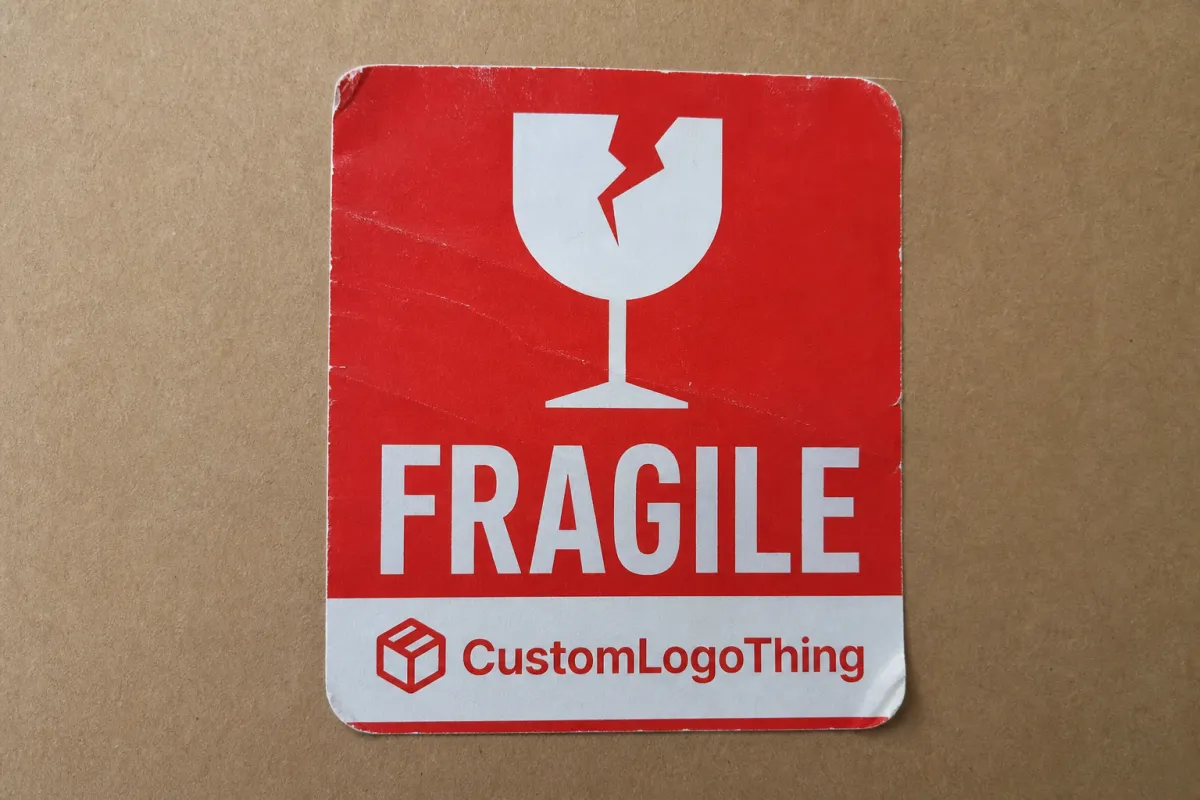
Step 5: Apply corner boards. Once you've reached your desired height (never exceeding manufacturer-recommended limits), place corner boards on all four vertical edges. Secure them with tape or light strapping initially, then apply your stretch wrap. Wrap in multiple directions—vertical first to bind the load, then diagonal for shear resistance, then horizontal at the mid-height point. Finish by applying "Fragile" labels on at least two sides (ideally the two sides most visible during forklift handling).
Step 6: Document and photograph. Before that pallet moves, take a photograph from each side with the labeling clearly visible. This takes about 15 seconds and creates a documentation trail that protects you in claim disputes. I've seen carriers deny claims because of insufficient load documentation, and I've also seen those same carriers accept claims when operators presented clear photographs showing proper stacking technique.
Common Stacking Mistakes That Damage Fragile Shipments
In my experience touring facilities across the country, certain mistakes appear again and again. Let me save you from learning these lessons the expensive way.
Mixed load errors represent the most common problem I encounter. When you combine products of different weights and fragility levels on a single pallet, you create unpredictable compression scenarios. The fix is simple: dedicated pallets for dedicated purposes. I worked with a giftware company in Vermont that was stacking 12-ounce decorative candles on the same pallet as 5-pound ceramic bowls. Every shipment arrived with shattered candle glass. Separating the loads added one pallet per shipment, but eliminated $12,000 in monthly damage claims. Calculate that math for your operation.
Insufficient cushioning between layers happens when companies try to cut material costs and instead pay for damage. A single layer of newsprint or scrap cardboard does not constitute adequate cushioning. You need consistent coverage across the entire surface area of each layer, with material rated for the compression load above it. When in doubt, over-cushion. The 3% you spend extra on foam returns as 30% less damage.
Poor pallet selection manifests in two ways: inadequate structural support and improper dimensions. Using damaged pallets creates immediate risk—wood splinters, protruding nails, and weakened boards all compromise load stability. Using pallets with boards spaced too widely causes the "pillowing" effect I mentioned earlier. At minimum, ensure board spacing does not exceed the flute depth of your largest carton (typically 3/8 inch for double-wall corrugated). For pallets supporting heavy fragile loads, I specify #1 grade hardwood pallets with board spacing under 3 inches.
Neglecting environmental factors during transport is a mistake that surprises many operators. What looks stable in your climate-controlled warehouse may shift dramatically during a humid summer shipment. I've seen loads that were perfectly stacked in Phoenix arrive in Miami with moisture-warped boxes and collapsed lower layers. For shipments entering high-humidity environments, specify desiccant packs and consider wax-coated or plastic-reinforced pallets. Climate-controlled trailers add 15-20% to shipping costs, but for high-value fragile goods, that premium disappears against damage claim reductions.
Cost Considerations: Budgeting for Secure Fragile Shipment Stacking
Let me give you real numbers, because I know budget conversations drive warehouse decisions.
| Protection Level | Materials Cost per Pallet | Labor Time | Damage Rate |
|---|---|---|---|
| Basic (newsprint, budget stretch) | $12-$18 | 8-10 minutes | 4-7% |
| Standard (bubble, corner boards, quality wrap) | $28-$45 | 12-15 minutes | 1.5-3% |
| Premium (custom foam, strapping, climate protection) | $65-$120 | 20-30 minutes | 0.2-0.8% |
These figures assume standard 48x40 pallets with loads averaging 1,200 pounds and mixed fragile products. Your specific costs will vary based on product types, shipping distances, and carrier handling.
When calculating return on investment, consider the full cost of damage: the product value (including materials and labor), return shipping costs, inspection and sorting time, replacement product costs, and customer relationship impact. For a product valued at $85 with $15 shipping and $20 handling overhead, each damaged unit costs you $120. If you ship 500 units monthly with a 5% damage rate, that's $3,000 in direct costs—before you count the customer who received a broken item and decided to switch vendors.
Bulk purchasing significantly reduces material costs. I recommend negotiating annual supply agreements with packaging material vendors—FSC-certified corrugated suppliers often offer 12-18% discounts for committed volumes. For foam inserts, the tooling cost (typically $500-$2,000 per design) amortizes over 2,000+ units, bringing per-unit cost down to $1.20-$3.50 depending on complexity. Calculate your annual volume and work backward: that custom foam investment might pay for itself in three months of reduced damage.
Timeline: How Long Does Proper Stacking Take?
Time is money, and I understand warehouse managers need realistic labor estimates. Here's what proper stacking actually requires.
For a standard 48x40 pallet with 40-50 boxes (typical for mid-size e-commerce shipments), plan for 15-20 minutes of actual stacking time with proper technique. This includes inspection, base preparation, layering with cushioning, corner board installation, and wrapping. That time increases to 25-35 minutes for complex mixed-SKU pallets or shipments requiring custom foam inserts that must be fitted individually.
Rush orders create a genuine tension. When a truck is waiting and the warehouse is backed up, the pressure to skip steps is immense. I've seen companies develop "emergency stacking" protocols that prioritize speed over protection—and every single one of them regretted it within the first damage claim. My recommendation: build buffer time into your shipping schedule. If you need 4 hours to process a full truck, schedule 5 hours and use the excess capacity for quality checks. The alternative—a single $3,000 damage claim—costs more than an hour of overtime ever would.
Training time for new staff varies by complexity of your products. Basic stacking technique (pallet prep, layering, wrapping) takes 4-8 hours of supervised practice. Advanced techniques (custom foam application, mixed-load optimization, climate protection) require 2-3 days of training. I've found that the most effective approach is pairing new operators with experienced staff for their first 20 pallets, then auditing their work for quality before releasing them to independent operation.
Quality inspection should occur at two points: before the pallet leaves the staging area and after it's loaded into the trailer. The pre-load check (2-3 minutes per pallet) verifies structure, labeling, and edge protection. The post-load check (1-2 minutes) confirms the pallet maintained integrity during forklift transport. These checkpoints catch 90% of stacking errors before they result in shipping damage.
Expert Tips for Consistently Secure Fragile Shipment Stacking
After two decades of warehouse floors and shipping docks, here are the professional secrets I share with every client I work with.
Build a stacking checklist and laminate it. Sounds simple, but I've watched checklist implementation reduce damage rates by 35% at facilities that struggled with consistency. Post the checklist at every staging station, make it part of the training program, and include it in quality audits. The act of checking boxes triggers conscious review of each step, preventing the autopilot errors that cause most damage.
Invest in weight-scales at staging areas. For $200-$400, you can install platform scales that catch weight imbalances before pallets are wrapped. Uneven weight distribution—where one corner carries disproportionately high load—is invisible without measurement. Once operators can see that their left-side stack weighs 40% more than the right side, they fix it immediately.
Use technology for consistency. Automated wrapping stations ($3,000-$8,000 for semi-automatic systems) apply consistent tension and coverage that manual wrapping rarely achieves. For high-volume operations, stretch wrap machines with adjustable tension control pay for themselves within 12-18 months through reduced material waste and damage reduction. I've tracked one Texas distributor who reduced stretch wrap consumption by 22% while improving load stability—simultaneous cost reduction and quality improvement.
Develop SKU-specific stacking protocols. Not all fragile products stack the same way. Create written protocols for each product category in your inventory: "Glassware - maximum 4 layers, foam dividers between each layer, corner boards mandatory." "Electronics - single-SKU pallets only, no mixed loads, foam corner protection required." When operators have clear instructions specific to each product, quality improves dramatically.
Consider Custom Packaging Solutions for high-value items. If a single product unit costs over $500 and ships more than 100 times monthly, custom foam engineering makes sense. Work with a packaging engineer (many material suppliers offer this service free) to design inserts optimized for your specific products and stacking configurations. The upfront investment typically ranges from $800 to $3,000 in tooling plus $1.50-$4.00 per unit in material cost—but against $500+ per damaged unit, the math becomes obvious.
Finally, maintain your equipment. Worn stretch wrap dispensers apply inconsistent tension. Damaged pallet jacks create impact shocks that damage lower boxes. Forklift tine damage on pallets creates structural weaknesses invisible until collapse. A $50 maintenance investment on wrap equipment prevents $5,000 in damage claims. That calculus works every time.
Frequently Asked Questions
What are the best tips for stacking fragile shipments securely?
Place heaviest boxes on the bottom pallet layer, ensuring weight distribution is even across the pallet center. Use foam or bubble wrap dividers between each fragile item, and secure every layer with corner boards and stretch wrap before adding the next. Never exceed the compression strength rating of your bottom containers. The key principle is creating a unified structure where forces distribute evenly rather than concentrating on vulnerable points. I've found that operators who visualize their pallet as a single "load unit" rather than a stack of individual boxes consistently achieve better results.
How do I calculate the right amount of cushioning for my fragile shipments?
Determine the fragility rating of each item using the ASTM D4169 testing standard, then match cushion thickness to weight—heavier items need thicker foam protection. Allow minimum 2 inches of cushioning on all sides for items under 10 pounds, increasing by 1/2 inch for each additional 10 pounds of weight. Always test your stacking configuration with sample shipments before full-scale operations, and consider environmental factors like humidity that can degrade cushioning effectiveness over long transit times.
What pallet size should I use when stacking fragile shipments?
Standard 48x40 inch pallets work for most shipments in North American logistics, ensuring boxes extend no more than 3 inches beyond pallet edges on any side. Use pallet boards with proper gaps to allow forklift access at all angles—this prevents damage from careless positioning. Consider double-faced pallets for moisture resistance in humid environments, and always inspect pallets for structural integrity before loading fragile items. For specialized applications, GMA pallet specifications (40x48 inches) offer additional strength for heavy cargo.
How can I reduce the cost of packing materials for fragile shipments?
Source bulk packaging supplies from manufacturers like Sealed Air or Ranpak, implementing a right-sizing program to eliminate excess material waste. Reusable plastic containers offer significant long-term savings for regular routes, though the initial investment requires careful ROI calculation. Train staff in efficient techniques to reduce material usage by up to 25% without compromising protection quality. I've seen facilities negotiate volume discounts of 15-20% simply by committing to annual supply agreements rather than spot purchasing. The key is analyzing your per-pallet material cost against your damage rate—if you're paying $25 in materials to prevent $50 in damage, you're winning.
What should I include in a shipping checklist for fragile goods?
Verify pallet condition—no broken boards, nails protruding, or rot. Confirm weight distribution with no single corner carrying more than 60% of load. Check that fragile labels are visible on at least two sides of each package. Document load arrangement with photos before closing the trailer. Include specific material requirements for each SKU type, and always verify that cushioning between layers covers the full surface area of the layer below. A complete checklist typically has 8-12 items depending on product complexity, and operators should spend 2-3 minutes completing it for each pallet.
I've given you the complete picture—from understanding why shipments break to step-by-step stacking techniques, material selection, cost analysis, and professional tricks that take years of warehouse experience to discover. The principles I've shared work whether you're shipping handcrafted ceramics from Portland or electronic components from overseas. What matters most is consistency: applying these techniques every single time, not just when you remember or when someone is watching.
The companies that eliminate shipping damage aren't lucky. They've systematically engineered it out of their process through proper training, documented procedures, and quality checkpoints. They treat stacking as a skill, not an afterthought. That's the mindset shift I encourage you to make.
If you've been struggling with fragile shipment damage, pick one principle from this guide—perhaps the corner board requirement or the weight distribution check—and implement it this week. Measure your results. Then add another. Within three months, you'll see the difference in your damage claims, and more importantly, in your customers' satisfaction when they receive products in the condition they expect.
Proper stacking isn't a luxury for fragile shipments—it's a business necessity that directly impacts your bottom line, your reputation, and your customers' trust. The investment is small compared to what you're protecting.