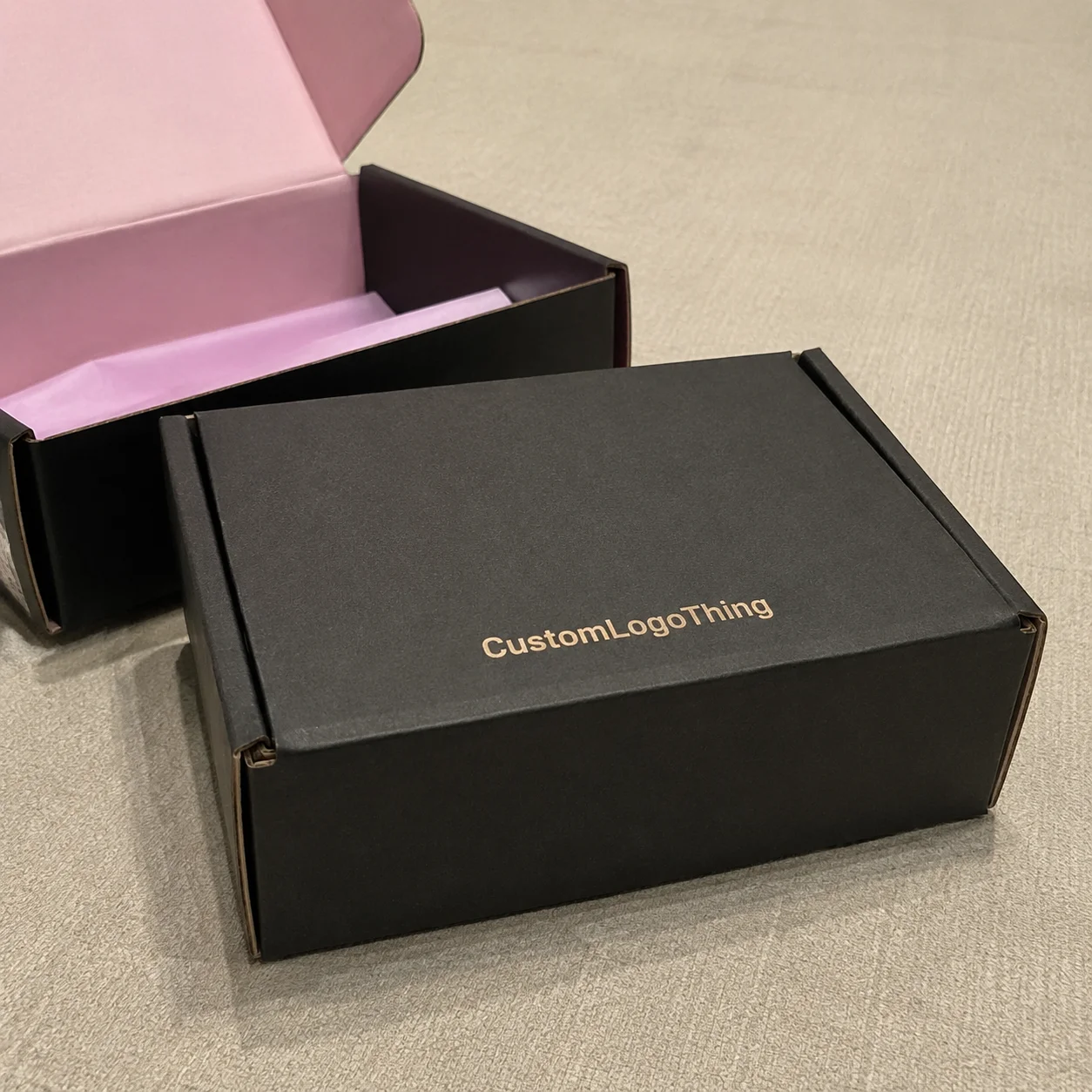
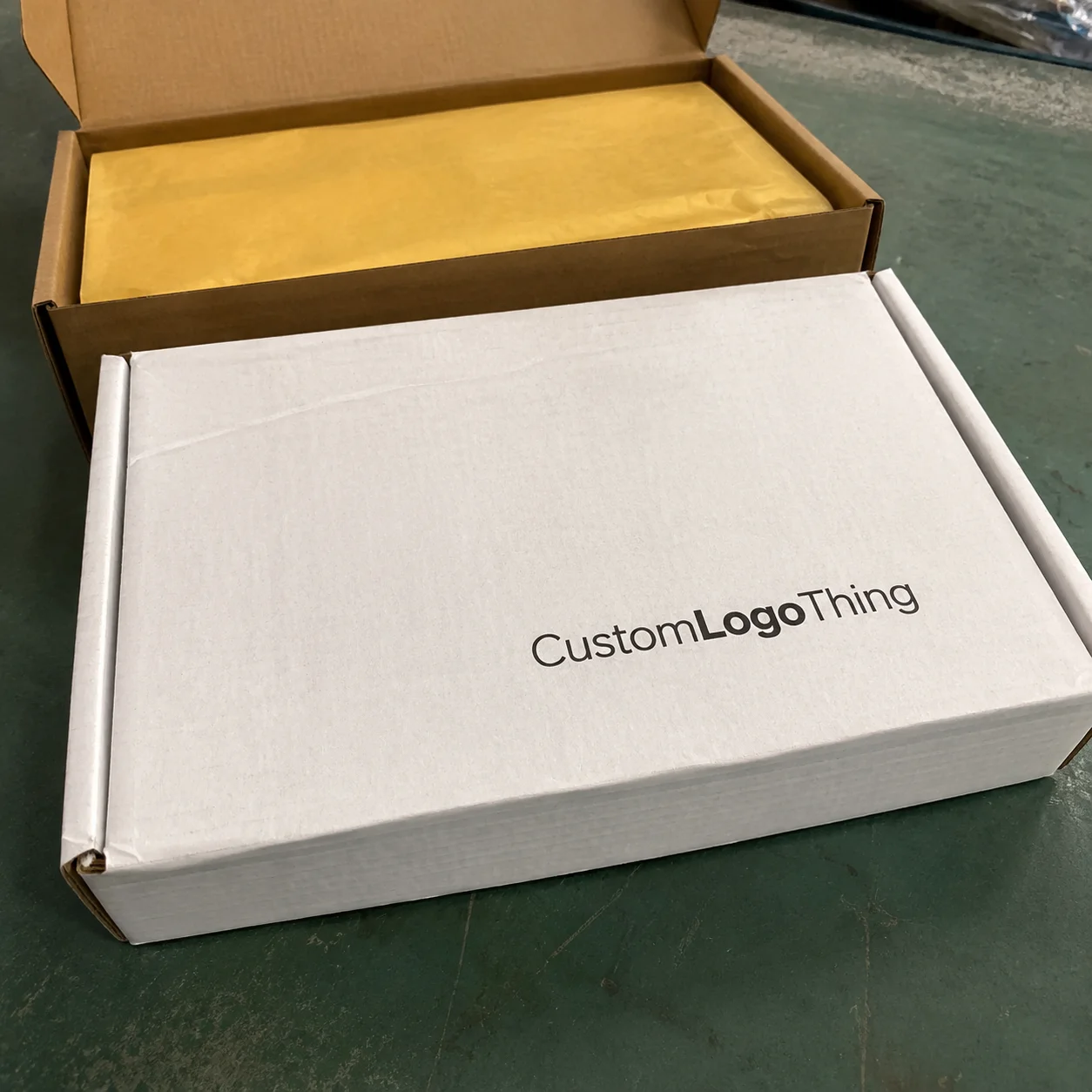
Buyer Fit Snapshot
| Best fit | mailers jewelry shipping protection for packaging buyers comparing material specs, print proof, MOQ, unit cost, freight, and repeat-order risk where brand print, material, artwork control, and repeat-order consistency matter. |
|---|---|
| Quote inputs | Share finished size, material target, print colors, finish, packing count, annual reorder estimate, and delivery region. |
| Proofing check | Approve dieline scale, logo placement, barcode or warning zones, color tolerance, and any recyclable or compostable wording before bulk production. |
| Main risk | Vague material claims, crowded artwork, or missing packing details can create delays even when the unit price looks attractive. |
Fast answer: Mailers Jewelry Shipping Protection: Film, Closure, Print, and Fulfillment should be specified like a repeatable production item. The safest quote includes material, print method, finish, artwork proof, carton packing, and reorder notes in one written spec.
What to confirm before approving the packaging proof
Check the product dimensions against the actual filled item, not only the sales mockup. Ask for tolerance on folds, seals, hang holes, label areas, and retail display edges. If the package carries a logo, QR code, warning copy, or legal claim, reserve that space before decorative graphics fill the panel.
How to compare quotes without losing quality
Compare board or film grade, print process, finish, sampling route, tooling charges, carton quantity, and freight assumptions side by side. A lower quote is only useful if the supplier can repeat the same color, closure quality, and packing count on the next order.
The first time I saw a jewelry claim traced back to shipping, the box inside was actually fine; it was the outer shipper that split at the seam after a conveyor drop in a Dongguan sorting center. Annoying? Absolutely. Avoidable? Also yes. That is exactly why I pay close attention to the top mailers for jewelry shipping protection. In my experience, a lot of sellers obsess over the velvet pouch, the ring box, or the thank-you card, then forget that the mailer is the first line of package protection. It usually gets punished hardest in ecommerce shipping and order fulfillment, and it does not care how pretty your branding looks.
Honestly, many jewelry brands underestimate how much transit packaging matters for small, light products. A necklace may weigh only 2 or 3 ounces, but once it enters a hub with automated sorters, belt transfers, and a rough final-mile route, the outer shipping materials need to resist puncture, moisture, crushing, and tampering all at once. That is where the top mailers for jewelry shipping protection earn their keep, especially when the product value is $48 for fashion pieces or $380 for sterling silver sets, because one loss wipes out profit on a whole batch. I have seen a “cheap” mailer turn into a very expensive mistake faster than a buyer can say, “Why is this dented?”
Quick Answer: Top Mailers for Jewelry Shipping Protection
If you want the short version from someone who has stood on more packing lines than I can count, the top mailers for jewelry shipping protection are usually padded poly mailers, dual-seal tamper-evident mailers, and reinforced bubble mailers. Which one is best depends on whether you are shipping low-value fashion jewelry, a boxed sterling silver set, or a luxury piece that needs both presentation and strength. I’ve seen all three categories perform well when chosen for the right job, and I’ve also seen all three fail when people try to save two cents on the wrong construction, which is a special kind of decision-making that usually starts with “it should be fine.”
Here is the practical distinction I use on factory floors in Shenzhen, Ningbo, and Suzhou: puncture resistance protects against sharp corners and cardboard edges, crush resistance protects against stacked cartons and hub pressure, moisture resistance protects against damp porches and trailer humidity, and tamper resistance protects against fraud and return abuse. A plain thin poly mailer might look neat, but it does very little beyond holding a label. The top mailers for jewelry shipping protection are the ones that match the hazard profile of the shipment, not just the appearance of the product.
For low-value fashion jewelry, a branded padded poly mailer with a good adhesive strip is often enough. For boutique boxed jewelry, I usually want a padded or bubble construction with a snug inner box or insert. For luxury or subscription shipments, I like a tamper-evident security mailer paired with a rigid inner box, because the customer gets both confidence and a cleaner unboxing. That combination is common in premium shipping materials programs where presentation has to work as hard as protection, especially for orders shipping from Los Angeles or Newark fulfillment centers.
“If the outer mailer fails, the nicest jewelry box in the world can still arrive rattled, scuffed, or exposed. I learned that after watching a 300-unit test run come back with eight damaged corners from one weak seal.”
One thing I always tell clients: no mailer replaces proper inner packaging. The top mailers for jewelry shipping protection reduce risk dramatically, but a loose bracelet rolling inside an oversized bag will still beat itself up in transit. That is why the best setups are a matched system, not a single material acting like it can do everything. Packaging loves humility. Buyers do too.
Top Mailers for Jewelry Shipping Protection Compared
When I compare the top mailers for jewelry shipping protection, I look at the same five factors every time: tear strength, seal quality, opacity, printability, and how well the mailer survives conveyor abuse. A mailer can look beautiful in a showroom sample, but if the adhesive lifts under warehouse dust or the side weld splits in a drop test, it is not a serious shipping option. I learned that lesson years ago in a Shenzhen facility where a glossy film looked premium until a simple 36-inch corner drop test turned half the sample lot into a mess of split seams. Not exactly confidence-inspiring.
The easiest way to sort the options is to compare them by use case, because jewelry lines do not all need the same level of structure. Some brands ship tiny stud earrings in a soft pouch, while others send rigid ring boxes, watch cases, or wholesale kits with multiple SKUs. The top mailers for jewelry shipping protection change with the product, the customer expectation, and the carrier service level. A brand shipping 200 orders a week from Austin does not need the same build as a studio in Chicago shipping 8,000 orders after a launch.
| Mailer Type | Protection Level | Best For | Typical Unit Cost | Brand Presentation |
|---|---|---|---|---|
| Standard poly mailer | Low | Light fashion jewelry, pouches, flat items | $0.03-$0.10/unit at volume | Good with matte print, weak on structure |
| Padded poly mailer | Medium | Small boxed jewelry, bracelets, earrings, subscription kits | $0.10-$0.28/unit at volume | Strong balance of protection and presentation |
| Bubble mailer | Medium to high | Delicate boxed items, watches, small luxury pieces | $0.12-$0.35/unit at volume | Functional, less premium unless custom printed |
| Tamper-evident security mailer | Medium to high | High-value jewelry, fraud-sensitive shipments, returns-prone channels | $0.16-$0.40/unit at volume | Very strong trust signal, especially with custom branding |
| Rigid mailer with insert support | High | Luxury pieces, premium unboxing, fragile presentation packs | $0.25-$0.60/unit at volume | Best presentation, but higher dimensional weight impact |
If presentation is your priority, matte Custom Poly Mailers are the best-looking solution when paired with an inner box or velvet pouch. I have watched boutique brands in California and New Jersey win repeat orders simply because the outer mailer felt intentional, not like a generic shipping bag. For pure protection, the padded and bubble categories are stronger, and that is why they show up so often in the top mailers for jewelry shipping protection for boxed items.
Another factor people forget is dimensional weight. A rigid mailer or thick bubble pack may protect better, but if your carrier charges on dimensional weight and your parcel tips into the next tier, the shipping math changes fast. I’ve sat in pricing meetings where a brand wanted a sturdier mailer, then discovered the added size pushed every shipment into a higher bracket with UPS or DHL. That is why the right choice is rarely “the thickest one.” It is the one that balances package protection, carrier economics, and brand value.
Detailed Reviews of the Best Mailers for Jewelry Shipping Protection
Let me be blunt: marketing sheets are often generous, and real transit is not. When I review the top mailers for jewelry shipping protection, I want to know how they behave after a drop onto concrete, after rubbing against a carton edge, and after sitting in a hot truck for a few hours. That is where the weak closures show up, where the film creases, and where poorly chosen materials start telegraphing their problems. Packaging has a funny way of telling the truth the hard way.
Padded Poly Mailers
Padded poly mailers are probably the best all-around answer for smaller jewelry boxes because they combine low weight with respectable impact absorption. Most of the better versions use a co-extruded outer film with an internal bubble or fiber pad, and the sweet spot for many brands sits around 2.5 to 3.5 mil outer film with a padded liner. I’ve tested padded Poly Mailers That held up beautifully on a 24-inch drop test with a ring box inside, while plain poly tore at the corner before the label even survived the chute. That was a fun day, if by fun you mean “I need another coffee.”
For jewelry, these mailers are ideal for earrings on cards, slim bracelet boxes, charm sets, and subscription shipments that need a little cushioning without feeling bulky. They also pack quickly, which matters in order fulfillment when a team is sealing 600 to 1,200 units per shift in a warehouse outside Atlanta or Rotterdam. The best versions close with a high-tack pressure-sensitive adhesive that bonds cleanly, and that is one reason they sit near the top of my list of the top mailers for jewelry shipping protection.
Dual-Seal Tamper-Evident Mailers
If fraud prevention matters, tamper-evident security mailers deserve serious attention. These usually include a primary closure strip and a secondary fail-safe closure that visibly damages if opened. I’ve watched returns teams in jewelry operations reduce disputes by choosing a mailer where any opening attempt leaves an obvious witness mark. That does not stop every problem, of course, but it changes the conversation with the customer and with the carrier. Suddenly everyone is a little more honest. Amazing how that works.
The trade-off is presentation. Some security mailers look more utilitarian than elegant, so I usually recommend custom printing or pairing them with a better inner box. For high-value pieces, though, the security benefit outweighs the slightly more technical look. In the real world, the top mailers for jewelry shipping protection are often the ones that make bad behavior visible, especially on routes with frequent porch theft or high return fraud.
Reinforced Bubble Mailers
Reinforced bubble mailers are the old reliable of jewelry shipping. A good one has a tough outer shell, a snug bubble matrix, and a clean seam that does not split when a parcel stack shifts. I like these for watches, heavier charm sets, and rigid presentation boxes with corners that would punish a softer mailer. They also perform well in parcel sorting systems because the air-cell layer absorbs a surprising amount of vibration during 18 to 36 minutes of hub handling.
Here is where I see most people go wrong: they buy the cheapest bubble mailer available and assume all bubbles are equal. They are not. The adhesive, the film gauge, and the seam construction make all the difference, and weak bubble mailers can fail right at the fold line after only a few impacts. The stronger versions belong in any serious discussion of the top mailers for jewelry shipping protection, especially for shipments that travel cross-country.
Standard Poly Mailers
Plain poly mailers are the least protective option here, but I would not dismiss them entirely. For very low-risk fashion jewelry, soft pouches, and flat accessories, they can work if the internal pack is already strong and the outer trip is short. I have seen brands use matte black Custom Poly Mailers with clean branding and no issues on regional shipments, especially when the product was under 4 ounces and not boxed.
Still, I do not recommend plain poly as the default for anything premium. They do very little against crush, and a sharp edge from an inner carton can poke through if the load shifts. They can be part of the top mailers for jewelry shipping protection only when the product itself and the inner packaging are already doing most of the work, usually in controlled routes with low handling counts.
Rigid Mailers with Insert Support
Rigid mailers are the premium option and the most confidence-inspiring to open, but they come with a cost. The structure is excellent for presentation and for keeping a jewelry box flat, especially when a piece includes a certificate, a care card, and a small gift insert. I’ve seen luxury brands use rigid mailers to great effect because the customer experience starts the moment the parcel is picked up, not when the box inside opens. A 350gsm C1S artboard face with a 1.5 mm greyboard core can feel very different from a flimsy shell.
That said, rigidity creates a dimensional weight problem if the format gets too large. You should only choose this option if the value of the shipment justifies it, or if the outer presentation is part of the product itself. For those cases, rigid formats can absolutely rank among the top mailers for jewelry shipping protection, particularly for high-ticket items shipped one at a time from premium studios in Milan, Los Angeles, or Brooklyn.
Common failure points across all categories include weak adhesives, oversizing, and sharp inner edges. I once saw a wholesale lot of 2,000 bracelet shipments come back with scuffed corners because the inner box floated inside a mailer with 12 millimeters of extra space on each side. That small tolerance mistake cost more than the upgrade would have. I still get twitchy thinking about it.
Price Comparison: What Jewelry Mailers Actually Cost
Pricing for the top mailers for jewelry shipping protection depends on material class, print coverage, and order volume, and the spread can be wider than most buyers expect. A plain stock poly mailer can be extremely cheap, while a custom printed tamper-evident mailer with matte finish and a tear strip can climb quickly once you add setup, freight, and a tighter spec. On the shop floor, the first question is usually “what does it cost?” but the smarter question is “what does a failure cost?” In one quote I reviewed from a supplier in Foshan, the difference between a stock bag and a custom security mailer was just $0.08 per unit at 5,000 pieces, but the damage rate dropped enough to pay for itself in one quarter.
Here is a practical way I explain it to clients. If a mailer costs $0.12 instead of $0.05, that extra $0.07 may sound painful until one damaged parcel, one reshipment, and one customer service call eat $9 to $18 of labor and shipping. That is why the top mailers for jewelry shipping protection are often the ones that reduce the total landed cost, not the ones with the lowest unit price. Cheap packaging can be expensive in very creative ways, especially once you add a replacement ring box, a rush label, and a refund request.
| Option | Sample / Low Volume | Mid Volume Custom | Bulk Production | Notes |
|---|---|---|---|---|
| Standard poly mailer | $0.12-$0.18/unit | $0.06-$0.10/unit | $0.03-$0.05/unit | Lowest structural protection, strongest on cost |
| Padded poly mailer | $0.22-$0.35/unit | $0.12-$0.20/unit | $0.08-$0.14/unit | Best balance for many jewelry lines |
| Bubble mailer | $0.24-$0.38/unit | $0.14-$0.24/unit | $0.10-$0.18/unit | Good shock absorption, heavier than plain film |
| Tamper-evident security mailer | $0.30-$0.50/unit | $0.16-$0.30/unit | $0.11-$0.22/unit | Higher trust, useful for high-risk channels |
| Rigid mailer with insert support | $0.45-$0.80/unit | $0.25-$0.45/unit | $0.18-$0.35/unit | Premium feel, higher freight and dimensional weight impact |
There are also hidden costs that get ignored in early quotes. Adhesive upgrades, extra print stations, tear strips, opaque film, and custom sizing all affect the final number. If you pair the mailer with an inner box from our Custom Shipping Boxes line, or a branded outer solution from Custom Poly Mailers, you need to account for the full system, not just one component. That is how experienced buyers evaluate the top mailers for jewelry shipping protection—as part of the complete transit packaging stack, not as a single line item.
For brands that want a broader packaging strategy, our Custom Packaging Products can help match mailers, boxes, inserts, and branded tissue so the whole shipment feels coordinated. I’ve seen that consistency improve retention in a way that a small unit-price discount never could. A customer remembers care. They rarely remember a three-cent savings, especially if the order arrived from a Chicago fulfillment center on a rainy Tuesday.
How to Choose the Right Mailer for Your Jewelry Line
The easiest way to choose among the top mailers for jewelry shipping protection is to start with the jewelry itself, not the packaging catalog. Ask four questions: how fragile is the item, what is the box size, what is the shipping distance, and how often do you see claims or returns? A $24 fashion necklace sold in a flat pouch does not need the same packaging as a $600 pendant in a rigid branded case, and the mailer should reflect that reality. A brand shipping from Dallas to Texas-only customers can often use a lighter spec than one shipping coast to coast five days a week.
If the jewelry is lightweight and non-fragile, a strong poly mailer may be enough, especially for short-zone shipments with low handling risk. If the product includes a rigid box, a padded or bubble mailer is usually the smarter move because it absorbs the small shocks that happen during sorting and last-mile delivery. If fraud or tampering is a concern, I would shift to a tamper-evident option quickly. That is where the top mailers for jewelry shipping protection become an operational tool, not just a branding decision.
For fulfillment teams, packing speed matters more than people think. A mailer that takes 8 seconds longer to seal sounds trivial until a team ships 3,000 orders per week. I’ve stood on lines where an extra fold, extra tape pass, or awkward insert step slowed the entire station and created a bottleneck. The right mailer should be easy to open, easy to load, and easy to verify, especially if your staff uses barcodes, scan-to-ship software, and automated label application. In one plant near Guadalajara, we shaved 14 minutes off every 1,000 units just by switching to a wider opening and a better release liner.
Lead time is another practical issue. Stock mailers can often move quickly, but custom runs usually need artwork approval, proofing, print scheduling, and freight planning. A typical custom program might run 12 to 15 business days after proof approval, then add 4 to 7 business days for domestic freight or 18 to 28 days for ocean freight from South China. That timeline is normal, not a delay, and it is why I tell brands to sample early if they are building a seasonal collection or a launch tied to a campaign.
Sustainability matters too, but only if the packaging still protects the product. Recyclable films, post-consumer content, and FSC-certified paper components can help align with brand values, yet none of that matters if the parcel arrives crushed. I always encourage clients to look at real material performance first, then choose the eco story that is honest and supportable. For additional standards and guidance, resources from ISTA and EPA Sustainable Materials Management can be useful when setting internal packaging rules. I also like to ask suppliers for exact specs, like 2.8 mil LDPE film, 170gsm kraft padding, or a 35mm adhesive strip, because vague “eco-friendly” claims are basically office wallpaper.
One more practical note: if your outer mailer is too large, you may pay twice, once in higher material usage and again in dimensional weight. If it is too tight, corners can press through or the seal can fail. The sweet spot is usually just enough room for the inner pack plus a small tolerance, often 5 to 10 mm on each side for flat items, a bit more for padded packs. That small detail is one of the reasons the top mailers for jewelry shipping protection are chosen by fit, not by guesswork.
Our Recommendation: Best Mailers by Jewelry Use Case
If I were setting up a new jewelry brand today, here is how I would rank the top mailers for jewelry shipping protection by use case. For low-cost fashion jewelry, I would choose a custom padded poly mailer because it gives enough cushioning without making the shipment feel overbuilt. For premium boxed pieces, I would step up to a reinforced bubble mailer or a tamper-evident mailer with an inner rigid box. For high-value or fraud-sensitive shipments, I would not hesitate to use a security mailer paired with firm internal support.
For most sellers, my honest recommendation is a strong custom padded poly mailer or security mailer combined with an inner box. That setup usually delivers the best mix of protection, brand presentation, and shipping efficiency. It also reduces the chance that a customer sees a damaged outer parcel and assumes the jewelry inside must be compromised, which is a real trust issue in ecommerce shipping. The top mailers for jewelry shipping protection should make the customer feel the brand is careful before they even open the package, whether the parcel comes from a boutique in Miami or a warehouse in Phoenix.
I still believe brand owners should test before they scale. Ask for sample packs, run a few transit trials, and drop test the finished shipment with the actual product weight inside. I remember a client in Miami who skipped this step, then discovered their beautiful mailer failed because the adhesive line lifted in humid storage at 80% relative humidity. One simple sample test would have caught it before they printed 25,000 units. Instead, we got the “how bad can it be?” email. It was bad.
My final ranking, plain and simple: best overall balance is padded poly, best anti-tamper option is dual-seal security mailers, best impact resistance is reinforced bubble mailers, and best premium presentation is rigid mailers with careful insert support. If your jewelry line sells on first impressions, choose the mailer with enough structure to protect the piece and enough finish to support the brand story. That is the practical truth behind the top mailers for jewelry shipping protection.
FAQ: Top Mailers for Jewelry Shipping Protection
What are the top mailers for jewelry shipping protection for small boxes?
Padded poly mailers and reinforced bubble mailers are usually the safest choice for small jewelry boxes because they absorb impact better than plain film. If the item is high-value, delicate, or easily scuffed, I would use a rigid inner box inside the mailer so the product has structure before it hits the carrier network.
Are poly mailers enough for jewelry shipping protection?
Plain poly mailers can work for lightweight, low-risk jewelry shipments, but they do very little for crush protection. For anything boxed, premium, or fragile, padded or tamper-evident versions are usually the better commercial choice among the top mailers for jewelry shipping protection, especially for items shipping more than 300 miles.
Which mailers are best for preventing jewelry tampering in transit?
Tamper-evident security mailers with strong closure strips and visible opening evidence are the best option for fraud-sensitive shipments. They should still be paired with secure inner packaging so the product cannot shift, scuff, or puncture through the outer layer during transit.
How do I choose between cost and protection for jewelry mailers?
Start by comparing the mailer cost to the replacement cost of the jewelry, plus the likely return, reshipment, and customer service expense. If one damaged shipment hurts margin, spend more on structure and sealing performance; that is usually the smarter move with the top mailers for jewelry shipping protection. A $0.09 upgrade can save a $14 reshipment and a bad review.
How long does it take to produce custom jewelry mailers?
Stock mailers can ship quickly, while Custom Printed Mailers usually require proofing, production scheduling, and freight time after approval. The safest planning approach is to request samples early, confirm artwork fast, and build in time for a pre-production test run before ordering at scale. For many factories in Guangdong or Zhejiang, the realistic window is 12 to 15 business days from proof approval, plus transit.
Next-step checklist: request three samples, test them with your actual jewelry weight, verify seal strength, compare handling with your shipping carrier, and confirm whether the outer mailer supports your brand look without pushing dimensional weight too high. If you do that, you will narrow down the top mailers for jewelry shipping protection much faster and avoid expensive surprises later.
After years of walking plants, talking through quote sheets, and watching too many “cheap” solutions turn expensive once claims started rolling in, I’m convinced the right mailer is one of the quiet profit protectors in a jewelry business. If you choose carefully, the top mailers for jewelry shipping protection will reduce damage, lower fraud risk, improve presentation, and keep your order fulfillment running with fewer interruptions. That is not hype; it is what happens when packaging matches the product.
For Custom Logo Things, that is the standard I would hold every shipment to: clean branding, honest material performance, and shipping materials that do their job without drama. Start with samples, put them through real transit tests, and choose the mailer that protects the jewelry without overpaying for weight, size, or false comfort. That is the move.