Buyer Fit Snapshot
| Best fit | Waterproof Document Pouches Wholesale for Shipping Teams projects where brand print, material claims, artwork control, MOQ, and repeat-order consistency need to be specified before quoting. |
|---|---|
| Quote inputs | Share finished size, material target, print colors, finish, packing count, annual reorder estimate, ship-to region, and any compliance wording. |
| Proofing check | Approve dieline scale, logo placement, barcode or warning zones, color tolerance, closure strength, and carton packing before bulk production. |
| Main risk | Vague material claims, crowded artwork, missing packing details, or unclear freight terms can make a low unit price expensive after revisions. |
Fast answer: Waterproof Document Pouches Wholesale for Shipping Teams should be specified like a repeatable production item. The safest quote records material, print method, finish, artwork proof, packing count, and reorder notes in one written spec.
Production checks before approval
Compare the actual filled-product size with the drawing, then confirm tolerance on folds, seals, hang holes, label areas, and retail display edges. Reserve space for logos, QR codes, warning copy, and material claims before decorative graphics fill the panel.
Quote comparison points
Review material grade, print process, finish, sampling route, tooling charges, carton quantity, and freight assumptions side by side. A quote is only useful when the supplier can repeat the same color, closure quality, and packing count on the next order.
A soggy packing slip can stop a pallet faster than a missing carton count. I have seen a receiving lane stall over a document that looked fine in the office and went limp the moment it met rain, condensation, or a cold trailer door. That is the quiet value of waterproof Document Pouches Wholesale: one low-cost pouch can keep paperwork readable, spare a reprint, and hold the line at receiving before a small paper problem turns into a labor problem.
For a packaging buyer, the useful question is not whether a pouch is cheap. The useful question is whether waterproof document pouches wholesale removes enough friction to justify standardizing it across routes, warehouses, and carriers. That answer usually tilts toward yes when freight sees rain, condensation, cold storage, or long waits in outdoor staging areas. The savings are not flashy, but they are real, and they show up in fewer exceptions.
Shipping teams work on deadlines, but paperwork still has a physical job to do. It has to stay visible, scan cleanly, and remain attached to the shipment. A dry invoice feels reassuring. A legible one keeps freight moving. That difference sounds small until you are standing on a dock with a line of pallets and a scanner that will not read a blurred barcode.
Why waterproof document pouches wholesale protects shipments better than reprinting paperwork
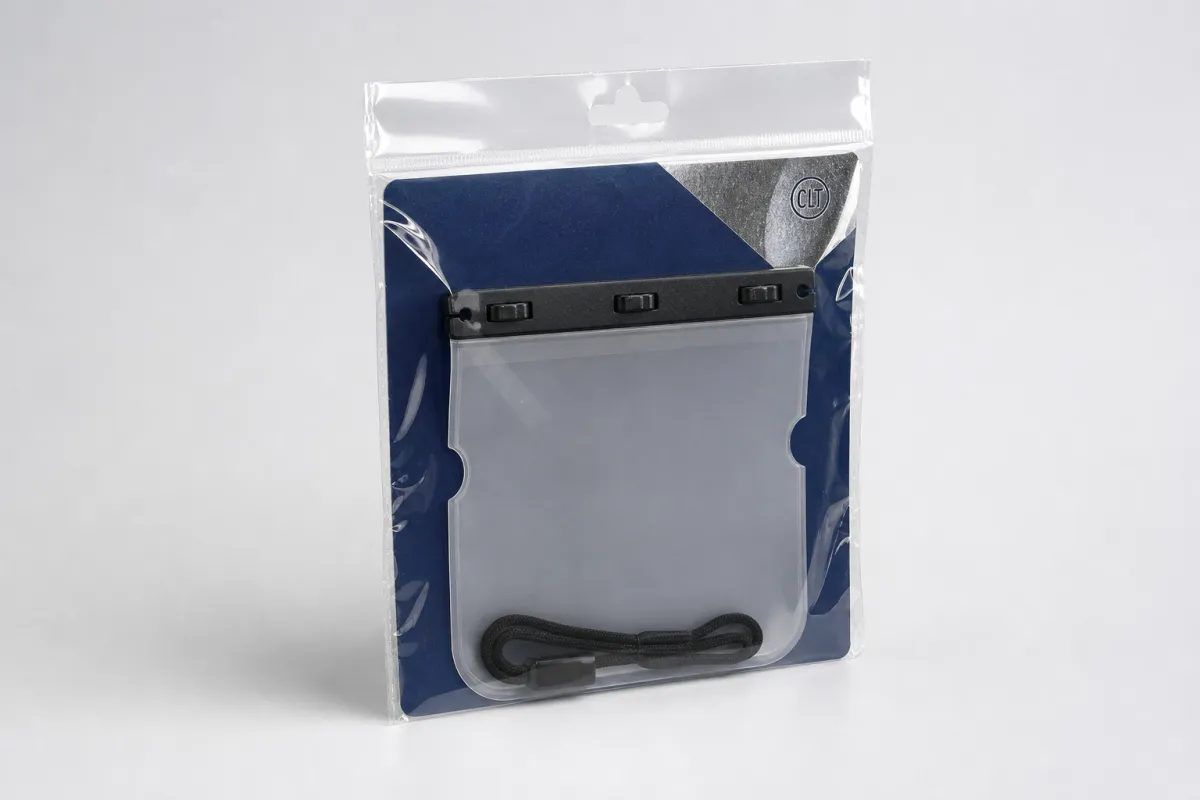
Picture a dock at 7:15 a.m. A pallet sits in the yard for twenty minutes because the packing slip softened in rain and the barcode no longer scans cleanly. Someone prints a replacement, someone else waits, and the receiving line starts to back up. That is the everyday reason waterproof document pouches wholesale exists: it protects the single sheet of paper that often controls the next move in the supply chain.
When paperwork fails, the cost never stops at the paper itself. It shows up as avoidable labor, longer trailer dwell time, missed scans, and customer service follow-ups that should never have been needed. One damaged document can take ten to fifteen minutes to fix if the team has to find the order, reprint the packet, and reattach the paperwork. Multiply that by a few exceptions each day and the waste becomes impossible to ignore. If a site ships in volume, even a handful of those events per shift can turn into a steady drag on productivity.
Waterproof document pouches wholesale also helps teams keep the same insertion process everywhere. That sounds small until you watch a new associate on a busy floor. Standard placement cuts training time, lowers the chance of human error, and makes it easier for the team to attach paperwork in the right location the first time. Strong operations usually come from repeatable small choices, not clever rescue work. A consistent pouch location also makes it easier for supervisors to spot exceptions without slowing the whole floor down.
For 3PLs, exporters, distributors, and e-commerce shippers, the upside goes beyond weather protection. Waterproof document pouches wholesale creates a consistent workflow for packing lists, invoices, customs documents, routing slips, and return instructions. A shipment that passes through a cross-dock, a cold room, or an outdoor staging lane benefits from a document pouch that behaves like part of the control system instead of a loose accessory. I have watched teams lose more time hunting for paperwork than handling the freight itself, which is why this category deserves more respect than it usually gets.
Wholesale buying makes sense for the same reason. You are not just purchasing sleeves for paper. You are buying a standard operating method. Once a team decides where the pouch goes, how the document is folded, and which surfaces it must stick to, the process becomes easier to audit and easier to repeat. Unit price matters. Operational predictability matters more. And once the process is standard, the whole thing gets a lot less fussy, which is kinda the point.
The lowest quote is not always the cheapest pouch. The best value is the one that survives rain, condensation, and a crowded receiving line without forcing a reprint.
If your team has ever lost fifteen minutes because a packing slip curled, blurred, or tore, waterproof document pouches wholesale is already earning its keep by reducing exceptions. That is a far more practical measure than comparing sticker price alone. It also makes audits easier, because you are not trying to explain why the same shipment needed two sets of paperwork.
For buyers who want to connect paperwork protection to broader shipping discipline, the ISTA transit test standards are a useful reference point. They are not a pouch spec sheet, but they do push buyers to judge packaging against real handling conditions instead of assumptions. That kind of baseline is helpful, especially if your lanes move through weather, vibration, and repeated touchpoints.
Waterproof document pouches wholesale: product details that matter on the dock
Not all pouches behave the same once they hit a real shipping floor. The structure is simple, yet the details decide whether a pouch works in practice. Waterproof document pouches wholesale usually starts with a clear film so the paperwork stays readable without opening the pouch, a pressure-sensitive adhesive that holds to cartons or wrap, and sealed edges that help keep out rain, dust, and dock grime.
Visibility comes first. If a driver, customs officer, or warehouse associate has to open the pouch to inspect the contents, the workflow slows down and the chance of contamination rises. Clear film and strong print clarity matter for that reason. A document pouch should not hide the document it is protecting. It should make the document faster to use. In a lot of plants and warehouses, that means faster scans, faster checks, and fewer awkward pauses while someone tries to peer through glare.
Different departments use the same product in different ways. Outbound shipping teams often need a fast place for packing slips and invoices. Import and export teams may need customs forms visible through the pouch. Warehouse transfer groups may use the pouch for movement tickets. Retail replenishment teams want it to survive repeated handling. In each case, waterproof document pouches wholesale is solving a different problem, even if the product looks similar on the outside.
It also helps to separate document pouches from packing list envelopes and label holders. Buyers sometimes overpay because they ask for the wrong format. A label holder is built for repeated label swaps. A document pouch is built to protect a sheet or small packet of paperwork. A packing list envelope may have different closure behavior or document capacity. Choosing the Right format usually saves money and clears up confusion. That distinction matters because a product that looks close enough on a quote sheet can behave very differently in the field.
Waterproof document pouches wholesale should also be evaluated against the surfaces your team actually uses. Rough corrugated board, glossy cartons, stretch wrap, and coated boxes all behave differently. Adhesive that works on a clean carton may underperform on wrap or in a cold room. A freezer route, a humid dock, or a multi-stop carrier line can turn weak adhesion into a repeating exception. If the pouch lifts at the corners after an hour, it is not doing the job, no matter how nice it looked in a sample photo.
Here is a simple way to think about the product by function:
- High-visibility protection for documents that must be read at a glance.
- Adhesive hold strong enough for cartons, wrap, and mixed handling environments.
- Edge sealing that helps block splashes, dust, and short outdoor exposure.
- Workflow fit for shipping, receiving, transfer, and customs review.
For teams that want paper and carton sourcing to line up with a broader sustainability policy, FSC certification guidance can help when evaluating paper inserts, cartons, and supporting print materials. It does not replace pouch testing, yet it does help procurement teams keep sourcing decisions consistent across categories. Not every shipment needs a fancy spec, but the material choices should still make sense together.
Experienced buyers ask for samples early for a reason. Waterproof document pouches wholesale is one of those products that looks straightforward until you test it on the exact box, route, and handling pattern you actually use. A pouch can resist water and still be a poor fit if the adhesive, size, or clarity misses the mark. That is why the sample stage matters so much.
Specifications to lock down before you order
The fastest way to avoid a bad purchase is to define the job before requesting a quote. With waterproof document pouches wholesale, the important specs are not glamorous, but they are decisive. Start with the paper size your team uses most. Then confirm whether documents are inserted flat, folded once, or folded multiple times. A pouch that is 10 mm too tight creates daily frustration. One that is too large can shift, curl, or collect air.
Dimensions should include both inner capacity and outer size. Buyers often ask for "4 x 6" without clarifying whether that means the finished pouch size, the paper insert size, or the usable pocket opening. That ambiguity slows quoting and leads to sample mismatches. If the pouch will carry a packing slip with a barcode, a customs form, or a multi-page packet, the insert depth matters as much as the face size. A little clarity here prevents a lot of back-and-forth later.
Material questions affect performance more than most teams expect. Ask about film thickness, clarity, adhesive type, liner style, and whether the pouch is intended for hand application or machine-assisted use. Waterproof document pouches wholesale can be made with lighter film for standard cartons or heavier film for rougher routes and more aggressive handling. A slightly thicker film may be worth it if it improves readability and reduces wrinkles. In practice, the right spec is the one your floor can live with every day, not just the one that looks good on paper.
Print and labeling options deserve attention too. Some buyers want blank pouches. Others want preprinted messaging such as "packing list enclosed" or "invoice enclosed." Some need a barcode window in a specific position so scanners can read the code immediately. A custom message can help internal routing, but only if it does not crowd the document view. Keep the layout clean. Crowding the face of the pouch usually creates glare, and glare is a nuisance nobody needs.
Environmental exposure should be part of the spec sheet, not an afterthought. If the pouch will sit in rain, face condensation, move from cold storage to ambient air, or remain in a yard for several hours, say that up front. Waterproof document pouches wholesale is only as effective as the test conditions behind it. A pouch approved for indoor handling may not be the right choice for export staging or winter freight. The same is true for humidity swings, which can be overlooked until the adhesive starts acting weird.
Before you place a production order, ask for samples and run a few simple tests:
- Insert the real document set and confirm the fit.
- Apply the pouch to the exact carton or wrap surface your team uses.
- Try barcode scans from the expected distance and angle.
- Expose the sample to moisture, temperature change, or rough handling.
- Check whether the adhesive lifts after a short dwell time.
If your shipping team uses more formal qualification methods, comparing sample behavior against waterproof document pouches wholesale trials and a recognized transit standard can be smart. The point is not to over-engineer the process. The point is to avoid approving a pouch based on appearance alone. For buyers who want a broader packaging benchmark, resources at Packaging.org can offer useful context on materials and logistics.
One practical detail often gets overlooked: scanability under glare. A clear pouch can still create reflections if the film is too glossy or the barcode is placed at the wrong angle. That is why a sample set with real paperwork, real scanners, and real boxes is worth more than a polished quote sheet. Waterproof document pouches wholesale should pass the "can the floor use it in ten seconds?" test. If a teammate has to tilt the box three times before the scanner reads, the pouch is slowing the line rather than helping it.
Cost, pricing, and MOQ for bulk orders
Pricing for waterproof document pouches wholesale depends on the usual mix of size, film thickness, adhesive strength, print complexity, and order quantity. The range can be modest or surprisingly wide. A standard blank pouch in volume may cost far less than a custom-printed or oversized version, but the lower unit price only matters if the pouch performs cleanly and does not create hidden labor elsewhere.
A realistic way to think about pricing is to compare total landed cost, not just the quote line item. Freight, carton counts, setup charges, sample charges, and plate fees can change the real cost of ownership. A supplier may offer a tempting unit price on waterproof document pouches wholesale, then offset it with packaging or tooling costs that trim the savings. Procurement teams should compare quotes on the same spec, same carton pack, and same delivery terms. Otherwise, the cheapest number on the page can turn out to be the most expensive order in the warehouse.
MOQ expectations usually follow the customization level. Stock blank pouches may be available at lower minimums because the supplier can draw from existing inventory. Custom sizes and printed versions typically require larger runs because the setup needs to be spread across the order. For many buyers, that tradeoff makes sense. The goal is to avoid overbuying a format that does not match the workflow. Nobody wants to sit on a year of product that almost fits the job.
Here is a practical comparison framework for waterproof document pouches wholesale orders:
| Option | Typical bulk price per unit | Common MOQ | Best fit | Notes |
|---|---|---|---|---|
| Stock blank pouch | $0.05-$0.10 | 1,000-2,000 | Standard packing slips and invoices | Fastest to source; fewer setup costs |
| Custom printed pouch | $0.09-$0.18 | 3,000-5,000 | Branded workflows and routing prompts | Useful when teams need clearer handling cues |
| Custom size or heavy-duty pouch | $0.12-$0.28 | 5,000-10,000 | Export sets, cold chain, rough handling | Higher spec can reduce failure and rework |
Those figures are not a universal quote. They are a working range that helps buyers judge whether a proposal is in the right zone. If a quote for waterproof document pouches wholesale seems unusually low, check whether the adhesive, film clarity, or size has been reduced to hit the number. If it seems unusually high, confirm whether the supplier included print, special liner stock, or premium freight. Either way, the spec sheet deserves a second look before anyone signs off.
The cheapest order is not always the best order. If a slightly higher spec prevents a dozen daily reprints, the higher unit cost can still win. That is especially true in warehouses where labor is already tight. A few cents added to each pouch is tiny compared with the cost of a delayed trailer, a rekeyed customs packet, or a customer complaint that lands on someone else’s desk. The math gets clearer once you count labor honestly.
For many teams, the right buying strategy is a phased one. Start with a standard size, then decide whether a printed version or custom dimension is justified after the first replenishment cycle. Waterproof document pouches wholesale should support your process, not push you into a larger commitment than the workflow needs. A cautious first order is often the smartest one.
Process and lead time: from quote to dock delivery
Most purchasing delays come from unclear inputs, not from the supplier itself. A good waterproof document pouches wholesale order starts with a clean request: dimensions, material expectations, application surface, estimated monthly volume, and whether the pouch is blank or printed. The cleaner the brief, the faster the quote. It also helps the supplier avoid guessing, which is where mistakes usually begin.
The usual sequence is straightforward. First, request pricing. Second, confirm the exact spec. Third, review a sample. Fourth, approve artwork if print is involved. Fifth, move to production and shipping. That order matters because every late change adds time. A revised size or a new barcode position can push the order back several days, and a late freight change can complicate arrival more than the production itself. One rushed change near the end can throw off the whole schedule.
Lead time is often slowed by a handful of predictable issues: inconsistent dimensions, late artwork changes, sample revisions, and uncertain ship-to details. Waterproof document pouches wholesale is a packaging purchase, but it behaves a bit like a custom print project whenever the buyer changes the spec midstream. Internal sign-off should happen before the final approval, not after. That sounds obvious, but teams under pressure forget it all the time.
Shipping method changes the calendar too. Air freight can shorten arrival time dramatically, which is useful for emergency replenishment or pilot orders. Ground or ocean freight often lowers landed cost for larger runs, but it should be planned before the warehouse stock hits a danger level. A first order should always include enough cushion to absorb a delay, especially if the product protects export paperwork or high-value shipments. Missing one carton of pouches is annoying; missing them during a dock surge is a mess.
Reorder planning is where many teams can save themselves. If a site uses 8,000 pouches a month, then a safety stock of two to four weeks is usually safer than a just-in-time replenishment model. Waterproof document pouches wholesale works best when the next order is placed before the supply dips below the point where exceptions become likely. Emergency buying is expensive buying, and it usually arrives with a headache attached.
A disciplined team will usually define three internal controls:
- Specification lock so the pouch matches the actual paperwork and surface.
- Usage threshold that triggers the next purchase before stock runs tight.
- Approval owner who signs off on samples, art, and destination details.
When those controls are in place, waterproof document pouches wholesale becomes a steady replenishment item instead of a recurring project. That is the real efficiency gain. The product stops demanding attention because the process around it has been cleared of avoidable friction. In a good operation, the pouch fades into the background because it is doing its job properly.
For buyers who want a simple path from quote to delivery, our Wholesale Programs page is a practical place to start reviewing volume options and support structure. If you already know the size and application, a clean brief gets you to the right proposal much faster than a broad back-and-forth.
Why choose us for waterproof document pouches wholesale
Good supply partners reduce uncertainty. That is the core value of sourcing waterproof document pouches wholesale through a vendor that understands shipping pressure instead of treating every order like a generic packaging line item. Stable specs, repeatable production, and clear communication matter because the pouch is only useful if it arrives on time and works the same way the next time you reorder.
Consistency often matters more than novelty. If a site manager has qualified one pouch size, the last thing they want is a surprise substitution on the next shipment. Waterproof document pouches wholesale should support repeat purchases without forcing the buyer to test the same product again every cycle. That matters even more for multi-site operations where one warehouse expects the same behavior as another. A supplier who understands that will spend less time talking and more time confirming the details that keep the floor moving.
Procurement-friendly support also matters. Buyers need straightforward quotes, sample coordination, documentation that can move through approvals, and updates that answer the only question that matters: when will the goods arrive? A supplier who can explain the difference between stock and custom configurations saves time before the order is even placed. That is not sales fluff. That is operational value, and it makes the buyer look better inside the company.
Fit-for-purpose guidance is part of the job too. Some buyers need a plain pouch, not an elaborate printed format. Some need a heavier adhesive because the cartons are rough or the route is cold. Some need a pouch large enough for folded customs packets. A strong partner helps specify the right version of waterproof document pouches wholesale instead of pushing the most expensive option on the sheet. The honest answer is often the most useful one.
That matters because shipping teams are not buying decoration. They are buying reliability at the dock. If a supplier understands that, the conversation gets sharper. Better questions come up early: What is the carton surface? How long is the staging window? Does the barcode need to stay readable after condensation? Those are the questions that prevent exceptions later. They are also the questions that separate a useful supplier from a polished one.
It also helps when a supplier can support both stock and custom needs under the same umbrella. One site may need standard pouches today. Another may need a custom size next quarter. A business that can support both makes it easier to standardize across facilities, reduce vendor sprawl, and keep purchasing aligned. That is one of the quieter benefits of waterproof document pouches wholesale done well. Less juggling, fewer duplicate approvals, fewer surprises.
Our own wholesale packaging options are built around that practical logic: clear quoting, documented specs, and enough flexibility to match different shipment profiles without piling on unnecessary complexity. If a buyer needs a packaging supply that behaves predictably, that is the standard to hold.
The best suppliers in this category do not try to impress you with jargon. They help you avoid rework. They help you match the pouch to the workflow. They make reordering boring, which is exactly what a shipping supply should be. Boring is fine here. Boring means the paperwork stayed dry, the scan went through, and the pallet kept moving.
Next steps to place a smart first order
The smartest first order starts with a simple usage audit. Count how many documents go into each shipment. Note which paper sizes show up most often. Identify which lanes face weather, cold storage, or rough transfer handling. Do that once and the buying conversation around waterproof document pouches wholesale becomes much more precise and much less expensive to correct later.
Then gather the three inputs that make quoting efficient: target dimensions, estimated monthly volume, and whether you need blank or printed pouches. If the team already knows the carton surface or the route conditions, include that too. Waterproof document pouches wholesale quotes improve when the supplier can see the use case instead of guessing at it. A good brief cuts out a lot of noise.
Samples should be tested on the actual materials your team handles. Corrugated cartons, coated boxes, and stretch wrap can behave differently under adhesive pressure. What holds on one surface may fail on another. That is why a sample that looks good on a desk is not enough. Put it on the box, move it through the dock, and check whether the document stays visible after handling. If the team is gonna rely on it in production, it deserves a real test, not a hopeful glance.
Before approving the first run, confirm the reorder plan. Set a usage threshold for the next purchase, assign an internal owner, and decide how much safety stock the site should keep. Waterproof document pouches wholesale becomes a much easier category to manage when the replenishment rule is written down instead of living in someone's memory. That one habit prevents a lot of last-minute scrambling.
One more check matters: destination accuracy. Make sure the ship-to address, receiving hours, and freight method are confirmed before production starts. If a shipment gets diverted because the destination details were incomplete, the delay can erase the benefit of the whole order. Small administrative mistakes are often the most expensive ones. A clean setup saves more money than a heroic rush ever will.
- Audit current document usage by shipment type.
- Match the pouch size to actual paper and barcode layout.
- Test adhesion on the surfaces your team uses most.
- Confirm sample approval before production release.
- Set the reorder trigger before the first shipment lands.
Once those steps are complete, the order is ready to move. If you want to review volume paths, repeat-order support, and the difference between stock and custom setups, our Wholesale Programs page is the cleanest place to start. The goal is not to buy more packaging. The goal is to buy fewer exceptions. That is the standard worth keeping.
For shipping teams that need sealed paperwork, fast scanning, and predictable unit cost control at scale, waterproof document pouches wholesale is a small procurement decision with a large operational footprint. It protects the document, but more than that, it protects the flow of the shipment itself. Choose the spec that matches the lane, test it on the actual surface, and lock the reorder process before the first box even lands.
FAQ
What sizes are common for waterproof document pouches wholesale orders?
Most buyers choose sizes that fit packing slips, invoices, customs forms, or folded multi-page sets without forcing the paper to curl. The right size depends on whether documents are inserted flat, folded once, or used with an external barcode label. Ask for sample fit testing with your actual paperwork before you commit to a full production run.
Are waterproof document pouches wholesale enough for rain and outdoor staging?
They are designed to protect visible paperwork from rain, splashes, dust, and short-term exposure during transit or staging. Performance depends on adhesive strength, edge sealing, and how clean the application surface is when the pouch is installed. For extended outdoor exposure, request samples and test them on the exact surface and route conditions you ship through.
Can carriers and warehouse teams still scan barcodes through the pouch?
Yes, if the film is clear and the barcode is placed in a readable position with minimal glare or wrinkling. Use a sample test with your handheld scanners to verify scan speed and accuracy before approving bulk purchase. If the pouch will cover multiple labels, confirm the layout so the barcode remains unobstructed.
What MOQ should I expect for waterproof document pouches wholesale?
MOQ varies by size, material, and whether the pouch is stock or custom printed. Stock items usually allow smaller minimums, while custom dimensions or printed formats often require a larger run. A quote should spell out MOQ clearly, along with any setup or packaging charges.
How do I choose the right adhesive for pallet and carton use?
Match the adhesive to the surface: rough corrugate, stretch wrap, and coated cartons can each need different tack levels. Check whether the pouch must hold through temperature swings, condensation, or long dwell times in the warehouse. If you are unsure, test two or three adhesive options on the exact materials your team uses most.


