Waterproof Labels Printed for Clothing: Buyer’s Guide
Waterproof labels printed for clothing have a simple job on paper and a hard one in use: stay readable after wash cycles, heat, folding, friction, and contact with skin or seams. That makes them a functional part of the garment, not a finishing detail. The difference shows up fast. A label that survives the first sample wash but fails after a few real laundry cycles creates returns, complaints, and avoidable rework.
For buyers in activewear, workwear, uniforms, children’s apparel, and everyday basics, the right choice depends on the full use case. The wash routine matters. The fabric matters. Placement matters. A label on a fleece hoodie behaves differently from one on a stretch jersey tee, and a neck print has a different comfort threshold than a side-seam care tab. The best result comes from matching the label construction to the garment, not picking a “waterproof” option from a catalog and assuming it will hold up everywhere.
Why Waterproof Labels Matter in Wash-Heavy Clothing
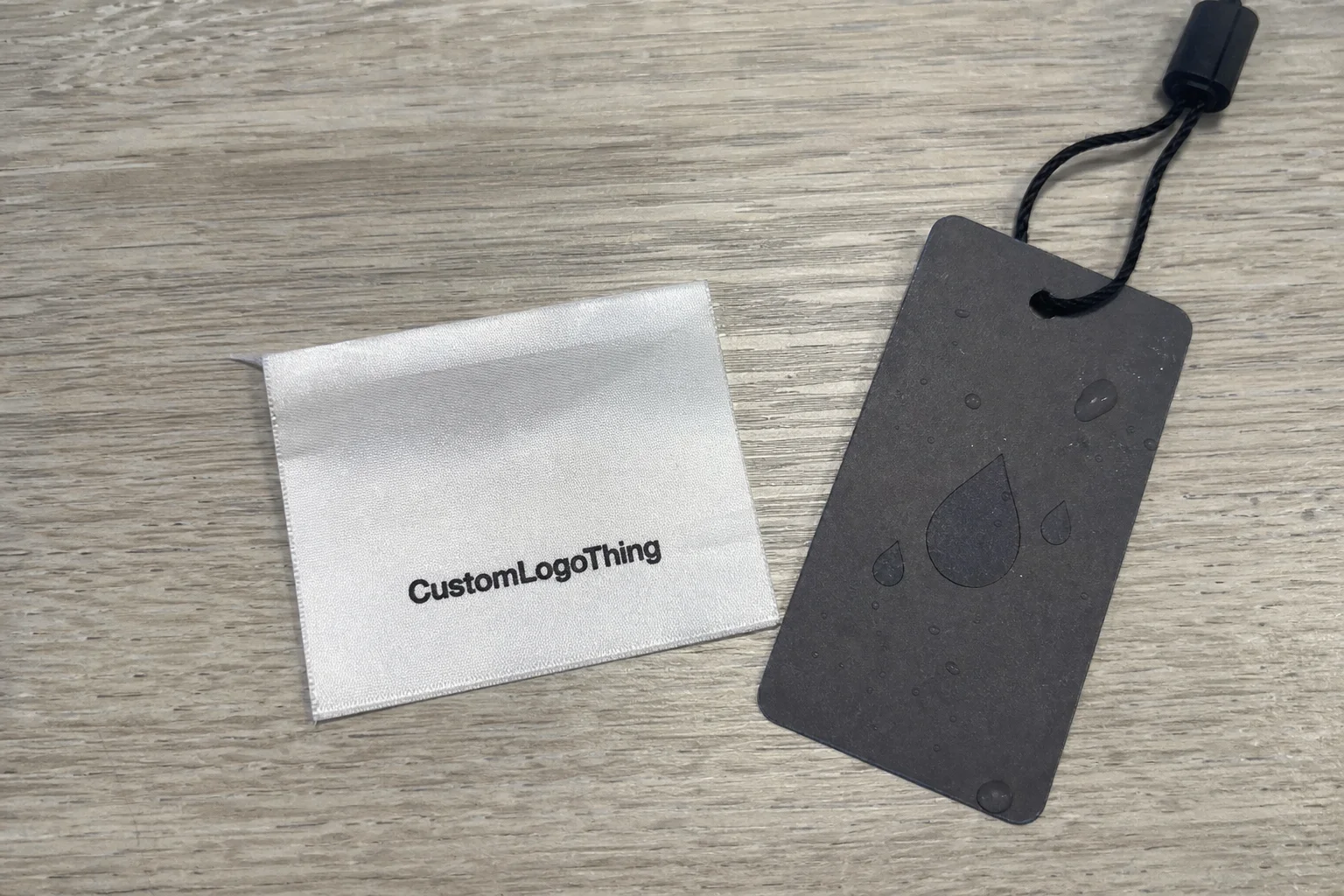
Garments often outlast their labels. That is the practical problem. The fabric may still be structurally fine after repeated laundering, but the print can fade, crack, smear, or lift long before the garment reaches the end of its life. Once the label looks tired, the whole product feels lower quality.
This is especially true for items that see regular laundering and abrasion: gym wear, base layers, scrubs, school uniforms, baby and children’s clothes, and workwear. These products face detergent, heat, spin cycles, tumble drying, sweat, and repeated folding. A paper-friendly label or light-duty adhesive system can look acceptable at first and still fail under the conditions the garment was actually built to survive.
Readable labels also serve compliance and support. Care instructions, size information, and fiber content need to stay legible. If that information disappears, the brand absorbs the problem. Returns rise, customer support gets dragged into basic quality complaints, and the garment loses credibility even if the fabric itself is good.
For apparel buyers, the question is never just “is it waterproof?” A better question is whether the label can stay attached, stay legible, and stay comfortable after repeated laundering and wear. That is a production requirement, not a marketing claim.
If the label also carries brand identity, the stakes are higher. A worn-out neck label or a care tab with rubbed-off text sends a message the rest of the garment cannot fix. On premium basics, that kind of failure looks careless.
How Waterproof Labels Printed for Clothing Are Built
The best waterproof labels printed for clothing are built as a system. No single layer does all the work. A durable label usually combines a printable substrate, an ink or toner system that bonds well, a protective finish, and an attachment method suited to the garment.
- Printable substrate: Usually polyester, polypropylene, or a coated textile for softer apparel applications.
- Print system: UV digital, thermal transfer, flexographic, or another method selected for adhesion and image stability.
- Protective finish: Laminate, topcoat, or sealed coating that protects against water, detergent, and abrasion.
- Attachment method: Sew-in, heat-seal, or another garment-compatible method that keeps the label in place.
Two labels can both be described as waterproof and still perform very differently. One may resist splashes but crack along fold lines. Another may survive washing but feel too stiff for a neckline. Clothing labels live in a narrow operating window: they flex with fabric, touch skin, rub against seams, and go through repeated hot-and-cold cycles. That is why the label build has to be matched to the garment type.
Flexibility is a bigger factor than many buyers expect. A label that is technically durable but too rigid can become uncomfortable on lightweight tees or performance knits. On the other hand, a very soft label may not hold detail as cleanly or may need more careful handling during application. The trade-off is not theoretical. It affects wearability and the final look of the garment.
Adhesive strength matters, but it is only one part of the spec. A strong adhesive on a weak print layer still fails if the print breaks down. A well-sealed image still fails if the edges lift or the label was cut or attached poorly. For garments that will be shipped and handled through standard packaging workflows, teams often apply the same discipline used in transit validation: test the real use condition instead of trusting the mockup. For that kind of process thinking, ISTA test methods are a useful reference point.
Key Specs That Decide Durability, Feel, and Garment Fit
Three specs usually drive the outcome: substrate, finish, and thickness. Those are the levers that determine whether a label feels right, survives washing, and fits the garment without creating an irritation point.
Substrate sets the base performance. Polyester film is common when wash resistance is the priority. Softer coated textiles can work better for skin-facing labels where comfort matters more than a glossy appearance. For stretch garments, the substrate has to move with the fabric instead of resisting it. A rigid label on a high-stretch knit is an invitation to edge lift and discomfort.
Finish changes both appearance and durability. A laminate or sealed topcoat can protect the print from detergent and abrasion, but it can also increase firmness. That may be acceptable for a care label or seam label. It is less forgiving on a neck label for a lightweight tee. Buyers often have to decide whether they want a softer hand or stronger surface protection. There is no universal answer.
Thickness affects drape and wear comfort. Thicker is not automatically better. In some applications, a thinner construction is smarter because it flexes more naturally and reduces the chance of edge wear. In others, a slightly heavier label helps the label survive sewing, heat application, or repeated folding during packaging.
Wash conditions matter just as much as the label build. A label that holds up in a cool home wash may fail in hotter cycles, with harsher detergent, or after repeated tumble drying. Sweat and body oils also play a role, especially on activewear and workwear. Those factors are easy to ignore during proofing and impossible to ignore after launch.
Material sourcing can matter too, especially when the label order sits inside a larger packaging or compliance program. Some buyers want certified paper inputs for adjacent packaging components such as hangtags or inserts, and FSC certification is often part of that conversation. It does not replace wash testing for the label itself, but it can support broader sourcing goals.
A useful rule: send the supplier the actual garment spec, not just the artwork. A label that works on fleece may not behave the same on slick polyester. A label that feels fine on a work shirt may be too abrasive on a running top. The final fabric is part of the label spec.
| Construction | Best For | Typical Feel | Approx. Unit Cost at 5,000 pcs | Main Watch-Out |
|---|---|---|---|---|
| Printed polyester sew-in label | Care info, branding, daily laundering | Light to medium | $0.06-$0.16 | Edge sealing and fray control |
| Heat-transfer label | Tagless neck branding, activewear | Very soft | $0.12-$0.28 | Needs the right heat and pressure on the final fabric |
| Laminated full-color film label | High-detail graphics, abrasion resistance | Firmer | $0.14-$0.32 | Can feel stiff on skin-facing placement |
| Thermal transfer printed synthetic label | Variable data, sizes, care codes | Thin and clean | $0.04-$0.12 | Best for simpler graphics than full brand art |
Cost and Pricing: What Changes Your Unit Price
Price is driven less by the phrase “waterproof” and more by the exact build. Material choice, print method, finishing steps, label size, and order quantity all affect the quote. A simple one-color synthetic care label is a very different job from a full-color laminated brand label with custom die-cut edges and tight registration.
Quantity has a large effect. Lower volumes spread setup, proofing, and calibration across fewer pieces, so unit price rises even when the label is physically small. Buyers often compare only the per-piece number and miss setup fees, sample charges, freight, or special finishing. That is how a quote that looks cheaper becomes more expensive after landing.
Common cost drivers in apparel label orders include:
- Rush production or compressed lead times
- Sampling or multiple proof rounds
- Special adhesives or heat-seal systems
- Variable data such as size, care code, or SKU changes
- Custom shapes, tight tolerances, or unusual dimensions
- Roll format requirements for automated application
The cleanest comparison is total landed cost. That means unit price plus setup, freight, sampling, and any secondary finishing or handling. If one option is a few cents cheaper per label but creates extra labor during application, the savings may disappear quickly. Clear quotes are more useful than low headline numbers that leave out the real production assumptions.
Small and mid-size runs tend to price differently from repeat orders. Once a supplier has the approved structure, the cut dimensions, and the confirmed application method, reorders are usually easier to quote and faster to produce. The first order carries the cost of uncertainty. Later orders often move more efficiently if nothing in the garment spec changes.
Process and Timeline: From Artwork to Production Steps
The production sequence is straightforward, but delays usually come from missing information rather than machine time. A typical job starts with artwork review, then proofing, then material confirmation. If the garment is sensitive or the label construction is new, sampling comes next. After approval, the order moves into production, finishing, inspection, and shipment.
- Artwork review: Confirm size, fonts, color calls, and any care copy or regulatory text.
- Proofing: Check layout, variable data if needed, and edge treatment.
- Material confirmation: Lock the substrate, finish, adhesive, and application method.
- Sample or test run: Especially useful for new fabrics, heat application, or wash-heavy garments.
- Production: Print, cure, laminate or coat, cut, and pack.
- Inspection and shipment: Verify legibility, trim quality, and quantity before dispatch.
What slows an order down is usually easy to diagnose after the fact. Unclear measurements cause reproofs. Incomplete garment details trigger more questions. Missing wash requirements leave the supplier guessing about whether the selected construction will really survive the final use case. If the artwork is ready but the fabric and application method are still vague, the production team is forced to estimate, and estimates cost time.
A realistic first-run timeline is often 12-15 business days after proof approval, with more time needed for sampling, corrections, or unusually complex finishing. Reorders can be faster if the construction already has approval. Heat-applied labels on sensitive fabrics, or labels with variable data, can take longer because they require more checks before release.
To keep the schedule tight, send the full brief early: garment type, fabric content, target size, print colors, quantity, application method, wash routine, and any compliance text. If the label is part of a broader label set or packaging program, include that too. One complete brief is much easier to execute than several partial requests that arrive in pieces.
Common Mistakes That Cause Labels to Peel or Fade
The biggest mistake is choosing a label system that was never meant for repeated laundering. Paper-friendly materials, short-term promotional stickers, and packaging labels can all look fine on a proof sheet. They are the wrong tools for clothing that will be washed, stretched, rubbed, and dried again and again. Waterproof labels printed for apparel need to be judged as garment components, not as general print items.
Skipping wash testing is another common failure. A label can pass a studio approval and still fail once it meets real detergent, real heat, and real friction. One wash is not a meaningful test. Several cycles on the final fabric tell a much better story. If the garment is premium, the label needs to be held to a premium standard.
Layout mistakes matter more than many teams expect. Small type becomes hard to read after wear. Low contrast disappears faster than strong contrast. Overpacked care information turns into visual clutter, and clutter becomes harder to read as the label flexes. Edge placement matters too. If important text sits too close to a cut or seam line, abrasion has less margin to work with.
Another error is approving a sample that does not match the final garment. A label can behave differently on fleece, jersey, rib knit, or coated performance fabric. Placement also changes the stress profile. A collar seam, waistband fold, or side-seam position can all alter how the label wears. The final wash routine matters as well. Home laundering, industrial laundering, and tumble drying are not interchangeable conditions.
A label that passes a studio proof but fails after three wash cycles is not a finished spec. It is a draft.
Some buyers ask for ASTM-style or similar test references, which can help structure the evaluation. That said, the final answer still comes from the real garment under the real wash profile. Paperwork does not replace wear testing.
Expert Tips and Next Steps for a Clean Order
Request samples or short test pieces before full production if the garment is new, the fabric is unusual, or the label will sit in a high-wear area. A flat proof is useful for layout, but it cannot show how the label feels on skin or how it behaves after folding and washing.
A good sample plan compares two or three finalist constructions on the final fabric. Test the label on the actual garment, wash it under the intended care routine, and inspect it after several cycles. Check for lift, fading, cracking, edge wear, and readability. One wash only tells you that the label survived one wash.
Send complete specs from the start so the supplier can quote the right build the first time:
- Garment type and fabric content
- Placement: neck, side seam, waistband, cuff, or external brand tab
- Target size and shape
- Artwork files and color targets
- Quantity and reorder expectations
- Wash temperature, dryer use, and detergent type if known
- Any care-label or compliance requirements
If the order is part of a broader label program, keep the branding, sizing, and care information consistent across every component. That avoids the common problem where the hangtag, wash label, and packaging disagree on style or terminology. For buyers comparing brand label builds, the most practical starting point is the use case, followed by placement and wash conditions, then artwork.
The takeaway is straightforward. Choose the construction for the real garment, the real wash routine, and the real wear path. The right waterproof labels printed for clothing should stay legible, stay attached, and stay comfortable enough to do their job quietly. That standard is demanding, but it is also measurable.
Are waterproof labels printed better than woven labels for laundry-heavy clothing?
Often, yes, if the priority is sharp care information, variable graphics, or a smoother hand feel. Woven labels can look premium, but they are not always the best fit for repeated laundering, small text, or low-profile branding. The better choice depends on the garment, the wash cycle, and whether the label needs to carry care instructions or branding only.
What material works best for waterproof labels printed on activewear?
A flexible synthetic substrate with a sealed print surface is usually the safest starting point for activewear. The label should resist sweat, friction, and repeated washing without feeling stiff against the skin. If the fabric stretches significantly, test the label on the final garment before approving the full run.
How do I test if waterproof labels printed for clothing will hold up?
Run a wash test using the real detergent, temperature, and drying method the garment will actually see. Check for edge lift, ink loss, cracking, softening, and readability after several cycles, not just after one wash. Test on the final fabric, because adhesion and feel can change a lot between materials.
What is a normal MOQ for custom waterproof printed labels?
MOQ varies by material, print method, size, and finishing, so there is no single standard number that fits every supplier. Lower quantities usually cost more per label because setup and proofing are spread across fewer pieces. If the run is small, ask for a quote that separates setup costs from unit costs so you can compare options clearly.
Can waterproof labels printed in full color still feel soft on clothing?
Yes, but softness depends on substrate thickness, coating, and how the label is attached to the garment. A thinner, smoother construction usually feels better on tees and performance wear than a heavy laminated finish. Ask for a sample against the exact fabric so you can judge comfort and durability together.


