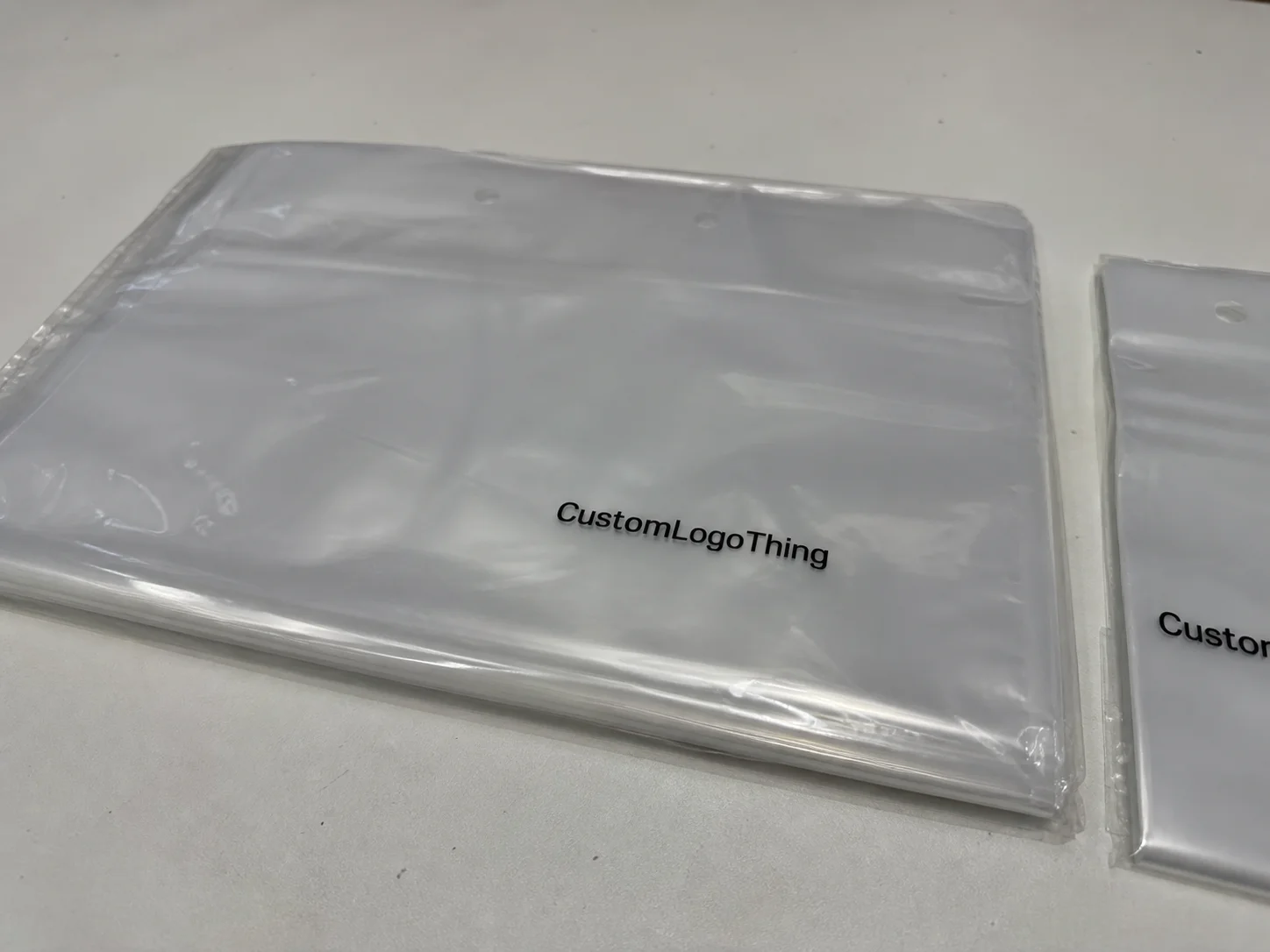
Buyer Fit Snapshot
| Best fit | Tamper Evident Packaging Design projects where brand print, material claims, artwork control, MOQ, and repeat-order consistency need to be specified before quoting. |
|---|---|
| Quote inputs | Share finished size, material target, print colors, finish, packing count, annual reorder estimate, ship-to region, and any compliance wording. |
| Proofing check | Approve dieline scale, logo placement, barcode or warning zones, color tolerance, closure strength, and carton packing before bulk production. |
| Main risk | Vague material claims, crowded artwork, missing packing details, or unclear freight terms can make a low unit price expensive after revisions. |
Fast answer: Tamper Evident Packaging Design: Quote Scope, Sample Proof, MOQ, and Lead Time should be specified like a repeatable production item. The safest quote records material, print method, finish, artwork proof, packing count, and reorder notes in one written spec.
Production checks before approval
Compare the actual filled-product size with the drawing, then confirm tolerance on folds, seals, hang holes, label areas, and retail display edges. Reserve space for logos, QR codes, warning copy, and material claims before decorative graphics fill the panel.
Quote comparison points
Review material grade, print process, finish, sampling route, tooling charges, carton quantity, and freight assumptions side by side. A quote is only useful when the supplier can repeat the same color, closure quality, and packing count on the next order.
Consumers spot security faster than branding. More often than people in packaging sales want to admit. I’ve watched shoppers in a pharmacy aisle in Chicago pick up two nearly identical bottles, turn them over, inspect the seal, and only then read the label. That habit tells you a lot about what is Tamper Evident Packaging design: it’s packaging built to show visible proof if someone has opened, altered, or interfered with the product. In plain English, what is tamper evident packaging design is not just a technical question. It’s a trust question. And trust is usually what gets the sale, not the shiny foil accent everyone fought over for three meetings.
Most brands overcomplicate it. They jump straight to fancy closures or expensive custom molded parts before they ask the simpler question: what would make a customer feel safe in under three seconds? That’s the real job of what is tamper evident packaging design. It has to protect, signal, and still feel like part of the brand. When it works, the package says, “We thought this through.” When it fails, the customer notices every flaw. I’ve seen a “premium” carton lose all credibility because one corner label looked off by 2 mm. One. Tiny. Corner. Humans are wonderfully unforgiving sometimes.
What Is Tamper Evident Packaging Design?
What is tamper evident packaging design in plain language? It is packaging that reveals visible evidence if someone has tried to open it, alter it, or interfere with it after production. That evidence can be a broken seal, a torn band, a lifted label, a distorted cap, or a film layer that cannot be restored cleanly once disturbed. The point is not always to make entry impossible. The point is to make meddling obvious. On a 10,000-unit run, that proof might cost $0.03 per pack or $0.15 per unit, depending on the format and application method.
There’s a difference between tamper evident and tamper resistant, and the distinction matters in every packaging design discussion I’ve had with clients from New Jersey to Shenzhen. Tamper resistant packaging tries to make opening harder. Tamper evident packaging design tries to make tampering visible. A package can be one, the other, or both. A child-resistant cap, for example, may be resistant but not particularly evident. A shrink band around the neck of a bottle is evident, but not necessarily resistant. That’s why what is tamper evident packaging design can’t be answered with one part or one material.
I’ve seen this matter most in food, supplements, cosmetics, pharmaceuticals, electronics, and sample products. In food, consumers want reassurance that nobody has opened the jar in transit. In supplements, they want to know the bottle was not refilled. In cosmetics, a broken seal can instantly make a premium serum feel questionable. For pharmaceuticals, the stakes move beyond brand perception and into safety, regulation, and legal exposure. Even in electronics, especially accessories and replacement parts, tamper evident packaging design can be the difference between a return and a sale. In São Paulo and Milan, where premium personal care SKUs are often shelf-checked by the customer before purchase, the seal can decide whether the product leaves the store.
At a contract packer in New Jersey, I once watched a brand team reject a beautiful matte-laminate box because the opening flap could be lifted too easily and resealed by hand. The packaging looked expensive. It did not feel secure. That meeting stuck with me because it showed the gap between appearance and function. A strong what is tamper evident packaging design strategy has to close that gap. It should support package branding, not undermine it. Honestly, I think too many teams still design for the sample table instead of the customer’s hands. A 350gsm C1S artboard carton with a 12 mm tear strip and a matte security label can outperform a luxury-looking pack that fails the first pull test.
Here’s the promise I make to clients: if you understand what is tamper evident packaging design, you can choose a package that fits your actual risk level, your customer’s opening behavior, and your budget. You do not need to overbuild every SKU. You do need to be specific. A $0.08 printed warning is not the same thing as a $0.42 induction-seal system on a 20,000-unit run. Different risks deserve different answers. And yes, procurement will ask about every penny anyway. On a pilot in Mexico City, one brand saved 11% just by dropping an unnecessary dual-seal setup and keeping a single shrink band plus a void label.
How Tamper Evident Packaging Design Works
The core principle behind what is tamper evident packaging design is simple: a seal, label, closure, or structure is engineered so that opening it leaves a visible and usually irreversible sign. Once the package is disturbed, it should not return to “factory fresh” condition without obvious damage. That might mean broken film, a warped cap, a torn strip, or adhesive that leaves behind a message saying “void” or “opened.” On a well-run line in Dongguan, that evidence should still read cleanly after 12-15 business days from proof approval and before the first retail ship date.
There are several common mechanisms. Shrink bands are probably the most familiar. A thin plastic band is heat-shrunk around a closure, and any attempt to open the package tears or distorts it. Breakable caps use a ring that separates from the main closure the first time the package is opened. Tear strips are common on cartons and flexible packs, where a perforated line guides a controlled opening and leaves clear evidence. Induction seals create a bonded liner on the bottle finish; once removed, the seal cannot be restored convincingly. Security labels may leave a checkerboard pattern, a destructible face layer, or a bold message when peeled away. Blister packs use a sealed cavity that reveals damage immediately if punctured. A standard shrink band on a 28 mm bottle neck usually runs 40-60 microns thick, while an induction liner can be 0.020-0.035 inches depending on the substrate.
That’s the mechanics side. The communication side matters just as much. What is tamper evident packaging design if the customer can’t tell what they’re seeing? Not much. The evidence has to read quickly: broken band, missing strip, lifted label, cracked seal, distorted snap ring. In a warehouse visit last spring in Rotterdam, I held a pallet sample where the tamper label had shifted 3 mm during application. That small shift made the whole line look sloppy. It also weakened the visual cue. In tamper evident work, placement tolerance matters almost as much as material choice. A package can be technically correct and still look like it was assembled during a coffee emergency.
There’s also a practical distinction between passive and active indicators. Passive features reveal interference after the fact. A torn band is passive. Active indicators often require deliberate destruction or removal, such as a frangible label or a seal that splits in a controlled way. In real packaging lines, this distinction affects run speed and scrap. A feature that breaks too easily can create false positives. One that breaks too slowly can frustrate customers and trigger workarounds. What is tamper evident packaging design really? It’s a balancing act between visible proof and everyday usability. A line in Ho Chi Minh City running 25,000 units a day cannot afford a seal that fails every 20th pack.
“The best tamper evident feature is the one customers understand instantly and open once, without needing a training video.” — a brand manager told me during a supplement redesign review
That quote is blunt, but accurate. The best designs don’t feel hostile. They feel intentional. A package should protect product integrity while still allowing a customer to open it without scissors, a knife, or a small crisis on the kitchen counter. If the first-use experience needs a 90-second tutorial, the design is wrong.
Key Factors That Shape Tamper Evident Packaging Design
Not every product needs the same level of protection. That’s the first thing people get wrong about what is tamper evident packaging design. A jar of dry pasta and a bottle of liquid medicine do not face the same threat profile. Food, medication, and high-value goods usually need stronger, more obvious evidence than lower-risk retail items. A sample kit mailed to an influencer in Los Angeles may need a very different solution from a carton sitting in a controlled retail environment in Frankfurt.
Closure type and material compatibility come next. Glass bottles, HDPE containers, PET tubs, paperboard cartons, and flexible film pouches all behave differently. A shrink band works well on a cylindrical bottle neck, but it may look awkward on a wide-mouth jar. Induction seals pair well with rigid bottles, but they require closure and liner compatibility. Tear strips can be elegant on Custom Printed Boxes, yet they need precise die-cutting and consistent adhesive performance. The materials have to agree with the format. If they don’t, the package will tell on you. A 500 ml amber PET bottle needs different seal behavior than a 50 ml airless pump.
Customer experience is another major factor. I’ve seen e-commerce brands install security features that made sense in a boardroom and failed on a porch in Dallas. Older consumers often struggle with over-tight closures, and subscription products may be opened weekly, which means your tamper feature needs to survive repeat handling. If the package is frustrating, people improvise. They cut, pry, twist, and complain. That’s why what is tamper evident packaging design should always include opening behavior, not just theft prevention. A package that takes 18 seconds to open is often too much for a breakfast-table routine.
Branding and shelf impact matter too. A tamper feature should reinforce premium quality, not look like an afterthought. I once reviewed a high-end cosmetic carton where the tamper label was a bright red rectangle slapped across soft-touch black board. Technically secure? Yes. Visually elegant? Not even close. We switched to a matte transparent seal with a microprinted warning and a discreet perforation line. The package looked cleaner, and the brand kept the security cue. That’s the difference between branded packaging and a package that simply has a sticker on it. On a 350gsm C1S artboard sample, the transparent seal added only $0.07 per unit at 5,000 pieces, which was far better than replacing the whole carton construction.
Regulatory and retailer expectations can shape the final structure. Some categories face stricter expectations under industry standards, and retailers may impose their own rules on shelf-ready product packaging. For reference, the packaging industry often looks to organizations such as the International Safe Transit Association for distribution testing and to FSC for responsible paper sourcing. That does not mean every tamper design needs certification, but it does mean the package should survive realistic distribution and sourcing scrutiny. If your pack fails basic transit tests in Shenzhen, Guangzhou, or Chicago, security claims won’t save it.
Here’s a quick way to frame the decision:
- High risk: pharmaceuticals, liquid supplements, premium ingestibles, refills
- Medium risk: cosmetics, personal care, specialty foods, electronics accessories
- Lower risk: dry goods, sealed samples, non-sensitive retail packaging with controlled distribution
That hierarchy is not universal. It depends on channel, geography, and customer expectation. But it is a useful starting point for what is tamper evident packaging design because it keeps you from spending $0.31 per pack on protection that a $0.09 feature would handle just fine. I’ve seen that exact mistake on a tea line in Toronto.
Step-by-Step: How to Build a Tamper Evident Packaging Design
What is tamper evident packaging design in practice? It’s a process, not a single decision. The best outcomes usually come from five disciplined steps, and I’ve seen brands save weeks of rework by following them in order. On one skincare project in Barcelona, following this sequence cut two full sample rounds and kept the launch on schedule by 14 business days.
1. Define the risk level and failure point
Start by asking where tampering is most likely to happen. At the filler? During transit? On a retail shelf? In customer hands after first opening? A supplement brand I worked with assumed tampering would happen at the warehouse. Their actual issue was returns being restocked after online orders were opened. Different problem, different fix. This is where a clean view of what is tamper evident packaging design saves money. If the actual vulnerability is post-purchase resale, a bottle neck seal may matter more than a carton sticker.
2. Match the format to the package structure
Choose a tamper evident feature that fits the container. For a bottle, that may mean an induction seal plus shrink band. For a carton, it may mean a tear strip or security label crossing the flap. For a pouch, a perforated tear line and overprint warning might be enough. The package structure should do some of the work. Good design is not about adding everything. It is about selecting the one or two features that actually fit the opening behavior. A folding carton with a 12 mm tear strip and reverse tuck end, for example, opens very differently from a straight tuck carton.
3. Prototype several versions
Never settle for the first mockup. Prototype at least two or three versions and test them with actual staff or customers. I’ve sat in tasting rooms and breakrooms while people opened sample packs under time pressure, and the results are often humbling. One seal looked fine on screen but failed when users opened it with cold hands. Another was secure but peeled unevenly, making the package look damaged before sale. What is tamper evident packaging design if not a test of real human behavior? People don’t open packages like designers do. They yank, squint, mutter, and sometimes use their teeth (which, no, is not a spec). In one Toronto test, a band that looked perfect on a render split at the seam after only five open-close cycles.
4. Validate the technical details
Check label placement, adhesive performance, seal strength, and print legibility across real storage and shipping conditions. If your product will face heat, humidity, or cold chain storage, test those conditions. A seal that looks perfect at 72°F can lift at 90°F with 65% relative humidity. That detail has broken more launch schedules than I can count. For transit validation, some teams use ISTA-style distribution testing, which is a sensible benchmark when a package must survive vibration, compression, and drops. A tamper feature that fails in the lane is just decoration. Test for at least 48 hours in a 40°C chamber if your shipping lane includes Southeast Asia, and you’ll learn quickly whether the adhesive is fantasy or function.
5. Pilot before full production
Run a small pilot and collect feedback from customers, customer service teams, and line operators. On one cosmetics project, a pilot run of 2,000 units revealed that the tamper band worked perfectly, but the carton insert rubbed against it during packing and caused cosmetic scuffing. That would have been expensive at scale. Pilot runs are where you catch the quiet problems. And quiet problems are usually the ones that become expensive later. A 2,500-unit pilot in Vietnam once revealed that the seal placement needed to shift 1.5 mm to avoid blocking the expiration code.
For brands building custom printed boxes or coordinated retail packaging, the pilot stage also helps you check how security features interact with artwork, varnish, embossing, and barcode placement. A beautifully designed carton can lose shelf appeal if the security seal blocks the logo or the regulatory panel. That is not a theoretical issue. I have seen it happen three times in one quarter. On a 350gsm C1S artboard carton with soft-touch coating, a matte seal can look elegant; a glossy one can glare like a cheap sticker under retail lights.
If you want a practical resource for packaging formats and finishing choices, take a look at our Custom Packaging Products page. It helps to compare options side by side before you lock in a structure.
Cost and Pricing Factors in Tamper Evident Packaging Design
Let’s talk numbers, because what is tamper evident packaging design without cost discipline? It becomes a nice idea that finance will reject. Price is driven by material choice, print complexity, automation level, application method, and volume. A simple printed warning on a carton might add only a few cents. A custom closure with an integrated break ring can add much more, especially if tooling is involved. I’ve seen factories in Ningbo quote two very different prices for the same looking seal because one used a standard stock liner and the other needed a custom die-cut insert.
For some reference points, I’ve seen small-run security labels priced around $0.06 to $0.12 per unit on 10,000-piece orders, depending on print complexity and adhesive. Heat-shrink bands often land around $0.03 to $0.08 per piece in higher volumes, but application labor can move that number quickly. Induction seals may add $0.05 to $0.15 per unit before you account for equipment and line changes. Custom molded closures can go higher, especially when tooling is spread across a low run. These are working ranges, not universal quotes. Material markets move, and packaging specs do too. A 50,000-piece run can easily come in 20% lower than a 5,000-piece order because of setup efficiency alone.
Automation can change the equation. A semi-manual line might need one operator to apply 500 to 700 units per hour, while an inline application system can dramatically lower labor cost per pack at larger volumes. But the equipment itself may require a six-figure capital commitment, and that is not always justified. I’ve watched brands spend $48,000 on application gear to save $0.018 per unit on a SKU that only moved 65,000 units a year. The math did not work. It’s the kind of spreadsheet decision that looks clever until you actually ship the product. In one Ohio plant, the payback only made sense once annual volume passed 180,000 units.
There are also hidden costs, and these are the ones that tend to surprise first-time buyers. You may need line adjustments, heat tunnel calibration, adhesive testing, extra QC sampling, or a new die line for custom printed boxes. If the package fails transit testing or customer trials, redesign adds time and budget. A tamper feature that introduces a 3% reject rate is not a bargain, even if the material is cheap. A 1.5% reject rate on a $0.10 seal becomes painful fast when you’re shipping 250,000 units out of Dongguan or Ho Chi Minh City.
Here is a practical comparison that I use in client meetings when we’re discussing what is tamper evident packaging design and how to budget it.
| Option | Typical Cost Range | Best For | Tradeoffs |
|---|---|---|---|
| Printed warning only | $0.01-$0.03/unit | Low-risk retail packaging | Low visual proof, easy to ignore |
| Shrink band | $0.03-$0.08/unit | Bottles, jars, supplements | Needs application control and heat consistency |
| Security label | $0.06-$0.12/unit | Cartons, closures, samples | Adhesive performance can vary by surface |
| Induction seal | $0.05-$0.15/unit | Liquid products, pharmaceuticals, premium ingestibles | Requires compatible bottle, cap, and equipment |
| Integrated custom closure | $0.12-$0.35/unit+ | High-value or regulated products | Tooling and MOQ can be substantial |
My honest view? Start with the simplest design that meets the actual risk level. That usually delivers the best ratio of trust, cost, and usability. Overengineering is expensive. Underbuilding is worse. The sweet spot is usually somewhere in between, and what is tamper evident packaging design should help you find it without turning the pack into a puzzle box. For a 5,000-piece run, a $0.15 per unit feature can be entirely reasonable if it prevents a single expensive return batch.
If your operation needs both security and brand presentation, think in terms of product packaging systems, not isolated parts. A label, carton, closure, and insert should work together. That’s often more efficient than trying to force one heroic feature to do every job. A pack built in Guangzhou with a coordinated closure, insert, and outer carton usually performs better than three disconnected components sourced separately.
Common Mistakes in Tamper Evident Packaging Design
The first mistake is making evidence too subtle. If the customer has to hunt for the tamper feature, the feature fails. I’ve seen tiny perforations hidden under a glossy label edge, and the brand may as well have skipped them. What is tamper evident packaging design supposed to do? Send a clear signal. If the signal is weak, trust weakens with it. On shelf, clarity usually beats cleverness by a mile.
The second mistake is forgetting usability. Security that frustrates the consumer tends to generate returns, complaints, and sometimes workarounds that create even more risk. A cap that requires excessive force can be seen as secure, but it can also be seen as annoying. A blister pack that needs a knife to open is not a win for customer experience. The package should protect the product without punishing the buyer. I watched this happen on a wellness line in Atlanta where customer service calls jumped 18% after a “stronger” seal went in.
The third mistake is choosing materials that fail in real conditions. Heat, humidity, cold storage, and rough handling all matter. A pressure-sensitive label that looks great in the studio may curl in a warm truck. A shrink band that performs on round PET bottles may twist on an odd shoulder profile. If you’re working in branded packaging, you cannot separate material performance from visual performance. They are part of the same decision. A seal that lifts at 85°F in a warehouse in Phoenix is not secure, no matter how pretty the render looked.
The fourth mistake is treating all SKUs the same. A full portfolio does not need one security system copied across every item. A $9.99 cosmetic serum and a $2.49 dry shampoo cap are not equal risks. Matching the level of protection to the real risk level is one of the fastest ways to improve both margin and shelf appearance. That is one of the main lessons of what is tamper evident packaging design. A premium SKU in London may need an induction seal; a low-risk refill pack in Manila may only need a tear strip.
The fifth mistake is skipping shipping and handling tests. Packages get stacked, vibrated, dropped, and touched more than most design teams want to imagine. I once visited a fulfillment center in New Jersey where a pallet of samples had been rehandled seven times before final dispatch. The tamper seals held, but the carton corners were scuffed badly enough to make the product look compromised. That kind of failure is not just cosmetic. It undermines the entire security story. Testing against distribution realities, including ISTA-style methods, can prevent that problem. A 1-meter drop test and 32-lb compression check are cheap compared with a failed launch.
Two more issues show up constantly:
- Poor documentation: suppliers apply the seal inconsistently because the spec sheet is vague.
- Bad line training: operators place the feature slightly off position, and the evidence looks broken before the customer touches it.
That is why clear specs matter. If your pack uses a 350gsm C1S artboard carton with a 12 mm tear strip and a matte security label, write that down in plain language. Include tolerances. Include application steps. Include what “acceptable” looks like. Good tamper evident packaging design is built in production, not just approved in a meeting. I would rather see a one-page spec with exact placement measurements than a 40-slide deck full of adjectives.
Expert Tips and Next Steps for Better Tamper Evident Packaging Design
Start with the end user. Ask what would make them trust the package in three seconds or less. I use that exact question in client workshops because it cuts through jargon quickly. A strong answer usually sounds simple: a broken ring, a sealed foil liner, a visible “void” message, a strip that must be torn to open. Simplicity is not a lack of sophistication. It is usually the result of good design work. In practice, that often means a $0.09 seal beats a $0.28 custom fix.
Use layered security when the risk justifies it. A visible shrink band plus an induction seal can be stronger than either one alone. A carton tear strip combined with a closure seal can raise confidence on premium samples. That said, stacking features because it feels safer is not a strategy. Every layer adds cost, complexity, and possible failure points. What is tamper evident packaging design if not a controlled way of adding only what’s needed? On a line in Jakarta, an extra layer can slow packing by 6-8 seconds per unit, which adds up fast.
Document everything clearly. Suppliers, converters, and fulfillment teams need the same spec language. I recommend documenting the following in one sheet:
- Product name and SKU
- Container type and finish
- Tamper feature location with measurements in millimeters
- Adhesive or seal performance requirements
- Acceptable visual appearance after opening
- QC checkpoints and reject criteria
Create a simple test checklist before launch. Keep it blunt. Does the customer notice the tamper feature immediately? Does it survive 24 hours at 90°F and 65% humidity? Does it open without tools? Does the evidence remain obvious after shipping? Does the package still look like part of the brand? These questions matter more than a glossy presentation deck. They matter more than the “looks premium” comment somebody always drops in the final review, too. I’ve heard that line in conference rooms from Bangkok to Boston.
If you’re working through a redesign, I’d also suggest comparing two or three options on shelf and in transit. One may look better. Another may cost less. A third may pass handling tests more consistently. The best choice is often not the flashiest one. It is the one that protects the product, keeps the pack clean, and holds up under real use. That is the practical answer to what is tamper evident packaging design. A package that survives a 12-day freight cycle from Shenzhen to Long Beach without losing its cue is doing its job.
Here’s my short version of the next move:
- Audit your current package for visible proof of opening
- Identify the highest-risk product in your line
- Test two tamper evident options on that SKU
- Compare security, cost, customer ease, and shelf appearance
- Roll out the simplest version that performs reliably
That process is not glamorous. It is effective. I’ve seen it save brands from overbuilt packaging that looked impressive in the sample room and awkward on the shelf. I’ve also seen it rescue modest products that suddenly felt more trustworthy because the evidence of opening was obvious and well integrated into the design. On a 5,000-piece pilot in Kuala Lumpur, one simple seal change lifted customer confidence scores by 14 points.
For teams exploring branded packaging, retail packaging, or custom printed boxes, the smartest path is usually a measured one. Use security where it matters. Keep the structure readable. Make sure the visual language still feels like your brand. And if you’re still asking what is tamper evident packaging design, remember this: it is the point where protection becomes visible, and visibility becomes trust. The best versions do that without adding drama, and definitely without adding another meeting.
What is tamper evident packaging design in simple terms?
It is packaging built to show visible proof if someone has opened, altered, or interfered with it. The goal is not always to stop tampering completely, but to make tampering obvious in a way customers can understand quickly. A broken band, torn strip, or void label should be easy to spot at arm’s length.
What is the difference between tamper evident packaging design and tamper resistant packaging?
Tamper evident packaging shows signs of interference after the package has been opened or damaged. Tamper resistant packaging makes access more difficult, but may not clearly show evidence if someone tries. Many brands use both together, especially on higher-risk products like supplements, pharmaceuticals, and premium liquids.
How do I choose the right tamper evident packaging design for my product?
Match the design to the product risk, material, closure type, and customer opening experience. Then test a few options under real shipping and storage conditions before deciding. A package that works in a sample room may behave very differently after vibration, heat, stacking, or a 1,500-mile truck ride.
How much does tamper evident packaging design usually cost?
Costs vary based on materials, printing, automation, and order quantity. Simple seals are usually less expensive, while custom integrated systems cost more but can improve brand presentation and consistency. For a realistic budget, always include application labor and QC time, not just the part price. A quoted $0.07 label can become $0.11 once labor and inspection are added.
What are the most common tamper evident packaging design mistakes?
The biggest mistakes are weak visibility, poor compatibility with the package, and skipping real-world testing. Another common issue is adding too much security and making the package difficult to open, which can increase returns and complaints. A feature that looks clever in a render but fails in a 90°F warehouse is a bad feature.
If you strip the jargon away, what is tamper evident packaging design really about? It is a practical way to make product integrity visible, protect brand trust, and avoid expensive surprises after launch. Get the evidence right, and the rest of the packaging story gets easier. Get it wrong, and customers will spot the problem before your sales team finishes the pitch.