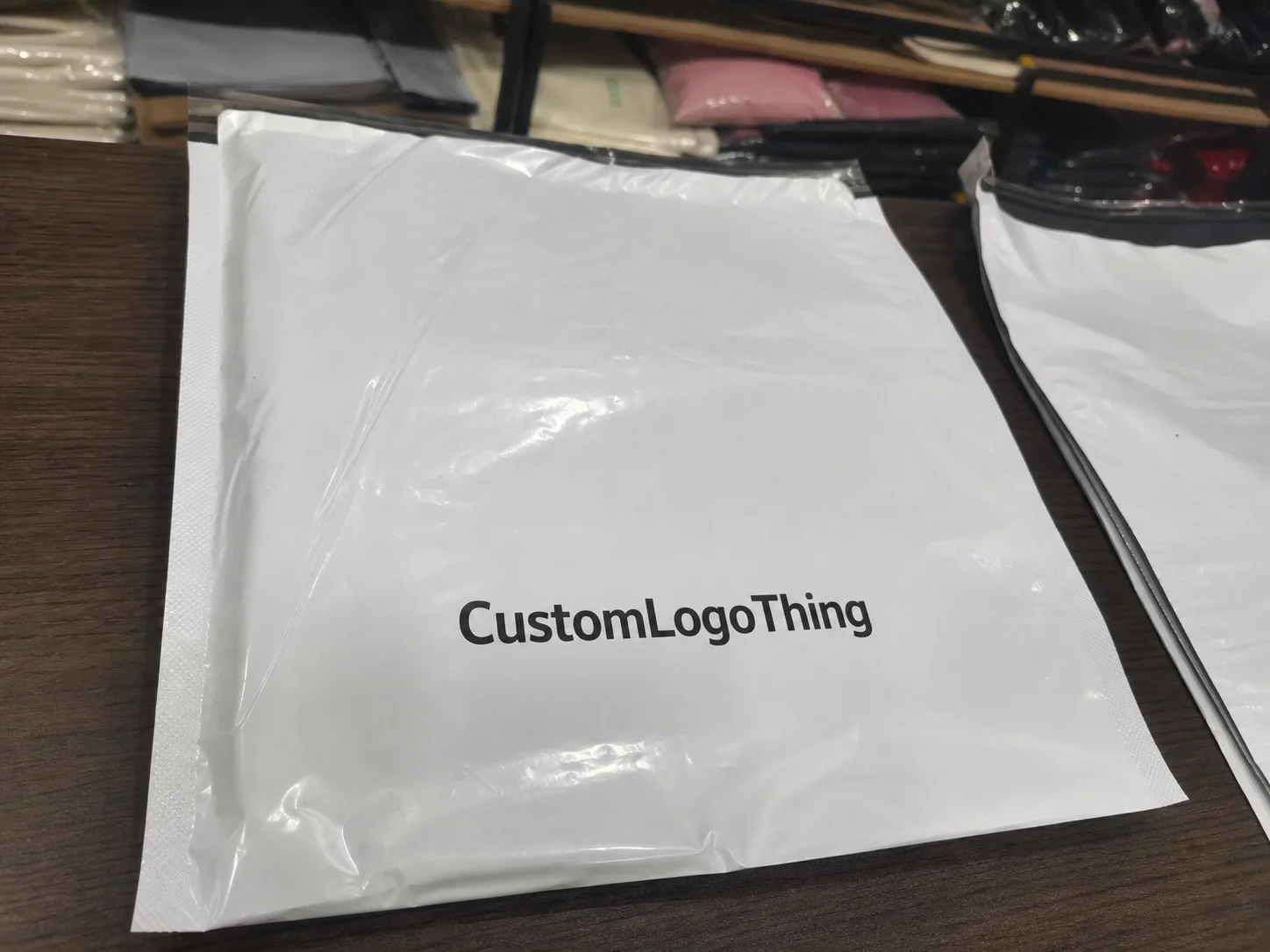
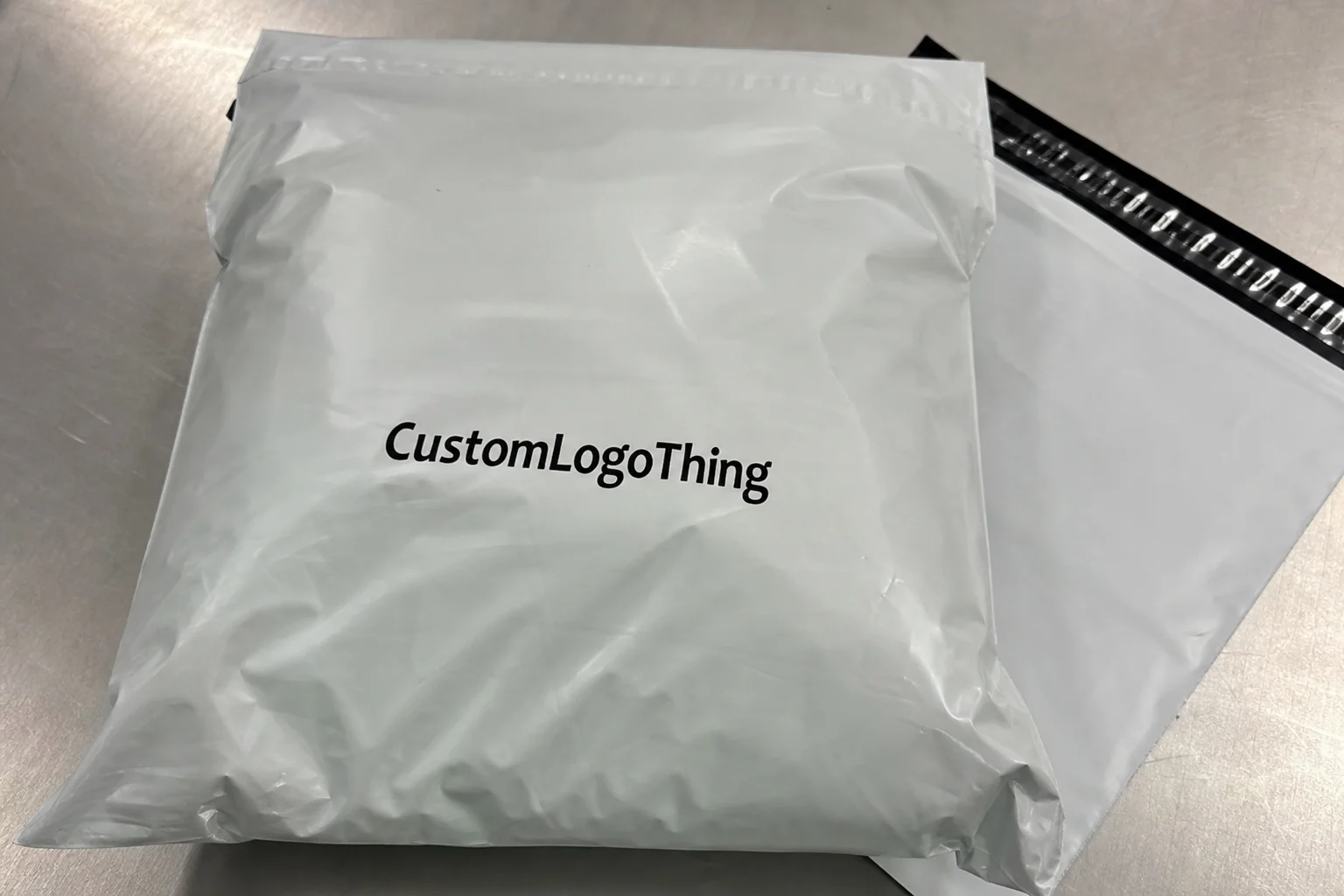
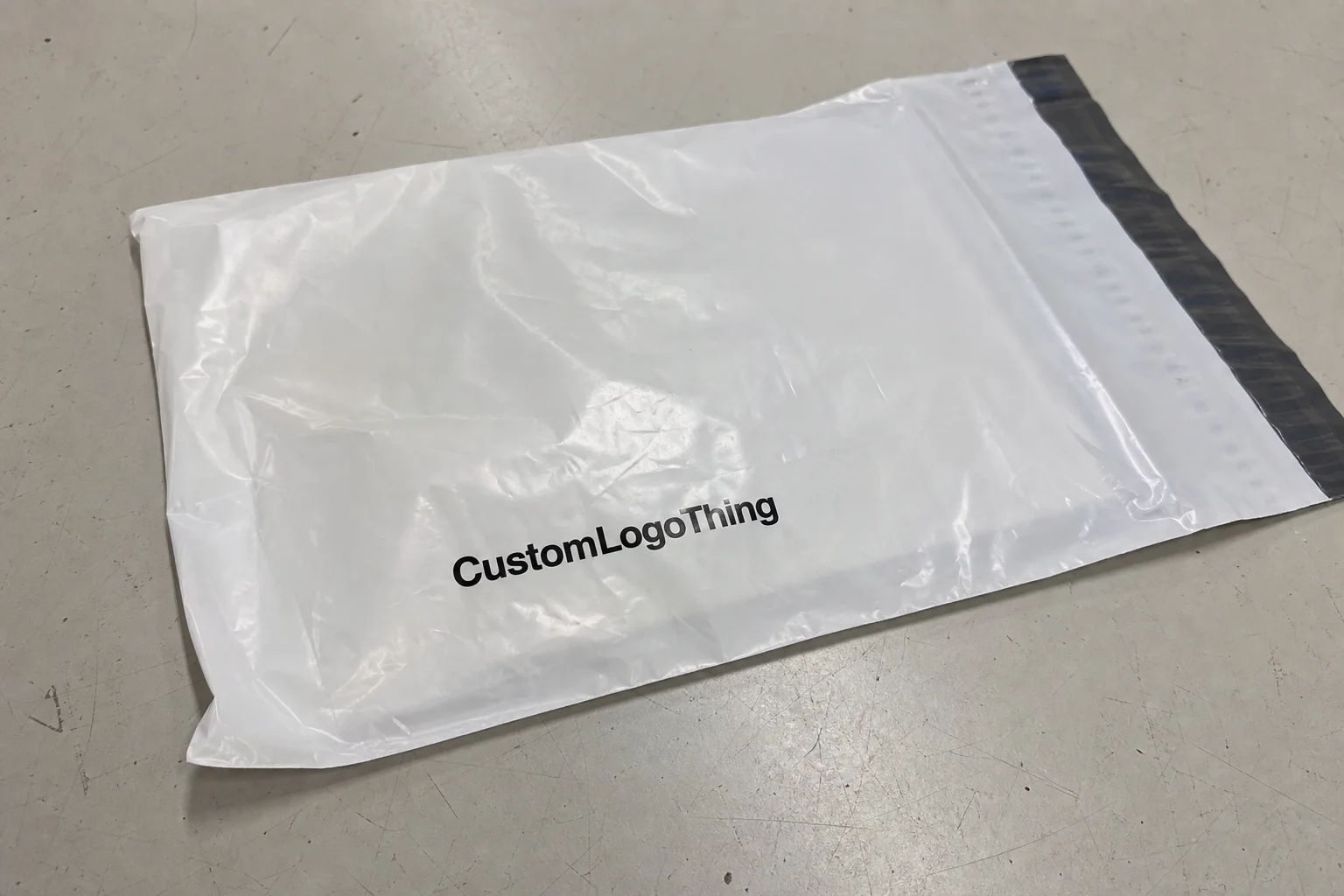
Buyer Fit Snapshot
| Best fit | Where to Buy Cheap Poly Mailers Wholesale projects where brand print, material claims, artwork control, MOQ, and repeat-order consistency need to be specified before quoting. |
|---|---|
| Quote inputs | Share finished size, material target, print colors, finish, packing count, annual reorder estimate, ship-to region, and any compliance wording. |
| Proofing check | Approve dieline scale, logo placement, barcode or warning zones, color tolerance, closure strength, and carton packing before bulk production. |
| Main risk | Vague material claims, crowded artwork, missing packing details, or unclear freight terms can make a low unit price expensive after revisions. |
Fast answer: Where to Buy Cheap Poly Mailers Wholesale: Film, Print, MOQ, and Carton Packing should be specified like a repeatable production item. The safest quote records material, print method, finish, artwork proof, packing count, and reorder notes in one written spec.
Production checks before approval
Compare the actual filled-product size with the drawing, then confirm tolerance on folds, seals, hang holes, label areas, and retail display edges. Reserve space for logos, QR codes, warning copy, and material claims before decorative graphics fill the panel.
Quote comparison points
Review material grade, print process, finish, sampling route, tooling charges, carton quantity, and freight assumptions side by side. A quote is only useful when the supplier can repeat the same color, closure quality, and packing count on the next order.
If you’re trying to figure out where to buy cheap poly mailers wholesale, the first quote you receive is usually the least useful number on the page. I’ve seen buyers celebrate a price that saved $0.012 per bag, only to lose that “savings” on tear-outs, reshipments, and customer complaints within six weeks. The cheapest invoice is not always the cheapest shipment, and that’s the first lesson I learned standing on a packing line in Shenzhen while a brand owner held up a split mailer like it had personally betrayed him. Honestly, I still think that mailer looked offended.
My goal here is practical: help you figure out where to buy cheap poly mailers wholesale without buying a headache. The right supplier balances film strength, adhesive seal reliability, print quality, and freight terms. That balance matters more than a flashy quote. I’ve sat through supplier negotiations where two factories were only $0.03 apart on unit price, but one had a 9% remake rate and the other was under 1.5%. Guess which one protected margin. Not the one with the prettier spreadsheet, I can tell you that.
“Cheap” should mean lower cost per shipment, not just the smallest line item on a purchase order. A mailer that survives the trip, packs quickly, and matches your brand saves money in three places: labor, replacements, and customer retention. When buyers ask me where to buy cheap poly mailers wholesale, I usually answer with another question: do you want the lowest quote, or the lowest landed cost? Those are not the same thing. I wish more sales reps would say that out loud instead of smiling and hoping nobody notices the freight bill later.
In the sections below, I’ll compare product types, materials, specs, pricing, minimum order quantities, and order steps. I’ll also point out the traps that show up after the sample looks fine but the full run does not. If you’re buying stock sizes or planning a printed run, this will help you compare suppliers on facts instead of vague promises. And yes, I’ve been burned by vague promises too—once was enough, thank you very much.
Where to Buy Cheap Poly Mailers Wholesale Without Sacrificing Quality
People usually mean one of three things when they ask where to buy cheap poly mailers wholesale: a domestic distributor with stock on hand, an overseas factory with lower unit pricing, or a private-label packaging partner that can handle both. All three can work. The trick is matching the source to the order type. For 500 stock mailers, a local warehouse in Dallas, Texas or Chicago, Illinois may beat an offshore quote once freight and delay risk are included. For 50,000 printed mailers, the overseas route can make sense if the specs are tight and the artwork is approved early, especially from manufacturing hubs in Shenzhen, Dongguan, and Ningbo.
The surprising industry fact is this: the lowest unit price is often not the lowest landed cost. I’ve seen a buyer choose a mailer at $0.021 less per unit, then spend an extra $420 on expedited freight because the order missed a promotional launch. I’ve also watched a fashion brand save money by switching from a shiny low-grade film to a slightly thicker matte mailer that reduced returns from scuffed product corners. That is what “cheap” should mean in wholesale sourcing. Anything else is just a math trick wearing a tie.
I think most people get tripped up by asking the wrong first question. They ask, “How low can the price go?” They should ask, “Which supplier can keep my pack-out consistent at 2,000 to 10,000 units a month?” In my experience, stable output matters more than a bargain that looks good only on paper. If your order volume is repeatable, you can negotiate better terms over time through Wholesale Programs rather than hunting one-off deals every month. A steady buyer ordering 12,000 pieces monthly in Phoenix, Arizona will usually get sharper terms than a one-time shopper placing a 700-piece trial in Atlanta, Georgia.
“We thought we found the cheapest source. Then we counted the replacements, the labor, and the freight. The real cost was 18% higher than our old supplier.”
That comment came from a client in apparel fulfillment after a batch of 2,500 mailers failed at the seal. It wasn’t dramatic. It was expensive. The parcel carrier doesn’t care that the bag was inexpensive. The customer definitely does care when a garment arrives wet, bent, or exposed. If you’re sorting out where to buy cheap poly mailers wholesale, start with suppliers who can document film thickness, adhesive performance, and packing consistency. A factory in Guangdong that can show 2.5 mil gauge readings and seal tests is more useful than a distributor who only says “good quality” and hopes the phrase carries the freight.
For brands that want control over both branding and budget, I often recommend testing stock sizes first, then moving into print once the size and closure are proven. If you need options across mailers, boxes, labels, and inserts, our Custom Packaging Products range makes that comparison easier. The useful buying question is not “Can I buy cheap poly mailers?” It’s “Can I buy cheap poly mailers wholesale that still pass real shipping conditions?”
There’s a reason I keep emphasizing landed cost. Packaging failures are usually invisible in the quote stage. They appear later as customer service tickets, replacement shipments, and negative reviews. A supplier that understands this will talk in numbers: seal strength, puncture resistance, lead time, carton count, and freight lane. That’s the supplier you want when you’re deciding where to buy cheap poly mailers wholesale. If they can also tell you whether the bags were converted in Vietnam, Shenzhen, or Ho Chi Minh City, even better.
Where to Buy Cheap Poly Mailers Wholesale: Product Details That Affect Real Cost
Poly mailers are not all the same, and that’s where a lot of buying mistakes start. The core material is usually polyethylene, but the blend can vary widely. Virgin polyethylene typically offers cleaner film appearance and more consistent seal behavior. Recycled-content blends can lower material cost and support sustainability goals, but film clarity and puncture performance depend on the resin mix. On the floor, I’ve seen recycled film perform beautifully at 2.5 mil and look weak at 1.8 mil because the supplier tried to cut too far on thickness. That kind of penny-pinching has a habit of coming back with teeth. A 2.0 mil film made in Ningbo is not automatically worse than a 2.5 mil bag from Dongguan; the resin grade, extrusion line speed, and seal temperature matter just as much.
Standard plastic poly mailers are the budget baseline. They work well for apparel, soft goods, and non-fragile goods. Self-seal mailers add an adhesive strip, which sounds minor until you calculate labor. A packer sealing 1,200 units a day may save 30 to 45 minutes with a reliable closure. Bubble mailers cost more, but they protect books, cosmetics, electronics accessories, and hard goods with sharper edges. Custom-printed options sit above stock mailers in price, yet they often win on branding and perceived value. If you’re asking where to buy cheap poly mailers wholesale, product type is the first cost driver to sort. Otherwise you’re comparing apples to oranges and then pretending the numbers are fair. A plain 10 x 13 inch white mailer at $0.08 and a printed 12 x 15 inch matte mailer at $0.13 are not the same purchase, even if a salesperson says both are “budget friendly.”
I once visited a fulfillment room where a retailer switched from plain white mailers to black co-extruded mailers with a strong hot-melt adhesive. Their packers said the new bag “felt faster.” That was not a vague compliment. Their average close time dropped by roughly 6 seconds per unit, which mattered across 18,000 monthly shipments. Small gains add up. In packaging, they usually do. And yes, the operations manager was thrilled enough to grin like he’d found money in a coat pocket. That kind of change can be worth $1,080 a month in labor at 18,000 units if your packing labor is valued at just $12 per hour.
Closure type influences both labor and failure rate. A weak adhesive seal can open during transit, especially in cold warehouses in Minneapolis, Minnesota or humid receiving areas in Miami, Florida. A reliable peel-and-seal strip reduces rework and keeps the bag flat during pack-out. For some product lines, tamper evidence matters too. That’s why the right answer to where to buy cheap poly mailers wholesale always depends on what you’re shipping, not just the bag price. A $0.10 bag with a 3 cm seal strip and 12N peel strength can outperform a $0.09 bag that looks fine until it rides a truck for 800 miles.
Size range changes economics in a way many buyers overlook. Oversized mailers can push dimensional shipping costs higher, especially if the mailer inflates parcel dimensions beyond the carrier threshold. I’ve watched a brand move from an 11 x 14 inch mailer to a 9 x 12 inch size and cut chargeable weight on half their orders. That single change mattered more than squeezing $0.005 from the unit price. I remember one client calling it “the weirdest savings win we had all quarter,” which is packaging-speak for: wow, That Actually Worked. A smaller bag also reduced carton cube by 14%, which let their 3PL in Columbus, Ohio fit 1,200 more units per pallet month over month.
Use cases are straightforward, but the specs behind them are not. Apparel tolerates lighter film if the seam is strong. Accessories need better puncture resistance because zippers and hardware can chew through thin film. Books benefit from a slightly stiffer mailer or a bubble layer. Cosmetics need protection from crushing, leakage, and scuffing. Non-fragile e-commerce goods can usually stay in standard poly mailers if the thickness and seal are tuned correctly. A beauty brand shipping 4-ounce jars from Los Angeles, California needs different protection than a T-shirt brand shipping from Raleigh, North Carolina.
To summarize the buying logic: the right bag depends on film strength, closure type, finish, and shipping profile. When buyers ask where to buy cheap poly mailers wholesale, they are really asking how to match application and budget. That question has a better answer than “lowest price.” It also saves you from the special kind of irritation that comes from opening a carton and realizing the “budget choice” was budget in all the wrong ways.
Specifications to Compare Before You Buy Poly Mailers Wholesale
If you want a serious answer to where to buy cheap poly mailers wholesale, compare suppliers by specification, not by sales language. The main specs are thickness, material blend, seal type, opacity, waterproofing, and print method. Thickness may be listed in mils or microns. A 2.5 mil mailer is not automatically better than a 2.0 mil mailer if the film structure and seal are poorly made. That’s a detail many buyers miss because they focus on a single number instead of the whole build. Marketing loves a simple number; shipping reality does not. A proper spec sheet should also list bag dimensions to the nearest 0.25 inch, seal width in millimeters, and carton quantity such as 250 pieces per carton or 500 pieces per carton.
Film quality matters as much as thickness. I’ve seen 2.0 mil mailers outperform cheaper 2.5 mil bags because the resin formulation held better at the crease lines. On the other hand, I’ve seen “premium” bags with inconsistent gauge spread that tore near the side seal after being packed tightly. ASTM-style thinking helps here: test against actual use, not a headline spec. If your products are sensitive to transit damage, you can borrow methods from packaging test standards and carrier testing practices used by groups such as ISTA. A 25-pound compression test means more than a brochure claim that says “strong.”
Print specifications become critical once you move beyond plain stock bags. Ask how many colors are included, where the print area starts and stops, and what registration tolerance the supplier guarantees. A one-color logo on a black mailer is a very different job from a full-panel design with gradients and fine text. If the supplier cannot clearly state print registration limits, I’d be cautious. I’ve reviewed press sheets where a logo drift of 2 to 3 mm made a premium brand look careless. Customers may not measure it, but they absolutely feel it. A factory in Shenzhen that prints within ±1.5 mm is worth more than a lower price from a plant that treats alignment like a suggestion.
Storage and handling also affect the real cost of buying cheap poly mailers wholesale. Flat-packed mailers save room. Bundle counts determine how fast a packer can pick and load. Carton dimensions influence pallet density and freight charges. A compact carton that stacks efficiently may lower your warehouse cost even if the unit price is slightly higher. That is exactly the kind of tradeoff most buyers discover after the first shipment, not before it. Warehouse managers tend to discover it with a sigh and a forklift schedule they now have to rewrite. A carton size of 13 x 11 x 6 inches can fit very differently than 17 x 13 x 8 inches on a 40 x 48 inch pallet.
Here’s the comparison sheet I recommend using with every supplier:
| Spec | Supplier A | Supplier B | Why It Matters |
|---|---|---|---|
| Thickness | 2.0 mil | 2.5 mil | Affects tear resistance and perceived quality |
| Material | Virgin PE | Recycled blend | Changes cost, finish, and sustainability profile |
| Seal | Peel-and-seal | Peel-and-seal | Impacts packing speed and failure rate |
| Opacity | High | Medium | Affects privacy and professional presentation |
| MOQ | 1,000 pcs | 5,000 pcs | Changes startup accessibility and inventory risk |
| Lead Time | 7 days | 18 days | Impacts launch timing and replenishment planning |
If you want to buy smart, compare identical technical criteria side by side. Don’t compare a 2.0 mil stock bag against a 3.0 mil custom-printed bag and call it a fair quote. It isn’t. The same caution applies to certifications. If sustainability claims matter to your brand, ask whether the supplier can support FSC-linked paper components elsewhere in the pack line or document recycled-content claims accurately. For broader packaging sustainability context, the EPA’s materials guidance at epa.gov is a useful reference point.
One more thing: ask for sample packs that match the exact listed specs. I’ve seen buyers approve a “sample” that was thicker than production because the supplier sent a premium sample to win the order. That happens more often than people admit. The smartest way to answer where to buy cheap poly mailers wholesale is to force a true apples-to-apples comparison. Otherwise you’re negotiating against a very polished illusion. If the sample is 2.5 mil and the production run is 2.0 mil, you are not buying the same product.
Where to Buy Cheap Poly Mailers Wholesale: Pricing, MOQ, and Hidden Fees
Price starts with volume. That’s the simple part. A 5,000-piece order usually costs less per unit than a 500-piece order because the production line absorbs setup across more units. Material choice matters next. Virgin film usually costs more than recycled blends with similar appearance, though the gap moves with resin markets. Custom printing adds plate costs, ink setup, proofing, and sometimes color matching. Shipping distance can dominate the final number if the order is small or urgent. A plain 10 x 13 inch mailer produced in Guangdong may land differently than the same mailer stocked in a New Jersey warehouse, even if the factory quote looks lower by $0.02.
Here’s the reality I’ve seen in supplier negotiations: a buyer asks where to buy cheap poly mailers wholesale and gets a quote of $0.078 per bag. Then they discover $65 for sampling, $120 for artwork setup, $260 for freight, and a 3% carton damage allowance that forces over-ordering. Suddenly the “cheap” bag is no longer cheap. I prefer to calculate landed cost at the carton level and then convert it back to unit cost. That gives a clearer picture of what the order really costs. It also prevents the classic “wait, why did the invoice get bigger after the quote?” moment, which is as pleasant as stepping on a Lego in the dark. In one order I reviewed, those extras pushed the real price to $0.112 per unit on a quote that started at $0.079.
MOQ is where small business buyers and larger sellers feel the market differently. A startup may be perfectly happy with a 500- or 1,000-piece MOQ because it limits inventory risk. A mid-size brand that ships 20,000 orders a month wants enough volume to drive price down without tying cash into dead stock. A larger operation can often negotiate mix-and-match sizing if the supplier is willing to run multiple SKUs in one production window. If your goal is where to buy cheap poly mailers wholesale, MOQ flexibility can be more valuable than a tiny unit discount. A 1,000-piece minimum in Miami, Florida may be better for cash flow than a 10,000-piece minimum from a factory in Shanghai that pushes the lowest per-unit price but traps inventory for 90 days.
Hidden fees are the real margin killers. Ask about tooling, plate charges, setup fees, freight surcharges, sample charges, storage fees, rush production, and palletization costs. If a supplier cannot explain these plainly, you are not looking at a transparent quote. I’ve also seen “free shipping” offers that were simply baked into a higher unit price. That may still be fine, but only if you know it. Silence on cost is never a feature. It’s usually a warning sign wearing a smile. In one case, “free shipping” hid a $0.018 per bag markup across 8,000 units, which cost more than the freight itself.
Domestic versus overseas sourcing deserves a practical comparison. Domestic suppliers often offer lower lead times, simpler communication, and easier replenishment, which matters if you reorder monthly. Overseas sourcing can deliver better unit pricing at scale, especially for custom-printed runs, but freight variability and longer production windows can erase savings if planning is weak. A 14- to 21-day lead time can be acceptable for steady replenishment, but it is dangerous for a product launch with no backup stock. If your mailers are made in Shenzhen and printed in Dongguan, you still need to account for port transit, customs clearance, and inland trucking.
What I tell buyers during quote reviews
First, compare the same size, same thickness, same seal, same print coverage, same carton count. Second, ask whether the quoted freight is door-to-door or only to port. Third, request the exact production timeline from proof approval, not from order placement. I’ve seen factories quote 12 days, then lose 4 days waiting for artwork sign-off. That delay is not the factory’s fault if the file arrives wrong. Still, it affects the customer’s shelf date. That’s the part people forget when they’re staring at a bargain quote and feeling clever. If you approve art on Monday and the supplier says 12–15 business days from proof approval, that is a real schedule you can plan around.
Negotiation works best around annual volume, repeat orders, and size bundling. If you know you’ll buy 30,000 bags over the next 12 months, say so. If you need two sizes, ask whether they can be priced together. If you want custom print later, start with stock bags and move into print after the first reorder. That staged strategy often answers where to buy cheap poly mailers wholesale in the most economical way possible. It also keeps you from committing too early to a format you may regret later. A buyer in Austin, Texas who starts with 2,000 stock pieces and then scales to 20,000 printed units usually has more pricing power than the buyer who jumps straight into a 50,000-piece custom run.
For brands comparing product mix and growth paths, our Custom Poly Mailers page is a useful place to review options before you commit. The cheapest mailer is the one that fits your shipping profile, inventory plan, and cash flow. Not the one with the smallest line in the quote. I know that sounds like common sense, but common sense gets thrown out the window the moment a spreadsheet shows a shiny low number.
Process and Timeline for Wholesale Poly Mailer Orders
The ordering process is usually straightforward, but the details decide whether the job stays on schedule. A typical flow looks like this: inquiry, quotation, sample approval, production, quality check, and shipment. If any step is vague, the timeline expands. I’ve been in client meetings where everyone agreed the order was “urgent,” yet nobody had finalized the print file, the size chart, or the delivery ZIP. The factory could not print what it had not received. Miraculously, nobody wanted to hear that. A factory in Shenzhen can’t ship a job that still has missing Pantone values and a wrong postal code.
For stock items, timelines are usually shorter because the film is already converted and the bags are ready to pack. For custom orders, allow more time. Production, print proofing, and carton prep can add days. Proof approval is often the bottleneck, especially when marketing teams and operations teams review the artwork separately. A smart buyer looking at where to buy cheap poly mailers wholesale will build time for design review, not just factory run time. I’ve watched “just one quick review” turn into four days of email chains and a very tired project manager. On a custom run, that can turn a 12-business-day schedule into 16 or 17 business days before the cartons even leave the dock.
Before you request quotes, prepare the basics: size dimensions, quantity per size, thickness target, material preference, whether you want print, artwork files, and the delivery ZIP or postal code. Include your current packaging problem too. If the current bag tears at the seam, say so. If your team is packing 3,000 units a week and wants faster closure, say that. The more precise the brief, the more precise the quote. If you can specify 350gsm C1S artboard for an insert card or a 2.5 mil matte polyethylene mailer for the outer shipper, the supplier can quote more accurately and miss fewer assumptions.
Sample evaluation should go beyond “looks okay.” I recommend three checks. First, seal the bag and pull on the closure to test adhesion. Second, drop a packed sample from tabletop height and inspect corners and seams. Third, run a pack-out test with your actual product for 20 to 30 units. That tells you whether the bag size is right, whether the product slides around, and whether the operator can close it fast. In packaging, the packer’s hands tell you almost as much as the lab test. Sometimes more, because they’re the ones dealing with it all day. A 15-minute sample test in a warehouse in Charlotte, North Carolina can save a 15,000-piece mistake later.
Clear communication shortens timelines and reduces remake risk. A clean artwork file in vector format, with correct bleed and specified Pantone references where needed, can save a week. A clear approval chain can save another. If you are buying from an offshore plant, time zone differences add another layer. I’ve negotiated late-night proof changes with a supplier in Guangdong while a brand manager in Chicago waited on a Friday launch schedule. Good communication made the order possible. Poor communication would have turned a one-week delay into a full missed campaign. And yes, everyone was hungry by the end of that call.
If your business needs broader sourcing support, the value of a supplier often shows up in how they coordinate across categories. A partner who handles packaging, inserts, and freight together can reduce handoff errors. That’s one reason many brands keep a relationship open with Custom Packaging Products rather than sourcing one item at a time. It’s not glamorous. It’s efficient. A consolidated order in Vietnam or South China also helps when your team wants one shipment rather than three.
One practical benchmark: for standard stock mailers, I like to see quoted delivery windows of 5 to 10 business days domestically or 12 to 18 business days for custom overseas production after proof approval. If a supplier cannot define the starting point of the timeline, push for clarity. Knowing where to buy cheap poly mailers wholesale is useful only if the product arrives before the customer demand does. A late bargain is just a late package with excellent marketing.
Why Choose Us for Cheap Poly Mailers Wholesale
If you are comparing suppliers and want a fact-based answer to where to buy cheap poly mailers wholesale, our focus is simple: consistent film quality, transparent pricing, and dependable lead times. I’ve seen too many packaging programs fail because a supplier talked about “best value” without naming specs. We prefer measurable terms. Thickness in mils or microns. Clear MOQ. Realistic turnaround. Written sample approval. That’s how you keep a packaging line honest. If the quote says 2.5 mil PE, 1,000-piece MOQ, and 12–15 business days from proof approval, you know what you’re buying.
We support both low-MOQ trial orders and larger repeat programs. That matters because a 1,000-piece test run is very different from a 50,000-piece replenishment order. A startup may want to validate bag size and brand presentation before scaling. A larger seller may need scheduled rollouts across several SKUs. Having both options under one roof reduces the scramble that often comes with shifting suppliers mid-stream. I’ve seen that scramble, and it’s not pretty. People start using words like “urgent” and “disaster” in the same sentence, which is never a good sign. A brand in Austin might test 1,500 units this month and reorder 15,000 units in Q4; that kind of path is easier when the supplier can keep one spec file and one approval trail.
Customization support helps brands use packaging as a functional asset, not just a container. A better-sized mailer can reduce dimensional weight. A stronger adhesive can reduce labor. A clean logo placement can improve unboxing without adding expensive structural changes. I’ve watched a direct-to-consumer apparel brand lower returns simply by moving from an oversized bag to a tighter fit with a stronger seal. No theatrics. Just better engineering. The numbers did the bragging for them. On one monthly run of 24,000 shipments, a 1-inch size adjustment saved enough on carrier charges to cover the print upgrade.
Quality control is not a slogan. It is the difference between a quiet fulfillment day and a pile of rework. We encourage sample approval, print checks, and spec confirmation before production starts. That reduces costly defects later. It also makes it easier to compare what you ordered with what arrives. For buyers trying to decide where to buy cheap poly mailers wholesale, that kind of discipline is worth more than a vague promise of cheapness. Frankly, it’s the only reason “cheap” doesn’t turn into “why is this my problem now?” A simple incoming inspection on the first 200 cartons can catch seal gaps, print drift, and film inconsistency before the full run goes out.
“Give me a supplier who can quote clearly, ship on time, and keep the seal consistent. I’ll take that over a one-time bargain every day.”
We also keep the conversation practical. If your product does not need custom print yet, we will say so. If a thicker film is unnecessary for soft apparel, we will say that too. I’d rather lose a small sale than sell the wrong bag. That may sound old-fashioned. It also protects your margin. And, if I’m being candid, it saves everyone from a very tedious complaint email later. A simple white mailer from a stock run in Los Angeles can be the right answer for a 500-piece test, while a custom matte bag out of Shenzhen may fit the 25,000-piece phase later.
If you want to see how wholesale programs can support repeat purchasing, branding consistency, and pricing visibility, review our Wholesale Programs. The right program turns packaging from a reactive purchase into a planned cost center. That is a much stronger place to be when you are trying to answer where to buy cheap poly mailers wholesale.
Next Steps for Ordering Cheap Poly Mailers Wholesale
Start with two or three sizes, not ten. Most buyers waste money by overcomplicating the first order. Estimate monthly volume, decide whether print is necessary, and choose a thickness target based on the product. A 2.0 mil bag may be enough for soft clothing. A 2.5 mil or thicker option may be wiser for items with edges or higher transit risk. If you are unsure, test both. That little bit of discipline saves a lot of “why did we order so many of the wrong thing?” later. A retailer moving 4,000 units a month in Denver, Colorado can often learn more from a 500-piece sample run than from a polished sales deck.
Then request a quote with spec comparisons, not just a single generic price. Ask for thickness, material, seal type, print coverage, MOQ, carton count, and shipping method. That lets you compare suppliers side by side. If the numbers do not match, do not compare the quotes. I’ve seen buyers waste days on “cheap” pricing that was actually quoted on different bag sizes or different freight assumptions. It’s like comparing two recipes where one secretly uses half the ingredients and then acting surprised when dinner tastes different. If one supplier is quoting 9 x 12 inch bags and another is quoting 10 x 13 inch bags, the difference in cost is obvious for a reason.
Ask for samples before you commit to a large order. Use them in a real pack-out. Pull on the seal. Check opacity under light. Put the mailer through the same handling your warehouse uses every day. If a sample fails in 15 minutes, it will fail in a thousand shipments too. Sample testing is not optional; it is the cheapest insurance you will buy all quarter. Probably the cheapest thing that actually saves you money, which is a rare and beautiful sentence in procurement. A 20-minute trial on the line in Dallas, Texas can stop a 20,000-piece mistake from landing in your inventory.
Here’s a simple checklist to move forward:
- Product type: stock poly mailer, bubble mailer, or custom printed mailer
- Thickness: target mils or microns, based on product weight and shape
- Quantity: per size, per month, and per reorder cycle
- Artwork: logo files, print colors, and placement
- Delivery location: ZIP code, postal code, or port destination
- Approval timing: who signs off on samples and proofs
One last field lesson. I once watched a buyer choose a slightly more expensive mailer because the carton count was better for pallet stacking. The change saved one pallet space per 8,000 units. That reduced warehouse handling enough to beat the cheaper quote on total cost. That is the kind of detail people miss when they only search where to buy cheap poly mailers wholesale and stop at the first quote that looks low. It looked boring on paper. In the warehouse, it looked like money. A carton count of 250 pieces instead of 180 may look minor, but it can change how efficiently a 40 x 48 pallet stacks in a warehouse outside Atlanta, Georgia.
The best answer to where to buy cheap poly mailers wholesale is the supplier who lowers total cost, not just invoice price. If the mailer is durable, the seal holds, the print is accurate, and the lead time matches your schedule, you are buying cheap in the only way that matters: your margins stay intact. The actionable takeaway is simple: request three matched quotes, test the exact sample spec in a real pack-out, and choose the supplier whose landed cost and failure rate hold up together. That’s the one worth ordering from.
FAQ
Where to buy cheap poly mailers wholesale for small business orders?
Look for suppliers that offer low MOQ stock sizes, sample packs, and clear shipping estimates so you can test before scaling. For small business orders, the best starting point is usually a stock poly mailer in 500 to 1,000 pieces, because it limits cash tied up in inventory and lets you verify seal strength before buying more. If the bags are stocked in the U.S. or converted in Guangdong with fast air freight, you can often get them moving in 5 to 10 business days.
What is the cheapest way to buy poly mailers wholesale?
Buy standard sizes in larger volumes, avoid unnecessary custom printing at first, and compare landed cost instead of unit price alone. In many cases, the cheapest path is a plain 2.0 mil or 2.5 mil stock mailer with a strong peel-and-seal strip, ordered in cartons that ship efficiently. A 5,000-piece order at $0.15 per unit can beat a 1,000-piece order at $0.11 if the smaller order carries setup, freight, and split-shipment fees.
How do I compare cheap poly mailers wholesale quotes?
Match quotes by thickness, seal type, size, carton count, shipping method, and any setup or sample fees. If one quote is based on 10 x 13 inch mailers and another uses 12 x 15 inch mailers, the pricing is not comparable. Ask each supplier to confirm the same technical specification in writing. A clean comparison should also include proof approval timing, such as 12-15 business days from proof approval for a custom run.
What MOQ should I expect for wholesale poly mailers?
MOQ varies by supplier and customization level; stock products are usually lower, while printed or custom-sized mailers often require higher volumes. A common range is 500 to 1,000 pieces for stock items and several thousand pieces for printed work, though exact numbers depend on film, print coverage, and carton configuration. In coastal manufacturing hubs like Shenzhen and Ningbo, 3,000 to 5,000 pieces is a common custom-print starting point.
Are cheap poly mailers wholesale durable enough for shipping?
Yes, if the material thickness, seal strength, and size match the item being shipped; test samples before placing a full order. A low-cost mailer can be perfectly durable for apparel or soft goods, but not every bargain bag is suitable for books, hardware, or anything with sharp corners. A 2.5 mil bag with a 1.5-inch adhesive strip and a well-made side seal can hold up far better than a thicker bag with weak conversion quality.