Buyer Fit Snapshot
| Best fit | Wholesale Magnetic Closure Boxes Supplier projects where brand print, material claims, artwork control, MOQ, and repeat-order consistency need to be specified before quoting. |
|---|---|
| Quote inputs | Share finished size, material target, print colors, finish, packing count, annual reorder estimate, ship-to region, and any compliance wording. |
| Proofing check | Approve dieline scale, logo placement, barcode or warning zones, color tolerance, closure strength, and carton packing before bulk production. |
| Main risk | Vague material claims, crowded artwork, missing packing details, or unclear freight terms can make a low unit price expensive after revisions. |
Fast answer: Wholesale Magnetic Closure Boxes Supplier: Board, Finish, Dieline, and Unit Cost should be specified like a repeatable production item. The safest quote records material, print method, finish, artwork proof, packing count, and reorder notes in one written spec.
Production checks before approval
Compare the actual filled-product size with the drawing, then confirm tolerance on folds, seals, hang holes, label areas, and retail display edges. Reserve space for logos, QR codes, warning copy, and material claims before decorative graphics fill the panel.
Quote comparison points
Review material grade, print process, finish, sampling route, tooling charges, carton quantity, and freight assumptions side by side. A quote is only useful when the supplier can repeat the same color, closure quality, and packing count on the next order.
I’ve spent enough time on factory floors in Guangzhou, Dongguan, and Shenzhen to know one thing: a wholesale Magnetic Closure Boxes supplier is rarely where brands think they are losing money. Waste usually starts earlier, with board specs that are too light, wraps that scuff in transit, or a quote that looks low until setup charges, inserts, and remake risk show up. If you’re buying at scale, the real savings come from disciplined structure, repeatable finishing, and a supplier that can hold tolerances across 3,000 or 30,000 units.
I remember standing beside a stack of rigid boxes in a Guangzhou packing room while a buyer stared at the closure and said, “Why does this one feel expensive and the other one feel like a school project?” Fair question. The answer was not magic. It was 2 mm board density, a soft-touch wrap from a vetted paper mill in Guangdong, magnet placement measured to within a few millimeters, and whether the assembly line had been trained to respect the corners instead of treating them like an afterthought. That is the part people miss when they shop for a wholesale magnetic closure boxes supplier—the box is not just a box, it is a chain of decisions, and one sloppy link makes the whole thing wobble.
Custom Logo Things works with brands that want premium presentation without treating every order like a guessing game. I’m going to keep this practical: what matters, what doesn’t, where costs hide, and how to separate a reliable wholesale magnetic closure boxes supplier from one that simply prints pretty samples. Honestly, I think the “pretty sample, messy production” trick is one of packaging’s oldest little lies, right up there with freight quotes that ignore inland trucking from Ningbo to the final delivery point.
Why a Wholesale Magnetic Closure Boxes Supplier Becomes the Better Choice
Many brands overpay for magnetic rigid packaging because they buy it as a luxury add-on. That mindset misses the structure of the cost. In my experience, the biggest drivers are not the magnet itself or the logo foil. They’re the board grade, the wrap material, the number of handwork steps, and whether the supplier can keep registration tight on repeated runs. On a 5,000-piece order, a difference of just $0.15 per unit becomes $750, and that is before freight from the factory in Dongguan or any remake allowance.
When I visited a finishing line in Guangdong, a client had been told their magnetic boxes were expensive because the supplier used “premium materials.” That was only half the story. The actual cost spike came from a 2 mm board spec, a soft-touch wrap, and a foil stamp that required extra platen cleaning between shifts. A good wholesale magnetic closure boxes supplier explains those tradeoffs up front instead of burying them in a quote. The better factories will even show you where the labor sits: wrapping, corner turning, magnet insertion, and final inspection.
The buyer problem is usually predictable: inconsistent quality, hidden setup fees, slow sampling, and lead times that keep slipping by 5 to 10 business days. I’ve seen brands approve a sample in week one, wait three more weeks for a revised dieline, and then discover the supplier had never confirmed the insert tolerances. That kind of delay is not normal. It is avoidable. It is also the sort of thing that makes marketing teams mutter into their coffee at 7:30 a.m., which I can confirm is not their happiest form.
Wholesale purchasing changes the economics in a few concrete ways. Larger runs spread the setup cost across more units, so per-unit pricing drops as volume rises. For example, a custom rigid magnetic box might land at $1.35 per unit for 1,000 pieces and about $0.15 per unit lower at 5,000 pieces, assuming the same 2 mm board, one-color print, and standard matte lamination. Repeat orders improve color consistency because the supplier can match the same ink sequence, paper batch, and finishing settings. Lead times become more predictable because the production team knows the spec, the tooling, and the inspection points before the job enters the schedule.
For premium brands, the business value is measurable. A rigid magnetic box improves shelf presence. It also increases perceived value during unboxing, which matters for cosmetics, gifts, electronics, and subscription kits. I’ve seen a $12 skincare set feel more like a $25 set simply because the box closed with a clean snap, the insert held the bottle straight, and the wrap had a controlled matte finish. That is not hype. It is presentation engineering backed by material choices like 157gsm art paper wrap and 350gsm C1S artboard insert panels.
“We stopped treating packaging like decoration and started treating it like a repeatable part of product quality. Our reorder complaints dropped fast.” — packaging manager at a mid-market beauty brand
Here’s what most people get wrong: they compare suppliers on unit price alone. A better wholesale magnetic closure boxes supplier should be judged on material consistency, closure strength, print accuracy, and order stability. If a supplier can’t hold those four things, the low quote is expensive by the time you factor in rejected cartons, delayed launches, and customer complaints. A factory in Shenzhen may quote $0.88 per unit, but if the magnets are drifting 3 mm off position and the corners are fraying in transit, the savings evaporate fast.
For buyers who need broader sourcing support, our Wholesale Programs and Custom Packaging Products pages show how packaging categories can be coordinated around a single brand system instead of handled piecemeal.
What Does a Wholesale Magnetic Closure Boxes Supplier Actually Provide?
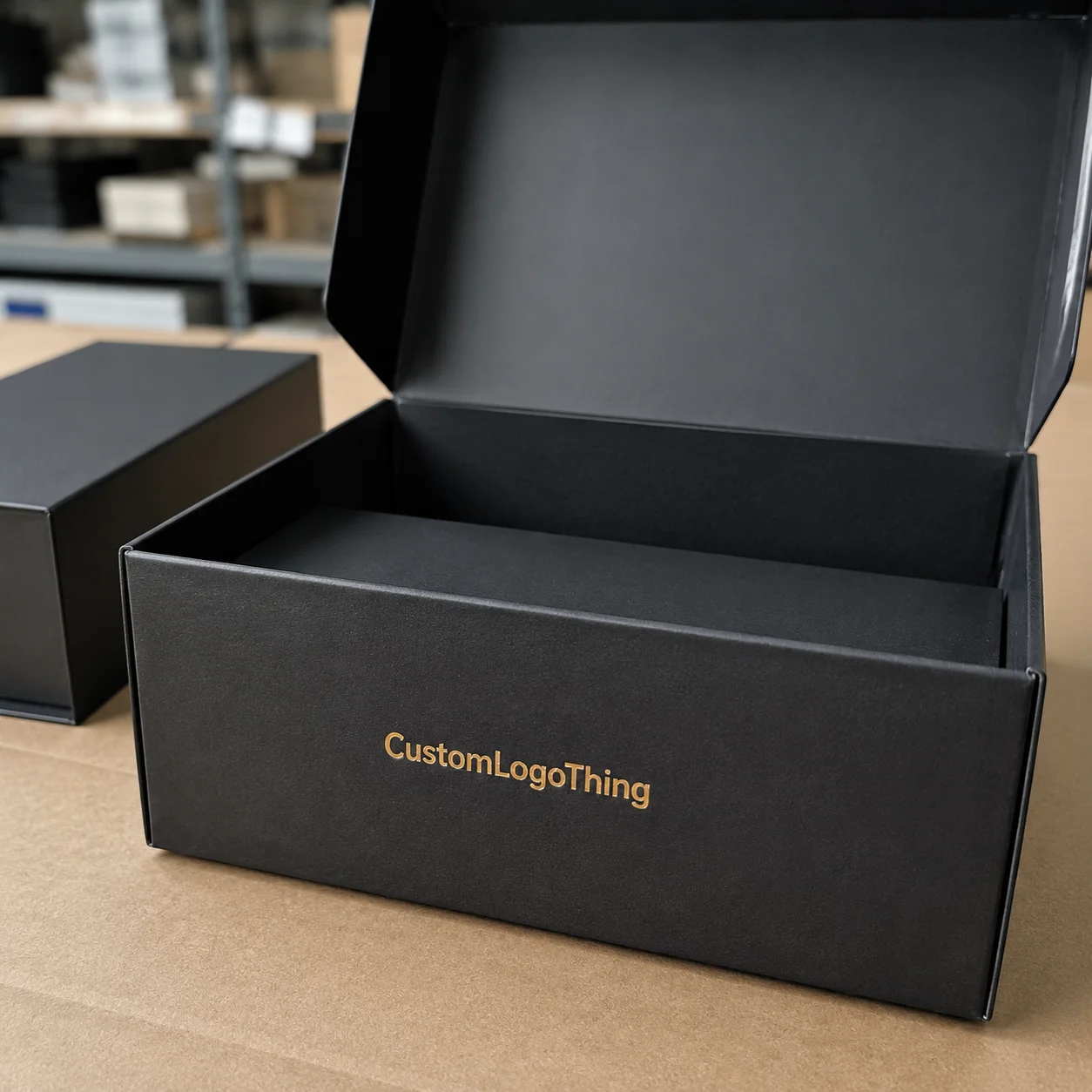
A magnetic closure box is a rigid box format built around a sturdy paperboard shell, usually wrapped in printed or specialty paper, with concealed magnets embedded in the flap and front panel. The closure should feel firm but not forced. When the alignment is right, the lid lands with a clean pull and a crisp close. When it is wrong, the box feels sloppy, and premium perception drops immediately. In many Guangdong factories, the magnets are installed during a dedicated assembly step, then checked again during final hand inspection before the box moves to packing.
The core construction usually includes 1.5 mm to 3 mm rigid board, depending on size and intended use. For many retail-ready projects, 2 mm grayboard is the practical standard, while smaller gift items can sometimes use 1.5 mm board and larger luxury kits may need 2.5 mm. The paper wrap can be art paper, textured stock, specialty kraft, or laminated printed paper. A reliable wholesale magnetic closure boxes supplier will explain which wrap suits your product better, because not every finish behaves the same during folding and edge wrapping. I’ve watched one beautiful concept fall apart simply because the wrap stock fought the corners like it had a personal grudge against the board.
Customization is where these boxes become more than containers. Matte lamination gives a controlled, low-glare look. Gloss lamination adds brightness and stronger color pop. Soft-touch coating creates a velvety handfeel that works well for luxury cosmetics and gifting. Foil stamping, embossing, debossing, and spot UV all change how a customer interprets the brand before they even open the box. That matters. A lot. If you’ve ever picked up a box and immediately thought, “Oh, this brand has its act together,” that feeling did not happen by accident. It often starts with a controlled production spec like 157gsm coated art paper over 2 mm rigid board, then a clean foil pass from a factory in Dongguan or Foshan.
In a supplier meeting I attended last year, a client asked whether spot UV was worth it on a fragrance box. The answer depended on the rest of the system. On a dark wrap with restrained copy, yes, because the highlight contrast looked intentional. On a busy layout with six claims and three logos, no, because the effect got lost. A good wholesale magnetic closure boxes supplier should say that plainly rather than selling every finish option in the catalog like a kid showing off trading cards. In practical terms, the right finish choice can save $0.08 to $0.22 per unit if it avoids unnecessary decoration.
Common use cases include cosmetics, apparel, gifts, electronics, subscription kits, candles, and corporate packaging. I’ve also seen them used for VIP mailers and product launch kits, especially when the brand wants something sturdier than a folding carton but less expensive than a full presentation case with a tray assembly. A buyer in Shanghai once used 500 custom magnetic boxes for a partner event, and the boxes did more for perceived value than the printed brochure inside ever could.
Design choices shape brand perception in measurable ways:
- Heavier boards signal durability and structure, especially at 2 mm or 2.5 mm thickness.
- Refined finishes suggest attention to detail and price discipline, particularly with matte or soft-touch lamination.
- Custom inserts improve product security and presentation alignment, whether made from paperboard or EVA foam.
- Precise wrap edges make the box feel more expensive than it is, even on a 1,000-piece run.
Artwork readiness also matters. Send vector logos, final copy, and high-resolution images at 300 dpi or better. If color accuracy matters, ask for a Pantone reference or a previously approved sample. In my experience, the fastest projects are the ones where the buyer hands over a clean dieline decision and approves one proof cycle, not four. That is one reason a seasoned wholesale magnetic closure boxes supplier is valuable: fewer surprises, fewer redraws, fewer delays. A clean PDF from Adobe Illustrator can save two or three business days by itself.
Compared with other rigid packaging formats, magnetic closure boxes sit in a useful middle ground. They are more premium than two-piece rigid boxes in the eyes of many buyers because the closure feels engineered, but they are often easier to store and ship than fully bespoke presentation cases. They can also be more brand-friendly than standard mailer boxes when the unboxing experience is part of the sale. In a warehouse outside Suzhou, I once saw 8,000 units packed in master cartons with enough care that the edge corners stayed sharp all the way to delivery.
If you are comparing finishes across a larger packaging program, our Custom Packaging Products catalog can help you match the same visual language across multiple box styles, not just one category.
Specifications That Matter Before You Order
If you want the right box, start with the numbers. A strong wholesale magnetic closure boxes supplier should ask for dimensions, board thickness, wrap type, magnet strength, insert material, and print method before quoting. If they do not, they are guessing. Guessing costs money later. A proper spec sheet should also state whether the box is for retail, subscription, or gift use, because the finishing tolerance in a boutique launch box is different from a transport-safe corporate kit.
Dimensions should be based on the product itself, plus clearance for the insert and closure. I usually tell buyers to leave 2 to 4 mm of breathing room around the product unless the item needs a friction fit. Too tight, and insertion becomes annoying on the packing line. Too loose, and the product shifts in transit. That difference shows up in returns, even when the box looks perfect in a photo. I once saw a cosmetics client lose an entire afternoon because the lip serum fit “technically” but not “practically,” which is a polite way of saying the line workers were ready to throw the insert across the room. If the item is glass, I prefer a little extra room and a denser insert rather than a forced fit.
Board thickness is one of the most misunderstood specs. A 1.5 mm board can work for lighter gift items or small cosmetics, but a 2 mm or 2.5 mm board is often better for premium sets, heavier glass, or anything the customer will open and reclose several times. If the box is large, board stiffness matters even more because long panels can warp if the substrate is underbuilt. A trustworthy wholesale magnetic closure boxes supplier will tell you when a design needs thicker board rather than more decoration. In a factory near Dongguan, I watched a sample fail a basic drop test simply because the board was too light for the box footprint.
The wrap type affects both appearance and cost. Art paper is usually the most flexible for print fidelity. Kraft gives a natural look but can mute certain colors. Specialty papers create a distinctive feel, though they may be harder to source consistently. If your brand lives or dies by exact color matching, be careful with uncoated or highly textured wraps, because they can shift ink appearance by a noticeable margin. I’ve seen a soft gray turn unexpectedly warm under the wrong paper, and the designer nearly swallowed the swatch book in despair. For high-volume work, a steady paper supply from a mill in Guangdong or Zhejiang can also prevent color drift between reorders.
Magnet strength should also be checked, especially for larger boxes. The closure needs enough hold to remain closed during handling, but not so much that staff struggle to open it repeatedly. I’ve seen a buyer request oversized magnets, then complain that the box “felt too stiff.” That was not a magnet problem. It was a spec problem. A balanced wholesale magnetic closure boxes supplier knows how to tune the closure for the user experience, often by selecting a standard magnet size and adjusting placement rather than chasing stronger hardware.
Insert design deserves more attention than it gets. For fragile items, a paperboard insert may work if the product is light and stable. For perfume bottles, tech accessories, or items with finished surfaces, foam or a structured molded-style insert may be safer. The goal is simple: stop movement without scuffing the product finish. If the insert is too soft, the product shifts. If it is too hard, it marks the item or makes packaging slower. A 350gsm C1S artboard insert with a die-cut cavity can be a smart middle ground for lighter products, while EVA foam is often better for heavier, breakable items shipped from Shenzhen or Dongguan.
Before ordering, use this decision framework:
- Define the product weight and whether it has glass, metal, or scratch-sensitive surfaces.
- Pick the presentation goal: luxury, eco-natural, corporate, or promotional.
- Match board thickness to the size and handling frequency, typically 1.5 mm, 2 mm, or 2.5 mm.
- Select a finish that supports the brand and the print file, not just the catalog sample.
- Confirm insert material based on protection requirements and assembly speed.
For brands shipping into retail programs, testing should be tied to recognized performance standards where needed. If the packaging is likely to face distribution stress, ask about ISTA testing options at ISTA. If your packaging story includes responsible sourcing, FSC chain-of-custody language may be relevant. And if your team is trying to Reduce Packaging Waste across the program, the EPA has practical guidance at EPA recycling resources.
The best wholesale magnetic closure boxes supplier does not force every buyer into the same spec. They help you balance cost, durability, and brand position. That balance is where the profit sits, especially when the order leaves a factory in Guangdong and lands on a retail shelf in New York, London, or Dubai.
Wholesale Magnetic Closure Boxes Supplier Pricing and MOQ
Pricing for magnetic closure boxes is shaped by more variables than many first-time buyers expect. A strong wholesale magnetic closure boxes supplier will break out the quote by quantity, box size, printing complexity, paper stock, finishing effects, and insert type. If your quote is one flat number with no breakdown, ask for more detail. You Need to Know what is driving the cost, whether that is 2-color printing in Guangzhou, foil work in Dongguan, or custom insert tooling in Shenzhen.
In wholesale, volume matters because setup costs get spread over more units. That includes die setup, print calibration, wrap cutting, magnet placement, and finishing adjustments. At 500 units, those costs may feel heavy. At 5,000 units, the per-box impact drops sharply. In one case I reviewed for a beauty brand, the difference between 1,000 units and 5,000 units cut the per-unit packaging cost by more than 40%, even though the total order value rose. That is the math buyers need to see. For example, a simple 2 mm rigid box with matte lamination might price at $1.20 per unit for 1,000 pieces and about $0.90 per unit for 5,000 pieces, while a foil-stamped version can stay closer to $1.65 per unit at the same 5,000-piece level.
To make comparison easier, here is a practical pricing structure you may see from a wholesale magnetic closure boxes supplier depending on spec complexity and order volume. These are representative ranges, not promises, because board grade, finish, and freight change the outcome.
| Order Quantity | Basic Printed Box | Premium Finish Box | Typical Notes |
|---|---|---|---|
| 500 units | $1.90–$2.80/unit | $2.60–$4.20/unit | Higher setup burden, best for launches or test runs |
| 1,000 units | $1.45–$2.10/unit | $2.05–$3.45/unit | Common MOQ zone for custom rigid packaging |
| 3,000 units | $1.00–$1.55/unit | $1.55–$2.80/unit | Often the sweet spot for brand owners balancing cost and flexibility |
| 5,000 units | $0.78–$1.25/unit | $1.20–$2.20/unit | Better economics if artwork and forecast are stable |
MOQ expectations are tied to production efficiency. A Custom Rigid Box takes more handwork than a folding carton, and a magnetic closure adds alignment steps. That means the minimum may be higher than buyers hope. A good wholesale magnetic closure boxes supplier will explain whether your MOQ is being driven by print plates, wrap sourcing, insert tooling, or labor on the assembly line. In many Guangdong facilities, the practical minimum starts at 500 or 1,000 pieces, but the best unit economics usually appear at 3,000 to 5,000 pieces.
First-time customers should ask for tiered quotes at 500, 1,000, 3,000, and 5,000 units. That lets you see the real unit economics. I often see buyers compare only the first tier and miss the place where their forecast actually sits. That is a mistake. If you expect a reorder, the supplier with a slightly higher initial quote but better repeat pricing can be the cheaper partner over six months. I have seen a brand save nearly $1,200 on a second run simply because the factory kept the same cutter, same wrap stock, and same magnet schedule.
Do not forget hidden costs. Freight can be substantial if the cartons are large and the delivery destination is far from the production site. Proofing may be included or billed separately. Inserts may add a meaningful amount if they require extra cutting or lamination. Remake charges are the worst surprise of all, and they usually come from artwork mistakes that were not caught before production. A disciplined wholesale magnetic closure boxes supplier will flag those risks before the order starts. In a 5,000-piece run, even a $0.08 insert change can move the total by $400, and that is before ocean freight from Ningbo or Shenzhen to the final port.
Here is a simple way to compare quotes:
- Unit price: compare at the same quantity and same spec.
- Setup fees: ask whether they are one-time or recurring.
- Sample costs: separate them from mass production pricing.
- Insert pricing: confirm whether the insert is included.
- Freight terms: know whether the quote is EXW, FOB, or delivered.
Honestly, I think buyers sometimes overvalue the lowest quote because it feels like a win in the moment. Then the packaging arrives with inconsistent magnet placement, weak edge wrapping, or color drift across batches. That is not savings. That is deferred cost. The better wholesale magnetic closure boxes supplier will not always be the cheapest one. It will be the one that makes total landed cost more predictable, especially when the production site is in Guangdong and the destination warehouse is a few time zones away.
How Does a Wholesale Magnetic Closure Boxes Supplier Handle Orders, Proofing, and Timeline?
The order process should be clear from the first email. A reliable wholesale magnetic closure boxes supplier typically moves through quote request, specification confirmation, dieline setup, artwork proofing, sampling, production, inspection, and shipping. If any of those steps are vague, the schedule will wobble. In a well-run factory in Dongguan, each step should have a named owner and a date attached, not just a friendly promise.
What slows projects down most? Missing artwork files. Late approvals. Unclear dimensions. Revision loops that keep reopening the same questions. I’ve seen a buyer send a logo in JPEG format, request three finish changes after the proof, and then ask why delivery slipped by two weeks. The answer was built into the process from the start. Another time, a team had three people “finalizing” the same file, which is corporate language for “nobody was actually in charge.” The magnet box was ready before the approvals were. A clean CMYK PDF and a locked dieline can save several days right away.
Sampling matters more than many teams admit. A digital proof is useful for layout, but it cannot show you the closure feel, the wrap texture, or how the insert holds the product. For new launches, I usually recommend a physical sample or prototype. That is especially true for a premium cosmetic line, a tech accessory kit, or any product where the unboxing moment is tied to social sharing. In Guangzhou, sample lead time is often faster than full production, but the sample still needs enough time for hand assembly and magnet alignment checks.
Timeline depends on the level of customization. A straightforward Custom Rigid Box may move from approved art to mass production faster than a box with foil, embossing, custom insert cutouts, and specialty paper. As a planning guide, samples often take 3 to 5 business days after artwork approval, and full production can range from roughly 12 to 15 business days after proof approval for standard custom work, with longer schedules for more complex builds. A transparent wholesale magnetic closure boxes supplier will tell you where your order sits, rather than giving a vague promise. If you add a custom EVA insert or multiple foil colors, plan for another 2 to 4 business days.
To keep the schedule tight, send this checklist with your inquiry:
- Final box dimensions in millimeters or inches
- Target quantity range
- Product weight and material sensitivity
- Printing method and finish preference
- Insert type and any fit concerns
- Delivery city and shipping deadline
One client in apparel once cut their lead time by almost a week just by finalizing the insert layout before sampling. That reduced back-and-forth and kept the dieline from being redrawn three times. Small discipline, big impact. That is how a strong wholesale magnetic closure boxes supplier earns repeat business. In that project, the final production line in Shenzhen moved straight from proof signoff into assembly without a single layout revision.
Tracking should be part of the handoff, not an afterthought. Buyers should receive the digital proof, a sample confirmation if applicable, a production sign-off, and shipment tracking once the boxes leave the facility. If a supplier cannot provide those checkpoints, they are asking you to trust process without evidence. I rarely recommend that. A shipping milestone from the factory in Ningbo or Guangzhou should include carton count, gross weight, and expected vessel or courier details.
Why Choose Us as Your Wholesale Magnetic Closure Boxes Supplier
Custom Logo Things focuses on the practical side of premium packaging: consistent build quality, strong communication, and enough production discipline to keep repeat orders aligned. As a wholesale magnetic closure boxes supplier, we pay attention to the details that are easy to miss on a spec sheet but obvious on the packing table. Our standard production targets are built around real factory workflows in Guangdong, where a box that looks good on screen still has to survive hand assembly, edge wrapping, and final carton packing.
Our quality control checkpoints are straightforward. We inspect board quality before assembly. We verify print alignment against the approved proof. We check magnet position and closure response. We review the wrapped edges and the final pack-out before shipment. That sequence matters because one weak step can undo the rest of the work. If a 2 mm board is cut slightly off or a magnet lands 2 to 3 mm out of position, the box can feel off even if the artwork is perfect.
I’ve sat across the table from buyers who had been burned by low-cost quotes. Their complaint was never just price. It was the experience of opening a pallet and finding color inconsistency from one carton stack to the next, or magnets that closed at different tensions because the supplier had not standardized placement. That is the kind of issue a serious wholesale magnetic closure boxes supplier should eliminate. And yes, I’ve watched an ops manager flip a lid open and shut ten times in a row like the box had personally offended him. I understood the mood, especially when the previous supplier had shipped 2,400 units with visibly different wrap tension.
For wholesale buyers, the service advantages are concrete:
- Scalable reorders without redesigning the box each time
- Consistent color matching across repeat production runs
- Flexible custom branding for different product lines or seasonal kits
- Responsive revisions when artwork or inserts need adjustment
- Sample availability so teams can approve real structure, not just mockups
There is also a process advantage that is easy to overlook: we can help clients compare specs across multiple packaging categories so the brand language stays consistent. A magnetic closure box should not feel like an isolated purchase. It should fit with your other custom packaging decisions. That is where a supplier with broader packaging experience adds value beyond a single quote, especially when the same brand needs cartons, Rigid Gift Boxes, and shipping mailers produced in the same quarter.
What do buyers risk with a low-cost supplier? Usually one of three things: weak process control, poor communication, or inconsistent output. Sometimes all three. What do they gain with a more disciplined wholesale magnetic closure boxes supplier? Fewer surprises, better repeatability, and packaging that supports the product instead of distracting from it. A quote that is $0.12 cheaper on paper can easily cost more once you account for inspection rejects and delayed launches.
Our job is not to oversell the box. It is to make the box perform its function well enough that your brand looks sharp every time a customer opens it. That sounds simple. It rarely is. But it is achievable when the supplier knows rigid packaging, not just printing, and when the factory floor in Dongguan has a clear standard for board, wrap, magnet, and finishing.
Next Steps to Order Wholesale Magnetic Closure Boxes
If you’re ready to request a quote from a wholesale magnetic closure boxes supplier, prepare the basics first: dimensions, estimated quantity, product weight, print requirements, finish selection, and the delivery destination. The better your input, the better the quote. That saves time on both sides. A complete brief from the start can shorten the quoting cycle by 1 to 2 business days, especially if the supplier is working between Shenzhen and Guangzhou production teams.
I recommend asking for two to three pricing tiers so you can compare the unit cost against your realistic order volume. If you are testing a product, include the sample cost separately. If you plan to reorder, tell the supplier your forecast range so they can price the first run with the next run in mind. That is how you avoid paying twice for the same setup. For example, if you expect to move from 1,000 units to 5,000 units within 60 days, ask for a rate card that shows both quantities side by side.
For fragile, premium, or new-to-market products, request a sample or prototype before mass production. A prototype can show whether the insert fits correctly, whether the magnets close at the right tension, and whether the box feels right in hand. Those details are hard to judge from a PDF. A solid wholesale magnetic closure boxes supplier will encourage that step, not resist it. In many cases, a sample costs $35 to $120 depending on complexity, and that is far cheaper than remaking 3,000 finished units.
Before approving production, confirm these four items:
- Finish selection and whether it changes print appearance
- Insert style and whether it protects the product surface
- Freight expectations and delivery timing
- Artwork approval on the final proof version
One last practical point: if your packaging is part of a launch calendar, build in a buffer. A two-day delay on approvals can become a ten-day delay downstream once the job enters print and assembly. I have seen that happen on a product rollout where the team was ready, but the logos were still being debated in the middle of proofing. The box was fine. The process was not. If your launch is tied to a retail date in Los Angeles, London, or Singapore, give yourself enough time for proofing, sampling, and freight from the factory in Guangdong.
So if you need a wholesale magnetic closure boxes supplier that takes specifications seriously, start with a clean brief and a real target price. Then compare sample quality, communication, and repeat-order stability, not just the first quote. That is how you buy smarter, protect margin, and end up with packaging that looks premium without behaving like a problem. If you are ready to move forward, send your specs to Custom Logo Things and ask for a precise wholesale quote from a wholesale magnetic closure boxes supplier that understands the difference between a low number and a smart buy.
FAQ
What is the typical MOQ for a wholesale magnetic closure boxes supplier?
MOQ usually depends on size, print complexity, and finishing. Custom Rigid Boxes often require a higher minimum than stock-style packaging, especially when you add foil, embossing, or custom inserts. In many Guangdong factories, the starting point is 500 to 1,000 units, but 3,000 to 5,000 pieces usually bring the best per-unit pricing. Ask for tiered pricing at different quantities so you can compare the true per-unit cost before committing.
How long does it take to produce wholesale magnetic closure boxes?
Timeline depends on sampling needs, artwork approval, and finishing complexity. Fast approvals and final files reduce delays, while custom samples and special effects extend the schedule. For many standard custom runs, samples can take 3 to 5 business days after artwork approval, and production can fall into a 12 to 15 business day window after proof approval, though that depends on the spec and the factory schedule in places like Dongguan or Shenzhen.
Can a wholesale magnetic closure boxes supplier make custom inserts?
Yes, most suppliers can produce foam, paperboard, or molded-style inserts depending on the product. The insert should be matched to product weight, shape, and display requirements, especially if the item has a sensitive surface or needs to stay fixed during shipping. A 350gsm C1S artboard insert works well for lighter products, while EVA foam is often better for heavier or fragile items.
What information do I need to request an accurate quote?
Provide dimensions, quantity, material preferences, print details, finish choices, and shipping destination. If you already have artwork, send print-ready files to avoid back-and-forth during proofing. A supplier can only price accurately when the structure and finish are clearly defined, and a quote for 5,000 units in Guangzhou can look very different from a quote for 1,000 units shipped to California.
How do I compare two wholesale magnetic closure boxes suppliers?
Compare more than price: check material quality, print consistency, proofing support, lead time, and freight terms. A lower quote is not a better deal if the supplier has weak color control or unreliable delivery. Ask for samples, ask about repeat-order consistency, and check whether the supplier explains the spec in plain language. If one supplier offers $0.95 per unit but the other offers $1.08 with tighter QC and a 12 to 15 business day timeline, the second option may be the better landed-cost decision.