Wholesale perfume boxes do more than hold a bottle. They shape first impression, reduce handling damage, and set the tone for how a fragrance is judged before it is opened. A carton that fits poorly can weaken presentation and create avoidable breakage. A carton that protects well but looks generic can miss the brand brief. Buyers usually need both: clean structure and controlled visual impact.
The box should be treated as a production spec, not only a design surface. Board grade, closure style, insert fit, and finish all affect how the packaging performs through packing, freight, shelf display, and ecommerce handling. Once those details are stable, reorders become easier because the package can be repeated without constant fit corrections.
Why wholesale perfume boxes lift shelf value and reduce damage
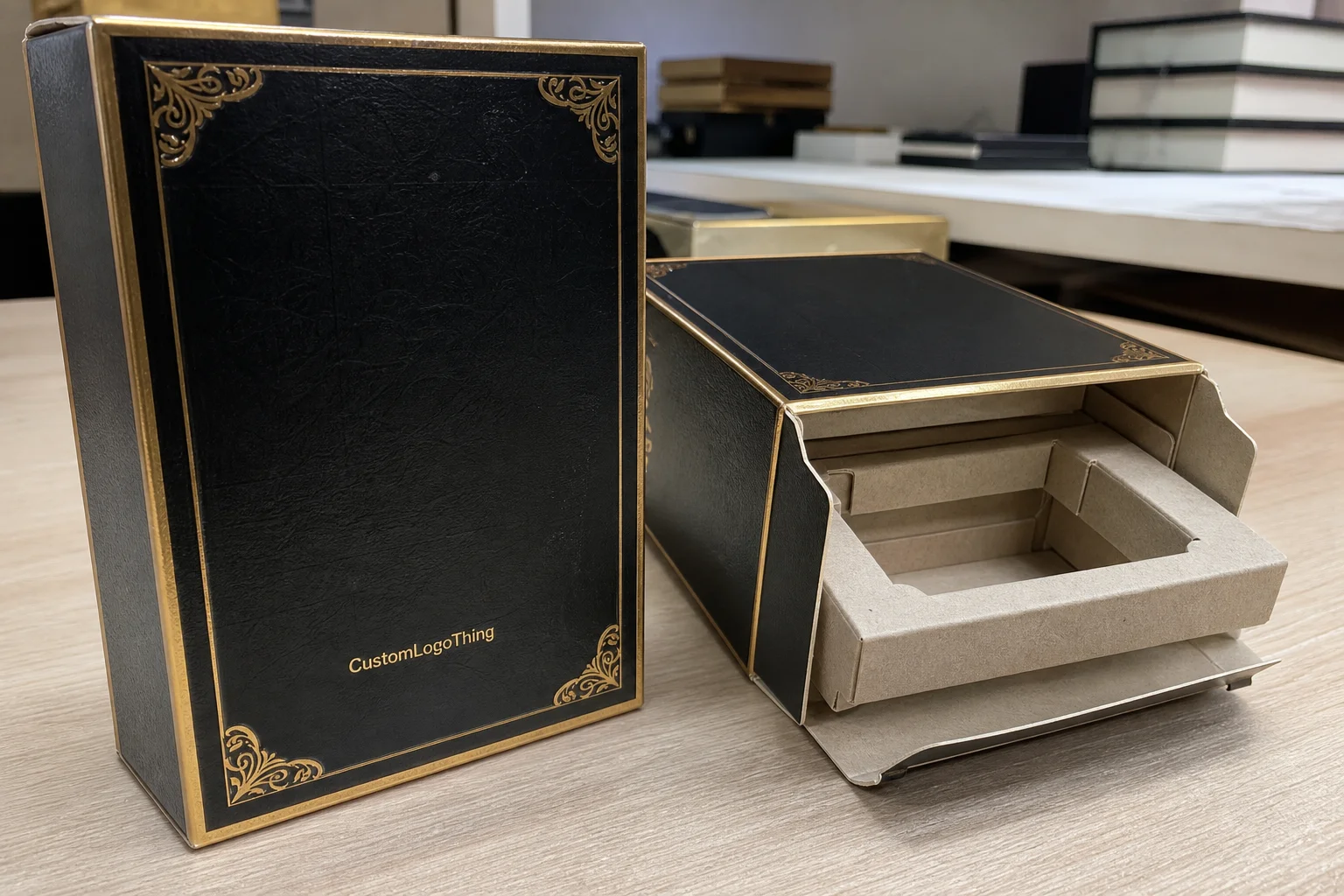
In fragrance, the outer carton often reaches the customer before the bottle is seen. That makes the box part of the product experience, not just transit protection. Crisp folds, accurate registration, and a controlled opening feel help the line appear established and worth the price point.
Protection matters just as much. Glass bottles are vulnerable to cap pressure, corner crush, neck movement, and internal abrasion. If the carton is too loose or the insert does not hold the bottle firmly, the risk shows up in damaged caps, scuffed surfaces, or cracked glass. Those problems usually come from spec gaps, not bad luck.
Ecommerce and retail create different stress points, but both punish weak packaging. Warehouse stacking, shipping vibration, store handling, and customer inspection all expose the same issues. A box that performs in both settings has to be built around actual movement, not only shelf photography.
"A premium-looking carton that lets the bottle shift is a weak spec. The box should protect the glass and still support the brand."
The useful test is simple: does the package add value, hold its form, and keep the bottle stable through the full supply chain?
Perfume box styles that fit glass bottles, inserts, and finish options
The main fragrance formats are folding cartons, rigid set-up boxes, sleeve-and-tray structures, and Magnetic Closure Boxes. Folding cartons are usually the most efficient option for entry and mid-market lines because they are compact, simpler to store, and easier to print at scale. Rigid boxes create more weight and a gift-like feel. Sleeves and trays are often used when the unboxing sequence matters. Magnetic closures sit at the premium end and are common in luxury launches or limited editions.
Bottle shape should drive the structure. A short, wide bottle needs different internal support than a tall narrow one. A heavy base, high cap, or unusual neck profile may require extra headspace or a tighter insert. If the box is sized from a guess instead of the actual bottle, the first problems usually appear during packing: the neck does not seat correctly, the cap presses against the lid, or the bottle shifts inside the carton.
Insert choice is part of the spec, not an afterthought. Paperboard inserts are economical and easy to die-cut. Molded pulp can support fiber-based packaging goals. EVA foam provides a firmer hold when tolerances are tight, though it is not always the best Fit for Brands that want a simpler material system. Custom die-cut supports are often the cleanest answer for unusual bottle profiles.
Finish selection changes both shelf presence and cost. Soft-touch lamination gives a velvety feel. Matte lamination reduces glare and supports metallic accents. Gloss works well for bold color or image-led artwork. Foil stamping, embossing, debossing, and spot UV can all raise perceived value, but they should be used with discipline. Window cutouts can showcase the bottle, though they reduce printable area and can weaken the structure if overused.
For brands building a broader packaging system, it helps to align fragrance cartons with related branded items from Custom Packaging Products. For recurring procurement, the Wholesale Programs page is the better reference because reorders depend on stable specs more than on one-off styling.
Structural specifications that keep fragrance packaging consistent
Good wholesale perfume boxes start with accurate measurements. Before quoting, the supplier should know bottle height, width, depth, cap profile, neck clearance, and the allowable movement inside the carton. Closure style matters too. A tuck end box behaves differently from a rigid tray or magnetic lid, so the structure has to match the bottle and the intended channel.
Board selection changes both print quality and physical feel. SBS is common when sharp graphics and a smooth surface matter. Coated kraft supports a more natural look. CCNB can make sense in cost-sensitive programs. Rigid board wrapped with printed paper gives a heavier presentation and is often used when the box needs to feel more giftable. There is no universal best board; the right one depends on bottle weight, channel, and target positioning.
Physical performance should be discussed early. Ask about crush resistance, corner integrity, abrasion resistance, and how the carton behaves inside a master case. A box can look excellent in a photo or on a table and still fail after stacking or transit vibration. Dielines and prototypes are the best way to confirm fold accuracy, insert fit, and closure alignment before production starts.
Testing standards can help narrow the spec. Packaging tests tied to ISTA are useful when the product will move through multiple handling points. If the brand wants FSC or recyclability claims, those should be planned deliberately rather than assumed. Material choice does not solve every problem, but it gives buyers a clearer basis for comparing options.
- Measure the bottle itself - include cap height, neck profile, and base width.
- Confirm the insert type - paperboard, pulp, foam, or custom die-cut support.
- Set the finish list early - lamination, foil, embossing, debossing, spot UV, or a window.
- Approve the dieline before artwork is locked - this avoids late changes to folds or panel sizes.
- Request a sample for heavy or unusual bottles - fit issues are easier to catch on a physical prototype.
Wholesale pricing, MOQ, and quote factors that change unit cost
Price in fragrance packaging is driven by a few variables: box style, board thickness, insert complexity, decoration method, and order quantity. A basic folding carton with simple print will cost far less than a rigid box with foil, embossing, and a custom insert. The common mistake is comparing headline prices without confirming what is included.
MOQ varies by structure. Folding cartons usually support lower minimums because they are faster to produce and easier to store. Rigid constructions, specialty wraps, and custom tooling often increase the minimum. Small launches can still justify a higher MOQ if the presentation matters, while simpler cartons usually work better when speed and cash control matter more.
Unit cost usually drops as volume increases because setup, tooling, and prepress work are spread across more pieces. The reduction is real, but not always linear. A 5,000-piece order is not automatically half the unit price of 2,500 pieces because some setup costs stay fixed. Reorders tend to become easier and cheaper once the spec is locked.
Indicative ranges below are useful for early planning, but they move with board grade, decoration, insert choice, and shipping terms.
| Box style | Typical use | Typical MOQ | Indicative unit cost | Notes |
|---|---|---|---|---|
| Folding carton | Entry to mid-market fragrance | 1,000-3,000 | $0.18-$0.45 | Best for efficient print runs and lower storage burden |
| Rigid set-up box | Premium retail or gift set | 1,000-2,000 | $1.10-$3.50 | Heavier feel, more hand assembly, higher freight weight |
| Sleeve and tray | Luxury reveal-style presentation | 1,000-2,500 | $0.65-$1.80 | Good for controlled opening and shelf presence |
| Magnetic closure box | High-end gift packaging | 1,000-2,000 | $1.50-$4.50 | Usually used for premium launches and limited editions |
Quotes should also include shipping method, transit packaging, sample charges, proofing fees, and any special tooling for windows or inserts. A lower quote can become expensive if it excludes the finish you need or assumes a lighter structure that will not survive transport. The cleanest comparison is one where every supplier is quoting the same spec set in writing.
Production steps, proof approval, and realistic turnaround windows
The production flow for wholesale perfume boxes usually starts with a quote request, then moves to spec review and dieline confirmation, artwork submission, proofing, sample approval, production, finishing, packing, and shipment. If any stage is unclear, delays tend to multiply. Clean dimensions and press-ready artwork reduce that risk more effectively than hurried follow-up later.
The most common delays are predictable: artwork arrives without bleed, bottle dimensions are incomplete, finish selections change after proofing, or the sample shows that the insert is too loose around the neck or too tight at the cap. A physical pre-production sample takes longer than a blind run, but it can prevent a more expensive mistake if the fit is not right.
Proof approval should cover barcode placement, panel alignment, fold lines, color expectations, and insert fit. If the design uses a magnetic closure or a sliding tray, the closing action should be tested with the actual bottle rather than a flat proof. That small step catches problems that are easy to miss on screen and expensive to fix later.
Turnaround depends on structure. Simple folding cartons usually move faster than rigid boxes with custom inserts or specialty finishing. Sample approval can take roughly 5-10 business days in many workflows, while production often lands in the 15-30 business day range after approval. Those ranges shift with order size, seasonal workload, and build complexity. Buyers who know quantity, artwork status, and packaging style early usually get more reliable schedules.
For teams thinking about fiber and disposal, the EPA recycling guidance can help frame how paperboard and mixed-material packaging fit into broader recovery conversations. It does not replace packaging engineering, but it is useful context when material selection is under review.
What repeat fragrance programs need from a supplier
Repeat fragrance programs depend on consistency more than novelty. The second order has to match the first in board tone, print density, insert sizing, and closure feel. If the replenishment run comes back slightly off-color or too loose at the neck, the packaging starts working against the line instead of supporting it.
Controlled production helps reduce that risk. Saved dielines, approved material specs, and clear internal records keep the job from drifting between runs. Small changes in paper weight or coating can alter closing action, especially in rigid or sleeve-based builds, so the supplier should manage those changes deliberately rather than by substitution.
Direct manufacturing support is useful because it makes tradeoffs explicit. A stronger insert may reduce breakage but raise cost. A thicker board may improve shelf feel but increase freight weight. Foil can add perceived value, while a simpler print structure can reduce lead time and registration risk. Those are practical decisions, not abstract branding choices.
For lines with multiple SKUs, packaging alignment matters. Fragrance cartons, secondary presentation boxes, and related retail packaging should feel like part of one system. That is easier to control when the supplier tracks repeat specifications carefully and applies them across formats without rebuilding the job each time.
For buyers evaluating wholesale perfume boxes as part of a larger launch plan, the main benefit is stable output: fewer surprises, cleaner replenishment, and packaging that supports the product instead of competing with it.
Next steps to order sample sets and lock final artwork
The fastest way to move a perfume packaging order forward is to send bottle dimensions, target quantity, closure style, finish preferences, and reference images together. That lets the quote team price against the actual product instead of a rough guess. If the bottle is heavy, unusually shaped, or intended for premium shelf display, a sample or proof is worth requesting before full production starts.
It also helps to lock the artwork, dieline, and packing method together. The box, insert, and shipping plan should agree before production begins. A carton designed for shelf display needs different priorities from one meant mainly for ecommerce, and that distinction should be made early.
Ask for unit price, MOQ, tooling, finish, and turnaround side by side. That makes tradeoffs visible. If one quote is cheaper because it excludes a window, uses a lighter board, or assumes a simpler insert, that should be obvious before approval. This matters with wholesale perfume boxes because the carton is part of the fragrance's perceived value.
Once the sample is approved and the artwork is final, production becomes much more predictable. The structure is locked, the presentation is defined, and the packaging supports the bottle instead of creating avoidable risk.
What is the usual MOQ for wholesale perfume boxes?
MOQ depends on the box style. Folding cartons usually start lower than rigid perfume boxes, while specialty finishes and custom inserts can raise the minimum. The most accurate quote comes from sharing the exact bottle size, finish request, and target quantity up front.
Which materials work best for wholesale perfume boxes with glass bottles?
Heavier SBS, coated kraft, and rigid board are common choices when the bottle needs stronger support and a better unboxing feel. Insert selection matters just as much as the outer board because it controls movement inside the box. The best material depends on bottle weight, shipping conditions, and the brand tier you want to present.
Can wholesale perfume boxes include foil, embossing, or a window cutout?
Yes. These are common upgrades for fragrance packaging when the design calls for more shelf presence. Foil and embossing add premium detail, while window cutouts show the bottle but reduce surface area for graphics. Each finish affects cost and production steps, so it should be confirmed before the final quote is approved.
How long does production usually take after proof approval?
Turnaround depends on box structure, decoration, order size, and whether a sample must be approved first. Simple folding cartons usually move faster than rigid boxes with custom inserts or specialty finishing. The most reliable schedule comes from approving artwork, dimensions, and packaging details before production begins.
How do I get an accurate quote for wholesale perfume boxes?
Send the bottle dimensions, order quantity, box style, insert type, and finish preferences together. Include any printing requirements such as foil, embossing, matte lamination, or spot UV. If you want a realistic unit price, ask the supplier to quote the same spec set for every option under review.