Address Return Labels Personalized may sit in a small corner of the packaging budget, but they affect more than most teams expect. On clothing orders, the return label is often the last branded detail a customer sees before the parcel leaves the building, and it can influence how organized, intentional, and reliable the shipment feels.
A good return label does three jobs at once. It identifies where the parcel should come back if something goes wrong, it keeps the pack line moving without handwritten fixes, and it gives the packaging a cleaner visual finish. That mix of function and appearance is why apparel brands pay attention to the label spec even when the item itself looks simple.
The design work is rarely complicated. The production decisions are. Stock choice, adhesive strength, label size, print method, and finishing all shape how the label behaves on real packaging, not just on a proof. A label that looks polished on screen can still peel at the edge, jam in a dispenser, or crowd the address once it lands on a mailer.
What personalized return address labels do for apparel brands
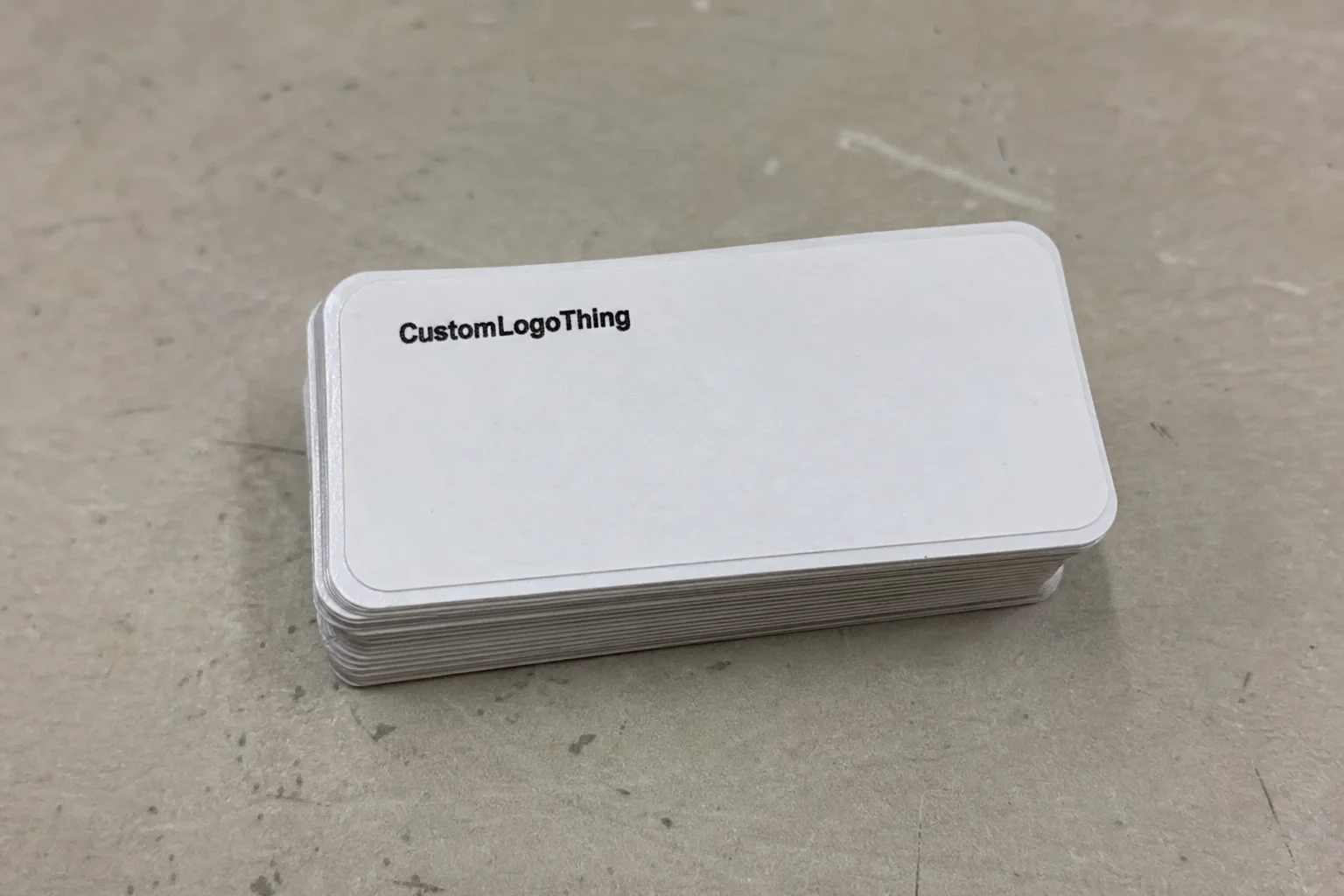
Personalized Return Address Labels are preprinted or custom-printed labels that combine the return address with brand details such as a logo, typography, border treatment, or a restrained color system. For apparel businesses, that matters because the shipping package is part of the product experience, not just the transport layer. Customers may never comment on the label directly, but they notice when a parcel feels consistent from the first glance.
The operational gain is straightforward. Handwritten return information disappears, which reduces mistakes and speeds up repetitive pack-out work. That matters most for brands dealing with exchange-heavy categories, seasonal launches, outlet replenishment, or gift orders. A few seconds saved on each parcel becomes visible once the team is processing hundreds of packages a day.
There is also a brand effect that is easy to underestimate. A generic label says the package moved. A branded one says the company behind it paid attention to the details. That difference can be subtle, but in clothing retail, subtle is often enough to shape whether a package feels premium or merely functional.
In practical terms, address return labels personalized support outgoing shipments, exchanges, repair programs, wholesale resends, and customer service replacements. They also reduce dependency on manual handwriting in mixed-shift packing environments, where small errors are common and consistency is harder to maintain.
If the return address is wrong, the label has already failed its most important job. Everything else is secondary.
How address return labels personalized are produced and approved
The production path is usually simple, but the details still matter. A buyer sends the return address, logo or wordmark file, preferred label size, quantity, and the intended packaging surface. From there, the supplier builds a proof, checks layout accuracy, and confirms whether the text remains readable at actual size. If the job is more than a plain text label, the proof stage is where the real quality control begins.
For address return labels personalized, the most important early decisions are the ones that affect use on the floor. Will the labels be applied by hand or from a dispenser? Are they going on paper mailers, coated cartons, poly bags, or something else with a difficult surface? Does the operation need sheets for small-volume use, or rolls for a faster packing line? These choices determine both cost and performance.
Material compatibility is where many projects stumble. Paper labels can work well on clean, dry cartons and mailers, but they are not always the right answer for glossy poly bags or humid storage rooms. Film labels cost more, yet they hold up better against moisture and abrasion. Adhesive choice matters just as much as face stock, because a label that sticks on day one may still lift after a parcel sits in a warm warehouse or gets handled several times in transit.
Timelines depend on artwork readiness, proof revisions, and whether any specialty material is involved. A clean, text-driven label can often move from proof to production in roughly 5 to 10 business days after approval. More detailed work, such as custom inks, specialty finishes, or unusual die cuts, often needs 12 to 15 business days. If the address is still changing, the warehouse has moved, or the fulfillment partner is not final, it is better to stop and lock the copy before production begins. Reprinting a run because the address changed is the least efficient way to spend packaging money.
The proof stage should catch more than spelling. Check line breaks, logo scale, return address hierarchy, spacing, and whether the label still reads cleanly when reduced to real size. If staff will apply the label manually, ask for a proof that reflects the final dimensions, not a loose digital mockup. Design approval and production approval are not the same thing.
Cost and pricing factors that shape your quote
Pricing for labels is driven by a small number of variables, but they interact in ways that are easy to miss. Quantity is usually the biggest driver. Size follows close behind. After that come material, finish, print coverage, format, and whether the job is produced on sheets or rolls. For address return labels personalized, small runs typically carry a higher unit price because setup and proofing are spread over fewer labels.
The commercial logic is simple. Fixed costs dominate low-volume orders. A 250-piece order can feel expensive because the setup effort sits on top of a very small run. At 5,000 pieces, the same label often lands in a much more efficient unit range. For straightforward paper labels with modest coverage, many buyers see pricing around $0.18-$0.28 per unit at 5,000 pieces. Small quantities can be several times that once setup is included.
| Label option | Best use | Typical unit price range | Cost note |
|---|---|---|---|
| Sheet labels on paper stock | Small teams, low-volume orders, manual packing | $0.30-$0.55 | Lower setup complexity, but slower for high-throughput fulfillment |
| Roll labels on paper stock | Repeat shipments, exchange programs, faster pack lines | $0.18-$0.28 | Usually the best balance of speed and cost at higher quantities |
| Weather-resistant film labels | Poly mailers, humid storage, rough handling | $0.25-$0.45 | Better moisture resistance, with a higher material cost |
| Premium finishes or specialty effects | Brand-led packaging, limited drops, gift-ready shipments | $0.40-$0.80 | Foil, texture, or heavy ink coverage can raise production cost fast |
Specialty coating, metallic ink, or a heavier paper face can move the price more than many buyers expect. So can stronger adhesive for cold storage, damp packing rooms, or coated mailers. The hidden cost is not always the quote itself. Reprints caused by the wrong adhesive, weak artwork, or incorrect address data can waste more margin than a slightly better spec ever will.
If you are comparing suppliers, ask what is included in the quote. Proofing, die setup, and finishing are sometimes folded into the price, and sometimes charged separately. That difference matters, especially on small runs. For a broader look at packaging options, see Custom Labels & Tags and compare paper, film, and finish choices against your own order volume.
Choosing the right label spec for clothing shipments
- Define the use case. A label for outgoing parcels is not automatically right for returns, retail bags, or internal bin systems. Clothing operations often use several label types, and each one should be chosen for the surface and handling conditions it will face.
- Select the format. Sheet labels suit smaller operations and occasional use. Rolls are better for teams processing orders all day. If the packing line is large enough, roll-fed labels usually reduce friction because they feed faster and stack more cleanly.
- Match adhesive and stock to the package surface. Paper mailers, coated boxes, and poly bags behave differently. On slick surfaces, a stronger acrylic adhesive is usually safer than a basic general-purpose adhesive.
- Decide how much branding belongs on the label. Logo, return address, border, color bar, and small instructions can all fit, but readability has to win. The brand mark should support the address, not crowd it out.
- Check legibility at real distance. Read the label from a packing station, then from arm’s length, then after it has been applied to the actual package. If the design only works on a monitor, the proof is not finished.
For clothing shipments, restrained usually performs better than decorative. A compact layout with disciplined typography and a controlled amount of color often looks more premium than a crowded design with too many visual effects. The best result is a label that is easy for staff to apply, easy for carriers to read, and visually aligned with the rest of the packaging system.
If the parcel is likely to face vibration, drop handling, or repeated warehouse sorting, sample testing matters more than assumptions. Transit-test guidance from ISTA is a useful benchmark when you want to evaluate how packaging behaves under shipping stress. If the brand is also making sourcing claims, FSC certification can help document responsible fiber sourcing for paper-based materials.
Common mistakes that cause waste or delays
Size is the first place many jobs go wrong. Too small, and the return address becomes cramped or the logo gets pushed into the corner. Too large, and the label dominates the package in a way that looks clumsy instead of controlled. Clothing brands often make this mistake by borrowing a size from another packaging line instead of measuring the actual mailer or carton.
Finish is the next problem. A soft-touch or heavily coated surface may look refined, but it can smear, haze, or resist scanning if the print file is not matched to the stock. Matte finishes usually read better under warehouse lighting, while glossy labels need tighter print control to avoid glare. The look matters, but legibility comes first.
Address errors are expensive and avoidable. A return label should use the final warehouse or fulfillment address, not an older office address or a contact line that never got updated. This becomes especially important for brands with more than one storage point, seasonal third-party logistics partners, or separate domestic and export operations.
- Overdesigning the label: too many colors, icons, or decorative elements can reduce readability.
- Ignoring application speed: a label that takes extra alignment time slows down every packer on the floor.
- Choosing the wrong finish: premium does not help if the label scuffs before the parcel leaves the facility.
- Skipping a surface test: a proof on paper is not the same as a label applied to the actual package.
- Forgetting address governance: one outdated warehouse line can create a wave of misrouted returns.
There is also a second-order cost that tends to be overlooked: staff frustration. If labels curl, peel at the edge, jam in the dispenser, or require two hands to place correctly, the packing team slows down. That sort of friction does not feel dramatic in a meeting, but it adds up during a full shift. Good label specs reduce the number of tiny decisions packers have to make.
Expert tips for brand consistency and speed
Keep the design restrained. A return label is not a billboard. The strongest versions give the brand enough presence to feel intentional, then get out of the way so the address can do its job. For address return labels personalized, that usually means one strong typeface, a controlled palette, and clean spacing that matches the rest of the packaging system.
Try to align the label with the other touchpoints in the shipment. If care labels, hangtags, and mailers use a narrow sans-serif and plenty of white space, the return label should echo that rhythm. Customers may not consciously name the consistency, but they feel it. A mismatched label can make a well-made garment package seem loosely managed.
Standardize placement in the packing SOP. If the label always lands in the same spot on the mailer or box, staff move faster and mistakes drop. A small shift may not sound serious, but on a production line it can affect scan visibility, fold clearance, and the chance of crossing a seam. The best teams treat placement as part of the spec, not a last-minute judgment call.
Sample runs are worth the time when you are changing materials, moving warehouses, or launching a new seasonal package. A small proof batch can show whether the adhesive likes the packaging film, whether the address still reads cleanly after handling, and whether the branding sits in the right visual balance. If the first run fails, the fix is manageable. If 10,000 labels fail, the lesson gets expensive.
A label has to survive the pack line first, then the truck, then the customer’s hands.
If your brand wants a fuller labeling system, Custom Labels & Tags can be configured to keep typography, material choice, and finishing consistent across multiple package touchpoints. That kind of consistency reduces decision fatigue on the floor and makes replenishment easier to manage.
What to do next before you place an order
Start with the packing flow itself. Where are labels slowing the team down? Where do mistakes happen most often? Is the issue handwriting, placement, adhesive failure, or a lack of consistency between shipments? Once the bottleneck is clear, the right spec becomes much easier to choose.
Measure the actual label area on the package. Do not estimate from memory. Check the mailer, the box, and any secondary packaging used for returns or exchanges. Then gather the return address, logo file, preferred quantity, and whether sheets or rolls make more sense for the team. A clean quote depends on clean inputs.
Compare at least two versions: one optimized for speed and one optimized for presentation. In many clothing operations, the practical choice is not the most decorative option. It is the one that balances unit cost, application speed, and brand fit without creating rework. If budget is tight, a simple paper roll label often performs better than a premium spec that is awkward to handle.
Before approving production, verify the proof at actual size, confirm the return address format, and lock the adhesive choice to the real packaging surface. If you want address return labels personalized that help clothing parcels move faster and still look polished, the safest path is to start with a clean spec, test it on the actual mailer, and scale only after the first run behaves the way it should.
Are address return labels personalized better than handwritten returns for clothing orders?
Usually yes. They look more professional, reduce handwriting mistakes, and speed up packing when you process repeat shipments or exchanges. For clothing brands, they also help the package feel more consistent with the rest of the identity system.
What size should personalized return address labels be for apparel packaging?
Pick a size that keeps the return address easy to read without taking over the package. Smaller mailers often need a compact label, while boxes can handle a larger branding area. The right size depends on how much text you need, how much logo space you want, and where the label will sit.
How long does production usually take for personalized address return labels?
Timing depends on artwork readiness, proof approval, quantity, and finishing. Simple orders can move faster than custom finishes or specialty materials. If the design is final and the return details are correct, rush options may be possible.
What affects the price of personalized return address labels the most?
Quantity, size, material, finish, and color count are the main drivers. Setup and proofing can also affect the final quote, especially for smaller runs. Standard materials and larger quantities usually lower the unit price.
Can personalized return labels work with different clothing packaging materials?
Yes, but the adhesive and stock should match the surface. Mailer bags, coated boxes, and textured packaging can all need different specs. A sample test is the cleanest way to confirm that the label stays flat, readable, and secure.


