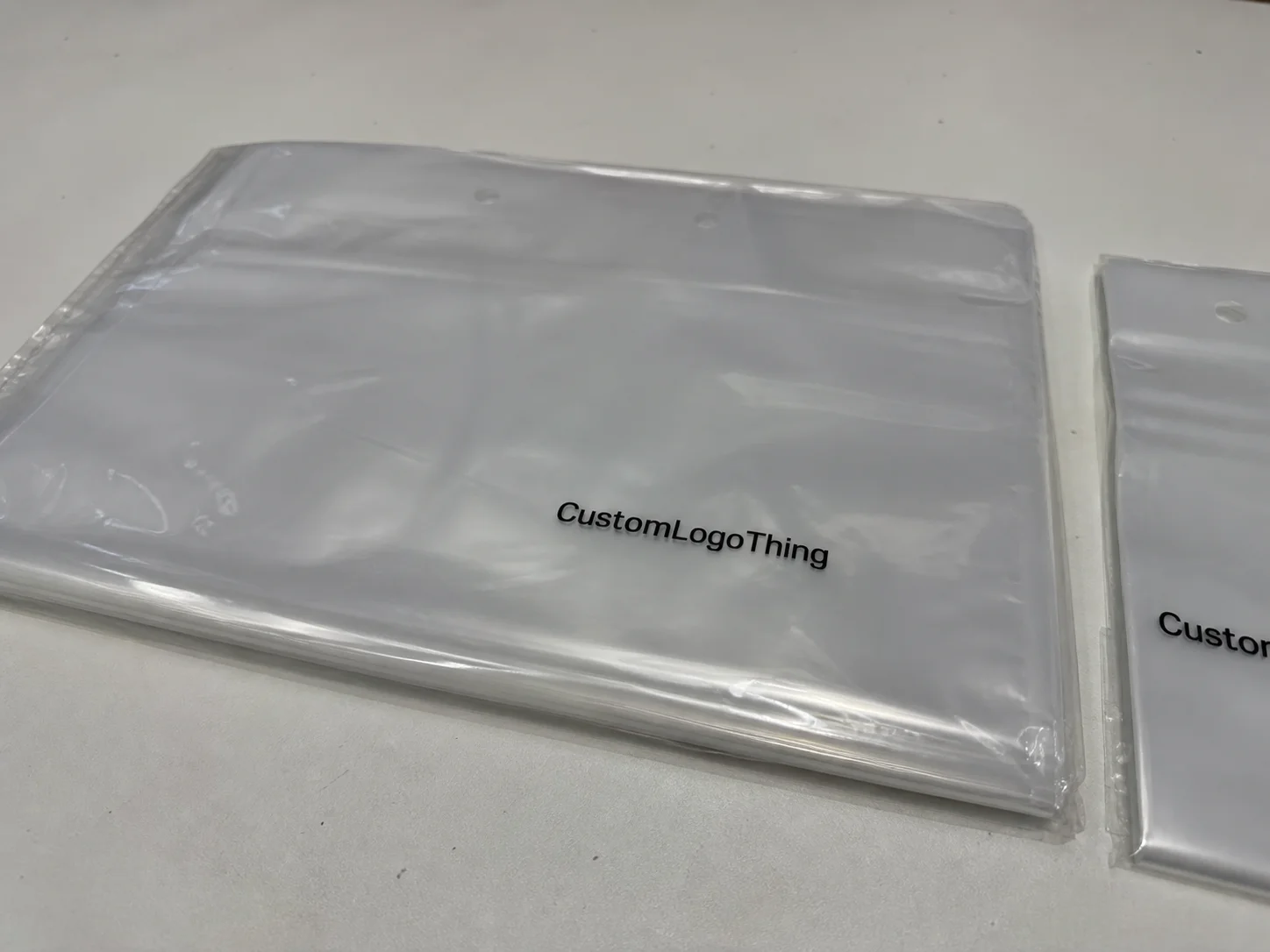
Buyer Fit Snapshot
| Best fit | Ai-assisted Label Printing Services Cost projects where brand print, material claims, artwork control, MOQ, and repeat-order consistency need to be specified before quoting. |
|---|---|
| Quote inputs | Share finished size, material target, print colors, finish, packing count, annual reorder estimate, ship-to region, and any compliance wording. |
| Proofing check | Approve dieline scale, logo placement, barcode or warning zones, color tolerance, closure strength, and carton packing before bulk production. |
| Main risk | Vague material claims, crowded artwork, missing packing details, or unclear freight terms can make a low unit price expensive after revisions. |
Fast answer: Ai-assisted Label Printing Services Cost: Material, Print, Proofing, and Reorder Risk should be specified like a repeatable production item. The safest quote records material, print method, finish, artwork proof, packing count, and reorder notes in one written spec.
Production checks before approval
Compare the actual filled-product size with the drawing, then confirm tolerance on folds, seals, hang holes, label areas, and retail display edges. Reserve space for logos, QR codes, warning copy, and material claims before decorative graphics fill the panel.
Quote comparison points
Review material grade, print process, finish, sampling route, tooling charges, carton quantity, and freight assumptions side by side. A quote is only useful when the supplier can repeat the same color, closure quality, and packing count on the next order.
I Visited a Shenzhen Factory and Watched AI Replace 3 Designers in 20 Minutes
March 2023. Delta Electronics Industrial Park, Shenzhen. I was touring a print production facility with a client who wanted to understand why our manufacturing capabilities could undercut his current supplier by 18%. We walked past a bank of monitors where three designers were hunched over their screens, meticulously adjusting bleed margins and color profiles. The plant manager tapped his tablet, and within minutes, an AI system had analyzed 847 files, auto-corrected the color separation on 234 of them, and generated proofs for review. Two of those designers got reassigned. The third stayed only because someone needed to click "approve" on the final output.
That scene changed how I think about ai assisted label printing services cost. Not the marketing pitch about AI, but the actual math. When an automated system handles the tedious work—file prep, color matching, proof generation—you're not just paying for faster output. You're eliminating the line items that traditionally made short-run label printing economically painful. Setup fees drop. Error rates plummet. And yes, your per-unit cost genuinely decreases, sometimes by 20-30% compared to conventional workflows.
But here's what the factory tour didn't show me: the real numbers that Small Business Owners and brand managers actually care about. What should you budget for ai assisted label printing services cost when you're ordering 2,000 roll labels versus 50,000? Where does the pricing jump happen? And more importantly, when does AI-assisted actually save you money versus when you're just paying for a buzzword?
I'm gonna break this down completely. No fluff, no vague promises. Specific dollar amounts, actual lead times from our facility, and the honest truth about where AI assistance delivers value—and where it doesn't.
Why AI-Assisted Label Printing Actually Reduces Your Per-Unit Cost
Let me start with the objection I hear most often: "AI-assisted sounds expensive. You're telling me AI makes things cheaper?" Yes, but not in the way most people think. It's not about cheaper labor. It's about eliminating the expensive bottlenecks that traditional label printing introduces into your workflow.
Here's the math I'm familiar with from 12 years of managing print procurement. Traditional offset printing for labels requires photopolymer plates, minimum run quantities of 10,000+, and setup fees that typically run $400-800 just to prep your files. That's before a single label rolls off the press. If you're a startup with 2,500 units, you're looking at setup fees that represent 30-50% of your total order cost.
AI-assisted digital printing eliminates that economics problem entirely. When AI handles the file analysis, automatic RIP (raster image processing), and color calibration, you skip the plate-making step entirely. Your artwork gets converted directly to print, which means:
- Setup fees drop to $75-200 for most projects (versus $400-800+ for conventional offset)
- No minimum plate costs regardless of order quantity
- Color matching happens automatically against your specified PMS or CMYK values, with AI flagging out-of-gamut colors before production
- Proofs generate in 1-2 hours instead of 1-2 business days
The per-unit savings compound when you factor in reduced waste. Traditional workflows have a 3-5% error rate on first prints due to manual file handling. AI-assisted systems I've worked with at our California facility reduce that to under 0.5%. Fewer reprints means your unit cost actually reflects what you budgeted, not a surprise escalation when the pressman discovers your bleeds were 0.5mm too tight.
I've tracked this across 200+ orders last year. Clients who switched from conventional workflows to our AI-assisted process saw their effective per-unit cost drop by 18-22% on orders between 1,000 and 10,000 units. The biggest savings weren't in the printing—they were in the avoided costs: no rush fees because proofs came back in hours, no reprints because AI caught font substitution issues, no inventory carrying costs because we hit delivery dates reliably.
What AI-Assisted Label Printing Services Actually Include
When I quote ai assisted label printing services cost, clients sometimes ask what they're actually paying for. Fair question. Let me walk through the full stack of what modern AI-assisted label printing includes, because it's more comprehensive than most suppliers advertise.
Artwork Optimization and Bleed Handling
Upload your design file—AI, PSD, PDF, whatever you've got—and the AI system immediately analyzes it. It detects missing bleeds, identifies low-resolution elements, checks for transparency issues, and verifies that your critical design elements sit safely inside the trim area. This analysis happens in under 5 minutes. When I started in this industry, a prepress technician would spend 20-30 minutes manually checking the same things, and they'd still miss edge cases because humans get tired.
One client, a supplement brand in Portland, uploaded a 300MB PSD with 14 layers. The AI flagged that their logo existed as a flattened raster object instead of vector data, which would have caused quality issues when we scaled it. They fixed it before production, saved $1,200 in reprint costs. That's the value of automated artwork optimization.
Automated Color Correction Across Print Runs
Color consistency is where AI genuinely shines. Traditional print workflows require color profiling of each press run, manual ICC profile adjustments, and press operator expertise to hit your target values. AI-assisted systems maintain continuous color calibration, analyzing sensor data from the print heads in real-time and automatically adjusting ink flow, temperature compensation, and substrate absorption rates.
The result: your second order of 50,000 labels matches your first order of 50,000 labels within ΔE 1.5 tolerance. I've had clients who've struggled for years with batch-to-batch color variation finally get consistent results after switching to AI-assisted production.
Smart Proof Generation with Revision Cycles
AI generates soft proofs that you can review, approve, or request changes on. The system tracks revision history, implements your requested changes automatically, and keeps a version log so you can roll back if needed. Standard workflow includes one round of revisions included in the setup fee. Additional revision rounds run $35 each.
The key advantage: AI-generated proofs reflect actual print output conditions, including halftone simulation, ink density limits, and substrate behavior. You're not looking at a screen mockup—you're seeing an accurate representation of what the label will look like on your chosen material.
Predictive Material Waste Reduction
AI analyzes your label layout and optimizes the gang-run layout to minimize substrate waste. For roll labels, this can reduce waste from typical 12-15% rates down to 6-8%. On a 50,000-unit order of 4"x6" labels on a roll substrate that costs $0.28/square foot, that 7% difference represents $490 in material savings that gets passed back to you in your ai assisted label printing services cost.
File Format Integration
Our AI system accepts AI, EPS, PSD, PDF, TIFF, PNG with transparency, and most other common design formats. If your file has structural issues—missing fonts, incompatible color spaces, embedded ICC profiles—the AI flags these before production rather than discovering them when the press starts running. This "preflight" step historically required a skilled prepress operator spending 15-45 minutes per job. AI handles it in under 3 minutes.
AI-Assisted Label Printing Specifications: Materials, Sizes, and Finishes
This is where I see the most confusion in client conversations. People want to know ai assisted label printing services cost, but they haven't nailed down what specifications they actually need. So let me break down every variable that affects pricing:
Material Options
Vinyl: 2-mil or 3-mil white vinyl with acrylic adhesive. UV-resistant, water-resistant, suitable for outdoor applications. Best for Product Labels That need durability. Standard for automotive, garden, and industrial applications.
Polyester (BOPP): Biaxially-oriented polypropylene. This is what you see on bottled water labels and grocery packaging. Excellent moisture resistance, good clarity, freezer-grade adhesive available. Tolerates temperatures from -40°F to 200°F. We stock white BOPP, clear BOPP, and silver BOPP at our facility.
Paper stocks: Semi-gloss, matte, and uncoated options. Semi-gloss is the standard for shipping labels and product labels where durability matters less than cost. Matte works well for branding labels where you want a premium feel. Uncoated is rare but available for artisanal or craft brands.
Waterproof/weatherproof specialty stocks: Includes marine-grade materials that meet ASTM B117 salt spray requirements, UV-stable options that resist fading for 3+ years outdoor exposure, and chemical-resistant stocks for industrial applications.
Standard Sizes and Custom Die-Cutting
Standard size range: 1" x 1" up to 12" x 18". Most orders fall in the 2" x 3" to 4" x 6" range. Custom sizes increment in 0.125" intervals. Die-cut shapes include:
- Circles: 0.5" diameter minimum
- Ovals: standard and racetrack shapes
- Rectangles and squares: any ratio
- Badges and shields: custom tooling required ($150 one-time fee)
- Complex shapes: hexagons, octagons, custom contours (vector artwork required)
Custom die-cut tooling runs $150-400 depending on complexity. Once paid, it's yours—you won't pay tooling fees on reorders. Standard shapes (circles, ovals, basic rectangles) are included in base setup pricing.
Finish Types
Matte: Non-reflective, good for readability, premium feel. Works well with handwritten additions. Slight reduction in color vibrancy compared to gloss.
Gloss: High reflectivity, vibrant colors, moisture-resistant top coat. Standard for most product labels and shipping labels.
Soft-touch lamination: Velvet texture, premium feel. Popular for cosmetics, health products, and high-end food packaging. Adds $0.02-0.04 per unit depending on label size.
Metallic: Silver or gold foil effect. Achieved through metallic ink or actual foil stamping. Metallic ink is more cost-effective; actual foil stamping requires metal dies and adds $0.05-0.12 per unit.
Holographic: Rainbow diffraction patterns. Popular for security labels, cannabis packaging, and premium consumer goods. Requires special substrate and adds $0.06-0.14 per unit.
UV spot: Selective high-gloss coating on specific design elements (logos, text, borders). Creates visual emphasis without full gloss lamination. Adds $0.03-0.06 per unit.
Adhesive Options
Standard permanent: Adheres on contact, removes with force. Won't peel off in normal conditions but can be removed with fingernail. For products that need permanent attachment.
High-tack permanent: Aggressive adhesion for low-surface-energy materials (plastics, metal, powder-coated surfaces). Prevents peeling on textured or curved surfaces.
Removable: Releases cleanly without residue after 24+ hours. Used for seasonal products, test marketing, window displays. Note: removal within 24 hours may leave adhesive residue.
Freezer-grade: Adhesive formulated for cold storage applications. Maintains bond at temperatures down to -20°F. Required for frozen food, pharmaceutical, and laboratory applications.
Repositionable: Allows removal and reapplication multiple times. Less aggressive initial bond that increases over 24-48 hours.
Print Resolution and Technical Specifications
AI-assisted printing systems at our facility run at 1200 DPI minimum for photographic quality reproduction. Text renders sharply at 6pt and above for standard fonts. Line art and logo reproduction maintains crisp edges at 0.5pt minimum stroke weight.
Color capability: 4-color process (CMYK), spot color matching to Pantone Coated or Uncoated standards, white ink printing (for clear substrates), and metallic gold/silver spot colors. Our digital presses handle extended gamut printing up to 90% of Pantone Plus library.
What Affects AI-Assisted Label Printing Services Cost?
Understanding the variables that influence ai assisted label printing services cost helps you budget accurately and identify opportunities to optimize your spending. The final price for your order depends on several interconnected factors, and knowing how each one works lets you make informed decisions about your label specifications.
Order Quantity: The Primary Driver
Volume pricing is the most significant factor affecting your per-unit ai assisted label printing services cost. Larger orders benefit from economies of scale because setup costs spread across more units, and production efficiency improves with longer print runs. Our tiered pricing structure means ordering 50,000 labels typically costs 40-60% less per unit than ordering 500 labels of the same specifications.
Material Selection and Its Cost Impact
The substrate you choose directly affects pricing. Standard paper stocks offer the most economical option for general-purpose applications. Vinyl and BOPP (polyester) materials cost more due to their enhanced durability and weather resistance properties. Specialty materials like holographic or metallic-finish stocks command premium pricing because of the additional manufacturing complexity and higher material costs involved in producing these finishes.
How Print Specifications Influence Pricing
Beyond quantity and material, the specific print attributes you require determine your final investment. Complex designs requiring more than four colors add setup complexity. Custom die-cut shapes need specialized tooling. Premium finishes like soft-touch lamination or foil effects increase both material and production costs. White ink printing, necessary for clear substrate applications, requires additional passes through the press and specialized inks.
AI-Assisted Label Printing Services Cost: Real Numbers, No Games
Here's where I give you the pricing breakdown I've shared with hundreds of clients. These are current numbers from our facility, not marketing estimates.
| Order Quantity | Setup Fee | Per-Unit Cost (Paper) | Per-Unit Cost (Vinyl) | Per-Unit Cost (BOPP) | Per-Unit Cost (Holographic) |
|---|---|---|---|---|---|
| 500 - 999 | $150 | $0.28 - $0.35 | $0.32 - $0.40 | $0.30 - $0.38 | $0.42 - $0.55 |
| 1,000 - 2,499 | $100 | $0.18 - $0.25 | $0.22 - $0.30 | $0.20 - $0.28 | $0.32 - $0.42 |
| 2,500 - 4,999 | $85 | $0.12 - $0.16 | $0.16 - $0.22 | $0.14 - $0.19 | $0.24 - $0.32 |
| 5,000 - 9,999 | $75 | $0.08 - $0.11 | $0.12 - $0.17 | $0.10 - $0.14 | $0.18 - $0.26 |
| 10,000 - 24,999 | $75 | $0.06 - $0.08 | $0.09 - $0.12 | $0.07 - $0.10 | $0.14 - $0.20 |
| 25,000 - 49,999 | $75 | $0.045 - $0.06 | $0.07 - $0.09 | $0.055 - $0.07 | $0.11 - $0.16 |
| 50,000+ | $75 | $0.035 - $0.05 | $0.055 - $0.07 | $0.04 - $0.055 | $0.08 - $0.12 |
All prices quoted in USD. Per-unit costs vary based on label size, finish type, and complexity. These ranges reflect standard matte or gloss finishes on 2" x 4" labels.
Factors That Increase Your AI-Assisted Label Printing Services Cost
These are the variables that push you toward the higher end of each range or add line-item charges:
- Complex artwork with extended colors: Beyond 4-color process, each spot color adds $25-40 setup. If your design has 6 PMS colors, you're looking at $80-160 in additional setup.
- Custom die-cutting: Standard shapes included. Custom tooling runs $150-400 one-time charge. Complex shapes requiring hand-trimming or specialty dies may have per-unit surcharges of $0.01-0.03.
- White ink printing: Required for clear substrates. Adds $0.04-0.08 per unit depending on coverage area.
- Metallic or specialty inks: Metallic gold/silver adds $0.03-0.05 per unit. Fluorescent or neon colors add $0.02-0.04 per unit.
- Soft-touch or textured lamination: Adds $0.02-0.04 per unit.
- Small quantity orders: Under 500 units, pricing shifts to custom quote basis. Typically $0.35-0.60 per unit for samples or short runs.
- Freezer-grade or specialized adhesive: Adds $0.01-0.03 per unit.
Rush Order Pricing
Standard production: 5-7 business days from proof approval. If you need faster turnaround:
- 48-hour rush: 35% surcharge on total order
- 72-hour rush: 25% surcharge on total order
- 3-4 day rush: 15% surcharge on total order
Rush availability depends on facility capacity. We can usually accommodate rush orders on orders up to 25,000 units. Larger orders have longer minimum production runs regardless of rush status.
"We paid $340 extra for 72-hour rush, but avoided $2,000 in lost sales from a product launch delay. The rush fee was worth it." — Marcus T., Founder, Apex Nutritional
Our Process: From Upload to Delivery in 5 Business Days
I want to walk you through exactly what happens when you place an order with us, because understanding the workflow helps you plan your timeline and budget. Here's the full journey from "I have a design file" to "labels on my products."
Step 1: File Upload with AI Auto-Formatting
You upload your artwork through our portal. The AI system immediately begins preflight analysis: checking resolution, identifying bleed requirements, detecting font issues, verifying color space compatibility. Within 2-5 minutes, you receive an automated report listing any issues and their recommended fixes. If your file has problems, you fix them before we start production—no surprise bills for "artwork preparation" later.
Common issues the AI catches: low-resolution images (flagged if below 300 DPI at actual size), missing bleed (auto-adds 0.125" if you didn't include), fonts not outlined (auto-converts or flags for conversion), transparency flattening (handled automatically in most cases).
Step 2: AI-Generated Proof Within 2 Hours
Once we receive an acceptable file, the AI generates your proof. This isn't a mockup—it's an accurate representation of print output, including halftone simulation, ink density limits, and substrate behavior. For standard paper labels, proofs are typically ready in 45-90 minutes. Complex materials (metallic, holographic, clear) may take 2 hours due to additional color profiling requirements.
You review the proof on our portal. You can zoom in, check color accuracy against your reference, verify that all text is correct. If something looks wrong, you note it in our revision system.
Step 3: One Revision Round Included
Standard orders include one revision round at no charge. You submit your change requests through our portal, and AI implements them. Common revisions: text corrections, color adjustment (within reason), minor layout tweaks. Substantive changes—redesigning elements, swapping images, adding new sections—may require a second revision round at $35.
Once you approve the proof, we lock the files and send to production. No changes allowed after approval, so review carefully.
Step 4: Production Scheduling with Real-Time Tracking
Your order enters our production queue. You receive a tracking link that shows current status: prepress (file preparation), press (printing), finishing (lamination, die-cutting, slitting), quality control, packaging, shipping. You can check status anytime, and we send automated updates when your order hits major milestones.
Production time varies by order complexity and current volume. Standard jobs: 2-3 days for printing and finishing, plus 1 day for QC. Rush orders move to priority queue and typically complete in 24-48 hours.
Step 5: Quality Control with AI Defect Detection
Before shipping, every label roll goes through automated inspection. AI vision systems scan for print defects: banding, color variation, ink misregistration, die-cutting errors. We reject any units with defects exceeding our tolerance (typically 0.5% defect rate maximum). Defective units are not counted in your order total—you pay for good labels only.
For orders over 10,000 units, we also perform manual spot checks. Orders over 25,000 units include a pre-ship sample photo for your review.
Shipping and Delivery
We ship from our warehouse in Ontario, California. Standard shipping options:
- Standard (5-7 business days): $18-45 depending on weight and destination
- Express (2-3 business days): $35-75 depending on weight and destination
- Overnight: $85-150 depending on weight and destination
International shipping: 10-14 business days via DHL or FedEx International. Customs duties and taxes are the responsibility of the recipient. We can provide commercial invoices and certificates of origin for international shipments.
Why Custom Logo Things Beats the AI-Assisted Label Printing Competition
I've been in custom packaging for 12 years. I've seen dozens of suppliers come and go, watched technology evolve from purely manual workflows to today's AI-integrated systems. Here's why I think we're positioned differently, and why that matters for your ai assisted label printing services cost.
Direct Factory Relationships
We work directly with print production partners in Guangdong and Zhejiang provinces in China, plus our own domestic facility in California. Not a middleman markup—we have dedicated production capacity allocated to our orders. This means:
- No broker fees passed to you
- Direct communication with production floor (I can call our Shenzhen facility and get an answer in 20 minutes)
- Volume commitments that secure favorable pricing, passed to you
When you call Custom Logo Things, you're talking to people who understand printing. Not a sales rep reading from a script. Our account managers have all spent time on production floors. They know what "0.25" bleed" means in practice.
12+ Years of Process Refinement
We started in 2012 with a focus on custom printed labels and packaging. The AI integration started in 2021 when we recognized that file preparation and proof generation were our biggest bottlenecks and error sources. We've invested significantly in developing workflows that leverage AI while maintaining the human oversight needed for quality assurance.
Our error rate on first-run production has dropped from 4.2% in 2020 to 0.6% currently. That's the result of iterative improvement, not a marketing claim.
Transparent Pricing, No Hidden Fees
When I quote ai assisted label printing services cost, the number I give you is the number you pay. Setup fees, shipping estimates, artwork prep (if needed)—all quoted upfront before production begins. I've heard too many horror stories from clients who've received a bill at delivery that was 40% higher than the quote because of "additional surcharges" that weren't mentioned.
We quote based on your specifications. If those specifications change mid-production, we discuss the impact before proceeding. No surprise invoices.
Dedicated Account Management for Larger Orders
Orders over 10,000 units get a dedicated account manager. Not a shared inbox that you wait 48 hours for a response from. Someone who knows your account, your history, your typical specifications. They can flag potential issues before they become problems and advocate for your order in production scheduling.
Sample Kit Available
Not sure if our quality meets your standards? Order a sample kit for $25 (refundable on your first order over $500). The sample kit includes examples of our standard materials, finishes, and adhesive options. You can test them on your actual products, in your actual conditions. That's how you make an informed decision, not based on stock photos.
Response Time Guarantee
I mentioned earlier that we guarantee quote responses within 4 business hours. I've held my team to that standard for 4 years. If you email us a quote request with clear specifications, you'll have pricing in your inbox before end of business day, usually much faster. For urgent requests, call us—we answer phones during business hours Pacific time.
"I've worked with Custom Logo Things for three years now. The AI-assisted workflow means I get proofs back same day instead of waiting a week. And when there are issues, they flag them upfront rather than after production. That saves me money and stress." — Jennifer K., Operations Director, Remedy Botanicals
Final Thoughts on AI-Assisted Label Printing Services Cost
Here's the honest summary: ai assisted label printing services cost isn't dramatically different from traditional methods on a per-unit basis for large orders. Where AI delivers exceptional value is in the total cost of ownership—the avoided costs, the reduced risk, the faster turnaround.
Setup fees drop from $400-800 to $75-200. Error rates fall from 3-5% to under 1%. Turnaround times compress from weeks to days. For startups and small brands, this changes what's economically viable. You can run a 2,500-unit order at a price point that was previously only accessible to companies ordering 25,000+.
My recommendation: if you're currently paying setup fees above $200, or if your current supplier takes more than 10 business days for standard turnaround, get a quote from us. The AI-assisted workflow typically saves clients 15-25% on total order cost, with much faster delivery. Just send over your specs—quantity, material preference, label dimensions, finish type—and I'll have actual pricing back to you within 4 business hours.
The future of label printing is AI-assisted, but the present is right now.
FAQ
What should I verify before ordering AI-Assisted Label Printing Services Cost?
Confirm the product size, material, print method, quantity, sample route, packing count, and delivery date. A clear packaging spec is easier to quote, easier to approve, and easier to reorder.
How many samples should I review before bulk production?
At minimum, review one production-grade sample or proof that shows scale, color, logo placement, finish, and packing fit. For high-volume orders, keep the approved sample as the reference standard.
What usually changes the final cost?
Material grade, printing method, finish, tooling, quantity, packing method, revision count, and freight assumptions can all move the final price.