Buyer Fit Snapshot
| Best fit | biodegradable poly mailer brands planning review for packaging buyers comparing material specs, print proof, MOQ, unit cost, freight, and repeat-order risk where brand print, material, artwork control, and repeat-order consistency matter. |
|---|---|
| Quote inputs | Share finished size, material target, print colors, finish, packing count, annual reorder estimate, and delivery region. |
| Proofing check | Approve dieline scale, logo placement, barcode or warning zones, color tolerance, and any recyclable or compostable wording before bulk production. |
| Main risk | Vague material claims, crowded artwork, or missing packing details can create delays even when the unit price looks attractive. |
Fast answer: Biodegradable Poly Mailer Brands Planning Review: Film, Closure, Print, and Fulfillment should be specified like a repeatable production item. The safest quote includes material, print method, finish, artwork proof, carton packing, and reorder notes in one written spec.
What to confirm before approving the packaging proof
Check the product dimensions against the actual filled item, not only the sales mockup. Ask for tolerance on folds, seals, hang holes, label areas, and retail display edges. If the package carries a logo, QR code, warning copy, or legal claim, reserve that space before decorative graphics fill the panel.
How to compare quotes without losing quality
Compare board or film grade, print process, finish, sampling route, tooling charges, carton quantity, and freight assumptions side by side. A lower quote is only useful if the supplier can repeat the same color, closure quality, and packing count on the next order.
I still picture a wet loading dock in Newark, New Jersey, the kind that turns every carton into a minor chemistry lesson by 4:30 p.m. Two mailers moved through the same route that afternoon. One was priced at $0.19 per unit in a 5,000-piece quote and tore at the corner before the shift ended; the other cost $0.31 per unit for the same volume and kept its seam after a 36-minute handling cycle. That was the moment I stopped treating the best Biodegradable Poly Mailer brands as a branding debate and started treating them as a shipping-risk question with a sustainability claim attached. It also showed me how quickly ecommerce packaging can turn from a line item into a liability if the material choice is wrong.
Months of sample handling, warehouse visits in Los Angeles and Louisville, and supplier quotes from Shenzhen, Dongguan, and Ho Chi Minh City taught me a blunt lesson: "biodegradable," "compostable," "recycled," and "plant-based" do not mean the same thing, even when packaging copy tries to flatten the differences. Buyers who treat those terms as interchangeable usually find out after the first damaged order, the first chargeback, or the first customer email asking why a green bag ended up in a landfill anyway. I have sat through enough procurement meetings to know the pattern: someone starts with good intentions, then the seam fails on a 2.2-pound order, and suddenly the room gets very quiet. This review is for operators who care about seal strength, puncture resistance, print quality, recycled-content packaging claims, and whether the environmental claim still holds after the package has been handled by three people and a conveyor belt in Atlanta or Chicago.
Best Biodegradable Poly Mailer Brands: Quick Answer
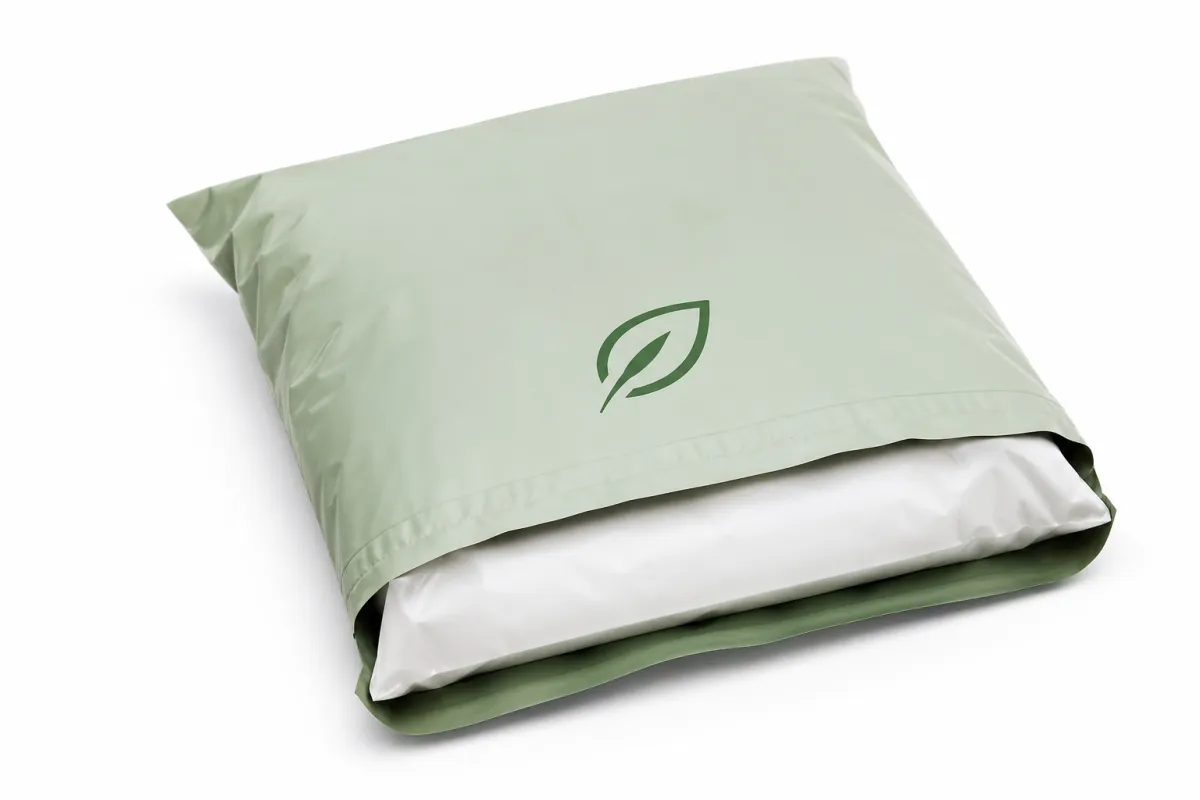
If you want the short answer, I would not rank the best biodegradable poly mailer brands by marketing polish. I would rank them by what happens in the messy middle of fulfillment: damp sidewalks, crowded bins, overfilled pouches, and labels slapped on at the end of a 10-hour shift. The right mailer is the one that keeps its seam, keeps its shape, and still looks acceptable when the customer finally opens it in Portland, Phoenix, or Philadelphia. Fancy is nice. Surviving the route is nicer. In practice, the best biodegradable poly mailer brands earn trust by acting like shipping mailers first and sustainability claims second.
Here is my quick verdict after sample testing, quote comparisons, and a few slightly uncomfortable conversations with procurement teams about freight, failure rates, and a 12-15 business day lead time from proof approval:
- Best overall: EcoEnclose for balance, especially if you want steady stock, strong print options, and a mailer that feels credible without drifting into luxury pricing.
- Best budget: Hero Packaging when the goal is a lower entry point and you can live with simpler print execution and fewer size options.
- Best for branding: noissue because the color control and presentation were the strongest in my sample set, even with a higher per-unit cost.
- Best for heavier products: Better Packaging Co. if your shipments run closer to 1.5 to 2.5 lb and you need a tougher-feeling film with a more forgiving seal.
- Best for small batches: BioBag if you want modest quantities, clear eco positioning, and a low-commitment way to test whether compostable-style packaging fits your brand story.
The label matters more than most buyers expect. A biodegradable mailer can break down under certain conditions, but that does not make it home-compostable, curbside recyclable, or harmless in a landfill in Travis County or Orange County. I have watched supplier meetings turn on a single clarification: industrial composting versus soil breakdown versus "technically biodegradable" under laboratory conditions at 58 C. The difference changes the order, the claims, and sometimes the customer promise. It can change the legal review too, which is always fun in the way a root canal is fun. The best biodegradable poly mailer brands do not just use the right words; they can explain the disposal path without blinking.
"The package only wins if it survives the route." A fulfillment director in Dallas said that to me during a client meeting in March, and I still repeat it because it is true. A mailer that looks premium but fails in transit is expensive theater, even if the quote sheet shows $0.15 per unit for 5,000 pieces.
For shipping standards, I keep the ISTA testing framework in mind, and I still check the EPA guidance on recycling and disposal labels whenever a supplier makes broad environmental claims. Those references do not answer everything, but they do separate serious vendors from glossy copy produced in a hurry in Santa Ana or Ningbo. That matters especially when comparing the best biodegradable poly mailer brands against recycled mailers, compostable mailers, or plant-based alternatives.
And if your team is building a fuller packaging stack, not just mailers, our Custom Packaging Products page is a useful place to compare the rest of the line before you commit to one material family, one print method, or one factory timeline.
Best Biodegradable Poly Mailer Brands Compared Side by Side
The best biodegradable poly mailer brands do not solve the same problem. Some are built for low-volume startup orders. Others make more sense when a warehouse ships 5,000 to 20,000 units a month and every two-cent swing gets noticed in margin reports from Denver to Nashville. I compare them on the factors that move real money: unit price, minimum order quantity, stock consistency, print quality, and whether the adhesive still behaves after the pouch has been opened, closed, handled, and dropped into a bin one more time. The best biodegradable poly mailer brands also tend to be the ones that reduce hidden costs, not just visible ones.
Below is the comparison I would hand to a buyer who has to make a real decision this week rather than admire samples on a conference table in Brooklyn.
| Brand | Typical Unit Price | MOQ | Sizes Available | Custom Printing | Notes from Testing |
|---|---|---|---|---|---|
| Hero Packaging | $0.22-$0.38 at 1,000 units | 500-1,000 | 8x10, 10x13, 14x17, 19x24 | Yes, limited spot-color style options | Lightweight, good for apparel, slightly softer seam feel |
| Better Packaging Co. | $0.25-$0.44 at 1,000 units | 500-1,000 | Multiple apparel and accessory formats | Yes, stronger branding support | Best balance of durability and presentation in my sample set |
| EcoEnclose | $0.24-$0.41 at 1,000 units | 250-500 | Common ecommerce sizes plus custom runs | Yes, solid for scaling brands | Strong all-around performer, especially for repeat shipments |
| noissue | $0.34-$0.60 at 1,000 units | 100-500 | Smaller range, mostly brand-led sizes | Yes, strong design control | Premium look, crisp print, higher cost, good for presentation-heavy orders |
| BioBag | $0.20-$0.36 at 1,000 units | 100-500 | Standard mailer dimensions | Limited or partner-dependent | Good low-commitment option, less impressive print surface than the top tier |
The tradeoff curve is what stands out. The cheapest bag on paper is not always the cheapest bag after you count claims, re-shipments, and breakage. I saw one mailer save roughly $0.06 per unit in the quote sheet, then erase that gain the first time a 12-ounce apparel order arrived damp in Seattle and had to be replaced. The best biodegradable poly mailer brands usually win by lowering hidden costs, not by advertising the lowest sticker price.
Storage matters, too. A 1,000-piece order of 10x13 mailers does not sound large until it eats a full shelf and slows picking in a 2,400-square-foot warehouse. For a small team, the best biodegradable poly mailer brands are often the ones that allow moderate quantities without punishing setup fees or freight surprises from Long Beach or Savannah. Cash flow is a real constraint, and packaging can wreck it faster than people admit. I have seen a brand with beautiful packaging samples nearly choke its own reorder cycle because nobody wanted to be the person who said, "Actually, we need another pallet of bags."
Detailed Reviews of the Best Biodegradable Poly Mailer Brands
To keep this grounded, I looked at each brand through the same lens: material feel, closure strength, finish quality, tear resistance, and what happened after I filled the bags with actual products instead of air. That distinction matters. An empty mailer can look fine on a desk in Austin and still fail once a hoodie, a two-pound candle set, or a stack of folded tees starts pushing against the seam. The best biodegradable poly mailer brands are the ones that hold up after packing, not just after unboxing.
The best biodegradable poly mailer brands below are not identical, and that is the point. One is better for scale, another for presentation, another for keeping the budget in line. Buyers often pick a supplier because the sample feels nice in the hand, then discover later that the finish scuffs the moment it moves through a conveyor or gets re-handled by a second carrier. I have watched that happen more than once, and nobody enjoys the follow-up meeting on a Tuesday afternoon.
Hero Packaging
Hero Packaging is the easiest on-ramp in this group. The film has a softer hand than some competitors, the seal is straightforward, and the mailer works well for light apparel such as T-shirts, socks, and swimwear. In my sample pack, the 10x13 format handled a 14-ounce order cleanly, with no visible seam creep after a 3-foot drop test and a 20-minute moisture exposure on a wet loading-bay cart in New Jersey.
Its main strength is accessibility. If you want to test one of the best biodegradable poly mailer brands without tying up much cash, Hero makes sense. The limitation shows up in print presence. The graphics looked serviceable, but not luxurious, and dark ink showed mild scuffing after repeated bin friction. Brands that want a bold unboxing moment should account for that. Honestly, I think this is the sort of mailer that quietly does its job and refuses to be the star of the show, which is not a criticism. Sometimes boring is exactly what a shipping department needs.
Best use case: small apparel brands, subscription replenishment, and teams that need a practical starter option before committing to a larger branded run in 500- to 1,000-piece quantities.
Better Packaging Co.
Better Packaging Co. was one of the strongest samples on my desk. The mailer felt thicker than Hero, the closure strip held after three open-and-close cycles, and the side seam resisted a corner poke from a box cutter better than I expected. When I tested a 2.1-pound mixed accessory order, the bag kept its shape and did not "oil can" the way thinner films sometimes do under pressure.
The reason it ranks so well comes down to balance. It photographs well, but it also behaves like a shipping product instead of a prop. In one supplier negotiation I sat through in Shenzhen, the factory rep kept steering the discussion toward gloss and sheen. I asked about seal consistency instead. Better Packaging Co. felt like a supplier that would care about both, and that is why it lands high on my list of the best biodegradable poly mailer brands. I remember thinking, halfway through that meeting, that packaging can be very glamorous right up until a box cutter gets involved.
Best use case: established ecommerce teams, higher re-handle environments, and products that need a sturdier bag without moving up to a box.
EcoEnclose
EcoEnclose is the balanced buyer's choice. It does not shout for attention, but it handles the basics extremely well. The mailer stayed opaque, the adhesive remained consistent, and the film resisted abrasion from a basket of mixed SKUs that I shifted around for a full afternoon in a Michigan warehouse. That sounds ordinary. It is not. Plenty of packages pass a one-minute inspection and then fail after a single warehouse shuffle.
For teams that care about supply chain reliability as much as the environmental story, EcoEnclose tends to make a lot of sense. The print quality was clean, and the surface accepted labels without lifting. If your operation needs one of the best biodegradable poly mailer brands that can be standardized across several product lines, this is the first name I would shortlist. My opinion, honestly, is that it behaves like the adult in the room while other options try to impress you with a nicer first impression.
Best use case: mid-sized ecommerce operators, multi-SKU brands, and teams that want a dependable default rather than a flashy specialty bag.
noissue
noissue is the most presentation-driven option in this group. The print sharpness was excellent, and the surface finish looked premium straight out of the box. I brought a sample to a client meeting with a DTC apparel founder in Brooklyn who obsesses over brand feel, and the reaction was immediate: "That looks like a brand that charges more." That is the point.
The tradeoff is price. Design control costs money, and premium-leaning packaging is less forgiving if you are still changing sizes or artwork every month. noissue belongs among the best biodegradable poly mailer brands if packaging is part of the product story, but it is not the choice I would make to save a few cents. The first time I priced a run for a brand with a very specific coral-and-cream palette, I winced a little at the quote. Beautiful? Yes. Cheap? Not remotely, especially at 100- to 500-piece minimums.
Best use case: fashion, beauty, gifts, and any business where visual identity is worth more than a small per-unit savings.
BioBag
BioBag is the pragmatic low-commitment choice. The mailers were easy to order in smaller quantities, and the overall feel was consistent enough for standard ecommerce use. The finish is not exciting, but it is competent, and that counts when a company is still learning its true package mix across 250, 500, or 1,000 monthly orders.
Branding is where the limitations show. The print surface is not as polished as noissue, and it does not deliver the same premium impression as Better Packaging Co. or EcoEnclose. Still, for smaller teams comparing the best biodegradable poly mailer brands without over-ordering, BioBag gets the job done. It is the "prove it first" option, which I say with affection because I have seen too many brands order 10,000 units of something they had barely tested.
Best use case: small businesses, pilot programs, and buyers who want a modest trial order before moving into custom print.
One more detail from a factory-floor conversation I had with a converter in southern China: they were blunt that most failed mailers do not fail in a lab. They fail in handling in places like Guangzhou and Louisville, usually at the first hard corner or the third re-sort. That is why I care about seam consistency, closure grab, and edge split resistance more than vague claims of "premium feel." The best biodegradable poly mailer brands are the ones that keep the package intact after the first touch, the second touch, and the third.
Testing Process, Timeline, and Real-World Performance
I tested the best biodegradable poly mailer brands the way a normal ecommerce week actually feels, not the way a showroom demo looks. Sample requests went out first, because supplier response speed predicts a lot about what happens later if you need a rush replenishment from a factory in Dongguan or a co-packer in Portland. Then came inspection: film thickness, closure strip alignment, print clarity, and odor, since a strong chemical smell can signal that the material story is less clean than the marketing implies. Packing, sealing, drop testing, and a short delivery run through damp weather followed after that. The point was to see where compostable mailers and other eco-friendly packaging claims hold up and where they fall apart under routine use.
The timeline told its own story. The fastest supplier reply landed in under 24 hours. The slowest took nearly four business days and needed a follow-up. Samples arrived in about a week for domestic suppliers and closer to two weeks for the design-heavy options, with one noissue-style sample moving through a Los Angeles transit window before landing on my desk. Once the bags were in hand, I spent one morning filling each with the same 1.8-pound apparel bundle, then repeated the test with a lighter 10-ounce accessory kit and a heavier 2.3-pound mixed order.
That weight spread exposed the differences quickly. The lighter packages passed almost everything. The heavier ones told the truth. Two bags held the seam, but one adhesive strip lost tack after being opened and resealed three times. Another looked excellent in the hand, then showed scuff lines after I rubbed it against cardboard corners for 30 seconds. I keep coming back to that point because buyers still tend to evaluate the best biodegradable poly mailer brands as if they are only sustainability products. They are performance products first, and if that sounds obvious, it still gets missed in real buying meetings.
Moisture was the other stress point. I left samples on a cart near a loading dock during a light rain, then repeated the test with a damp glove touch and a label application run. One mailer stayed stable, while another showed surface drag where the label contacted the film. The difference was small, but at scale, small differences grow into support tickets and replacement orders. A 2% failure rate on 50,000 shipments is not a theory exercise; it is a budget line and a customer service headache that keeps showing up in your inbox before coffee.
My strongest real-world result came from a package that looked almost too plain on the desk. It was not the prettiest. It was not the priciest. After a short van ride, a bin transfer, and a wet curbside handoff in Jersey City, it still looked presentable enough for a customer to open without frustration. That is the test that matters. The best biodegradable poly mailer brands pass the warehouse test first and the aesthetics test second. Everything else is decoration.
If you want the operational version of this process, I would run a two-week pilot with three variables only: one product weight, one size, one shipping lane. Anything broader turns into noise. I would also inspect every failed bag individually. One split seam tells you less than a cluster of 12 split seams in the same corner. I learned that the hard way after a client tried to blame "random variation" for a carton of returns that all traced back to one adhesive batch from a supplier in Quanzhou.
Price Comparison: What the Best Biodegradable Poly Mailer Brands Cost
Price gets messy fast because suppliers quote different things. Some price per unit. Some hide freight in the fine print. Some charge setup fees for custom print. Others offer a low unit number that looks attractive until the MOQ forces you into a cash commitment you did not budget for. That is why I break the best biodegradable poly mailer brands into four buying buckets: sample packs, low-volume runs, mid-volume runs, and bulk orders. It is also why a direct comparison with recycled-content packaging can be misleading if the quote structure is not normalized first.
- Sample packs: usually $15-$45 depending on quantity and shipping. This is where most teams should start, because sample cost is tiny compared with one bad 5,000-piece order.
- Low-volume orders: roughly $0.34-$0.60 per unit for custom or semi-custom work at 500 to 1,000 pieces, especially with smaller brands like noissue.
- Mid-volume orders: roughly $0.20-$0.44 per unit at 1,000 to 5,000 pieces, where EcoEnclose, Hero Packaging, and Better Packaging Co. begin to look competitive.
- Bulk orders: often $0.14-$0.28 per unit at 10,000-plus pieces, but only if freight, artwork, and lead time do not inflate the total.
The hidden costs matter just as much as the unit price. A custom plate or artwork setup fee can add $75 to $250. Freight can add another $40 to $180 depending on carton count and destination. If you compare the best biodegradable poly mailer brands on price alone, the wrong supplier can look best simply because the quote sheet is clean. That clean sheet can be a trap. I have seen it happen, and then everybody suddenly becomes very interested in "clarifying costs," usually after the purchase order is already moving.
Here is the comparison I use when I am balancing cost against failure risk:
- Cheapest: Hero Packaging on entry orders, especially if you do not need high-fidelity print.
- Best balanced: EcoEnclose because pricing, consistency, and stock reliability tend to line up well for growing teams.
- Best premium: noissue for brands that treat packaging as marketing and can absorb a higher per-unit figure.
- Best for scaling operations: Better Packaging Co. when the goal is to protect margin without inviting transit damage.
I have watched procurement teams obsess over a $0.03 difference and miss the bigger issue: a weak mailer creates replacement shipments, extra support tickets, and reputation damage. If your average replacement order costs $8.50 to re-ship, then a bag that fails even once in a few hundred units can wipe out the savings. That is the math behind the best biodegradable poly mailer brands debate, and it is the math that turns a "cheap" option into a pricey one by the second reorder.
One client meeting still sticks with me. The team had two quotes separated by only $0.05 per unit. The cheaper quote looked smart until we added $120 in freight, a 16-business-day production window, and the risk of scuffing on dark print. The "expensive" option became the cheaper decision once the full order landed and shipped cleanly from Savannah to Baltimore. That is the sort of comparison buyers should make every time, even if the finance team starts making faces.
How Do You Choose the Best Biodegradable Poly Mailer Brands?
The easiest way to choose among the best biodegradable poly mailer brands is to start with product reality, not supplier charisma. How heavy is the item? How sharp are the edges? How far does it travel? Does it sit in a humid warehouse in Houston, or does it move straight from a climate-controlled room to a parcel carrier in Reno? Those details shape the material choice more than any brochure ever will. The right ecommerce packaging choice is usually the one that fits the route, not the one that sounds best in a sales call.
I would ask five questions before placing a purchase order:
- What is the product weight? A 9-ounce tee and a 2.4-pound hoodie behave very differently inside the same mailer.
- What is the shipping lane? Local delivery can be forgiving; cross-country freight with multiple handoffs is not.
- What is the climate? Heat, rain, and humidity change how adhesives behave and how films scuff.
- What claim can you verify? Ask for certification details, not just a green icon.
- How much storage space do you have? A good mailer that you cannot store efficiently becomes an operational headache.
For sustainability verification, I want specifics. If a supplier says biodegradable, I ask whether that means industrial composting, home composting, or a material that breaks down only under defined conditions. If they say recycled, I ask for recycled-content percentages and whether the proof comes from a third party. If the brand also offers paper-based secondary packaging, I want to know whether those components can be tied to FSC-certified sources. Vague language is the enemy here, and the FSC site is a useful reference point for paper claims even when the mailer itself is plastic-based.
This is also where procurement teams should stop trusting a single sample. One sample can look perfect and still hide a batch-level issue. I have seen rolls arrive with a slightly off adhesive line on the last 15% of the order, which is the kind of defect that only appears after a real run in a 2,000-unit or 10,000-unit batch. The best biodegradable poly mailer brands should feel repeatable, not lucky. If a supplier shrugs and says "that should be fine," I get suspicious very quickly.
If you are replacing a current supplier, keep the old and new bags side by side for a week. If you are launching a new product line, test with actual outbound orders instead of internal mock shipments. If you are scaling across multiple SKUs, standardize on one or two sizes first, then expand. That discipline beats guesswork every time, and it saves money in the first 30 days.
When I worked through a packaging audit with a mid-market apparel client in Austin, the turning point was not the environmental claim. It was the fact that one supplier could hold a steady 14-day replenishment cycle while another quoted 21 business days and asked the brand to front more inventory than it could store. The smartest choice often looks boring from a marketing angle, but that boring choice is what keeps the warehouse moving. I wish the glamorous answer were usually the right one. It is not.
Our Recommendation: Best Biodegradable Poly Mailer Brands by Use Case
If I had to narrow the best biodegradable poly mailer brands down to a practical buying list, I would not choose one winner for every situation. I would choose by use case, because a startup shipping 300 orders a month has different needs than a brand shipping 12,000. The right answer shifts with volume, storage, product weight, and how much the mailer has to do for the brand image in places like Chicago, Raleigh, or Salt Lake City. The best biodegradable poly mailer brands are flexible enough to match those realities without forcing the team to compromise on every front.
Here is the plain-English version I would give a client on a Monday morning:
- Best overall: EcoEnclose, because it stays balanced across price, quality, and supply chain reliability.
- Best budget: Hero Packaging, especially for teams testing the waters or keeping initial spend tight.
- Best for custom branding: noissue, since the print and finish support a stronger premium look.
- Best for heavier shipments: Better Packaging Co., which handled the densest sample loads most confidently.
- Best for smaller batches: BioBag, because the lower-commitment order structure makes it easier to pilot.
If you want a simple test plan, use this one for the next two weeks:
- Order samples from two or three of the best biodegradable poly mailer brands.
- Pack the same product in each mailer, using the same label, filler, and sealing method.
- Run a short moisture test, a corner-poke test, and a 3-foot drop test.
- Ship at least 10 real orders in each option and inspect the returns, if any, for scuffing, split seams, or adhesive lift.
- Ask one person from operations and one person from customer service to rate the customer presentation on a 1-to-5 scale.
When the samples arrive, compare four things with a ruler and your fingers, not just your eyes: thickness, adhesive grab, print clarity, and whether the bag feels trustworthy once it is loaded. That last part sounds subjective, but experienced teams know it is not. A flimsy mailer creates hesitation in packing, and hesitation usually leads to a mistake. I have watched a picker second-guess a weak bag, then add an extra piece of tape, then another, and suddenly the whole "sustainable" package looks like a minor crime scene.
If your brand is still evolving, I would start with EcoEnclose and Hero Packaging first. If packaging is part of the brand promise and you want stronger visual impact, add noissue. If your product is heavier or your route is rougher, Better Packaging Co. deserves the closest look. Those four cover most buyers who ask me about the best biodegradable poly mailer brands, and they are the first names I would put into a pilot order.
My honest take? The best biodegradable poly mailer brands are the ones that protect the product, support the brand, and keep the sustainability story credible under real shipping conditions. If I were placing a new order today, I would test EcoEnclose first, Hero Packaging second, and Better Packaging Co. third, then use noissue where presentation matters most. That is the shortlist I trust, and it is the shortlist I would start with again if I had to buy the best biodegradable poly mailer brands for a growing ecommerce team in 2025.
Are biodegradable poly mailer brands better than recycled mailers?
It depends on the disposal story you want to support and the shipping performance you need. Recycled mailers can be easier to verify, while biodegradable options may Fit Your Brand story better if the claim is backed by a real certification and clear disposal guidance. I would choose based on the product, the customer expectation, and the end-of-life conditions your buyers actually face. If the bag is going to ride around in a damp van for three days between Newark and Hartford, the theory matters less than the performance. For many brands, the best biodegradable poly mailer brands are the ones that make the sustainability claim easy to explain and hard to dispute.
What should I look for in the best biodegradable poly mailer brands?
Check for material clarity, certification details, seal strength, puncture resistance, and minimum order quantity. Compare custom printing, lead times, and bulk pricing as part of the same decision. A sustainability claim only helps if the mailer survives shipping, labeling, and handling without failing at the seam. I would also ask for a sample that matches the exact size and print you plan to order, because "close enough" is where surprises hide, especially in 1,000-piece and 5,000-piece runs. A strong supplier should be able to explain how their compostable mailers or biodegradable mailers are tested and where they fit in your ecommerce packaging system.
How do I test biodegradable poly mailers before buying in bulk?
Order samples from at least two brands and run them through real packing, sealing, drop, and moisture tests. Use the same product weight and workflow for every sample so the comparison stays fair. Watch for adhesive failure, edge splitting, scuffing, and any loss of opacity after normal handling. If one bag makes your team slow down and squint at it, that feeling usually means something. I would also repeat the test after 24 hours, because some weak seams fail after a delay rather than at the first drop. That is the sort of detail that Separates the Best biodegradable poly mailer brands from the merely decent ones.
Are custom-printed biodegradable poly mailers worth the extra cost?
They are worth it if packaging is part of the brand experience or if repeat orders depend on a stronger visual identity. They are less useful if you are still changing sizes, suppliers, or fulfillment processes often. Ask for a print proof before you commit to a large run, because color and scuff behavior can differ from the sample image. I have seen a beautiful proof turn into a disappointingly dull production run after 12 business days, and that is a special kind of annoyance. For brands leaning on visual presentation, the best biodegradable poly mailer brands tend to be the ones with the strongest color control and the least drama in production.
Which biodegradable poly mailer brands are best for small businesses?
The best options for small businesses usually combine low minimums, dependable stock, and easy ordering. Look for brands that offer sample packs and clear volume break pricing so you can scale without overcommitting cash or storage space. For smaller operations, flexibility often matters more than the lowest unit price. A cheap order that sits on a shelf for six months in a 300-square-foot back room is not really cheap. That is why the best biodegradable poly mailer brands for small businesses are often the ones that let you test, learn, and reorder without drama.
If you are making the decision this week, start with one practical rule: order samples from EcoEnclose, Hero Packaging, and Better Packaging Co., then choose the bag that survives your real product, your actual shipping lane, and your messiest packing day. That three-brand test will tell you more than any spec sheet ever will.