Buyer Fit Snapshot
| Best fit | sustainable packaging for craft markets buyer review for packaging buyers comparing material specs, print proof, MOQ, unit cost, freight, and repeat-order risk where brand print, material, artwork control, and repeat-order consistency matter. |
|---|---|
| Quote inputs | Share finished size, material target, print colors, finish, packing count, annual reorder estimate, and delivery region. |
| Proofing check | Approve dieline scale, logo placement, barcode or warning zones, color tolerance, and any recyclable or compostable wording before bulk production. |
| Main risk | Vague material claims, crowded artwork, or missing packing details can create delays even when the unit price looks attractive. |
Fast answer: Sustainable Packaging for Craft Markets Buyer Review: Claims, Protection, MOQ, and Cost should be specified like a repeatable production item. The safest quote includes material, print method, finish, artwork proof, carton packing, and reorder notes in one written spec.
What to confirm before approving the packaging proof
Check the product dimensions against the actual filled item, not only the sales mockup. Ask for tolerance on folds, seals, hang holes, label areas, and retail display edges. If the package carries a logo, QR code, warning copy, or legal claim, reserve that space before decorative graphics fill the panel.
How to compare quotes without losing quality
Compare board or film grade, print process, finish, sampling route, tooling charges, carton quantity, and freight assumptions side by side. A lower quote is only useful if the supplier can repeat the same color, closure quality, and packing count on the next order.
At a crowded Saturday craft fair outside Milwaukee, where the temperature climbed to 84 degrees by 11:30 a.m. and the coffee line stretched past the pottery tent, I watched the prettiest package get passed over while the plain kraft carton vanished first. That one stuck with me. The Best Sustainable Packaging for craft markets is the packaging that protects the product, stacks neatly behind a 6-foot folding table, and leaves a maker enough margin to keep going, which is a bigger victory than most glossy mockups admit. A $0.22 carton that survives a nine-hour event beats a $0.08 sleeve that splits on the third sale, and nobody at the booth is gonna cheer for the pretty one when it caves in.
I have spent enough time on factory floors in Dongguan, sample tables in Portland, and booth aisles in Grand Rapids to say this plainly: the best sustainable Packaging for Craft markets is not a single material, and it is not always the one with the greenest headline. Recycled paperboard can beat a plant-based pouch if it keeps a candle upright in a USPS Flat Rate box. A paper wrap can beat a rigid carton if the item weighs under 4 ounces and needs fast hand-packing during a 200-customer rush. If you are comparing Custom Packaging Products, start with the product itself, not the slogan printed on the front. Slogans are cheap; crushed inventory costs real money.
What Is the Best Sustainable Packaging for Craft Markets?
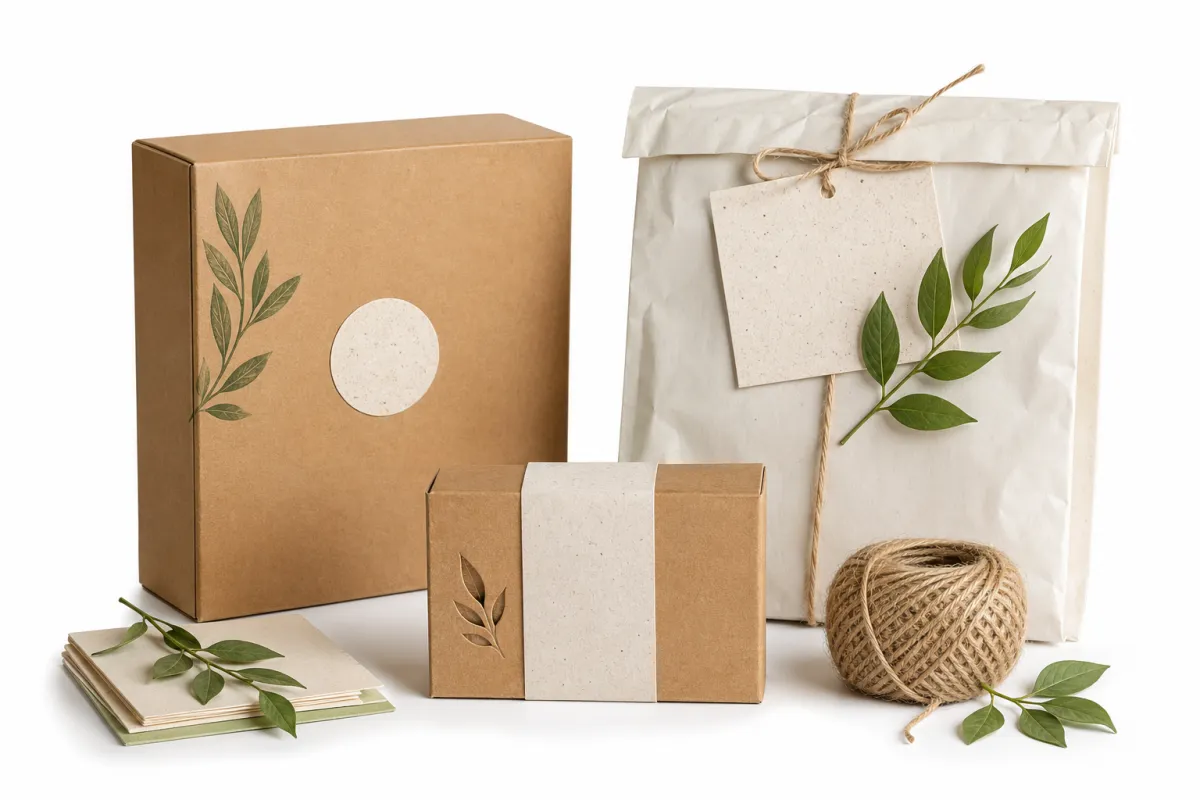
The short answer: for lightweight goods, the best sustainable packaging for craft markets is often a kraft mailer or paper wrap; for premium items, recycled paperboard gives stronger shelf presence; for refillable, low-fragility products, compostable pouches can work if customers can dispose of them correctly. I still remember a soap maker in Portland, Oregon, who switched from a loose sleeve to a 350gsm paperboard carton with water-based ink. Packing time dropped by 4 seconds per unit, which saved nearly 27 minutes on a 400-bar weekend run. That kind of boring improvement is worth more than a fancy finish that slows the line.
The word sustainable causes confusion because it covers a lot of ground. Recycled content, FSC-certified paper, water-based inks, soy-based adhesives, plastic-free closures, reusable formats, and compostable film all fall under the same umbrella, yet they are not interchangeable. The best sustainable packaging for craft markets for a soy candle brand in Asheville is not the same as the right choice for handmade earrings in Seattle or tiny ceramic bowls in Santa Fe. One needs crush resistance. Another needs presentation. The package has to behave well in three moments: on the shelf, in transit, and in the customer's hands. If it fails one of those, the whole thing starts wobbling like a folding table on uneven concrete.
If you want a quick starting point by product type, I would begin here:
- Jewelry, prints, stickers: kraft mailers, paper envelopes, or folded wraps with a clean label and a 1-inch branding band.
- Soap, candles, bath bars: recycled paperboard cartons or sleeves with a snug fit, water-based ink, and a 16pt to 18pt board weight.
- Small ceramics: paperboard boxes with molded fiber or paper inserts, tested for edge protection from a 30-inch drop.
- Refillable products: compostable or recyclable pouches only if the fill is dry, the seal is strong, and the zipper closes on the first pass.
- Baked goods and food items: food-safe paper, glassine, or compliant coated paper, depending on grease, moisture, and shelf life.
The best sustainable packaging for craft markets also has to keep booth operations moving. At a packed Saturday fair in Madison, Wisconsin, nobody wants to wrestle with a box that needs two hands and a prayer to close. One ceramic seller I met there lost more sales to awkward packing than to price. Her Recycled Rigid Boxes looked beautiful, but assembly, taping, and padding took 40 to 50 seconds each, and the line started to form after 3:15 p.m. Customers notice a delay instantly, even if they never say it out loud.
The prettiest option does not always win. The better one is the package that protects the product, looks intentional, and can be built or closed in under a minute without turning the booth into a workbench. I have seen plenty of makers discover that the hard way, usually while muttering under their breath and trying to find the scissors they set down beside a roll of kraft tape.
If you need a first pass, browse our custom printed boxes and compare lighter folding cartons against more protective paperboard structures before you lock in a format. A 300-piece test run is usually enough to spot whether a design feels tidy or fussy.
Best Sustainable Packaging for Craft Markets: Top Options Compared
Here is the side-by-side view I wish more buyers saw before ordering. The best sustainable packaging for craft markets usually falls into five families: recycled kraft boxes, compostable mailers, molded fiber trays, glassine bags, and paper-based wraps. Each solves a different problem. Each has a different failure point. A kraft box can look sturdy and clean, then need a better insert to stop rattling. A compostable mailer can feel current, then wrinkle badly in a damp booth after 2 hours in July humidity. I have watched that happen more than once, and it is irritating in exactly the way only packaging can be.
Recycled kraft boxes work best for soaps, candles, small accessories, and art prints because they are easy to print, easy to stack, and easy to label with a 2-inch sticker. Compostable mailers suit lightweight, non-fragile goods, especially for pre-orders leaving a studio in Minneapolis or a home workshop in Bend. Molded fiber trays make sense for product sets, small ceramics, and fragile display kits, though they can feel too industrial if the design is pushed too far. Glassine bags do a fine job for jewelry, stationery, and dry bakery items. Paper wraps are the fastest low-waste option for makers who need quick pack-out at the booth.
At market scale, look past the look. Crush resistance, moisture protection, shelf presence, and speed matter more than a pretty mockup. I have seen handsome paper packaging fail because it softened near a coffee urn or picked up humidity in an open tent on the Chicago lakefront. I have also seen the best sustainable packaging for craft markets win because it nested tightly, needed one label, and stayed neat after five hours of handling by customers with wet hands, tote bags, and very little patience. Humans are not gentle with packaging. They just are not.
A useful decision rule is simple. If the item is premium and the packaging should feel like part of the gift, choose a folded box or a paperboard structure with real presence. If the item is refillable, lightweight, and opened quickly, choose a pouch or wrap. If the item is fragile, build around the product first and the branding second. That order saves trouble later, and it saves you from the kind of design review where everyone nods at the pretty prototype while quietly ignoring that the lid jams at the last 3 millimeters.
In my experience, the strongest performers at a craft market look polished without wasting material. An 18pt SBS carton with FSC paper, water-based inks, and a clean tuck flap often does more for package branding than a louder, heavier, overbuilt solution. Technical buyers should also check how the structure behaves under ISTA-style drop and vibration stress. A package that passes the booth test but fails in a tote bag after a 14-minute bus ride is not a win. It is just an expensive disappointment.
| Format | Best For | 500 pcs | 2,500 pcs | 10,000 pcs | Practical Note |
|---|---|---|---|---|---|
| Recycled kraft folding carton | Soaps, candles, prints, accessories | $0.38-$0.72/unit | $0.18-$0.31/unit | $0.10-$0.19/unit | Good print surface, quick assembly, strong shelf value |
| Compostable mailer | Lightweight shipped goods | $0.46-$0.88/unit | $0.22-$0.39/unit | $0.14-$0.26/unit | Best for non-fragile items; check moisture resistance |
| Molded fiber tray | Sets, ceramics, bottles, inserts | $0.55-$1.10/unit | $0.27-$0.48/unit | $0.16-$0.33/unit | Excellent protection, less premium feel unless paired well |
| Glassine bag | Jewelry, stationery, dry baked goods | $0.12-$0.28/unit | $0.06-$0.14/unit | $0.04-$0.08/unit | Simple, tidy, and fast; limited protection on its own |
| Paper wrap | Low-fragility items, gift sets, samples | $0.05-$0.16/unit | $0.03-$0.08/unit | $0.02-$0.05/unit | Lowest material use, best for quick table packing |
That table hides one more truth: the best sustainable packaging for craft markets is not always the cheapest unit price. A glassine bag may cost almost nothing, but if it needs two extra layers of tissue, a sticker, and a rigid insert to prevent bending, labor starts climbing. A slightly pricier kraft carton can reduce damage, shorten pack time, and raise perceived value enough to justify the cost at the register. That is the part nobody sees on a spec sheet, and it is usually the part that decides whether a project stays profitable in Milwaukee, Brooklyn, or Boise.
Detailed Reviews of the Best Sustainable Packaging for Craft Markets
Here is where the marketing copy meets floor reality. The best sustainable packaging for craft markets is often the option that looks slightly less dramatic in a catalog and performs better in the hand. I have watched recycled paperboard boxes hold their shape through a rain delay in Philadelphia while a trendy film pouch picked up creases the moment someone tucked it into a shoulder bag. That does not make compostable materials bad. It means the real test is how they behave in a booth, in transit, and later at the kitchen table when the customer finally opens them. That moment matters more than the design board usually admits.
Recycled paperboard boxes are my first pick for premium handmade goods because they print well, cut cleanly, and feel deliberate. A 16pt to 18pt carton with a water-based coating can support sharp typography, a logo, and a short product story without looking busy. If you are buying Custom Printed Boxes, ask about die-cut tolerances, fold memory, and glue strip placement. Sloppy scores or misaligned flaps make the brand feel rushed. Thin board can crush at the corners, so fragile products usually need a molded insert or a paperboard cradle. I have seen one crooked flap sink an otherwise beautiful box; it is the packaging equivalent of showing up to a wedding with one shoe untied.
Kraft Folding Cartons are the workhorse choice for makers who want a natural look without sliding into a rustic cliché. The paper texture feels grounded, and recycled kraft stock takes one-color or two-color printing very well. I negotiated a run in a Dongguan mill where the buyer wanted foil, metallic ink, and a window patch on a 6,000-piece order. The quote jumped by 28% in one revision. We cut the embellishment, kept a single black plate, and the package looked better because it was cleaner. That is the kind of package branding decision that saves money and usually improves readability. Restraint beats decoration more often than brands expect, especially when the product itself already carries the story.
Compostable film pouches can work for dry refills, salts, bath soaks, and other lightweight goods, but they need careful testing. If the film is too soft, it looks tired before the customer leaves the market. If the zipper or seal is weak, the product loses freshness and trust. Check whether the material is certified to the right standard, not just labeled green. In some cases, ASTM compostability claims matter. In others, the customer will simply recycle the package if it is paper-based and clearly marked. That kind of honesty builds trust faster than fuzzy language. Nobody likes decoding a green sticker that says three different things and answers none of them.
Molded pulp and molded fiber inserts are underrated. They protect well, nest tightly, and often reduce excess filler. I like them for small ceramics, bottled serums, and candle jars because they stabilize the item at the corners where damage usually starts. The tradeoff is appearance. If the insert is visible, it can feel utilitarian unless the outer carton carries the design work. That is where packaging design does the heavy lifting: the insert handles protection, and the box handles the story. Good systems split the labor instead of forcing one material to do everything badly.
“The package that looks best in a social media photo is not always the one that survives a wet afternoon at the fair,” a pottery client told me after she switched to molded fiber inserts and stopped replacing chipped mugs every weekend.
Glassine bags and paper wraps remain some of the smartest low-waste choices for jewelry, stationery, and dry bakery items. A 40gsm to 60gsm glassine bag with a simple branded sticker can feel elegant without adding much material. The downside is obvious. They do not protect against crush, so they should be treated as presentation layers, not armor. For that reason, I rarely recommend them alone for ceramics or anything with a sharp edge. They are the package equivalent of a nice jacket in light rain: helpful, but you still need something sturdier if the weather turns.
Three things usually backfire in the real world. Flimsy mailers wrinkle in transit and make the brand feel cheaper than it is. Overly rustic paper can read as rough rather than premium if the print is weak or the stock is too fibrous. Too much sustainable packaging for a tiny product becomes waste in its own right. If a 2-ounce candle needs three nested wraps and a decorative tag, the system has already lost some of its logic. I know the impulse; I have watched teams add one more layer because the first two looked too simple. Simple is not the enemy. Confusion is.
For buyers checking suppliers, I would ask about FSC sourcing, water-based inks, glue chemistry, and whether the structure can be separated for recycling. The FSC chain-of-custody standards at fsc.org are worth knowing, and the packaging guidance at packaging.org is a useful reference point for material selection. I also keep ISTA test expectations in mind, because a package that cannot survive handling is not really finished. If it dents in the van, peels in the booth, or splits in a tote bag, the sustainability story becomes hard to defend.
In short, the best sustainable packaging for craft markets is the one that closes cleanly, protects the item, and looks intentional without pretending to be more eco-friendly than it really is. Customers can spot a marketing costume from a few feet away. They may not use those words, but they know when something feels like theater.
Price Comparison for Sustainable Packaging at Craft Markets
Price matters, but unit price alone is a trap. The best sustainable packaging for craft markets should be judged against setup cost, sample rounds, damage rates, and the extra minutes spent packing every sale during a busy event. A box that costs $0.21 but saves 30 seconds per unit may be more profitable than a $0.09 sleeve that needs fiddling, tape, and a second label. I have seen makers quietly bleed time all day because a cheap package looked efficient on a spreadsheet.
Here is the part sellers often miss: custom printing plates, dieline changes, sample shipping, and artwork revisions can add real money before a single finished piece arrives. I have seen small brands spend $240 on samples, $160 on artwork prep, and $90 on express freight just to discover that the first fold line interfered with a barcode. That is not unusual. It is the normal cost of getting custom packaging right. And yes, it is annoying. Usually a little too annoying, if I am being honest.
For rough planning, I usually tell craft sellers to think in three buckets. A simple stock-format or label-only run might land around $0.05 to $0.14 per unit for paper wraps or glassine at moderate volume. A custom branded packaging carton often sits in the $0.18 to $0.35 range at mid-volume. A more protective insert system or specialty pouch can climb higher, especially if the order is under 1,000 pieces. The cheapest option is rarely the one that preserves margin after breakage and labor.
There is also the hidden Cost of Customer perception. A cleaner unboxing experience can help a $24 candle feel like a $32 candle, even if the materials add only $0.17. That is not magic. It is retail packaging doing its job. If you are deciding where to spend, put money into structure, fit, and print clarity first. Save on unnecessary finishes before you save on protection. I would rather see a crisp one-color carton than a crowded metallic design that fights the brand and gives the whole thing a slightly overcaffeinated feel.
Shipping costs can tilt the whole equation. A flat mailer packs efficiently, but if it saves $0.04 per unit and increases damage by even 3%, the savings disappear. I have watched sellers lose more money to crushed corners than they ever saved on paper. The best sustainable packaging for craft markets is the one that protects sellable inventory, not the one that merely lowers the invoice total. Profit is not a vibe; it has a number on it.
Process and Timeline for Custom Sustainable Packaging
Ordering the best sustainable packaging for craft markets gets easier once you know the production path. It usually starts with dimensions, product weight, closure style, and branding files, then moves into structural samples, print proofs, and final production. Skip the first step and guess the size, and you often pay for it later in wasted board, poor fit, or a box that looks oversized beside the product. I have seen people order by eye in Austin and Santa Cruz. That is rarely a good plan, no matter how confident the eye may feel that day.
Here is the usual sequence I have seen on factory floors and in client calls: first inquiry, pricing, dieline review, artwork setup, sample approval, prepress proof, production, and freight. For a simple unprinted paper wrap, the process can move in 7 to 12 business days once artwork is ready. A fully custom carton with printed interiors, water-based inks, and a die-cut insert may take 15 to 25 business days after sample approval. If you need a molded insert tool, add more time, because tooling and test runs rarely move quickly. Paper does not like to rush, which would be charming if deadlines felt the same way.
Delays usually show up in two places. Artwork revisions are the first. A brand owner sends a logo in the wrong format, the proof comes back with a color shift, and two days disappear. The second delay is sampling. I once sat through a supplier negotiation in Guangzhou where the carton looked perfect on screen, but the live fold exposed a 2mm gap at the tuck flap. That tiny gap meant another sample round, another freight charge, and a week lost. Small errors become expensive fast. Packaging has a way of punishing optimism.
Before you order, prepare a dimension sheet with product length, width, height, and weight. If you sell food or cosmetics, add compliance details, ingredient space, barcode placement, and any warning text. If the package will be mailed, mention the shipping lane or carton orientation. If it will be handed across a booth table, say so. The best sustainable packaging for craft markets changes depending on whether the item is shipped, displayed, or both. A package has a different life story at a farmers market in Ann Arbor than it does in a parcel network, and your spec should reflect that.
If the deadline is tight, a stock structure with a branded label or belly band can be the smartest move. That gives you the look of custom packaging without the lead time of fully custom printed boxes. It is not the most dramatic option, but it is practical. I have seen too many brands miss a holiday market because they insisted on a special finish that pushed the schedule by 10 days. A glitter varnish is not worth losing December sales. I would say that with feeling.
For sellers working against a market date, I recommend asking for three things up front: a realistic production calendar, one sample round minimum, and a freight estimate to your studio or prep location. That gives you a real landed-cost picture, which is much better than judging by unit price alone. Good planning is part of package branding too, even if nobody prints it on the carton. A calendar and a calculator are a better pair than a mood board and a guess.
If you are comparing options inside our Custom Packaging Products, start with structures that use FSC paper, water-based adhesive, and simple folding geometry. Those are usually the fastest to approve and the easiest to scale once the design is locked. A 350gsm board with a one-pass tuck can often move from proof to production in under three weeks.
How to Choose the Best Sustainable Packaging for Craft Markets
The decision process for the best sustainable packaging for craft markets gets much simpler once you sort by product behavior first. Fragile items need corner support. Moisture-sensitive items need a barrier or a dry environment. Premium items need a package that feels intentional in the hand. Refillable goods need closure integrity and clean labeling. That order beats every vague sustainability promise I have heard in a meeting, including one in Denver that lasted 48 minutes and used the word “eco” six times without naming a material.
Start with fragility. Ceramics, glass jars, and candles with brittle lids need crush resistance, so paperboard plus molded fiber usually beats a soft pouch. Soap, bath bombs, and dry salts need moisture awareness, but they rarely need heavy structural protection. Jewelry and stationery sit at the other end. They benefit more from tidy presentation and fast packing than from large-box protection. The best sustainable packaging for craft markets mirrors the product's risk profile instead of forcing every item into the same box.
Then look at brand style. Some booths are built on warm, handmade texture, and a natural kraft carton fits that story well. Others are more refined, with restrained typography and a higher price point, so a smooth recycled paperboard box does more work. Packaging design and package branding overlap here in a way that is easy to underestimate. The materials, type size, closure, and print finish need to speak the same language. If the product is $48 and the box looks like a shipping carton, customers notice the mismatch immediately.
Material cues matter too. I trust recycled content claims more when the supplier can name the substrate, the FSC source, the adhesive type, and the print system. Water-based coatings are a good sign for paper packaging, and plastic-free closures can help where the product will not be opened and reclosed repeatedly. For end-of-life behavior, be honest with yourself. A package that is technically recyclable but so ink-heavy that nobody wants it is not as useful as a simpler one people actually sort correctly. Reality beats intention here every single time.
Avoid three common mistakes. Do not overpack tiny items; it wastes money and turns a simple good into a complicated one. Do not hide the product so much that the customer cannot inspect it quickly at the table. Do not pick a green label that sounds impressive if the structure fails the job. I have seen brands choose the wordiest option on the sheet and then wonder why their market setup took 20 minutes longer than everyone else's. Nobody wants to be the stall where the line stops because a carton is more complicated than the product inside it.
I also recommend checking actual disposal behavior in your customer base. A compostable film pouch only makes sense if buyers know where to take it. A recycled paper carton only helps if it is clean enough and separated correctly. This is why the best sustainable packaging for craft markets depends as much on realistic customer habits as it does on material science. People mean well. They are just not always excellent at sorting packaging after they have already bought a candle, a print, and an oat milk latte.
If you are unsure, order two or three sample formats and test them with the real item. Put them on a table, stack them in a tote, drop them from table height, and see whether the corners dent or the label peels. That is a better test than staring at a catalog image for an hour. A five-minute rough test tells you more than three rounds of internal guessing ever will.
Our Recommendation and Next Steps
If I had to rank the best sustainable packaging for craft markets by use case rather than crown one winner, I would start with recycled paperboard boxes for premium handmade goods, kraft folding cartons for everyday market sellers, and paper wraps or glassine for the fastest low-waste setups. Compostable pouches belong in the mix only when the product is dry, low-fragility, and the disposal path is realistic for the customer. That is the honest answer, and it is the one I would give a maker standing beside me at a booth with a line already forming at 10:00 a.m.
My advice is simple: shortlist two or three formats, request samples, and run a mock packing session before you order. Time how long each unit takes to assemble, label, and hand to a customer. Then check shelf appeal from three feet away, which is the distance most buyers actually use at a craft fair. The best sustainable packaging for craft markets should look good from that distance and still make sense when you open it at home. If it only works in a render or a 3D mockup, it does not work.
After that, compare durability, customer handling, and end-of-life disposal. Ask yourself whether the package can be recycled, composted, or reused without confusion. If the answer is vague, your customer will probably be vague too. That is why I like simple structures with clean material declarations, especially for brands that want to scale from one booth to several markets a month. You can always add secondary packaging later once the core format proves itself.
The rollout plan I trust most is this: start with one primary package for your best-selling item, keep the design clear, and use that to learn. Once the first run is profitable and the pack-out feels smooth, expand into secondary sizes or premium versions. That sequence reduces risk and gives your brand room to sharpen its packaging design instead of gambling on a broad launch. It also makes budgeting easier, which is a relief for anyone balancing ingredient costs, booth fees, and shipping bills in the same month.
One last thing. The best sustainable packaging for craft markets is the one that fits the product, the booth workflow, and the customer's experience from first glance to final takeaway. If it protects the item, respects the brand, and does not slow down a Saturday rush, you have probably found the right answer. If it also keeps you from fumbling with tape while someone is waiting to pay $18 for a handmade soap, even better.
FAQ
What is the best sustainable packaging for craft markets if I sell fragile items?
Use rigid or semi-rigid recycled paperboard boxes with molded fiber or paper inserts so the item cannot shift during transport. I would test the package by dropping it from table height, checking the corners, and making sure the product does not scuff, tilt, or rattle. For fragile ceramics or glass, the best sustainable packaging for craft markets is the one that controls movement first and decoration second. If it only looks good, it is not doing enough.
Is compostable packaging always the best sustainable packaging for craft markets?
No, because compostable materials can be less moisture resistant and less durable than recycled paper options. I only recommend compostable formats when the product is dry, low-fragility, and the customer has a real way to compost it. If buyers will likely toss it in the trash, recycled paperboard may be the more honest choice for the best sustainable packaging for craft markets. Green claims are nice; actual disposal behavior is nicer.
How much should I budget for sustainable craft market packaging?
Budget by format and order size, since short runs usually cost more per unit than larger batches. Include setup, artwork, samples, and shipping, because those costs can add $200 to $500 before production even starts. For many small sellers, the best sustainable packaging for craft markets is the option that balances protection, perceived value, and a landed cost that still leaves profit on each sale. If your margin disappears in the carton, the carton is too fancy.
What packaging works best for soaps, candles, or bath products at craft fairs?
Kraft folding cartons, paper sleeves, and paper-based wrap solutions usually work well for dry bath and body items. If moisture or scent control matters, consider a lined or lightly coated structure that still keeps the package recyclable where possible. Make sure there is enough room for ingredients, warnings, and branding so the best sustainable packaging for craft markets does not feel crowded. Nobody needs a tiny soap with a label that looks like a legal brief.
How long does custom sustainable packaging take to produce?
Timing depends on the material, print method, and whether you need samples or custom tooling. Simple stock-label or unprinted options can move in roughly 7 to 12 business days, while fully custom printed boxes or inserts often need 15 to 25 business days after approval. Build in extra time for proofing and revisions so you do not have to settle for the wrong size or finish before your market date. The best sustainable packaging for craft markets is only useful if it arrives on time.