Buyer Fit Snapshot
| Best fit | mailers for dropshipping stores for packaging buyers comparing material specs, print proof, MOQ, unit cost, freight, and repeat-order risk where brand print, material, artwork control, and repeat-order consistency matter. |
|---|---|
| Quote inputs | Share finished size, material target, print colors, finish, packing count, annual reorder estimate, and delivery region. |
| Proofing check | Approve dieline scale, logo placement, barcode or warning zones, color tolerance, and any recyclable or compostable wording before bulk production. |
| Main risk | Vague material claims, crowded artwork, or missing packing details can create delays even when the unit price looks attractive. |
Fast answer: Mailers for Dropshipping Stores: Film, Closure, Print, and Fulfillment should be specified like a repeatable production item. The safest quote includes material, print method, finish, artwork proof, carton packing, and reorder notes in one written spec.
What to confirm before approving the packaging proof
Check the product dimensions against the actual filled item, not only the sales mockup. Ask for tolerance on folds, seals, hang holes, label areas, and retail display edges. If the package carries a logo, QR code, warning copy, or legal claim, reserve that space before decorative graphics fill the panel.
How to compare quotes without losing quality
Compare board or film grade, print process, finish, sampling route, tooling charges, carton quantity, and freight assumptions side by side. A lower quote is only useful if the supplier can repeat the same color, closure quality, and packing count on the next order.
What Are the Best Mailers for Dropshipping Stores?
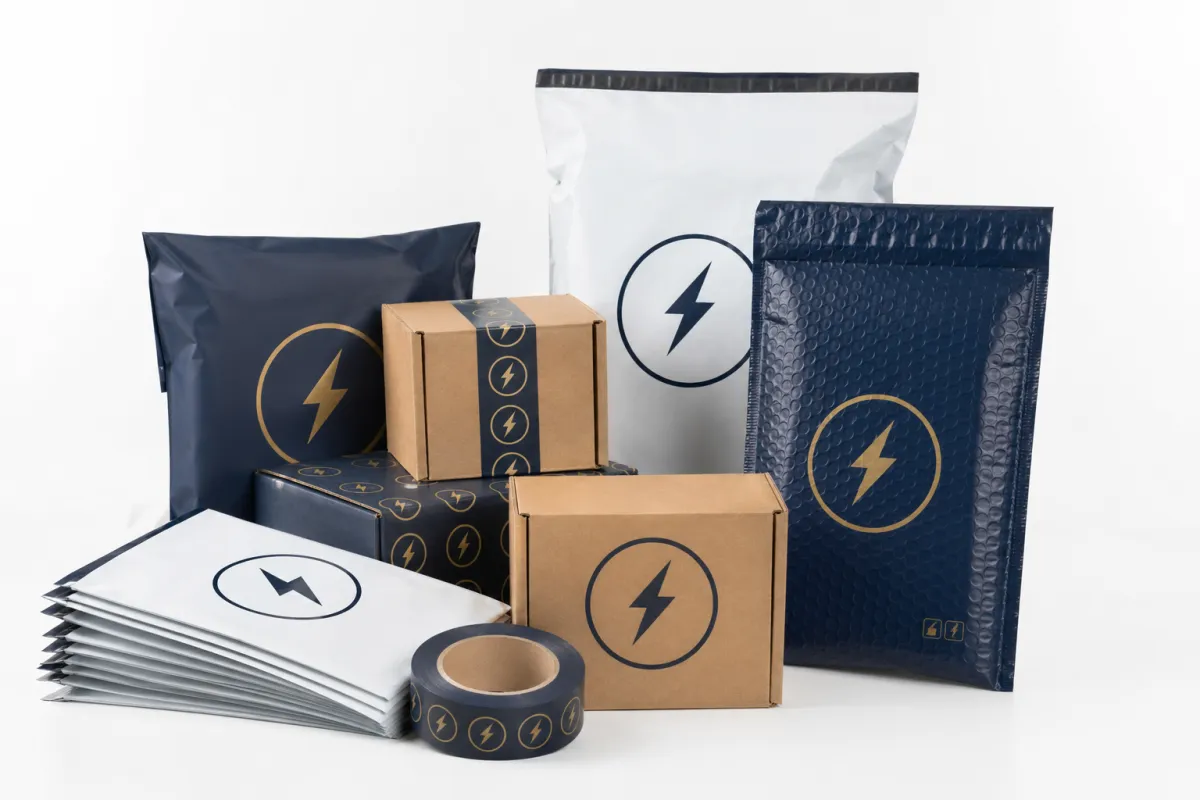
The cheapest pouch on the invoice often turns into the most expensive decision once you count crushed corners, split seams, replacement shipments, and the slow drip of customer complaints, which is why I spend so much time comparing the best mailers for dropshipping stores against real transit abuse instead of stopping at unit price. I remember one client proudly showing me a budget mailer that saved them $0.03 a unit on a 10,000-piece run, and then three weeks later we were staring at a stack of re-ship tickets because the bags started failing in a hot regional lane with rough sortation and a conveyor in Phoenix that seemed personally offended by anything under 3 mil.
If a store ships lightweight apparel, soft accessories, or flat promo goods, durable poly mailers usually win because they keep shipping weight low and move quickly at the packing table. If the SKU has edges, corners, zipper pulls, or small fragile parts, a padded mailer or bubble mailer earns its place, especially for 6 oz electronics accessories and 4 x 4 inch boxed items. Premium brands can use compostable or printed mailers to raise the unboxing moment, but only if the film, seal, and opacity are strong enough to survive a normal UPS Ground or USPS Zone 5 trip without looking tired by the time it reaches the porch. I have seen gorgeous packaging arrive looking like it lost a fight with a garbage truck in the rain outside Louisville, and frankly that is a bad look for everybody.
The tradeoff buyers care about most is plain enough: mailer strength, presentation, shipping weight, shipping protection, and how reliably the package survives conveyor drops and long transit lanes. That balance matters more than a glossy product photo. In a packing room, I look at three things first: seal consistency, puncture resistance, and whether the outside surface takes a thermal label without wrinkling under 70% warehouse humidity, cold storage, or a rushed hand applying pressure too close to the edge. There is nothing glamorous about fixing label curl at 7:15 a.m. in a 38,000-square-foot facility, but it saves real money.
My fast answer is this: for most stores, the best mailers for dropshipping stores are well-made poly mailers with a dependable adhesive strip, enough opacity for privacy, and a film thickness that does not tear when the packer twists the top shut. If the item needs cushioning, step up one level. If the item sells on brand perception, step up only after the structure is proven in a 25-order pilot. The real question is not which mailer is cheapest, but which one protects margin across different SKU types, return rates, and fulfillment lanes. Honestly, I think too many store owners buy packaging like they are shopping for office snacks, and that is how the pain starts. The best mailers for dropshipping stores are usually the ones that keep fulfillment packaging simple, reliable, and predictable for the warehouse team.
"I would rather see a store spend $0.04 more per unit on a stronger bag than lose $6.80 on one replacement shipment. That math showed up again and again in my client reviews, including a 2,400-order apparel launch in Austin, and it still annoys me that the cheap option keeps winning the first round of the spreadsheet."
Best Mailers for Dropshipping Stores Compared Side by Side
When I compare the best mailers for dropshipping stores, I start with the product, not the packaging trend. A 16 oz hoodie, a resin phone grip, and a ceramic soap dish do not belong in the same mailer conversation, even if the selling price looks similar on a spreadsheet. The right format saves time at the bench, reduces void fill, and keeps the damage rate predictable across 1,000 or 10,000 shipments. I have watched teams waste hours trying to force the wrong bag into a workflow, and nobody ever looks proud of that decision afterward, especially when the picking line is moving 220 orders per hour.
Here is the practical comparison I use when a brand wants the best mailers for dropshipping stores without overbuying packaging they do not need.
| Mailer Type | Protection | Branding Potential | Shipping Cost Impact | Best Fit | Main Watch-Out |
|---|---|---|---|---|---|
| Standard poly mailer | Low to medium | Medium to high with print | Very low | Apparel, soft goods, non-fragile accessories | Weak film or poor seals can split under stress |
| Padded poly mailer | Medium | Medium | Low to medium | Phone cases, jewelry boxes, cosmetics, small kits | Extra weight can hurt margin on low-ticket items |
| Bubble mailer | Medium to high | Medium | Medium | Fragile add-ons, breakables, items with hard edges | Bulky storage and higher unit cost |
| Kraft mailer | Medium | High for premium look | Low to medium | Eco-minded brands, giftable items, curated kits | Needs moisture and puncture testing |
| Compostable mailer | Medium | High for sustainability messaging | Medium | Brand-led stores with green positioning | Must verify seal strength and storage conditions |
That table may look straightforward, yet it reflects what I have watched on real packing floors. At a fulfillment center outside Dallas, we ran six mailer styles across 300 test orders, and the plain poly mailer won the speed test by almost 18 seconds per order because the team could grab, load, seal, and label it with almost no thought. A tiny candle brand I advised in Chicago lost more money to broken glass in soft mailers than they ever saved on freight, so the bubble style paid for itself before the first month ended. I still remember the owner holding a cracked jar in his hand and saying, very calmly for a man who wanted to scream, "Well, that is irritating." It was more than irritating; it was expensive.
The best structure for the best mailers for dropshipping stores depends on the catalog mix. Poly mailers are the workhorse for t-shirts, leggings, scarves, and lightweight home textiles, especially when they are made from 2.75 mil co-extruded film. Padded mailers handle items that can scratch or dent, and bubble mailers earn their keep when the product has a rigid shell or a delicate surface finish. Kraft and compostable formats make sense when the shopper is buying into a story, not only a product, and that story is easier to tell when the bag is sourced from a converter in Ontario or Guangdong with consistent print registration. I have a soft spot for a good kraft mailer, but I also know what happens when the paper gets damp near a dock door and suddenly your "premium" choice looks like it spent the weekend in a rain barrel.
If you are building a packaging program from scratch, I usually suggest starting with one dependable base format and one backup format. For many brands that means a Custom Printed Poly mailer for the core line and a padded or bubble option for the 15% of SKUs that need extra protection. That is often the cleanest route through Custom Packaging Products, and it keeps the receiving and picking process easy for a third-party warehouse in Atlanta, Reno, or Mississauga. The more I have seen warehouse teams operate, the more convinced I am that simple wins when the line is busy and everybody is moving a little too fast.
I also pay attention to how each surface handles labels and scuffs. A matte white poly bag hides smudges better than a glossy clear one, while a kraft exterior looks premium but can show water marks if pallets sit near a dock door for 48 hours in a humid building near Savannah. The best mailers for dropshipping stores are not just the ones that photograph well; they are the ones that survive Monday morning when the team is behind and the carrier trailer is already waiting. In other words, pretty is nice, but durable pays the rent.
Detailed Reviews: Which Mailer Works Best for Each Product
In my experience, the best mailers for dropshipping stores are chosen by failure mode first. Ask what will happen if the package gets crushed in a chute, rubbed against a pallet edge, or held in a damp trailer for two days in late July. That question tells you more than a catalog image ever will. I wish more teams would skip the glossy brochure fantasy and ask the boring, slightly grim questions first, because the boring questions are usually where the money is hiding.
Poly mailers are the baseline workhorse. Good ones use co-extruded film in the 2.5 mil to 3.0 mil range, with a seal flap that grabs fast and holds. They are ideal for apparel, soft home goods, light beauty kits, and accessories that bend rather than break. I like them because they pack quickly, they weigh very little, and they cost less to stage on a shelf than padded formats. Their weakness is obvious: they offer little cushioning, so anything rigid or glass-like can arrive with a story to tell. The last time I saw a thin bag split on a corner seam in a warehouse outside Columbus, I swear the package looked offended that it had been asked to do real work.
Padded mailers and bubble mailers sit one level up. They are the safer choice for phone chargers, small electronics, jewelry boxes, folded leather goods, or any SKU that can scratch, dent, or crack if it rattles around. A client of mine who sold enamel pins and acrylic keychains switched from plain poly to padded mailers after 2.8% of their orders came back with corner cracks. Their freight cost moved up about $0.09 per unit, but returns dropped enough that the math still favored the upgrade. I still remember the founder sighing and saying, "I hate that the bag is winning," which made me laugh because yes, the bag was absolutely winning.
Kraft mailers can look premium, especially on a subscription line or a curated bundle, but I never trust the first sample alone. I always check for fiber crush, crease memory, and moisture resistance. A nice-looking kraft mailer can turn limp fast if it sits near a humid dock or under stretch wrap that traps condensation in a warehouse on the edge of Houston. If the paper is too thin, one corner of a boxed cosmetic set will punch right through it. The big lesson here is that paper can feel sturdy in your hand and still fail the moment it meets a real warehouse floor, which is rude but true.
Compostable mailers are a good fit for brands that want a clear sustainability message, especially if the customer base cares about fiber content and end-of-life claims. I have seen them work well when the business also uses FSC-certified paper inserts and keeps the print simple. If the mailer includes paper components, FSC is the right place to verify sourcing; if the outer film is sold as compostable, ask for proof against standards such as ASTM D6400 or EN 13432, because marketing copy is not the same thing as certification. Do not assume compostable means tough. Some films feel nice in the hand but need a real stress test before you roll them into volume, especially if they are stored in a 90-degree dock area in Southern California. I have seen a compostable sample look elegant on a desk and then fail in a way that made the whole room go quiet, which is never a cheerful sign.
Branding matters too. A clean one-color print on a 2.75 mil bag often looks sharper than a busy four-color layout on a flimsy shell. I learned that on a supplier walk-through in Shenzhen, where one converter showed me a gorgeous metallic print that looked premium under showroom lights but cracked at the fold line after the third drop test. The better recommendation was a simpler printed surface with stronger film and a wider adhesive band, the sort of spec that survives actual handling in Dongguan or Ningbo. I would take fewer colors and better survival over flashy art almost every time. Honestly, some packaging design gets a little too in love with itself.
For stores shipping hundreds of orders a day, the practical question is whether the packaging helps or slows the line. When the flap peels cleanly, the team moves faster. When the opening sticks unevenly, or the bag curls under static, the packers lose 6 to 10 seconds per order, which is enough to matter during a peak week in November or a flash sale on a Friday afternoon. That is why the best mailers for dropshipping stores are usually the ones that pack well, seal well, and look good enough without getting fussy. Nobody on a live warehouse floor has time for packaging that acts delicate.
Price Comparison: What Mailers Really Cost Per Shipment
Unit price alone can fool a buyer. I have seen a store celebrate a $0.12 bag, then spend another $0.31 per order on repairs, repacks, and customer service follow-up after a rough delivery wave. That is not a win. The best mailers for dropshipping stores are priced by total shipment cost, not by the first quote on the spreadsheet. I get why owners focus on the sticker price; nobody wants to stare at a packaging budget and feel their stomach drop. Still, the invoice never tells the whole story, especially once returns start piling up from a facility in New Jersey or Nevada.
For a rough pricing ladder, budget poly mailers often sit near $0.08 to $0.14 each in larger runs, standard Printed Poly Mailers often land around $0.14 to $0.22, padded mailers may move into the $0.20 to $0.38 range, and compostable or premium printed options can go higher depending on size, ink coverage, and certification needs. I have seen a strong custom print on a 10 x 13 inch poly mailer land around $0.15 per unit for 5,000 pieces, while a small-run eco mailer with heavier artwork came back closer to $0.42. Those numbers shift with film gauge, adhesive choice, freight lane, and order quantity, but they are useful for planning. The people who quote "cheap" without context usually leave out at least two painful line items.
| Mailer Type | Typical Unit Cost | Approx. Storage Footprint | Damage Risk | Best Economic Use |
|---|---|---|---|---|
| Budget poly | $0.08-$0.14 | Very low | Higher if film is thin | High-volume soft goods with low breakage risk |
| Printed poly | $0.14-$0.22 | Very low | Low to medium | Everyday branded apparel and accessories |
| Padded mailer | $0.20-$0.38 | Low | Lower for dent-prone items | Small hard goods that need light cushioning |
| Bubble mailer | $0.18-$0.35 | Medium | Lower for fragile add-ons | Breakables, kits, small electronics |
| Compostable mailer | $0.24-$0.50 | Low to medium | Depends on material grade | Eco-positioned stores with premium pricing |
The real cost drivers are thickness, print coverage, and order quantity. A 2.25 mil plain bag is cheaper than a 3.0 mil printed one, but if the thinner bag stretches at the seam or tears on the first corner snag, the savings disappear fast. Full-coverage print can add more than 15% to a quote, and a low-quantity run of 500 pieces often costs dramatically more per unit than 5,000 or 10,000 pieces because setup and plate charges get spread across fewer bags. I have watched a founder order the smallest run possible to "stay flexible," then pay more for the privilege of being unprepared. That kind of flexibility is expensive.
I like to calculate cost per order using four pieces: mailer cost, label waste, seal waste, and damage cost. If a mailer saves 2 grams of weight but generates one extra return every 250 orders, the math can still be bad. That is why the best mailers for dropshipping stores are often the ones that are dull on the invoice and excellent in the shipping room. They keep the margin intact when the buyer is not watching. Honestly, the strongest packaging choices are rarely the ones that get applause in the meeting, especially not the ones chosen in a conference room at 4:45 p.m. on a Thursday.
There is also a hidden storage cost. A carton of 2,000 poly mailers takes far less shelf space than the same count of padded mailers, and that matters in a 3PL where rack space can be charged by pallet position in Chicago, Jersey City, or Compton. A small brand that ships from a 2,400 square foot back room might care even more, because one extra gaylord of bulky packaging can choke the whole workflow. If you are still deciding between formats, the spec pages for Custom Poly Mailers usually make the cost tradeoff easier to see.
When I sit with a founder and run the numbers, I ask them to compare 30 days of actual orders against three mailer types, not one. If a higher-grade bag cuts damage from 1.6% to 0.4% and adds only $0.05 per unit, that is usually worth it. If the upgrade looks fancy but changes nothing in the complaint rate, keep the money in the bank. That is the kind of discipline that separates the best mailers for dropshipping stores from the ones that only look good on a quote sheet. There is a reason I keep coming back to the same advice: test the bag in the lane, not just on a desk.
How to Choose the Right Mailer for Your Store
The best mailers for dropshipping stores are not chosen by habit. They are chosen by the product, the lane, and the brand promise. I usually start with five questions: How fragile is the item? What does it weigh? How far is it traveling? Does the buyer care about the unboxing experience? And will the package go through heavy conveyor handling or mostly direct parcel drops? I wish there were a prettier formula, but the useful answer is usually a mix of material science and common sense, plus one or two sample runs in a warehouse like the one I saw in Louisville last spring. For most DTC brands, the best mailers for dropshipping stores are a packaging choice, a shipping protection choice, and a brand decision all at once.
Size matters more than many owners expect. An undersized mailer can split at the seal or force the team to overstuff the bag, while an oversized mailer lets the item shift and bruise corners. I have watched a 12 x 15 inch hoodie ship beautifully in a 14 x 17 inch bag, then move like a loose brick inside a too-large pouch because the fold stack was not planned. That kind of mistake is avoidable with a simple fit test and a few sample runs. A lot of packaging mistakes are not dramatic; they are just quietly annoying, which may be worse because they keep happening on every Friday cutoff.
Thickness, opacity, and seal type matter just as much. I like to see film in the 2.5 to 3.5 mil range for standard apparel and a more protective structure for anything with an edge or hard insert. A good adhesive should close with one firm press and stay down in warm, cold, and slightly dusty conditions. If the exterior needs privacy, make sure the material blocks silhouettes well enough that the customer is not staring at the contents on the porch. Nobody wants a package that advertises the contents to the whole neighborhood on a street with front porches six feet from the sidewalk.
Brand positioning changes the answer. A value-led store can prioritize speed and cost, then use a simple printed exterior. A premium store may need a mailer that feels intentional and polished, with a texture or print finish that supports the product story. That does not mean expensive by default. I have seen a 1-color matte white mailer outperform a full-bleed design because it looked calm, clean, and honest. My bias is simple: if the mailer feels like it was chosen carefully, the brand feels more trustworthy.
For sustainability-minded brands, I tell them to verify claims with the same care they apply to product sourcing. If the outer shell is paper-based, ask about water resistance and puncture strength. If the bag is compostable, ask what conditions it needs to break down correctly, whether in an industrial facility in Portland or a municipal program in Vancouver. The ISTA test standards are helpful here because they push the conversation toward actual distribution stress, not marketing copy. I have seen too many "eco" claims fall apart the moment a sample box gets rubbed against a damp pallet wrap.
The best way to choose is to build a small test matrix. Pick three candidate mailers, pack 20 real orders in each, and ship them through normal carriers to three different zones: one local, one regional, and one cross-country. Then measure damage, pack time, and customer complaints. That approach gives you a real answer on the best mailers for dropshipping stores instead of a guess dressed up as strategy. If a bag survives local deliveries but falls apart on cross-country routes, that tells you something useful without wasting a quarter of your budget.
If you want to widen the packaging program beyond mailers, the comparison often reaches into secondary shipping formats as well. For heavier items or multi-piece kits, Custom Shipping Boxes may protect margin better than forcing everything into a soft pack, especially if the product ships with a 350gsm C1S artboard insert or molded pulp tray. I have seen that decision save a seller more money than any coupon code ever could. There is a stubborn temptation to make one package do every job, but packaging rarely cares about stubbornness.
Process and Timeline: From Sampling to Shipping at Scale
Getting the best mailers for dropshipping stores into production is a process, and the stores that respect the process usually get the better result. The first step is sample approval. I like to request at least three sample styles, because one may feel right in hand but fail on seal strength, and another may look basic yet pass every practical test. The funny part is that the sample everyone dismisses as "boring" is often the one that survives the warehouse abuse without complaint, especially if it comes from a converter in Dongguan with a 3.0 mil spec and a wider adhesive band.
From sample request to a usable proof, I usually expect 3 to 7 business days if the spec is straightforward. Once the material, dimensions, and print layout are set, the production lead time often lands around 12 to 15 business days from proof approval for a standard printed run, though a complex multi-color or compostable order can stretch longer. Freight depends on origin and destination, and I have seen sea transit plus drayage add two to four weeks when a brand sources internationally. That waiting period can feel endless if you are trying to hit a launch date and your packaging is still somewhere on a container ship with a vague tracking update.
Before anyone commits to a larger purchase, I always recommend a small packing run. Put 50 to 100 real orders through the chosen mailer, not test weights or dummy blocks. Watch for tearing at the corners, adhesive failures, print scuffs, and curl at the opening. Then put the same sample into a normal carrier lane. A mailer that survives a polished office test may fail the first time it rides a belt sorter in summer heat. I have seen a perfect sample go from "excellent" to "well, that was embarrassing" after one afternoon in a warm trailer outside Memphis.
Once the spec is approved, the rest of the process is familiar to anyone who has managed a packaging program: manufacturing, packing, palletizing, inbound freight, and inventory staging for daily fulfillment. At a plant I visited in Guangdong, the best-run line kept mailer cartons stacked in a 6-high pattern with clear lot coding on every case, and that simple discipline saved the team from mix-ups when two sizes were in production at once. Small process choices like that prevent a lot of grief later. The most impressive factories I have seen were not the fanciest; they were the ones where every step had a reason.
For outsourced fulfillment, the mailer spec has to fit the warehouse workflow. If the pouch opens awkwardly, the crew wastes time. If the adhesive grabs too early, the packer fights the seal. If the cartons are too dense or too tall, the line gets slowed by storage and retrieval. I always want the packaging to be easy to grab, easy to fill, and easy to close with one motion. That is how the best mailers for dropshipping stores earn their keep day after day. A good bag should make the packer look efficient, not frustrated.
I also advise stores to document the spec in writing: size, thickness, color, adhesive width, print placement, carton count, and acceptable tolerance. It sounds formal, but it stops the late-stage drift that happens when one employee orders "the same one we used before" and gets a different version with a weaker seal. Good documentation is boring, and boring saves money. I have spent enough time untangling packaging confusion to know that one extra line in a spec sheet can save an entire week of headaches.
One of the clearest lessons I learned came during a client meeting in Atlanta, where the founder thought the bag problem was all about design. After we timed the team, the real issue was a 4-second delay at the seal because the release paper kept curling under dry winter air in a 52,000-square-foot fulfillment center. We changed the adhesive construction, not the artwork, and the line moved faster on day one. That is the kind of fix that keeps the best mailers for dropshipping stores from becoming a headache. I still smile thinking about how quickly the team stopped blaming the art file once the real culprit showed up.
Common Mistakes That Make Good Mailers Fail
Plenty of stores buy a good mailer and still end up with bad results. The usual cause is not the material itself. It is the way the bag is used, stored, or spec’d on the front end. I have watched solid 3.0 mil poly mailers fail because somebody saved money by shrinking the size by half an inch and then asked the packers to force in bulky garments. That is not a packaging problem so much as a planning problem wearing a packaging costume.
The first mistake is choosing by price alone. A low quote looks tidy on a spreadsheet, but if the film is thin, the adhesive is inconsistent, or the print area causes the bag to stick in the wrong places, the hidden cost shows up in returns and labor. The second mistake is ignoring climate. A mailer that behaves beautifully in a dry, air-conditioned room can get temperamental in a humid dock or a cold trailer, especially if the adhesive strip was not built for those swings. I have seen release liners curl, seals soften, and paper exteriors pick up moisture like they had a personal grudge against the warehouse.
The third mistake is skipping real shipping tests. Desk checks are useful, but they do not tell you what happens when a package rides a belt sorter, gets stacked under a heavier carton, or spends two nights in a trailer behind a distribution center in July. If you are gonna spend money on packaging, spend a little more on the testing that proves it can handle the lane. That single habit cuts a lot of drama. A fourth mistake is overdesigning the print. Too much ink can hide scuffs for a week, but it can also add cost, stiffen the film, and make the bag look tired when folds crack along the heavy coverage areas.
Another problem is failing to match the mailer to the SKU mix. Stores often start with one winner, then keep using it for everything because reordering feels easier. That is fine until the catalog shifts. A soft apparel bag will not rescue a glass bottle, and a padded mailer is wasted on a light cotton tee. I have seen brands try to make one pouch do every job, and the result is usually a quiet pile of preventable damage. The simpler answer is to set a primary mailer, a backup mailer, and a short list of exceptions.
One more thing: do not ignore storage. Bulk mailers need dry, clean, accessible space. If cartons sit too close to a dock door or under a roofline with condensation, paper-based products and compostable materials can suffer before they ever touch an order. A pretty sample in a showroom does not tell you how the box behaves after two weeks on a pallet in a busy 3PL. That is one of those ugly little truths nobody likes hearing until the damage report lands.
Our Recommendation for Best Mailers for Dropshipping Stores
If you want the short version, my recommendation for the best mailers for dropshipping stores is this: choose a strong poly mailer for most apparel and soft goods, step up to padded or bubble formats for fragile accessories, and reserve kraft or compostable options for brands where the packaging story is part of the sale. That is the mix I have seen work most consistently across small stores, growing DTC brands, and outsourced fulfillment operations from Salt Lake City to Charlotte. It is not the most dramatic answer, but it is the one that holds up after the first thousand orders.
Best overall value: a well-made poly mailer in the right size, usually with a 2.5 to 3.0 mil film and a dependable seal strip. That choice usually gives the best blend of cost, speed, opacity, and transit survival. It is not glamorous, but it is the format I have come back to most often when the numbers matter more than the mood board. If I had to start a fresh apparel brand tomorrow, this is where I would begin without arguing with myself for three hours.
Best for fragile items: padded or bubble mailers, especially for small electronics, cosmetic jars, and hard accessories with corners. I would rather see a store spend an extra $0.12 on protection than spend a week apologizing for broken deliveries. In one supplier negotiation in Shenzhen, a factory offered a lighter bubble wall at a lower price, but after we tested 150 samples, the stronger wall reduced crush damage enough to justify the extra cost instantly. It was one of those rare moments where the better choice was also the obvious one, which made everybody suspicious for a minute.
Best for brand presentation: printed mailers with a clean layout, good opacity, and a finish that feels deliberate. A matte surface often photographs better and hides handling marks. If the brand wants to look refined, the packaging should support that promise without becoming fragile theater. A pretty bag that splits on a belt sorter is just a problem with better lighting, and nobody needs that kind of performance art.
Best for eco-conscious positioning: compostable or FSC-aligned paper-based options, but only after you test seal performance and moisture resistance. I like the story, but I never treat sustainability as a substitute for protection. If a greener mailer causes more returns, the environmental and financial win disappears fast. The material has to do both jobs well. Otherwise you are just buying a headline.
Here is the action plan I give clients who ask for the best mailers for dropshipping stores: audit your top 10 SKUs, separate them into fragile and non-fragile groups, request 3 sample formats, and run a 30-day comparison on damage rate, pack time, and customer feedback. Then narrow the choice to one primary mailer and one backup. That simple process keeps the ordering clean and the warehouse happy. I know it sounds basic, but basic is often what scales, especially when your monthly volume crosses 5,000 orders.
Honestly, many stores make the same mistake: they buy the cheapest pouch first, then hope brand perception will fix the rest. It rarely does. Good packaging earns trust when the customer opens the box or bag and sees that the item arrived clean, flat, and intact. That is why the best mailers for dropshipping stores are the ones that match the product, the margin, and the promise behind the sale. If the packaging feels careless, customers assume the rest of the operation is careless too, and that is a tough reputation to dig out of.
For Custom Logo Things customers, I usually point them back to the actual use case before anything else. If the catalog is mostly apparel, start with Custom Poly Mailers. If the line mixes soft goods and boxed accessories, compare those against the broader Custom Packaging Products catalog. If you are shipping heavier or more rigid pieces, the box route may pay off faster than forcing the wrong format into service, especially if the product needs a 350gsm C1S insert or a corrugated divider.
My final verdict is plain: the best mailers for dropshipping stores are the ones that protect margin across the full shipment cycle, from pack table to porch. Match material to product, test before you scale, and do not let the lowest sticker price talk you into the wrong bag. I have been in enough warehouses from Newark to Long Beach to know that the bag is usually the first thing customers touch, and sometimes the first thing they judge your brand by. The cleanest next move is simple: pick one primary mailer, test it against one backup in real shipping lanes, and lock the spec only after the damage rate and pack time both look right.
FAQ
What are the best mailers for dropshipping stores that ship clothing?
Lightweight poly mailers are usually the best fit for clothing because they keep shipping weight low, pack quickly, and protect soft goods well enough for everyday parcel lanes. I usually look for a 2.5 mil to 3.0 mil film, a wide adhesive strip, and enough opacity to keep the contents private. If the fabric is bulky or prone to wrinkling, I will sometimes size up rather than force the garment into a too-tight pouch, because nobody enjoys a crushed hoodie that looks like it slept in a drawer for 48 hours.
Are padded mailers worth it for dropshipping accessories?
Yes, when the product can scratch, bend, or crack. For accessories like phone cases, compact gadgets, or small boxed items, padded mailers often pay for themselves by cutting replacement shipments and lowering complaint volume, even if they add $0.09 to $0.18 per order. I have watched one small accessories brand save more on avoided returns in a single month than they spent on the mailer upgrade for the whole quarter, which is the kind of math I love because it is boring and useful.
How thick should mailers be for a dropshipping business?
Choose thickness based on the product and the lane, not just the cheapest quote. For many stores, 2.5 mil to 3.0 mil works for apparel, while fragile or higher-value items may need a tougher construction. I care more about tear resistance and seal reliability than chasing the thinnest possible film. Thin can be fine; thin and optimistic is where the trouble begins, especially if the package is going through a busy hub in Indianapolis or Dallas.
Do branded mailers help conversion for dropshipping stores?
Branded mailers can improve perceived value and make the unboxing feel more intentional, especially when the print is clean and the base material is strong. I have seen a simple one-color bag outperform a flashy design because it looked cleaner and arrived without scuffs or split seams. The brand still has to earn the sale with the product, but the right packaging can make the customer feel like somebody in the operation actually cared.
How do I test which mailer is best for my store?
Order a few sample styles, pack your actual products, and ship them through normal carriers before you buy in volume. Compare damage, labor speed, seal failures, and customer feedback over at least 30 days. That real-world test is the most reliable way to identify the best mailers for dropshipping stores for your catalog. If you can, include one long route and one rough lane, because that is where weak packaging starts confessing its secrets.