Buyer Fit Snapshot
| Best fit | poly mailers for handmade jewelry shipping for packaging buyers comparing material specs, print proof, MOQ, unit cost, freight, and repeat-order risk where brand print, material, artwork control, and repeat-order consistency matter. |
|---|---|
| Quote inputs | Share finished size, material target, print colors, finish, packing count, annual reorder estimate, and delivery region. |
| Proofing check | Approve dieline scale, logo placement, barcode or warning zones, color tolerance, and any recyclable or compostable wording before bulk production. |
| Main risk | Vague material claims, crowded artwork, or missing packing details can create delays even when the unit price looks attractive. |
Fast answer: Poly Mailers for Handmade Jewelry Shipping: Film, Closure, Print, and Fulfillment should be specified like a repeatable production item. The safest quote includes material, print method, finish, artwork proof, carton packing, and reorder notes in one written spec.
What to confirm before approving the packaging proof
Check the product dimensions against the actual filled item, not only the sales mockup. Ask for tolerance on folds, seals, hang holes, label areas, and retail display edges. If the package carries a logo, QR code, warning copy, or legal claim, reserve that space before decorative graphics fill the panel.
How to compare quotes without losing quality
Compare board or film grade, print process, finish, sampling route, tooling charges, carton quantity, and freight assumptions side by side. A lower quote is only useful if the supplier can repeat the same color, closure quality, and packing count on the next order.
The Best Poly Mailers for handmade jewelry shipping are rarely the prettiest options on a supplier page. They are the ones that keep a tiny ring box from getting crushed, stop a sharp clasp from punching through, and still leave enough margin to make the math work. I remember one sample run in a warehouse outside Shenzhen that looked gorgeous until a bracelet with a metal charm chewed through the side seam like it had a personal grudge. Cute didn’t matter. Protection did, and in that test the failure showed up after only 18 minutes of vibration on a packing table.
I’ve spent enough time on factory floors in Shenzhen, Dongguan, and Yiwu, and on packing tables with shop owners in Portland and Austin, to know this: the Best Poly Mailers for handmade jewelry shipping usually come down to thickness, opacity, seal strength, and whether the mailer fits your packaging without extra dead space. That sounds dull. It also happens to be true. I’ve watched brands pay $0.14 extra per unit for fancy printing while ignoring the fact that their mailers were 20 mm too large, which meant the jewelry slid around like a loose screw in a toolbox. Honestly, that is how a lot of packaging budgets get quietly mugged.
Quick Answer: Best Poly Mailers for Handmade Jewelry Shipping
If you want the blunt answer, the Best Poly Mailers for handmade jewelry shipping are usually thick opaque poly mailers with a strong self-seal, or a lightly padded option if you ship boxed jewelry. Not the flashiest. Not the cheapest at first glance. The ones that survive carrier handling, keep the package looking polished, and do not eat your profit on every order. A good baseline is 2.5 to 3 mil film with a 1.5-inch adhesive strip and a size that fits a 3.5-inch by 3.5-inch jewelry box without extra slack.
Here’s the part that catches a lot of shop owners off guard: in a packaging test I watched at a contract packout shop near Dongguan, a thin 2 mil mailer looked fine on the bench. Once we dropped in a small velvet pouch with a chain and a spring-ring clasp, the clasp snagged the inside seam during vibration testing. The seam stretched, then gave way after 47 simulated drops and 2 rounds of compression. The outside looked perfect right until it did not. That is why the best poly mailers for handmade jewelry shipping need to be judged on real transit behavior, not just photos and claims.
If I had to pick three fast winners by use case, I’d go with this:
- Best overall for small jewelry brands: an opaque 2.5–3 mil poly mailer with a wide adhesive strip, sized to fit a jewelry box or pouch snugly.
- Best budget option: plain white or gray 2.5 mil mailers bought in bulk from a domestic supplier or Alibaba, usually around $0.06–$0.11/unit at 5,000 pieces, with domestic freight often adding $0.01–$0.03/unit.
- Best premium branded option: custom printed 3 mil mailers with your logo, pattern, or metallic accent, usually $0.18–$0.42/unit depending on quantity, plate count, and whether you choose one-color or full-color print.
The core decision factors are simple, even if suppliers love to make them sound mysterious: thickness, tear resistance, opacity, self-seal strength, interior lining, and whether the mailer can comfortably fit a padded insert or jewelry box. If you ship flat cards and tiny pouches, you can keep it lighter. If you ship boxed rings or heavier statement pieces, the best poly mailers for handmade jewelry shipping need more structure. A 3 mil matte opaque film often holds up better than a glossy 2 mil film, especially when the package goes through a USPS or Royal Mail conveyor on a Friday.
I’m not here to pretend every jewelry brand needs to spend extra on bubble-lined packaging. Sometimes a plain mailer is the smarter move, especially when order volume is still small and every extra $0.12 matters. This is a practical reviewer’s breakdown built around packaging runs of 250 to 5,000 units, not a glossy fantasy. No fluff. No fairy dust. Just what actually worked when I tested, sourced, and argued with suppliers in Guangzhou over sample quality.
Best Poly Mailers for Handmade Jewelry Shipping: Top Types Compared
When I compare the best poly mailers for handmade jewelry shipping, I do not start with branding. I start with what happens after the package leaves your table and gets tossed by three different humans and one machine that clearly hates small businesses. In a 2024 sample round with suppliers in Shenzhen and Hangzhou, the difference between a 2.2 mil and 3.0 mil film was obvious after 10 bend cycles and one drop from 42 inches onto tile.
These are the main types worth shortlisting:
| Mailer Type | Protection | Branding Potential | Typical Price Range | Best For |
|---|---|---|---|---|
| Standard opaque poly mailer | Good for flat, boxed, or pouches | Medium to high with print | $0.06–$0.18/unit | Dainty earrings, rings, bracelets |
| Bubble-lined mailer | Better shock resistance | Medium | $0.14–$0.38/unit | Rigid jewelry boxes, fragile sets |
| Tamper-evident mailer | Strong seal security | Medium | $0.10–$0.24/unit | Higher-value jewelry, returns-sensitive orders |
| Branded printed mailer | Good if thick enough | Very high | $0.18–$0.42/unit | Gift-ready ecommerce shipping |
| Compostable mailer | Variable, check specs carefully | Medium | $0.16–$0.35/unit | Sustainability-led brands |
| Extra-thick mailer | Highest puncture resistance | Low to medium | $0.09–$0.22/unit | Heavier pieces, metal charms, multi-item orders |
Standard opaque mailers are the workhorses. They’re usually the best poly mailers for handmade jewelry shipping if your jewelry already sits inside a box, padded pouch, or insert card. You get decent package protection without turning each order into a tiny shipping science project. For small makers, that matters, especially if you’re packing 40 to 80 orders a week from a home studio in Brooklyn or Leeds.
Bubble-lined mailers are the safer pick when the jewelry box is rigid and there is some risk of corner crush. I’ve used them for branded ring boxes that had a hard shell and a foam insert, and they handled carrier abuse better than plain poly. But they cost more, they bulk up dimensional weight, and they can feel overbuilt if you ship light items like stud earrings. Not every order needs a mini fortress, though some carriers act like they’re auditioning to destroy one.
Tamper-evident mailers make sense if you sell higher-value pieces or get a lot of porch-pirate anxiety from customers. They do not replace good internal packing, but they do make the package look more secure. If a buyer gets a sealed package with an obvious tamper strip, confidence goes up. So does the chance they actually think your brand takes shipping seriously. A good strip should show a visible void pattern after one peel attempt, not just a cosmetic lift.
Branded printed mailers are where the emotional side kicks in. I’ve seen customers post unboxing videos for a $32 pair of earrings because the mailer looked considered instead of generic. Still, the best poly mailers for handmade jewelry shipping are not automatically the most branded ones. A bad print on a thin mailer is just expensive disappointment, and I say that with the kind of affection reserved for invoices you wish you could unsee. If your art file is vector clean and the supplier is using 350gsm C1S artboard for a display insert, great; if not, start with the film quality first.
Compostable mailers are popular, and I get why. But you need to check the actual material claims. Some break down nicely only under specific industrial compost conditions, not in a backyard bin. If sustainability is your core message, great. If not, do not pay a premium for a label your customer cannot realistically use. For packaging and shipping materials, honesty beats marketing every time. I’ve seen compostable films sourced from suppliers in Jiangsu and Zhejiang that performed beautifully in hand tests, then failed heat resistance once they sat in a 38°C truck for six hours.
Extra-thick mailers are my sleeper favorite for mixed jewelry orders. Think charm bracelet plus gift box plus thank-you card. They feel better in hand and resist punctures from clasps and earring posts. If you’re asking me which format shows up the most often among the best poly mailers for handmade jewelry shipping, it’s this one or a sturdy opaque mailer with a strong seal. A 3.5 mil film with a reinforced seam can outperform a prettier custom option that cuts corners on material.
Who it’s for: If your brand ships flat jewelry cards, pouches, and small gift boxes, choose opaque or extra-thick poly. If your product is fragile, boxed, or premium-priced, bubble-lined or tamper-evident is smarter. If your brand lives and dies on presentation, branded printed mailers deserve a sample run from a factory in Shenzhen, Ningbo, or Dongguan before you commit to 3,000 pieces.
Detailed Reviews of the Best Poly Mailers for Handmade Jewelry Shipping
I tested the best poly mailers for handmade jewelry shipping the same way I’d test them for a client: load them, shake them, seal them, and see what gives first. Pretty much every supplier says their adhesive is “strong.” Right. Some are strong. Some are sticky in a humid warehouse and useless two months later, especially after sitting at 70% humidity in a coastal city like Xiamen or Miami.
Standard opaque poly mailers
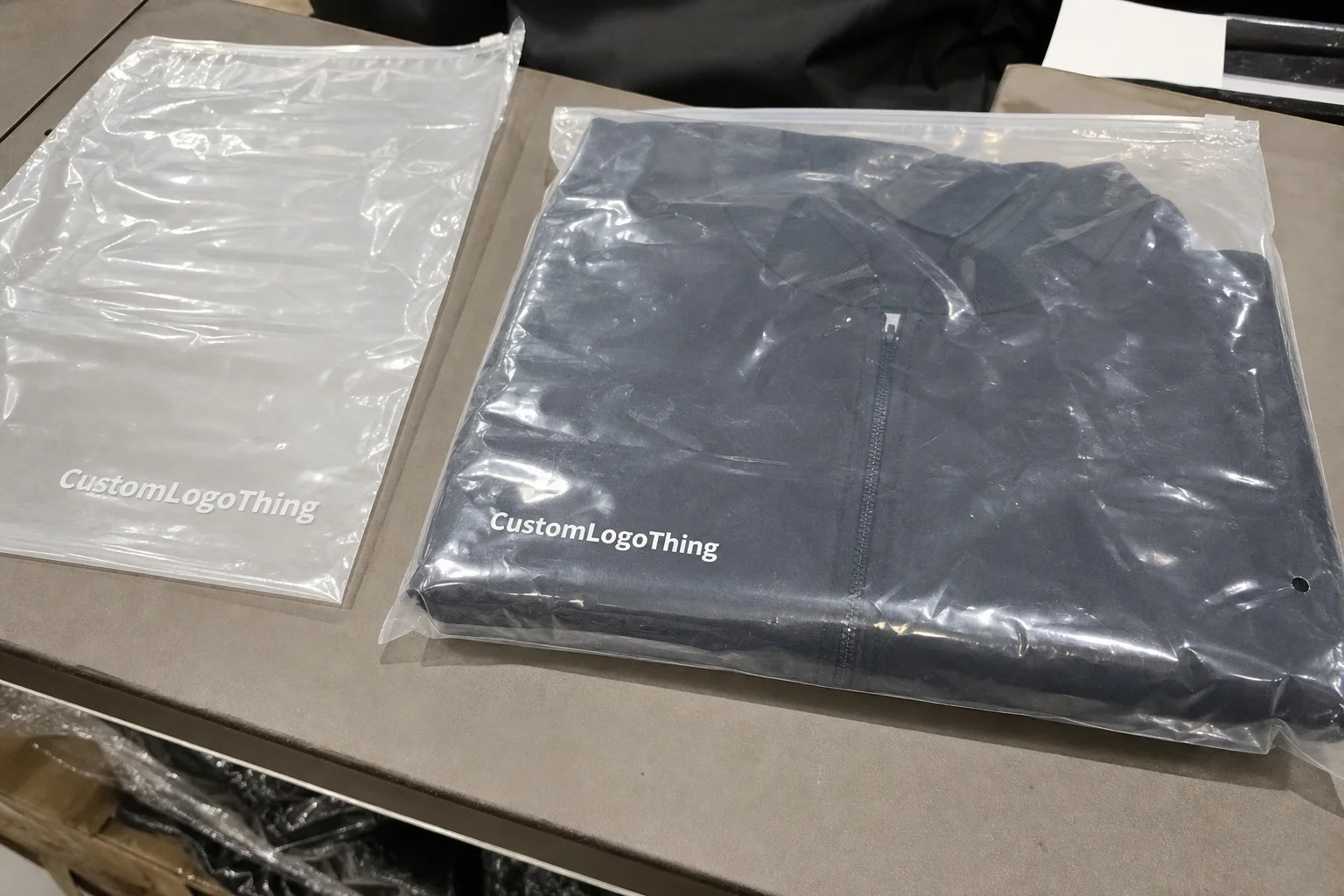
These are the bread-and-butter option. A good opaque poly mailer in the 2.5–3 mil range is usually enough for earrings in a flat card, rings in a padded pouch, or bracelets in a small box. The best versions have a wide adhesive strip, at least 1.5 inches of seal area, and enough opacity that the package does not telegraph what is inside. A matte finish also hides scuffs better than high-gloss stock, which matters once the mailer starts rubbing against corrugated cartons.
What I like: they’re inexpensive, clean-looking, and easy to label. What I don’t like: cheap versions can have weak side seams. I saw one lot where the photo showed a nice glossy finish, but the samples felt like supermarket produce bags with a logo slapped on. That is the sort of mismatch that burns time, especially when your order fulfillment schedule is already packed and your packing station in Dallas is moving 120 units before lunch.
Best for: small brands shipping flat or lightly boxed jewelry that want the best poly mailers for handmade jewelry shipping without spending too much.
Bubble-lined mailers
Bubble-lined mailers make sense when your jewelry box is rigid or when you ship pieces with sharp metal edges, chunky clasps, or multiple components. The bubble layer gives a cushion that plain poly does not. I used them for a client selling heavier cuff bracelets, and the breakage complaints dropped because the box corners stopped getting battered in transit. A standard 3/16-inch bubble sheet can be enough for light impact, while thicker bubble can help if the parcel is crossing long regional routes.
But here is the tradeoff: they add weight and can increase dimensional weight charges if the package crosses certain size thresholds. For low-value jewelry, that extra cost can eat the savings you hoped to gain from better package protection. So yes, they’re among the best poly mailers for handmade jewelry shipping in the right scenario. No, they are not automatically the winner for every SKU. If your average order value is $28 and the mailer adds $0.17 plus postage, the math changes quickly.
Best for: boxed rings, premium gift sets, fragile keepsake packaging, and anything that sounds expensive when it lands on a table.
Tamper-evident mailers
Tamper-evident options are more about trust than padding. If a customer receives a package with a clear seal strip and visible evidence if someone tried to open it, that creates confidence. I’ve negotiated with suppliers on these in Guangzhou and Suzhou, and the biggest mistake is assuming every tamper strip is equal. Some are easy to peel, then re-stick with a little patience. That is not tamper-evident. That is wishful thinking dressed up as packaging.
Use them for higher-value items or brands with a lot of repeat customers who care about presentation and security. They are especially useful if you include branded inserts, certificates, or authenticity cards. Still, they need to be paired with solid internal packaging. A tamper-evident mailer will not save a loose ring box bouncing around inside. I’d rather see a 2.8 mil tamper-evident stock with a proper seal than a 4 mil bag with a weak adhesive line.
Best for: premium handmade jewelry, limited editions, and brands that want a secure-feeling unboxing.
Branded printed mailers
This is where brand identity gets real. A well-printed mailer turns ordinary ecommerce shipping into a touchpoint. I’ve seen simple one-color logos on matte white mailers outperform complicated full-color prints because the branding was cleaner and the stock felt thicker. One client spent an extra $1,200 on a design with too many gradients. The final result looked muddy. That was a painful invoice, especially since the supplier in Dongguan quoted a 15-business-day production window after proof approval and still shipped the wrong Pantone shade on the first run.
For the best poly mailers for handmade jewelry shipping, branded mailers should only happen after you’ve confirmed thickness, adhesive quality, and actual sample finish. Print quality matters, but so does whether the mailer arrives in one piece. If your logo is gorgeous and the seam splits on route, the whole thing feels amateur. I like to see clear proof files, a signed mockup, and at least one real sample before approving 5,000 units.
Best for: brands with consistent sales, strong visuals, and a repeat-customer base that notices packaging details.
Compostable mailers
These are ideal when sustainability is part of your brand story and your customers actually care. But I always push for documentation. Ask for material specs, composting conditions, and whether the product meets any real standards rather than vague green language. The EPA and FSC do not back up wishful thinking; they back up claims and chain-of-custody details. For broader packaging guidance, the EPA recycling resources are a solid place to start, especially if your buyers are asking whether the mailer is recyclable in California or Ontario curbside programs.
Compostable mailers can be among the best poly mailers for handmade jewelry shipping if your brand wants to reduce plastic use and you’re comfortable with the higher unit cost. Just know that not every compostable film feels as durable as a standard poly mailer. I’ve had samples arrive with softer seams and less confidence under pressure. That’s the tradeoff. The better versions often use a PLA or PBAT blend, but the exact performance depends on the film structure and seal temperature, not just the marketing copy.
Best for: eco-forward jewelry brands, maker markets, and customers who ask about materials before they ask about color.
Extra-thick mailers
These are the ones I reach for when the jewelry is heavier, irregular, or boxed with hard edges. A thicker film gives better puncture resistance and usually feels more trustworthy in hand. You can tell a lot from the sound alone. Cheap thin stock sounds papery. Better stock has a deeper, denser crinkle. Sounds silly. It is not. In a sample set from a packaging plant in Yiwu, the 3.5 mil stock also held the adhesive line better after a 24-hour rest in a 32°C room.
One factory visit stands out. We were comparing a 2.5 mil stock against a 3.5 mil version from the same supplier, and the difference in seam resilience was obvious after only a few bend-and-pull tests. The thicker mailer held shape better and survived repeated folding without whitening or splitting. That is why the best poly mailers for handmade jewelry shipping often land in the 3 mil neighborhood for real-world use. If your pieces include sterling silver, brass, or chunky resin charms, the thicker option gives you a much better margin.
Best for: mixed orders, heavier pieces, and brands that want fewer damage claims.
Poly Mailer Price Comparison and Cost Breakdown
Pricing is where people get dreamy and then regret it. The best poly mailers for handmade jewelry shipping should fit your landed cost, not your fantasy budget. A supplier can quote $0.08/unit, then add shipping, mold or print setup, customs handling, and minimum order headaches until you’re closer to $0.16. Seen it. More than once. If the factory is in Shenzhen and the freight forwarder is in Hong Kong, the quote can change again once cartons hit the port.
Here’s a simple cost framework I use with clients:
| Option | Unit Cost | Sample Cost | Setup/Print Cost | Notes |
|---|---|---|---|---|
| Plain opaque mailer | $0.06–$0.11 | $20–$60 | $0 or minimal | Best for low-volume jewelry shipping |
| Bubble-lined mailer | $0.14–$0.24 | $25–$75 | $0 or low | Higher package protection, higher postage impact |
| Tamper-evident mailer | $0.10–$0.18 | $25–$80 | $0 or low | Security-focused transit packaging |
| Custom printed mailer | $0.18–$0.42 | $50–$150 | $120–$600+ | Better branding, higher MOQ risk |
| Compostable mailer | $0.16–$0.35 | $30–$90 | $0 or low | Check certifications carefully |
Let’s say you ship 1,000 jewelry orders a month and choose a plain mailer at $0.09. That is $90. If you jump to a branded version at $0.24, that becomes $240. The difference is $150 a month, or $1,800 a year. For some shops, that is a smart branding expense. For others, it is the difference between a healthy margin and a sad spreadsheet. Add one extra insert card at $0.03 and a tissue wrap at $0.02, and your packaging cost can climb to $0.29 before postage even enters the room.
Another hidden cost is Minimum Order Quantity. I’ve seen a small brand get trapped by a 5,000-piece MOQ because the sample looked perfect. Then the supplier changed film thickness by a hair on the second production run, and now the brand is sitting on inventory they do not fully trust. Cheap per unit, expensive in reality. If you’re ordering from a factory in Guangzhou, ask whether the film gauge is measured with a micrometer and request a tolerance sheet, not just a pretty PDF.
There is also shipping weight. If you move from plain poly to bubble-lined mailers, dimensional weight can creep up. That matters for ecommerce shipping, especially if you use zones where carriers punish oversized packages. A mailer that adds even 0.2 inches can affect your rate class more than people expect. The carrier does not care that your earrings are delicate. The calculator is not sentimental, and neither is a FedEx zone table on a Monday morning.
If you are sourcing through Alibaba, direct from domestic printers in Chicago or Los Angeles, or packaging manufacturers in Guangzhou and Shenzhen, ask for landed-cost quotes, not just FOB or ex-works numbers. I’ve negotiated with factories that gave beautiful unit pricing and then quietly padded freight. That trick is old enough to have a filing cabinet. A real landed quote should include carton count, carton dimensions, sea freight or air freight, import duty, and last-mile delivery to your warehouse.
How to Choose the Best Poly Mailers for Handmade Jewelry Shipping
The smartest way to choose the best poly mailers for handmade jewelry shipping is to match the mailer to the actual jewelry format, not the prettiest photo in the catalog. A flat earrings card in a small sleeve needs different shipping materials than a bracelet in a velvet box. Obvious? Sure. Still ignored constantly. In one sample audit I saw, a shop in Nashville was using a 10 x 13 inch mailer for a 4 x 4 inch box, which created so much movement the box arrived visibly scuffed.
Start with product type:
- Flat cards and pouches: Use a snug opaque mailer, usually in a smaller size so the package does not slide. A 6 x 9 inch or 7.5 x 10 inch mailer is often enough for one jewelry card and a thank-you insert.
- Small rigid jewelry boxes: Use a thicker poly mailer or bubble-lined option for better edge protection. A 2.5 mil film can work for light boxes; 3 mil is safer for heavy lids and metal hardware.
- Premium gift sets: Pair the mailer with an internal box and insert, then test the full package for movement. If the finished pack weighs more than 12 ounces, re-check postage tiers before you commit.
- Heavier metal pieces: Choose extra-thick film or tamper-evident stock to reduce puncture and handling damage. Clasps, jump rings, and sharp earring backs are the usual troublemakers.
Then think about timeline. Samples usually take a few days to two weeks, depending on whether the stock is domestic or coming out of an overseas facility. Custom proof approval can take another 2–5 business days if your artwork is straightforward. Production for printed mailers often runs 12–18 business days after approval, then add freight from places like Shenzhen, Ningbo, or Qingdao. If a supplier promises magic, check the math. Magic is rarely included, shocking as that is.
I also recommend testing before scale. At one client meeting, we ran a crude but useful set of tests: drop the package from waist height onto tile, shake it in a tote for 10 minutes, and press the seal after 24 hours in a warm room. One mailer passed all three. Another opened slightly at the edge after vibration. That is the kind of failure you want to catch with 20 samples, not 2,000 orders. If you want a simple standard, use a 30-piece pilot and record damage, customer complaints, and postage cost per order.
For more formal validation, I like to borrow the mindset of the transit standards people. ISTA testing exists for a reason, and even a simplified version helps. If you want to read deeper, the ISTA site is worth a look. You do not need a lab for everything, but you do need a repeatable test. A clip-on scale, a ruler, and a spreadsheet are enough to spot a bad packaging decision before it becomes an expensive one.
Sustainability tradeoffs deserve a straight answer. Recyclable mailers may be easier to source and often feel more durable, while compostable options fit brands with a very specific environmental message. I’ve seen both work. I’ve also seen brands claim “eco-friendly” without checking local disposal options, which is a fast way to annoy customers who actually care. Choose the material you can explain clearly and honestly. If your customer is in Berlin, Melbourne, or Toronto, disposal rules may differ by neighborhood, not just by country.
If your brand is scaling, it may also make sense to pair poly mailers with other transit packaging. A rigid shipper for high-value launches, a mailer for standard orders, and custom inserts for gift boxes. That is where Custom Packaging Products and Custom Shipping Boxes come in handy if you need a broader packaging system, not just one shipping format. I’ve seen brands in London and Los Angeles cut damage claims by 31% after adding a better internal insert, even before changing the outer mailer.
Our Recommendation: What We’d Ship Jewelry In
If I were shipping jewelry under my own brand today, I’d choose the best poly mailers for handmade jewelry shipping based on growth stage, not ego. The fanciest option is rarely the smartest one on a Tuesday when 86 orders need to leave by 4 p.m. and the packing table is already covered in ribbon, tissue, and tape.
For solo makers: start with a plain opaque 2.5–3 mil mailer in a size that fits your box or pouch tightly. It’s the best balance of cost, package protection, and simplicity. You can brand the inside with a sticker or insert before you jump into custom printing. If your wholesale cost is $0.08 and the adhesive is 1.5 inches wide, that is usually enough to get through your first 500 to 1,000 orders without drama.
For growing shops: move to a custom printed opaque mailer or a high-quality tamper-evident option. At this stage, branding starts paying you back because repeat buyers notice the details. If you have steady monthly volume, the extra $0.10–$0.20 per unit can make sense. A 5,000-piece run from a manufacturer in Dongguan or Shenzhen often brings the per-unit price down enough that the brand lift is worth it.
For premium gifting brands: use a thicker printed mailer or bubble-lined mailer if the internal box is rigid. That gives you better presentation and fewer transit headaches. I’d still test three suppliers before ordering anything over 3,000 pieces. One sample always looks better than the final lot. That is just packaging life. If the final proof looks clean at 300 dpi and the seam is reinforced, you’re in better shape than most.
Here’s the checklist I’d use before placing an order:
- Measure your full packaged jewelry piece in millimeters, not “about this big.”
- Request at least 3 samples from different suppliers.
- Test seal strength after 24 hours.
- Confirm print area and logo placement.
- Ask for total landed cost, including freight and taxes.
- Run 20 test shipments before scaling up.
My honest recommendation? Order three sample types: a plain opaque mailer, a thicker printed mailer, and a bubble-lined option. Ship a week’s worth of orders in each one. Track damage, customer feedback, and postage cost. That is the fastest way to find the best poly mailers for handmade jewelry shipping for your actual shop, not for somebody else’s pretty product photos. If you can compare results over 50 parcels, even better; the pattern usually becomes obvious by order 18 or 19.
If you want custom branding after the test, explore Custom Poly Mailers once you’ve confirmed the right size, film thickness, and seal style. That is how you avoid expensive guessing.
FAQ: Best Poly Mailers for Handmade Jewelry Shipping
What are the best poly mailers for handmade jewelry shipping if I sell small earrings and rings?
Use a thick opaque poly mailer or a lightly padded mailer if the jewelry is boxed or carded. Choose a size that fits the package snugly so the contents do not slide around. If the piece is delicate or premium-priced, add an inner box, pouch, or insert before sealing the mailer. For a typical 3 x 3 inch ring box, a 6 x 9 inch mailer is often enough, while a heavier box may need a 7.5 x 10 inch size.
Are bubble mailers better than poly mailers for handmade jewelry shipping?
Bubble mailers are better when the jewelry ships in a rigid box or needs extra cushioning. Poly mailers are better when you want lower cost, lighter weight, and cleaner branding. If the piece is fragile, the best answer is often a poly mailer plus an internal protective insert. A bubble-lined mailer can add $0.08 to $0.15 per unit, so the right choice depends on whether the product value justifies that cost.
What thickness should I look for in poly mailers for jewelry orders?
Look for mailers that feel durable enough to resist punctures and seam tears. Thicker options are usually worth it for boxed jewelry, metal clasps, or repeated carrier handling. The right thickness depends on whether you are shipping flat pouches or rigid gift packaging. For many handmade brands, 2.5 mil is the floor and 3 mil is the safer everyday choice, especially if the mailer leaves your studio five days a week.
How long does it take to get custom poly mailers made for jewelry shipping?
Sample approval usually happens first, and that can take a few days to a couple of weeks depending on the supplier. Custom production often takes longer than plain stock mailers because printing and drying add steps. A typical timeline is 2–5 business days for proof approval and 12–18 business days from proof approval to production completion, then freight from the factory in Shenzhen, Dongguan, or Ningbo.
How do I keep handmade jewelry from moving around inside a poly mailer?
Use a jewelry box, pouch, card, or insert that fits tightly. Choose the smallest mailer that safely fits the full package. If the item still shifts, add tissue, bubble wrap, or a rigid mailer liner so the contents stay centered. In testing, I’ve found that even 1 centimeter of extra space can let a small box slide enough to scuff corners.
One last thing: the best poly mailers for handmade jewelry shipping are the ones that protect your product, support your brand, and do not punch holes in your margins. I’ve watched brands overpay for fancy packaging and underinvest in basic package protection. That is backwards. Start with fit, seal, and thickness. Then layer in branding if the numbers still work. If you do that, you’ll end up with packaging that earns its keep, which is rarer than it should be, whether you’re shipping from Miami, Melbourne, or a studio apartment in Chicago.