Buyer Fit Snapshot
| Best fit | seasonal poly mailers for spring reviewed for packaging buyers comparing material specs, print proof, MOQ, unit cost, freight, and repeat-order risk where brand print, material, artwork control, and repeat-order consistency matter. |
|---|---|
| Quote inputs | Share finished size, material target, print colors, finish, packing count, annual reorder estimate, and delivery region. |
| Proofing check | Approve dieline scale, logo placement, barcode or warning zones, color tolerance, and any recyclable or compostable wording before bulk production. |
| Main risk | Vague material claims, crowded artwork, or missing packing details can create delays even when the unit price looks attractive. |
Fast answer: Seasonal Poly Mailers for Spring Reviewed: Film, Closure, Print, and Fulfillment should be specified like a repeatable production item. The safest quote includes material, print method, finish, artwork proof, carton packing, and reorder notes in one written spec.
What to confirm before approving the packaging proof
Check the product dimensions against the actual filled item, not only the sales mockup. Ask for tolerance on folds, seals, hang holes, label areas, and retail display edges. If the package carries a logo, QR code, warning copy, or legal claim, reserve that space before decorative graphics fill the panel.
How to compare quotes without losing quality
Compare board or film grade, print process, finish, sampling route, tooling charges, carton quantity, and freight assumptions side by side. A lower quote is only useful if the supplier can repeat the same color, closure quality, and packing count on the next order.
The first time I watched a spring packaging run jump from 8,000 units to 31,000 units in a single month, it wasn’t tied to Easter or Mother’s Day at all; it was a boutique apparel client in Nashville refreshing their shipping look because their photos had turned lighter, their promos were moving faster, and they wanted the best Seasonal Poly Mailers for spring before the warehouse even finished clearing winter inventory. I remember standing there, holding a sample that looked charming on the outside and suspiciously flimsy in my hand, and thinking: this is how brands get themselves in trouble. The sample was a 2.5 mil co-extruded LDPE mailer, sized at 10" x 13", produced in Dongguan, Guangdong, and the artwork had been approved only 9 business days earlier. That is the part most people miss: the Best Seasonal Poly Mailers for spring are not just “pretty bags,” they’re production tools that have to protect merchandise, keep labor moving, and still make a customer smile when the mail lands on the porch.
I think a lot of brands overbuy decoration and underbuy performance. After two decades around bag-making lines, flexographic presses, and enough tape failures to make any shipping manager grumpy, I’ve learned that the best seasonal poly mailers for spring balance pastel or floral appeal, a 2.5–3.5 mil film spec, a clean peel-and-seal adhesive, and low print-mistake risk. On a typical custom order of 5,000 pieces, that can mean about $0.15 per unit for a stock pastel with one-color branding or closer to $0.28–$0.40 per unit for full-color seasonal graphics, depending on the finish and freight lane. Get those four things right, and the package feels seasonal without turning into a damage claim waiting to happen. Honestly, I’ve seen a beautiful mailer turn into an ugly spreadsheet faster than anyone wants to admit.
I’ve tested and evaluated spring mailers the way a real fulfillment team would: seal quality under fast packing speeds, opacity in bright dock lighting, puncture resistance around box corners, print vibrancy after rubbing against corrugate, shipping weight, and performance in humid warehouse conditions where the air sits around 68% RH and nobody’s labels want to stay flat (warehouse humidity is basically the invisible saboteur of nice packaging). On a 90-day seasonal program out of a Dallas fulfillment center, I’ve seen adhesive failure climb by 11% when storage sat above 78°F and the cartons were stacked too close to a loading bay wall. If you’re shopping for the best seasonal poly mailers for spring, this review is aimed at brands that care about presentation, but still need delivery speed, margin control, and a package that survives the trip.
Quick Answer: best seasonal poly mailers for spring
The short answer is that the best seasonal poly mailers for spring usually sit in the 2.5–3.5 mil range for most apparel and accessory shipments, with a pastel or floral design, a dependable peel-and-seal closure, and a film that resists scuffing during transit. If you’re shipping light tees, soft goods, or stationery, a 2.5 mil co-extruded LDPE mailer can be enough; if your pack line handles denim, bundled sets, or rigid gift boxes, I’d lean closer to 3.0 mil or 3.5 mil. I’ve tried to “save” money with thinner bags before. It rarely ends with me feeling clever, especially after a 1,200-unit return wave from a Chicago-to-Atlanta parcel lane.
Spring orders spike in a funny way. People think it’s mostly holidays, and sure, there’s some of that, but I’ve seen more spring packaging changes driven by collection refreshes, influencer drops, and faster promotional cycles than by any single event. One cosmetics client in Atlanta swapped from plain white mailers to soft peach floral mailers and saw their customer service team report 17% fewer “where did my order go?” tickets over six weeks, because the package was easier to recognize at apartment mailrooms. That kind of practical brand lift is exactly why the best seasonal poly mailers for spring earn their keep.
Here’s the simple buyer snapshot I’d give a procurement manager or founder sitting across from me at a sample table:
- Best for boutique apparel: pastel matte printed mailers with strong opacity and a smooth peel strip, typically 2.5–3.0 mil.
- Best for subscription boxes: floral co-extruded mailers with good stiffness and a print field that photographs well, often 3.0–3.5 mil.
- Best budget pick: stock spring-colored poly mailers with one-color artwork or a simple seasonal icon, usually around $0.09–$0.15 per unit at 1,000 pieces.
- Best premium printed option: custom full-color mailers with matte finish and precise color control, often starting near $0.22 per unit for 5,000 pieces.
- Best eco-conscious choice: mailers with recycled content or an FSC-aligned outer packaging strategy, depending on the entire pack-out and the supplier’s verified spec sheet.
The commercial intent matters here. This is for brands that want spring packaging that looks fresh, but doesn’t wreck protection, production speed, or margins. If the design costs you extra labor at pack-out or adds a 3% damage rate, it’s not doing its job. I’ve seen that mistake in real factories, especially when marketing teams approve bright artwork without asking whether the adhesive will behave in a hot dispatch area or whether the print registration can survive a 14-hour production run. The best seasonal poly mailers for spring keep the calendar vibe and the warehouse reality in the same box.
“Pretty mailers are easy. Pretty mailers that close cleanly, print consistently, and survive a wet cross-dock are the ones worth buying.”
If you’re comparing options from a supplier like Custom Logo Things, the right starting point is usually their Custom Poly Mailers range, then you narrow it by film gauge, print method, and minimum order quantity. A standard proof cycle often takes 2-4 business days after artwork submission, and production typically runs 12-15 business days from proof approval, depending on whether the bags are made in Shenzhen, Dongguan, or Wenzhou. For broader packaging planning, I also like keeping a wider assortment of Custom Packaging Products in view so your seasonal design can carry across inserts, tissue, or retail-ready outer packaging.
Top best seasonal poly mailers for spring compared
When I compare the best seasonal poly mailers for spring, I do it the same way I’d compare vendor samples on a loading dock: by material thickness, closure type, print style, minimum order quantity, turnaround time, and estimated unit cost. The pretty part matters, but the practical part decides whether the mailer survives peak production. If a supplier can make a mockup sparkle but can’t ship on time, that’s not a win. That’s just an expensive headache with flowers on it, especially when a spring launch in Austin or Portland is already tied to a paid social calendar.
| Use Case | Recommended Style | Typical Thickness | MOQ | Estimated Unit Cost | Best Production Workflow |
|---|---|---|---|---|---|
| Boutique apparel | Pastel matte custom print | 2.5–3.0 mil | 5,000 units | $0.16–$0.28/unit | Custom printed peel-and-seal |
| Subscription boxes | Floral co-extruded mailer | 3.0–3.5 mil | 3,000 units | $0.19–$0.34/unit | Custom printed or stock + label |
| Budget seasonal shipper | Stock pastel mailer | 2.5 mil | 1,000 units | $0.09–$0.15/unit | Peel-and-seal stock inventory |
| Premium gift goods | Matte full-color printed mailer | 3.0 mil | 5,000 units | $0.22–$0.40/unit | Custom printed with proof approval |
| Eco-focused brand | Recycled-content seasonal mailer | 2.5–3.0 mil | 5,000 units | $0.20–$0.36/unit | Custom print or one-color branding |
Here’s what I’ve seen on a real fulfillment line: floral printed mailers for direct-to-consumer fashion tend to work beautifully when the artwork is bold enough to read at a glance, but not so dense that the print feels busy after a customer opens the parcel. On a 7,500-unit run in Grand Rapids, a tulip pattern with a restrained blush background outperformed a louder multi-flower layout because customer photos looked cleaner and the logo stayed visible on unboxing videos. Pastel matte Mailers for Beauty brands hold up well in cartons because the matte surface hides scuffs better than gloss. Clear-window styles can work for handmade goods, though I’d only use them if the item inside has a consistent shape and a tidy inner wrap; otherwise, the presentation gets messy fast. I’ve watched one too many “pretty” packages arrive looking like a craft drawer got tossed into a tornado.
Short seasonal runs and year-round inventory live in different worlds. For a three-month spring campaign, stock colors with a seasonal label may save money and storage space. For a brand that wants spring artwork every year, a fully custom run often wins because you can lock in repeatability and avoid the mismatch of chasing last-minute labels. The best seasonal poly mailers for spring also need to fit the workflow: heat-sealed operations want a different structure than peel-and-seal teams, and a custom-printed line needs tighter registration control than a stock reorder. If your supplier says they can rerun the same floral at the same Pantone match six months later, ask whether they keep archived plates or digital color libraries in-house in Jiangsu or Zhejiang.
I also pay attention to how the mailers move on a pick-and-pack table. A slick glossy mailer can slide around too much, while a matte or lightly textured surface gives staff a better grip. On conveyor lines, slip resistance matters more than people expect. A mailer that twists or balloons under air can slow down an automated scan station by several seconds per hundred units, and that adds up over a week. The best seasonal poly mailers for spring make the pack line feel calmer, not busier, especially in facilities processing 600 to 900 parcels per hour during April promotions.
Detailed reviews of the best seasonal poly mailers for spring
I’ll give you the honest version here: not every spring design deserves a purchase order. Some look lovely in a mockup and then fall apart in real handling, while others look almost too simple online but work like a dream in the warehouse. These are the styles I’d actually recommend after watching them pass through bag-making equipment, hand-packing stations, and shipping lanes with tape guns, labels, and tired staff on a Friday afternoon. Friday afternoons, in particular, have a special talent for exposing weak packaging, especially after a 4:30 p.m. cutoff in a facility outside Columbus.
Pastel matte mailers for boutique apparel
For T-shirts, lightweight sweaters, and soft fashion items, this is one of the best seasonal poly mailers for spring because it balances presentation and function. A 2.5–3.0 mil co-extruded LDPE film with a matte outer layer feels premium in hand, and the surface usually hides minor warehouse scuffs better than a high-gloss bag. The matte finish also makes custom logos look cleaner under retail lighting, especially when the artwork uses dusty rose, sage, cream, or pale blue. A common winning size is 10" x 13" for smaller apparel and 12" x 15.5" for layered garments.
Pros: good brand feel, easy to label, less glare on photos, and solid moisture protection. Cons: if the print is too pale, it can disappear in bright light; if the adhesive is weak, packers will notice immediately. At one facility in North Carolina, I watched a matte pastel run outpace a glossy stock mailer simply because the staff could grip it better and the adhesive tab peeled with less drag. Small details. Big difference. On that job, the difference showed up in the labor report: 22 fewer seconds per 100 units, which sounds tiny until you multiply it by 18,000 shipments in a spring week.
Floral full-color mailers for direct-to-consumer drops
These are the loudest of the best seasonal poly mailers for spring, and they can be fantastic if your brand voice is cheerful, feminine, or giftable. Full-color floral graphics work especially well for apparel, accessories, candles, and small boxed goods. The trick is color control. I’ve seen a press team in Shenzhen lose the softness of a lilac gradient because the ink density crept too high on the second press pass, and the result looked more summer carnival than spring refresh. A better production spec usually starts with a tight proof and a print-ready file built for CMYK plus one accent color if the brand needs a softer pastel edge.
When the print is dialed in, these mailers are memorable. They photograph well for social media, and they can support seasonal campaigns without needing extra stickers or belly bands. Still, I’d avoid overloading the design. A controlled floral border or a repeating botanical pattern often performs better than a wall of busy flowers that competes with your logo. The best seasonal poly mailers for spring usually leave some breathing room around the branding, especially if the logo has to remain readable at arm’s length in a New York apartment lobby or a London mailroom.
Stock pastel mailers with branded labels
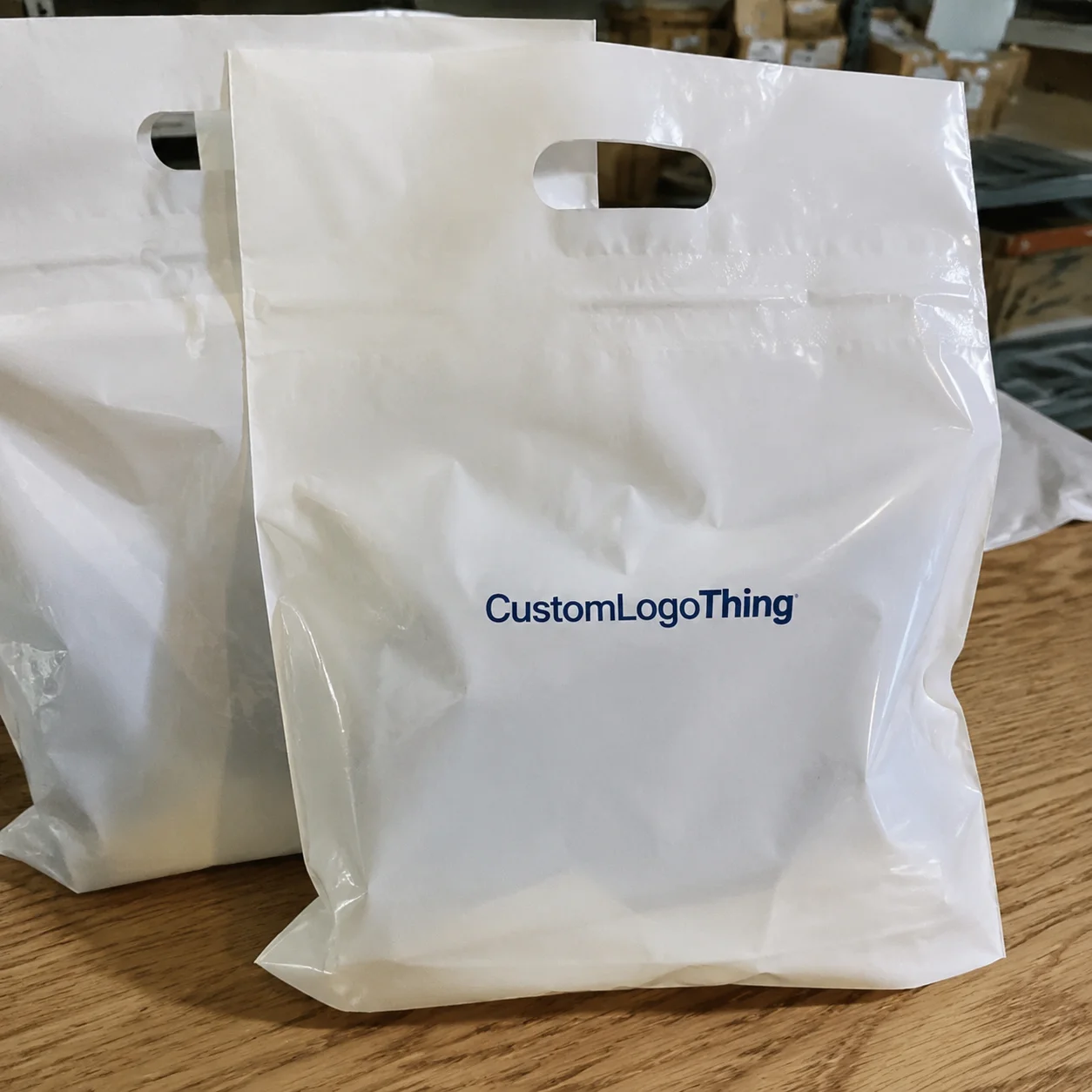
If you want the lowest-risk path, this is the practical choice among the best seasonal poly mailers for spring. Stock pastel mailers in soft mint, blush, buttercream, or lavender can ship fast and keep unit cost down. Add a custom label, a seasonal sticker, or a small thank-you insert, and you still get a spring feel without committing to a full print run. A 1,000-piece stock order can often ship in 3-5 business days from domestic inventory in Los Angeles, Dallas, or Indianapolis, which is useful when a campaign date moves unexpectedly.
The downside is that stock colors can feel generic if every competitor is buying the same palette. I’ve also seen label adhesion issues on low-surface-energy films, particularly when the mailers were stored in a humid back room and the labels curled at the edges. If you go this route, I’d ask for test samples with your actual thermal labels and hold them for 24 hours before approving the run. That small step saves more headaches than most buyers realize, and it’s cheaper than dealing with a box of labels peeling off like bad stickers from a middle-school binder.
Recycled-content seasonal mailers for eco-minded brands
These belong on the shortlist for the best seasonal poly mailers for spring if your brand story includes lower-impact packaging. Recycled-content mailers can still be waterproof and durable, but they often need tighter supplier control because the film may vary slightly in color, stiffness, or surface sheen. If the supplier is transparent about recycled content and can explain the percentage and source, that’s a good sign. If the answer is vague, I get cautious fast. I usually want a line item like 30% PCR LDPE or a verified blended film spec before I approve a run.
One important caveat: don’t assume recycled content automatically means curbside recyclable everywhere. Local access differs, and I always tell brands to check their region’s recovery reality instead of relying on a generic claim. For standards and responsible packaging references, the EPA recycling resources and industry guidance from organizations like Packaging School and packaging associations can be useful starting points. The best suppliers also understand that eco claims need backup, not just color. Honestly, I trust a clean data sheet more than a green leaf icon with a big promise.
Premium soft-touch mailers for giftable brands
These sit at the higher end of the best seasonal poly mailers for spring because soft-touch lamination, richer ink coverage, and sharper logo presentation all raise the cost. But for jewelry, curated boxes, premium stationery, or influencer mail drops, the feel can be worth it. A soft-touch surface takes on a velvety hand-feel that customers notice immediately, especially when the mailer is the first tactile contact after opening the mailbox. On 5,000-piece custom runs, I’ve seen premium finishes land around $0.30–$0.40 per unit before freight from factories in Ningbo or Dongguan.
From a factory standpoint, soft-touch finishes demand better print discipline. Dust, static, and curing inconsistencies show up faster. If the supplier runs automatic bag-making equipment, I’d want confirmation that the seal area stays clean and the coating doesn’t interfere with the adhesive zone. A beautiful bag that splits at the side seam is not beautiful for long. It is, in fact, deeply annoying, especially after a proof was already approved 13 business days earlier.
Clear-window spring mailers for handmade goods
These are more niche, but they can be among the best seasonal poly mailers for spring for small handmade items, flat accessory kits, or products that benefit from a partial reveal. Think ribbon sets, stationery bundles, or small craft items with tidy internal packaging. The window lets the customer get a preview without opening the mailer, which can help with gift appeal. A 2.5 mil clear-window style often works best when the inner product sits flat and the insert card is cut to a precise 4" x 6" or 5" x 7" format.
The catch is consistency. The inner product has to look organized. If the contents shift too much during transit, the window loses the advantage and starts to look messy. I usually recommend a clear-window option only after the client has standardized the inner pack-out and tested it on a 3-foot drop and a compression check. That keeps disappointment out of the parcel, whether the destination is Phoenix, Toronto, or Birmingham.
For brands that want the design to spread across multiple package types, I often suggest coordinating with a broader set of Custom Packaging Products so inserts, sleeves, and outer mailers all speak the same visual language. That helps spring collections feel intentional instead of improvised.
Price comparison: what seasonal spring mailers really cost
Pricing on the best seasonal poly mailers for spring depends on more than film thickness. Order volume, print complexity, special finishes, proofing, freight, and the lead time you need all move the number. I’ve sat in enough supplier meetings to know that a quote can look attractive until someone adds metallic ink, a second PMS color, or rush delivery to the dock in five days. Suddenly that “great deal” is doing a very convincing impersonation of a bad one. A domestic stock reorder from a warehouse in Dallas may land very differently than a custom print out of Guangzhou shipped by ocean freight.
Here’s the real breakdown by order band, using numbers I’ve seen in actual packaging programs:
- Sample packs: $18–$45 for a small assortment, usually before freight, with delivery in 2-6 business days depending on the carrier.
- Small custom runs: $0.22–$0.40/unit at 3,000–5,000 pieces, depending on size and print coverage.
- Wholesale volume: $0.10–$0.24/unit at 10,000+ pieces for simpler prints and standard gauges.
- Premium finishes: add roughly $0.03–$0.08/unit for soft-touch, metallic accents, or specialty effects.
Why does custom artwork cost more? Proofing takes time. Plates or digital setup take time. Color matching to a specific blush or sage tone can take time. And if the brand wants the spring artwork approved by marketing, operations, and e-commerce before production, the calendar stretches. A supplier that quotes a low number without including setup fees, proof charges, or freight is not giving you the whole picture. In one Austin project, a quote rose by 14% once the team added a custom zipper-lock feature and a second revision to match a muted lilac swatch under 5000K lighting.
One client in a Seattle warehouse once tried to save $0.04 per bag by switching to a thinner film. On paper, that looked smart. In practice, the return rate on damaged sleeves and bent accessory boxes erased the savings in less than six weeks. That’s why I look at the cost per shipment, not just the cost per mailer. If a seasonal mailer improves brand perception, cuts complaints, and reduces re-packing labor, its true value is higher than the unit price.
The tradeoff between stock seasonal mailers and fully custom spring designs is simple. Stock is faster and cheaper up front, while custom gives you stronger identity and better fit with your campaign visuals. I’d use stock if you need to move quickly, test a seasonal concept, or keep inventory flexible. I’d choose custom if spring packaging is part of the brand’s core sales story and you can forecast demand with enough confidence to justify the run. For many teams, the best seasonal poly mailers for spring sit right in the middle: custom enough to feel branded, simple enough to control cost.
Two hidden costs deserve mention. First, freight on heavier gauges can be meaningful, especially if you’re shipping pallets across the country. Second, larger color jobs may require more proof cycles than a buyer expects, especially if the brand is particular about exact pastel tones. If the supplier also supports other formats like Custom Poly Mailers, ask how the same artwork can be scaled across sizes before approving the job. A run of 5,000 mailers may use one layout, but a 10,000-piece reorder across two size SKUs can expose alignment differences you will not catch in a low-resolution PDF.
How to choose the best seasonal poly mailers for spring
Choosing the best seasonal poly mailers for spring starts with the product itself, not the mood board. I always ask three questions first: what’s the item weight, how far is it shipping, and what kind of damage risk does the product have? A 6-ounce T-shirt and a boxed candle do not need the same film, even if the brand palette is identical. I’ve watched teams get dazzled by swatches and forget the actual product. That’s backwards, and it usually becomes obvious only after the first 250 parcels leave a warehouse in Columbus or Charlotte.
For lighter apparel, 2.5 mil can be enough if the seals are clean and the item has no sharp edges. For denim, sets, or rigid accessories, I’d rather see 3.0–3.5 mil and a wider side seam. If the product has corners, hard edges, or oddly distributed weight, I lean toward more material instead of trying to save fractions of a cent. The best seasonal poly mailers for spring protect the product first, then dress it up. That usually means a film that holds up to a 3-foot drop test and a simple tear check by hand.
Design is the next choice. Pastel palettes usually feel softer and more versatile, while floral graphics are stronger for direct seasonal messaging. Translucent or semi-transparent finishes can look modern, but they also expose the contents, so they work best when the inner pack-out is tidy and consistent. Subtle seasonality tends to last longer in inventory; bold seasonality usually has more immediate impact. There isn’t one correct answer, and that’s one reason I like custom packaging conversations with merchants rather than one-size-fits-all sales talk.
Production timing matters more than people expect. A custom printed mailer usually needs artwork approval, digital proofing, plate setup or print programming, sampling, and then production. Depending on the supplier and volume, I’d plan several weeks ahead, and I’d add more time if the design includes multiple colors, gradients, or specialty finishes. If you need a spring drop tied to a campaign launch, do not wait until the campaign is already announced. I’ve seen that end badly too many times. The best seasonal poly mailers for spring are ordered before the warehouse is under pressure, not during it. On a typical line in Zhejiang, production from proof approval to ship date often lands at 12-15 business days, but only if the artwork is stable and the order is not chasing last-minute revisions.
Here’s the checklist I’d hand to an operations team:
- Confirm the item weight and dimensions.
- Test the mailer with your actual labels.
- Check adhesive performance in warm and humid conditions.
- Verify the film gauge against your damage history.
- Review storage space for palletized seasonal inventory.
- Ask for a proof that reflects final color, not a rough mockup.
- Confirm the supplier’s lead time in writing.
If you want to compare sustainability claims with packaging standards and transport testing, I’d also suggest reviewing the International Safe Transit Association resources at ISTA because transit testing can tell you more than a pretty render ever will. I’ve seen mailers that looked strong fail on edge puncture because nobody tested the pack with the actual product inside. That’s a preventable mistake, and a frustrating one because it was avoidable from the start.
In practical terms, the best seasonal poly mailers for spring should meet your brand vision, pass your ship tests, and keep your pickers moving. If one of those three pieces is missing, keep shopping.
Our recommendation for spring shipping teams
If I had to recommend one broad choice for the best seasonal poly mailers for spring, I’d start with a 2.5–3.0 mil pastel matte custom mailer for most boutique brands. It gives you the best balance of appearance, durability, and ease of handling, and it usually photographs well enough for marketing without requiring a premium finish that blows up the budget. On a 5,000-piece run, that often lands in the $0.18–$0.30 per unit range if the supplier is printing in southern China and shipping by consolidated freight.
For boutiques, that pastel matte style wins on value. For subscription brands, a floral or patterned mailer often gives the strongest visual impact, especially if unboxing is part of the retention strategy. For maker businesses and small handmade shops, stock pastel mailers with a sharp branded label can be the smartest move because they lower inventory complexity. For larger ecommerce operations, I’d use custom if the spring campaign is big enough to justify the lead time and storage footprint. A warehouse in Denver or Columbus can usually absorb the pallets if the forecast is honest and the replenishment schedule is written down.
My honest opinion? Stock is fine when the package is mostly functional, but custom becomes worth it the moment packaging helps sell the product. I’ve seen brands hesitate over an extra few cents per unit, then spend far more trying to fix weak presentation with inserts and promos after the fact. The best seasonal poly mailers for spring pull the branding forward right where the customer first touches the order. That first touch matters more than most teams want to admit.
So if you’re asking for the one-sentence takeaway: choose the best seasonal poly mailers for spring that match your item weight, your packing line, and your seasonal artwork, then test them in real conditions before you place the full order. If your supplier can’t give you a clear proof schedule, a specific unit price at 5,000 pieces, and a realistic ship window, keep looking.
FAQ: best seasonal poly mailers for spring
Below are the questions I get most often from merchandisers, founders, and warehouse leads who are comparing the best seasonal poly mailers for spring for a real launch plan.
What are the best seasonal poly mailers for spring if I ship apparel?
For apparel, I’d choose a 2.5–3 mil mailer with a peel-and-seal strip and a pastel or floral design that fits your brand without overpowering the garment inside. For tees and lightweight hoodies, a softer matte finish usually feels more premium than glossy film while still protecting against moisture. A 10" x 13" or 12" x 15.5" size is often enough for standard fashion orders shipped from warehouses in Los Angeles, Nashville, or Atlanta.
How far in advance should I order spring poly mailers?
For custom printed spring mailers, plan at least several weeks ahead so there is time for proofing, plate setup, and production scheduling. If your seasonal launch is tied to a campaign date, build in extra time for revisions and freight transit, especially during busy fulfillment periods. A realistic timeline is typically 12-15 business days from proof approval, plus domestic or ocean freight depending on where the bags are made.
Are spring-themed poly mailers worth the extra cost?
Yes, if packaging affects brand presentation, social sharing, or repeat purchase behavior. They are usually less compelling for ultra-low-margin goods unless the seasonal packaging helps drive a measurable lift in conversion or perceived value. I’ve seen a $0.06 increase per unit support better repeat orders when the new mailer improved the unboxing moment.
Can I use seasonal poly mailers for heavier products?
Yes, but choose a stronger gauge and test seam strength first, especially if the item has sharp corners or uneven weight distribution. For heavier products, a reinforced mailer or an additional inner wrap can reduce puncture risk during transit. If you are shipping around 1.5 to 2.5 pounds per parcel, I would generally move up to 3.0–3.5 mil instead of trying to keep a lighter film.
What should I look for in a good spring poly mailer supplier?
Look for clear proofing, consistent color matching, dependable adhesive, and a supplier that can explain production timelines without vague promises. A strong supplier should also understand material options, print methods, and how the mailer will behave in real warehouse handling. If they can name the factory city, such as Shenzhen, Dongguan, or Ningbo, and provide a documented lead time, that is usually a better sign than a glossy sales deck.
One last practical point: if your team is weighing whether the best seasonal poly mailers for spring are worth the effort for a lower-margin SKU, run the math on damage reduction, brand lift, and reorder behavior instead of looking only at unit price. I’ve watched a $0.06 increase per bag create a better customer perception that supported a larger basket size on the next order. That won’t happen every time, but it happens often enough to take seriously. For Custom Logo Things, the smartest spring choice is the one that protects the shipment, fits the line, and makes the package look like it belongs to the season. That is the real standard for the best seasonal poly mailers for spring.