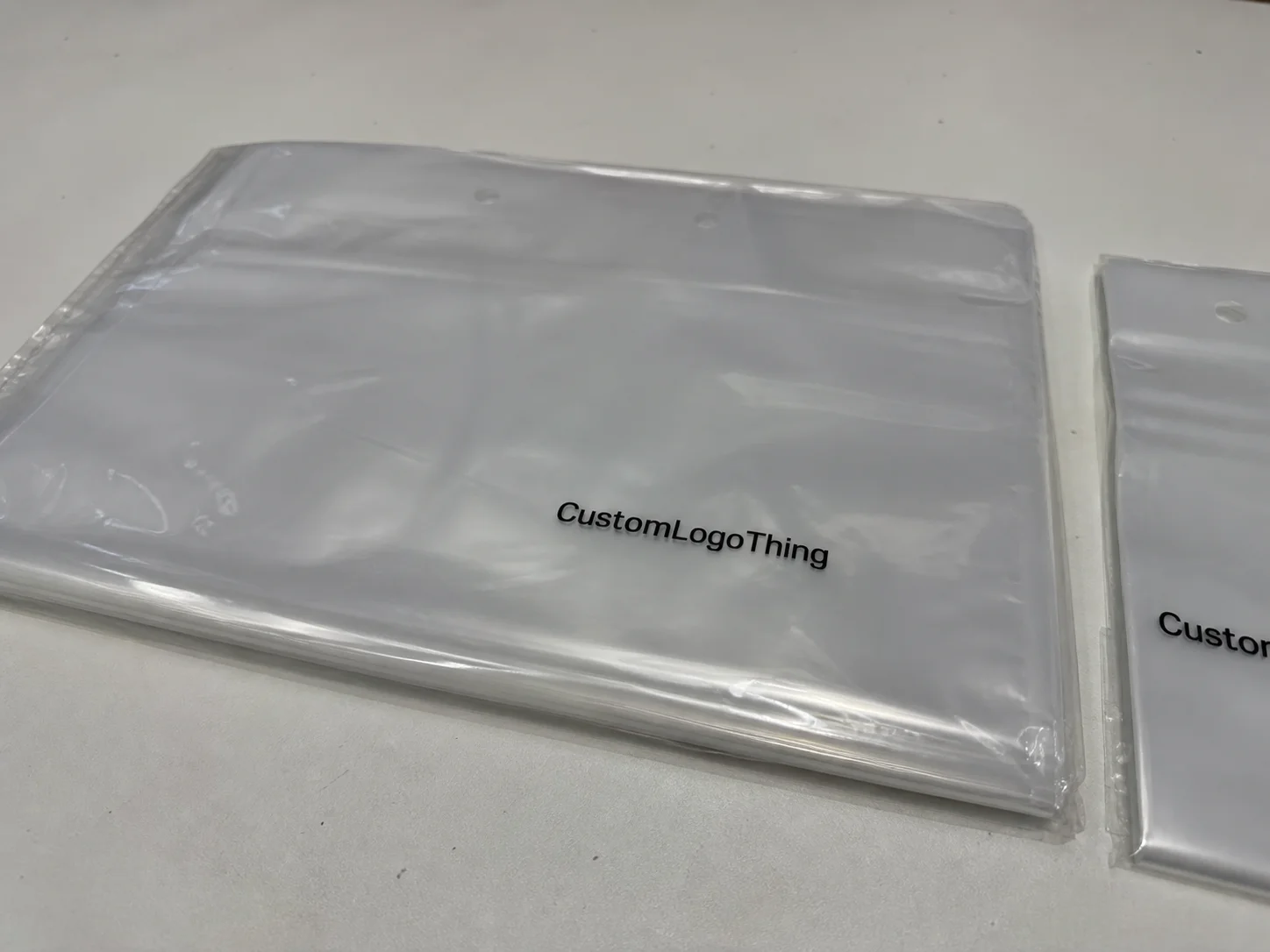
Buyer Fit Snapshot
| Best fit | Biodegradable Poly Mailers Supplier projects where brand print, material claims, artwork control, MOQ, and repeat-order consistency need to be specified before quoting. |
|---|---|
| Quote inputs | Share finished size, material target, print colors, finish, packing count, annual reorder estimate, ship-to region, and any compliance wording. |
| Proofing check | Approve dieline scale, logo placement, barcode or warning zones, color tolerance, closure strength, and carton packing before bulk production. |
| Main risk | Vague material claims, crowded artwork, missing packing details, or unclear freight terms can make a low unit price expensive after revisions. |
Fast answer: Biodegradable Poly Mailers Supplier: Film, Print, MOQ, and Carton Packing should be specified like a repeatable production item. The safest quote records material, print method, finish, artwork proof, packing count, and reorder notes in one written spec.
Production checks before approval
Compare the actual filled-product size with the drawing, then confirm tolerance on folds, seals, hang holes, label areas, and retail display edges. Reserve space for logos, QR codes, warning copy, and material claims before decorative graphics fill the panel.
Quote comparison points
Review material grade, print process, finish, sampling route, tooling charges, carton quantity, and freight assumptions side by side. A quote is only useful when the supplier can repeat the same color, closure quality, and packing count on the next order.
Choosing a biodegradable poly mailers supplier can feel pretty simple until the first shipment lands with a weak seam, the print starts rubbing off in transit, or the eco language turns out to mean something a lot looser than your team expected. The gap between a responsible-looking spec sheet and a package that actually survives a shipping lane is where packaging programs lose money and trust, sometimes both at once. A dependable biodegradable poly mailers supplier should close that gap, not widen it.
The phrase sounds exact, but the products behind it often are not. One supplier may offer a bio-based film with a documented end-of-life pathway, while another is really selling a conventional poly mailer with a small additive and a broad marketing description. Those are not interchangeable from a buyer's point of view. A serious biodegradable poly mailers supplier has to prove performance and explain the claim clearly, not decorate a quote with green language and hope nobody asks questions.
If your brand also buys other packaging formats, it helps to place the mailer decision inside the larger system. A team comparing Custom Poly Mailers with broader Custom Packaging Products can see how print quality, closure style, and shipping strength shape the customer experience together rather than separately. That bigger view matters more than most teams realize.
Biodegradable Poly Mailers Supplier: What They Actually Sell
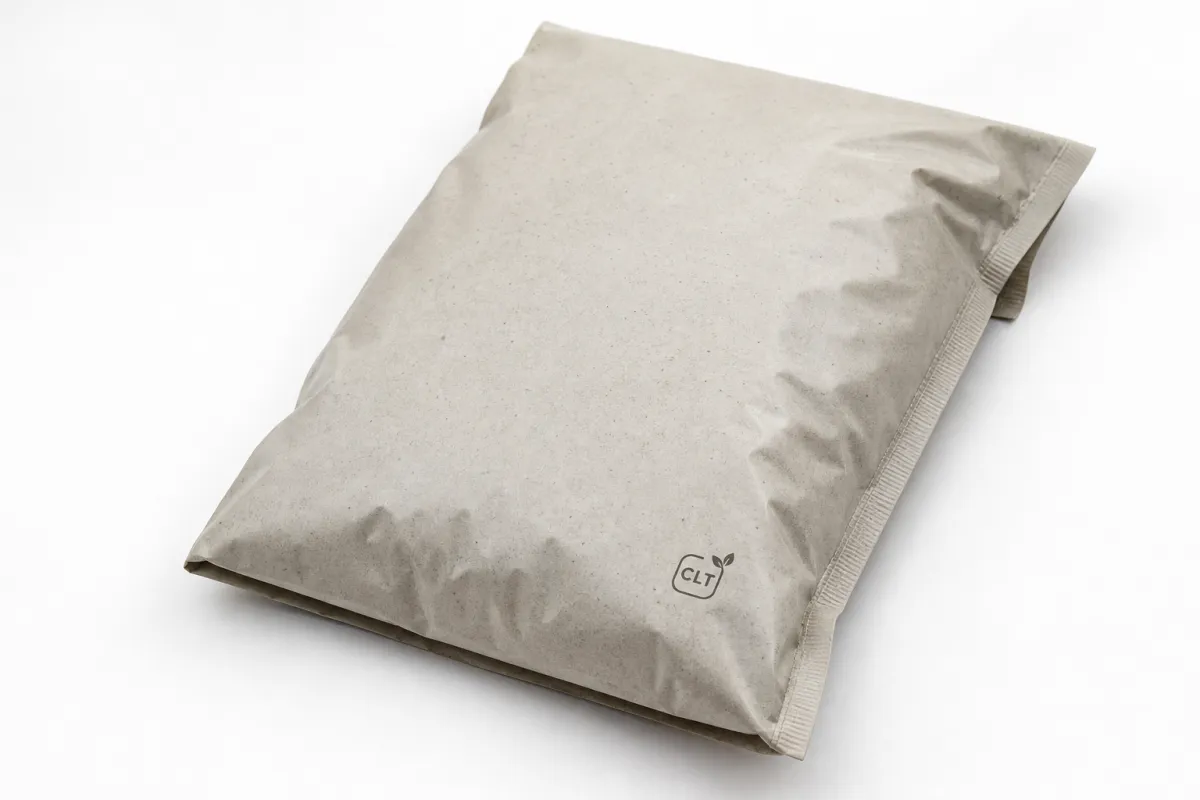
A biodegradable poly mailers supplier is usually selling a shipping mailer first and a sustainability claim second. That distinction matters more than the sales pitch makes it sound. A mailer still has to survive packing speed, conveyor belts, warehouse stacking, and the occasional rough toss from a carrier. If the seal fails or the film tears, the end-of-life story loses relevance because the order needs to be replaced. The best biodegradable poly mailers supplier understands that tradeoff and designs around it.
Plain language helps here. Biodegradable generally means a material can break down through biological activity over time, but the conditions required are not always the same. Some products need industrial composting settings, some are marketed for specific environments, and some rely on additives that change how the film fragments. Buyers need to separate biodegradable from compostable, recyclable, and oxo-degradable. Those words do not mean the same thing, and a biodegradable poly mailers supplier should be able to explain the difference without hiding behind jargon.
A practical way to think about it looks like this: a recyclable poly mailer is intended for a recovery stream; a compostable mailer is designed for a composting pathway under defined conditions; a biodegradable mailer is a broader claim that still needs evidence; and an oxo-degradable bag depends on oxidation rather than true composting in many cases. That distinction changes how a brand writes packaging copy, how compliance reviews the product, and how a warehouse stores inventory. A credible biodegradable poly mailers supplier will not blur those lines just to close a sale.
Performance matters just as much. Two mailers can look nearly identical and still differ in resin blend, print surface, closure adhesive, and barrier properties. One supplier may describe a 60-micron film with a narrow seal, while another offers an 80-micron film with stronger puncture resistance and cleaner print. On paper, the products seem close. In transit, they are not. That is why the biodegradable poly mailers supplier matters more than the label alone.
A mailer that appears environmentally responsible but fails in real shipping conditions is not a sustainability win. It is a replacement order.
From a buying perspective, the decision sits at the intersection of three questions: how the package performs in transit, what end-of-life claim you can support, and whether the brand fit is strong enough to justify the switch. If one of those legs is weak, the program gets shaky fast. The smartest biodegradable poly mailers supplier will help you balance all three rather than pushing the cheapest green-looking option.
How a Biodegradable Poly Mailers Supplier Handles the Process
A competent biodegradable poly mailers supplier usually starts with the material story. What resin system is being used? Is it partially bio-based, is it made with a biodegradable additive, or is the entire film built around a compostable formulation? How is degradation supposed to begin, and under what conditions? Heat, moisture, oxygen, microbial activity, and time all matter, but not in the same way for every product. A supplier that cannot answer those questions clearly is asking you to accept a claim on faith.
The next step is evidence. A credible biodegradable poly mailers supplier should connect the material claim to a test method, a certification, or a documented standard. For compostable claims, that often means a recognized framework such as ASTM D6400 or EN 13432, depending on the market and product type. For shipping durability, separate tests matter too, because a package can be "green" and still fail a drop test or puncture test. If your logistics team ships into harsh climates or uses automated packing, ask for data instead of adjectives. For more context on packaging and recovery language, the EPA recycling guidance is a useful starting point.
Then comes the manufacturing path. A biodegradable poly mailers supplier chooses film structure, thickness, seal width, adhesive, print method, and outer finish. Those decisions affect everything from shelf stability to barcode readability. A lightly printed mailer with a clean matte finish may look premium, but if the ink layer interferes with seam strength or the adhesive is tuned too aggressively, the package can fail at the exact point where the customer opens it. Good suppliers think in systems, not isolated specs.
Storage is the part many buyers forget. A mailer that performs well in a lab can still lose quality if it sits too long in a hot warehouse or in a damp carton room. Some biodegradable materials are more sensitive to heat and humidity than conventional poly. That does not make them bad; it means the warehouse rules need to be clearer. Ask the biodegradable poly mailers supplier about shelf life, recommended storage temperature, and how the product behaves after 6, 9, or 12 months on site. That is practical information, not trivia.
In production terms, the supplier is doing more than filling a bag. They are translating a packaging brief into something that has to satisfy three separate audiences: operations, compliance, and marketing. A strong biodegradable poly mailers supplier ends up functioning like part materials engineer, part compliance translator, and part production manager. The best ones can talk about seal temperatures, artwork placement, and end-of-life claims in the same conversation without losing the thread.
Key Factors That Separate Good Claims From Real Performance
Material blend is the first filter. Ask whether the mailer is plant-based, partially bio-based, or built with biodegradable additives. Each route changes cost, strength, and disposal story. A bio-based feedstock does not automatically mean the package will biodegrade quickly, and a biodegradable additive does not automatically make a film suitable for every disposal stream. A dependable biodegradable poly mailers supplier should explain the chemistry in plain terms and tell you what the product is not.
Thickness and seal quality matter more than most buyers expect. A film that is slightly tougher can reduce damage claims, and a consistent seal can save a lot of downstream pain. If a mailer opens during transit, the cost is not just the mailer itself. It includes the replacement unit, the second freight movement, the customer service ticket, and often the brand hit. For apparel, a 70-90 micron structure may be enough in many cases; for heavier goods or sharper edges, a thicker film or reinforced seam can be the safer path. A seasoned biodegradable poly mailers supplier will talk about those tradeoffs openly.
Print and branding deserve more attention than they usually get. Many brands want logo coverage, barcode readability, tamper evidence, and a clean unboxing moment. Those goals can work together, but not if the print method is chosen carelessly. Heavy ink coverage can affect disposal claims or create a finish that behaves differently in recycling or composting pathways. Ask for print samples and compare the unprinted side, the print density, and the edge registration. A biodegradable poly mailers supplier that handles custom branding well should be able to keep the artwork sharp without masking the technical details underneath.
Climate and shipping lanes are not background noise; they are part of the product spec. A package that works fine in a temperate warehouse may fail in a humid environment, a hot container, or a long international route. If your shipments go across regions, ask how the mailer performs after temperature swings and whether the supplier has data for your use case. An honest biodegradable poly mailers supplier will admit that one size does not fit every lane, because it just doesn't.
Shelf life is another quiet variable. Some biodegradable materials stay stable for normal inventory cycles; others need tighter controls. That can affect purchase timing, storage cost, and reorder rhythm. If your team holds inventory for months, do not let that question slip. A good biodegradable poly mailers supplier should give you a clear storage window, not vague reassurance.
If you want one external benchmark for transit performance, shipping test methods from ISTA are useful because they remind buyers that packaging has to survive a journey, not just a brochure. That is a healthier way to evaluate a biodegradable poly mailers supplier than looking only at a sustainability claim.
Step-by-Step Guide for Choosing a Biodegradable Poly Mailers Supplier
Start with the real shipping profile. What product are you sending, how heavy is it, what is the typical cart mix, and how often do you see returns or re-ships? A mailer for a 6-ounce apparel order is not the same as one for cosmetics, supplements, or small accessories with hard edges. The better you define the use case, the easier it is for a biodegradable poly mailers supplier to propose the right structure.
Step 1: define the package weight range, dimensions, shipping method, and sustainability claim you need to support. If the claim has to be defensible on a customer-facing website, say so upfront. A biodegradable poly mailers supplier can only solve for what you actually need, not what the brochure assumes.
Step 2: request technical sheets, proof of material composition, and any available certification documents before talking price. If the supplier cannot share enough detail to distinguish one film from another, the quote is too thin to compare. This is where a serious biodegradable poly mailers supplier earns trust.
Step 3: order samples and test them like a shipment, not like a display piece. Fill the mailer to normal weight, close it under real packing conditions, run barcode scans, rub the print, drop the pack, and check for punctures after exposure to moisture. Compare failure points across suppliers. A polished sample that fails after one rough handling test is telling you the truth early. That is good news, not bad.
Step 4: ask about the timeline in detail. Sampling can take a few days to a couple of weeks, but production timing depends on artwork approval, material availability, print setup, and order size. Many custom runs land in the 12-18 business day range after proof approval, and freight can add another 3-6 weeks if ocean shipping is involved. A reliable biodegradable poly mailers supplier should be able to map those steps clearly.
Step 5: build a comparison matrix with performance, documentation, customization, and service response time. Price matters, but it is only one column. When brands compare only the quote total, they often miss the higher cost of poor communication or weak inventory planning. A disciplined biodegradable poly mailers supplier should score well on the full program, not just on unit price.
One practical move is to create a small internal test panel. Let operations, compliance, and marketing each score the sample pack separately. Operations will notice seal strength and packing speed. Compliance will notice wording and evidence. Marketing will notice print quality and customer perception. A strong biodegradable poly mailers supplier should satisfy all three without forcing one team to compromise blindly.
Biodegradable Poly Mailers Supplier Pricing, MOQ, and Quote Traps
Pricing starts with the resin system, but it does not end there. Film thickness, size, print colors, certification costs, packaging format, and order volume all push the number in different directions. A standard unprinted mailer may sit around $0.12-$0.24 per unit at moderate volume, while a custom-printed version can move into the $0.20-$0.45 range depending on print coverage, material choice, and order size. That spread is normal. What matters is understanding why it moves. A transparent biodegradable poly mailers supplier should be able to break down the pieces.
MOQ is where many buyers get surprised. Some suppliers offer a low unit price but require a large run that only makes sense for bigger brands. Others will sell smaller quantities, but the per-piece cost rises because setup is spread across fewer units. If your team is still testing the market, a flexible biodegradable poly mailers supplier may be worth a slightly higher piece price because it reduces the risk of dead stock.
Quote traps usually show up in the fine print. One supplier may include artwork setup, tooling, and freight in the estimate; another may leave those items for later. That means the lowest headline number is not always the lowest landed cost. Ask for the quote to separate unit cost, setup fees, freight estimates, and any certification-related charges. A serious biodegradable poly mailers supplier will not mind that request.
Customization changes the math in obvious and less obvious ways. A logo may add print cost, but it can also reduce pack station errors by making the mailer easier to identify. A tear strip or tamper-evident feature may raise the unit price, yet lower customer service issues. Even a small change in film gauge can alter damage rates enough to pay for itself. The right biodegradable poly mailers supplier should help you look at cost in terms of total program impact, not just per-unit spend.
| Option | Typical Unit Cost | Common MOQ | Best For | Trade-Offs |
|---|---|---|---|---|
| Stock unprinted mailer | $0.12-$0.22 | 1,000-5,000 | Testing, fast launches, smaller brands | Less brand control, limited sizing options |
| Custom-printed mailer | $0.18-$0.35 | 5,000-20,000 | Brand visibility, repeat shipping, cleaner presentation | Longer lead time, higher setup cost |
| Certified or documentation-heavy program | $0.22-$0.45 | 10,000+ | Retailers, compliance-sensitive programs, formal claims | More paperwork, tighter spec discipline |
The most useful comparison is not the cheapest price. It is the landed cost, the reorder cost, and the cost of failure. If you save two cents on a mailer but see even a small jump in damage claims, the math can turn upside down quickly. That is why a capable biodegradable poly mailers supplier should be evaluated on what the quote does after it leaves the sales inbox.
Ask for the cost at two or three volume tiers. A quote at 5,000 units and another at 20,000 units often shows where the real break point sits. That is especially useful if you are deciding between a pilot order and a full rollout. The best biodegradable poly mailers supplier will make tier pricing easy to read.
Common Mistakes When Choosing a Biodegradable Poly Mailers Supplier
Mistake one is treating every biodegradable claim as equal. It is not. A claim can point to different chemistry, different disposal pathways, and different proof standards. If a buyer does not ask what the claim actually means, the program can become a compliance headache later. A careful biodegradable poly mailers supplier should help separate the wording from the science.
Mistake two is skipping sample testing. A smooth-looking mailer can still fail under rough handling, temperature swings, or moisture exposure. I've seen buyers approve a sample because it looked clean on a desk, then discover the real problem only after the first distribution run. That is an expensive lesson. A competent biodegradable poly mailers supplier expects you to test.
Mistake three is chasing price alone. Lower unit cost means very little if the product cannot pass internal review, if documentation is incomplete, or if the mailer creates customer confusion at unboxing. Packaging buyers often think the bargain is in the quote. Sometimes the bargain is in not having to explain a failure later. That is where a strong biodegradable poly mailers supplier pays for itself.
Mistake four is buying too much too soon. Inventory can look cheap on paper until it sits for months, occupies storage space, and ties up cash. That is especially risky if the material has a shorter shelf life or needs tighter warehouse control. A good biodegradable poly mailers supplier should help you plan reorder cadence, not just flood you with a large MOQ.
Mistake five is using sloppy terminology with customers or internal teams. If the packaging claim is broader than the evidence, the brand can end up overstating what the product does. That is a reputation risk, not just a technical one. A responsible biodegradable poly mailers supplier will support accurate language, not encourage vague green claims.
There is also a subtler mistake: assuming the disposal story matters more than the shipment story. It does not. A mailer that degrades under the right conditions but damages a product before it reaches the customer has already failed. The better biodegradable poly mailers supplier keeps both realities in view at the same time.
Expert Tips and Next Steps With a Biodegradable Poly Mailers Supplier
Ask for written confirmation of the exact material composition, the test standard, and the disposal guidance. Not a sales summary. Not a verbal assurance. Written detail. That way the claim is auditable later, and your team has something concrete to reference if internal questions come up. A dependable biodegradable poly mailers supplier should be comfortable putting that on paper.
Use a pilot order before scaling. This is especially smart if your products ship across multiple climates, if your pack line runs at high speed, or if your damage tolerance is low. A pilot can reveal things a spec sheet will never show, such as how the mailer behaves when packed with a soft item versus a boxed item, or whether the adhesive grabs too slowly for your operation. A serious biodegradable poly mailers supplier should welcome that pilot approach.
Build an internal checklist that covers artwork, size, seal strength, storage conditions, and customer-facing language. The goal is consistency. Every team should be asking the same questions so the final packaging decision does not get fragmented across departments. When that happens, brands often get mixed messages from procurement, marketing, and fulfillment. A disciplined biodegradable poly mailers supplier makes the checklist easier to follow because the supplier's own documentation is cleaner.
Keep the conversation practical. Ask: Does this mailer protect the product? Does it support the brand story? Can we reorder it without surprises? Can we store it without special headaches? If the answer is yes across those four questions, you are close to a good fit. If not, keep looking. The best biodegradable poly mailers supplier is not the one that says the most; it is the one that can prove the most and repeat it consistently on every replenishment.
For teams that already buy branded shipping materials, it also helps to compare this option against your broader packaging line. A mailer decision can affect insert cards, labels, void-fill, and the overall unboxing experience. If you already source from Custom Packaging Products, then the biodegradable mailer choice should sit inside that larger strategy rather than living as a one-off purchase. A coordinated program usually costs less to manage, even if the unit price is not the absolute lowest.
Here is the decision rule I would use: choose the biodegradable poly mailers supplier that can prove performance, explain the process without evasions, and stay consistent on every replenishment. If a supplier can do those three things, the packaging decision becomes much easier to defend internally and much easier to scale. That is the real test of a biodegradable poly mailers supplier, and it is the part that matters when the order actually starts moving.
How do I verify a biodegradable poly mailers supplier's claims?
Ask for the exact material breakdown and any third-party testing or certification documents. Check whether the claim refers to industrial composting, home composting, or another disposal pathway. Request a written spec sheet so the sales language and technical reality match.
What should a biodegradable poly mailers supplier provide in a sample pack?
At minimum, ask for multiple sizes, thickness options, and any printed or unprinted versions you may use. Test seal strength, barcode readability, and resistance to punctures or tearing. Compare samples from different suppliers under the same shipping conditions.
What is a normal MOQ from a biodegradable poly mailers supplier?
MOQ varies by size, print complexity, and whether the mailer is stock or fully custom. A lower MOQ usually means a higher unit cost, especially for custom artwork or special materials. Ask for pricing at two or three volume tiers to see where the real break point sits.
How long does production usually take with a biodegradable poly mailers supplier?
Sampling can be relatively fast, but production timing depends on material availability, artwork approval, and order size. Custom printing and certification checks often add time before the first shipment leaves the factory. Confirm both production lead time and freight time so the delivery date is realistic.
Are biodegradable poly mailers home compostable or industrial only?
Some are designed for industrial composting, while others may be marketed differently depending on the material system used. Never assume the disposal method from the word biodegradable alone. A reliable supplier should state the exact end-of-life condition in writing.