printed padded mailers for boutique retailers Unit Cost Breakdown is the kind of search phrase people type after a quote comes back looking harmless and then gets awkward once freight, setup, and sizing are added. That usually means the first number was never the real number. Boutique packaging lives in that gap. The mailer has to protect the item, carry the brand, and still leave enough margin for the product itself.
A good mailer does three jobs at once. It presents the brand before the box is even opened, it survives normal shipping abuse, and it keeps fulfillment from turning into a hand-pack operation. Miss any one of those and the “cheap” option starts to look expensive. Fast.
When a Mailer Has to Sell Before It Gets Opened
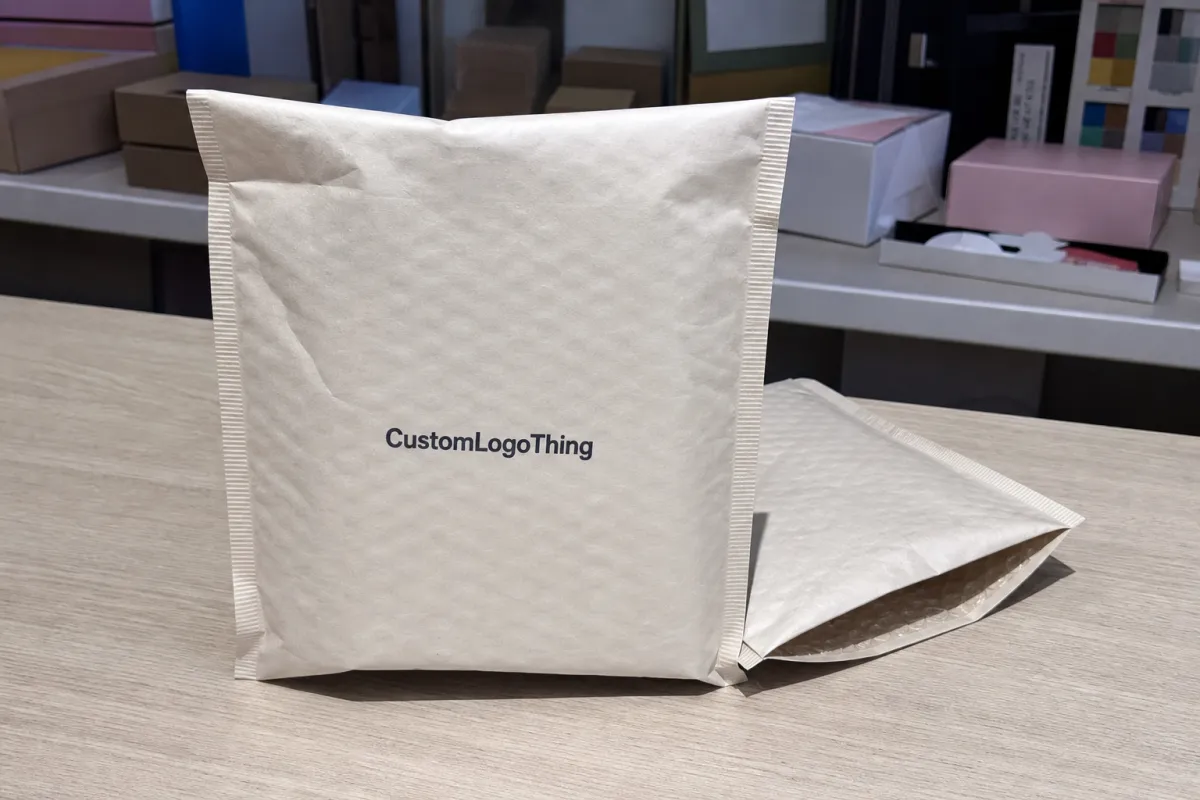
For a $24 accessory, a weak outer pack can blow up the economics. If the mailer arrives dented, feels flimsy in hand, or needs extra fillers to keep the item from shifting, the packaging cost stops being a line item and starts behaving like a margin leak. Boutique shoppers notice that stuff. They may not name it, but they feel it.
The outer mailer is often the first physical brand touchpoint. That matters more for small labels than for mass-market goods because the package is carrying part of the perceived value. A clean logo on a well-made padded mailer can do the work of a sticker stack, tissue wrap, and outer carton for lower-ticket items. A generic envelope usually does the opposite. It makes the order feel temporary.
That does not mean every order needs a premium build. Some SKU mixes should stay simple, especially if the product is flat, low-fragility, and high-turn. The smarter question is whether the package supports the retail price without creating hidden costs in packing time, damage rates, or wasted space. The cheapest-looking option is not always the cheapest option.
For teams comparing formats, it helps to keep both custom padded mailers and lighter poly options in view. Some assortments need more structure. Some do not. The right choice depends on product shape, presentation value, and how much labor the fulfillment team can absorb before shipping times start slipping.
Most packaging mistakes are not dramatic. They are just small enough to ignore until the month-end margin report shows up.
Print, Padding, and Closure Choices That Change the Look
The visible face of the mailer gets the attention, but the construction details do the actual work. A standard padded mailer usually comes down to four pieces: the outer face stock, the inner cushioning, the adhesive closure, and any added feature such as a tear strip or tamper-evident seal. Each one shifts both the feel and the cost.
Printing is the easiest place to overbuy. One-color branding on kraft or white stock usually gives boutiques enough identity without pushing setup costs too far. Two or three colors increase impact, but the price rises with every additional plate, press adjustment, and color-match step. Full-coverage artwork looks strong in photos and on the packing table, yet it only makes sense if the volume justifies the extra production friction.
Finish matters more than people expect. Matte usually reads calmer and more premium. Gloss can make brand marks pop, but it also shows scuffs and handling marks faster. Soft-touch finishes, spot varnish, and special coatings can look elegant in sample photos and still be the wrong call for shipping. The item inside should drive the finish, not a passing preference for the mockup.
Padding choice changes both protection and brand story. Bubble lining is familiar, light, and efficient for most low- to mid-fragility goods. Paper padding feels less plastic-heavy and can fit brands that want a different sustainability story, though it does not automatically outperform bubble on protection. For paper-based builds, buyers often ask about certified inputs. FSC materials can support that conversation, and ISTA test methods are useful if you want to think about transit performance instead of just appearance.
| Option | Typical MOQ | Unit Cost Range | What You Get |
|---|---|---|---|
| 1-color logo, standard padding | 3,000-5,000 pcs | $0.22-$0.36 | Solid branding with controlled setup cost |
| 2-3 color logo, matte finish | 5,000-10,000 pcs | $0.30-$0.48 | Better shelf presence and stronger unboxing feel |
| Full-coverage print, premium finish | 10,000+ pcs | $0.42-$0.68 | Highest visual impact, highest pressure on tooling and proofing |
One practical warning: stacking upgrades rarely produces a proportional return. A second print color, a coated finish, a tear strip, and a custom adhesive all sound minor in isolation. Together they can push a mailer into a cost bracket that only works for the strongest sellers. Pretty packaging is not a business model. It needs to ship, fit, and close cleanly first.
Size Specs, Fit Tolerance, and Shipping Performance
Size should be based on the fully packed item, not the naked product. Add room for tissue, a care card, a dust bag, or a small insert if those pieces are part of the order experience. Too tight, and the seam can split or the product corners get crushed. Too loose, and the mailer looks cheap while wasting space in the carton.
Fit tolerance sounds technical because it is. A few millimeters can decide whether the adhesive strip closes under tension or the item slides during transit. That matters more with folded apparel, jewelry boxes, flat leather goods, and compact accessories than with soft goods that compress easily. A single mailer size may work across a narrow SKU family, but broad guessing usually creates reorders.
Warehouse behavior matters too. If the mailer is awkward to load, the labor cost sneaks up. A packed envelope that fits the product but fights the packer is a bad spec. It may only add a few seconds per order, but across a season that becomes real money. Fulfillment teams feel these choices before finance does.
Shipping performance is the other hidden line. Thicker structure can protect better, but it may also reduce carton density and push up dimensional weight. On some carrier networks, that difference is enough to alter the economics of the whole order. A buyer who ignores ship cost and focuses only on piece price is only seeing half the picture.
A useful spec sheet should include outer dimensions, usable interior space, seam allowance, padding thickness, closure style, and carton packout. If one supplier quotes outside size and another quotes usable internal size, the two numbers are not equivalent. That mistake is common. It is also how a quote that looks cheap ends up costing more once inventory lands.
- Measure the item fully packed, not just the product by itself.
- Check closure overlap and seam strength against the final load.
- Match the mailer size to the best-selling SKU first, not the average SKU.
- Ask how many pieces fit per carton before comparing freight.
Printed Padded Mailers for Boutique Retailers Unit Cost Breakdown
The printed padded mailers for boutique retailers Unit Cost Breakdown usually comes down to material grade, print coverage, padding type, size, order volume, carton configuration, and freight. That is the real list. If a quote skips one of those inputs, it is not complete. It may be convenient, but it is not complete.
For small boutique runs, simple custom print often lands around $0.22-$0.36 per piece at roughly 3,000 to 5,000 units. At 10,000 units or more, a buyer may see pricing closer to $0.18-$0.28 if the structure stays simple and the print is restrained. Add extra colors, a premium finish, or heavier cushioning, and the number climbs fast. There is no mystery there. More material and more setup usually means more cost.
Setup charges matter because they are easy to hide inside “project cost.” Plate charges, file prep, press setup, and testing can be modest on a big order and annoying on a small one. A one-color job may carry $50-$150 in setup, while a more complex build can run higher depending on the print method and the amount of art correction needed. For a boutique with limited launch volume, those fees can distort the true unit economics more than the material itself.
MOQ is where the tradeoff gets real. Lower volume gives better cash flow and less storage pressure, but the per-piece price is usually worse. Higher volume brings the unit cost down, but it also ties up inventory and exposes you if the design changes mid-season. That matters more for boutiques with frequent drops, color swaps, or collection refreshes. Overbuying packaging is just another kind of dead stock.
| Spec Level | MOQ Range | Typical Unit Cost | Best For |
|---|---|---|---|
| Basic custom print | 3,000-5,000 | $0.22-$0.36 | New launches, testing demand, smaller seasonal runs |
| Mid-tier branded finish | 5,000-10,000 | $0.30-$0.48 | Stable sellers with steady fulfillment volume |
| Premium presentation build | 10,000+ | $0.42-$0.68 | High-volume boutiques that want stronger visual impact |
The key is comparing landed cost, not just factory price. Freight, carton count, and delivery terms can shift the real number enough to make the “cheaper” quote worse. A quote also needs to match the same spec line by line. Same size. Same padding. Same print coverage. Same finish. Same packout. If those do not match, the comparison is mostly theater.
One more caution: the smallest order is not always the smartest order. A very low MOQ can look attractive until the setup spread makes the packaging too expensive for the product margin. That is a common trap for boutique launches. The best buy is the one that keeps the packaging visible without forcing you to subsidize it.
Production Steps, Proofs, and Lead Time
The production path is simple in theory and fussy in practice. Brief the job, clean up the artwork, approve the proof, produce, pack, and ship. Most delays happen before the press starts running. If the file is low-resolution, the dieline is wrong, or the color expectations are vague, the schedule stalls before anything physical exists.
A realistic timeline is usually 2-4 business days for proofing once files are ready, 3-7 days for samples or pre-production checks if needed, and about 12-20 business days for standard production after approval. Rush orders can shorten that if stock materials are on hand and the production queue has room. They do not erase setup. They just compress the window where mistakes can be caught.
Proof review deserves more attention than it usually gets. Check logo placement, text size, outer dimensions, closure position, and the exact color handling shown on the proof. Also verify the piece count per carton. A mailer that looks right on screen can still arrive with a closure that sits too high, a print that drifts off-center, or a size that does not match the original brief. Those are all preventable, which is why they are so irritating.
Sample approval should answer one basic question: does the mailer close cleanly with the real product inside? If the answer is yes, the rest is mostly execution. If the answer is no, no amount of finish talk will fix it. That sounds blunt because it is. Packaging failures tend to be obvious once the first order ships.
What a Retail-Focused Supplier Should Handle for You
A supplier that works well with retail packaging should help make the spec tighter, not just the print prettier. That means size guidance tied to the packed SKU, honest feedback about what can be achieved at the target quantity, and proofing that catches fit problems before production starts. Vague reassurance is cheap. Good spec advice is useful.
Practical support usually shows up in the dull places. Dieline help. Material suggestions that fit the product instead of the sales pitch. Sample checks that confirm the adhesive holds and the closure aligns with the product height. Clean reorder records also matter, because the second order should not need to be rediscovered from scratch.
Retail buyers are buying reliability as much as packaging. Fewer print shifts. Fewer size mistakes. Fewer delays. Fewer surprise “we can do that, but not on this run” conversations. Any supplier can promise a polished sample. The real test is whether the production result matches that sample without creating extra labor downstream.
There is also a judgment call around format. Some products belong in padded mailers. Some belong in boxes. Some need a hybrid approach because the shipping profile and brand story point in different directions. A good supplier should be able to say that plainly. If the recommendation is always the most decorative option, the advice is probably selling the sample, not the operation.
Retail packaging gets expensive when every issue is treated as a custom exception. Good support reduces exceptions. That shows up in fewer reworks, fewer damaged units, and fewer reorder surprises. It is not glamorous, but it is how unit cost stays honest over time.
Next Steps: Build a Quote That Matches Your SKU Mix
If you want a quote that means anything, send the packed product dimensions, target quantity, artwork file, number of print colors, finish preference, and required delivery date. If the request is for a sample, say that. If it is for launch inventory, say that too. Sample pricing, launch pricing, and reorder pricing are not interchangeable.
For boutique retailers, the quote checklist should stay short and strict: confirm fit, compare landed cost, verify MOQ, then approve the proof. That order matters. A lower unit price is not useful if the mailer does not fit the item or misses the launch window.
It also helps to prioritize the best-selling SKUs first. A small, clean packaging range usually beats a sprawling set of variations with hidden setup costs attached. Seasonal brands feel this quickly. Too many sizes create storage clutter, more approvals, and more chances for the wrong item to ship in the wrong mailer.
Used properly, the printed padded mailers for boutique retailers Unit Cost Breakdown is not just a pricing exercise. It is a way to decide whether the packaging helps the product sell, ships without drama, and keeps margin intact. If the spec does those three things, it earns its place. If not, it is just a branded expense with a freight bill attached.
What affects the unit cost of printed padded mailers for boutique retailers most?
Material grade, print complexity, and order quantity usually move the price more than anything else. Freight, carton packout, and finish choices can also change the landed cost fast. The printed padded mailers for boutique retailers Unit Cost Breakdown gets messy when buyers compare quotes that do not share the same size or construction.
What is a practical MOQ for custom printed padded mailers?
MOQ depends on size, print method, and construction, but boutique buyers usually need to balance Lower Unit Cost against higher upfront cash. The best MOQ is the smallest run that still gives a usable per-piece price without creating storage pressure or dead inventory.
How long does production usually take after artwork approval?
Lead time depends on proof revisions, material availability, and current factory load. A clean file and fast proof approval usually save more time than a rush request. Standard production is often 12-20 business days after approval, with proofing and sample checks taking a few business days before that.
Which specs should I compare before ordering printed padded mailers?
Compare outer size, usable interior space, padding thickness, closure style, print coverage, and carton packout. Quotes only make sense if those details match. Otherwise the lower number is just a different product wearing the same description.
Can boutique retailers order multiple sizes or SKU-specific mailers?
Yes, but each size or print variation can affect MOQ, setup cost, and unit price. If the assortment is broad, it usually makes sense to start with the best-selling items first and keep the first production run tight.


