Buyer Fit Snapshot
| Best fit | Black Friday Promotional Mailers projects where brand print, material claims, artwork control, MOQ, and repeat-order consistency need to be specified before quoting. |
|---|---|
| Quote inputs | Share finished size, material target, print colors, finish, packing count, annual reorder estimate, ship-to region, and any compliance wording. |
| Proofing check | Approve dieline scale, logo placement, barcode or warning zones, color tolerance, closure strength, and carton packing before bulk production. |
| Main risk | Vague material claims, crowded artwork, missing packing details, or unclear freight terms can make a low unit price expensive after revisions. |
Fast answer: Black Friday Promotional Mailers: Quote Scope, Sample Proof, MOQ, and Lead Time should be specified like a repeatable production item. The safest quote records material, print method, finish, artwork proof, packing count, and reorder notes in one written spec.
Production checks before approval
Compare the actual filled-product size with the drawing, then confirm tolerance on folds, seals, hang holes, label areas, and retail display edges. Reserve space for logos, QR codes, warning copy, and material claims before decorative graphics fill the panel.
Quote comparison points
Review material grade, print process, finish, sampling route, tooling charges, carton quantity, and freight assumptions side by side. A quote is only useful when the supplier can repeat the same color, closure quality, and packing count on the next order.
During one especially ugly factory visit in Shenzhen, I watched a brand pay a premium for Black Friday Promotional mailers because they waited until the last minute and then wanted “something premium, but fast, but cheap.” That sentence alone could fund a few more production lines. The result was a rushed order, a messy proof cycle, and air freight that added roughly $1,200 on a 20,000-piece run. I remember standing there thinking, yep, this is how packaging budgets go to die.
I’ve seen that same story more than once. Brands that plan Black Friday Promotional mailers early usually get better pricing, better print quality, and fewer warehouse headaches. On a clean 10,000-piece run from a supplier in Dongguan, a 2-color custom mailer might land at $0.15 per unit, while a rushed order can jump to $0.22 or more once express production and freight are added. Brands that panic in November end up buying stress by the pallet. Honestly, I think panic is the most expensive material in packaging.
Black Friday Promotional Mailers: What They Are and Why They Work
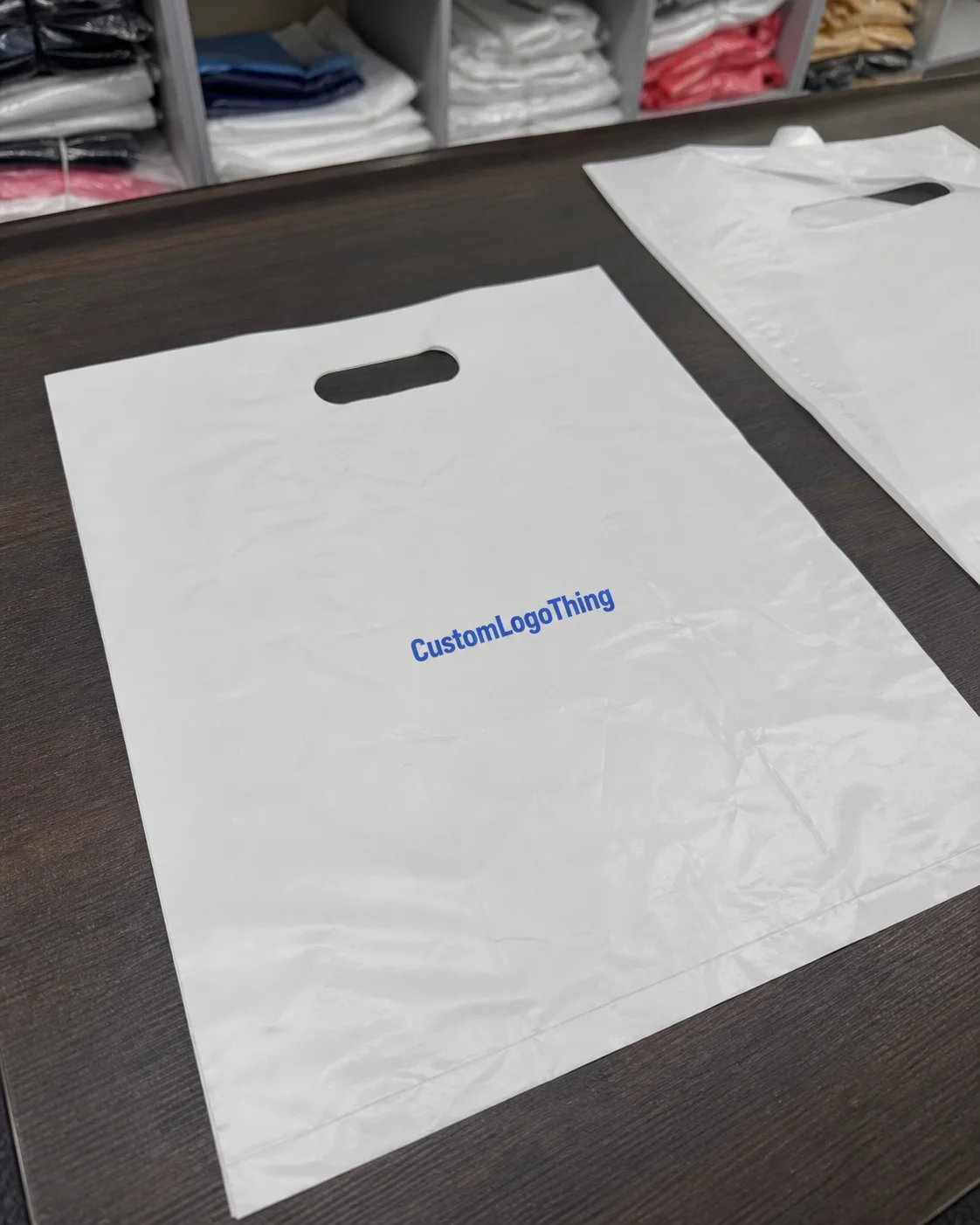
Black Friday Promotional mailers are branded poly mailers used to ship ecommerce orders while also carrying a seasonal message, offer, QR code, or campaign-specific graphic. Plain English version: they are shipping bags that do more than just sit there and protect a sweater. They sell, remind, and nudge. Which is more than I can say for a lot of “marketing assets” I’ve been handed over the years, especially the ones approved at 6:45 p.m. on a Friday.
In my experience, the best black friday promotional mailers do three jobs at once. They protect the product, they reinforce the offer, and they make the brand easy to remember when the package lands on a customer’s doorstep. That matters during Black Friday because everyone is shouting at the same customer, usually with a 20% discount, a 48-hour countdown, and a shipping promise like “order by November 22 for delivery by December 1.”
I once stood on a line at a packaging plant in Shenzhen where a client was comparing plain white mailers against printed seasonal mailers with a bold “VIP Early Access” message. Same product inside. Same shipping lane. The printed version cost about $0.06 more per unit on a 10,000-piece run, but their repeat order rate moved enough that they stopped complaining by the second month. Funny how that works. Funny, and a little annoying if you were the person trying to argue for “just plain bags.”
Here’s the difference between a standard shipping mailer and black friday promotional mailers: standard bags are built to move a product from A to B. Promotional bags do that, then add a layer of campaign value. That could be a discount code, a referral offer, a scannable QR code, a seasonal pattern, or a simple “thanks for shopping with us” message that keeps the brand in the customer’s head for one more week. On a 14 x 17 inch bag, even a 1.5-inch QR panel can do real work if it’s printed cleanly.
But no, black friday promotional mailers are not magic. If the offer is weak, the landing page is broken, or the fulfillment team is already drowning, a pretty mailer will not save the campaign. I wish it did. I’d retire to a beach and let someone else argue about Pantone 186 C vs. “close enough red.” In practice, a bad offer still fails even if the bag is printed on 350gsm C1S artboard-backed inserts and wrapped in gold foil.
What they do well is support a real campaign. That means a clean product offer, a realistic ship date, and graphics that are readable at arm’s length. If you want seasonal packaging, think of the mailer as the first physical ad your customer touches. I’ve seen a simple “Black Friday Exclusive” line on a 10 x 13 mailer outperform a louder, busier design just because it was easier to read at the front door.
For brands that also need broader packaging support, I usually point them toward our Custom Packaging Products and specifically our Custom Poly Mailers because the material choice, seal type, and print layout all affect the final result. A flashy design on the wrong bag is still the wrong bag. A 2.5 mil film in the wrong size will still tear when a hoodie arrives with a rigid cardboard insert.
“A mailer is not a billboard. It’s a piece of fulfillment equipment that happens to advertise.” — something I told a client after they wanted nine call-to-actions on one side of a 14 x 17 bag
How Black Friday Promotional Mailers Work in an Ecommerce Campaign
Black friday promotional mailers fit into the customer journey much earlier than most people think. The ad gets the click. The product page gets the sale. Then the mailer shows up at the front door and quietly decides whether the customer feels excited, ignored, or mildly annoyed by a crumpled package with a broken seal. For a brand shipping 8,000 orders from Los Angeles and Dallas, that front-door moment can be the difference between one order and a second purchase in January.
That physical moment matters. A well-designed mailer can carry the campaign from the screen into the real world. I’ve seen brands add a simple seasonal line like “Holiday Bundle Inside” or “VIP Perk Enclosed” and get better repeat engagement, not because the message was clever, but because it was visible, direct, and tied to the order. A message printed in black ink on a white 2.5 mil poly mailer is often more effective than a full-color design nobody can read under porch light at 7 p.m.
There are a few common ways brands use black friday promotional mailers in ecommerce. Subscription brands use them to frame a new drop. Influencers receive them for unboxing content. VIP customers get them as thank-you packs with a referral card. Bundle campaigns use them to make a discounted set feel more intentional and less like leftover stock shoved into a shipping bag. I’ve seen a beauty brand in Austin use a matte black mailer with a gold “Early Access” print and sell through 3,000 units of a set in four days.
The print content should support the sale, not clutter it. One discount code. One QR code. One message. That’s usually enough. If you cram in five offers, two hashtags, a tiny legal disclaimer, and a random slogan from your brand book, the bag starts looking like a ransom note printed by a committee. And trust me, no warehouse picker wants to be the person staring at that mess at 5 a.m., especially when they’re packing 600 orders per shift.
Custom printing on black friday promotional mailers also helps brand recognition. I’ve watched customers post a delivery photo just because the bag was bright, clean, and obviously branded. That kind of social sharing is not guaranteed, obviously, but it is more likely when the packaging looks considered rather than generic. In one Chicago campaign I reviewed, the same product shipped in a printed mailer generated 14% more tagged posts than the plain version over a 21-day window.
Mailer construction matters too. Size, seal strength, and opacity all affect the end experience. A 2.5 mil co-extruded poly mailer is fine for many apparel items. For bulkier bundles or products with sharp edges, I’d rather move up to 3 mil or add an inner poly bag. Nobody enjoys a torn seam and a soaked sweatshirt. Nobody. Not the customer, not the warehouse team, and definitely not me when I’m trying to fix the complaint email from a customer in Boston who paid $9.95 shipping and got a ripped package.
One caution: promotional packaging should not overpromise what’s inside. If the outside says “luxury gift set” and the inside is a thin tee and a coupon, customers notice. They always do. The stronger approach is honest branding with a seasonal visual cue and a clear campaign message. That’s why black friday promotional mailers work best as a support piece, not a disguise. A realistic front panel and a well-matched 14 x 19 bag will do more than a bag dressed up like a product it isn’t.
If you want a packaging standard to benchmark against, look at test methods and transit expectations through resources like ISTA and material guidance from the EPA. Shipping abuse is not theoretical. Carriers are very committed to proving that every corner can be dropped, especially on 12-day transit lanes from Shenzhen to Long Beach.
Why Black Friday Promotional Mailers Pay Off in Seasonal Sales
Black friday promotional mailers do more than carry products. They extend the sale after checkout and turn the shipment into a repeat touchpoint. That matters because Black Friday is crowded. Every brand is screaming for attention. A printed mailer gives your customer one more branded moment without asking them to open another tab or click another ad. Nice little miracle, if you ask me.
I’ve seen the effect in both factory samples and real campaigns. A simple promotional mailer can support upsells, referral codes, and holiday follow-up offers without feeling pushy. A customer who receives a clean, seasonal bag is more likely to remember the brand when the next email lands in December. That kind of physical brand recall is hard to fake with a banner ad.
There’s also a practical advantage. Black friday promotional mailers help make high-volume order surges feel more organized. During peak season, fulfillment teams need packaging that stacks well, seals quickly, and holds up in transit. A branded mailer with clear instructions or a visible campaign code saves seconds per pack. Multiply that across thousands of orders and you stop talking about “just packaging” and start talking about labor efficiency.
And yes, customers notice when the bag feels intentional. A plain shipping pouch gets the job done. A seasonal mailer with a clear message feels like part of the purchase. That tiny shift can make a discount feel more exclusive and the whole order feel a little more finished. No, it will not fix a weak product. But it can make a good product feel more worth sharing.
Key Factors That Affect Cost, Quality, and Timeline
The price of black friday promotional mailers depends on several boring but very real variables: bag size, film thickness, print colors, order quantity, and whether you’re buying stock or fully custom. Boring? Yes. Expensive if ignored? Also yes. A 10 x 13 inch stock mailer from a U.S. distributor can sit around $0.08 to $0.16 per unit, while a custom printed order from a factory in Guangdong often starts closer to $0.12 to $0.24 depending on volume and color count.
Here’s the part clients usually underestimate: the unit price is only one number. Setup fees, plate charges, freight, and rush fees can swing the total landed cost far more than the quoted piece price. I’ve seen a bag quoted at $0.14/unit turn into $0.23 landed once the freight and rush production were added. Still not terrible, but not the cute little estimate someone wrote in an email with too much confidence. On a 5,000-piece order, that difference is $450 before anyone mentions duties or palletization.
| Option | Typical Unit Cost | Setup/Extra Costs | Best For |
|---|---|---|---|
| Stock mailers, no print | $0.08–$0.16/unit | Usually lower freight risk, no print setup | Very tight budgets, fast replenishment |
| 1–2 color custom print | $0.12–$0.24/unit | Plate/setup fees often $60–$200 per color | Simple logo, seasonal message, QR code |
| Full custom design, multi-color | $0.18–$0.38/unit | Higher setup, proofing, and color matching work | Campaign packaging, influencer orders, premium branding |
Those numbers are not a promise. They’re a realistic range I’ve seen in quotes from suppliers like Uline, EcoEnclose, and direct factory programs depending on size and volume. A 10 x 13 poly mailer at 5,000 pieces behaves differently from a 14 x 19 mailer at 50,000 pieces, and anyone pretending otherwise is selling fantasy with a freight bill. In Ningbo, I once saw a supplier shave $0.01 off the unit price only to add $180 in “special handling” later. Very inventive. Very annoying.
Order quantity changes everything. Low-volume black friday promotional mailers usually cost more per piece because the factory still has to set up the press, run the film, and handle the same labor for a smaller batch. Once you move into larger runs, the Price Per Unit drops quickly. On a 20,000-piece order, for example, a factory in Dongguan may quote $0.15 per unit for a 2-color print, while 2,000 pieces of the same spec may land closer to $0.26. That said, a larger run is only smart if you can actually use the inventory before the design goes stale. I’ve seen perfectly good bags become “last season” overnight, which is a painful way to learn inventory math.
Timeline is the other trap. A straightforward custom order can take 12 to 15 business days from proof approval, but that assumes the artwork is clean, the supplier is not buried in other seasonal jobs, and freight behaves itself. Add a complicated color match, and production slows down. Add ocean freight in peak season, and you start praying to logistics gods you never believed in. If the route is from Shenzhen to Los Angeles, add 18 to 24 days for ocean transit and customs clearance if you want a more realistic landing window.
In the plant, I’ve watched a production manager stop a job because the customer’s QR code was too small to scan reliably. That added two days. The client complained for exactly six minutes, then admitted the code had been designed by someone who thought “smaller looks cleaner.” Cleaner for whom? Ants? A QR code needs enough quiet space and contrast to scan at roughly 1 inch square on a moving conveyor line.
Material quality is another place where cheap gets expensive. A low-gauge film may save a few cents, but if the mailer tears in transit, the return and replacement cost wipes out the savings. For many apparel and soft goods shipments, 2.5 mil to 3 mil co-extruded polyethylene is a practical starting point. For heavier packs or rough handling routes, I’d test 3 mil with a stronger adhesive seal. If you want a specific spec, ask suppliers for 3 mil co-extruded PE with a 1.5-inch adhesive flap and an opacity rating that hides the product shape under warehouse lighting.
When we specify black friday promotional mailers, I always ask for the exact product weight, folded dimensions, and whether anything sharp is included. A box corner or a zipper pull can change the whole spec. That’s not me being dramatic. That’s me having seen a perfectly good run rejected because the customer underestimated how much room a hoodie takes once it’s folded with inserts. One client in Atlanta shipped a 1.2 lb hoodie set in a 10 x 13 mailer, then had to move to 12 x 15 after the first 1,500 units because the cuff tags kept punching the side seams.
If sustainability matters, look for recycled content or FSC-linked paper alternatives for inserts and outer branding. For paper-based components, certification guidance from FSC can help with sourcing claims, though the exact certification path depends on your supply chain and what your printer can verify. A common insert spec is 350gsm C1S artboard for a folded card, which gives a sturdier hand feel than flimsy 250gsm stock and survives packing better in bins and cartons.
Step-by-Step: How to Plan Black Friday Promotional Mailers
The smartest black friday promotional mailers orders start with the campaign goal, not the artwork. Are you trying to drive a quick sales spike? Push bundles? Increase repeat purchase rate? Introduce a new colorway? Each goal changes the bag size, the message, and the quantity you should order. If your goal is a 10-day flash sale, your print count may be 8,000 pieces. If it’s a longer retention play, 25,000 pieces might make more sense and cut the unit price by a few cents.
Step one is measuring the packed product, not the product alone. That sounds basic, but I’ve watched teams order mailers for a “small shirt” and then discover the shirt ships with tissue, a postcard, and a folded thank-you insert. Suddenly the mailer is tight, the seal looks stressed, and the warehouse workers need an extra 4 seconds per pack. Multiply that across 8,000 orders and you’ve got a labor line item nobody budgeted for. Measure the folded pack in inches, not vibes: product, insert, and any outer sleeve together.
Step two is choosing the construction. For lightweight apparel, a standard poly mailer with a strong self-seal may be enough. For multi-item bundles or anything with sharper edges, I’d move up in thickness or use an outer mailer plus inner protection. Black friday promotional mailers should look good, yes, but they also need to survive a conveyor belt and a delivery van that has clearly seen some things. A 3 mil co-extruded bag with a 1.5-inch seal strip is a solid choice for a 2.0 lb apparel bundle shipping from Chicago to Miami.
Step three is deciding the message. Build around one strong offer. “15% off your next order” works. “15% off plus free shipping plus a mystery gift plus scan here plus join us plus three hashtags” is how brands make a bag that talks too much. Promotional mailers are not the place for a manifesto. If you need a CTA, keep it at one line, one QR code, and a coupon field no smaller than 1.25 inches wide.
Here’s a simple planning sequence I use with clients:
- Set the campaign objective.
- Measure the packed dimensions of the main product.
- Select mailer size and thickness.
- Choose one printed message and one QR code or code field.
- Request quotes from at least three suppliers.
- Check the proof at full size, not just as a tiny PDF preview.
- Approve production only after the warehouse test pack fits cleanly.
That last part matters. A digital proof can look perfect and still fail in the real world. I’ve had clients approve a design with a QR code that scanned fine on screen but not on the actual bag because the film sheen and print contrast changed the reading angle. The factory ended up reprinting, which is a fancy way of saying everyone paid twice for the same lesson. On one run in Yiwu, the fix added four business days and $290 in rework charges.
When comparing quotes for black friday promotional mailers, make sure you’re comparing apples to apples. Same bag size. Same thickness. Same print colors. Same shipping term. Same delivery window. Otherwise one supplier looks “cheaper” only because they quoted a thinner film or excluded freight from the estimate. Suppliers do this. Not all of them. Enough of them. A $0.13 FOB quote from Guangzhou and a $0.19 delivered quote from Ohio are not the same thing, even if the spreadsheet wants to pretend they are.
If your promotion depends on a delivery deadline, work backward. I usually build at least 10 to 15 business days for production, then add freight time, then add 3 to 5 days of buffer. If the order is large or the route is international, add more. Everyone loves to say the product will “probably make it.” Probably is not a strategy. If Black Friday launches on November 29, I want final proof approval by November 1 at the latest, not November 20 with a hopeful emoji.
One more thing: align inventory arrival with fulfillment. I once saw a beautiful seasonal mailer sit in a warehouse for 11 weeks because the campaign launch date moved and nobody updated receiving. That’s not packaging. That’s storage with a deadline problem. A carton of 50,000 bags taking up half a rack in Phoenix is a lot less charming when the promo doesn’t go live until after Cyber Monday.
Common Mistakes Brands Make With Black Friday Promotional Mailers
The first mistake is waiting too long. A late order for black friday promotional mailers turns into rush production, expensive freight, and a stressful proof cycle. I’ve seen brands act surprised that a seasonal project becomes difficult after they start it ten days before launch. That is not a mystery. That is math. A factory in Shenzhen can do a lot, but it cannot bend a 15-business-day schedule into five without extra fees.
Second mistake: choosing the wrong size. Too small, and the bag bulges, tears, or seals badly. Too large, and the product slides around like it’s being shipped in a sleeping bag. Either way, the package looks sloppy. The bag should fit the packed order with a little room for the seal and nothing more. A 12 x 15 mailer is often safer for a folded hoodie set than a 10 x 13, especially if you’re adding a card and a promo insert.
Third mistake: cluttered graphics. A lot of teams want the mailer to announce the sale, the brand story, the social handles, the loyalty program, the return policy, and a Christmas teaser all at once. The result is noise. Black friday promotional mailers work better when they carry one seasonal visual and one call to action. Clean wins. If you need more content, put it on the insert card, not the shipping bag.
Fourth mistake: ignoring print limitations. Bleed settings matter. Color shifts happen. Thin lines disappear on film. Small text becomes unreadable once the bag flexes and catches warehouse light. If the design was built like a poster for a trade show, it may not print well on a poly mailer. Film is not paper. It behaves differently. That part surprises people for some reason every single season. I wish I could say I was kidding. On a glossy 3 mil mailer, text under 6 pt can vanish the second the seal gets folded.
Fifth mistake: forgetting warehouse reality. Where will the mailers be stored? How fast can the team pack them? Will labels cover part of the design? Will the adhesive interfere with the message placement? These details matter more than most marketers want to admit because their job ends at the campaign idea and starts again after someone else has to physically ship 12,000 orders. A warehouse in Las Vegas can pack 1,500 units a day if the mailer stacks cleanly; a bad design can slow that down by 10% or more.
I remember a client who insisted on a beautiful full-bleed back panel, then placed the shipping label right across the center of the design. The label covered the QR code, half the discount message, and the nicest part of the artwork. Was the design wrong? Not exactly. Was the implementation a disaster? Absolutely. The warehouse team looked at it like, “great, now we’re the art department too?”
Another mistake is ordering a too-fancy structure for the product. If you are shipping lightweight tees and socks, you probably do not need a heavy-duty premium film with expensive multi-pass printing and custom metallic ink. You might need it for a hero product launch. For routine promotional mailers, a well-specified 2.5 mil or 3 mil bag can be plenty. A metallic silver pass looks nice, sure, but not if it adds $0.07 per unit to a 30,000-piece run for no real gain.
The last big mistake is treating black friday promotional mailers like a standalone campaign. They are part of the offer, not the offer itself. If the mailer is beautiful but the landing page loads slowly or the code doesn’t work, the package becomes an expensive reminder that bad operations can outshine good design. I’ve seen a $4.50-per-unit product campaign sink because the QR code linked to a page that took nine seconds to load on mobile. That is not a packaging problem. That’s a full-stack mess.
Expert Tips for Better Black Friday Promotional Mailers
Keep the seasonal theme subtle enough that the mailer still feels on-brand after the holiday rush. That’s one of my favorite tricks for black friday promotional mailers. Use a seasonal accent color, a limited-time line, or a small festive graphic instead of turning the whole bag into a holiday costume. Nobody wants packaging that looks dated in three weeks. I’ve seen a neon pumpkin bag haunt a brand all the way into January. Not cute. A deep burgundy accent or metallic copper detail ages a lot better in January than a giant snowflake and a discount scream.
Test one packed sample before you commit to the full run. I know, thrilling advice. But a physical pack test tells you more than a PDF ever will. You’ll see whether the seal closes cleanly, whether the artwork gets distorted when the bag stretches, and whether the bag feels cheap or solid in hand. Under warehouse lighting, details change fast. A 14 x 17 mailer that looks fine flat on a desk can wrinkle badly once a 2.3 lb bundle gets dropped inside.
Ask for material samples. Compare opacity, film feel, adhesive strength, and print clarity side by side. I’ve done this in supplier meetings in Shenzhen where the cheapest option looked acceptable on a desk and terrible under fluorescent light. A bag can look fine in a polished sales sample and still fail when the warehouse team starts packing at speed. That’s why I trust my hands more than sales decks with too many gradients. If a sample tears under a firm pull at the seal, it doesn’t matter how nice the mockup looked on a laptop.
Keep the content simple. One offer. One QR code. One instruction. That’s usually enough. If you want a referral incentive, put it in the insert. If you want a discount code, make it large and readable. If you want a seasonal message, keep it short. More text doesn’t mean better conversion. Shocking, I know. On a 10 x 13 bag, you have maybe 4 to 5 inches of truly usable front-panel space after you account for logos, folds, and shipping labels.
Negotiate freight early. Freight rates can move quickly, and seasonal congestion adds another layer of pain. If your supplier is in China, Vietnam, or India and your destination is the U.S. or Europe, ask for the full landed estimate before you approve the run. I’ve seen a “cheap” quote become a budget problem because the shipping lane got crowded and the client didn’t ask about transit timing until the bags were already in production. A direct ocean shipment from Yantian to Los Angeles might save money, but only if you can wait the 18 to 24 days plus customs.
For promotional packaging that has to support sustainability claims, make sure every claim is verified. Recycled content percentages, FSC certification, and material composition should be documented. Marketing words are not enough. Customers and retailers ask questions, and vague answers make brands look sloppy fast. If your insert is a 350gsm C1S artboard card printed in Hangzhou, make sure the printer can show paper source documentation before you put “responsibly sourced” on the back.
If you need a quick decision rule for black friday promotional mailers, use this: choose the simplest design that still looks premium, and the most durable material that still fits your budget. That balance is where most strong campaigns land. I’ve seen 2-color mailers beat full-coverage designs because they were cheaper, cleaner, and easier for the warehouse to handle.
Next Steps to Order Black Friday Promotional Mailers the Smart Way
Start by auditing your current packaging. Look at what you already ship, what feels generic, and where black friday promotional mailers could improve the customer experience. Sometimes the answer is a full redesign. Sometimes it is just a better printed bag and a cleaner message. I’ve seen both, and I’ll be honest: half the time the “big strategy” is just fixing the bag nobody liked in the first place. In a Philadelphia warehouse, I once saw a brand swap a plain white mailer for a black printed one and immediately stop hearing complaints about “cheap-looking shipping.”
Next, measure your top-selling products with inserts included. Use the actual folded pack dimensions, not the product page dimensions from some supplier listing that forgot the tissue paper, hang tag, or accessory card. Then shortlist the Right Mailer Size and thickness before you ask for quotes. That saves time and reduces the revision loop. A 9.5 x 12.5 folded tee with a 4 x 6 insert card is not the same as a plain tee, and the factory will not guess correctly for you.
Lock the artwork before you contact suppliers if you can. Every revision costs time. Every “small change” tends to become three more rounds of edits because someone’s boss wants the logo bigger by 8 percent. I’ve negotiated enough of those to know the pattern. It always starts with “just a tweak” and ends with everyone staring at version 14. If you want a practical workflow, approve the final copy, print size, and QR destination URL before you request a formal quote.
Then request samples and compare the full landed cost. Not just the quoted unit price. Ask about setup fees, freight, packaging, taxes, and delivery timing. For black friday promotional mailers, the cheapest unit price often loses once everything is tallied. Budget people hate surprises. Packaging people do too. We just get better at hiding the sigh. A bag quoted at $0.15 per unit for 5,000 pieces can still become a $0.21 landed cost once palletization and trucking from Ningbo to the port are included.
Confirm production and delivery windows in writing. Get the proof approval date, the production start date, and the estimated arrival date on the same email thread if possible. If the supplier is vague about one of those, push for specifics. “Around then” is not a schedule. I want dates, not poetry. A straight answer like “proof approved on October 18, production 12 business days, ship from Shenzhen on November 4” is a lot more useful than a hopeful shrug.
Build your fulfillment calendar backward from the promo launch. Add extra buffer if your brand has multiple SKUs, multiple warehouses, or international freight. The goal is simple: your black friday promotional mailers should arrive before the rush, not in the middle of it. Once the boxes start stacking up, nobody wants to be the person asking where the bags are. For a launch on November 29, I’d want inventory on the floor by November 8 in the U.S., earlier if you’re crossing an ocean.
For brands that want to keep the whole packaging stack consistent, I usually recommend pairing mailers with matching inserts or branded outer packaging from our Custom Packaging Products. Consistency matters. Customers notice when the shipping bag, insert card, and offer sheet all look like they were designed by the same adult. A cohesive set might use a 350gsm C1S artboard insert, a 3 mil poly mailer, and a 1-color black imprint so the whole thing looks intentional instead of improvised.
If you’re building a seasonal ecommerce push and want practical packaging advice, I’d rather you spend an extra hour on measurement, mockups, and freight than throw money at emergency fixes later. That’s the ugly truth of black friday promotional mailers: the earlier you plan, the less you pay for panic. In my experience, a two-week delay in planning often costs more than the difference between stock and custom print.
And yes, I’ve watched brands save thousands by ordering early. I’ve also watched brands burn thousands because they treated custom packaging like a last-minute accessory. The difference was not talent. It was timing. A team in Brooklyn ordered in September and landed at $0.16 per unit; the team that waited until mid-October paid $0.24 and got a worse freight window. Same product. Different calendar. Big difference in the invoice.
Black friday promotional mailers work when they fit the product, support the offer, and arrive on time. That’s the whole play. Nothing mystical. Just good packaging, good planning, and a little respect for lead times. If you want the short version, that’s it. If you want the profitable version, measure twice and approve once.
FAQ
What are black friday promotional mailers used for?
They are used to ship ecommerce orders while reinforcing Black Friday promotions, brand identity, and seasonal offers. Brands use black friday promotional mailers for bundles, limited-time deals, influencer orders, and repeat-customer campaigns. A typical use case is a 10 x 13 or 12 x 15 poly mailer printed with one coupon code and one QR code for a campaign running in November and December.
How much do black friday promotional mailers usually cost?
Pricing depends on size, thickness, print colors, and order volume, with custom runs typically costing more upfront than stock mailers. Setup fees, freight, and rush charges can change the total landed cost significantly, so always compare full quotes for black friday promotional mailers. For example, a 5,000-piece custom run might price around $0.15 per unit before freight, while a 20,000-piece order can come in lower per piece depending on the print count and factory location.
How far in advance should I order black friday promotional mailers?
Plan early enough for artwork, proofing, production, and shipping, because seasonal factory schedules fill quickly. A safe approach is to build your timeline backward from launch and leave extra buffer for revisions or freight delays. In many cases, production takes 12 to 15 business days from proof approval, and ocean freight from Shenzhen to the U.S. can add another 18 to 24 days if you are not using air.
What size should I choose for promotional poly mailers?
Choose the size based on your packed product dimensions, not the product alone, so the order fits without stretching or wasted space. Test a packed sample first to confirm seal strength, presentation, and shipping efficiency before placing your black friday promotional mailers order. A folded hoodie with an insert card may fit best in a 12 x 15 mailer, while a tee with a postcard often fits in a 10 x 13 bag.
Can I print a discount code or QR code on black friday promotional mailers?
Yes, and it can work well if the message is clear, scannable, and not overcrowded by extra graphics. Keep the code placement visible and test readability at real size before approving production. A QR code printed at about 1 inch square with strong contrast on a 3 mil poly mailer is far easier for customers to scan than a tiny code buried in a busy design.