Buyer Fit Snapshot
| Best fit | Book Mailer Boxes Wholesale for Safe Shipping Solutions projects where brand print, material claims, artwork control, MOQ, and repeat-order consistency need to be specified before quoting. |
|---|---|
| Quote inputs | Share finished size, material target, print colors, finish, packing count, annual reorder estimate, ship-to region, and any compliance wording. |
| Proofing check | Approve dieline scale, logo placement, barcode or warning zones, color tolerance, closure strength, and carton packing before bulk production. |
| Main risk | Vague material claims, crowded artwork, missing packing details, or unclear freight terms can make a low unit price expensive after revisions. |
Fast answer: Book Mailer Boxes Wholesale for Safe Shipping Solutions should be specified like a repeatable production item. The safest quote records material, print method, finish, artwork proof, packing count, and reorder notes in one written spec.
Production checks before approval
Compare the actual filled-product size with the drawing, then confirm tolerance on folds, seals, hang holes, label areas, and retail display edges. Reserve space for logos, QR codes, warning copy, and material claims before decorative graphics fill the panel.
Quote comparison points
Review material grade, print process, finish, sampling route, tooling charges, carton quantity, and freight assumptions side by side. A quote is only useful when the supplier can repeat the same color, closure quality, and packing count on the next order.
Book Mailer Boxes Wholesale for safe shipping solutions work best when the package does the quiet, unglamorous job of holding a book still. Less empty space means less shifting. Less shifting means fewer scuffed jackets, bent corners, and crushed spines. In the boxes I have seen fail in real transit, the damage usually starts with movement long before the carton shows any obvious abuse.
For book sellers, publishers, subscription brands, and fulfillment teams, book Mailer Boxes Wholesale can cut repacking time, reduce claims, and improve the unboxing experience without slowing down the line. The right choice usually comes from looking at the trim size, the number of titles being shipped, the weight of the book, and the actual route the parcel will travel. A mailer that fits the product and the handling pattern is worth more than one that merely looks sturdy on a sample table.
Book Mailer Boxes Wholesale: Why the Right Fit Cuts Damage
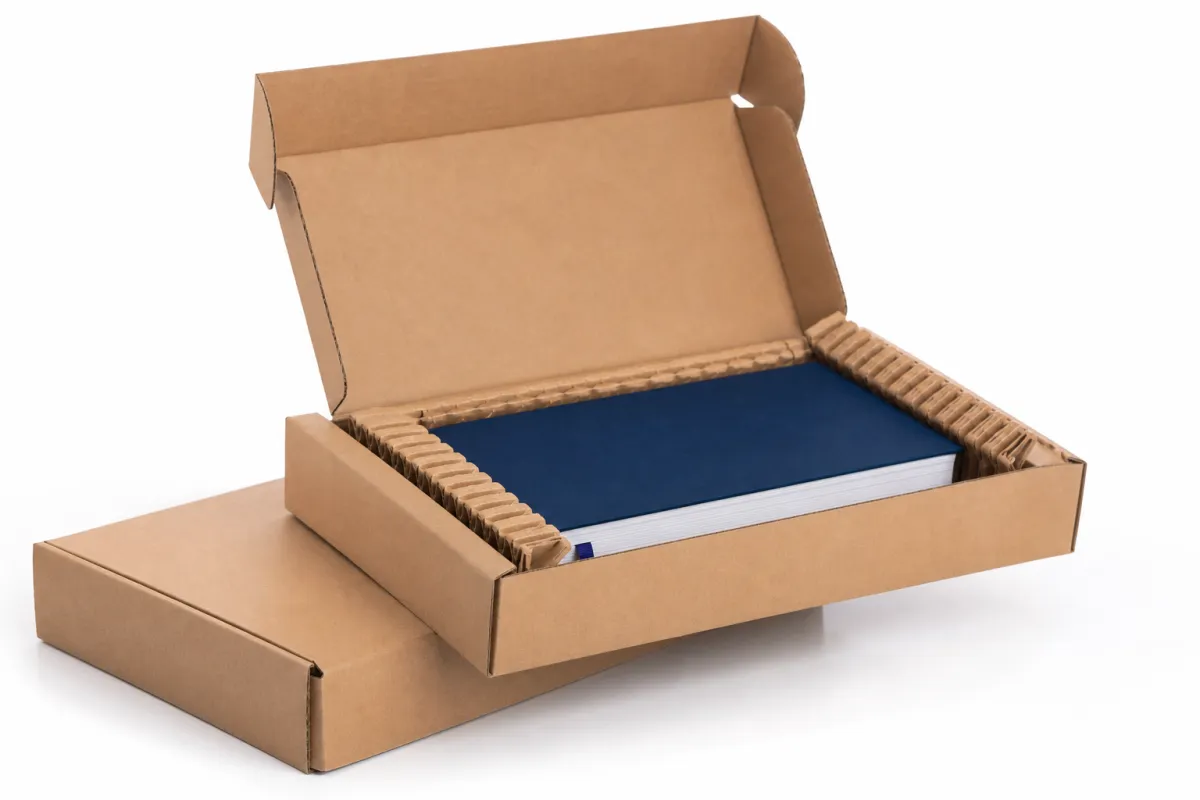
Many buyers assume better protection always means a bigger carton, but book mailer boxes wholesale usually perform better when the fit is snug and intentional. A tighter interior reduces side-to-side movement, which helps prevent cover rub, spine pressure, and corner crush. A box with too much open space can fail at the most basic part of the job: keeping the book from wandering during transit.
That fit also matters on the fulfillment side. Book mailer boxes wholesale can speed up packing, reduce tape use, and lower the need for loose fill because the structure closes cleanly and stays aligned with less fuss. On a busy bench, those little efficiencies add up. I have watched teams lose more time than they expected just from fighting packages that were a quarter-inch off. That kind of thing snowballs, kinda quietly, until the line is behind schedule.
Damage complaints tend to repeat in familiar ways: dented corners, curled covers, scratched dust jackets, and rubbing at the edges. A properly fitted mailer keeps the book centered and keeps the package walls away from the product. For many programs, book mailer boxes wholesale lower return rates simply because the book arrives the same way it left the packing table.
Before a buyer locks in a spec, four questions usually shape the whole decision:
- What are the exact trim dimensions and spine thickness of the book?
- Will the shipment hold one book, a bundle, or a book plus inserts?
- How much print or branding needs to appear on the outside and inside of the mailer?
- What kind of handling should the box survive before damage becomes likely?
Those questions sound basic, but they steer everything that follows. A paperback subscription program may need a lightweight structural mailer that packs fast and prints cleanly. A premium hardcover release may need stronger board, better edge support, and a closure method that survives a longer route. Either way, book mailer boxes wholesale work best when the structure is matched to the shipment instead of forcing the shipment into a generic box.
Book mailer boxes wholesale also help with consistency. Once a brand settles on a stable pack format, training gets easier, replenishment becomes more predictable, and the warehouse needs fewer workarounds. None of that is flashy, but it is exactly the kind of improvement that shows up in fewer packing mistakes and fewer emergency purchases.
"A good mailer is quiet insurance: it does not ask for attention, but it prevents the expensive problems that show up after the carton has already left the dock."
If you are comparing packaging systems, it helps to think in terms of total cost per shipped book instead of box price alone. book mailer boxes wholesale often win because they reduce fillers, lower damage claims, and speed up outbound operations at the same time. That is a practical return from a packaging choice that may look modest on paper.
Book Mailer Boxes Wholesale Product Details: Materials and Styles
The most common book mailer boxes wholesale structures fall into a few categories, and each one solves a slightly different packing problem. Corrugated book mailers are a familiar option because they bring stiffness, edge strength, and solid crush resistance in a format that still moves efficiently through fulfillment and freight. Book wraps are popular for single-book orders because they fold around the product and hold it with very little wasted space. Self-locking mailers reduce tape use, while tuck-style designs can work well for branded retail orders that need a polished finish without extra bulk.
Board selection usually comes down to kraft liner, white liner, or recycled content, and each one brings a different practical advantage. Kraft liner gives a natural, sturdy look and hides scuffs well during shipping. White liner handles high-visibility printing better and creates a cleaner presentation. Recycled content can support sustainability goals, but it still has to meet the strength requirements of the route. If the board is too soft, the environmental message gets undercut the moment the books start arriving damaged.
Flute choice matters just as much. A B-flute or E-flute structure can be a smart fit depending on the book weight, the desired print quality, and the space available on the packing line. Thinner flutes often help with compact mailers and sharper print, while thicker flutes provide more cushioning and greater stiffness. In many book mailer boxes wholesale programs, the best result comes from matching the flute profile to the real transit risk instead of assuming thicker always means better.
Structural features deserve a close look. A tear strip can make opening easier for the customer. Dust flaps can protect the edges of the book and close off gaps. Glue tabs help the mailer hold its shape. Locking ends can reduce the amount of tape needed at pack-out. Those details may seem small, but on a high-volume line they affect speed, repeatability, and customer satisfaction in a very direct way. That is why many book mailer boxes wholesale buyers review the structure before they even talk about graphics.
There is also a real difference between plain functional mailers and branded versions. A plain mailer can do the job with no print at all, which keeps cost down and simplifies inventory. A branded mailer adds a logo, a message, or an inside print that turns opening the box into part of the brand experience. For subscription businesses and author-direct sales, that inside surface can matter more than the outside because the reveal happens first. Strong book mailer boxes wholesale programs often include just enough print to create recognition without inflating cost or slowing the line.
For buyers who want a broader reference point on corrugated construction, the material overview on Packaging.org is useful. It gives a solid baseline for corrugated terminology, print methods, and general packaging language, which makes supplier conversations more precise. That precision matters when you are ordering book mailer boxes wholesale and need the finished package to work on the line, not just look good in a mock-up.
Here is a simple use-case view that I find helpful:
- Lightweight paperbacks: book wraps or compact self-locking mailers usually work well.
- Standard hardcovers: corrugated book mailers with stronger side walls are often the safer choice.
- Boxed sets: custom inserts or deeper mailers help keep the set from shifting.
- Catalogs and promotional mailings: tuck-style or low-profile formats can reduce bulk while still looking professional.
The main point is simple: book mailer boxes wholesale should be chosen for the book, the route, and the handling reality, not for a catalog description alone. The right board and structure can make a basic shipment feel polished, while a poor structure can make a premium book look careless the moment it arrives.
Book Mailer Boxes Wholesale Specifications: Sizes, Inserts, and Print
Specifications are where a lot of book mailer boxes wholesale projects succeed or fail. Internal dimensions need to be based on the book's trim width, height, and spine thickness, plus only the clearance needed for easy insertion and secure closure. Too much clearance invites movement. Too little makes packing slow and increases the chance of rubbing the covers during insertion. For a single title, that balance is usually straightforward. For a line with multiple formats, the spec needs more discipline and a bit more restraint.
The first details a buyer should send are exact book dimensions, weight, expected order quantity, and whether the book ships alone or with inserts. If the package also needs to hold a bookmark, postcard, sticker sheet, or signed card, that extra item changes the internal layout. In those cases, book mailer boxes wholesale often benefit from a small insert, divider, or restraint feature that keeps the accessory from pressing against the cover.
For mixed programs, I usually recommend asking whether one mailer size can cover more than one SKU. Standardizing sizes can simplify purchasing, storage, and fulfillment even if it means a slightly looser fit for one title. That tradeoff is often worth it. A warehouse that keeps three efficient mailer sizes on hand will usually outperform one that juggles ten near-identical versions. With book mailer boxes wholesale, simplification can save money long after the first order ships.
Print deserves the same level of attention. Logo placement should respect fold lines and closure points. Shipping marks need a clean zone so they remain readable. Barcodes should not land where creasing or scuffing can blur them. If the package is used for a premium release, inside printing can add a strong branded moment, but it should be treated as a deliberate decision, not an automatic upgrade. A nice-looking interior is good. A crowded one that slows the line is not.
Sample approval is the best way to prevent expensive mistakes. Request a prototype or mock-up before production, then test the actual book inside the mailer. Check the fit. Close it. Open it. Tape it if the design requires tape. Pack it at normal speed. book mailer boxes wholesale should not be approved by eye alone, because a structure that looks correct in a render can behave differently once the board, folds, and product weight start interacting.
For teams that want a stronger protection framework, it helps to treat transit testing as part of the spec rather than an afterthought. Many shippers align sample evaluation with ISTA handling methods or similar compression and drop criteria so they can compare designs in a consistent way. That is especially useful for book mailer boxes wholesale orders that move through parcel carriers, distribution centers, or mixed freight routes.
One more practical point: print coverage affects more than appearance. Heavy ink coverage can change drying time, cost, and the feel of the finish. If the mailer is meant to be packed in volume, ask whether one-color print, two-color print, or a restrained uncoated presentation gives the best balance of cost and branding. A lot of book mailer boxes wholesale buyers find that a cleaner design looks better and costs less than a fully flooded panel.
Common specification questions worth answering early:
- What are the exact inside dimensions needed for the book and any accessory?
- Will the mailer close with glue, tuck flaps, or a locking feature?
- Is the outside print only, or do you want branding on the inside panel too?
- Do you need a single SKU size or a family of sizes for multiple titles?
- What transit condition should the design survive: local parcel, national parcel, or longer freight movement?
Those questions save time because they keep the quotation process focused on the actual job. book mailer boxes wholesale are much easier to price and sample correctly once the dimensions, finish, and use case are clearly defined.
Book Mailer Boxes Wholesale Pricing and MOQ Explained
Pricing for book mailer boxes wholesale usually breaks down into five main drivers: board grade, finished size, print coverage, insert complexity, and freight. If the design uses premium board, custom tooling, or multiple print passes, the unit price rises. If the run is large and the structure is straightforward, the unit price usually falls. That is standard packaging economics, but the details matter because a small spec change can move the quote more than many buyers expect.
Volume breaks are where wholesale becomes attractive. On shorter runs, setup and tooling costs may represent a noticeable share of the total. On larger runs, those same costs spread out, which lowers the per-unit price. MOQ, or minimum order quantity, depends on whether the mailer is a stock structure, a semi-custom size, or a fully custom printed version. For many book mailer boxes wholesale programs, the most useful first question is not "What is the lowest price?" but "What volume point gives us the best balance between unit cost and inventory risk?"
Land cost matters more than box price alone. A slightly higher box price can still be the better deal if it cuts damage, reduces packing labor, or lowers outbound freight waste by trimming unnecessary dimensions. That is why experienced buyers compare the shipped cost, not just the quote line item. book mailer boxes wholesale often look expensive until the team adds up fewer inserts, less tape, lower repacks, and fewer replacements after damage claims.
To make the tradeoffs easier to see, here is a practical comparison of common mailer styles. The numbers are typical wholesale ranges for medium-volume orders, often around 5,000 pieces, and they will move based on size, print, and board choice.
| Mailer Style | Typical Use | Approx. Unit Price | Strength / Protection | Pack Speed |
|---|---|---|---|---|
| Corrugated book mailer | Hardcovers, premium DTC orders, standard shipping | $0.32-$0.68 | High stiffness and good edge support | Fast |
| Book wrap | Single paperback or slim hardcover | $0.24-$0.45 | Moderate protection with low void space | Very fast |
| Self-locking mailer | Subscription boxes, retail mailings, branded parcels | $0.30-$0.60 | Good closure integrity and clean appearance | Fast |
| Tuck-style mailer | Gift sets, promotional kits, lighter books | $0.22-$0.40 | Moderate protection, best for controlled packs | Moderate |
Those ranges are planning tools, not promises. If you need white liner, inside print, specialty coatings, or a custom insert, the cost will move. If the order is smaller than the examples above, the price can rise. If the design is standardized and the quantity is strong, book mailer boxes wholesale can become surprisingly efficient.
There are also sensible ways to control spend without weakening the package. Standardize dimensions across multiple book formats if possible. Limit print colors unless the design truly needs more. Keep the structural geometry simple. Use one mailer for the core titles and reserve specialty formats for premium releases or bundled campaigns. Those decisions make book mailer boxes wholesale easier to buy and easier to restock.
If your buying team manages other packaging types as well, our Wholesale Programs page and Custom Packaging Products page can help you compare structure, print, and volume options across different formats. Some book brands also use Custom Poly Mailers for apparel, inserts, or lightweight non-book add-ons, which can keep a broader shipping program organized under one supplier relationship.
One honest rule of thumb: compare any quote against the damage profile of the current pack. If book mailer boxes wholesale reduce breakage from 4% to 1%, the savings can justify a higher box price very quickly. Packaging is not only a material purchase; it is a system that affects labor, returns, reputation, and inventory flow.
Book Mailer Boxes Wholesale Process and Timeline From Quote to Freight
The quote request is the first place to get organized. For book mailer boxes wholesale, send inside dimensions, book weight, quantity, art file status, ship-to location, and any packing constraints that could affect production. If your fulfillment team uses a specific packing bench, carton count, or pallet height, include that too. A good supplier can work from limited information, but a complete brief usually produces a cleaner quote and fewer revisions.
The approval flow is usually familiar: structural recommendation, layout or dieline review, sample or prototype confirmation, art approval, and final release. The order should not move to production until the fit has been checked with the real book. This is where a lot of avoidable delays come from. book mailer boxes wholesale projects move faster when the sample stage is treated as a working step instead of a courtesy or a box-checking exercise.
Manufacturing itself follows a predictable sequence. The board is printed, die-cut, folded or glued, inspected, packed into cartons, and prepared for freight booking. If the mailer has special features like a tear strip, a glued side seam, or a complex locking end, that can add handling time. The more custom the structure, the more the timeline depends on tooling readiness and sample signoff. For many book mailer boxes wholesale orders, the production run is the easy part; the schedule pressure usually comes from approvals and shipping coordination.
Freight method changes both cost and timing. Ground freight can be efficient for regional deliveries. LTL makes sense for larger palletized orders. Ocean freight can lower long-distance manufacturing cost but requires much more planning around transit time, customs, and receiving windows. If the boxes are tied to a book launch, seasonal campaign, or subscription start date, build in extra time. book mailer boxes wholesale should arrive before the first pack date, not after the launch has already started.
For teams that care about shipping consistency, it is smart to review packing performance using recognized methods and, if needed, add simple internal checks that mirror the route. That can mean compression checks, drop checks, or line trials that show whether the mailer opens too easily or closes too tightly. book mailer boxes wholesale are a packaging decision, but they also sit inside a logistics system, and the system is where the real cost often hides.
A practical timeline for a straightforward program often looks like this:
- Day 1-2: inquiry, quote, and spec review.
- Day 3-7: structure recommendation and sample or mock-up preparation.
- Day 8-12: sample review, fit confirmation, and art approval.
- Day 13 onward: production, packing, and freight scheduling.
That timeline is not fixed. Custom tooling, multiple print colors, special coatings, and freight mode can stretch it. Still, it gives buyers a workable framework. If the team locks the pack spec early, book mailer boxes wholesale can move through the pipeline without the back-and-forth that slows launch calendars and complicates warehouse scheduling.
Why Choose Custom Logo Things for Wholesale Book Mailers
Custom Logo Things is well positioned for buyers who need packaging that performs on the line and protects the product in transit. For book mailer boxes wholesale, that matters because the best package is not the most complicated one; it is the one that packs consistently, ships safely, and presents the book in a way that supports the brand. Good packaging suppliers understand both the visual side and the production side, and those two worlds do not always agree. A useful partner helps balance them without adding friction.
Specification guidance is one of the biggest advantages in a wholesale program. A buyer may know the book format, but not know whether a tighter fold, a different flute, or a simpler closure will improve the result. That is where practical packaging knowledge earns its keep. book mailer boxes wholesale should be matched to the actual shipping conditions, not guessed from a screen image or a generic sample sitting on a shelf.
Clear communication also saves money. Fast responses on samples, lead times, and freight details help purchasing teams make decisions without guessing. Repeat orders become easier when the supplier keeps the structure defined the same way from run to run and maintains consistent sizing. For brands with multiple book lines, that consistency is especially valuable. book mailer boxes wholesale should support replenishment, not create another layer of uncertainty in inventory planning.
Another practical strength is flexibility across related packaging needs. A book brand may need mailers for single titles, mailers for bundles, shipping cartons for cases, and lighter secondary packaging for promotional materials. Being able to work from a broader packaging catalog keeps the program organized. If that is useful to your team, the product range on our Custom Packaging Products page can help you map the right format to the right job.
For shipping managers, the most valuable supplier is the one that helps reduce damage, labor, and rework while still giving the package a clean, professional look. That is the standard to aim for. book mailer boxes wholesale are not about decoration for its own sake; they are about creating a package that works from the first carton to the last carton in the run.
If you are also shipping apparel, accessories, or lightweight add-ons alongside books, our Custom Poly Mailers are another useful option to review. Some brands pair book mailers with poly mailers to keep different order types moving through the same fulfillment center without confusion. That kind of practical system thinking is often what makes book mailer boxes wholesale part of a broader packaging plan rather than a one-off purchase.
Next Steps for Ordering Book Mailer Boxes Wholesale
If you are ready to move, start with three essentials: exact book dimensions, expected monthly or annual quantity, and the branding level you want on the mailer. With those inputs, a packaging team can usually narrow the structure and price range quickly. For book mailer boxes wholesale, that first brief is often the difference between a smooth quote and a round of unnecessary revision.
Next, ask whether one mailer size can cover multiple titles. Standardizing sizes can simplify purchasing, warehousing, and replenishment, especially for publishers or sellers who release several formats under the same brand. It may be tempting to create a custom size for every title, but that approach can make storage and reordering harder than it needs to be. In many programs, book mailer boxes wholesale work best when the packaging line is intentionally simplified.
Ask for a sample, a spec sheet, or a simple mock-up before you place the full order. Fit should be checked with the real book, not estimated from a drawing alone. Open and close the sample several times. Pack it at the speed your team actually uses. If the mailer feels tight, loose, or awkward, fix that before production. A small delay during sample approval is much cheaper than a warehouse full of boxes that do not suit the job. That is why book mailer boxes wholesale buyers who test early usually spend less overall.
One final buying note: compare landed pricing, not just unit pricing. Freight, damage risk, and labor all affect the true cost of a mailer. A cleaner-fitting, better-built box can save more money than a cheap one that creates returns and repacking. For most shipping programs, book mailer boxes wholesale are the most practical starting point when the goal is safe transit, efficient pack-out, and a professional branded finish. Get the dimensions right, approve the sample with the real book inside, and then place the production order with confidence.
FAQ
What size book mailer boxes wholesale should I use for paperbacks and hardcovers?
Choose the internal size from the book's trim width, height, and spine thickness, then add only enough clearance for easy insertion and safe closure. One standard size can often serve several SKUs if the format family is similar, which keeps purchasing and fulfillment simpler. Before a large run, ask for a sample fit check, especially if some titles have dust jackets or other outer finishes that change the effective footprint. A good fit should let the book slide in without forcing the covers, yet still keep the book from wandering inside the mailer.
Can book mailer boxes wholesale ship books without extra void fill?
Yes, if the mailer is sized correctly and the structure holds the book snugly enough to stop movement in transit. Fitted corrugated mailers and book wraps often eliminate the need for loose fill on single-book shipments. Heavier hardcovers or mixed bundles may still need an insert, divider, or internal restraint so the edges do not wear during handling. The goal is to keep the product centered and protected without adding material that slows packing or complicates disposal for the customer.
What affects book mailer boxes wholesale pricing the most?
Board grade, finished dimensions, print coverage, insert complexity, and order quantity are the biggest pricing drivers. Freight can change landed cost significantly, so compare delivered pricing instead of looking only at the box unit price. If you need to reduce cost, simplifying the structure or reducing print colors is often safer than cutting the board too far. A small change in size or construction can shift the quote more than many buyers expect, especially on custom runs.
What is the usual MOQ for custom book mailer boxes wholesale?
MOQ depends on whether the mailer is a stock style, a semi-custom size, or a fully custom printed structure. Custom tooling and print setup usually push minimums higher, while standard shapes can often start at lower quantities. Ask for tiered pricing so you can see whether a slightly larger order improves the unit cost enough to justify the extra inventory. That comparison is often more useful than chasing the lowest possible minimum, because the lowest minimum is not always the lowest total cost.
How long does book mailer boxes wholesale production usually take?
The schedule depends on art approval, sample confirmation, structure complexity, and the shipping method you choose. A straightforward order can move from approval to production faster than a fully custom format with new tooling. Build in time for sampling and freight so the boxes arrive before your launch, reorder, or seasonal shipping window. The safest timeline is the one that leaves room for fit checks, artwork review, and transit delays without forcing the warehouse into last-minute adjustments.


