Buyer Fit Snapshot
| Best fit | Brand Packaging Bulk Order projects where brand print, material claims, artwork control, MOQ, and repeat-order consistency need to be specified before quoting. |
|---|---|
| Quote inputs | Share finished size, material target, print colors, finish, packing count, annual reorder estimate, ship-to region, and any compliance wording. |
| Proofing check | Approve dieline scale, logo placement, barcode or warning zones, color tolerance, closure strength, and carton packing before bulk production. |
| Main risk | Vague material claims, crowded artwork, missing packing details, or unclear freight terms can make a low unit price expensive after revisions. |
Fast answer: Brand Packaging Bulk Order: Costs, Specs, Timeline should be specified like a repeatable production item. The safest quote records material, print method, finish, artwork proof, packing count, and reorder notes in one written spec.
Production checks before approval
Compare the actual filled-product size with the drawing, then confirm tolerance on folds, seals, hang holes, label areas, and retail display edges. Reserve space for logos, QR codes, warning copy, and material claims before decorative graphics fill the panel.
Quote comparison points
Review material grade, print process, finish, sampling route, tooling charges, carton quantity, and freight assumptions side by side. A quote is only useful when the supplier can repeat the same color, closure quality, and packing count on the next order.
If you are planning a brand packaging bulk order, I can save you a few expensive headaches right now: the quote that looks cheapest is often the one that gets you later, after setup, proofing, freight, and reprints all stroll in like they own the place. I remember standing on a factory floor in Shenzhen watching a buyer celebrate a $0.08 unit price on 5,000 folding cartons, only to lose the savings to two extra rounds of artwork changes, a $165 plate remake, and a rushed air shipment from Guangzhou that turned a five-day plan into a much more expensive one. A brand packaging bulk order works best when the specs are tight, the quantities are real, and the timeline is built on facts instead of wishful thinking.
At Custom Logo Things, I’ve seen buyers win big on a brand packaging bulk order because they planned for materials, landing cost, and storage before anyone printed a single box. I’ve also seen the opposite in warehouses outside Los Angeles and Rotterdam: pretty boxes, wrong size, damaged corners, late launch. That’s not branding. That’s an expensive lesson in product packaging. Honestly, I think packaging people and production people should be in the same room more often, because too many “great ideas” collapse the minute a real pallet shows up, usually on a Tuesday afternoon when the receiving dock is already full.
Why a brand packaging bulk order saves money fast
The first thing I usually tell clients is simple: small runs look cheaper until the factory starts adding setup fees, plate charges, and proof costs. I watched one candle brand compare a 1,000-piece run at $0.92 per unit to a 10,000-piece brand packaging bulk order at $0.31 per unit. On paper, the small run looked “safer.” Then we added $180 for die-cut setup, $95 for proofs, and higher per-unit freight because cartons shipped in three separate batches from Dongguan to the port in Shenzhen. The short run stopped looking clever very quickly.
A brand packaging bulk order spreads fixed costs across more units. That means the die line, prepress work, color matching, and machine setup do not get repeated every tiny run. In real terms, I’ve seen folding cartons drop from $0.44 to $0.19 per unit when a client moved from 2,000 pieces to 12,000 pieces on a 350gsm C1S artboard job with matte aqueous coating. Not magic. Just manufacturing math. The bigger the order, the less each box carries the weight of setup, which is one of those wonderfully boring truths that saves actual money.
Bulk also helps keep your brand identity consistent. If you’re reordering every six weeks, you risk tiny color shifts, finish differences, or board substitutions. That matters. A lipstick carton that prints slightly warmer blue than the last batch can make a whole shelf look off, especially under retail lighting in stores across Chicago or Dubai. In a brand packaging bulk order, the print run is usually held under the same material batch, which helps protect consistency across SKUs and reorder cycles.
I’ve had subscription box clients tell me they want to “test first.” Fine. Testing is smart for structure. But if the box size is confirmed and the art is locked, a brand packaging bulk order usually beats repeat short runs for retail launches, influencer kits, and seasonal promotions. Those categories eat inventory fast. Christmas, Valentine’s, and product drops do not care that your printer was still waiting for approval on Wednesday. The calendar does not forgive delays, even if everybody in the office keeps pretending it will, and a launch tied to a fixed retail window in New York or Sydney usually needs the packaging on hand at least 14 days early.
The risk side is real, though. Overbuying is a classic mistake. So is stuffing 30,000 boxes into a warehouse that holds 8,000. I’ve seen founders tie up $12,000 in packaging they could not store, then pay $450 a month in offsite storage in New Jersey. That is not a cost saving. It is a cash flow leak. For a smart brand packaging bulk order, I ask three questions: how fast do you sell, how much space do you have, and how much cash can sit in inventory for 90 days without choking operations?
Client quote from a food brand: “We thought the smaller order was safer. Sarah showed us the freight, setup, and reorder math. The bulk buy saved us $2,700 on the first round alone, and the cartons arrived in 14 business days after proof approval.”
For reference on packaging material and sustainability considerations, I often point buyers to the EPA recycling guidance and industry standards from Packaging Corporation-related industry resources. If your packaging is meant to be recycled, printed, or stored long-term, the board choice and coating matter more than the marketing copy on the box, especially when you’re choosing between a recycled kraft board from Zhejiang and a bleached SBS sheet from a mill in Fujian.
Product options for brand packaging bulk order
A brand packaging bulk order is not one product. It is a family of formats, and the right one depends on weight, protection, shelf display, and shipping method. The common choices I quote most often are folding cartons, rigid boxes, mailer boxes, sleeve boxes, paper bags, inserts, and labels. Each one has a job. Pretending they are interchangeable is how you end up with crushed corners or a luxury product packed in something that looks like office supplies, usually after someone chose the box based on a pretty sample rather than a measured dieline.
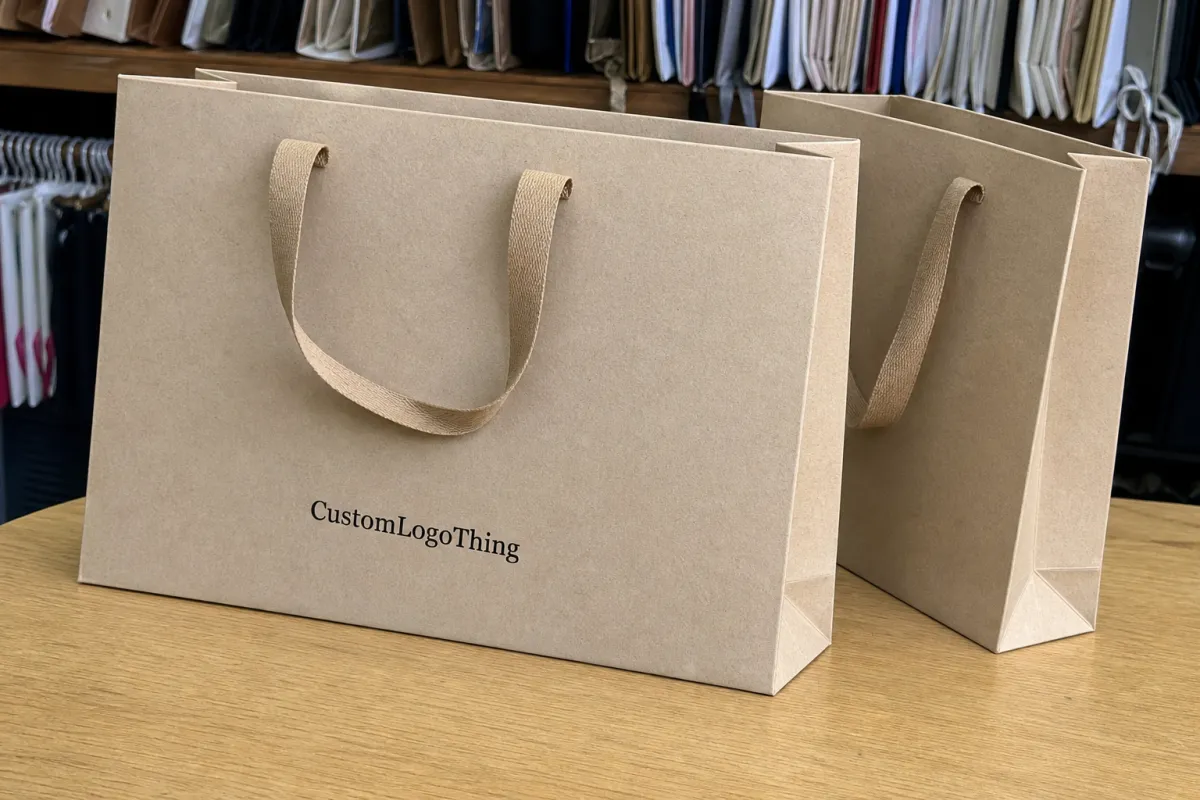
Folding cartons are best for cosmetics, candles, supplements, soap, and lightweight consumer goods. They ship flat, which keeps freight low, and a 350gsm to 400gsm C1S or C2S board is common for retail-ready work. Rigid boxes suit premium skincare, electronics, jewelry, and gift sets because they feel heavier and hold their shape, often built on 1.5 mm to 2.0 mm chipboard wrapped with art paper. Mailer boxes are the workhorse for e-commerce and subscription shipping, typically made from E-flute or B-flute corrugated board. Sleeve boxes add branding without rebuilding the whole structure. Paper bags are common in retail packaging for apparel, boutiques, and events. Inserts keep products from rattling around like loose hardware. Labels do the cheap, fast branding jobs when the budget is tight.
When I visited a carton plant near Dongguan, the operator showed me how a 0.3 mm difference in insert fit could make a perfume bottle either sit snugly or bounce inside the box during vibration testing. That is why a brand packaging bulk order should start with protection. Pretty comes second. If the product arrives broken, no foil stamp on earth will save the customer review, and yes, I learned that lesson the annoying way after one launch that looked lovely on a render and absolutely unlovely in transit through a freight hub in Long Beach.
Customization is where packaging design becomes package branding. You can change size, structure, board grade, coatings, foil, embossing, spot UV, matte lamination, gloss lamination, window cutouts, and edge details. A cosmetics client I worked with chose 350gsm C1S artboard, matte AQ coating, gold foil on the logo, and a small window cutout on the side panel. Their brand packaging bulk order was not flashy for the sake of it. It was deliberate. The box gave product visibility, shelf contrast, and enough stiffness to survive distribution from a warehouse in Suzhou to retail stores in Texas.
Branding should work across the whole set: outer box, insert, tissue, sticker, and shipper. If the box screams premium but the tissue is plain white with no logo, the unboxing experience falls apart halfway through. I’ve seen brands spend $0.18 extra on a branded insert and create a much stronger brand identity than a $1.20 foiled lid ever could. That’s the sort of tradeoff I actually like, because it feels smart instead of merely expensive, and it pays off every time a customer opens the box on camera.
Here’s how I usually match format to product category in a brand packaging bulk order:
- Cosmetics: folding cartons, rigid sets, inserts, spot UV, foil, and precise barcode placement.
- Apparel: mailer boxes, paper bags, tissue wrap, and label systems that keep retail packaging consistent.
- Food: cartons with coatings that suit shelf life, clear compliance copy, and safe ink systems.
- Candles: cartons or rigid boxes with snug inserts and higher crush resistance.
- Electronics: corrugated mailers, internal inserts, and strong outer shippers for transit damage control.
If you need a wider product view, our Custom Packaging Products page shows the main structures we produce, and our Case Studies page has a few real examples where structure choice saved both money and complaints. One skincare project in particular moved from a bulky rigid box to a reinforced folding carton and cut landed cost by $0.27 per unit on a 15,000-piece run.
Specifications to confirm before you place a bulk order
The fastest way to slow down a brand packaging bulk order is to send vague dimensions. “It should fit the product” is not a measurement. I need internal dimensions, and so does any competent factory. Outside dimensions can be useful for retail display and pallet planning, but internal dimensions determine fit. If your jar is 72 mm wide and your insert allowance is 2 mm, say that. If not, expect a sample that looks almost right and almost right is not acceptable in packaging, especially if the product is a glass bottle or a pump dispenser with a tall shoulder.
Material choice comes next. For cartons, I commonly see SBS paperboard, coated artboard, kraft board, recycled stock, and premium rigid chipboard. SBS is clean and bright, good for premium printing and sharp text at 300 dpi or higher. Kraft gives a natural feel, which works for eco-conscious brand positioning. Corrugated board is the stronger choice for shipping, with E-flute often used for retail mailers and B-flute or C-flute used for stronger transit protection. Rigid chipboard is what gives luxury boxes that dense, substantial feel buyers expect in a higher-end brand packaging bulk order.
Printing specs can make or break the job. CMYK is standard for most full-color work. Pantone matching is better if brand color precision matters, especially for logos that must stay the same across SKUs. Black-only print is cheaper and cleaner for minimal branding. I always ask whether the artwork includes bleed and safe zones. If a buyer sends a design without bleed, the trim may cut too close to text or a border. That is how you get a box that looks like it was trimmed by somebody in a hurry with a steak knife. Not exactly the luxury look anyone is hoping for, and certainly not what you want after approving a digital proof at 11:40 p.m.
Finish decisions matter more than most people admit. Matte looks clean and modern. Gloss makes colors pop and can be cost-effective. Soft-touch adds a velvety feel but usually raises cost. Aqueous coating is practical for scuff resistance. Lamination adds more durability, but it changes the tactile feel and can affect recycling claims. In a brand packaging bulk order, I usually tell clients to spend on finish where the customer will actually touch the box, not where the marketing team wants to brag, because a lid with 1.2 mm board and matte lamination feels far better than a plain wrap that only looks expensive in a render.
Compliance is the boring part that keeps your launch out of trouble. Shipping strength matters for corrugated packaging, and standard testing often references ISTA protocols and ASTM methods. If you’re shipping retail-ready cartons or transit packaging, ask what compression or drop testing applies. If the product has regulatory copy, put it in the layout early. Barcode placement should stay scannable, with enough quiet zone around it. I’ve watched a brand lose a week because the barcode sat too close to a matte black edge and the scanner hated it. Machines are rude like that, especially when the code is printed too small or too close to a fold.
For shipping and testing references, ISTA is a useful authority for transport packaging standards, especially if your brand packaging bulk order needs performance verification before launch. If you need FSC paper or board, check FSC certification guidance and confirm the chain of custody before you approve the quote. A supplier in Vietnam or Guangdong can provide documentation, but only if you ask before production starts.
Here is the quick checklist I use before I release a brand packaging bulk order to production:
- Exact internal dimensions in millimeters.
- Board type and thickness, such as 350gsm, 1.5 mm chipboard, or E-flute corrugate.
- Print method, color system, and Pantone references.
- Finish, coating, foil, embossing, or spot UV.
- Barcode, claims, warnings, and regulatory copy.
- Final artwork with bleed, trim, and safe zones.
Brand packaging bulk order pricing and MOQ explained
Pricing for a brand packaging bulk order is driven by five things: quantity, structure, material, decoration, and freight. Anyone who quotes only unit price is leaving out the part that determines what you actually pay. I once reviewed a quote for a skincare brand that showed $0.27 per carton. Great number. Then came $210 for plates, $150 for a die, $95 for sampling, $130 for export packing, and $480 freight split across the order. The real landed cost was much closer to $0.41 per unit. That is the number that mattered, and it was the number the finance team needed for the launch budget.
Setup costs are normal. Die lines have to be built. Plates have to be made if the job uses offset printing. Samples and proofs take time and labor. Sometimes a new structure needs tooling, especially for a rigid box or unusual insert. If you are comparing suppliers, ask them to separate the one-time costs from recurring costs. That lets you judge the real economics of a brand packaging bulk order. A factory in Shenzhen will often quote those separately if you ask for an itemized breakdown, which is exactly what you want before you approve 20,000 units.
MOQ varies by packaging type. Labels and simple mailers can start lower because the production process is straightforward. Folding cartons usually sit in the middle. Rigid boxes often need higher minimums because the hand assembly, board wrapping, and finishing steps take more labor. Specialty decoration like embossing, foil, or complex inserts can push MOQ up further. I tell buyers not to ask for “the MOQ.” Ask for MOQ by structure, print method, and finish. That is the only answer worth using, unless you enjoy comparing apples, oranges, and a box that somehow includes both.
| Packaging type | Typical MOQ range | Common unit price behavior | Best use case |
|---|---|---|---|
| Labels | 500 to 5,000 pieces | Low setup, lower unit cost as quantity rises | Jars, bottles, retail add-ons |
| Mailer boxes | 1,000 to 10,000 pieces | Good savings at mid-volume | E-commerce, subscription boxes |
| Folding cartons | 2,000 to 20,000 pieces | Strong price drop with higher volume | Cosmetics, food, candles |
| Rigid boxes | 500 to 5,000 pieces | Higher labor and assembly costs | Luxury sets, gifts, premium retail |
| Paper bags | 1,000 to 10,000 pieces | Moderate setup, strong volume savings | Apparel, boutiques, events |
That table is not a promise. It is a practical range based on the jobs I’ve handled and the factories I’ve negotiated with, including carton lines in Dongguan, rigid box workshops in Foshan, and mailer producers near Ningbo. Your exact brand packaging bulk order may sit above or below those numbers depending on size, finish, and print coverage.
There is another trick buyers should watch for: low base price with hidden add-ons. I’ve seen quotes exclude carton export packing, inner polybags, outer master cartons, and freight to the destination warehouse. Once those costs get added back, the cheapest quote stops being cheap. A solid comparison for a brand packaging bulk order should include:
- Unit price
- Setup or tooling cost
- Sample charge
- Freight method and estimate
- Duty or import fees if applicable
- Landing cost at your warehouse
My rule is boring, but it works: budget Packaging Cost Per unit, one-time setup costs, and total landed cost. If a supplier will not give you all three, they are not helping you make a purchasing decision. They are just making the quote look prettier, and pretty numbers do not help when you need to compare $0.15 per unit for 5,000 pieces against $0.22 per unit for 10,000 pieces with a different coating and a different port.
For buyers who need predictable sourcing, our Wholesale Programs are built for repeat purchasing and larger runs, which makes a brand packaging bulk order easier to plan across multiple SKUs, especially if you reorder every 60 to 90 days.
What is the process for a brand packaging bulk order?
The process for a brand packaging bulk order is usually straightforward if the buyer does not treat every step like a surprise party. It starts with the brief. You send product dimensions, quantity, packaging style, artwork, and deadline. Then the supplier builds a quote and a dieline, or reviews your existing one. After that comes proofing, sample approval, production, inspection, and shipping. Simple sequence. Messy execution is usually what breaks it, especially when files are scattered across email threads and the approval person is traveling.
Typical timing depends on the product. A simple mailer box may move from proof approval to production in about 7 to 10 business days, then ship in another 5 to 15 business days depending on the freight method. A folding carton with custom print, foil, and insert may take 12 to 18 business days after proof approval. A rigid box brand packaging bulk order can take longer because hand assembly and finishing add labor time, and in most factories around Guangdong or Zhejiang, the finishing table is where the schedule starts to stretch. If anyone promises every package type in the same timeframe, they are either inexperienced or they enjoy disappointing people later.
I remember a beverage client that lost two weeks because their logo file was sent as a low-resolution PNG instead of a vector AI file. The printer had to redraw the art, then the buyer requested a color shift, then another proof cycle followed. A clean art file can shave days, sometimes weeks, off a brand packaging bulk order. The factory is not a miracle worker. It is a machine environment that runs on clean data, a correct dieline, and approvals that arrive before 5 p.m. local time.
Delays usually come from three places: artwork changes, late approvals, and shipping congestion. None of these are mysterious. They are planning problems. If your launch date is fixed, add an inventory buffer. For a retail rollout, I like at least 2 to 3 weeks of safety time before the boxes are needed on the shelf. For imported freight, build in more if port schedules are unstable or if you are moving by sea instead of air. A shipment from Yantian to the U.S. West Coast can move very differently from an air freight booking out of Hong Kong, and the quote should reflect that.
Urgent orders can happen, but “rush” is only realistic when the structure is simple, materials are in stock, and the factory slot is open. I’ve had a 3,000-piece mailer box brand packaging bulk order move fast because everything was ready and the buyer approved the digital proof in six hours. I’ve also had a rigid box rush order fail because the finish required special foil plates and the client kept changing the closure style. That was not urgent. That was chaos wearing a deadline badge.
Here is the clean path I recommend:
- Send a complete brief with dimensions, quantity, packaging type, and deadline.
- Approve a quote that includes setup, freight, and landing cost.
- Review the dieline and digital proof carefully.
- Approve a physical sample when the structure or insert is complex.
- Lock artwork before production begins.
- Track inspection, packing, and shipping milestones.
Why choose us for your brand packaging bulk order
Custom Logo Things is built for buyers who want practical packaging support, not empty sales talk. We handle customization, production oversight, and export-ready packing under one roof, which matters when you are managing a brand packaging bulk order across multiple SKUs. I have spent enough years inside factories in Shenzhen, Dongguan, and Guangzhou to know that the nice website means nothing if the prepress team, QA team, and shipping team do not talk to each other.
One of our biggest strengths is direct sourcing. I’ve negotiated paper pricing with mills when board costs swung by 8% in a single quarter, and I’ve had blunt conversations with box plants about labor constraints when a rush job was trying to cut the line. That is not drama. That is how you protect margin and keep stock available. A brand packaging bulk order should not depend on someone guessing which paper mill has inventory. It should be managed with supplier backups, written specs, and a timeline that assumes the press may run 30 minutes late, not 30 hours.
We verify materials before production, check artwork for print issues, and look closely at packaging design details that often get missed. If the safe zone is too tight, we flag it. If the Pantone match is risky on coated stock, we say so. If a finish looks expensive but adds cost without helping the shelf appeal, we will tell you that too. I’d rather lose a flashy add-on than ship a box that fails in the market, especially when a 0.5 mm trim shift can make a whole run look off-center.
That practical style is why some clients come back for repeat brand packaging bulk order runs instead of hunting for the lowest quote each time. They want transparent pricing, clear timelines, and Packaging That Actually protects the product. Sensible, right? Funny how that becomes rare once people start chasing the cheapest vendor and then act shocked when the cheapest vendor behaves like the cheapest vendor, especially if the order is shipping from a plant in the Pearl River Delta with no written proof schedule.
We also help buyers avoid common mistakes that raise cost or delay delivery: wrong dimensions, under-specified materials, missing barcode data, and last-minute artwork revisions. If you need branded packaging that fits a real launch plan, we can keep the conversation grounded in numbers. No fake urgency. No mystery fees. No pretending that a premium box can be priced like a mailer. If the quote is for 8,000 units, we’ll show you exactly how that changes the unit cost versus 3,000 or 15,000 pieces.
If you need broader support, our FAQ page answers common buying questions, and our team can help determine whether your brand packaging bulk order should start with a sample, a small pilot, or a full production run. For a first-time buyer, a 200-piece pilot often reveals fit problems faster than any mockup ever could.
Factory-floor note: “The best packaging order is the one that matches product, budget, and deadline. The pretty quote is useless if it misses two of the three.”
Next steps to place a brand packaging bulk order
If you want to move quickly, send one clean message with the exact product dimensions, target quantity, packaging style, brand files, deadline, and budget range. That is the fastest way to get an accurate brand packaging bulk order quote without ten follow-up emails asking the same thing in different fonts. If possible, include the product weight in grams, because a 120 g lotion bottle and a 260 g glass serum bottle need very different packaging strength.
I recommend requesting two or three options side by side. For example: a standard folding carton, a premium finish version, and a mailer or rigid alternative. That gives you a real comparison of structure, finish, and price. Sometimes the “better-looking” box is only $0.06 more. Sometimes it is $0.42 more. Knowing that difference upfront keeps the buying decision honest, especially if you are comparing 5,000 versus 10,000 pieces and trying to protect margin on a launch in Atlanta or Toronto.
Approve a sample or digital proof before production starts. A physical sample is worth the extra time when the insert fit, closure, or finish is critical. If the design is simple and the supplier is experienced, a digital proof may be enough. I say “may” because not every brand packaging bulk order needs a physical sample, but every buyer needs confidence before mass production begins, and a 12- to 15-business-day window from proof approval is a reasonable planning baseline for many folding carton jobs.
My final advice is plain: ask for landed cost, not just unit cost. The best order is the one that arrives on time, fits the product, and stays within budget after freight and setup are counted. That is what a real brand packaging bulk order should deliver. Facts first. Hype later, if ever, and if the quote does not include the carton size, coating, and shipping method, ask for the missing lines before you sign.
Send the specs in one message, ask for the quote in writing, and confirm the timeline before you pay the deposit. If you do that, your brand packaging bulk order has a much better chance of landing exactly where it should: on shelves, in shipments, and in customers’ hands without drama.
FAQ
What is the minimum quantity for a brand packaging bulk order?
MOQ depends on packaging type. Labels and mailers can start lower, often around 500 to 1,000 pieces, while rigid boxes and specialty finishes usually need higher quantities. The smarter way to compare is by asking for MOQ by structure, print method, and finish instead of one generic number for the entire brand packaging bulk order, because a 1,000-piece mailer quote and a 1,000-piece rigid box quote are not even close to the same production effort.
How much does a brand packaging bulk order usually cost?
Cost depends on material, size, print coverage, finish, and quantity. A simple carton might be under $0.25 per unit at higher volume, while a rigid box with foil and custom inserts can climb much higher. Ask for both unit price and total landed cost so freight, setup, and sample charges do not surprise you later in the brand packaging bulk order. For example, $0.15 per unit for 5,000 pieces may become $0.23 landed once freight and export packing are included.
How long does a brand packaging bulk order take from proof to delivery?
Timing varies by complexity, sample approval, and shipping method. Simple mailers can move faster, while rigid boxes or detailed printed cartons usually take longer. A clean file and fast approvals shorten the schedule more than anything else in a brand packaging bulk order, and many folding carton runs typically finish in 12 to 15 business days from proof approval before freight is added.
Can I mix different products in one brand packaging bulk order?
Yes, but each size or structure usually needs its own dieline and can affect MOQ and pricing. A shared branding system across multiple SKUs helps keep the line consistent and can reduce design work across the brand packaging bulk order. If one SKU uses a 250 mm x 180 mm carton and another needs a 320 mm x 240 mm mailer, those are separate production setups even if the logo is the same.
What files do I need to start a brand packaging bulk order?
You should send the exact product dimensions, logo files, brand colors, copy, and target quantity. If you already have a dieline or sample, include it so the factory can quote faster and more accurately for the brand packaging bulk order. A vector AI or PDF file with outlined fonts is usually best, and a clear board spec such as 350gsm C1S or 1.5 mm chipboard helps prevent delays.