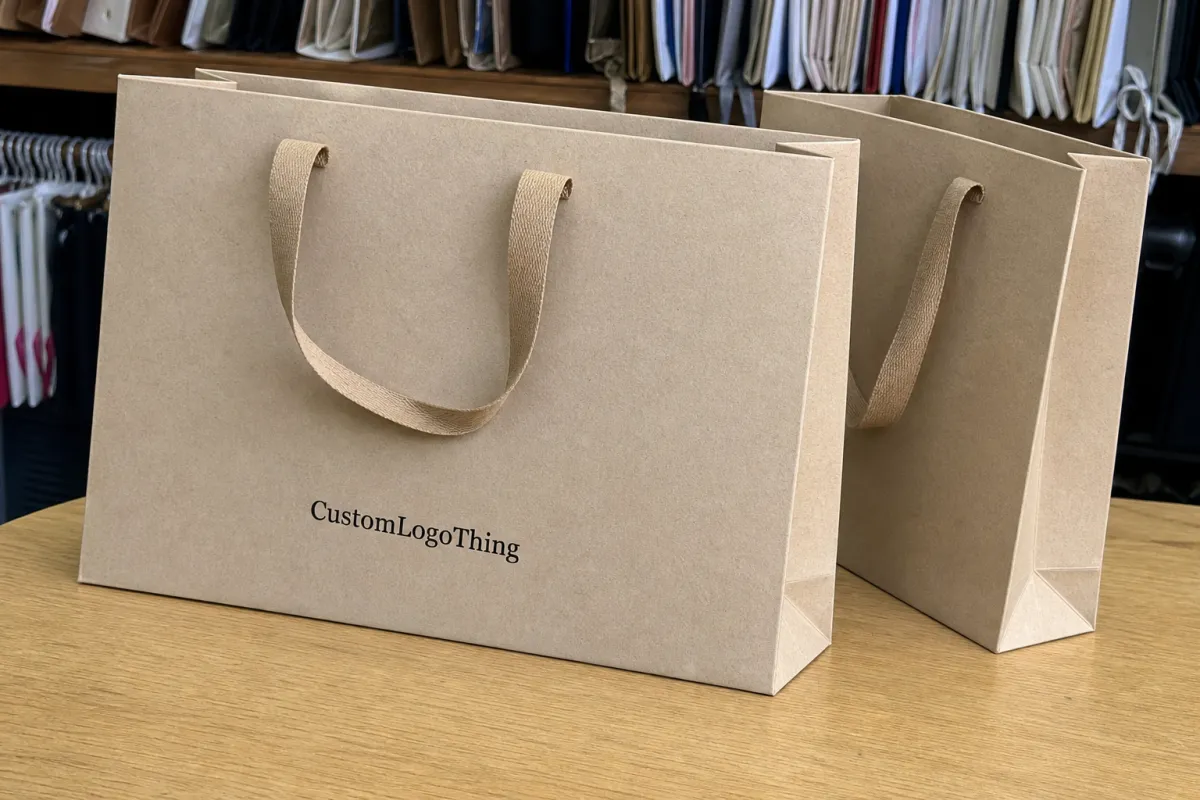
If you are building a branded product line, branded Hang Tags for Ecommerce Fulfillment supplier quote checklist sounds clunky, but the idea behind it is practical. A clean quote depends on the same thing every time: enough specification detail to prevent guesswork, rework, and the familiar “we assumed you meant…” email chain.
A $28 garment can feel like a $48 purchase when the tag, insert card, and outer packaging speak the same visual language. The tag is tiny. The signal is not. From a packaging buyer’s perspective, that small piece of board affects perceived value, SKU clarity, warehouse handling, and how confidently a fulfillment team can move orders through the line.
That is why the quote request matters as much as the tag itself. If your brief is incomplete, the price may look low while the total cost climbs later through extra proofs, split shipments, hand sorting, and avoidable delays.
For teams that want the brief turned around faster, a single, well-organized request is usually more effective than sending fragments over multiple emails. Supplier quoting gets better when the inputs are clean.
Why ecommerce hang tags can raise perceived value fast
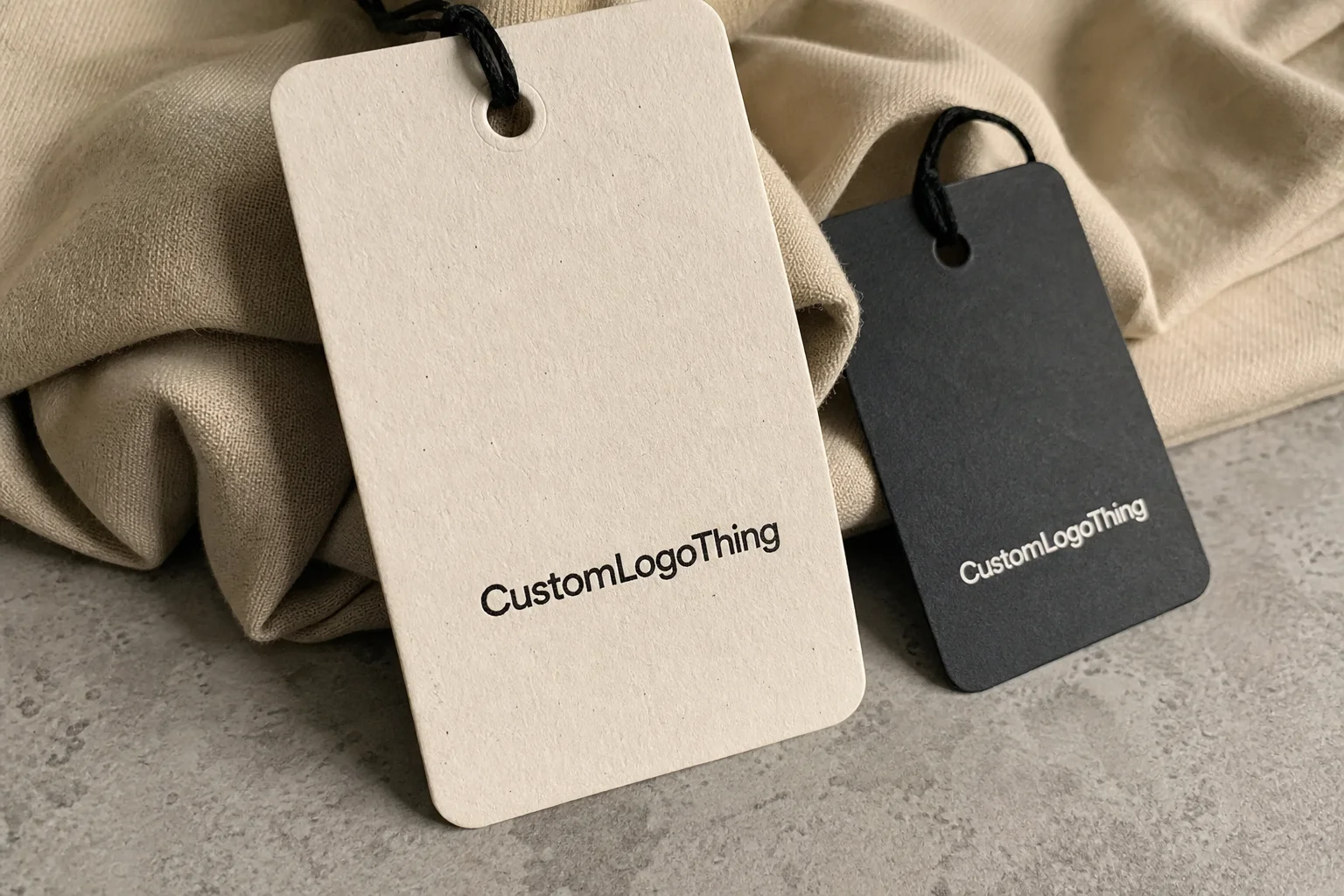
Hang tags do more than identify a product. They frame the purchase. In ecommerce, where customers cannot touch fabric or compare weight in person, the tag becomes part of the evidence that the brand is serious. Add a coordinated insert card and a tidy fold pattern, and the item reads as intentional rather than rushed.
That matters at the order stage. Fulfillment teams need tags that arrive flat, sorted, and ready to apply. Loose stacks, inconsistent folds, or mixed lots create friction in pick-pack-ship flow. A good branded Hang Tags for Ecommerce Fulfillment supplier quote checklist helps you ask the right operational questions before production starts, not after cartons land at the warehouse.
Get the spec wrong and the savings can disappear quickly. If ink smudges, a barcode fails to scan, or variable data is misplaced, the cost difference on the print quote can be wiped out by rework labor. A 10-minute warehouse slowdown across 5,000 units is not a minor issue; it can turn the cheaper print job into the more expensive one.
Buyers often compare tag prices without comparing the workflow. That misses part of the economics. The value is broader: stronger brand recall, cleaner SKU identification, better marketplace presentation, and more consistent unboxing across DTC and wholesale replenishment channels.
Practical test: if the tag can move from carton to product without repacking, resorting, or hand correction, it is doing real work for your fulfillment operation.
For terminology around packaging materials and print components, industry resources from packaging associations can help teams align on stock, coating, and recycling language before quotes go out. Precision saves time, especially when multiple departments are involved.
What to specify before requesting a hang tag quote
A supplier cannot quote what it cannot see. Start with the basics: tag size, shape, paper or cardstock weight, finish, hole diameter, string or fastener type, print colors, and whether serialization or variable data is required. If even one of those is missing, expect revisions. If three are missing, expect two rounds of clarification and a slower start.
For ecommerce fulfillment, usage matters as much as appearance. Will the tags be hand-applied, machine-applied, bundled by SKU, or packed with inserts for later assembly? A tag designed for manual application can behave very differently in a semi-automated line. That is why a quote checklist should always include how the item is handled after print, not only how it looks on screen.
Branding details drive the quote too. Spot UV, foil, embossing, soft-touch lamination, Pantone matching, and double-sided printing can each change Cost and Turnaround. Some effects are mostly visual. Others require more setup, extra inspection, or different dies. The supplier needs to know which ones are essential and which are preferred if budget allows.
File prep affects pricing and schedule more than many buyers expect. Dieline approval, bleed settings, barcode quality, and image resolution are quote issues, not just prepress issues. Poor files lead to production delays, and delays tend to cost more than the print savings that triggered them. If your artwork contains a UPC or QR code, test it at final size rather than on a magnified monitor image.
Compliance details can matter, depending on the category:
- Fiber content disclosures for apparel
- Care instructions where required
- Recycled paper claims that need substantiation
- Retail barcode placement and quiet zones
- Any region-specific labeling language your sales channels require
Keep the request brief but complete. Two pages of loose notes help no one. One page with clear specs usually gets a better quote, faster, because the supplier can price the job instead of decoding it.
Hang tag material, finish, and structural specifications
Material choice sets the tone before the customer even opens the package. Coated cardstock gives sharp color and crisp photography. Uncoated stock feels softer and more tactile. Kraft communicates a natural, low-gloss aesthetic. Laminated stock holds up better in transit and resists scuffing during warehouse handling.
Thickness matters because perception and durability are linked. A 16pt or 18pt card often reads as more premium than a thin 12pt tag, but heavier stock can require different punch locations or stronger fasteners to reduce tearing. If your fulfillment team applies tags quickly, that extra resistance matters. A tag that tears at the hole turns into a problem immediately, not later.
Finishes should match the use case, not just the mood board. Matte suits minimalist branding. Gloss supports saturated photography. Foil works for premium collections, though it adds setup and inspection steps. Aqueous coating can improve scuff resistance without the bigger cost jump of some specialty laminations.
Attachment systems deserve more attention than they usually get. Cotton string is clean and classic. Elastic loops can be faster in some operations. Plastic fasteners are practical for certain products. Safety pins and pre-threaded application options may fit specific product types, but they can affect labor and packaging speed. The best option depends on whether the warehouse is manual, semi-automated, or applying tags downstream after receipt.
| Specification choice | Typical effect on appearance | Typical effect on fulfillment | Common use case |
|---|---|---|---|
| Coated cardstock | Sharp color, clean graphics | Easy to sort, moderate durability | Fashion, accessories, lifestyle goods |
| Uncoated stock | Soft, natural, tactile feel | Less scuff resistance, easy to write on | Craft, heritage, eco-led brands |
| Kraft board | Earthy and understated | Good handling, visible print limits | Recycled or rustic positioning |
| Laminated stock | High finish, stronger color depth | Better transit durability | Premium or long-chain distribution |
For any brand that ships through a third-party fulfillment center, ask for front/back layout guidance and scanner-safe spacing around barcodes and QR codes. Quiet space is not decorative. It is operational. A clean margin can determine whether a camera reads the code on the first pass, especially when lighting or print gain shifts slightly.
If sustainability claims are part of your positioning, make sure they are defensible. EPA sustainable materials resources are useful for understanding recycled content language and broader material-reduction context. Claims should be supportable, not hopeful, because packaging language gets questioned quickly once it reaches procurement or compliance review.
Cost, pricing, MOQ, and what changes the unit cost
Price is not one number. It is a stack of decisions. Quantity, dimensions, stock choice, finishing, color count, variable data, and packaging format all affect the quote more than the word “custom” suggests. If two suppliers are within a few cents of each other but one includes kitting and the other does not, the comparison is false.
MOQ logic is simple, even if the sales language around it is not. Small runs cost more per piece because setup, die cutting, and proofing are spread across fewer units. Larger runs usually lower unit cost, but they also increase inventory exposure if your product line changes quickly. For many buyers, the practical middle ground is a quantity that supports one launch plus one replenishment cycle.
For planning, many standard hang tag jobs can land around $0.08-$0.22 per unit at higher quantities for standard stock and standard print. Add specialty finishes, variable data, or complex die work and the range can move higher, often $0.18-$0.45 per unit depending on quantity and complexity. Those are broad ranges, not guarantees. The exact number depends on the job, the supplier’s equipment, and how many extras are bundled into the quote.
Ask for tiered pricing. Three quantities are better than one:
- Test run or launch run
- Core seasonal buy
- Replenishment volume
That structure shows break points clearly. Sometimes a 10% quantity increase drops the per-unit cost enough to justify holding a small buffer. Other times, the savings are too small to outweigh storage risk.
Confirm hidden costs upfront. Kitting, warehousing, rush fees, split shipping, extra proofs, and reprint allowances for damaged transit cartons can all appear on the final invoice. Freight is the line people tend to underestimate. Cartons may be light, but multiple small shipments add up fast, especially when a launch is split across several receiving dates.
Here is a simple way to compare options:
| Order type | Typical MOQ pressure | Unit price trend | Inventory risk |
|---|---|---|---|
| Short test run | Higher | Higher | Low |
| Seasonal buy | Moderate | Balanced | Medium |
| Annual replenishment | Lower | Lower | Higher |
Always compare total landed cost. A slightly higher print quote can still be cheaper overall if it reduces warehouse handling, eliminates repacking, and arrives palletized in a format your fulfillment center can use immediately. That is the real metric, not the quote line that looks best in isolation.
Production steps, proofing, and turnaround expectations
A clean production flow usually follows the same sequence: inquiry, spec confirmation, digital proof, prepress adjustments, sampling if needed, production, finishing, inspection, and outbound shipping. If a supplier cannot explain that process clearly, expect confusion later. A good process does not need to be fancy; it needs to be visible.
The approval checkpoints matter more than most buyers realize. Artwork proof, color target, dieline, barcode scan test, and final layout for variable data should all be approved before the full run starts. One missed barcode check can make a whole batch less useful to a fulfillment team, and the fix is often more expensive than the original print savings.
Turnaround depends on complexity. Simple tags with standard stock and standard print can move faster. Specialty finishes, custom dies, and serialized data add steps. In practical terms, standard jobs are often quoted at roughly 7-12 business days after proof approval, while more complex jobs can run 12-20 business days or longer. If the supplier promises faster, ask what is being skipped.
Match the production schedule to the warehouse schedule. The receiving date, intake process, and labeling sequence should align with the launch window or replenishment date. Receiving the tags two weeks early is helpful only if the warehouse can store and stage them properly. Receiving them two days late is a problem no one wants.
Ask whether partial releases or staggered shipments are available. For multi-SKU brands, that option can be useful when one collection launches before another. It also reduces the temptation to overbuy a single design when demand is still uncertain.
Buyer rule: if the supplier cannot explain where the job sits in the schedule after proof approval, the promised lead time is not yet dependable.
For logistics expectations tied to packaging performance, ISTA testing standards are useful when shipping damage or carton performance is part of the conversation. See ISTA for testing frameworks that many packaging teams use when they want more confidence in transit performance.
How to evaluate a supplier for ecommerce fulfillment reliability
Do not let a polished quote replace operational proof. Ask how many tag jobs the supplier handles at scale, especially jobs with multiple SKUs or variable data. A supplier that can print one nice sample is not necessarily a supplier that can support 50,000 mixed units with clean sorting and reliable carton labeling.
Ask for the quote based on your actual fulfillment workflow, not a PDF spec sheet alone. Include carton counts, packaging method, labeling rules, and any warehouse constraints. That is the difference between a generic print quote and a quote that reflects real receiving conditions.
Quality control should be specific. Look for in-line inspection, barcode verification, color consistency standards, and documented tolerance ranges for die cuts and hole placement. “Checked for quality” is too vague. Better to hear exactly how defects are caught and how they are handled if they appear.
Communication speed matters more than many buyers admit. Fast, accurate prepress feedback often beats a lower starting price because it reduces back-and-forth and helps your launch stay on schedule. A supplier that asks the right questions early is usually cheaper to work with later.
Logistics capability is part of reliability. Domestic shipping options, carton labeling, palletization, and the ability to send directly to a fulfillment center without repacking can save hours. If the supplier cannot ship in a warehouse-friendly way, someone on your side will end up paying for it.
Supplier evaluation should also include whether they can support repeat orders without changing colors, paper lots, or application details. Inconsistent replenishment is a quiet problem: the first run looks correct, the second run looks slightly different, and the brand team notices only after the inventory is already moving.
Next steps to get an accurate supplier quote
Start with a one-page brief. Include quantity, dimensions, artwork files, finish choice, attachment method, shipping destination, and target in-warehouse date. That is usually enough for a supplier to quote the job without guessing. If you send five disjointed emails, expect five different interpretations.
Request at least two quantity tiers. You want to compare unit cost against inventory risk and decide whether the order is for one launch or a broader replenishment window. The Branded Hang Tags for Ecommerce fulfillment supplier quote checklist works best when every vendor receives the same request structure and the same quantity options.
Ask what is included in the quote. Proofing, dieline creation, packaging, kitting, and freight should be itemized when possible. If they are not itemized, the quote may still be usable, but only if you ask the supplier to confirm exclusions in writing.
If you use multiple SKUs, send one representative sample plus a list of variable fields so the supplier can check compatibility before production starts. This is especially useful for barcodes, QR codes, size runs, or multilingual care copy. A small error in variable data can create a large operational mess.
Use the same checklist for every vendor. That is the cleanest way to compare responses on equal terms and avoid surprise fees, rework, and delayed receipts. For teams comparing tag formats and attached label systems, a broader custom labels and tags category can help frame the options before the quote goes out.
FAQs
What should I include in a branded hang tags for ecommerce fulfillment supplier quote checklist?
Include quantity, tag size, stock, finish, print colors, attachment method, and whether you need variable data or barcodes. Add shipping destination, target delivery date, and any kitting or packaging requirements so the supplier can quote the real landed cost.
How do hang tag specs affect ecommerce fulfillment costs?
Heavier stock, special finishes, custom dies, and serialized printing usually increase both setup time and unit price. Simpler specs with standard sizes and fewer finishing steps tend to be cheaper and easier for fulfillment teams to handle.
What MOQ is typical for custom branded hang tags?
MOQ varies by material, finish, and print complexity, but custom tags often price best at higher quantities because setup costs are spread out. Ask for tiered pricing so you can compare test-run quantities against core replenishment volumes.
How long does turnaround usually take for custom hang tags?
Turnaround depends on proof approval, print method, finishing, and whether you need variable data or specialty effects. Standard jobs are usually faster than projects with custom die cuts, foil, or serialized tagging requirements.
How do I compare two hang tag quotes accurately?
Compare the same quantity, stock, finish, attachment method, proofing included, and shipping terms on both quotes. The cheapest quote is not always the best if it excludes freight, kitting, or quality checks that your fulfillment center needs.