Staples Custom Labels are small pieces of packaging, but they do a disproportionate amount of work. They can make a folded shirt look retail-ready, keep a shipping carton organized, or turn a plain polybag into something that feels finished. If the label is off by even a little, the whole package feels less intentional than it should.
Buyers usually notice the problem too late. A label that is too glossy can glare under store lighting. A weak adhesive can lift on a coated bag. A badly sized label can crowd a barcode or hide the fold line on tissue. The fix is not complicated, but it does require treating the label as part of the packaging system rather than a separate afterthought. If you are also developing Custom Labels & Tags or broader Custom Packaging Products, the label spec should match the rest of the package instead of competing with it.
A good label does not ask for attention. It supports the product, survives handling, and stays readable long enough to do its job.
What Staples Custom Labels Actually Are
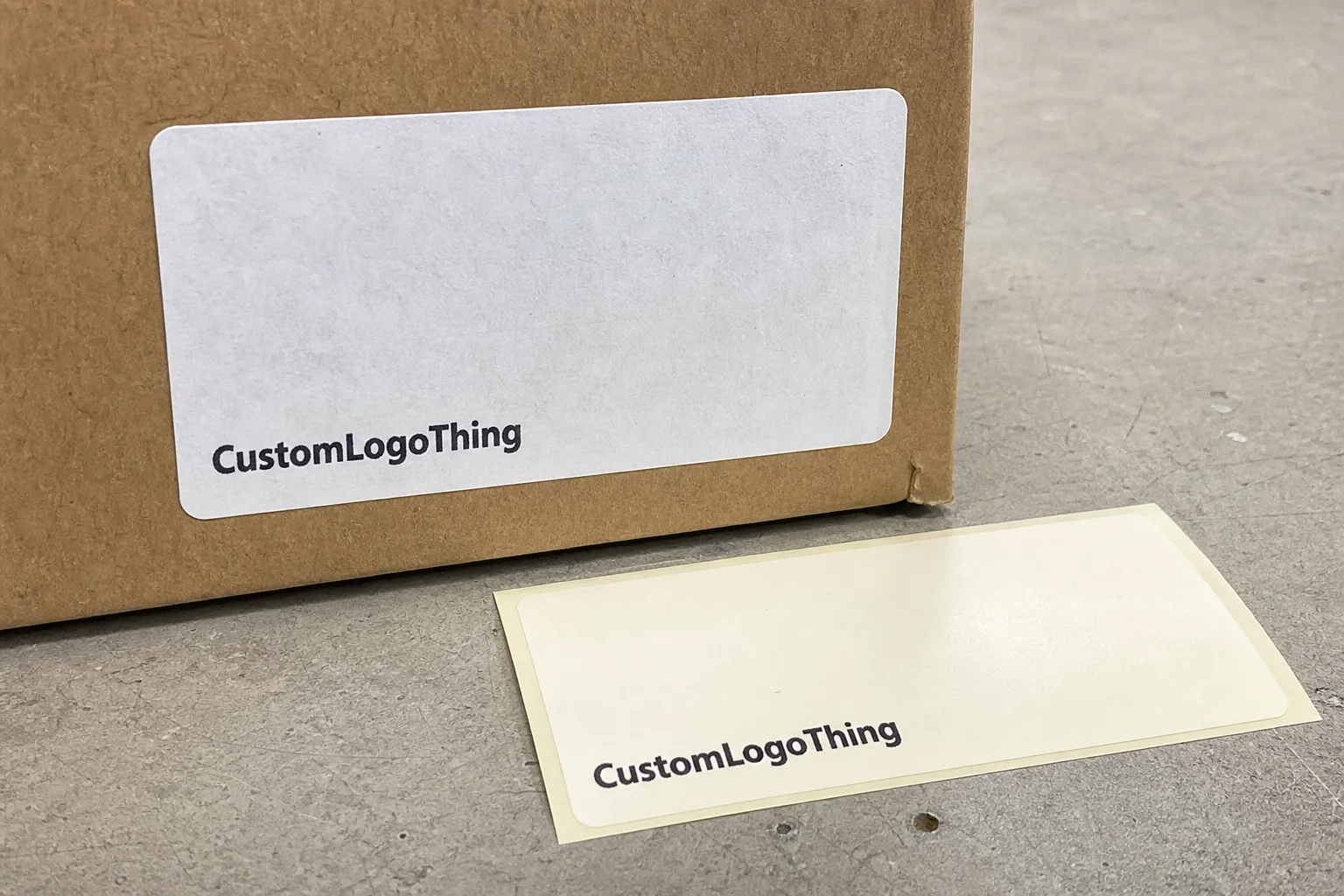
In practical terms, staples custom labels are printed labels used for packaging, shipping, retail presentation, and product identification. Some are decorative, some are functional, and some are tied to compliance. That distinction matters because each category pushes the material, adhesive, and print method in a different direction.
Decorative labels are the most visible. These are the seals on tissue, the sticker on a folded shirt wrap, or the logo mark on a mailer. Their job is visual consistency. They should fit the brand tone and the rest of the packaging, not simply repeat a logo and call it finished.
Functional labels handle the operational side. Size stickers, SKU labels, carton markers, and shipping labels all need clear contrast, stable adhesion, and dependable print quality. If the barcode smears or the adhesive fails, packing slows down fast.
Compliance-driven labels are the ones that create the most trouble when they are left until the end. Care instructions, fiber content, country of origin, and warning labels often need to be accurate on both the garment and the packaging. If a clothing line is headed toward retail or marketplace fulfillment, these details are not decorative. They are part of the product record.
For launches, seasonal drops, or rebrands, labels are often the fastest packaging component to bring into production. They can carry a lot of visual weight while the rest of the packaging program is still being finalized. That is one reason buyers search for staples custom labels when they need speed without giving up a polished finish.
The hard part is not finding a label. The hard part is choosing one that fits the application. A label on tissue wrap does not need the same build as a label on a shipping carton, and a label that looks strong in a proof may still fail once it meets heat, friction, or a textured surface.
How the Labeling Process and Timeline Work
The production path is usually simple on paper: artwork comes in, prepress checks it, a proof is issued, the job is printed, then it is finished, inspected, and shipped. The delays tend to happen at the handoff points. If the label size is unclear, if the finish is still undecided, or if the art file is messy, the whole schedule slips.
For a standard digital label run, a buyer usually needs to provide the logo or artwork, dimensions, quantity, intended surface, and preferred finish. That is enough for most quotes. If the label needs to wrap around a sleeve, sit inside a die-cut area, or line up with a fold or seal, sending a template saves time and reduces guesswork.
Format changes the workflow too. Sheet labels are easy to store and work well for low volumes or hand application. Roll labels are better when the packing team is moving quickly or using an applicator. Cut labels are useful for custom shapes and lower runs where roll tooling would be overkill. Specialty finishes such as foil, embossing, or spot UV add setup and inspection time, so they need to be planned early.
Typical lead times look roughly like this:
- Simple digital labels: 5-8 business days after proof approval.
- Medium-complexity jobs: 8-12 business days.
- Specialty finishes or custom shapes: 12-15 business days, sometimes longer if proofs need revision.
Approval is usually the real bottleneck. Most production schedules move faster than the brand team’s internal review cycle. A small artwork change, a revised barcode, or a debate over gloss versus matte can push shipping by several days. If a launch date is fixed, the proof has to be treated like a deadline, not a draft.
It also helps to think like a packaging buyer instead of only a designer. Packaging standards groups such as ISTA focus on transit stress, and that mindset applies here as well. A label that looks perfect on a screen can still fail once it is exposed to pressure, dust, humidity, or repeated handling in fulfillment.
Cost, Pricing, and MOQ Factors That Move the Quote
Pricing is usually driven by a short list of variables, and quantity is the biggest one. Smaller orders carry higher unit costs because setup, proofing, and press preparation are spread across fewer pieces. Once the run gets larger, the per-unit cost drops because the press is being used more efficiently. That pattern holds for staples custom labels just as it does for most printed packaging.
The major pricing drivers are predictable:
- Quantity: larger runs lower the unit cost.
- Size: bigger labels use more substrate and press area.
- Material: paper is usually cheaper than film or specialty stock.
- Finish: matte is generally simpler than foil, soft-touch, or spot UV.
- Adhesive: removable, permanent, and high-tack options are priced differently.
- Format: sheet, roll, and cut-to-size each have different handling costs.
- Artwork complexity: full-coverage graphics, variable data, and multiple colors can add cost.
Minimum order quantities vary by supplier and print method. Digital production makes lower volumes practical, often in the low hundreds or low thousands. Offset and specialty runs tend to make more sense once the volume rises. If you only need a few hundred labels for a test drop, do not inflate the order just to chase a lower unit price. Inventory that sits in storage is not savings.
These ranges are useful for planning:
| Label Type | Typical Use | Approx. Cost Range | Typical Lead Time |
|---|---|---|---|
| Matte paper label | Bag seals, tissue, light retail use | $0.03-$0.08 per label at 5,000 pcs | 5-8 business days |
| Waterproof synthetic label | Shipping, damp environments, durable branding | $0.08-$0.18 per label at 5,000 pcs | 8-12 business days |
| Foil-accent label | Premium retail packaging, launch kits | $0.14-$0.28 per label at 5,000 pcs | 12-15 business days |
Those figures are directional, not a promise. Artwork coverage, finishing complexity, packaging configuration, and shipping distance can move the final number. Even so, they are good enough for budgeting, and they make the tradeoff obvious: paper is cheaper, synthetic costs more, and premium finishing pushes the quote higher.
Hidden costs are where buyers get surprised. Setup charges, proof revisions, design edits, rush fees, and freight can change the total more than a minor material upgrade. Ask for an all-in estimate early. A clean quote is easier to approve than one that starts low and keeps growing.
Material, Adhesive, and Finish Choices for Clothing Use
For clothing packaging, the material has to fit both the surface and the brand tone. Paper stock gives a classic, approachable look and keeps cost under control. Film or synthetic stock resists tearing and moisture better. Specialty paper can add texture and make the package feel more deliberate, which matters when the label is part of the presentation rather than just a functional marker.
Paper labels work well for dry, low-stress applications. They are common on tissue wraps, inserts, and cartons that do not get much abrasion. Synthetic labels are the better choice for shipping, humidity, cold storage, or surfaces that get handled repeatedly. If the packaging is going through packing tables, mailers, and returns, synthetic usually earns its price.
Adhesive selection matters just as much as substrate selection. A removable adhesive is useful when the label should come off cleanly from a retail bag or temporary seal. A permanent adhesive is better for cartons, shipping labels, and long-wear applications. If the surface is textured, recycled, coated, or unusually smooth, ask for a sample test before you commit to a full run. Some materials look easy and then reject adhesive with almost no warning.
Finish changes both appearance and performance:
- Matte: understated, easy to read, and less reflective.
- Gloss: brighter color and stronger visual contrast.
- Soft-touch: a velvety finish that reads as premium.
- Foil: strong shelf presence, usually at a higher cost.
- Spot UV: useful for highlighting a logo or creating contrast.
If sustainability is part of the brand story, verify the substrate and adhesive instead of relying on the language on the proof. Ask whether paper options are FSC-certified, whether recycled content is available, and whether the adhesive choice matches the intended end use. The FSC standard is a practical reference for paper-based components because it gives buyers something more concrete than a green-looking claim.
Real-world behavior matters more than the sample sheet. Humidity can curl paper. Friction can scuff print. Cold storage can stress adhesive. If the label is going onto clothing packaging that passes through multiple hands before reaching the customer, durability is usually more valuable than a decorative finish that looks nice only in the mockup.
Production Steps to Spec Before You Order
If you want a clean quote and fewer revisions, spec the order like a production buyer. Start with the use case, then move through size, Material, Adhesive, Artwork, and delivery date. That order keeps design preferences from getting ahead of the actual job requirements.
- Define the use case: bag seal, hang tag, box label, insert label, or shipping label.
- Measure the available space on the package or garment component.
- Choose the substrate: paper, film, or specialty stock.
- Select the adhesive based on the surface and removal needs.
- Review artwork for resolution, bleed, safe area, and color expectations.
- Approve the proof only after checking spelling, size, and finish.
- Confirm shipment timing against your launch or replenishment date.
Artwork is where many orders drift off course. Vector files are the safest option for logos and text because they scale cleanly. Raster art can work if the resolution is high enough, but low-resolution logos are still one of the most common mistakes in packaging. If the label prints to the edge, include bleed. Keep barcodes, care text, and legal copy inside the safe area. What looks centered on a monitor can be off by enough to create problems on press.
Ask for the proof details that actually matter: final size, color treatment, trim, finish, and placement. If the label is going onto a specific package format, request a mockup or placement view. That is especially helpful when the label has to fit around folds, closures, or an existing printed design.
A practical quote request should include the final dimensions, quantity, surface type, adhesive preference, artwork files, and required delivery date. That list is short, but it removes most of the back-and-forth that slows a job down.
Artwork, Color, and Compliance Checks
Color is where label jobs often look fine in proof and then disappoint in hand. Screen color, coated paper color, and printed color are three different things. If the brand depends on exact color matching, ask how the printer handles Pantone references, whether digital output will be converted, and what tolerance is realistic for the chosen material. Paper stock can shift color slightly differently than film stock, especially on lighter tones.
Fine lines and small type deserve more attention than they usually get. Thin strokes can disappear on textured paper or low-resolution files, and small legal copy can clog on a dark background. If the label carries a barcode, QR code, or SKU number, test readability before approval. A code that scans on a designer’s laptop is not enough; it has to scan after printing, trimming, and handling.
For apparel, compliance text should be checked separately from the branding layer. Care symbols, fiber content, origin marking, and warning copy should be legible, correctly spelled, and placed where they will not get hidden by folds or seals. If the label is part of a retail-ready package, that information often has to stay readable after the package has been opened and reclosed.
Another detail that gets missed is overprint behavior. Dark or full-coverage backgrounds can make light text difficult to read if the layout is not planned carefully. Transparent or synthetic materials can also change how the ink sits on the surface. That is why proofing should include not just the artwork, but a real check on contrast, size, and intended handling.
If the order includes multiple SKUs, variable data, or seasonal art, make sure the master file is organized before production starts. Small inconsistencies multiply quickly when a label program has more than one version. A clean file set saves time at prepress and reduces the chance of a mix-up on press.
Common Mistakes Buyers Make With Custom Labels
The biggest mistake is buying on price alone. Cheap labels can fail on print clarity, adhesive strength, or finish quality, and then the cost shows up again in rework, reordering, or wasted labor. That is not savings. That is a delayed expense with more friction attached to it.
Another common problem is ignoring substrate compatibility. A label that sticks perfectly to a corrugated carton may fail on coated tissue wrap, recycled board, or a fabric-related packaging surface. If the material is uncertain, ask for a sample test. That is faster than discovering the issue after the inventory is already on the shelf.
Size errors happen constantly. Buyers approve a label that fits the logo but forget room for barcode, care copy, or edge margin. The final design ends up cramped, clipped, or visually unbalanced. On clothing packaging, where labels are often small and highly visible, that problem stands out immediately.
Proofing mistakes are another easy trap. The color on a monitor is not the color on press. Low-resolution art can look acceptable on screen and still print soft or fuzzy. Trim lines can shift if someone approves a file without checking the details. A rushed proof is usually a bad proof.
Ordering too late is the final classic mistake. Fast-turn labels still need production time. Rush work costs more, leaves less room for correction, and creates pressure where the team least wants it. If the drop date is fixed, work backward from that date instead of hoping the printer can compress the schedule after the fact.
For buyers managing branded packaging across several products, the label spec should stay consistent with the rest of the packaging system. Match the tone, keep the color plan coherent, and make sure the label material does not clash with mailers, inserts, or custom printed boxes. Small mismatches can make a disciplined product line look less finished than it really is.
What to Do Next Before You Request a Quote
Before requesting pricing, gather the essentials: dimensions, quantity, application surface, artwork files, and target delivery date. That information turns a vague estimate into a production-ready quote that can actually be used for planning.
If you are unsure between two constructions, compare them against the real use case rather than the sample sheet. A matte paper label may be enough for a dry retail bag. A synthetic option makes more sense for shipping, repeated handling, or humid storage. If the label is customer-facing, spend the extra money where it will be seen most clearly: finish, color accuracy, and clean cut quality.
If the adhesive or finish is uncertain, ask for a recommendation or a sample. That step can prevent a lot of waste. In packaging, the expensive mistake is usually the second order, not the first quote.
For buyers evaluating staples custom labels, the practical path is straightforward: define the use case, lock the spec, review the proof with care, and keep the schedule realistic. That is the shortest route to a label that supports the product instead of fighting the rest of the packaging.
Are staples custom labels good for clothing packaging or just shipping boxes?
They can work for both, but the right construction depends on the surface and how the package will be handled. For clothing packaging, buyers usually want labels that look clean on bags, tissue, cartons, or hang tags without peeling, wrinkling, or scuffing. Match the adhesive and finish to the surface instead of choosing only for appearance.
What affects the price of staples custom labels the most?
Quantity is usually the biggest driver because setup costs are spread across more units at higher volumes. Material, finish, adhesive strength, and print complexity all affect unit price as well. Rush timing and specialty formatting can push the quote higher too.
How long does the process usually take?
Simple label jobs can move quickly once artwork is approved. Specialty materials, custom shapes, or finish-heavy orders take longer because they add production steps. The most common delay is proof approval, not printing itself.
What file format should I send for custom label production?
Vector files are best for logos and text-heavy artwork because they scale cleanly. High-resolution raster files can work for images or complex graphics if they meet print requirements. Include size, bleed, and any special instructions so prepress does not have to fill in the gaps.
What is the best way to avoid mistakes when ordering custom labels?
Confirm the surface, size, and adhesive before approving the quote. Review the proof for spelling, trim, color, and placement instead of skimming it. Build in enough time for a revision if the first proof is not right.