The quickest way to expose supplier weakness is to treat Printed Hang Tags for ecommerce fulfillment Factory Audit Questions as a production test, not a design exercise. One typo, one barcode too close to the trim edge, or one stock substitution without approval can stall intake, trigger relabeling, and clog a fulfillment lane before the first carton ships.
That is why hang tags in ecommerce do two jobs at once. They carry the brand, but they also act like a control document. A good tag tells you whether the factory can hold artwork, register color, keep traceability, and pack consistently under pressure. A weak tag reveals the opposite quickly, and the cost usually shows up in labor before it shows up on a print defect report.
There is a reason experienced buyers inspect tags so closely. They are small, cheap, and easy to dismiss. They also sit at the junction of print, packaging, warehouse handling, and SKU control. That makes them one of the best places to test whether a supplier understands ecommerce fulfillment rather than just retail presentation.
What printed hang tags reveal before the first carton ships
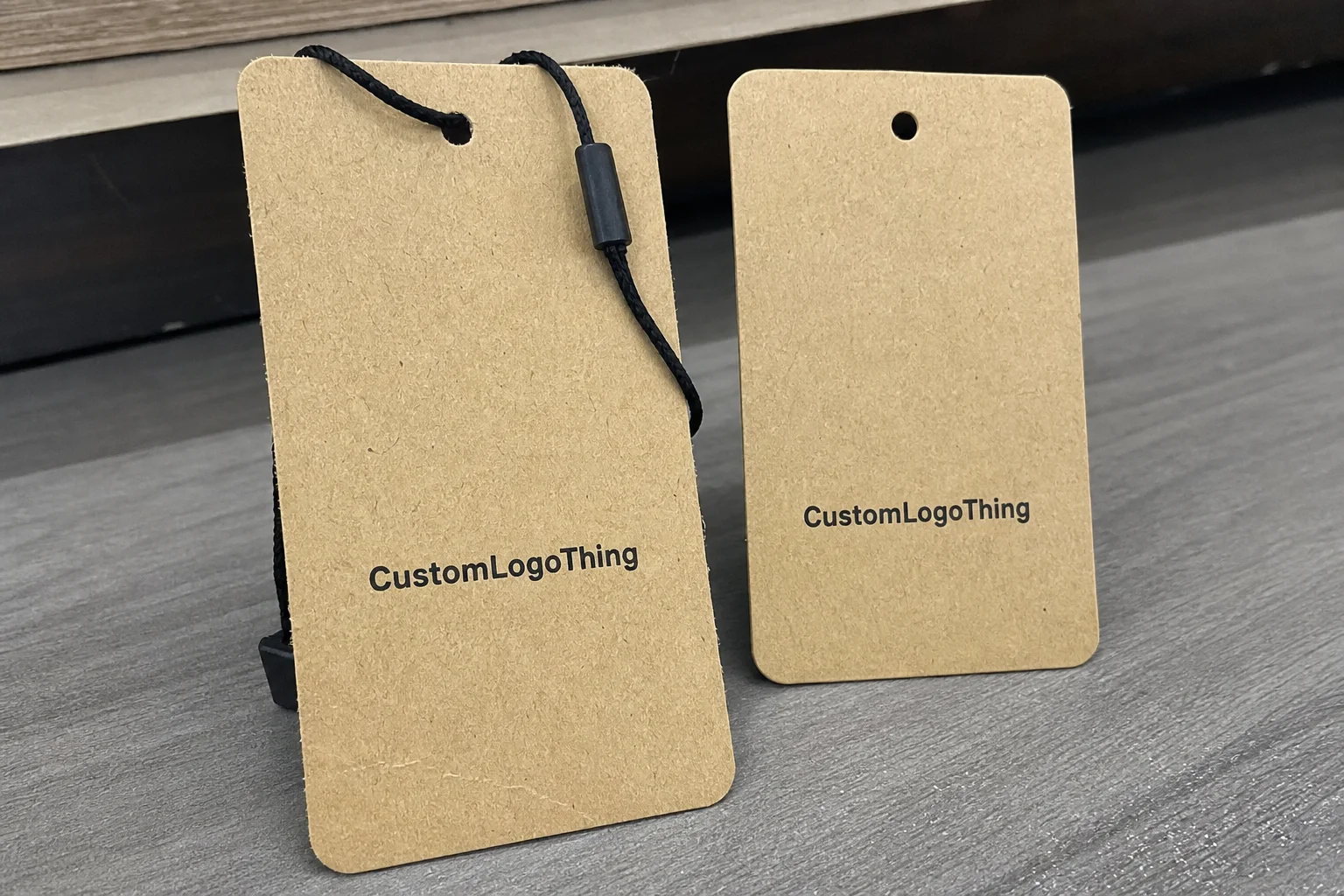
In store retail, a hang tag gets a visual check and moves on. In ecommerce fulfillment, the tag is handled differently. It is scanned, stacked, bundled, packed, and sometimes rechecked at the carton stage. Small defects multiply fast. A 2 mm hole shift can slow threading. A faint barcode can delay an entire aisle. A slightly wrong board caliper can change how tags lie flat in the pack-out flow.
That is why Printed Hang Tags for ecommerce fulfillment factory audit questions matter so much before launch. Buyers are not only asking, "Does this look right?" They are asking whether the supplier can produce the same result every time, with the same stock, the same punch placement, and the same finishing method. That is a manufacturing question, not a branding one.
From a packaging buyer's point of view, the hang tag is often the first physical proof that the file, the spec sheet, and the production floor are actually aligned. If the brand team approved a polished layout but operations never checked barcode readability, the audit will expose the gap. If the factory says it can handle FSC board, variable data, and stringing in-house, the sample and the paperwork need to support that claim. FSC guidance is published at FSC, and it matters whenever fiber sourcing is part of the buying brief.
A hang tag that looks right but scans badly is not a design issue. It is a warehouse delay, and warehouse delays turn into labor cost almost immediately.
There is also a cost of delay that people underestimate. If a tag issue holds product at intake, the brand may need relabeling, a manual sort, or a partial reprint. Even a small mismatch can push a launch by days, and in ecommerce that often means missed promotion windows and rebooked labor. A cheap mistake can behave like an expensive one once the cartons are already in motion.
The tag also reveals whether the factory understands process discipline. Clean artwork is not enough. A buyer wants to see how the supplier controls versions, approves substrates, separates rejected stock, and keeps carton labels tied to the right revision. That is where the real audit value sits.
Process and timeline for audit-ready hang tag production
A clean workflow usually starts with RFQ, dieline review, and file check. Then comes sampling, proof approval, print, finishing, and final pack-out. In theory, the sequence is linear. In practice, the delays usually begin at the file stage: wrong dimensions, missing bleed, barcode art exported at the wrong resolution, or revision history that no one can trace.
The factory audit sits between proofing and full production, or sometimes right before the first pilot run. The point is simple: confirm the supplier can hold spec under real shop conditions. Can they maintain register on both sides? Can they keep hole placement consistent across the run? Can they track lots and separate approved stock from rejected stock? If the answer is vague, the audit has done its job by revealing the risk early.
Timeline depends on three things more than anything else: proof turnaround, material availability, and finishing complexity. A basic single-color tag on standard board can move faster than a multicolor tag with foil, embossing, or custom stringing. Add barcode testing, variable data, or a special coating, and lead time usually stretches. For a simple reprint, production may be measured in a handful of business days after approval. For a new custom build with approvals and audit verification, 12 to 15 business days from proof signoff is a more realistic planning number, and sometimes longer if corrective changes are needed.
There is a useful comparison here. A same-day approval does not equal same-day shipment. Approval only means the file is clear enough to proceed. It does not erase drying time, die cutting, stringing, carton labeling, or final QC. Buyers who separate those steps make better schedules and fewer promises to operations.
One more operational detail tends to matter more than people expect: how the factory queues the job. A supplier with a clean prepress workflow can usually absorb minor corrections without disrupting the whole line. A supplier that relies on manual handoffs may turn one corrected barcode into a full-day delay. That difference is often invisible in the quote and obvious in the lead time.
For a broader view of print controls and packaging standards, the Packaging Association offers useful references on materials and production consistency. If your team needs a quick internal reference while building the spec pack, the FAQ page can serve as a working checklist.
Cost, pricing, and MOQ drivers for hang tag quotes
Hang tag pricing is driven by a handful of variables that buyers can control if they ask the right questions up front. Stock choice is the first one. A 350gsm C1S board costs differently than a heavier uncoated stock. Print sides matter too. So does finish: matte aqueous, soft-touch lamination, spot UV, foil stamping, embossing, and debossing all change the quote. Add stringing, eyelets, variable data, and barcode verification, and the labor profile changes again.
MOQ is not just a sales policy. It is a production efficiency issue. A supplier running 1,000 customized tags may have nearly the same setup burden as one running 5,000, especially if the job needs a die, multiple press passes, or hand assembly. That is why unit price often falls sharply as quantity rises. The factory is spreading fixed setup across more units. Buyers who understand that dynamic can judge quotes more accurately.
A practical quote request includes size, quantity, stock, finish, artwork status, stringing needs, and any audit requirement. If the supplier also needs barcode testing or lot tracking, say so immediately. Hidden assumptions are expensive. A quote for a flat tag is not the same as a quote for a tag that must ship pre-strung, pre-bundled, and carton-labeled in a traceable sequence.
| Option | Typical Unit Price at 5,000 pcs | Best For | Tradeoff |
|---|---|---|---|
| Basic matte tag | $0.18-$0.28 | Simple branding, low-risk SKU launches | Lower durability, fewer finish options |
| Barcode-ready tag | $0.26-$0.42 | Warehouse scanning, tighter fulfillment control | Needs stricter file prep and print contrast |
| Premium audited spec | $0.40-$0.75 | Complex packs, finishes, traceability, heavier QC | Higher setup cost and longer approval cycle |
Low-volume pilot runs are useful, but they often cost more per unit because setup is not fully diluted. That is normal. The better question is not "Can I get the lowest price?" It is "Can I get a sample or pilot that proves the spec before I commit to a larger run?" For buyers balancing margin and risk, that distinction matters more than a small headline discount.
One practical rule: if a supplier cannot explain what changes when the quantity doubles, the quote is probably too vague to trust. Good pricing is not only about the number. It is about what that number assumes.
Spec choices that affect scanability, durability, and pack-out
Spec details determine whether a tag behaves like a control item or a nuisance. Paper weight affects stiffness. Coating affects scuff resistance and barcode contrast. Hole placement affects threading speed and edge tear risk. Even the choice of string material can change how quickly associates can apply tags at volume. Cotton string feels premium, but it is not always the fastest choice on a high-throughput line.
Barcode quality is the big one. Quiet zones need to be respected. Contrast needs to stay high enough for reliable scanning under warehouse lighting. Barcodes printed too close to a die-cut edge or too near a fold line create avoidable labor. The problem may not show in a sales photo, but it shows immediately on a packing bench. For shipping durability, ISTA drop and vibration protocols are useful references when the tag needs to survive repeated handling during transit and fulfillment.
Durability is not just about toughness; it is about shape retention. Tags that curl, feather at the edge, or delaminate under humidity create friction during pack-out. If an associate has to flatten each piece before applying it, throughput drops. A slight change in coating, grain direction, or board weight can prevent that problem. In other words, the spec has labor implications.
There is also a workflow angle. A larger tag may look more premium, but if it slows threading or makes carton packing messy, the gain is not worth the cost. A tag that works well in ecommerce fulfillment usually balances presentation with handling speed. That is why many buyers test a sample in a real packing environment before approving the final run. The best spec is the one the team can repeat at scale, not the one that wins a design mockup.
If the tag sits inside a broader SKU control system, the same logic applies to Custom Labels & Tags. Consistency matters more than decorative extras once the product is moving through fulfillment.
Step-by-step audit checklist for buyers and factories
Start with file review. Confirm the artwork dimensions, bleed, dieline alignment, barcode specs, and version control before sampling begins. If there are multiple SKUs, each one needs a unique revision trail. A file named "final-v3" is not traceability. It is a headache waiting to happen.
Next, compare the physical proof against the approved spec sheet. Measure the tag, not just the image. Check hole diameter, corner radius, color values if they were specified, and the placement of any machine-readable data. Then test the tag under conditions that resemble the actual pack-out process: fold it, string it, stack it, and scan it. A good sample should survive all four without obvious wear or read errors.
Factory controls matter just as much as print quality. Ask how the supplier tracks lots, how rejects are isolated, and whether final carton labels tie back to the approved revision. A supplier that can show in-process QC records usually has a clearer grip on repeatability than one that only talks about the finished sample. That is the heart of Printed Hang Tags for ecommerce fulfillment factory audit questions: can the factory prove the process, not just the output?
Use a signoff sequence that names the approver, the date, the revision number, and the specific production reference. If the factory later substitutes paper, ink, or string, the change should require written approval. No exceptions. The fastest way to create a dispute is to let one team assume the other team saw the same version.
Audit the file, then audit the sample, then audit the line. If those three do not agree, do not release production.
A practical checklist for buyers looks like this:
- Artwork dimensions match the dieline.
- Barcode contrast and quiet zones are verified.
- Stock, coating, and finish match the quote.
- Hole size, hole location, and string type are recorded.
- Lot tracking and carton labeling are documented.
- Final approval is tied to one version only.
That is also the point where internal communication matters. Procurement, operations, and design need one approved record. If the team needs a reusable reference, the FAQ and the spec confirmation trail should live together, not across scattered email threads.
Good audits do not create more paperwork for its own sake. They cut ambiguity. Once the sample, the file, and the line all match, the job becomes repeatable rather than hopeful.
Common hang tag mistakes and how to keep reorders controlled
The recurring failures are predictable. Wrong hole size. Barcode placed too close to the trim edge. Artwork built without print-safe margins. Color drift between the proof and the production batch. These are not exotic errors; they are basic process misses that happen when approval moves faster than verification.
Approval gaps create a different kind of risk. Marketing may approve the visual layout while operations never checks whether the barcode will scan in the warehouse. A brand manager may care about the finish but never ask whether the tag can be packed flat without curling. Both teams can be right from their own perspective and still leave the factory with a bad spec. That split is where rework starts.
Supplier substitutions are another common trap. Paper substitutions, string changes, or alternate coatings may look close enough on press, but close enough is not the same as approved. A substitute can change thickness, color appearance, or handling behavior. If the change was not written into the approval record, the buyer inherits the risk.
Reorder assumptions also cause avoidable failures. The original run may have used a stock that is now unavailable, or a finishing method that the factory no longer runs on the same line. Teams often assume a reorder should simply copy the first job. It rarely does. The better approach is to treat every reorder as a controlled repeat of the approved spec, with the sample and quote attached.
The most expensive mistakes are not always the most visible. A slight scanning issue across 20,000 units costs more than a prettier tag that nobody notices. A missing approval note can slow a release longer than a small print imperfection. That is why audit questions should be built into the buying process, not added after the first failure.
After approval, the smart move is to lock the artwork file, archive the quote, and store a sample set with the exact production reference. Keep at least one finished piece, one proof or press sheet if available, and the carton label record together. That baseline matters the next time someone asks whether the reorder is identical.
In practice, printed Hang Tags for Ecommerce Fulfillment factory audit questions are most useful when they are repeated on purpose. They help verify whether the supplier can hold the same board, barcode, finish, and pack-out again without drift. That is the real test, and it is the one worth paying attention to.
What should printed hang tags include for ecommerce fulfillment audit questions?
Include SKU, barcode, size, brand name, artwork version, and any handling or country-of-origin text that must match the product record. If the factory is being audited, add traceability details such as lot coding, proof approval date, and the approved production spec.
How do I know if a hang tag quote is missing hidden costs?
Check whether the quote includes finishing, stringing, proofs, freight, and any data personalization or barcode testing. Ask whether the pricing assumes a specific stock, run length, or packing method, because substitutions can change the unit cost fast.
What timeline should I expect for an audit-ready hang tag order?
A simple order can move quickly, but sampling, approvals, and special finishes add time before production starts. If the factory needs process verification or corrective changes, expect the timeline to stretch until the revised proof is signed off.
Which hang tag mistakes cause the most factory audit failures?
The biggest problems are wrong artwork versions, poor barcode placement, unreadable print, and specs that the factory cannot repeat consistently. Missing documentation is just as risky as a print defect because it breaks traceability and slows approval.
How can a buyer reduce MOQ pressure on printed hang tags?
Standardize size and stock, avoid unnecessary finishes, and consolidate SKUs where possible so the supplier can run more efficiently. Ask for a pilot quantity first if the design is new, then scale once the approved spec has proven it works in fulfillment.