The cheapest box is rarely the cheapest shipment. That is the heart of wine club Mailer Boxes Cost: a small swing in packaging price can protect margin, or quietly chew it up through breakage, reships, and frustrated subscribers. For a packaging buyer, the number that matters is not only the box price. It is the landed cost, the damage rate, and how often the same shipper performs without surprises.
Wine Club Mailer Boxes cost becomes a serious budget line once a club starts shipping every month, every quarter, or with each release. One weak run may be forgivable. Repeat that weakness across hundreds or thousands of parcels and the losses stack up fast. A stable structure, a proper insert, and a repeatable spec are not extras. They are the practical pieces that keep wine clubs profitable.
Why the right mailer is cheaper than replacing damaged wine
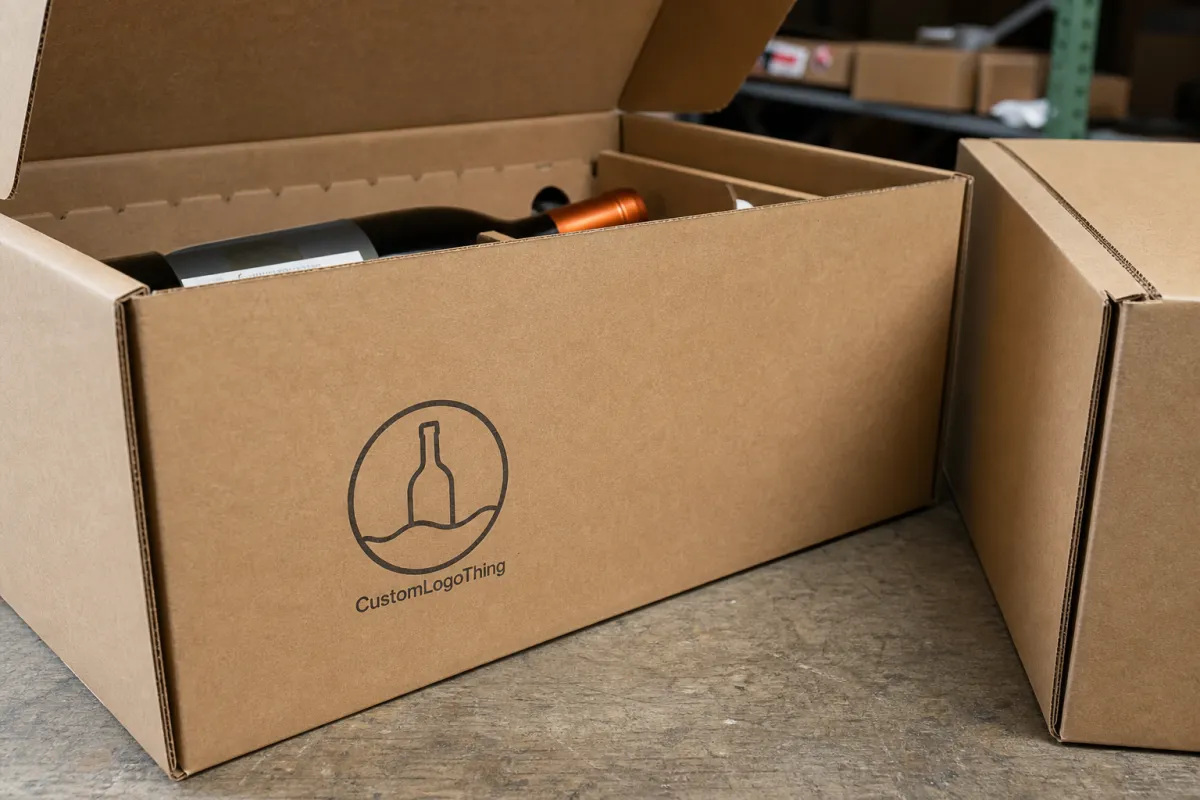
People often treat wine club mailer boxes cost like a simple carton purchase. It is not. A wine club shipper is a protection system. The outer box, the insert, the closure, and the board grade all work together. If one part is undersized or flimsy, the whole pack starts handing money back to the carrier through claims, replacements, and avoidable customer service time.
Repeat shipments magnify every packaging weakness. A one-time holiday box might survive awkward handling and still land well enough to pass. A monthly subscription box has to survive the same route again and again. Fit consistency matters. Compression strength matters. The way the bottle sits inside the insert matters. If the bottle can rattle, it can scuff, crack, or fail at the neck or shoulder, where a small impact turns into a much larger problem.
The box price is only one piece of wine club mailer boxes cost. If freight adds 12% to 18%, inserts add another layer, and a few percent of shipments break, the real spend climbs quickly. One reship can erase the savings from a cheaper spec. Add support time, replacement inventory, and a few lost renewals, and the economics get even harder to ignore.
A mailer that saves three cents but cracks one bottle is not a bargain. It is a delayed bill.
From a subscription brand’s point of view, the goal is not the lowest packaging quote. The goal is a stable packaging standard that protects margin in every cycle. That is why wine club mailer boxes cost should be measured by landed cost, not just unit price. A box at $1.35 that arrives intact may be cheaper overall than a $0.98 box that creates replacements and unhappy emails.
There is a brand side to this too. A damaged delivery does more than cost the wine. It weakens trust. That is harder to quantify, but every club operator knows what it looks like: more support tickets, lower renewal confidence, and more time spent explaining a problem that should have been prevented. Wine club mailer boxes cost should therefore be tied to retention as well as procurement.
A careful buyer will also ask whether the spec is standardized enough for repeat fulfillment. If the shipper works on one bottle batch and then changes behavior on the next label run, that is not a reliable standard. Subscription packaging should be boring in the best way: same fit, same closure, same result, every time the box leaves the warehouse. That kind of consistency is not flashy, but it is the difference between a packaging line that runs smoothly and one that is always kinda putting out fires.
Wine club mailer boxes cost: pricing ranges, MOQ, and quote drivers
Wine club mailer boxes cost moves mostly with five variables: bottle count, board grade, insert style, print coverage, and order quantity. Once those are defined, a quote becomes much clearer. Without them, vendors have to estimate, and estimates tend to come padded because they have to protect against missing details. Nobody loves that outcome, even if some suppliers pretend it is normal.
For a rough market view, small custom runs often land in these ranges:
- Single-bottle mailers: about $0.75 to $1.80 per unit at low to mid volume, depending on board and print.
- Two-bottle shippers: about $1.10 to $2.50 per unit, with stronger inserts and better stack performance pushing the number up.
- Three-bottle formats: about $1.60 to $3.20 per unit, especially if the insert needs tighter bottle control.
- Six-bottle club boxes: about $2.75 to $5.50 per unit when heavier board, larger format, and freight weight are part of the equation.
Those ranges are practical starting points, not fixed rules. Wine club mailer boxes cost changes quickly with print coverage and structure. A plain kraft mailer with a simple corrugated insert sits in one part of the market. A full-color premium shipper with a custom die-cut insert and specialty coating lands in another. If a vendor cannot explain the spread, ask them to break it down.
MOQ matters more than many buyers expect. If a supplier wants 1,000 units to run efficiently, then ordering 250 boxes means setup charges and tooling fees get spread across a much smaller batch. That pushes unit cost up. On the other side, a larger order often improves bulk pricing because the setup is amortized and production runs cleaner.
For example, a quote might look something like this:
| Build type | Typical MOQ | Estimated unit cost | Best for | Main tradeoff |
|---|---|---|---|---|
| Plain kraft mailer with corrugated insert | 500 to 1,000 | $0.85 to $1.40 | Budget-conscious clubs, short routes | Less room for print and premium presentation |
| Printed custom mailer with standard insert | 1,000 to 3,000 | $1.20 to $2.20 | Most subscription programs | Moderate setup charges and freight |
| Reinforced shipper with upgraded insert | 2,500 to 5,000 | $2.10 to $4.00 | Heavier bottles, longer shipping lanes | Higher MOQ and more material cost |
The lowest quote is not always the best answer. If a lighter build increases breakage by even 1% to 2%, wine club mailer boxes cost rises in the background through replacements. For many clubs, that extra damage wipes out the savings from the cheaper spec. A practical buyer compares unit cost against likely claims, not against a competitor’s headline price.
Ask for tiered pricing. Seriously. Get quotes at 1,000, 3,000, 5,000, and 10,000 units if your volume forecast supports it. That shows where the price actually bends. It also tells you how much room there is to grow before your packaging budget starts feeling tight. Wine club mailer boxes cost is easier to plan when you see the drop between tiers instead of one lonely number on a PDF.
Also check the line items that sneak up on buyers. Freight. Pallets. Samples. Custom inserts. Coatings. Specialty finishing. Even small tooling fees can change the math on a lower-MOQ order. A quote with no freight assumption is not a complete quote. It is a budget draft pretending to be final.
There is a reasonable split between budget and premium builds. A budget build may work well if the route is short, the bottles are standard 750 ml shapes, and the club is sending a lower-value allocation. A premium build makes more sense if bottles are heavy, necks are fragile, or the customer is paying for a luxury unboxing experience. That is why wine club mailer boxes cost should always be compared against bottle value and replacement risk.
Design choices that keep bottles safe in transit
The outer carton is only half the story. Wine club mailer boxes cost can look attractive until the insert turns out to do a poor job of controlling the bottle. A strong shell with a loose internal layout still fails, because bottles move. Movement creates impact. Impact creates broken glass. The math is painfully simple.
Single-bottle mailers are the simplest format, but even there the fit has to be deliberate. A bottle should sit snugly with enough clearance for the closure and shoulder, yet not so much room that it bangs around under carrier vibration. Two-bottle shippers need better separation between the bottles, since side-to-side contact is one of the most common failure points. Multi-bottle subscription boxes need even more discipline, because the load shifts as the package is handled, tipped, and stacked.
Common insert choices include corrugated dividers, molded pulp, and die-cut corrugated inserts. Each one has a place. Corrugated inserts are often cost-efficient and easy to spec. Molded pulp can feel more premium and can offer good cushioning, though it is not always the lowest-cost path. Die-cut corrugated inserts are useful when tighter bottle location and clean assembly matter. The right answer depends on bottle size, route, and budget.
Here is the short version: snug fit, bottle separation, crush resistance, closure security, and carrier-friendly handling matter more than decorative excess. A fancy surface does not rescue a weak insert. Some brands get stuck in presentation-first thinking and then wonder why the damage rate is worse than expected. That is not a packaging strategy. That is wishful thinking with a print budget.
Branding still matters, of course. The trick is to add it without compromising protection. One-color print can look sharp on kraft board. Full-bleed graphics work well on premium club boxes if the structure stays strong. Interior printing can create a nice reveal without changing outside stack performance. Label-ready surfaces are useful if your team wants fast pick-and-pack labeling without fighting glossy stock.
If you need a broader packaging program, our Custom Packaging Products page is a useful starting point for comparing structures. For non-bottle accessory shipments, our Custom Poly Mailers can handle flatter items without overbuilding the pack.
Simple often wins. A clean, durable shipper usually outperforms a flashy one if the goal is fewer replacements and fewer angry emails. Wine club mailer boxes cost should reflect that reality. Customers remember a safe arrival far longer than they remember a fancy surface that failed in transit.
Specs that affect fit, strength, and performance
If you want a useful quote, send usable measurements. Wine club mailer boxes cost gets fuzzy fast when the supplier has to guess the bottle size or carton dimensions. The right spec sheet should include bottle diameter, bottle height, closure type, insert clearance, and finished carton dimensions. Without those numbers, a quote is at best approximate and at worst wrong.
- Bottle diameter: needed to size the insert cavity correctly.
- Bottle height: affects top clearance and closure protection.
- Closure type: cork, screw cap, or wax finish can change the headspace needs.
- Insert clearance: too loose means movement; too tight means assembly problems.
- Finished dimensions: needed for pallet planning and carrier rate checks.
Board thickness and flute choice matter more than many buyers expect. A lighter single-wall board can work for short parcel routes and standard bottles. Heavier bottles, longer shipping routes, or rougher carrier handling often justify stronger board, a better flute profile, or reinforced construction. For multi-bottle shippers, that extra strength can reduce claims enough to justify the higher unit cost.
Common performance checks include edge crush, stacking strength, drop behavior, and resistance to typical parcel abuse. A packaging buyer does not need to turn into a lab technician, but a basic validation process helps a lot. If a supplier can describe how a sample behaves in transit testing, that usually beats a vague promise. For parcel profiling, many teams use ISTA-based testing as a baseline; see ISTA for the standard body, and FSC if material sourcing is part of your procurement requirements.
Print and finish specs also move wine club mailer boxes cost. Heavy ink coverage adds expense. Coatings add expense. Soft-touch or specialty surface treatment adds more. A plain one-color build may be the most practical option if the club is price-sensitive. A premium release with a stronger brand story may justify a higher spend because the packaging becomes part of the product experience.
Here is a practical rule: collect the specs first, then ask for the quote. That prevents vendors from padding the estimate around missing data. It also keeps the team from approving a packaging structure that looks fine on paper but fails once the real bottle shows up. Wine club mailer boxes cost becomes much clearer once the exact load is known.
This is usually where buyers save the most time. A complete brief reduces back-and-forth and gives you a price you can actually use. If the goal is to manage unit cost without sacrificing protection, the spec sheet is your friend. Not glamorous, just effective.
Process and timeline: from dieline to delivery
Good packaging projects have a boring rhythm, and that is a compliment. Wine club mailer boxes cost is easier to control when the workflow is predictable. The basic sequence is straightforward: gather specs, review the dieline, set up artwork, approve proofs, review samples, run production, pack pallets, and book freight. Skipping a step usually just moves the problem to a more expensive place.
- Spec gathering: collect bottle dimensions, count, finish type, and target quantity.
- Dieline review: confirm the structure fits the bottle and the shipping method.
- Artwork setup: make sure print areas, barcodes, and labels fit the layout.
- Proof approval: check copy, dimensions, and print placement before anything is made.
- Sample review: test the real pack with the real bottle, not a guess.
- Production: run the approved structure and inspect the output.
- Freight booking: confirm pallet count, warehouse receiving rules, and transit timing.
The biggest delay points are easy to predict. Missing bottle dimensions create a bad first quote. Last-minute artwork changes slow the proof cycle. Approving a design before testing a sample often leads to rework. None of that is mysterious. It usually happens because teams get busy and move too fast. Wine club mailer boxes cost goes up when the process gets sloppy, because every correction takes time and usually money.
Timing depends on complexity. Simple repeat orders can move faster because the structure is already approved. A straightforward reprint might be ready in roughly 10 to 15 business days after proof approval, though that still depends on current capacity and freight booking. A new custom structure, especially one with a printed interior or a specialty insert, may need 15 to 25 business days or more. If sample approval is required, add time for that too.
Transit time is a separate question. Pallet count, lane, and warehouse receiving windows all affect delivery. A shipper leaving the factory is not the same as product sitting in your warehouse and ready to use. If a club renewal cycle is fixed, build in buffer time. Rushing a replacement order is usually the most expensive way to solve a packaging problem. Yes, the quote may arrive quickly. That does not mean the goods will.
One more practical point: approve the artwork only after the structure is locked. Reworking print after the dieline shifts is where costs start behaving badly. A good buying process keeps packaging, print, and logistics aligned. That is how wine club mailer boxes cost stays under control across multiple releases instead of ballooning every time marketing changes a label line.
For teams with a recurring ship schedule, the best move is to treat packaging as a standing program rather than a one-off purchase. That way, wine club mailer boxes cost can be forecast with actual shipment cadence, not hope. And hope does not bill very accurately.
Why B2B buyers choose our wine club shipping boxes
B2B buyers usually want the same thing: fewer surprises. That is the real selling point. Wine club mailer boxes cost only stays manageable if the supplier understands repeat shipment economics, not just one-off print jobs. A good packaging partner should care about fit consistency, realistic MOQ, and whether the spec is actually appropriate for the bottles being shipped.
That is where direct communication matters. Buyers do not need a generic script about quality. They need answers on structure, print, and price. If a box is overbuilt, say so. If it is underbuilt, say so. Honest feedback helps teams avoid paying for unnecessary board or, worse, paying twice after a failure. Clear quoting also matters because it keeps setup charges and tooling fees visible instead of hiding them in the margins of the estimate.
We also see a lot of value in samples and artwork checks. A sample tells you whether the bottle fits, whether the closure has enough room, and whether the neck is exposed to damage. Artwork checks catch the simple mistakes that turn into production delays. That kind of support saves time, and time is part of wine club mailer boxes cost whether procurement wants to admit it or not.
If your packaging program goes beyond wine, our Custom Packaging Products range can help keep the rest of the subscription kit organized. If you ship inserts, notes, or lightweight add-ons in parallel with the club box, pairing the right mailer with a lighter secondary pack like Custom Poly Mailers can keep the overall shipping budget cleaner.
Most importantly, the right partner should help you avoid overbuying. A huge order is not automatically smart. If your forecast is uncertain, it may be better to start with a manageable volume, validate the structure, and scale once the damage rate and renewal pattern are clear. That keeps wine club mailer boxes cost aligned with actual demand instead of an optimistic spreadsheet.
For club programs, the best outcome is simple: fewer breakages, fewer replacements, and less time wasted correcting packaging mistakes. That is not flashy. It is just good buying.
Next steps to get an accurate quote for wine club mailer boxes cost
If you want a quote that is actually usable, start with the basics. Bottle count. Bottle dimensions. Ship frequency. Target quantity. Print needs. Delivery location. That is the minimum information needed to keep wine club mailer boxes cost from drifting into guesswork. The more precise the brief, the better the quote.
It also helps to share your volume forecast in tiers. If you know the club will ship 1,500 units now but may grow to 4,000 next cycle, say that. A tiered quote shows you where bulk pricing gets better and whether the MOQ is helping or hurting your budget. It also makes the unit cost comparison much more honest.
Before final production, order a sample or prototype. Do not skip this. A live sample tells you if the bottle rattles, if the closure clears the insert, if the box closes squarely, and whether the unboxing feels right for the brand. That is the cheapest place to catch a mistake. Wine club mailer boxes cost climbs fastest after production starts, not before.
Approve the structure first, then the artwork. That sequence avoids rework and protects the schedule. If you lock the design before validating fit, you are paying to solve a problem twice. I have seen enough packaging budgets to say this plainly: a little discipline here saves a lot of money later.
If you are building the next order now, send the bottle count, target landed cost, expected ship date, and any packaging constraints. Be direct about what you need. The fastest way to get a real answer on wine club mailer boxes cost is to give the spec team the numbers they need, not a vague description and a prayer.
What drives wine club mailer box pricing the most?
The biggest drivers are bottle count, board strength, insert style, print coverage, and order quantity. Freight and sample costs can shift the final number more than many buyers expect, especially on smaller runs where setup charges are spread across fewer units.
How much do custom wine mailers usually cost at lower MOQ?
Lower MOQ usually means a higher unit price because tooling fees and setup charges are divided across fewer boxes. For a custom build, it is smart to ask for tiered pricing so you can see how wine club mailer boxes cost changes at 1,000, 3,000, and 5,000 units.
Do I need a custom insert for wine club shipping boxes?
If you want consistent protection, usually yes. The insert controls bottle movement, and bottle movement is what causes a lot of the damage. The right insert depends on bottle diameter, bottle height, and whether you are shipping one bottle, two bottles, or multiple bottles per order.
How long does production take for a custom wine club mailer order?
Timing depends on structure complexity, artwork approval, sample requests, and current production load. Simple repeat orders are faster. New custom builds usually need more time for proofing and validation, and that has to be baked into the club schedule before the ship date gets uncomfortably close.
What specs should I send to get an accurate quote for wine club mailers?
Send bottle dimensions, bottle count, target quantity, print requirements, ship-to location, and any packaging constraints. If you already have a target landed cost, include that too. It helps narrow the structure fast and keeps wine club mailer boxes cost anchored to something real instead of a vague estimate.
Choose the box around the bottle, not around the spreadsheet. If you lock in the right structure, validate it with a real sample, and quote it with complete specs, wine club mailer boxes cost stays predictable instead of turning into a monthly surprise. That is the practical move, and it is the one that usually saves money in the long run.