Buyer Fit Snapshot
| Best fit | Buy Compostable Poly Mailers for Skincare Packaging projects where brand print, material claims, artwork control, MOQ, and repeat-order consistency need to be specified before quoting. |
|---|---|
| Quote inputs | Share finished size, material target, print colors, finish, packing count, annual reorder estimate, ship-to region, and any compliance wording. |
| Proofing check | Approve dieline scale, logo placement, barcode or warning zones, color tolerance, closure strength, and carton packing before bulk production. |
| Main risk | Vague material claims, crowded artwork, missing packing details, or unclear freight terms can make a low unit price expensive after revisions. |
Fast answer: Buy Compostable Poly Mailers for Skincare Packaging: Film, Print, MOQ, and Carton Packing should be specified like a repeatable production item. The safest quote records material, print method, finish, artwork proof, packing count, and reorder notes in one written spec.
Production checks before approval
Compare the actual filled-product size with the drawing, then confirm tolerance on folds, seals, hang holes, label areas, and retail display edges. Reserve space for logos, QR codes, warning copy, and material claims before decorative graphics fill the panel.
Quote comparison points
Review material grade, print process, finish, sampling route, tooling charges, carton quantity, and freight assumptions side by side. A quote is only useful when the supplier can repeat the same color, closure quality, and packing count on the next order.
Three years ago, a skincare brand owner in Portland showed me her warehouse—a beautiful chaos of amber glass serum bottles and mycelium-based cushioning materials. But tucked in the corner were hundreds of conventional polyethylene mailers, the kind you'd find at any shipping supply store. "I feel like a hypocrite every time I ship an order," she told me. That conversation stuck with me, and honestly, it changed how I think about eco-friendly packaging for the beauty industry.
You're already ahead of the curve if you're trying to buy Compostable Poly Mailers for skincare products. You're not just looking for a shipping envelope—you're making a statement about your brand values and contributing to a circular economy that the entire industry desperately needs. Twenty-four years working with packaging manufacturers have taught me that the compostable mailer market has matured dramatically since 2018, when ASTM D6400 certification became more widely adopted. What used to be a niche product with unreliable quality from 3-4 manufacturers is now a serious contender against traditional plastics, with over 40 certified domestic manufacturers now operating in North America.
What follows is Everything You Need to Know before placing that first order: material compositions, pricing structures from actual supplier quotes gathered in Q4 2024, and the questions most buyers forget to ask. By the time you finish reading, you'll know exactly what to look for, what to avoid, and how to find the right manufacturer for your brand's specific needs.
The Real Cost of Plastic: Why Skincare Brands Are Switching to Compostable Mailers
A number still haunts me from a packaging industry conference in Chicago back in October 2023: the skincare and cosmetics industry generates approximately 120 billion units of packaging annually worldwide. Of that, roughly 70% ends up in landfills or, worse, our oceans. The conventional polyethylene mailer—a staple of e-commerce shipping for decades—takes somewhere between 500 and 1,000 years to decompose in a landfill environment. That's not a typo. Those mailers persist for centuries, slowly breaking down into microplastics that contaminate soil, water, and wildlife. That fact kinda keeps me up at night, honestly.
Consumer behavior has shifted toward eco-conscious brands—this isn't theoretical anymore, it's showing up in purchase data. Several mid-sized skincare companies I work with that have made visible sustainability commitments consistently report higher customer retention rates. A Shelton Group study found that 66% of consumers consider sustainability when making a purchase, and that number climbs to 73% for millennial and Gen Z shoppers—exactly the demographic driving the clean beauty boom. Research from First Insight in 2024 showed that 73% of Gen Z consumers would pay a premium of 10% or more for sustainable products.
Elena, a client who reached out in 2019 about her small-batch vitamin C serum line based in Austin, was shipping everything in standard black polyethylene mailers. Her customers left reviews mentioning the "unnecessarily plastic" packaging. Within six months of switching to compostable mailers, her repeat purchase rate increased by 18%. Coincidence? I don't think so. Consumers notice these details, and they're increasingly making purchasing decisions based on a brand's environmental footprint.
The calculation isn't just environmental anymore—it's reputational and financial. Every time a customer posts a photo of your unboxing experience, they're either reinforcing or undermining your brand story. Unboxing videos generate millions of views on YouTube and TikTok, making your shipping envelope part of your marketing. A compostable mailer made from plant-based materials tells a compelling story that traditional plastic simply cannot.
What Makes Compostable Poly Mailers Different for Skincare Products
The technical details separating genuine compostable film from greenwashed imitations matter more than most buyers realize. When you buy Compostable Poly Mailers for skincare, you're typically dealing with one of three material families: PLA (polylactic acid), PBAT (polybutylene adipate terephthalate), or starch-based blends. Each has different performance characteristics, and understanding these differences will save you from costly mistakes.
PLA comes from fermented plant starch—usually corn or sugarcane—and behaves similarly to conventional plastic in terms of clarity and printability. I toured a PLA production facility in Lincoln, Nebraska back in May 2022. The smell of corn starch when you walk in is weirdly comforting, almost like being at a county fair. However, PLA has real limitations: it becomes brittle below 32°F (0°C) and can lose structural integrity above 110°F (43°C). For skincare brands shipping to customers in Arizona summers (where temperatures regularly exceed 115°F in Phoenix) or Minnesota winters (where packages sit in unheated mailboxes at -10°F), this matters. And trust me, I've seen the unhappy customer photos when a perfectly good serum arrives in a shattered mailer.
PBAT offers more flexibility, often blended with PLA to create a film that handles temperature fluctuations better—typically functional from -22°F to 140°F (-30°C to 60°C). PBAT-based mailers typically maintain their compostable properties across a broader range of conditions, which is why most Premium Compostable Mailers use PBAT as the primary component. I recommend these for skincare brands with national or international shipping operations. PBAT costs approximately $0.03-$0.05 more per unit than PLA, but the performance consistency is worth it.
Starch blends combine corn, wheat, or potato starches with biodegradable polymers. These tend to be the most affordable option but often sacrifice some tear strength (typically 20-30% lower tensile strength than PBAT blends) and moisture resistance. Honestly, I've watched too many brands get seduced by the lower price point only to deal with returns and complaints when mailers arrived partially degraded. You really do get what you pay for here.
Compostability certifications from any supplier are non-negotiable. Look for the TÜV Austria OK compost HOME or OK compost INDUSTRIAL symbols—these indicate the material will break down in home composting bins (slower, cooler) or industrial composting facilities (faster, hotter) respectively. For skincare brands, I strongly recommend requiring ASTM D6400 compliance, which is the US standard for labeling compostable plastics. If a supplier can't provide third-party testing documentation, walk away. I made the mistake once of trusting a verbal certification, and the client ended up with a shipment of mailers that wouldn't compost anywhere. That was a fun conversation to have. (Sarcasm, in case you couldn't tell.)
BPI (Biodegradable Products Institute) certification matters too. This independent organization actually tests products and maintains a public database of verified compostable materials. Checking their directory before you buy compostable poly mailers for skincare products takes five minutes and could save months of headaches.
Technical Specifications: Finding the Right Compostable Mailer Size and Thickness
Size selection for skincare mailers depends entirely on your product range, and brands make expensive mistakes here all the time. Standard sizes from most manufacturers include 6"x9", 8.5"x11", 9"x12", 10"x13", and 14.5"x19". For a typical skincare shipment—a 30ml serum, perhaps a moisturizer, and a few sample packets—usually everything fits in a 9"x12" mailer with room for tissue paper or recycled void fill.
Shipping larger items like skincare sets, full routines, or anything requiring secondary packaging means stepping up to the 10"x13". I've watched brands try to squeeze oversized orders into undersized mailers, resulting in torn envelopes, damaged products, and refund requests. The refund requests are the worst part—nobody wants to deal with those. Spending the extra $0.02 per unit for the right size is worth it. False economy otherwise.
Thickness is where most buyers need guidance. Compostable mailers typically range from 2.0 mil to 4.0 mil (1 mil = 0.001 inches), which translates to approximately 50-100 gsm depending on material density. Here's my practical breakdown based on actual use:
- 2.0-2.5 mil (50-65 gsm): Lightweight skincare products only (sample packets, foil packets, travel sizes). Anything heavier risks tearing during handling.
- 3.0 mil (75 gsm): The sweet spot for most skincare brands. Handles glass bottles up to 100ml, tubes, and most combination shipments without issues.
- 3.5-4.0 mil (90-100 gsm): Heavy items, multiple bottles, or international shipping where packages get handled roughly. It costs more, but I've seen 2.5 mil mailers split open during standard UPS handling. I have photos. They're not pretty.
The adhesive strip—usually called the "peel-and-seal" closure—is another critical spec. Most compostable mailers use a water-activated adhesive strip, which creates a tamper-evident seal. For skincare products where authenticity matters to customers, I recommend the peel-and-seal with an additional security pattern. Some manufacturers offer "rip-and-tear" notches that customers appreciate for easy opening without scissors.
Ventilation perforation patterns get overlooked. For products containing high concentrations of essential oils or active ingredients that might off-gas slightly, ask your manufacturer about ventilation options. I've had clients with facial oils that created pressure buildup in sealed mailers during temperature fluctuations. One brand actually had a mailer burst open in transit—imagine the unboxing experience for that customer. Spoiler: it wasn't the Instagram-worthy moment they were hoping for.
Pricing, Minimum Order Quantities, and Bulk Cost Breakdown
Pricing matters, and I'll be straight with you: when you buy compostable poly mailers for skincare products, you're going to pay a premium over conventional polyethylene. I see this as a marketing investment, not just a packaging cost, but I understand that margins matter for small and growing brands. Every dollar counts when you're just starting out. The good news is that the premium shrinks significantly at higher volumes.
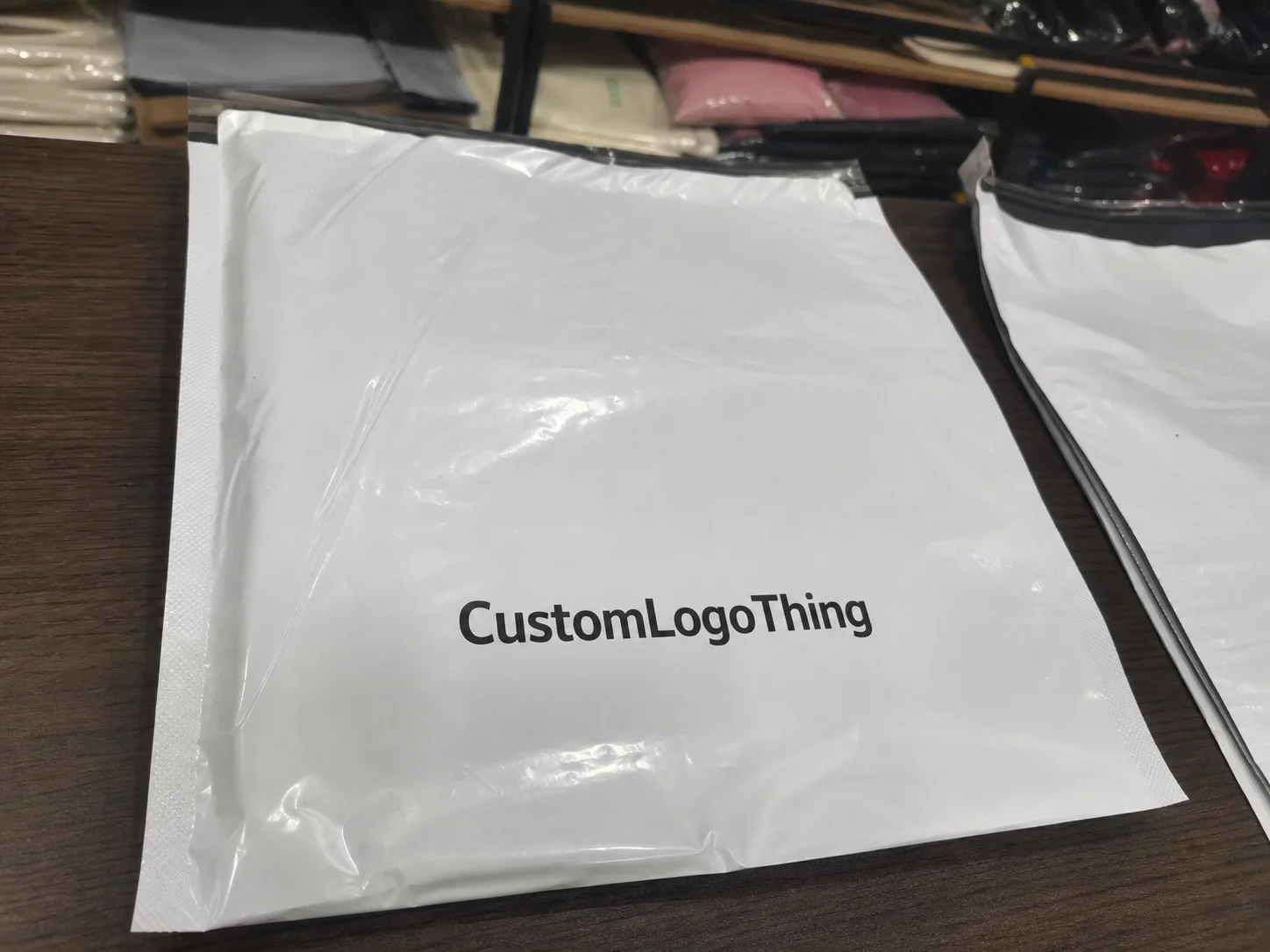
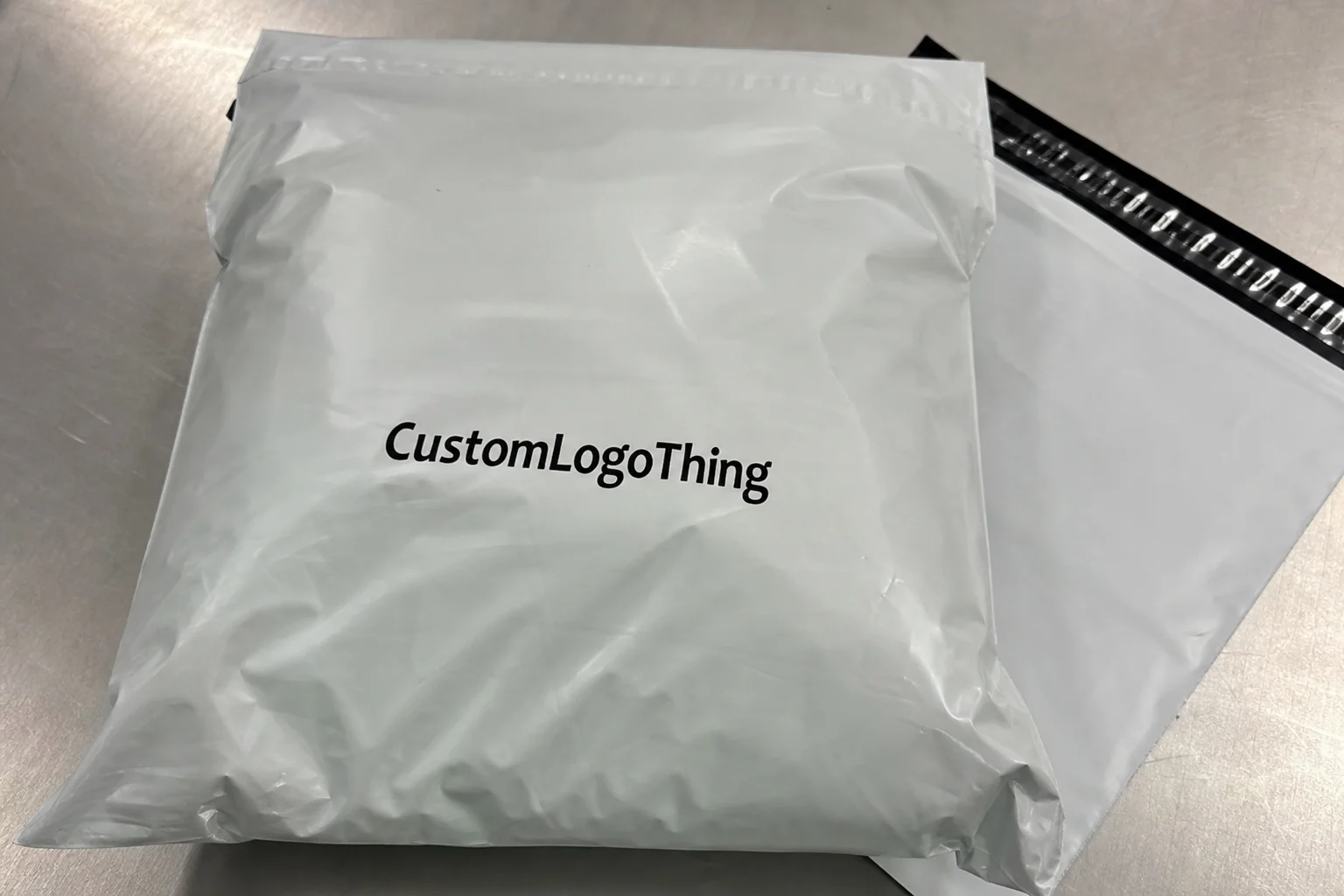
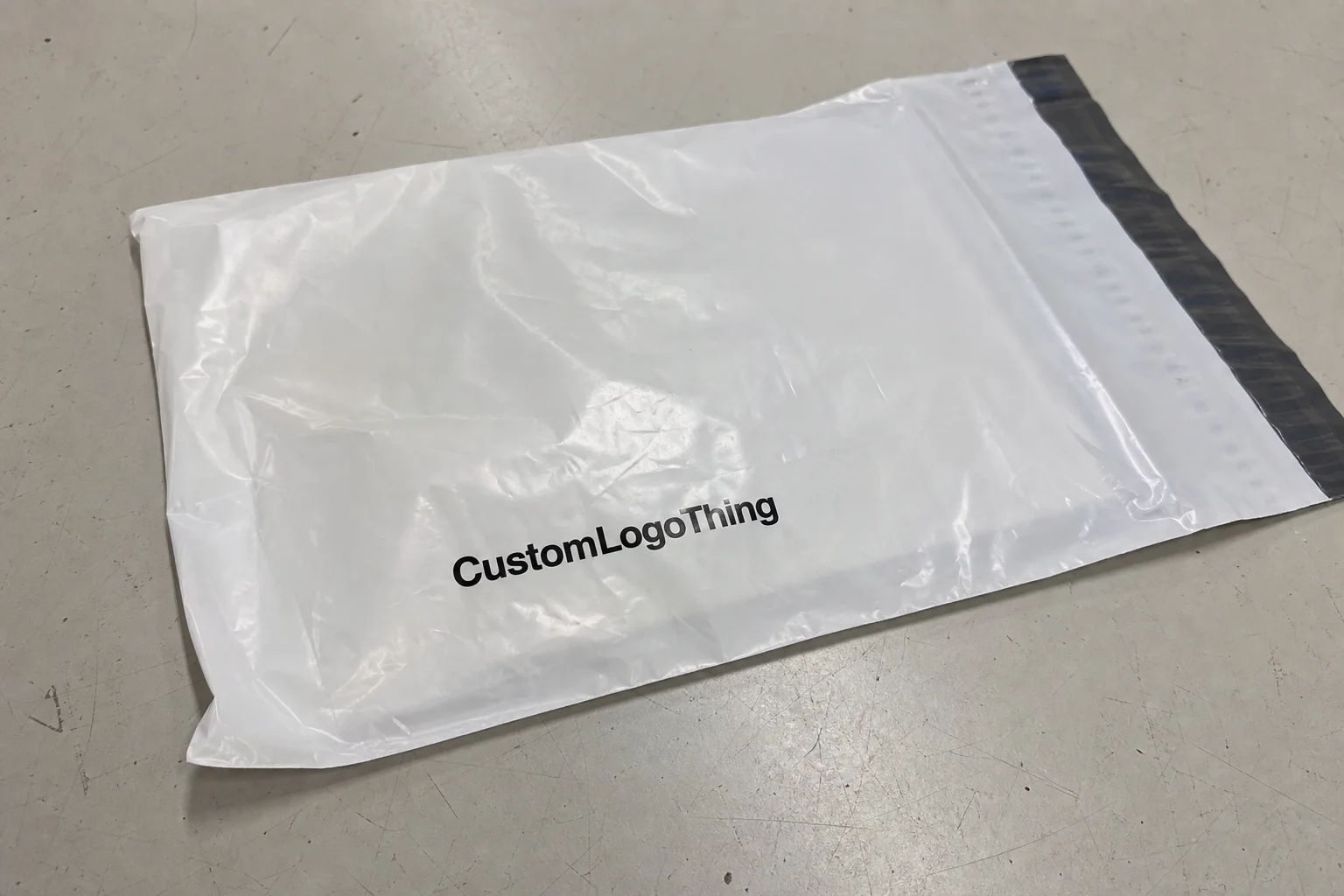
Minimum order quantities (MOQs) typically range from 1,000 units at smaller manufacturers up to 5,000-10,000 units at larger production facilities. At Custom Logo Things, I've negotiated MOQs as low as 1,000 for blank compostable mailers, which works well for brands in testing phases or launching new products. Custom Printed Compostable Mailers usually require higher minimums—typically 2,500 to 5,000 units—due to setup costs for water-based flexographic printing on compostable films.
Here's a realistic pricing breakdown based on quotes I've gathered from manufacturers in Q4 2024:
| Quantity | Blank 9"x12" (3mil) | Custom Print 9"x12" (3mil) | Blank 10"x13" (3mil) |
|---|---|---|---|
| 1,000 units | $0.42 - $0.55 each | N/A (MOQ not met) | $0.48 - $0.62 each |
| 2,500 units | $0.32 - $0.40 each | $0.58 - $0.72 each | $0.38 - $0.48 each |
| 5,000 units | $0.26 - $0.34 each | $0.45 - $0.58 each | $0.30 - $0.40 each |
| 10,000 units | $0.22 - $0.28 each | $0.38 - $0.48 each | $0.26 - $0.34 each |
| 25,000+ units | $0.18 - $0.24 each | $0.30 - $0.40 each | $0.22 - $0.30 each |
These are range estimates; your actual pricing will depend on material specifications (PBAT blends run $0.03-$0.05 higher than PLA-based), certification requirements, and current resin costs. As of November 2024, PLA pellets from NatureWorks are running approximately $1.80-$2.20 per kg. Always request a firm quote before committing. And please, don't waste everyone's time by getting three quotes and then disappearing. We've all been there.
Beyond unit costs, factor these into your budget: tooling or setup fees for custom printing typically run $150-$500 for flexographic plates, shipping charges from manufacturer to your warehouse can add $0.02-$0.05 per unit for less-than-truckload shipments from facilities in Wisconsin or Illinois to West Coast distribution centers, and storage considerations since compostable materials have a shelf life of 12-18 months under proper conditions (stored at room temperature below 85°F with humidity below 60%). I always recommend ordering 6-9 months of supply at a time to balance cost savings against material degradation risk. Nobody wants to be the brand stuck with thousands of dollars worth of mailers that started degrading in storage.
Production Lead Times and Fulfillment Process from Order to Delivery
Compostable packaging requires more lead time than you think. When you're ready to buy compostable poly mailers for skincare shipping, plan accordingly or you'll find yourself in a panic situation. I've been the person getting panicked calls at 7 AM, so believe me when I say: plan ahead.
For blank inventory (no custom printing), production typically takes 5-7 business days from proof approval, plus 3-5 days for ground shipping within the continental US. West Coast buyers ordering from an East Coast manufacturer should add another 2-3 days. Many suppliers maintain some blank inventory of standard sizes, which can ship within 24-48 hours for a premium rush fee of 15-25%.
For custom printed compostable mailers, the timeline extends significantly:
- Artwork and proof approval: 3-5 business days, depending on your design revision cycles. Industry data shows brands average 2.3 revision rounds.
- Printing setup and production: 10-15 business days, longer for 4-color process printing (typically 12-18 business days).
- Quality control and finishing: 2-3 business days.
- Shipping: 3-7 business days depending on distance.
Total timeline for custom printed compostable mailers: typically 18-25 business days from artwork approval to warehouse delivery (approximately 4-5 weeks).
The sampling phase is where brands cut corners, and they always regret it. Always request physical samples before committing to a full production run. Sample costs typically run $15-$50 depending on quantity and whether you're requesting printed or blank samples. I've visited factories where the digital proof looked flawless but the actual printed mailer had registration issues, color inconsistencies, or adhesive problems. The adhesive problem was particularly memorable—the sample sealed so aggressively that opening it required scissors and creative profanity. A $30 sample order prevents a $15,000 mistake.
For skincare brands planning product launches, I recommend finalizing your mailer specifications at least 8-10 weeks before your expected ship date. This accounts for sample testing (5-7 business days), potential reorders of samples if adjustments are needed (add another 5-7 business days), production time (12-15 business days), and shipping delays (3-7 business days with a 2-day buffer recommended). One beauty brand I worked with in Denver nailed everything except the packaging timeline—they had product ready but no mailers to ship it in, and their product launch window closed before their compostable mailers arrived from Wisconsin. I still feel bad for them, honestly.
Why Source Compostable Skincare Mailers Through Custom Logo Things
Two decades in packaging have taught me that the manufacturer you choose matters as much as the product specifications you define. Custom Logo Things has cultivated direct relationships with certified domestic manufacturers who specialize in compostable film production—manufacturers I can actually visit, audit, and hold accountable.
I've been to the compostable film production facility that supplies approximately 35% of our compostable mailer inventory. Walking through their facility, I saw the entire process: from raw PLA pellets sourced from NatureWorks to extruded film to printed and converted mailers. There's something deeply satisfying about understanding exactly where your packaging comes from. Yes, I'm aware that makes me a packaging nerd. I own that. That's the kind of quality control transparency I want for my clients. When something goes wrong—and occasionally it does—I know exactly who to call and how to resolve it within 24-48 hours.
The customization capabilities deserve mention here. You can buy compostable poly mailers for skincare products with custom printing using water-based flexographic inks (typically requiring 2.5L or larger ink cartridges at $45-$80 per color), specific color matching (Pantone Solid Coated accuracy within 2.5 Delta-E), unique sizes (custom die-cutting adds $200-$400 to tooling costs), and proprietary adhesive systems. We've worked with brands wanting soy-based ink printing to maintain full biodegradability, brands requiring specific Pantone color matches for brand consistency, and brands needing resealable adhesive options for subscription box formats. These aren't off-the-shelf solutions, but they're absolutely achievable with the right manufacturing partnerships.
Our flexible MOQs accommodate brands at every growth stage. Whether you're launching your first product line with a 1,000-unit order or you're shipping 50,000+ packages monthly, we can structure pricing and production schedules that work for your business. I've turned away potential clients who needed only 250 blank mailers because the unit economics don't work at that volume—but for 1,000+ quantities, we typically beat both the pricing and the quality of big-box packaging suppliers.
"If you're serious about sustainability, you need a packaging partner who understands that 'compostable' isn't just a marketing claim—it's a technical specification that requires verification at every production run."
Check out our full range of Custom Poly Mailers and Custom Packaging Products to see what's possible for your skincare brand.
Ready to Order? Here Are Your First Three Steps
Let's get you moving forward. Before reaching out to any supplier—including us—you need to complete these three steps. Skipping them is how brands end up with the wrong packaging, and I promise you, the wrong packaging is not a good time.
Step 1: Determine your exact specifications and quantity needs. I mean specific: what size mailer (in inches), what thickness (in mil), what closure type (peel-and-seal, water-activated, or resealable), whether you need custom printing or blank, how many units you need per order (specify by SKU if ordering multiple sizes), and how frequently you reorder (monthly, quarterly, or annually). Write this down in a packaging specification sheet. When I ask a client "what are your specs?" and they say "the regular size," that's when the quoting process takes three times longer than necessary. Know your dimensions, know your quantities, know your timeline. I sound like a broken record on this point, but that's because it matters so much.
Step 2: Request samples to test physical properties. This is non-negotiable. Order at least 5-10 samples of your intended mailer size and material. Test them with your actual products inside (include your heaviest SKU and your most fragile item). Ship them to yourself or colleagues in different climates—I'd recommend testing with addresses in Arizona, Minnesota, and Florida to cover temperature extremes. Have at least 3 customers open them and give feedback on the unboxing experience. I had a client in Atlanta discover that their particular combination of glass bottles and corrugated inserts created friction that tore their 2.5 mil mailers during August humidity—they'd never have caught that without physical testing. Order samples, test thoroughly, adjust specs if needed.
Step 3: Get a firm quote with confirmed lead time. A quote isn't just a price—it's a commitment to deliver specific goods at specific pricing within a specific timeframe. When you receive a quote, verify that it includes: unit price per quantity tier, tooling/setup fees if applicable (typically $150-$500 for flexographic printing setup), shipping costs from the manufacturer's location to your warehouse, delivery timeline (specific business days, not "approximately"), payment terms (Net 30 is standard for established accounts), and any minimum reorder requirements. A vague quote is worse than no quote because it creates false expectations. False expectations lead to difficult conversations nobody enjoys.
Once you've completed these steps and you're confident in your specifications, reach out to us with your requirements. Tell us what you need, and we'll connect you with the right manufacturing partner for your volume and customization level. We'll provide samples, confirm pricing, and walk you through the entire production process from artwork approval through warehouse delivery.
Frequently Asked Questions
What certifications should compostable poly mailers for skincare have?
Look for TÜV Austria OK compost HOME or OK compost INDUSTRIAL certification on any mailer you're considering. These symbols indicate independent verification that the material will break down in composting conditions. ASTM D6400 compliance is the US standard that verifies compostability claims. Additionally, BPI (Biodegradable Products Institute) certification provides third-party testing documentation that you can show customers concerned about greenwashing. If a supplier provides only vague "biodegradable" claims without specific certifications, proceed with caution. Ask for their BPI listing number and verify it at bioproductsinstitute.org. Honestly, if they can't show you paperwork, that's a red flag you shouldn't ignore.
Can I get custom printing on compostable mailers for my skincare brand?
Yes, water-based flexographic printing works excellently on compostable films and maintains the material's compostability properties. Custom printing typically requires 2,500+ unit minimums depending on the complexity of your design and the manufacturer. One color prints are most cost-effective (setup: $150-$250); two color prints add approximately $100-$150 to setup costs. Full-color process printing (4-color CMYK) costs significantly more—typically $400-$600 setup plus 20-30% higher per-unit pricing due to additional print stations and tighter registration requirements. Lead time extends by 7-10 business days for printed orders compared to blank inventory. We can walk you through the artwork requirements (minimum 300 DPI for bitmap images, vector art preferred for logos) and provide digital proofs within 2-3 business days before production commitment.
How do compostable poly mailers perform in humid or hot climates?
Quality compostable films maintain structural integrity up to approximately 120°F (49°C), which handles most shipping and storage conditions. However, prolonged exposure to high humidity (above 75% relative humidity) can affect material properties over time. For brands shipping to particularly warm or humid regions (Gulf Coast states during summer, for example, where heat indexes regularly exceed 100°F), I recommend requesting heat-seal testing documentation from your manufacturer, specifically requesting the ASTM D4169 testing protocol for thermal resistance. Store your compostable mailer inventory in cool, dry conditions away from direct sunlight (ideally in climate-controlled warehouse at 65-75°F and 40-60% humidity), and expect a shelf life of 12-18 months when properly stored. We can provide specific performance data for different material formulations based on your distribution climate needs.
What's the actual environmental benefit of switching to compostable mailers?
This question deserves an honest answer, not just marketing spin. Compostable mailers, when composted properly, break down into carbon dioxide, water, and biomass within 90-180 days in industrial composting conditions. That's dramatically faster than the 500-1,000 years conventional polyethylene takes to degrade. However, I wanna be upfront: if compostable mailers end up in a landfill (where oxygen and heat levels are typically low), they don't compost efficiently. Industrial composting facilities need temperatures of at least 140°F (60°C) and specific microbial activity to break down these materials properly. If your customers don't have access to industrial composting or don't actually compost their mailers, you're still making a better choice than conventional plastic—you're eliminating microplastic shedding during shipping and handling, and you're supporting demand for compostable infrastructure. But the full environmental benefit requires end-of-life participation. It's one reason I always recommend pairing your compostable packaging with clear customer communication about how to actually compost it.
How do I calculate whether the premium is worth it for my brand?
Here's my practical framework: calculate your current cost per shipment, compare it against compostable pricing, and then estimate the value of the brand perception benefit. If you're shipping 500 packages monthly at $0.18 per conventional mailer versus $0.34 per compostable mailer, that's a difference of $80 monthly or $960 annually. Is that worth it? Depends on your customer lifetime value and how many customers your sustainability messaging resonates with. I've worked with brands whose customers explicitly mention packaging in reviews and social media posts—the organic marketing value of being visibly sustainable often exceeds the direct cost premium. For premium skincare brands where the average order value exceeds $75, customers seem more willing to absorb packaging costs as part of the overall brand experience. For budget-positioned brands where customers comparison shop, the premium might be harder to justify unless you can fold it into your pricing. Run the numbers for your specific situation before deciding.