A custom branded tote bag is one of the few packaging items that keeps working after the sale. It leaves the counter, rides into offices and gyms, shows up at farmers markets, and keeps a logo in circulation long after the original purchase is forgotten. That makes it closer to retail packaging with a second life than a simple carry bag.
The buying question is not whether the mockup looks clean. It is whether the tote supports package branding, handles the intended load, prints crisply, and lands at a unit cost that still leaves room for freight, fulfillment, and margin. If your team already evaluates Custom Packaging Products, custom printed boxes, and broader packaging design with care, this item deserves the same treatment.
Used well, a tote becomes practical media space. Used poorly, it becomes dead stock in a closet. The difference usually comes down to a few choices: material, size, imprint method, and how clearly the brief is written.
What a Custom Branded Tote Bag Actually Does for a Brand
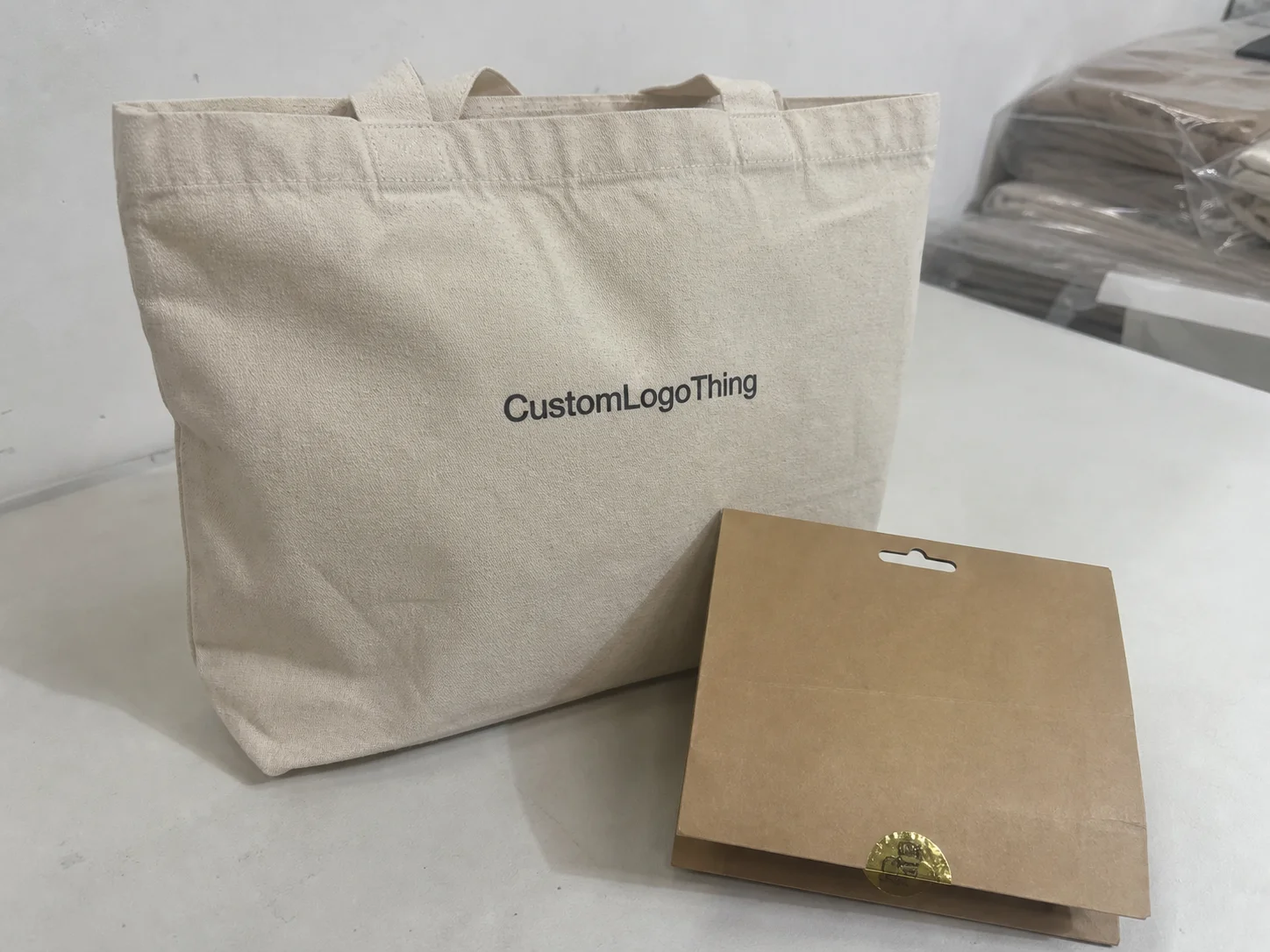
A tote is not just a bag with a logo on it. It is a reusable carry format built for events, retail handoff, employee kits, welcome packs, and gift-with-purchase programs. The logo matters, but repetition matters more. Every reuse creates another impression without another ad buy.
That is why a custom branded tote bag works best when the use case involves moderate weight, visible handling, and a realistic chance of repeat use. A lightweight poly bag can be fine for an expo handout. A heavier canvas tote makes more sense for premium retail packaging or for a brand that wants the bag to stay in circulation for months, not minutes.
The strongest tote programs sit at the intersection of utility and visibility. A bag that is too fragile gets discarded. A bag that is too expensive gets used too sparingly. The sweet spot is a structure that matches the items inside while still feeling deliberate enough to represent the brand well.
Here is the part many buyers miss: the tote is usually judged in public, not at the point of issue. Handle comfort, print placement, panel proportion, and color contrast matter more than internal teams expect. If the art looks cramped or the bag collapses awkwardly, the piece stops acting like branded packaging and starts acting like a compromise.
The cheapest tote is not always the cheapest order. A bag that tears, bleeds print, or fails in transit creates replacement cost, reputation damage, and another purchase cycle.
For Brands That Sell through retail packaging channels, event programs, or direct mail inserts, a tote can extend campaign life without complicating the format. For sustainability-minded teams, it can also support a more reusable product packaging strategy, provided the material claim is accurate and documented.
Two reference points help here. The ISTA standards matter when the bag is packed in cartons or shipped as part of a kit, because transit damage can erase any savings from a lower unit cost. Broader packaging guidance from packaging.org is useful when your team is aligning tote programs with wider branded packaging goals.
One more practical observation: the tote often sits alongside other components, not in isolation. If the carton feels premium and the insert is carefully written, a flimsy tote breaks the story. If the tote is sturdy and the rest of the pack is ordinary, the tote ends up carrying more brand weight than it should.
Material, Size, and Print Choices That Change the Result
Material sets the first impression and most of the cost structure. Nonwoven polypropylene is the common low-cost option for high-volume promotions. It is light, fast to produce, and practical for events where the tote is mostly a handoff vehicle rather than a long-term accessory. Cotton and canvas cost more, but they usually feel more premium and hold up better under repeated use. Recycled blends sit in the middle for brands that want a sustainability story without jumping straight to heavier woven goods.
Weight matters too. Buyers often focus on the fabric type and ignore the actual fabric weight, which is where a lot of quality differences show up. A thin cotton tote can look good in a sample and still feel underspecified in real use. A heavier canvas bag can survive months of carry, but the added weight can also raise freight and storage costs. The spec has to match the job.
Size matters more than most buyers think. A bag that is 13 x 15 inches with a shallow gusset may work for flat handouts or folded apparel. Once the contents include a catalog stack, bottle, or boxed product, the gusset depth becomes a functional spec, not a detail. Handle length matters too. Short handles feel tidy in retail. Longer shoulder-drop handles work better for event traffic and heavier loads.
Construction is where a tote either feels dependable or cheap. Look at seam reinforcement, handle stitch count, bottom support, and whether the top is open or zipped. A zipper adds cost, but it can be the right call for welcome kits, travel programs, and premium corporate gifting. If the tote is carrying items with edges or weight, a reinforced bottom panel is worth discussing before the proof is approved.
Print method should follow the artwork, not the other way around. Screen print is still the cleanest choice for bold logos, fewer colors, and strong contrast. Heat transfer is useful when the design has more detail or more color variation. Full-color methods can preserve artwork that would otherwise lose sharpness at distance, but they are not always the cheapest route for large runs. A good supplier should show where the cost rises, not just hand over a quote.
| Material option | Typical feel | Common use case | Indicative unit cost at 5,000 pieces |
|---|---|---|---|
| Nonwoven polypropylene | Lightweight, practical, economical | Events, promo handouts, mass distribution | $0.45-$0.95 |
| Cotton | Natural, softer hand feel | Retail, staff kits, repeat-use programs | $1.10-$2.20 |
| Canvas | Heavier, more premium | Merch, higher-end retail packaging | $1.80-$3.80 |
| Recycled blend | Modern, sustainability-forward | Brand programs with recycled-content messaging | $1.40-$3.00 |
The right choice is rarely the most expensive one. It is the one that matches load, use frequency, and brand position. If the tote is part of a premium program, the bag should feel like it belongs next to the rest of the product packaging, not like an afterthought.
How the Ordering Process Works From Artwork to Approval
The order flow is straightforward once the buyer defines the scope. Start with quantity, dimensions, artwork, material preference, delivery date, and shipping destination. Without those inputs, any quote is a guess. A supplier then turns that brief into a mockup that shows placement, scale, color count, and any limits created by seams, zippers, or gusset folds.
That proof is not a formality. It is the moment to catch mistakes before they become expensive. Copy that is too small to read, a logo that sits too close to an edge, or colors that drift from brand standards should all be addressed before production begins. A clean proof also helps internal teams avoid approval delays because everyone is reviewing the same version.
There are usually three checkpoints worth treating seriously:
- Digital proof to confirm layout, artwork size, and print placement.
- Sample or pre-production check when the order is large, time-sensitive, or visually sensitive.
- Final sign-off on construction, spelling, and shipment details.
Artwork is the hidden bottleneck in many tote orders. If the files are not print-ready, the production clock does not really start. Low-resolution logos, missing fonts, transparent backgrounds that do not convert well, and tiny type all create revision cycles. Color matching can also slow things down when a brand insists on precise Pantone behavior on a material that absorbs ink differently from paper.
Buyers should treat tote approval the same way they treat packaging design for Custom Printed Boxes. Once the file leaves the design team and enters production, assumptions turn into cost. Clarify the print method. Confirm the exact bag panel dimensions. Make sure the vendor knows whether the artwork is supposed to sit centered, lower-left, or full bleed.
If the tote is part of a larger kit, the order should be planned alongside the rest of the branded packaging. That reduces surprises later when the bag, insert, and retail display all have to arrive together. A late tote often forces a compromise somewhere else.
One detail worth checking is how the artwork behaves on the seam lines. Many good designs fail when the center graphic lands on a fold or where a gusset changes the visible area. If the vendor does not flag this, ask anyway. That one question can prevent a reprint.
Production Steps and Turnaround Expectations
Production moves through a sequence, and a delay at one stage affects everything after it. Material sourcing comes first. Then the panels are cut, printed, sewn or heat-finished, checked for quality, packed, and prepared for shipment. A factory can be fast and still lose time if a material is backordered or a print plate needs correction.
Simple runs with stock material and a one-color print often move faster than buyers expect. A realistic window is often 10 to 15 business days after proof approval, assuming the factory is not in peak congestion and the artwork is clean. Add more time for custom colors, special handles, complex imprints, or construction changes. Those details can push the job into the 20 to 35 business day range before freight.
Shipping can matter as much as manufacturing. Domestic freight is usually easier to forecast, but overseas transit introduces customs timing, port variation, and more room for seasonal disruption. If the totes are needed for a scheduled event, the safest move is to back-plan from the event date and leave room for both production and transit. A missed delivery is more damaging than a slightly higher unit price.
For buyers working in a regulated or audited environment, ask how cartons are packed, how shrink wrap is used, and whether the shipment can stand up to transit testing when needed. ISTA-aligned carton testing is not overkill if the tote order is traveling with other merch or high-value inserts. It is cheaper to catch failure on a lab bench than in distribution.
Seasonal demand changes lead time as well. A tote run ordered near a major trade show period may move slower than the same order placed in a quieter month. That is not an excuse. It is supply chain reality.
Sampling also deserves a realistic timeline. Even when the final product is simple, a sample may take a separate cycle if the fabric, handle, or print method is not already in stock. That is one reason buyers who want speed should lock artwork early and avoid last-minute design changes.
Pricing, MOQ, and Unit Cost Drivers
Pricing is a stack, not a single number. Material weight, bag size, print method, number of colors, finishing details, packaging, and freight all move the quote. Even the way the supplier counts cartons can change the final landed cost. Buyers who compare only headline prices usually miss the real spread.
MOQ is the other number that changes the conversation. Lower quantities usually cost more per unit because setup gets spread across fewer bags. Larger runs usually reduce unit cost, but only if the design is stable enough to justify the inventory. That is why tote buying should be tied to usage timing, not just to a discount threshold.
Setup fees are common, especially for screen print. They may be modest on a large run and annoying on a short run, but they are part of the math. Ask whether the quote includes one or multiple print positions, whether proofing is included, and whether packaging into retail cartons or bulk master cartons is extra.
| Quantity | Nonwoven tote | Cotton tote | What drives the difference |
|---|---|---|---|
| 500 pieces | $0.95-$1.80 | $1.80-$3.60 | Setup spread over fewer units, higher labor share |
| 2,500 pieces | $0.60-$1.10 | $1.30-$2.50 | Better efficiency, fewer setup penalties per unit |
| 5,000 pieces | $0.45-$0.95 | $1.10-$2.20 | Lower unit cost, but freight and storage still matter |
When comparing quotes, make sure the specs are actually identical. Same bag dimensions. Same material weight. Same print count. Same delivery location. Same packaging assumption. If one supplier quotes bulk packed and another quotes retail packed, the lower number is not a fair comparison.
That is also why a buyer should ask for the same level of detail they would expect on custom printed boxes or any other packaging purchase. A good supplier can explain where the cost sits. A sloppy one hides it inside vague wording.
Freight and storage deserve a separate line in the budget. A tote that looks inexpensive at the factory can become less attractive after warehouse handling, palletization, and final-mile delivery are included. The landed cost tells the truth. The unit price does not.
Common Mistakes That Create Reprints or Dead Stock
The most common mistake is choosing a tote that cannot actually carry what the brand intends to place inside it. A lightweight bag can look fine in a render and fail in the field once it is loaded with catalogs, bottles, boxed products, or heavier promotional kits. If the bag stretches, tears, or feels flimsy, the brand gets blamed even if the problem was a bad spec.
Artwork mistakes are just as expensive. Tiny type is hard to print cleanly on fabric. Too many colors increase setup and can muddy the result. Logos placed across seams or folds can distort once the bag is sewn or heat-finished. If the design depends on photographic detail, the buyer should check how much resolution the print method can actually hold.
Planning mistakes create the biggest waste. Ordering too early without a firm use case leads to dead stock that ages in storage. Ordering too late leaves no buffer for proof changes, production, or freight. A tote order is not difficult, but it is unforgiving when the timeline is vague.
Another problem is treating the tote as a separate purchase from the rest of the program. In reality, it should support the same package branding logic as the rest of the campaign. If the colors, tone, and material feel do not match the rest of the branded packaging, the whole presentation can feel pieced together.
One more subtle risk is sustainability language that moves ahead of the actual bill of materials. If the bag uses recycled content, say exactly how much and what part of the bag contains it. If the claim depends on an FSC-certified paper hangtag or insert, limit the claim to the paper component. Buyers get into trouble when marketing language outruns documentation.
Quality-control misses often show up only after the order is already packed. Common failures include uneven stitching, off-center prints, weak handle attachment, inconsistent color across cartons, and scuffing from poor bulk packing. None of those are dramatic on their own. Together, they create a tote that looks cheaper than it should.
For teams that want to compare the tote to other packaging formats, a review of Case Studies can help because it shows how different budgets and delivery needs change the final spec. That is usually where the learning happens: not in theory, but in the tradeoff between appearance, handling, and cost.
Expert Tips for a Cleaner Brief and Better Next Order
Start with end use. That sounds basic, but it is where the best briefs begin. What will the tote carry? How often will it be reused? Is it a retail handoff, a conference piece, a staff kit, or a premium gift? Once that answer is clear, the right size and construction usually follow without much debate.
Build the brief like a production document, not a wish list. Include the size target, material preference, print area, artwork files, quantity range, budget band, and deadline. If the bag needs to coordinate with other items in the kit, say that up front. The more specific the brief, the less time the supplier spends guessing and the less time your team spends revising proofs.
- Confirm the bag load before approving dimensions.
- Keep the print count as low as the design allows.
- Choose a material that fits the use case, not just the budget.
- Ask for a landed-cost view, not just a factory quote.
- Verify that the tote aligns with the rest of the packaging design.
For the best result, think about the tote as part of a larger product packaging system. It should complement the insert, the carton, the shelf display, and any custom printed boxes already in the program. That is how a bag stops being a standalone promotional item and starts acting like a deliberate brand asset.
Before you release the order, review the proof one more time, confirm the freight plan, and make sure the sample reflects the final intent. If there is any doubt, fix it before production starts. That is cheaper than reprints, and it protects the timeline.
A well-ordered custom branded tote bag is simple on the surface and strategic underneath. If the brief is clear, the material matches the load, and the print is handled with discipline, the bag earns its place in the program. If not, it becomes storage. The buying decision matters more than the bag size would suggest.
How do I choose the right size for a custom tote bag?
Match the dimensions to what the bag must hold, not to the logo size. Use a wider gusset for boxes, bottles, or folded apparel, and a slimmer profile for handouts and light retail items.
What is the difference between cotton and nonwoven tote bags?
Cotton usually feels more premium and is better suited to long-term reuse. Nonwoven polypropylene is typically lighter, faster to produce, and lower cost for high-volume promotions.
How many print colors should I use to keep custom tote bag costs down?
Fewer colors usually mean lower setup cost and cleaner production. A bold one- or two-color imprint often performs better than a crowded design on a small bag panel.
What MOQ should I expect for branded tote bags?
MOQ varies by material, print method, and factory setup. Ask for the threshold that changes unit cost so you can compare a smaller test run against a better-value larger order.
How long does a custom branded tote bag order usually take?
Simple orders move faster when artwork is ready and specs are standard. Add time for proofing, sampling, peak-season production, and shipping if the bags are coming from overseas.


