Why custom water bottle labels birthday tables feel more finished
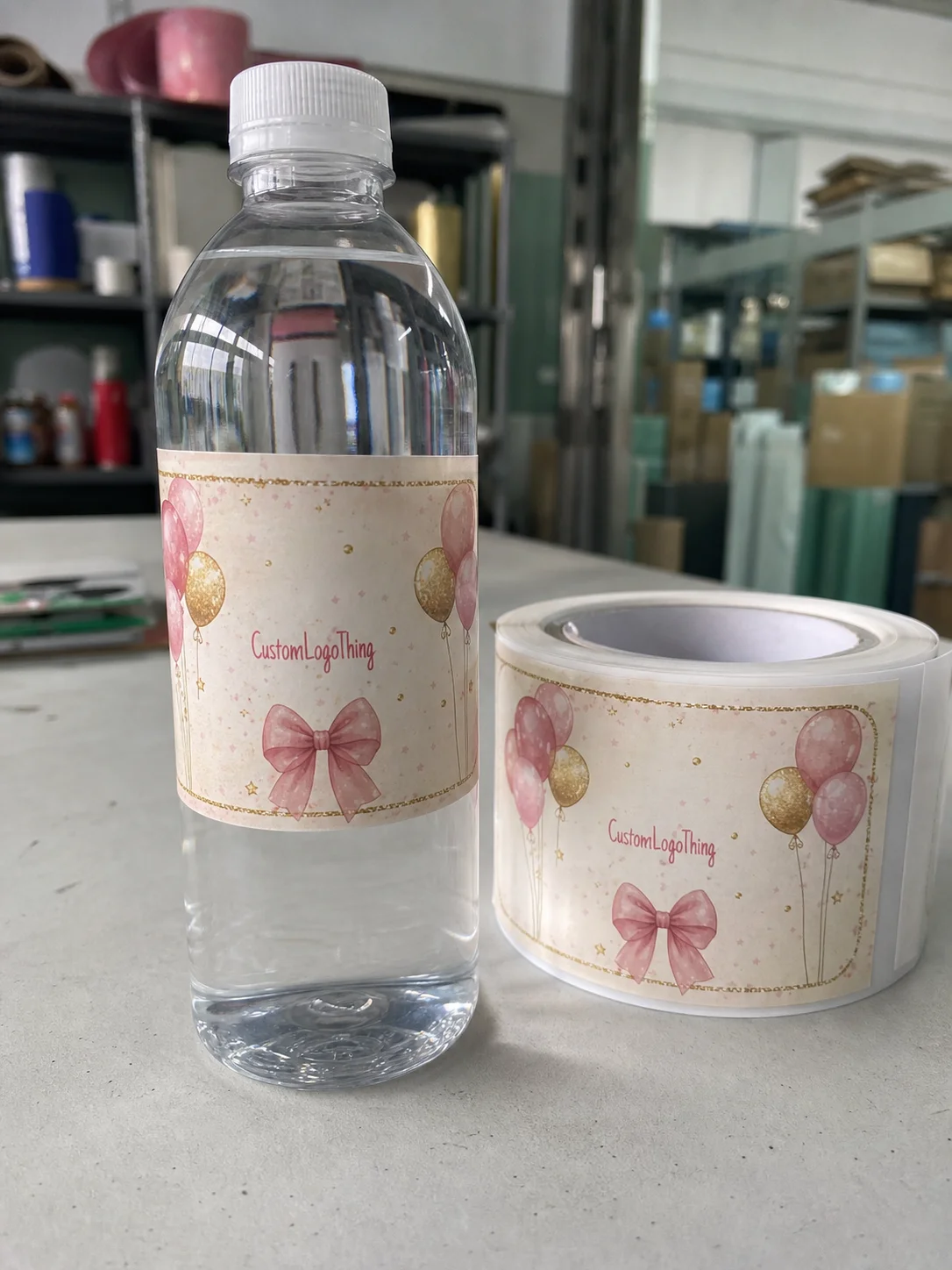
A plain water bottle is useful, but it rarely feels intentional. Add custom Water Bottle Labels birthday hosts choose for the event, and the bottle starts working as part of the table design instead of reading like store stock.
That matters because birthday tables are visual systems. Cake, favors, plates, balloons, and photos all compete for attention. A labeled bottle helps the setup feel coordinated, and it also makes drinks easier to identify when several guests set bottles down in the same area.
From a production standpoint, the label has a harder job than a favor tag. It stays visible, gets handled, and has to look clean in photos and in person. If the bottles are chilled, the material also has to survive condensation without curling or lifting.
There are three useful ways to think about the label:
- Decorative label: focused on theme, color, and visual impact.
- Identity label: includes the child’s name, age, date, or a short message.
- Functional wrap: sized to the bottle and built for handling and moisture.
If the bottles are only for display, a lighter material can work. If they will sit in coolers or on ice, the adhesive and face stock need to be rated for wet conditions. That is where Custom Labels & Tags move from decoration into a packaging spec.
The practical comparison is simple: a bottle label does for a birthday table what a clean printed carton does for retail packaging. The contents may be ordinary, but the presentation changes how people judge the whole setup.
Process and turnaround: from proof to delivery
The cleanest orders follow the same sequence: confirm bottle size, choose the label dimensions, submit artwork, review the proof, approve it, then move into print and shipping. Delays usually come from one weak link: a guessed measurement, missing bleed, or a file built for screen viewing instead of print.
A good proof should show trim, bleed, safe area, and seam placement. Without those details, it is harder to judge fit on a curved bottle and easier to miss an issue that only shows up after printing.
Standard production often falls around 12 to 15 business days after proof approval. Larger quantities, specialty finishes, and busy seasons can push that out. Rush production can shorten the calendar, but it leaves less room for art changes. Shipping still needs its own buffer.
Application time matters too. A label that takes only a few seconds longer per bottle becomes a real labor cost on a larger event. If there are 200 bottles and each one needs careful alignment, the task becomes assembly-line work, even on a kitchen table.
If the birthday order is part of a broader packaging set, keep the bottle labels in the same production queue as the rest of the event materials. Matching print files, finishes, and color references across Custom Packaging Products reduces the common problem of near-matches that look fine separately but inconsistent together.
Pricing, MOQ, and what actually changes the quote
Price is shaped by more than order count. Quantity matters, but so do label size, shape, material, finish, adhesive, and whether the design is a simple band or a full wrap. A short run usually costs more per piece because setup work gets spread across fewer labels. Larger runs lower the unit price, sometimes sharply.
For birthday projects, a common range for a mid-size run on a standard format sits around $0.18 to $0.28 per label. Smaller quantities are often higher, especially if the order uses waterproof stock, metallic ink, or a custom die-cut shape. That range is a budgeting reference, not a quote.
Minimum order quantity, or MOQ, is where small-party buyers often get surprised. A lower MOQ is convenient, but convenience usually costs more per label. A higher MOQ lowers the unit price, yet only makes sense if you can use the extras for sibling birthdays, school events, or future parties with the same look.
| Option | Typical Use | Approx. Unit Price | Cost Drivers |
|---|---|---|---|
| Short run, standard paper label | Small indoor parties, same-day display | $0.30-$0.60 | Setup, low quantity, basic finish |
| Mid-run, moisture-resistant label | Chilled bottles, most birthday tables | $0.18-$0.28 | Quantity, stock selection, adhesive type |
| Premium wrap with special finish | Photo-heavy events, coordinated packaging | $0.25-$0.45 | Metallics, custom shape, full coverage print |
Special features move the quote more than many buyers expect. Variable names add file prep and sorting logic. Waterproof or condensation-safe stock costs more than paper. A better cold-bottle adhesive adds to the bill, but it avoids the more expensive problem of labels peeling during the party.
A useful comparison is label-only pricing versus ordering a broader set of matching items such as snack stickers, favor seals, or insert cards. A bottle label can look inexpensive on its own, but the cost picture changes if the rest of the setup has to match it. In that case, one coordinated print plan often beats three separate vendor quotes.
Specs that keep labels smooth, durable, and readable
Good labels start with measurement, not design. Measure the bottle circumference, the available label height, and the seam location. Straight-sided bottles are forgiving. Tapered bottles are not. A few millimeters of curvature can create a wrinkle, a lifted edge, or a visible gap where the ends meet.
For chilled drinks, waterproof or condensation-resistant materials are the safer choice. Bottles sweat. That moisture weakens standard adhesives and can ripple paper before guests even sit down. If the bottles will go into coolers, sit on ice, or be handled outdoors, ask for a stock built for wet conditions.
Readability can fail in ways that are easy to miss on a screen. Tiny type disappears in a crowd scene. Low contrast looks soft under party lighting. Text placed too close to a seam gets split or warped when the wrap goes on. A label should be legible at a glance.
Adhesive choice matters just as much as print quality. Kids’ parties involve a lot of grabbing, turning, and setting bottles on damp tables. A label that holds fine in a dry room may fail in a cooler. Test one sheet first if the bottle is tapered, slim, textured, or unusually slick. The test costs far less than redoing an entire batch.
If the bottle will be cold, assume condensation will happen. Design for that first, decorate second.
These same habits carry over into broader packaging design decisions for school functions, holiday gifts, and retail-style event setups. The rule is consistent: substrate, adhesive, and finish have to match the environment. If they do not, the artwork gets blamed for a materials problem.
Step-by-step ordering checklist for a birthday batch
A birthday order moves faster when the basics are collected before pricing starts. Gather the bottle brand, bottle size, total quantity, exact wording, theme colors, and whether the labels are for table display or guest takeaways. That single pass usually prevents the back-and-forth that slows proofing.
- Identify the bottle - brand, size, and whether it is straight or tapered.
- Count the quantity - include extras for mistakes, samples, and last-minute additions.
- Define the use case - decorative table piece, guest favor, or cold-service label.
- Prepare artwork - name, age, date, colors, and any logo or icon.
- Review the proof - spelling, bleed, safe area, and seam placement.
- Approve and schedule - leave time for print, shipping, and application.
Proof review is where many jobs go wrong in quiet ways. Spelling is the obvious check, but the hidden problems are crop marks, narrow safe zones, low contrast, and graphics that sit too close to the edge. A file can look polished on a laptop and still fail on a wrapped bottle if the layout was not built for print.
If the same birthday theme may return next year, ask for a master file with editable text. That makes future changes faster and keeps the layout consistent. It also turns one good design into a reusable asset for siblings, school events, or matching party materials.
Ordering a sample or test sheet is worthwhile when the bottle shape is unusual, the finish matters, or the event will be photographed heavily. A test run shows whether the wrap sits flat, whether the color prints the way you expect, and whether the finish throws too much glare under the room lights.
Application is easiest when bottles are at room temperature and completely dry. A flat prep area helps. If bottles come straight from a refrigerator or cooler, wait for the condensation to settle before applying labels. That small pause often fixes more adhesion issues than any design tweak.
Common mistakes that cause peeling, wrinkling, or late delivery
The first mistake is measuring from memory. A bottle that looks like another bottle is not the same bottle. Even slight differences in shoulder shape, body width, or label panel height can expose a seam or create a wrinkle. Use the exact bottle that will appear at the event.
Design errors are equally common. Low-contrast text, too many small graphics, and critical copy crossing a seam all reduce performance. A label can be attractive and still be hard to read. For a birthday setting, a single strong visual anchor usually works better than multiple design ideas fighting for space.
Paper-only stock is another weak point. On chilled bottles, condensation can loosen the adhesive and distort the surface. The corners lift first, then the edges wrinkle, then the whole label starts to look tired. If the bottles will be cold, choose a stock rated for moisture and avoid guessing.
Late delivery usually comes from planning, not printing. When an order starts too close to the event date, there is no buffer for proof revisions, shipping delays, or a reprint if the file is off. That becomes especially risky when the birthday setup depends on multiple printed pieces, including labels, favors, or matching custom printed boxes. One delay can throw off the entire table plan.
The safest orders are not the flashiest ones. They are the ones with clear measurements, simple copy, and a deadline that leaves room for corrections. That is how the job stays controlled instead of turning into a scramble.
Expert tips for a sharper finish and easier reuse
Use one strong visual anchor. A name, an age, or a central icon is usually enough on a small bottle label. When too much text gets squeezed into a narrow format, the result looks busy and reads poorly from a few feet away.
Choose the finish with the room in mind. Matte reduces glare and photographs well under bright indoor lighting. Gloss can make colors punch harder, but it also reflects windows, candles, and overhead fixtures. The finish that looks right on screen may behave differently on a party table.
Keep one master file with editable text. If the same birthday theme returns, or if the design gets reused for a sibling, the layout can be updated without starting over. That saves time and keeps the packaging consistent across events.
For personalized orders, two versions help: one variable-data file for names and one clean bulk version without names. That lets you order a display set and a guest set without rebuilding the artwork each time. Small process choices like that matter when the order also includes favor pieces, snack packaging, and table labels.
Test the label under real lighting before approving the full run. A design can look sharp on a bright monitor and flat in a dining room. One printed sample in the actual space gives better information than a stack of mockups ever will.
Next steps before you request a quote
Before asking for pricing, gather the bottle dimensions, quantity, deadline, and artwork files. If those details arrive together, the quote is usually faster and more accurate. It also helps the printer confirm whether the wrap will fit the exact bottle style you plan to use.
Decide whether the labels are decorative only or durable enough for cold bottles, transport, and several hours of handling. That answer affects material choice, adhesive type, and finish. It can also change the price more than the artwork itself.
If the birthday date is close, ask about proof timing, sample options, and rush turnaround before you commit. A tight schedule can still work, but only if everyone knows the deadline from the start. Waiting until artwork is already in motion creates avoidable pressure.
For larger party setups, keep the bottle labels aligned with the rest of the order set. Matching tone, finish, and color across drink bottles, favor bags, and box packaging helps the whole event look deliberate.
A final pass on copy and measurements reduces the chance of rework, wasted material, and last-minute panic. It is not the exciting part of the process. It is the part that usually keeps the event looking polished.
What size should birthday water bottle labels be?
Measure the exact bottle circumference and label height rather than guessing from the bottle name. Leave room for the seam, any taper, and a small margin so the wrap sits flat. If the bottle shape is unusual, request a proof mockup before printing the full order.
Are custom water bottle labels waterproof for birthdays?
They can be, but only if the material and adhesive are designed for cold bottles and condensation. Ask for waterproof or moisture-resistant stock if the bottles will be iced, refrigerated, or used outdoors. Standard paper labels are more likely to wrinkle, lift, or show edge curl in those conditions.
How long does the process usually take?
Most orders follow a proof, approval, print, and ship sequence, so the timeline depends heavily on how quickly the design is approved. A typical production window is about 12 to 15 business days after proof approval, with shipping time added on top. Rush work can shorten the schedule, but it leaves less room for revisions.
What affects the price of custom birthday bottle labels?
Quantity, label size, material, finish, and design complexity are the main drivers. Smaller runs usually cost more per label, while larger runs bring the unit cost down. Specialty items such as metallic inks, waterproof stock, custom shapes, or variable names can increase the total.
How do I make custom water bottle labels stay on cold bottles?
Use a label stock and adhesive rated for chilled surfaces and condensation. Apply labels to dry, room-temperature bottles for the strongest bond. Avoid paper-only materials if the bottles will sit in coolers or be handled for several hours.
Useful references: packaging standards and material guidance from ISTA and substrate/fiber certification information from FSC can help buyers think more critically about testing, durability, and responsible sourcing. Those frameworks are not birthday-specific, but the habit of checking specs and performance carries over well.