Buyer Fit Snapshot
| Best fit | Buy Matte Finish Poly Mailers Online projects where brand print, material claims, artwork control, MOQ, and repeat-order consistency need to be specified before quoting. |
|---|---|
| Quote inputs | Share finished size, material target, print colors, finish, packing count, annual reorder estimate, ship-to region, and any compliance wording. |
| Proofing check | Approve dieline scale, logo placement, barcode or warning zones, color tolerance, closure strength, and carton packing before bulk production. |
| Main risk | Vague material claims, crowded artwork, missing packing details, or unclear freight terms can make a low unit price expensive after revisions. |
Fast answer: Buy Matte Finish Poly Mailers Online: Specs, Pricing should be specified like a repeatable production item. The safest quote records material, print method, finish, artwork proof, packing count, and reorder notes in one written spec.
Production checks before approval
Compare the actual filled-product size with the drawing, then confirm tolerance on folds, seals, hang holes, label areas, and retail display edges. Reserve space for logos, QR codes, warning copy, and material claims before decorative graphics fill the panel.
Quote comparison points
Review material grade, print process, finish, sampling route, tooling charges, carton quantity, and freight assumptions side by side. A quote is only useful when the supplier can repeat the same color, closure quality, and packing count on the next order.
I’ve watched brands spend $3.20 on a shirt and then ship it in a mailer that looks scratched before it leaves the dock. Brutal. That’s why so many buyers want to buy matte finish Poly Mailers Online: matte hides scuffs, cuts down glare in transit photos, and makes a plain shipment look like someone actually cared. If you’re comparing options right now, the decision to buy matte finish poly mailers online usually has less to do with “cute packaging” and more to do with protecting brand value on a very real shipping budget. A lot of teams want a premium look without jumping to rigid boxes that can run $0.80 to $1.50 per unit before freight.
Matte wins for a simple reason. It behaves better under pressure. Glossy film can show fingerprints, print hotspots, and tape marks after one sorting cycle. A matte surface is quieter visually. It looks more expensive without pushing you into rigid-box pricing, which is exactly why apparel brands, beauty labels, and boutique e-commerce sellers keep asking me to buy matte finish Poly Mailers online instead of defaulting to stock glossy bags. Honestly, I think a lot of glossy mailers are doing way too much for no good reason, especially for products shipping out of hubs in Shenzhen, Dongguan, and Ho Chi Minh City where the package gets handled three times before it even hits export pallets.
At Custom Logo Things, the buyers who move fastest are usually not chasing buzzwords. They want a durable mailer, a clean print, a clear MOQ, and a timeline they can actually plan around. That is the lens I use below as we break down specs, pricing, and ordering details for anyone ready to buy matte finish poly mailers online. No fluff. No mystery. Just packaging that does its job, whether it’s shipping from a warehouse in Los Angeles, a 3PL in Dallas, or a fulfillment center in Brisbane.
Buy Matte Finish Poly Mailers Online: Why Brands Switch
The first time I saw a matte mailer beat a glossy one, I was standing on a factory floor outside Shenzhen, wearing the kind of safety shoes that make you question every life choice. Two shipments of the same hoodie line went out the same week, one packed in gloss and one in matte. The matte cartons photographed better at receiving, and the client’s customer service team reported fewer complaints about “scuffed packaging” even though the transit path was identical. Not magic. Surface behavior. That’s why more buyers choose to buy matte finish poly mailers online after a few painful rounds with glossy alternatives. The factory’s baseline spec was 60-micron film, heat-sealed in a batch of 20,000 units, and the matte sample still looked cleaner after a 1,200-mile domestic line-haul.
Matte finish changes the perception of the entire shipment. It softens reflections, hides small abrasions, and makes printed logos look more deliberate because the eye is not distracted by shine. In practical terms, that means the mailer can support premium positioning even when the product inside is a $24 T-shirt or a $38 beauty sampler. I’ve seen brands spend heavily on inserts and thank-you cards while ignoring the outer bag. Then they wonder why the unboxing still feels average. The outer shipper is the first touchpoint, and that is usually why brands decide to buy matte finish poly mailers online. A 10 x 13 mailer with a matte finish often does more brand work than a $0.75 tissue wrap ever will.
Compared with glossy mailers, matte tends to read as modern, understated, and more controlled. Gloss can work for bold promo campaigns, but it also shows fingerprints and scratches faster. If a warehouse uses conveyor belts, bin drops, or manual packing with frequent handling, matte usually looks cleaner after the first 100 shipments. That visual resilience matters. It is one reason apparel brands, subscription boxes, beauty labels, and boutique sellers often buy matte finish poly mailers online when they want brand lift without moving into rigid packaging. I remember one buyer telling me, “I don’t need it to sparkle. I need it to survive Tuesday.” Fair enough. I’ve heard that in a fulfillment center in Chicago, and I’ve heard it again in a plant near Guangzhou.
The transaction side is straightforward. People searching to buy matte finish poly mailers online are not browsing for inspiration alone. They are comparing thickness, print quality, unit cost, and lead time. They want enough durability for shipping, but they also want the package to look polished in the hands of the customer. In my experience, those two goals are where matte earns its place. It is one of the few packaging choices that actually feels grown-up instead of trying too hard. A buyer moving 5,000 units a month can feel the difference in both customer photos and claims reduction.
During a client meeting in Los Angeles, a founder showed me customer photos from a launch week. The glossy mailers looked patchy under warehouse lighting. The matte sample, by contrast, held up in every image. She did not change her logo. She changed the surface. That alone lifted perceived value. It’s a small material choice with a surprisingly large branding effect, and it’s why the smartest operators continue to buy matte finish poly mailers online as a repeatable packaging decision. Her order had a 12-business-day timeline from proof approval, and she said that was short enough to hit the launch but long enough to avoid panic.
“We did not need a new logo. We needed a mailer that didn’t look tired after one trip through the carrier network.”
That quote came from a subscription apparel client who had already tested three package formats before settling on matte. Her point was blunt, but accurate. The outer package is part of the product experience, and it should survive transit visually as well as mechanically. When you buy matte finish poly mailers online, you are buying that first impression and the packaging tolerance for real-world handling. You’re also buying fewer headaches for your fulfillment team, which is a beautiful thing. On her last re-order, the unit price landed at $0.19 each for 8,000 pieces, and she stopped complaining about damaged corners by week two.
Buy Matte Finish Poly Mailers Online: Product Details That Matter
The construction matters more than the finish name. A proper matte mailer usually combines an outer matte-treated layer with a polyethylene body, plus a self-seal adhesive strip that closes firmly with finger pressure. Some versions add a tear strip, dual-seal strip, or tamper-evident closure. If you want to buy matte finish poly mailers online, ask about the full build, not just the surface texture. I’ve had suppliers talk about “premium feel” like that was a measurable spec. It is not. Ask for the actual structure, such as a 60-micron PE outer film with a 38-micron adhesive flap, or you are buying vibes instead of packaging.
Standard matte mailers are the workhorses. They are light, flexible, and suited for soft goods like folded tees, socks, accessories, and small cosmetic kits. Bubble-lined versions add cushioning for light fragility, but they change the shipping profile and cost slightly more. Tamper-evident versions are useful for higher-value goods, because the closure gives the receiver a visible sign if the package has been opened. I’ve seen beauty brands and small electronics resellers choose that feature specifically when they want to buy matte finish poly mailers online with a security cue built in. And yes, I have also seen someone forget to specify the tear strip placement, which turned a neat package into a mildly irritating puzzle. Fun times. In one case, the strip sat 18 mm too low and made the opening look crooked on every bag in a 15,000-piece run.
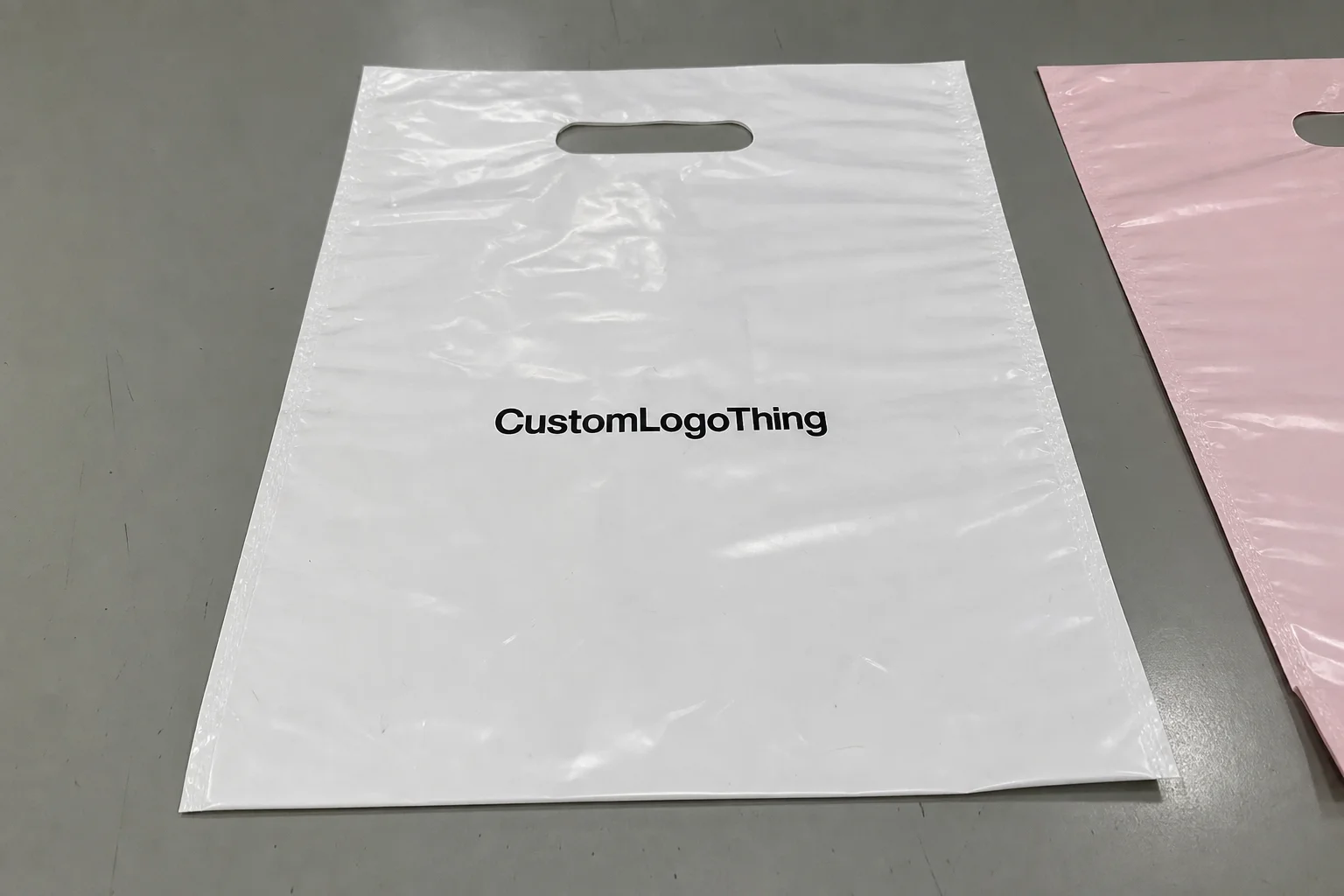
Branding options are broad. You can print a one-color logo, a full-color graphic, a repeating pattern, or an interior message that surprises the customer after opening. Some brands keep the exterior minimal and use a single logo in black or white. Others go for full bleed coverage with a matte base that carries rich, flat colors well. If your design is heavy on small text, matte is often kinder to legibility because it reduces glare on the ink surface. That alone is a practical reason many teams choose to buy matte finish poly mailers online rather than defaulting to a shiny stock bag. A simple 1-color print on a matte surface can look cleaner than a 3-color design on gloss if the logo has thin lines under 1.5 pt.
There is also a strategic use case here. Matte mailers work especially well for apparel, accessories, cosmetics, printed inserts, and other lightweight non-fragile products. They are moisture resistant and efficient to store, which matters if your pack station runs tight on cubic feet. A carton of 500 mailers takes much less space than a stack of rigid boxes, and the savings can be meaningful. One customer in Texas told me his pack room gained back nearly 18 square feet after switching to mailers from folding cartons. He still buys matte finish poly mailers online every quarter because the storage math is that favorable. His last replenishment was 12,500 pieces at 14 x 19 inches, and the freight moved from LTL to parcel just because the carton count dropped.
If you are building a custom pack program, I strongly recommend starting with Custom Poly Mailers as the baseline product family and then narrowing into matte surface treatment, seal style, and print coverage. You can also pair the mailers with other branded materials from our Custom Packaging Products range if you are coordinating inserts, labels, or tissue. That keeps the packaging language consistent from the shipper to the inner wrap. A 350gsm C1S artboard insert, for example, will feel much more intentional next to a clean matte outer bag than a flimsy 250gsm sheet that curls at the corners.
Specifications: Sizes, Thickness, Colors, and Print Options
Here’s where a lot of buyers get sloppy. They ask for “a medium mailer” or “something like the sample,” and then the order goes sideways because the dimensions were never pinned down. If you want to buy matte finish poly mailers online and avoid expensive rework, confirm width, length, gusset, thickness, seal strength, and print area before you request a quote. I’ve seen a one-inch measurement miss turn into 9,000 bags that fit the product only if the tee is folded twice and prayed over.
Common dimensions usually range from small apparel formats around 6 x 9 inches up through larger e-commerce mailers at 12 x 15.5 inches or 14.5 x 19 inches. The right size depends on folded product thickness and whether you include a card, hang tag, or tissue sheet. I have seen clients oversize a mailer by two inches “for safety” and then pay more in postage than they needed to. Too much empty space is not just inefficient; it can create shifting inside the package. When you buy matte finish poly mailers online, sizing should be calculated, not guessed. If the folded item is 1.5 inches thick, choose the mailer with at least 0.75 inches of clearance on each side, not a random bag because it “looked right” on a sample table in Ningbo.
Thickness is usually expressed in microns or mil equivalents depending on supplier language. Thicker film improves puncture resistance and confidence for tougher carrier routes, but over-specifying adds cost. A lightweight apparel brand shipping under 1 lb does not need the same construction as a retailer moving denim or boxed accessories. In my experience, the sweet spot is often where film strength supports the item without dragging down margin. That is the kind of balance buyers should look for when they buy matte finish poly mailers online. For many soft goods, 50 to 60 microns does the job; once you move into heavier apparel, 70 microns starts to make sense.
Color choice affects both perception and print contrast. Black and white remain the most common, but gray, soft kraft-look tones, and custom colors are gaining traction. Matte surfaces make deeper tones look more refined and keep pale colors from feeling overly reflective. If your logo uses a very thin line or a small type lockup, test contrast carefully. I have seen an elegant silver logo disappear on a low-contrast gray matte bag because no one checked the proof under warehouse light. That was an expensive lesson for a beauty brand that wanted to buy matte finish poly mailers online with a “luxury neutral” feel. The fix cost them an extra proof cycle and five days in production.
Print options need equal attention. Ask whether the supplier supports PMS matching, CMYK printing, inside printing, and bleed requirements. Provide vector artwork whenever possible, especially for logos and line graphics. If your artwork has gradients, photograph-based images, or tiny text, request a proof on the exact substrate, not just a digital mockup. A mockup can hide issues with ink spread and contrast. The real bag will not. I know, shocking how packaging refuses to behave like a screen. A factory in Dongguan once quoted me a 0.25 mm line weight limit, and they were right: below that, the line began to break on press.
| Option | Best For | Typical Visual Result | Cost Impact |
|---|---|---|---|
| Stock matte mailer | Testing demand, fast reorders | Clean, simple, low-shine | Lowest setup cost |
| Custom printed matte mailer | Established brands, recurring shipments | Strong branding, premium presentation | Moderate setup and plate cost |
| Tamper-evident matte mailer | Higher-value goods, security-sensitive shipments | More functional, slightly more technical | Higher unit price |
| Bubble-lined matte mailer | Light protection for small fragile items | Bulkier but more protective | Higher material and freight cost |
That table is not theoretical. It mirrors how buyers actually compare options when they buy matte finish poly mailers online. Each step up in function usually adds some cost, but not always in a linear way. A bump in thickness may add pennies; a custom print setup may add a more noticeable fixed charge. That is why spec clarity comes first. For instance, moving from a stock 12 x 15.5 bag to a custom printed one-color version can shift the landed cost from $0.11 to $0.17 per unit at 5,000 pieces, before freight and duty.
From an industry standards perspective, it helps to think in terms of testing rather than marketing language. Transit abuse can be evaluated against common distribution test logic associated with organizations like the ISTA network, while material and environmental claims should be checked against supplier documentation rather than assumed. If you need recycled content or responsible sourcing, ask for certifications, not just verbal assurances. If you want to align with chain-of-custody expectations, the FSC system is one framework to review for paper-based components, inserts, or mixed packaging programs. Matte Poly Mailers themselves are plastic-based, so be precise about what part of the packaging you are certifying. A recycled-content claim on the insert does not magically make the outer bag compostable. Chemistry remains stubborn.
Pricing & MOQ: What Impacts Your Order Cost
If there is one place buyers misread the market, it is pricing. They focus on the unit number and ignore the full landed cost. When you buy matte finish poly mailers online, the real drivers are quantity, size, thickness, number of print colors, tooling, and freight. The lowest unit price does not always produce the best total spend. I’ve watched more than one team celebrate a “cheap” quote and then stare at the freight bill like it personally offended them. A bag quoted at $0.15 per unit for 5,000 pieces can become $0.21 landed once palletization, inland trucking from Guangzhou, and customs brokerage are added.
For a rough planning frame, stock matte mailers may start at a lower entry point than fully custom versions, especially if you are buying unprinted bags in set sizes. Custom runs usually need more quantity to justify setup. A common structure I’ve seen is a low MOQ for stock or lightly customized orders and a higher MOQ for a fully printed mailer with exact color alignment. The reason is simple: print setup, plates, and production calibration have fixed costs. If a supplier does not charge those somewhere, they are likely buried elsewhere. Buyers who plan to buy matte finish poly mailers online should always ask for a line-item quote. A sensible custom MOQ is often 3,000 to 5,000 pieces, while bigger brands may place 20,000-piece runs to get the best per-unit rate.
Here is where pricing typically moves, based on what I see in supplier negotiations:
- Quantity: More pieces usually reduce per-unit cost.
- Size: Larger mailers use more film and often cost more to ship.
- Thickness: Heavier gauge increases material use.
- Print colors: More colors usually mean more setup complexity.
- Add-ons: Tear strips, tamper-evidence, and bubble lining all add cost.
One apparel client I advised wanted 10,000 printed matte mailers but kept asking why a 5,000-piece price did not simply halve. It never does. Fixed setup charges, artwork preparation, and freight class distort simple arithmetic. In that case, the buyer was better off splitting the order into a 3,000-piece test and a 7,000-piece replenishment once designs were proven. That is often a smarter way to buy matte finish poly mailers online if demand is still being validated. Less drama. Fewer regrets. Her test run came in at $0.18 per unit, while the follow-up order dropped to $0.14 because the plates and sampling were already paid for.
Typical hidden costs include shipping, plates, artwork revisions, rush charges, and packaging configuration. I’ve seen a quote that looked 12% cheaper on paper become more expensive once freight and revised proofs were added. Ask whether the price includes doorstep delivery, or whether you are seeing factory ex-works pricing. That distinction changes everything. If you are comparing two suppliers as you buy matte finish poly mailers online, make sure the comparison is apples to apples. A factory in Xiamen quoting FOB port terms is not the same as a supplier in California giving you DDP to your warehouse in Atlanta.
For reference, many custom buyers end up in one of three zones. A stock test order may be the least expensive entry. A mid-volume branded order often gives the best balance of unit cost and presentation. A premium high-volume run can yield the lowest unit number, but only if your storage and cash flow can support the larger buy. The smartest brands do not just chase the cheapest mailer. They buy the right mailer at the right scale. I’ve seen 2,500-piece launches and 50,000-piece replenishments both make sense, depending on monthly shipping volume and cash cycle.
Below is a simple comparison buyers often use internally before they decide to buy matte finish poly mailers online:
| Order Type | MOQ Profile | Unit Cost Trend | Best Use Case |
|---|---|---|---|
| Stock matte, unprinted | Lower | Lowest | Testing, quick fill-ins, seasonal spikes |
| Custom printed, single color | Moderate | Medium | Growing brands with repeat shipments |
| Custom printed, full coverage | Higher | Higher upfront, better at scale | Established brands, launch kits, premium positioning |
The takeaway is practical: if you are testing a new look, start with a lower MOQ or a stock matte bag. If the brand is already stable, move into custom print and use the packaging to reinforce recognition every time the parcel moves through a sorter, a truck, or a front porch. That is the point of deciding to buy matte finish poly mailers online in the first place. A brand shipping 8,000 units a month can usually justify custom print faster than a brand only moving 600.
Process & Timeline: How to Order Without Delays
The cleanest orders are the ones that arrive with decisions already made. The sequence is usually quote request, spec confirmation, artwork submission, proof approval, production, quality check, and shipment. If you want to buy matte finish poly mailers online without delays, do not wait until the proof stage to decide size or print placement. That sounds obvious, but I’ve still seen it happen more times than I’d like to admit. A proof approved on Tuesday can still stall if someone suddenly realizes the logo sits 12 mm too high.
Before you send an inquiry, prepare the product dimensions, target quantity, brand colors, and delivery deadline. If the mailers are for folded apparel, tell the supplier the folded size, not just the garment size. That matters. A large sweatshirt folded into a 12 x 15.5 mailer behaves very differently than a slim tee. I’ve seen production held up for four days because the buyer forgot to mention that an insert card had to fit inside the package too. Small omission, large consequence. When teams buy matte finish poly mailers online, those details save time. If your insert is 4 x 6 inches and printed on 350gsm C1S artboard, say that up front.
Proofing is usually where buyers feel the most friction. Digital proofs are fast, often within a day or two, but they do not always reveal how a matte surface will handle very dark inks or light type. If the design uses a precise brand Pantone, ask for confirmation of print match tolerance. Complex color matching may require extra review time. That does not mean the order is in trouble; it just means the process should be respected. I have sat through enough supplier negotiations to know that color certainty is never free, and brands that want to buy matte finish poly mailers online should budget a little time for it. For custom printed runs, the proofing window is often 2-3 business days, and final production can take 12-15 business days from proof approval.
Stock mailers can ship faster because the material is already on hand. Custom matte mailers take longer due to print setup, production, and curing or drying windows, depending on the ink system used. If you are tying the order to a product launch, leave room for revisions and freight time. The worst surprises I’ve seen were not manufacturing failures. They were calendar failures. A campaign date moved, the mailers did not, and the brand had to pack the launch in generic bags for the first 1,800 units. Nobody likes that email. One client in Melbourne had to absorb a one-week delay because they approved artwork at 4:50 p.m. local time and expected midnight production to happen by telepathy.
If you are comparing vendors, ask for the following:
- Exact dimensions and thickness.
- Print method and color limits.
- MOQ by size and finish.
- Sample or proof availability.
- Lead time from proof approval to shipment.
- Freight terms and packaging carton count.
That list is boring. It is also the list that prevents missed launches. Brands that consistently buy matte finish poly mailers online with clean timelines are usually the brands that standardize this checklist instead of reinventing it every quarter. If your supplier cannot state a timeline like “12-15 business days from proof approval,” keep asking until they can or move on.
One more practical note: ask whether the supplier can hold a sample run or send a pre-production reference before the full order ships. I have seen this save a cosmetics client from a color mismatch that would have been expensive to correct across 20,000 units. A small sample order can expose a problem while the fix is still cheap. That is a much better outcome than discovering the issue on a pallet already booked to your warehouse. In one case, a 200-piece sample caught an adhesive issue that would have affected a full 25,000-piece run. That is a very cheap lesson compared to a warehouse full of unhappy mailers.
How do I buy matte finish poly mailers online without messing up the order?
Start with exact dimensions, thickness, quantity, and artwork. Then ask the supplier for MOQ, proofing steps, lead time, and freight terms in writing. If you want to buy matte finish poly mailers online without a headache, send a folded product sample or clear folding instructions, confirm print placement, and request a physical sample if the finish or color contrast matters to your brand. That one step prevents the “we thought it would look different” problem that ruins a lot of packaging budgets.
Why Choose Us for Matte Finish Poly Mailers
Custom Logo Things focuses on the parts buyers can actually verify: material consistency, print alignment, quoted lead time, and final pack-out. That is not a marketing angle. It is the basic expectation when a brand decides to buy matte finish poly mailers online. If the specs are vague, the shipment gets messy. If the specs are tight, the order behaves predictably. Simple, really. But simple is apparently rare. I’ve seen too many “premium” quotes that fell apart once the buyer asked for the actual film thickness in microns.
We look at matte mailers the way a warehouse manager would. Does the seal hold under normal packing pressure? Does the film resist puncture for the intended product weight? Does the print stay legible under handling? Those are the questions that matter. I’ve walked production lines where operators were checking seal strength by hand on every batch of test bags, and I’ve seen how quickly quality slips if no one is watching the basics. That is why a structured quality-control process matters more than clever copy when buyers want to buy matte finish poly mailers online. A good batch should pass a simple drop test from 1 meter and still keep the seal intact.
Our quality checkpoints typically include film inspection, seal testing, print alignment review, and final packing standards. If a client wants a custom size, we verify how that size fits the product, not just the artwork. If they want a branded finish, we confirm how the matte surface affects contrast before moving forward. That reduces surprises. It also helps the buyer compare a premium presentation against actual unit economics instead of gut feel. For example, a 14 x 19 mailer with a 60-micron body and one-color print may cost $0.16 at 10,000 pieces, while the same format in a heavier 70-micron build may move to $0.20. That difference matters when you ship every week.
We also support brands that need guidance on artwork setup. If your file is a JPEG when it should be vector, we will tell you. If your type is too thin for the chosen size, we will flag it before print. That kind of honesty is worth more than a cheap quote. It saves you from reordering 2,000 bags because the logo lost definition. When brands choose to buy matte finish poly mailers online, they need a supplier who can see the problem before the press starts running. I’ve had a designer insist that 0.3 pt lines would be “fine” on a matte bag in Suzhou. They were not fine. They vanished.
There is also a service advantage in having one packaging contact across products. If you are coordinating custom mailers with inserts, labels, or additional branded components, it helps to work through a single packaging source. You can review Custom Packaging Products alongside your mailer specs, which keeps the packaging stack coherent from outer shipper to inner presentation. That matters more than most founders expect, especially once order volume starts moving past a few hundred units a month. It also makes reorder math easier, because you are not juggling three vendors for one shipping experience.
“The best packaging vendor is the one who tells you the truth about your files, your timing, and your actual unit cost.”
I say that because I have seen too many brands pay for optimism. The better path is clarity. Clear quotes. Clear specs. Clear turnaround. If your goal is to buy matte finish poly mailers online and keep the process boring in the best possible way, that is exactly what we aim to deliver. If the quote says 10,000 pieces at $0.15 per unit, 12-15 business days from proof approval, and shipping from a plant in Guangdong or Jiangsu, that’s the kind of concrete answer that saves everyone time.
Next Steps to Buy Matte Finish Poly Mailers Online
Start with the product, not the price. Measure the folded item, estimate monthly volume, and decide whether you need stock or custom-printed bags. If you are planning to buy matte finish poly mailers online, those three decisions will narrow the field faster than any generic search result. A 10 x 13 mailer works for many folded tees; a 14.5 x 19 format is better for sweatshirts or bundled apparel.
Next, gather your artwork files and brand color references. If you already have vector logos, supply them. If you only have a low-resolution web file, be upfront about that. A supplier can often help, but the earlier the conversation starts, the fewer revisions you will face. I’ve seen customers shave two full days off proofing just by sending the right files on the first pass. That is a small operational win, but it adds up quickly when you are trying to buy matte finish poly mailers online ahead of a launch. If your brand color is Pantone 186 C, send that number instead of “red-ish.”
Compare at least two configurations side by side. One should prioritize cost. The other should prioritize presentation. For example, you might compare a stock matte 10 x 13 mailer against a custom printed 10 x 13 mailer with a tear strip. One gives you lower upfront spend. The other gives you a stronger brand impression and a more controlled opening experience. If you never compare the two, you may overbuy features you do not need, or underbuy the visual impact that your brand actually depends on. A 5,000-piece stock order at $0.12 each and a custom version at $0.18 each can both be right, depending on your margin and repeat-rate.
I also recommend asking for a sample or proof before a large commitment, especially if matte finish and print contrast are critical. A sample tells you more than a quote ever will. It shows surface feel, seal quality, ink saturation, and how the bag behaves in hand. That one sample can confirm whether the package supports your positioning or undercuts it. It is the fastest way to de-risk the decision to buy matte finish poly mailers online. A factory sample from Hangzhou or Dongguan is cheap compared with reprinting 15,000 bags because the black logo looked gray under warm light.
Here is the final buying logic I use with clients:
- If the shipment is test volume, start with a lower MOQ.
- If the brand needs recognition, add custom print.
- If transit abuse is a concern, specify thickness and seal strength first.
- If presentation matters most, prioritize matte finish, contrast, and consistency.
That framework works because it keeps the order grounded in the actual job the mailer has to do. A matte bag is not just a cosmetic choice. It is a protective, branded outer layer that may pass through five or six hands before it reaches the customer. The finish should support that journey, not fight it. That is why the most confident buyers do not hesitate to buy matte finish poly mailers online once the specs are clear. If you need 8,000 pieces for a quarter’s worth of shipping, the math is easy; if you need 800 and want them next week, stock is the smarter move.
If you are ready to move, request a quote with exact dimensions, thickness, quantity, and artwork details. Ask for the MOQ, lead time, and delivery terms in writing. Then compare the sample against your product and your brand standards. If the fit is right, place the order. If it is not, adjust the spec before production starts. That is the simplest and safest way to buy matte finish poly mailers online without paying for guesswork. I prefer boring packaging decisions, mainly because boring is how you keep margins from bleeding out in quarter two.
Bottom line: the right matte mailer balances price, durability, and presentation in a way glossy bags often cannot. If your brand wants packaging that photographs better, hides handling marks, and still keeps shipping efficient, it makes sense to buy matte finish poly mailers online with a clear spec sheet and a supplier who will tell you the truth. A fair target is a 12-15 business day production window from proof approval, a realistic MOQ of 3,000 to 5,000 pieces for custom print, and a landed price that actually fits your margin. Measure the folded product, lock the spec, and verify one sample before you commit. That’s the move.
FAQ
Can I buy matte finish poly mailers online in small quantities?
Yes, but the minimum order quantity depends on whether you choose stock or custom-printed mailers. Stock matte mailers often have lower entry quantities, while custom printed versions usually require a larger run to cover setup costs. If you are testing demand, start with the smallest available MOQ or request a sample pack first. Some stock programs start at 100 to 500 pieces, while custom jobs usually begin around 3,000 pieces.
Are matte finish poly mailers stronger than glossy mailers?
The finish itself does not determine strength. Film thickness, adhesive quality, and overall construction do. A matte mailer can be very durable if the polyethylene gauge and seal are specified correctly. Choose based on product weight, puncture risk, and shipping conditions rather than finish alone. For example, a 60-micron matte mailer can outperform a thinner glossy bag every day of the week, no drama required.
How much does it cost to buy matte finish poly mailers online?
Pricing depends on size, thickness, print coverage, quantity, and whether the order is stock or custom. Larger quantities usually lower the per-piece price, but setup charges and freight can still affect total spend. Send exact dimensions and print details to get a usable quote comparison. As a planning example, some custom runs land around $0.15 per unit for 5,000 pieces, while larger reorders can drop below that depending on freight terms and print complexity.
What artwork do I need for custom matte finish poly mailers?
Vector artwork is preferred for logos and linework because it prints more cleanly. You should also provide brand colors, placement notes, and any background or bleed requirements. If your files are not final, ask whether production support or proof adjustments are available. A clean AI, EPS, or PDF file can save two or three revision rounds, especially on one-color or two-color prints.
How long does it take to receive matte finish poly mailers after ordering?
Lead time depends on whether the order is stock or custom, plus proof approval and shipping method. Stock items usually ship faster, while custom orders require additional production time. To avoid delays, approve proofs quickly and confirm all specs before production begins. A typical custom timeline is 12-15 business days from proof approval, plus freight from the factory in Guangdong, Jiangsu, or wherever your supplier actually runs the press.