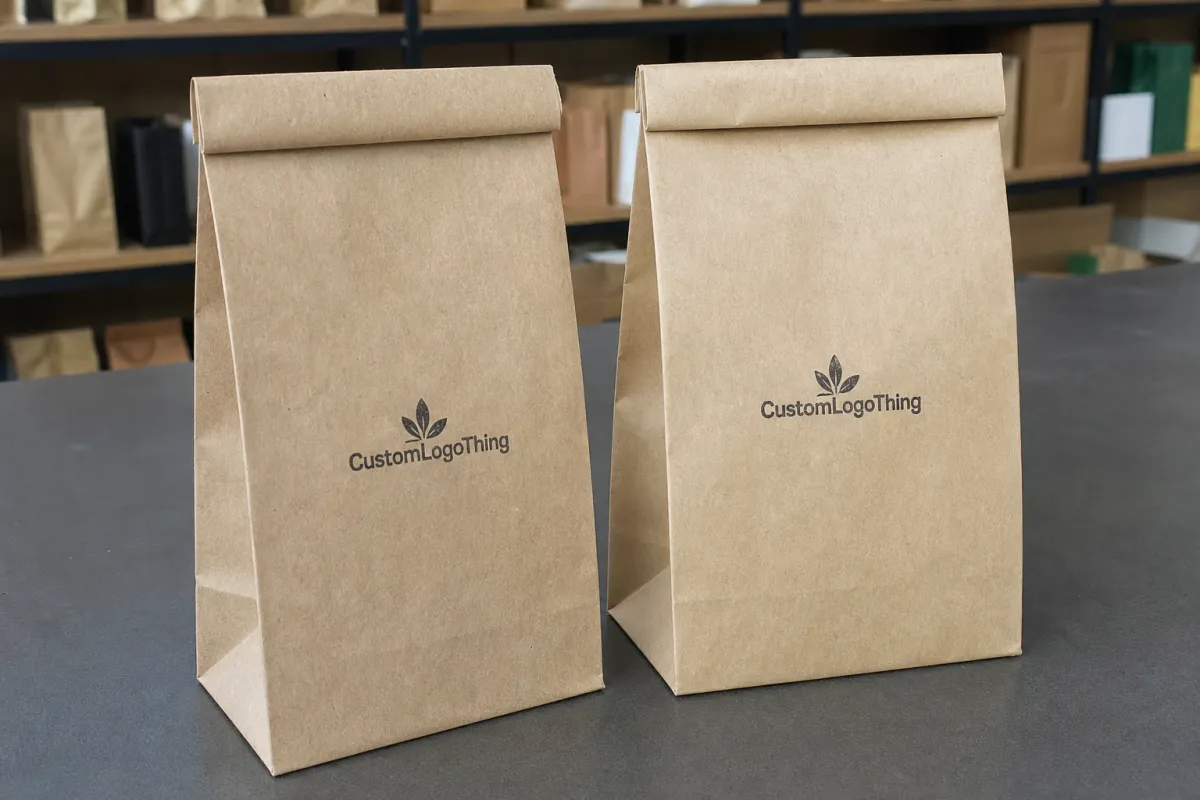
Buyer Fit Snapshot
| Best fit | Buy Recycled Mailer Sleeves Wholesale projects where brand print, material claims, artwork control, MOQ, and repeat-order consistency need to be specified before quoting. |
|---|---|
| Quote inputs | Share finished size, material target, print colors, finish, packing count, annual reorder estimate, ship-to region, and any compliance wording. |
| Proofing check | Approve dieline scale, logo placement, barcode or warning zones, color tolerance, closure strength, and carton packing before bulk production. |
| Main risk | Vague material claims, crowded artwork, missing packing details, or unclear freight terms can make a low unit price expensive after revisions. |
Fast answer: Buy Recycled Mailer Sleeves Wholesale: Material Claims, Seal Quality, and Freight Cost should be specified like a repeatable production item. The safest quote records material, print method, finish, artwork proof, packing count, and reorder notes in one written spec.
Production checks before approval
Compare the actual filled-product size with the drawing, then confirm tolerance on folds, seals, hang holes, label areas, and retail display edges. Reserve space for logos, QR codes, warning copy, and material claims before decorative graphics fill the panel.
Quote comparison points
Review material grade, print process, finish, sampling route, tooling charges, carton quantity, and freight assumptions side by side. A quote is only useful when the supplier can repeat the same color, closure quality, and packing count on the next order.
If you want to buy recycled mailer sleeves wholesale, start with the numbers, not the sales language. I once stood on a dock in Long Beach, California, while a buyer compared two quotes that looked almost identical on paper. One came in at $0.19 per unit for 5,000 pieces, the other at $0.23, and the cheaper line item lost once freight, rework, and an extra carton layer added $640 to the shipment. That is the arithmetic that matters. I have spent enough time around converting lines, pallet maps, and production schedules to know that the best sleeve is not always the prettiest one. A nested stack that holds 72 units per carton, a fold that stays square, and a pallet that fills a 40-foot container in Dongguan, Guangdong, can save more money than a lower sheet price ever will.
Brands moving 2,000, 10,000, or 50,000 units a month do not need packaging poetry; they need consistency measured in millimeters and business days. A team shipping 8,000 units from a warehouse in Chicago or Manchester needs a sleeve that protects the product, looks polished on arrival, and keeps landed cost under control. That is the real reason smart teams buy recycled mailer sleeves wholesale instead of stitching together small orders that get hit with retail markup, inconsistent board stock, and a six-week replenishment gap. A small run at $0.41 per unit may seem harmless until the second reorder lands late and someone in fulfillment starts substituting whatever is closest to the tape gun, which is exactly how bad process decisions spread.
I watched one cosmetics buyer learn that lesson the hard way in Suzhou, Jiangsu. The sample looked sharp on the table, but the nested stack was loose by 2 mm, so cartons rode with too much dead air on the pallet. We changed the dieline by 3 mm, tightened one score line, and the pallet count dropped from 18 cartons to 14 while the total shipper weight fell by 11.6 kilograms. Same printed face, same product, lower freight. That is the kind of detail that turns buy recycled mailer sleeves wholesale from a branding phrase into a procurement decision with a measurable return.
Once your sleeve has to support monthly reorder cycles, the questions get practical very quickly. Does it protect the contents through 12 to 15 business days of linehaul and warehouse handling? Does it give the product a finished look instead of a corrugated warehouse look? Can the supplier hold the same spec on run two, run three, and run ten across factories in Guangdong, Zhejiang, or Jiangsu? Those are the questions I ask every time a team wants to buy recycled mailer sleeves wholesale for ecommerce, retail kits, or subscription packaging. The answer usually tells you more than the quote ever will.
Why Buy Recycled Mailer Sleeves Wholesale
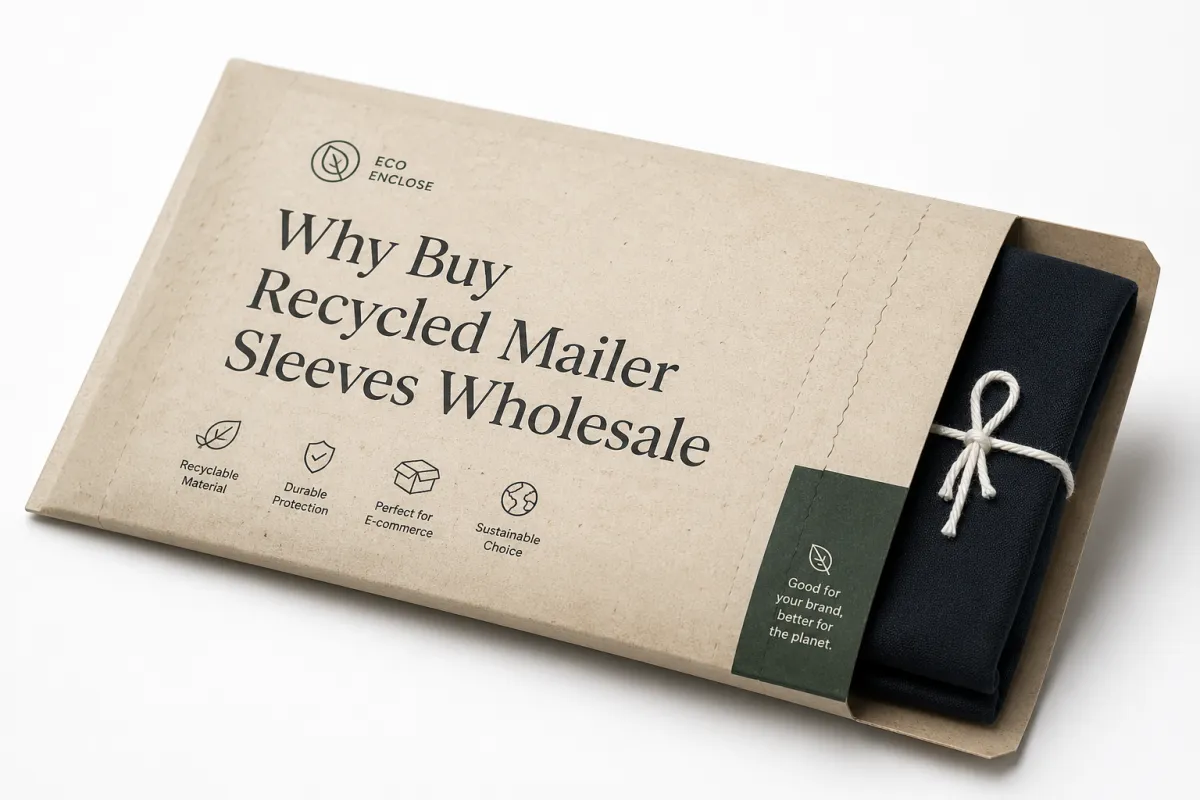
There is a straightforward business case for buy recycled mailer sleeves wholesale. Volume changes the math. Once you factor in freight, setup, waste, and the cost of reordering, the cheapest-looking option is often the most expensive one in practice. Retail channels charge for convenience, and that premium gets painful fast when the same 220 x 160 mm size is reordered every month. Wholesale buying strips out noise: one spec, one price structure, one repeatable replenishment path. A 5,000-piece order at $0.15 per unit can be better value than a 1,000-piece run at $0.28 per unit, even before you count the extra cartons and air freight. That is the part people miss when they are staring at a spreadsheet at 6:30 p.m. and trying to look efficient.
The buyers who save the most are usually the ones who think like operators. They do not stop at, "Can you make it?" They ask, "Can you make it the same way next month in Ningbo, Zhejiang, with the same 350gsm recycled board and the same score depth?" Recycled fiber stock can vary more than virgin board if the supplier is careless, and that variation shows up in caliper, color, and fold behavior. I once watched a plant manager in Dongguan pull sheets from three stacks and check them with a micrometer in front of a buyer from Chicago; the readings came back at 0.43 mm, 0.45 mm, and 0.48 mm. The buyer thought the inspection was fussy. It was actually a warning against three future reorder headaches. I still think about that scene whenever someone calls consistency "nice to have." It is not nice to have. It is the whole point.
If you ship books, apparel, cosmetics, supplements, or flat promotional items, the sleeve has three jobs at once. It has to reduce scuffing, keep the outer pack looking clean, and avoid the tired warehouse look that makes a product feel cheaper than it is. A sleeve with crushed corners, off-register print, or a bowed face does the opposite of what you paid for. A 350gsm C1S artboard benchmark may work for some premium retail programs, while a 300gsm recycled kraft board can be enough for lightweight inserts and folded apparel; the right choice depends on whether the final parcel rides in a poly mailer, a shipper carton, or a display tray. That is why brands that buy recycled mailer sleeves wholesale tend to care about performance and presentation in the same sentence. They should.
Sustainability gets oversold in some sales decks, then undersold the moment procurement gets involved. The value is not the buzzword. The value is the ability to buy recycled mailer sleeves wholesale with a recycled-content specification, clean print behavior, and a board grade that survives the trip from a factory in Guangzhou to a fulfillment center in Ohio or Berlin. If your team needs documentation, FSC chain-of-custody, recycled-content declarations, and mill certificates matter. Boring paperwork has a way of becoming very useful the moment legal, retail, or a customer asks for proof, often at 4:15 p.m. on a Friday when everybody would rather be anywhere else.
"We saved more by fixing the nesting than by switching suppliers." A fulfillment director said that to me after a production review in Shenzhen, and he was dead right. Packaging savings usually hide in the places nobody wants to measure, like a 4 mm change in carton height or a shift from 90 units per case to 108.
Another reason to buy recycled mailer sleeves wholesale is the reduction in rework. When the sleeve is built around the product from the start, fewer units are lost to trial fits, fewer cartons need correction, and fewer hours disappear into back-and-forth with the factory in Dongguan or Xiamen. That is not theory. That is cash that stays inside the project budget instead of leaking out through avoidable mistakes. I have seen a 3 mm mismatch turn into four revision calls, a new proof, and two days of delay on a 20,000-piece order. Nobody enjoys that kind of noise.
Product Details for Recycled Mailer Sleeves
A recycled mailer sleeve is a lightweight protective wrap made from recycled paperboard or recycled fiber stock, typically in the 250gsm to 400gsm range. It is designed to cover mailers, boxes, books, subscription kits, and flat goods that need a cleaner outer finish than a plain shipper. Buyers who buy recycled mailer sleeves wholesale usually want a format that looks refined without adding much weight or volume, and that is where the sleeve earns its keep. A 2,000-piece run can save 14 to 18 kilograms of packaging waste versus a heavier rigid mailer configuration, depending on size and liner choices.
The most common applications are easy to spot. Apparel brands use them for folded garments and accessories measuring 180 x 260 mm or smaller. Subscription brands use them around inner Boxes That Ship at 500 to 900 grams. Cosmetics and supplement companies use them for rigid cartons that need a second layer of presentation and a cleaner opening experience. Book publishers use them for limited editions and collector sets, especially when a 1.2 mm board edge matters more than a glossy finish. I have also seen them used for promo kits with inserts, samples, and small rigid gifts, where the sleeve keeps everything from sliding around and arriving crooked. A shift of even 6 mm inside the carton can make a premium product look like it had a rough day.
Construction choices matter more than many buyers expect. Open-end sleeves, tuck styles, wraparound formats, scored panels, tear strips, and window versions all solve slightly different problems. Some teams want a simple wrap with one fold line and a 12 mm glue flap. Others want a more structured outer shell that behaves like a second skin with double scores and a locking tab. If you plan to buy recycled mailer sleeves wholesale for recurring use, choose a construction that matches the packing line and the product, not just the sample you happened to hold in your hand. A sample can flatter almost anything; a 10,000-piece production run in Ningbo cannot.
Print and finish choices are just as consequential. A one-color logo on kraft stock can look sharp if the ink density is controlled at around 1.20 to 1.35 on a standard press target. Full-bleed print creates stronger shelf presence, though it usually pushes up cost by 8% to 18% and adds setup time for registration. Spot colors help keep brand rules tight. Matte coatings often feel more premium than glossy finishes on recycled material because they leave the texture visible instead of fighting it. On a paper-converting floor outside Shenzhen, the best-selling sleeve in the room was not the most elaborate one; it was the one with a clean one-color mark, crisp folds, and board that stayed flat at the corners after 24 hours under stacked cartons.
If you are comparing options before you buy recycled mailer sleeves wholesale, use product details to decide the right balance of appearance and cost. Some teams need a plain recycled kraft look. Others need a retail-ready print face with a 20 mm logo safe zone and a 3 mm bleed. Both can work. The wrong move is paying for a premium finish on a product that ships inside a plain outer shipper anyway. That is just money wandering off in a direction your budget never asked for.
If your packaging mix also includes other mailers, it can help to compare related formats like our Custom Poly Mailers and the broader Wholesale Programs. Different packs solve different problems, and a 1,500-piece mix of sleeves plus outer mailers often keeps the order book cleaner than forcing one material to do three jobs.
Recycled Mailer Sleeves Specifications You Can Order
The fastest way to slow down a project is to say "standard" and hope the factory fills in the blanks. If you plan to buy recycled mailer sleeves wholesale, confirm the inside dimensions, board caliper, recycled content level, print area, and closure style before anything gets approved. Those five specs drive almost every other decision. A spec sheet that lists 248 x 172 x 26 mm, 350gsm recycled board, 1-color flexo print, and a 15 mm tuck is useful; a note that says "similar to last time" usually is not.
I ask buyers to begin with inside dimensions because the outside size helps designers more than packers. Give the factory the exact product length, width, and depth, then let them build around the item that actually needs to ship. For paperboard stock, thickness is often described in gsm or point. A 300gsm board behaves very differently from a 400gsm board, especially if the contents have rigid edges or sharp corners. When a client wants to buy recycled mailer sleeves wholesale for supplement cartons, I usually push them toward a slightly heavier stock if the product will travel cross-country or sit in a warehouse for three weeks. Cheap paper that caves in does not feel cheap when you bought it; it feels expensive after the third complaint from operations.
Material options are not interchangeable. Recycled paperboard is common because it prints cleanly and folds predictably. Recycled fiber stock can give a more natural feel, though it may show texture or a little shade variation. If brand color matters, request sample sheets from the exact stock lot rather than a generic swatch. I learned that lesson on a shelf-ready sleeve order where the first lot looked warm and the second drifted gray across 8% of the run. The buyer had approved a "similar kraft." Those three words cost them two extra rounds of review, one revised approval sheet, and a week of schedule pressure in the Portland office.
Finishing choices change both performance and price. Aqueous coating improves rub resistance and can reduce scuffing by a visible margin after 200 to 300 handling cycles. Uncoated kraft feels more natural and usually costs less, especially on a 5,000-piece run. Perforations can improve opening, but they also create a new failure point if the die line is sloppy by more than 1 mm. Fold tolerance matters too. If the factory cannot hold a consistent score line, the sleeve may bow, crack, or close unevenly. That is not mysterious. It is basic production discipline, the unglamorous kind that keeps a program out of trouble.
Before you buy recycled mailer sleeves wholesale, ask for these checks:
- Sample sheets from the exact stock lot, not a different paper grade.
- Color tolerance targets for logos, solids, and kraft background shade, ideally within a Delta E range the printer can actually hold.
- Dieline review with fold marks, glue zones, and cut lines visible at full scale.
- Compression expectations if the sleeve will sit under stacked cartons in a 40-foot container.
- Repeat-run confirmation so the second order matches the first on board feel, print density, and trim.
For quality and transit testing, teams often reference methods used by organizations like ISTA. That matters when a sleeve has to survive distribution, not just a desk-side approval in London or Austin. If recycled-content claims matter to sales or compliance, ask the supplier how the board source is documented and which mill issued the lot number. The point is not to collect paperwork for sport. The point is to keep claims defensible when someone audits them or asks for a certificate three months after launch.
One more detail matters more than most buyers expect. If your print file is full bleed, tell the factory the acceptable trim variance up front. A 1 mm drift is fine on some sleeves. On others, it puts the logo too close to the edge and makes the whole pack look careless. I have seen teams approve gorgeous mockups, then complain later when the production run followed the wrong assumption. A careful supplier will bring that up before you place the order. A lazy one will nod and hope you forget. That little hope is where a lot of avoidable problems are born.
Buy Recycled Mailer Sleeves Wholesale: Pricing, MOQ, and Landed Cost
Price is not one number. It is a stack of choices. When buyers buy recycled mailer sleeves wholesale, the unit cost depends on board grade, sleeve size, ink coverage, finishing, packaging method, and how efficiently the factory can run the job. Change any of those, and the quote moves with it. A 300gsm uncoated sleeve with one-color print might land at $0.15 to $0.22 per unit for 5,000 pieces, while a premium 350gsm sleeve with aqueous coating and a full-bleed design can sit between $0.29 and $0.54 per unit depending on trim, cartons, and freight.
MOQ usually follows the same logic. Smaller runs carry a higher unit cost because setup gets spread across fewer pieces. Larger orders bring the per-unit number down once the factory can run the job in a cleaner batch. I have seen a 1,000-unit order price at nearly double the 5,000-piece run simply because setup, proofing, and waste allowance ate too much of the total. That is not the supplier being dramatic. It is how print production works when the quantities are small and the dieline is still being tuned in the first week.
Here is a practical way to compare options before you buy recycled mailer sleeves wholesale. Ask each supplier for the same quote structure: unit price, setup or plate fees, sample cost, freight estimate, and any custom dieline charges. If one supplier gives you a shiny unit rate and hides the rest, keep moving. Landed cost is what matters. A sleeve that looks cheap on paper can get expensive once shipping, cartons, export documentation, and reprint risk show up. That is the kind of bill that makes procurement people stare into the middle distance for a minute.
| Option | Typical MOQ | Unit Price Range | Best For | Lead Time |
|---|---|---|---|---|
| Stock recycled sleeve, no print | 500-1,000 pcs | $0.18-$0.32/unit | Fast replenishment, simple packing | 7-12 business days |
| Custom printed recycled sleeve | 1,000-3,000 pcs | $0.28-$0.58/unit | Branding, ecommerce, subscription kits | 12-18 business days |
| Heavy board, premium finish | 3,000-5,000 pcs | $0.42-$0.86/unit | Retail presentation, higher crush resistance | 15-22 business days |
Those ranges are realistic when the spec is clear and the volume is real. A 5,000-piece order built in Dongguan with one-color print and carton packing can come in at $0.15 to $0.26 per unit depending on size, while a 10,000-piece reorder from Ningbo may drop another 8% to 12% if the die line stays unchanged. Special folds, perforations, window cutouts, and custom die lines all add setup time. A one-color logo on kraft board usually keeps the quote calmer. That is why buyers who buy recycled mailer sleeves wholesale should quote the exact same spec with every supplier. Otherwise you are comparing three different products and calling it a pricing exercise, which is a fast way to fool yourself.
One negotiation still sticks with me. A client wanted the lowest unit price and nearly ignored freight. We placed two quotes side by side. Supplier A was $0.29/unit with $1,950 freight. Supplier B was $0.33/unit with $980 freight. On 5,000 units, the "cheaper" sleeve cost more once landed by $930 before duty and local delivery. That is why I keep telling people to buy recycled mailer sleeves wholesale on landed cost, not headline cost. Headline numbers are good for slides. Landed numbers pay the bills.
For larger program orders, packaging teams often set a reorder trigger at 20% of stock remaining. That gives enough time for proofing, production, and transit without emergency air freight. If you reorder every month, ask for a standing quote with updated freight windows from Shanghai, Shenzhen, or Xiamen. It keeps procurement from chasing the same issue over and over, and it gives the factory a more stable schedule. Everyone sleeps better, or at least less badly, when the next 10,000-piece run is already penciled into the calendar.
How Do You Buy Recycled Mailer Sleeves Wholesale Without Delays?
The process is not complicated, but it does demand discipline. If you want to buy recycled mailer sleeves wholesale without getting trapped in proof revisions, move in this order: RFQ, spec confirmation, sample review, proof approval, production, quality check, and shipment booking. Skipping a step usually costs more time later than it saves in the moment. A one-day shortcut can become a four-day delay if the board thickness or fold direction is wrong.
Start by sending the factory the product dimensions, target quantity, artwork, shipping destination, and the recycled material standard you want to meet. If you have a preferred finish, say so. If you want split cartons rather than bulk pack, say that too. "Standard" is not a specification. It is a guess. Guesswork is a common cause of late orders, and late orders have a terrible habit of showing up just before launch, usually when the marketing team has already sent the email.
Timeline depends on complexity. A stock recycled sleeve with simple print may move in 7 to 12 business days after proof approval. A custom die-line sleeve with perforation or a complex fold can take 12 to 18 business days, sometimes 20 business days if the board stock has to be sourced to order from a mill in Zhejiang or Guangdong. When a buyer wants to buy recycled mailer sleeves wholesale and still hit a launch date, I always ask them to build in a buffer of at least five business days. That buffer is cheap. Expedited freight out of Shanghai to Los Angeles is not.
Here is the sequence I prefer:
- Send exact dimensions and order count.
- Confirm board thickness, recycled content, and print method.
- Review a dieline with measurements marked.
- Approve a physical sample or pre-production sample.
- Lock the production calendar and freight booking.
Three things usually cause delays. Unclear dimensions come first. Artwork files built for screens instead of print come second. Silence during proof review takes third place. I have had buyers vanish for four days on a 10,000-piece order and then ask why production slipped. The factory cannot read silence. That is the blunt answer. It can read a spec sheet. It cannot read a mood, and it certainly cannot infer a 2 mm fold change from a disappearing inbox thread.
One of my better factory-floor moments happened during a recycled sleeve trial for an apparel client in Guangzhou. The buyer kept asking for a tighter tuck, but the opening panel was already near the limit of the board's memory. We changed the score depth by 0.4 mm, adjusted the nesting pattern, and the whole job packed cleaner. Good suppliers earn their keep in fixes like that. If you want to buy recycled mailer sleeves wholesale and actually repeat the order, score depth and folding pressure matter more than glossy renderings. Pretty pictures do not survive a packing table.
Ask for a quality check before shipment. A clear photo set of finished cartons, corner condition, print registration, and pallet count can catch problems before cargo leaves the dock. A supplier who refuses simple QC photos is usually not the partner you want for repeat programs. The first order might limp through. The second order exposes the weak spots. I would rather have a slightly slower shipment than a box of surprises showing up on the receiving dock, especially on a 15,000-piece run that has already been booked into a retailer's receiving calendar.
Why Choose Us for Wholesale Packaging
We treat packaging like procurement, not theater. If you want to buy recycled mailer sleeves wholesale, you need a supplier who can answer practical questions before production starts: what board thickness fits the product, what print method fits the budget, and what tolerance the factory can actually hold. Pretty mockups do not help if the sleeve arrives warped, over-creased, or too loose to stay neat in transit. A 350gsm recycled board sleeve that holds a 0.6 mm tolerance is more useful than a polished render that never survives the first carton test.
Direct Factory Pricing only helps if the factory also knows how to keep the run stable. Experience matters there. I have spent enough time in plants in Shenzhen, Dongguan, and Suzhou to know the difference between a nice sample and a repeatable product. A sample can be massaged by hand by one skilled operator. A bulk order has to survive an entire shift, and the shift after that, with no drama. That is why buyers who buy recycled mailer sleeves wholesale with us get clearer spec guidance instead of vague reassurance and a promise that "it should be fine."
We also look at the order as a shipping problem, not just a print job. If the sleeve is too bulky, freight goes up. If the fold is too loose, cartons shift in transit. If the print area is too ambitious for the board, the result looks muddy. These are boring problems, and that is a good thing. Boring problems are fixable. Sudden surprises are expensive. I would pick boring every time, especially when a 40-foot container from Ningbo to the U.S. West Coast costs more than the entire setup fee on a small run.
Here is what hands-on support usually changes:
- Dimension checking so the sleeve fits the actual product, not a guessed size.
- Material matching so the recycled stock supports the weight and handling level.
- Print review so logos, bleeds, and folds do not fight each other.
- Packaging method so cartons, inserts, and pallet counts make freight sense.
We also keep the conversation practical around reorders. If a buyer plans to buy recycled mailer sleeves wholesale every quarter, we document the final spec, approved artwork, and carton configuration so the next run does not start from zero. That saves time. It also avoids the tedious disputes that happen when someone says, "I thought the last order used a different board." Nobody enjoys that meeting, and nobody enjoys the invoice that follows a misaligned assumption. I have sat through enough of those meetings to know they age everyone by about three years.
Because many brands use more than one packaging format, we also help compare where recycled mailer sleeves fit alongside other wholesale packaging options. If the product needs a poly outer for moisture resistance, the sleeve may work better as a secondary brand layer instead. That is where our Wholesale Programs page becomes useful for planning a broader packaging mix rather than treating each format as a separate problem. A hybrid package can save 9% to 14% in material spend if the sleeve takes the branding role and the outer mailer takes the protection role.
I have a simple rule from years of supplier negotiations: the best packaging partner tells you what will not work before they quote. That honesty saves everyone time. If a folded sleeve is the wrong format for a product that ships irregularly shaped items, say so. If a different structure is better, say that too. Buyers remember that kind of candor. So do their freight numbers, especially after the second reorder arrives on time and the first one is already proving the value of the decision.
Next Steps to Place Your Order
If you are ready to buy recycled mailer sleeves wholesale, gather five things before you request a quote: product dimensions, target quantity, print artwork, shipping destination, and the recycled material standard you want to meet. That is enough to get a useful number back without a week of back-and-forth. A clean RFQ for 5,000 pieces can usually get a real response in 24 to 48 hours if the dieline is already measured and the board target is clear.
My preferred approval path stays simple. Request one sample build first. Compare it against the product. Check fit, fold, print, and corner strength. Then approve the final spec only after the sample passes. That sounds cautious because it is cautious. A ten-minute sample review can save a ten-thousand-piece mistake, and I have seen that mistake cost $1,800 in rework plus another $420 in expedited freight. The review is cheaper.
When comparing suppliers, use the same spec sheet for each quote. If one factory prices a 350gsm recycled sleeve and another prices a 300gsm version, you are not comparing suppliers. You are comparing board weights. That is a different problem entirely. The supplier who can prove consistency is usually worth more than the one with the prettiest starting number. If you plan to buy recycled mailer sleeves wholesale for repeat orders, reliability beats a tiny discount every time, especially when production is split across runs in Shanghai and Ningbo.
Here is the rule I give buyers in one sentence: compare two quotes on the same spec, then choose the supplier who can show the sample, the timeline, and the landed cost without dancing around the details. That is the cleanest path when you buy recycled mailer sleeves wholesale for real production. A supplier who can quote $0.17, a 12-business-day timeline, and carton counts that match the pallet plan is doing real work; anything vaguer is just noise.
If the quote, sample, and timeline all line up with your reorder plan, place the order. If one of those three is off, fix it first. It is cheaper to spend one extra day aligning the spec than to spend three weeks explaining why the sleeves do not fit the pack-out you already promised to sales. Packaging problems have a habit of showing up exactly when the calendar gets tight, which is rude but very consistent with how operations behaves in Q4.
And yes, if the goal is to buy recycled mailer sleeves wholesale for a brand that reorders monthly, make sure the supplier can support the next run before you celebrate the first one. That is the part most people overlook. A good first order is useful. A repeatable second order is what keeps the business moving, particularly when the second purchase lands at the same $0.15 to $0.23 range and the factory in Guangdong can hold the same board grade without starting from scratch.
FAQ
What is the MOQ when I buy recycled mailer sleeves wholesale?
MOQ depends on size, print complexity, and whether the factory is using a stocked format or a custom die line. For many projects, 500, 1,000, and 5,000 units are useful checkpoints because they show where the unit cost starts to drop. If you need a trial run before you fully buy recycled mailer sleeves wholesale, ask whether the supplier can do a short batch or a sample build first. A small trial often reveals fit and fold issues before they become expensive, and a 200-piece proof can save a 10,000-piece reprint.
Can I get custom sizes when I buy recycled mailer sleeves wholesale?
Yes, and in many cases custom sizing is the right move. Provide exact inside dimensions, product thickness, and any fold or tuck requirements so the factory can build the right dieline. Custom sizes can add tooling and setup time, so confirm those costs before you approve the quote. That matters even more if you plan to buy recycled mailer sleeves wholesale for a product that changes seasonally. A size that works in spring may be wrong by autumn, especially if the product shifts by 5 mm in depth or includes a new insert.
How long does it take to produce recycled mailer sleeves wholesale?
Stock sizes usually move faster than fully custom sleeves, especially when the print is simple. Lead time depends on proof approval, board availability, and whether the order needs special finishing or custom cutting. Ask for a production calendar that shows sample timing, bulk run timing, and freight booking dates. If you want to buy recycled mailer sleeves wholesale without guessing, that calendar matters more than any sales promise. Dates on paper are better than optimism, and a clear 12- to 15-business-day window is more useful than a vague "soon."
What materials are used in recycled mailer sleeves?
Most are made from recycled paperboard or recycled fiber stock, often in kraft or uncoated finishes. Confirm the recycled content level, board thickness, and whether the stock is suitable for printing or coating. If sustainability claims matter to your brand, request written material details before you place the order. That way, when you buy recycled mailer sleeves wholesale, you know exactly what you are putting into the market and what you can stand behind later. A board spec of 300gsm recycled kraft is a very different purchase from a 350gsm C1S artboard-backed sleeve.
How do I compare suppliers before I buy recycled mailer sleeves wholesale?
Compare the same spec sheet across suppliers so you are not pricing three different products and calling it research. Check sample quality, communication speed, quoted lead time, and whether the supplier gives clear landed-cost numbers. A reliable partner explains setup fees, freight, and reprint terms up front instead of hiding them in the fine print. That is the difference between a decent quote and a quote you can actually use when you buy recycled mailer sleeves wholesale. Clear numbers beat vague confidence every time, especially when the order ships from Shanghai to Chicago or Rotterdam.
If you are going to buy recycled mailer sleeves wholesale, do it with a spec sheet, a sample, and a real landed-cost comparison. Lock the inside dimensions, confirm the board grade, and approve the physical sample before you release the bulk run. That is how you keep the order clean, the freight under control, and the reorders predictable. Anything less is just guessing with a purchase order attached. And frankly, I have seen enough packaging guesswork to last me a lifetime, from 300-piece test runs in Suzhou to 30,000-piece programs in Guangdong.